On This Page
Description
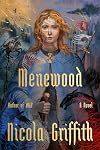
In the much anticipated sequel to Hild, Nicola Griffith's Menewood transports readers back to seventh-century Britain, a land of rival kings and religions poised for epochal change. Hild is no longer the bright child who made a place in Edwin Overking's court with her seemingly supernatural insight. She is eighteen, honed and tested, the formidable Lady of Elmet, now building her personal stronghold in the valley of Menewood. But Edwin needs his most trusted advisor. Old alliances are show more fraying. Younger rivals are snapping at his heels. War is brewing--bitter war, winter war. Not knowing who to trust, he becomes volatile and unpredictable. Hild begins to understand the true extent of the chaos ahead, and now she must navigate the turbulence and fight to protect both the kingdom and her own people. Hild will face the losses and devastation of total war, and then she must find a new strength, the implacable determination to forge a radically different path for herself and her people. In the valley, her last redoubt, her community slowly takes root. She trains herself and her unexpected allies in new ways of thinking as she prepares for one last wager: risking all on a single throw for a better future... In the last decade, Hild has become a beloved classic of epic storytelling. Menewood picks up where that journey left off, and exceeds it in every way. show lessTags
Recommendations







Member Reviews
I had to go back and re-read Hild before this and I'm glad I did that. I'm not surprised that this book is heartbreaking, because how could it not be? But it's also a fierce and glorious book, one where Hild breaks and is mended and carries on and comes to a new chapter. Long, immersive, obsessively good, and the vivid world inside keeps turning as fate goes ever as it must. Devastating in all the best and worst meanings of that word. Absolutely beautiful.
advanced readers copy provided by Edelweiss
advanced readers copy provided by Edelweiss
This massive medieval epic comes to a bittersweet end. Backed into a corner by her idiot uncle, the king, who is losing his edge while his enemies gather, Hild finds herself in an impossible situation. In active labor on a battlefield Hild will barely escape with her life and must suffer not only the loss of her husband but shortly afterward her infant baby.
Her noble house is scattered, all her power disintegrated, and all she loved is dead. Or so her grief tells her. But her faithful house hasn't given up on her. The place of safety she built in Menewood is full of people who have sworn her oath. It is her duty to learn how to live again so she can protect them.
This is a story of survival, revenge and making one's own destiny.
Her noble house is scattered, all her power disintegrated, and all she loved is dead. Or so her grief tells her. But her faithful house hasn't given up on her. The place of safety she built in Menewood is full of people who have sworn her oath. It is her duty to learn how to live again so she can protect them.
This is a story of survival, revenge and making one's own destiny.
Back in 2018, when I was finally able to get around to reading the first book in this series, I wrapped up that endeavor being impressed by the effort that Ms. Griffith had put into the novel, but had to admit that I more respected the work than loved it.
Flashing forward to 2024, I find myself in much the same boat. Hild is a great character, and I do love the way that Griffith writes about the landscape and environment of the England of the period as a character in and of itself. However, it does appear to be that now Dr. Griffith (she has picked up a doctorate in medieval history in the interim) is undertaking the endeavor of writing her own chronicle of England, and I'm not sure that I'm signing up for that in the long run. Here's show more the thing: Originally billed as the "Light of the World" series, Hild's story is now being billed as the "Hild Sequence," and a sequence sounds significantly longer than a trilogy. While I applaud Griffith's ambition, a lot of people have come up with ambitious writing programs that they were/are unable to conclude.
Realizing that this all sounds like damning with faint praise, I do expect to be looking at the follow-on books. show less
Flashing forward to 2024, I find myself in much the same boat. Hild is a great character, and I do love the way that Griffith writes about the landscape and environment of the England of the period as a character in and of itself. However, it does appear to be that now Dr. Griffith (she has picked up a doctorate in medieval history in the interim) is undertaking the endeavor of writing her own chronicle of England, and I'm not sure that I'm signing up for that in the long run. Here's show more the thing: Originally billed as the "Light of the World" series, Hild's story is now being billed as the "Hild Sequence," and a sequence sounds significantly longer than a trilogy. While I applaud Griffith's ambition, a lot of people have come up with ambitious writing programs that they were/are unable to conclude.
Realizing that this all sounds like damning with faint praise, I do expect to be looking at the follow-on books. show less
The Hild saga continues!
Early Middle Ages, Northumbria. The Romans have mostly left Britain. This is no cohesive country, but rather kingdoms or tribes that are constantly at war. The roman priests are gaining some influence. Importantly they bring the written word. Communication is enhanced. It is a record of accord, especially if all parties have a signed and witnessed statement. Hild uses this to ensure her conditions of agreement are not set aside later in the novel.
I also noted that later Hild warned King Oswald about letting the bishop speak to his people for him.
Hild Yffing, “light of the world and godmouth; hægtes and freemartin; Butcherbird and king’s fist ... [and] new-made Lady of Elmet.”
Hild is niece to Edwin show more Yffing, Overking of the people north of the Humbre. A woman surrounded by mystique, legend and song.
Hild has seen what kings can do to the common people and to the land. (After winning a battle kings have a war-host that needs to be kept occupied. That’s trouble.) She has already planned for a safe place to live and hide deep in Elmet, in Menewood. Hild’s had caches of food and supplies hidden, and unobtrusive gardens sown throughout the countryside. She’s walked and ridden that land, payed attention to the seasons, the flight of birds, the way the streams run. She notes it all. That sense of oneness with the land lifts her story.
When King Edwin plans to face a cunning and ruthless foe, Cadwallon, (who is determined to wipe all Yffings of the faces of the land), Hild is troubled when some of Edwin’s allies haven’t sworn to him in the traditional way. Edwin is unconcerned. He should be!
Hild has been called to bless the warband and Edwin’s undertaking in the coming battle. She had planned to leave straight after, but Edwin insists on taking his ‘godmouth’ with him to the front.
Big with child, Hild and her Hounds, her gesith (elite fighting force), are trapped between the opposing armies. They can’t escape the surging hoards, filled with battle lust. Betrayal is the key to the fiercesome, brutal battle that follows. It is the death knell, the tragic loss of all Hild holds dear.
Her escape back to Menewood will be sorely endured and won over many months.
Hild is religious, both aware of the old ways and the new ways. She merges pagan and Christian practices, seeing the strengths of both.
Her final battles has her seeking the best for her people, but always the will of kings will be troublesome. Hild is special, she is fierce and true, and kings want to control her.
I loved the glossary. It helped me to come closer to the story.
Colorful, raw and splendid writing gives shape to the person Hild is become. Her Wyrd is not finished.
An enticing, readable and at times harrowing continuation of Hild’s story brought to life in startling ways. A book that simultaneously gives us an insight into what many thought of as the Dark Ages. An age that reveals the beauty and the hell of human history … that continues into today.
A Farrar, Straus and Giroux ARC via NetGalley.
Many thanks to the author and publisher.
Please note: Quotes taken from an advanced reading copy maybe subject to change show less
Early Middle Ages, Northumbria. The Romans have mostly left Britain. This is no cohesive country, but rather kingdoms or tribes that are constantly at war. The roman priests are gaining some influence. Importantly they bring the written word. Communication is enhanced. It is a record of accord, especially if all parties have a signed and witnessed statement. Hild uses this to ensure her conditions of agreement are not set aside later in the novel.
I also noted that later Hild warned King Oswald about letting the bishop speak to his people for him.
Hild Yffing, “light of the world and godmouth; hægtes and freemartin; Butcherbird and king’s fist ... [and] new-made Lady of Elmet.”
Hild is niece to Edwin show more Yffing, Overking of the people north of the Humbre. A woman surrounded by mystique, legend and song.
Hild has seen what kings can do to the common people and to the land. (After winning a battle kings have a war-host that needs to be kept occupied. That’s trouble.) She has already planned for a safe place to live and hide deep in Elmet, in Menewood. Hild’s had caches of food and supplies hidden, and unobtrusive gardens sown throughout the countryside. She’s walked and ridden that land, payed attention to the seasons, the flight of birds, the way the streams run. She notes it all. That sense of oneness with the land lifts her story.
When King Edwin plans to face a cunning and ruthless foe, Cadwallon, (who is determined to wipe all Yffings of the faces of the land), Hild is troubled when some of Edwin’s allies haven’t sworn to him in the traditional way. Edwin is unconcerned. He should be!
Hild has been called to bless the warband and Edwin’s undertaking in the coming battle. She had planned to leave straight after, but Edwin insists on taking his ‘godmouth’ with him to the front.
Big with child, Hild and her Hounds, her gesith (elite fighting force), are trapped between the opposing armies. They can’t escape the surging hoards, filled with battle lust. Betrayal is the key to the fiercesome, brutal battle that follows. It is the death knell, the tragic loss of all Hild holds dear.
Her escape back to Menewood will be sorely endured and won over many months.
Hild is religious, both aware of the old ways and the new ways. She merges pagan and Christian practices, seeing the strengths of both.
Her final battles has her seeking the best for her people, but always the will of kings will be troublesome. Hild is special, she is fierce and true, and kings want to control her.
I loved the glossary. It helped me to come closer to the story.
Colorful, raw and splendid writing gives shape to the person Hild is become. Her Wyrd is not finished.
An enticing, readable and at times harrowing continuation of Hild’s story brought to life in startling ways. A book that simultaneously gives us an insight into what many thought of as the Dark Ages. An age that reveals the beauty and the hell of human history … that continues into today.
A Farrar, Straus and Giroux ARC via NetGalley.
Many thanks to the author and publisher.
Please note: Quotes taken from an advanced reading copy maybe subject to change show less
Ten years after Hild, we get the long-awaited sequel Menewood. We rejoin Hild, now in her late teens, and finding her homelands on the verge of war and having to figure out how to navigate that in a way that keeps her family (by blood and by choice) safe. This is a story of grief and community and power.
As with the first book, Nicola Griffith clearly relishes the epic sweep of the tale she's telling and loves the particularities of the land she's talking about—having read this book, I feel I'd have a reasonable chance of being able to navigate around Northumbria if you plonked me down there today, just based on Griffith's loving descriptions of it. The prose is also clearly crafted to echo medieval epic poetry, with the repetition of show more epithets and by-names and the use of alliteration.
That epic strength of the book is also its major weakness: it really is just too long, especially since I didn't feel that the narrative's ruminations on the book's themes weren't quite deep enough, the characters (and there are a lot of them) fleshed-out enough, to make it feel like a page count that ran into the several hundreds were earned.It was also obvious from the get-go that in order for Hild to end up as the abbess Hilda of Whitby, neither husband nor baby were long for this world. I was fine with Cian dying because my stomach for reading about someone rhapsodying about the smell of the smell of her husband/half-brother when they fuck is, uh, low. But the circumstances of the birth/death of Hild's infant daughter were both really upsetting and just a bit too OTT for me to be able to roll with. If you're writing a book that puts such emphasis on realistic world-building that you go way into detail on how you butcher a horse and prep its hide to make parchment, you make it much more difficult for me to buy an extended scene in which a woman in active labour fights on horseback and on foot in a full-on battle.
I will probably continue on with the series, should Griffith publish a sequel, but I hope that she'll either get an editor more willing to tell her 'no' or that she learns how to stop over-writing. show less
As with the first book, Nicola Griffith clearly relishes the epic sweep of the tale she's telling and loves the particularities of the land she's talking about—having read this book, I feel I'd have a reasonable chance of being able to navigate around Northumbria if you plonked me down there today, just based on Griffith's loving descriptions of it. The prose is also clearly crafted to echo medieval epic poetry, with the repetition of show more epithets and by-names and the use of alliteration.
That epic strength of the book is also its major weakness: it really is just too long, especially since I didn't feel that the narrative's ruminations on the book's themes weren't quite deep enough, the characters (and there are a lot of them) fleshed-out enough, to make it feel like a page count that ran into the several hundreds were earned.
I will probably continue on with the series, should Griffith publish a sequel, but I hope that she'll either get an editor more willing to tell her 'no' or that she learns how to stop over-writing. show less
More difficult for me to follow than Hild was, for some reason. But the characters were just as charming, the story just as well-told. I've yet to read a Griffith I didn't enjoy.
Hild by Nicola Griffith was my favourite book of recent years, so I was very pleased to hear there was a sequel - Menewood - and then very pleased to get an eARC of it a couple of months ago.
Hild was about the early years of the girl who would become St Hilda, up to age 18, and this book covers the next few years of her life. She is cousin to a king, and influences the world around her in many different ways. Menewood is a wooded valley that she owns, and it's the place in this book that she goes back to. She has a certain amount of power because of her family connections, but also has a lot of other skills which she brings to bear to affect what's going on around her.
Reading it is like travelling back in time to the seventh century. show more It's really immersive - sights and smells are so well described. There's no Tardis to translate for you, but there's a glossary at the back as there are a few words that have no modern equivalent.
What is now England was a number of different kingdoms in the seventh century, and there's a lot about the shifting alliances and threats of, and actual battles going on. I find that sort of thing difficult to keep in my head. I'm looking forward to getting the book and re-reading it while flicking back to the maps and list of characters to keep track. Nicola helps us though, by reminding us of where people fit in when they pop up again.
As well as the bigger things going on, there are also more personal stories going on in her life. She uses her power, and the skills of those who look to her to provide for more people as they come to Menewood, but also for other settlements further afield. In turn, those around her look out for her, as she works on making life better for her people - those who live in Elmet (which covers some of what is now Yorkshire).
I know from Nicola's blog posts some of the research she's done, so there's nothing like "We'll get to Sherwood [from Dover] by nightfall", as Kevin Costner said in Robin Hood - Prince of Thieves. Travel is slow and may take days. I'm the sort of person who wonders how the economics of stories work ("What was Frodo's job?), and there's nothing puzzling me in this book! show less
Hild was about the early years of the girl who would become St Hilda, up to age 18, and this book covers the next few years of her life. She is cousin to a king, and influences the world around her in many different ways. Menewood is a wooded valley that she owns, and it's the place in this book that she goes back to. She has a certain amount of power because of her family connections, but also has a lot of other skills which she brings to bear to affect what's going on around her.
Reading it is like travelling back in time to the seventh century. show more It's really immersive - sights and smells are so well described. There's no Tardis to translate for you, but there's a glossary at the back as there are a few words that have no modern equivalent.
What is now England was a number of different kingdoms in the seventh century, and there's a lot about the shifting alliances and threats of, and actual battles going on. I find that sort of thing difficult to keep in my head. I'm looking forward to getting the book and re-reading it while flicking back to the maps and list of characters to keep track. Nicola helps us though, by reminding us of where people fit in when they pop up again.
As well as the bigger things going on, there are also more personal stories going on in her life. She uses her power, and the skills of those who look to her to provide for more people as they come to Menewood, but also for other settlements further afield. In turn, those around her look out for her, as she works on making life better for her people - those who live in Elmet (which covers some of what is now Yorkshire).
I know from Nicola's blog posts some of the research she's done, so there's nothing like "We'll get to Sherwood [from Dover] by nightfall", as Kevin Costner said in Robin Hood - Prince of Thieves. Travel is slow and may take days. I'm the sort of person who wonders how the economics of stories work ("What was Frodo's job?), and there's nothing puzzling me in this book! show less
Members
- Recently Added By
Lists

al.vick-wishlist-next-in-series
110 works; 1 member

Bookstore Deep Diving
10 works; 1 member

2023 Update: The Best Twenty Books You've Read in the Past Five Years
40 works; 3 members

Top Five Books of 2023
767 works; 317 members

Books Read in 2024
4,623 works; 126 members
Author Information

34+ Works 8,063 Members
Some Editions
Awards and Honors
Series

Common Knowledge
- Canonical title
- Menewood
- Original publication date
- 2023-10-03
- People/Characters
- Hilda of Whitby; Edwin of Northumbria; Cian Boldcloak; Begu; Gwladus; Breguswith (show all 8); James the Deacon; Oswald of Bernicia
- Important places
- Elmet (Brittonic Kingdom); York, England, UK
- Important events
- Battle of Hatfield Chase; Battle of Heavenfield
- Dedication
- For Kelley: everything, always, for all the reasons
- First words
- On the high moor of Elmet, ghostly in the pale winter light, wind hissed like grit through frozen bracken.
- Last words
- (Click to show. Warning: May contain spoilers.)"Farewell," she said, and let go.
- Blurbers
- Headley, Maria Dahvana
- Original language
- English
Classifications
- Genres
- Historical Fiction, General Fiction, Fiction and Literature
- DDC/MDS
- 813.5400 — Literature & rhetoric American literature in English American fiction in English 1900-1999 1945-1999
- LCC
- PS3557 .R48935 .M46 — Language and Literature American literature American literature Individual authors 1961-
- BISAC
Statistics
- Members
- 284
- Popularity
- 113,527
- Reviews
- 10
- Rating
- (4.36)
- Languages
- English
- Media
- Paper, Audiobook, Ebook
- ISBNs
- 4
- ASINs
- 3