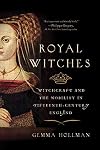
Royal Witches: Witchcraft and the Nobility in Fifteenth-Century England
by Gemma Hollman
On This Page
Description
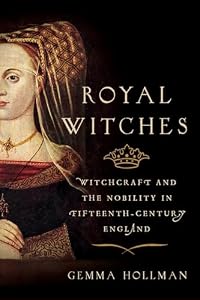
The stories of four royal women, their lives intertwined by family and bound by persecution, unravel the history of witchcraft in fifteenth-century England. Until the mass hysteria of the seventeenth century, accusations of witchcraft in England were rare. However, four royal women, related in family and in court ties-Joan of Navarre, Eleanor Cobham, Jacquetta of Luxembourg and Elizabeth Woodville-were accused of practicing witchcraft in order to kill or influence the king. Some of these show more women may have turned to the "dark arts" in order to divine the future or obtain healing potions, but the purpose of the accusations was purely political. Despite their status, these women were vulnerable because of their gender, as the men around them moved them like pawns for political gains. In Royal Witches, Gemma Hollman explores the lives and the cases of these so-called witches, placing them in the historical context of fifteenth-century England, a setting rife with political upheaval and war. In a time when the line between science and magic was blurred, these trials offer a tantalizing insight into how malicious magic would be used and would later cause such mass hysteria in centuries to come. show lessTags
Recommendations




Member Reviews
Let me preface, "Royal Witches" is not about courtly covens, but an introduction into the lives of four, often forgotten, noble women who were accused of witchcraft.
First is Joan of Navarre, Queen Dowager of England. Fascinating woman. She is accused of witchcraft by her step-son Henry V. She is not imprisoned, but rather has her lands and assets seized to help pay for his war in France. She continues to live in comfort under house arrest, and then released upon his death.
Next is Eleanor Cobham, who has an adulterous affair with Joan's stepson Humphrey, eventually becoming his wife! But in 1431, Roger Bolingbroke, a clerk in Eleanor's household, is on trial for "witchcraft on Eleanor's orders." She's charged by Humphrey's enemies as a show more witch and co-conspirator to murder Henry VI. She isn't executed, but her fate is heartbreaking.
Finally there's Jacquetta of Luxembourg, Eleanor's sister-in-law and her daughter Elizabeth Woodville. Jacquetta had scandalously married Richard Woodville and in turn, Elizabeth shockingly marries the new Edward IV. But in a deadly game of thrones, Richard killed, Edward captured, Elizabeth put under house arrest and Jacquetta is accused of witchcraft. Of course, the most terrifying enemy of all would turn out to be Richard III.
I enjoyed this one more than I thought I would. It's got all the royal drama you'd expect combined with the political machinations of the Hundred Years War and the War of the Roses. It definitely rekindled my love for the subject! show less
First is Joan of Navarre, Queen Dowager of England. Fascinating woman. She is accused of witchcraft by her step-son Henry V. She is not imprisoned, but rather has her lands and assets seized to help pay for his war in France. She continues to live in comfort under house arrest, and then released upon his death.
Next is Eleanor Cobham, who has an adulterous affair with Joan's stepson Humphrey, eventually becoming his wife! But in 1431, Roger Bolingbroke, a clerk in Eleanor's household, is on trial for "witchcraft on Eleanor's orders." She's charged by Humphrey's enemies as a show more witch and co-conspirator to murder Henry VI. She isn't executed, but her fate is heartbreaking.
Finally there's Jacquetta of Luxembourg, Eleanor's sister-in-law and her daughter Elizabeth Woodville. Jacquetta had scandalously married Richard Woodville and in turn, Elizabeth shockingly marries the new Edward IV. But in a deadly game of thrones, Richard killed, Edward captured, Elizabeth put under house arrest and Jacquetta is accused of witchcraft. Of course, the most terrifying enemy of all would turn out to be Richard III.
I enjoyed this one more than I thought I would. It's got all the royal drama you'd expect combined with the political machinations of the Hundred Years War and the War of the Roses. It definitely rekindled my love for the subject! show less
Although this is far from a bad book, the title is a little misleading, in that it's more of an examination of the court politics of the Wars of the Roses from the perspective of the "witches" of the title, particularly Edward IV's wife Elizabeth Woodville. The point here is that eminent women were in a precarious position, particularly if they didn't have an esteemed pedigree backing up their position, so accusations of witchcraft were believable, as what eminent man would marry a woman who was beneath his social status if witchcraft had not been involved; never mind the woman's own quality and character.
Fascinating study of very early medieval women. Witchcraft is not very important in this book...it seems to be just a trope that the author added to bring the stories together. Some of the women were barely accused of witchcraft at all, but anyway, it's an interesting book.
In the 15th century, if there was a rich woman whose wealth you craved, you accused her of witchcraft. Powerful woman in the way of your advancement? Accuse her of witchcraft. Powerful man who you want brought down? Accuse his wife of witchcraft. None of these women were witches, although one did admit to seeking out a wise woman for a charm to help her conceive. What they were, were powerful, rich women who stood in the way of powerful men. Witchcraft was an easy accusation to make, since it’s impossible to prove one didn’t do it.
Joan of Navarre, Eleanor Cobham, Jacquetta of Luxembourg, and Elizabeth Woodville are the women this book examines. The author gives the first two each a section of their own; Jacquetta and Elizabeth, show more being mother and daughter, share the last half of the book. I have to admit; Woodville was the only one I was familiar with. I had never even heard of Cobham. Turns out that they were fairly important to the War of the Roses and how it turned out, yet historians have ignored them.
I found parts of the book riveting, and others lost me. Part of the problem is the fact that so many people had the same names- Henry, Richard, Joan, Elizabeth- that I would have trouble keeping them all straight in my mind. The writing was uneven, too; parts seemed like they could have used a good editor to smooth them out. The strange part, however, is that the book is basically biographies of the four women, and of the men they were attached to, rather than concentrating on the witchcraft aspect. The witchcraft trials are a very small percentage of the book. I give the book four stars. show less
Joan of Navarre, Eleanor Cobham, Jacquetta of Luxembourg, and Elizabeth Woodville are the women this book examines. The author gives the first two each a section of their own; Jacquetta and Elizabeth, show more being mother and daughter, share the last half of the book. I have to admit; Woodville was the only one I was familiar with. I had never even heard of Cobham. Turns out that they were fairly important to the War of the Roses and how it turned out, yet historians have ignored them.
I found parts of the book riveting, and others lost me. Part of the problem is the fact that so many people had the same names- Henry, Richard, Joan, Elizabeth- that I would have trouble keeping them all straight in my mind. The writing was uneven, too; parts seemed like they could have used a good editor to smooth them out. The strange part, however, is that the book is basically biographies of the four women, and of the men they were attached to, rather than concentrating on the witchcraft aspect. The witchcraft trials are a very small percentage of the book. I give the book four stars. show less
I am really tired of monographs fluffed up into books. The amount of actual information about magic and witchcraft during the 15th century and the attitudes toward it, is miniscule. The very little information about the lives of these women in padded out with endless speculation about their emotions along the lines of -- "with her husband gone to war and her children around her X must have felt great anxiety." The author also makes a point of one of her subjects believing in the Trinity--she was a Roman Catholic--of course she believed in the Trinity. That is basis Church doctrine. Why would you throw this random fact into the mix. Disappointing.
Ratings
Members
- Recently Added By
Lists

TBR of Books I Don't Own
132 works; 1 member
Author Information

4 Works 203 Members
Gemma Hollman has a Master's degree in Medieval History from the University of York. She runs the Just History Posts blog and has written for the British Numismatic Journal among other magazines. She lives in England.
Common Knowledge
- People/Characters
- Joan of Navarre, Queen of England; John IV, Duke of Brittany; Henry IV, King of England; Robert Brochereul; Antony Riczi; Humphrey of Lancaster, Duke of Gloucester (show all 31); John of Lancaster, 1st Duke of Bedford; Henry "Hotspur" Percy; Thomas Percy; Constance, Countess of Gloucester; Henry V, King of England; Catherine of Valois, Queen of England; Charles VI, King of France; John V, Duke of Brittany; Henry VI, King of England; Eleanor Cobham, Duchess of Gloucester; Jacqueline of Hainault; Cardinal Henry Beaufort; Master Roger Bolingbroke; John Home; Margery Jourdemaine; Margaret of Anjou, Queen of England; Jacquetta of Luxembourg, Countess Rivers; Richard Woodville, 1st Earl Rivers; Richard Neville, the Earl of Warwick; Jasper Tudor; Elizabeth Woodville, Queen Consort of England; Edward IV, King of England; George Plantagenet, Duke of Clarence; Richard III, King of England; Henry VII, King of England
- Important places
- Clarendon Palace, Clarendon Park, Wiltshire, England; Eltham Palace, Royal Borough of Greenwich, London, England; Rotherhithe, Southwark, London, England; Leeds Castle, Kent, England; La Pleasaunce, Royal Borough of Greenwich, London, England
- Important events
- Hundred Years' War (1337 | 1453); Battle of Shrewsbury (1403-07-21); Battle of Agincourt (1415-10-25); Treaty of Troyes (1420-05-21); Jack Cade's Rebellion (1450); Wars of the Roses (1455 | 1487) (show all 8); Battle of Edgcote Moor (1469-07-24); Battle of Barnet (1471-04-14)
- Epigraph
- Thorowowt a pales as I can passe, I hard a lady make gret mone, And ever she syked and sayd, 'Alas! Alle worldly joy ys from me gone; And alle my frendes from me can fle; Alas! I am fulle woo begon; Alle women may be ware by ... (show all)me. - The Lament of the Duchess of Gloucester
- Dedication
- For Mr Hough and Ms Robinson for encouraging my love of history
- First words
- Before exploring the lives of the four women contained in this book, it is necessary to take a moment to explore what exactly people in the fifteenth century believed about magic and sorcery.
- Last words
- (Click to show. Warning: May contain spoilers.)History will never know. Their stories, however, have now been rescued.
Classifications
- Genres
- History, Nonfiction, General Nonfiction, Religion & Spirituality, Hunting and Fishing, Sports and Leisure, Biography & Memoir
- DDC/MDS
- 133.430820941 — Philosophy and Psychology Parapsychology & occultism Specific topics in parapsychology and occultism Demonology and witchcraft Magic and witchcraft Standard subdivisions
- LCC
- BF1581 .H65 — Philosophy, Psychology and Religion Psychology Occult sciences Witchcraft
- BISAC
Statistics
- Members
- 168
- Popularity
- 192,042
- Reviews
- 5
- Rating
- (3.53)
- Languages
- English
- Media
- Paper, Audiobook, Ebook
- ISBNs
- 10
- ASINs
- 5