On This Page
Description
A messianic blue fox who slips through warrens of time and space on a mysterious mission. A homeless woman haunted by a demon who finds the key to all things in a strange journal. Three ragtag rebels waging an endless war for the fate of the world against a ruthless corporation. A raving madman who wanders the desert lost in the past, haunted by his own creation: an invisible monster whose name he has forgotten and whose purpose remains hidden. Jeff Vandermeer's Dead Astronauts presents a show more City with no name of its own where, in the shadow of the all-powerful Company, lives human and otherwise converge in terrifying and miraculous ways. At stake: the fate of the future, the fate of Earth--all the Earths." -- show lessTags
Recommendations



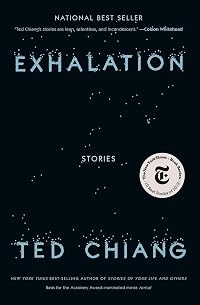
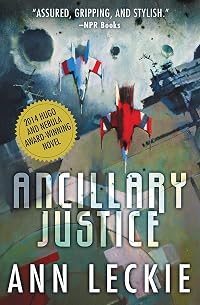
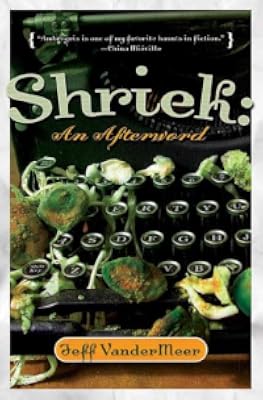
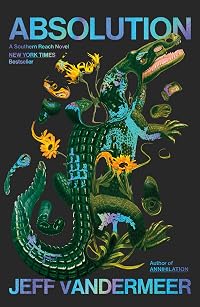




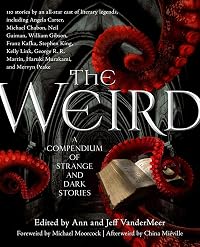
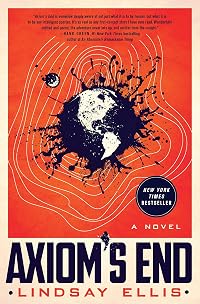


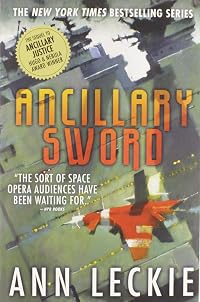
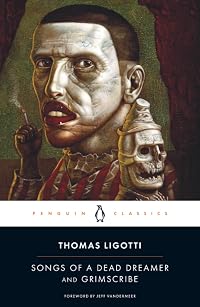
Member Recommendations

Member Reviews
Good news, VanderMeer fans!
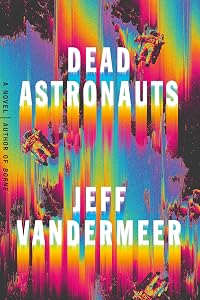
Just look at that cover and imagine, if you will, a book just like a massive acid trip filled with disjointed alternate realities, or reality versions, where men and hybrids, monsters, demons (or daemons), foxes, Shrodinger's ducks, and spawning pools populate your colorful biotech apocalypse.
And then know that the real trip lies within these pages, not on the cover.
I say good news for other reasons, however. It's not merely a nightmare of continuity issues, melding and morphing bodies, strained, molded, and transformed identities made from beasties, cold scientists, and long-lived leviathans who have forgotten their own stories.
The core of the text DOES have a major theme, if not anything more than a show more remotely identifiable plot. Of course, you might find one if you are a massive wall-charter, handy with yarn, have access to revisionary transparent overlays, and you maintain a hearty respect for novels that triples as a prequel to Borne, a contemporary, and a sequel.
I happen to love the theme. By the end of the novel, I'm rocking hard to it. It's tragic, obvious, and it truly condemns the three reality-hopping astronauts from the beginning of the tale. (The same dead three we see from Borne.)
Or, of course, any prospective reader would do just as well to sit back and relax into the brilliant, wild, and totally freaky imagery. Just trip balls. Open your mind, man.
I would love to see someone do a scholarly analysis of this s**t. show less
Just look at that cover and imagine, if you will, a book just like a massive acid trip filled with disjointed alternate realities, or reality versions, where men and hybrids, monsters, demons (or daemons), foxes, Shrodinger's ducks, and spawning pools populate your colorful biotech apocalypse.
And then know that the real trip lies within these pages, not on the cover.
I say good news for other reasons, however. It's not merely a nightmare of continuity issues, melding and morphing bodies, strained, molded, and transformed identities made from beasties, cold scientists, and long-lived leviathans who have forgotten their own stories.
The core of the text DOES have a major theme, if not anything more than a show more remotely identifiable plot. Of course, you might find one if you are a massive wall-charter, handy with yarn, have access to revisionary transparent overlays, and you maintain a hearty respect for novels that triples as a prequel to Borne, a contemporary, and a sequel.
I happen to love the theme. By the end of the novel, I'm rocking hard to it. It's tragic, obvious, and it truly condemns the three reality-hopping astronauts from the beginning of the tale. (The same dead three we see from Borne.)
Or, of course, any prospective reader would do just as well to sit back and relax into the brilliant, wild, and totally freaky imagery. Just trip balls. Open your mind, man.
I would love to see someone do a scholarly analysis of this s**t. show less
Most reviews of Jeff VanderMeer’s Dead Astronauts begin by making it somehow the story of Grayson, a black woman who returns from a disastrous interstellar mission to find the Earth filled with genetically engineered mutants, including a shapeshifting moss that becomes her lover. As she moves through space and time, she meets many creatures to be pitied and feared. There is Chen, who is subsumed by mathematics. There is Charlie X, an abused bat-faced boy, who grows up to create monsters, and there is Botch, a giant salamander who once was human. A biotech organization, known only as The Company, seems to be responsible for it all.
Yet the novel does not begin with Grayson or The Company but with a chapter titled: “v. 1. The Dream of show more the Blue Fox,” and it ends with the suggestion that Grayson, Chen, and Moss-Sarah may be a seventh instantiation of the incrementally reiterative dream song of the genetically engineered Blue Fox. The poetry of that song is a key to the structure of the novel’s fragmented narrative and its ecological message.
The novel is certainly a stylistic tour de force and worth an attentive reading. It will get five stars from those who don’t mind its literary flourishes—as it does from me. show less
Yet the novel does not begin with Grayson or The Company but with a chapter titled: “v. 1. The Dream of show more the Blue Fox,” and it ends with the suggestion that Grayson, Chen, and Moss-Sarah may be a seventh instantiation of the incrementally reiterative dream song of the genetically engineered Blue Fox. The poetry of that song is a key to the structure of the novel’s fragmented narrative and its ecological message.
The novel is certainly a stylistic tour de force and worth an attentive reading. It will get five stars from those who don’t mind its literary flourishes—as it does from me. show less
I adore Jeff VanderMeer; the Area X series was one of my fiction favourites from the last decade. So it was with some trepidation that I thought, for the first half of Dead Astronauts, that he might finally have written something *too* weird for me.
Thankfully, it all came together at the end.
Not in that it became less weird. At all. What happens to who in what order where is still almost completely open for interpretation.
But what looked like formlessness (beautifully written highly experimental formlessness, but still formlessness) for the first half of the book shifted:
In the first half (roughly), the story centres on the humans. Humans fighting humans, humans in human institutions, humans fighting against evil institutions, evil show more human institutions doing evil things, and the destruction of the world this brings about. Terrible things happen to the world (/environment), terrible things are done to animals (who become monsters), but the narrative focus is still almost entirely on humans: human motivations, human weaknesses, human bongs, individual human beings. And the story here is like a fever dream, or a hallucination: nothing makes sense. The story has dream logic.
Then the blue fox starts talking. Which I know doesn't sound like a radical departure from hallucinations or dream logic. But when it does, it becomes very clear what's been missing: this isn't a human story, a humans-vs.-humans story. It's a humans vs. world story, and the world--mostly but not exclusively the animals--that have been figured in this novel to that point as ground, as setting, as object, have in fact been watching, evaluating, and judging the humans the whole damned time.
The portion of the book on the blue fox is absolutely the highlight of the book, too.
My take (and I realize that something this experimental and open to interpretation lends itself to many mistaken interpretations, but still) is that in VanderMeer's ongoing efforts to fictionalize and story-tell about the 21st century predicament of ecological collapse, portrayed in Borne as the fairly transparent City & Company allegory, here is continued and then challenged by narrative perspectives completely outside of and foreign to both the City and the Company, even as both the City and the Company conceive of themselves as the only parts of the world with meaning and agency.
To the extent that something of value is found in people, in individual human characters, it's something VanderMeer also finds in his non-human characters. It is not human exceptionalism. Most of his human characters aren't even fully human, or human at all as we would understand it. And there are no heroes.
Anyway: I really liked it by the end, even though I wasn't sure for the first half of the book whether it would ever resolve into something that I could even form an opinion about. But do be warned: Dead Astronauts is an entire novel written like the very weirdest parts of the Area X series got high. If you need predictable quantities of sense, narrative logic, internal consistency, and a graspable plot in your novels, you are not likely to love this book.
If you can appreciate an author trying to create narrative techniques that might encompass the scale of what we are doing to this planet, you might love it. show less
Thankfully, it all came together at the end.
Not in that it became less weird. At all. What happens to who in what order where is still almost completely open for interpretation.
But what looked like formlessness (beautifully written highly experimental formlessness, but still formlessness) for the first half of the book shifted:
In the first half (roughly), the story centres on the humans. Humans fighting humans, humans in human institutions, humans fighting against evil institutions, evil show more human institutions doing evil things, and the destruction of the world this brings about. Terrible things happen to the world (/environment), terrible things are done to animals (who become monsters), but the narrative focus is still almost entirely on humans: human motivations, human weaknesses, human bongs, individual human beings. And the story here is like a fever dream, or a hallucination: nothing makes sense. The story has dream logic.
Then the blue fox starts talking. Which I know doesn't sound like a radical departure from hallucinations or dream logic. But when it does, it becomes very clear what's been missing: this isn't a human story, a humans-vs.-humans story. It's a humans vs. world story, and the world--mostly but not exclusively the animals--that have been figured in this novel to that point as ground, as setting, as object, have in fact been watching, evaluating, and judging the humans the whole damned time.
The portion of the book on the blue fox is absolutely the highlight of the book, too.
My take (and I realize that something this experimental and open to interpretation lends itself to many mistaken interpretations, but still) is that in VanderMeer's ongoing efforts to fictionalize and story-tell about the 21st century predicament of ecological collapse, portrayed in Borne as the fairly transparent City & Company allegory, here is continued and then challenged by narrative perspectives completely outside of and foreign to both the City and the Company, even as both the City and the Company conceive of themselves as the only parts of the world with meaning and agency.
To the extent that something of value is found in people, in individual human characters, it's something VanderMeer also finds in his non-human characters. It is not human exceptionalism. Most of his human characters aren't even fully human, or human at all as we would understand it. And there are no heroes.
Anyway: I really liked it by the end, even though I wasn't sure for the first half of the book whether it would ever resolve into something that I could even form an opinion about. But do be warned: Dead Astronauts is an entire novel written like the very weirdest parts of the Area X series got high. If you need predictable quantities of sense, narrative logic, internal consistency, and a graspable plot in your novels, you are not likely to love this book.
If you can appreciate an author trying to create narrative techniques that might encompass the scale of what we are doing to this planet, you might love it. show less
I found the first 2/3 of the book phenomenal and riveting. Vandermeer did an exquisite job communicating the disorientation and time confusion the 'astronauts' were experiencing from trying over and over again, caught not necessarily in a time loop, but moreso aware of past lives/attempts to beat the Company. And failing over and over. The confusion and scheming and hope and despair. Such visceral feelings. And then the narrative transitioned to other perspectives -- beings that, in previous books, were peripheral characters. This world is more than The City, The Company, and the humans: turns out "peripheral players" were actually major players.
I always find Jeff VanderMeer's writing interesting and worthwhile, and was prepared to call his "Annihilation" the best genre novel of its year of publication. So, you might ask, you're saying that "Dead Astronauts" is not the best genre novel of its year of publication? Pretty much. Don't get me wrong, VanderMeer's prose can be lyric verging on the poetic and portions of this book read with the kick of a creation myth. However, the man has taken on another hard task, trying to capture what being caught in an indeterminate state between universes would feel like, taking you again up to the edge of what can be comprehended. Maybe I'm just not smart enough to get it this time, or maybe 2020 does not leave me in the state of mind for this show more level of surrealism. Still, if you're looking for a Zen koan of a story to chew over, have at it. show less
The cover of this book (I won't call it a novel) must have a mention. It's gorgeous to see in person, it's gorgeous to see in pictures, it's gorgeous to touch.
Note above that I feel I can't call it a novel. The book reads like poetry, like a novel length work of prose verse. Rhythm, imagery, repetition, and thematic overtures take precedence over the story. There is a narrative, but it is spun fine and cast wide like a net.
Borne (the previous book set in the same multiverse post apocalypse) followed a tight character arc. Yes there was crazy biotech mutant apocalypse stuff, yes a floating golden bear the size of a building, and enormous monster warfare, but at its heart Borne was a story of found family: a young couple struggling to show more navigate the changes in their relationship caused by the addition of a "child" (in this case, a blob monster child that grows to the size of cities) while dealing with their own baggage (enormous vast trauma). It is a personal story with wild, multi hued surrealist trappings.
DEAD ASTRONAUTS is very far from Borne. There is no close character arc, no diving into a layered emotional journey. If anything, it is almost an esoteric tribute to angry cosmic magical foxes who want to eliminate humanity for fairly good reasons, the landscape populated by dead astronauts and lost women who drift disconsaltely in and out of the narrative.
Is it good? Sure.
Is it a novel? Not... Really.
Is it a sequel? Sort of?
Woul I recommend it? Yes, but not as an entry point to Vandermeer. Best to read Borne first, or better yet, Annihilation and THEN Borne. It may also help if you enjoy poetry / free verse / novels in verse. show less
Note above that I feel I can't call it a novel. The book reads like poetry, like a novel length work of prose verse. Rhythm, imagery, repetition, and thematic overtures take precedence over the story. There is a narrative, but it is spun fine and cast wide like a net.
Borne (the previous book set in the same multiverse post apocalypse) followed a tight character arc. Yes there was crazy biotech mutant apocalypse stuff, yes a floating golden bear the size of a building, and enormous monster warfare, but at its heart Borne was a story of found family: a young couple struggling to show more navigate the changes in their relationship caused by the addition of a "child" (in this case, a blob monster child that grows to the size of cities) while dealing with their own baggage (enormous vast trauma). It is a personal story with wild, multi hued surrealist trappings.
DEAD ASTRONAUTS is very far from Borne. There is no close character arc, no diving into a layered emotional journey. If anything, it is almost an esoteric tribute to angry cosmic magical foxes who want to eliminate humanity for fairly good reasons, the landscape populated by dead astronauts and lost women who drift disconsaltely in and out of the narrative.
Is it good? Sure.
Is it a novel? Not... Really.
Is it a sequel? Sort of?
Woul I recommend it? Yes, but not as an entry point to Vandermeer. Best to read Borne first, or better yet, Annihilation and THEN Borne. It may also help if you enjoy poetry / free verse / novels in verse. show less
I think 'Dead Astronauts' is set in the same world as [b:Borne|31451186|Borne (Borne #1)|Jeff VanderMeer|https://i.gr-assets.com/images/S/compressed.photo.goodreads.com/books/1477487850l/31451186._SX50_.jpg|48253660], or rather a set of worlds like it. This setting is post-apocalyptic, as the world (or all of it that the reader sees) has been ruined by pollution generated by the Company's biotech experiments. 'Dead Astronauts' doesn't have a plot so much as a series of different perspectives on this apocalyptic collapse, which occurred across multiple (all?) alternate universes. The novel is told as a prose poem, employing various stylistic conceits to convey the weirdness of this destroyed world and its altered inhabitants. I think show more some of these conceits worked better than others. The pages of repetition were not to my taste, as they wore away the impact of the sentence sequence being repeated rather than reinforcing it. I preferred the version numbers in the margins, which reinforced the disconcerting instability of reality. Vandermeer definitely conveys this well and the trauma of the biotech experiments is likewise effective. There is a great deal of atmosphere in this book, but not much more than that. Ultimately I found the fragmentary nature of the narrative unsatisfying, despite appreciating the strange details and nonhuman perspectives. Most of the book slipped from my mind as soon as I'd read it, but one element will definitely remain: the terrifying duck. show less
Members
- Recently Added By
Lists

Top Five Books of 2020
982 works; 350 members

Top Five Books of 2021
604 works; 181 members

Kirkus Starred Fiction Reviews of Books Published in 2019
411 works; 12 members

Books Read in 2020
4,379 works; 124 members

Books Read in 2021
5,361 works; 114 members
Author Information

162+ Works 39,535 Members
Jeffrey Scott VanderMeer was born in Bellefonte, Pennsylvania on July 7, 1968. He is an editor, writer, teacher, and publisher. He is the founding editor and publisher of the Ministry of Whimsy Press. He is the author of several books including City of Saints, Madmen, Finch, and The Southern Reach Trilogy. His novel Annihilation won the Nebula show more Award for Best Novel in 2014. (Bowker Author Biography) show less
Some Editions
Awards and Honors
Awards
Distinctions
The Guardian Book of the Day (2020-01-16)
Series

Common Knowledge
- Original publication date
- 2019-12-03
- Epigraph
- And when I dream
I keep my promises to you
I really do.
—HOT SNAKES - Dedication
- For Ann, always, across all the worlds
- Original language
- English
Classifications
Statistics
- Members
- 1,018
- Popularity
- 25,582
- Reviews
- 30
- Rating
- (3.40)
- Languages
- English, French
- Media
- Paper, Audiobook, Ebook
- ISBNs
- 15
- ASINs
- 4