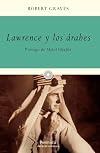
Lawrence and the Arabs
by Robert Graves 
On This Page
Description
T. E. Lawrence began his lifelong affair with the Middle East as a student at Oxford, taking a four-month walking tour of Syria to study the Crusaders' castles. He later returned to the area as an archaeologist and was attached to British Army Intelligence in Egypt at the outbreak of World War I. In 1916, he set out on his greatest adventure: with no backing, Lawrence joined Arab forces facing almost insurmountable odds in a rebellion against Turkish domination. His brilliance as a show more desert-war strategist made him a hero among the Arabs and a legend throughout the world, earning him the moniker "Lawrence of Arabia." But his near-pathological dislike of publicity led him to a life of self-imposed obscurity as T. E. Shaw, anonymous RAF soldier. This is the official biography of a unique leader of men whose larger-than-life presence still echoes. show lessTags
Recommendations























Member Reviews
Many details about T.E. Lawrence are well-known, but there is still some interesting information to be gleaned in Graves' book, published in 1928. Lawrence is best known for his role in helping the Arabs against the Ottoman Empire, the main subject of this work. Lawrence chose Emir Faisal, the son of Sharif Hussein, to lead the Arab Revolt. And it was Faisal who asked Lawrence to wear Arab costume because his men associated khaki with Turkish soldiers.
Graves' writing tends towards the dated style that is quite dry, but it is clear, without resorting to promotion of his friend, although he clearly thought highly of the very talented Lawrence. In fact, his friendship with Lawrence meant he was able to write more knowledgeably about him. show more A lot of the military manoeuvres were less interesting to me and at times difficult to follow, but necessary to understand events then and later. He was an exceptional strategist making him a hero with Arab forces and legend throughout the world.
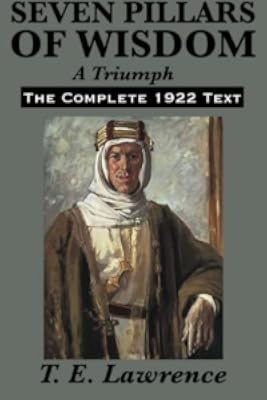
There is an interesting section about Lawrence's life after the Arab Revolt when he joined the RAF, and his interest in motor cycles. There is no doubt that Lawrence had a magnetic personality. This section includes information about his work Seven Pillars of Wisdom and the shorter version Revolt in the Desert. The former, was written as a record of the Revolt, not meant for popular publication.
A snippet of information from another source reports that Lawrence gave a copy of Graves' book to his commanding officer, Sydney Smith. He had pencilled in over 30 amendments, and advised Smith with typical modesty "Do not take Graves' book as very true!". This copy sold for £7200 at auction in 2010. show less
Graves' writing tends towards the dated style that is quite dry, but it is clear, without resorting to promotion of his friend, although he clearly thought highly of the very talented Lawrence. In fact, his friendship with Lawrence meant he was able to write more knowledgeably about him. show more A lot of the military manoeuvres were less interesting to me and at times difficult to follow, but necessary to understand events then and later. He was an exceptional strategist making him a hero with Arab forces and legend throughout the world.
There is an interesting section about Lawrence's life after the Arab Revolt when he joined the RAF, and his interest in motor cycles. There is no doubt that Lawrence had a magnetic personality. This section includes information about his work Seven Pillars of Wisdom and the shorter version Revolt in the Desert. The former, was written as a record of the Revolt, not meant for popular publication.
A snippet of information from another source reports that Lawrence gave a copy of Graves' book to his commanding officer, Sydney Smith. He had pencilled in over 30 amendments, and advised Smith with typical modesty "Do not take Graves' book as very true!". This copy sold for £7200 at auction in 2010. show less
I really wanted to like this book. It's about a fascinating character, written by one of my favorite authors--a personal friend of Lawrence's. And I did like parts: the beginning and the end when Graves talked about Lawrence's early life and his life after the WWI campaign with the Arabs. The middle sagged and I found myself skimming over the blow by blow descriptions of (it felt like) nearly every raid or battle that Lawrence engaged in with the Arab uprising. The writing and history were as dry as the desert setting with only an occasional oasis of passion or insight into the major players. I wanted to know what motivated and inspired Lawrence and his Arab friends and foes. What I got was narrative that sounded like it came from field show more reports. I like biography and read a lot of it. I think Graves' version of Lawrence's life suffers from his personal friendship. I felt he held back. show less
Good Book, His life ecompassed so much more than the movie, but then we should have known that to begin with.....
Ratings
Members
- Recently Added By
Author Information

259+ Works 40,616 Members
Robert Graves (also known as Robert Ranke Graves) was born in 1895 in London and served in World War I. Goodbye to All That: an Autobiography (1929), was published at age thirty three, and gave a gritty portrait of his experiences in the trenches. Graves edited out much of the stark reality of the book when he revised it in 1957. Although his most show more popular works, I, Claudius (1934) and its sequel, Claudius the God and His Wife Messalina (1935), were produced for television by the BBC in 1976 and seen in America on Masterpiece Theater, he was also famous as a poet, producing more than 50 volumes of poetry. Graves was awarded the 1934 James Tait Black Memorial Prize for both I, Claudius and Claudius the God. Also a distinguished academic, Graves was a professor of English in Cairo, Egypt, in 1926, a poetry professor at Oxford in the 1960s, and a visiting lecturer at universities in England and the U.S. He wrote translations of Greek and Latin works, literary criticism, and nonfiction works on many other topics, including mythology and poetry. He lived most of his life in Majorca, Spain, and died after a protracted illness in 1985. (Bowker Author Biography) show less
Robert Graves has a Legacy Library. Legacy libraries are the personal libraries of famous readers, entered by LibraryThing members from the Legacy Libraries group.
Series
Belongs to Publisher Series
Florin Books (60)
Common Knowledge
- Original title
- Lawrence and the Arabs
- Alternate titles
- Lawrence and the Arabian Adventure
- Original publication date
- 1927
- People/Characters
- T. E. Lawrence
- Important places
- Middle East
- Important events
- World War I (1914 | 1918); Arab Revolt (1916 | 1918)
Classifications
- Genres
- Biography & Memoir, History, Nonfiction, General Nonfiction
- DDC/MDS
- 940.4150924 — History & geography History of Europe History of Europe Military History Of World War I Operations And Units Asia
- LCC
- D568.4 .L45 .G7 — History of Europe, Asia, Africa and Oceania History (General) World War I (1914-1918)
- BISAC
Statistics
- Members
- 239
- Popularity
- 136,594
- Reviews
- 3
- Rating
- (3.89)
- Languages
- Czech, English, French, Spanish
- Media
- Paper, Audiobook, Ebook
- ISBNs
- 22
- UPCs
- 1
- ASINs
- 16