
The Nigger of the Narcissus
by Joseph Conrad
On This Page
Description
Often overlooked because of its controversial title, this novel from Joseph Conrad features a black West Indian protagonist, James Wait, who serves as a sailor on the merchant vessel known as Narcissus. Wait is overcome with illness on the voyage from Bombay to London, and the crew's reaction to his condition speaks volumes about differences in social class, psychology, and culture. A must-read for fans of maritime adventure tales, as well as for readers who appreciate Conrad's finely show more observed insights into human nature.. show less
Tags
Recommendations




































Member Reviews
A voyage from East to West. A voyage through life. A voyage into eternity. Conrad takes the reader along all three journeys. Along with Lord Jim, I feel The Nigger of "Narcissus" captures the author at his height and in his most pure form. Another one of his shorter works, a novella, The Nigger of the "Narcissus" condenses into just over a hundred or so pages the style and preoccupations that will characterize most of his later work. The shifting perspectives, the psychological observations, and, here, also, the notations about how shipboard crews meet and splinter, only tied by vague remembrances of endless voyages. Still, each journey in the age of sail has its own unique personality, something that is yielded from the men who man the show more decks, go aloft, steady the wheel, and issue commands. It is a living breathing organism. That is why there is no central protagonist, other than perhaps The Narcissus herself. The title character, the "Nigger of the Narcissus" is James Wait, a black seaman around whom the constellation of shipmates gather and in turn criticize, suspect, and find fault, before coming to realize that his journey, the final one through life, is one each must make in his own time. Alas, it is true for the reader as well. Thus the novel has a sense of the cosmic about it. All supported by the at times lyrical nature of the prose. And, too, there are times when Conrad joins hands with Kipling, in this story, when depicting lives heretofore unacknowledged and often discarded. In this work, they all live and breathe together, and give The Narcissus a sense of mission, a vital organism if only for a few months before the ship takes on a new lot and the former crew disbands to new duties ashore or aboard new vessels. show less
St. Bart's 2015 #10 - the final book of this year's vacation.....one I felt I had to almost hide in the plane flight home as I finished it, due to its less than politically correct title. This is one of those that I have always wondered about due to its startling title, and it is about just what it says it is, the 'nigger' on the crew of the sailing ship 'Narcissus.'. Actually, it's about what his presence onboard did to disrupt the already shaky psyche and hierarchy of a rough & tumble, ragtag sailing crew.
Conrad is an amazing author, especially when you learn that English was his second language, yet he wrote his books in English. The beautifully descriptive prose describing the power of the sea, the beauty of the sea, what the show more isolation of the sea does to men's minds, and the fury of a Cape of Good Hope storm are quite remarkable, especially coming from the pen of a Polish sailor. He brilliantly captured the humanity of these crusty, hardworking inhabitants of this ship, and makes one realize that anyone who would venture onto these ships were truly special people. Not the most exciting book I ever read, although the storm was gripping, but the insight to the life of a sailor was well worth the read. And of course the racial tensions on board are somewhat intense, but presented in a way that the bigots are the bad guys, which I thinks was Conrad's point. Definitely worth the time! show less
Conrad is an amazing author, especially when you learn that English was his second language, yet he wrote his books in English. The beautifully descriptive prose describing the power of the sea, the beauty of the sea, what the show more isolation of the sea does to men's minds, and the fury of a Cape of Good Hope storm are quite remarkable, especially coming from the pen of a Polish sailor. He brilliantly captured the humanity of these crusty, hardworking inhabitants of this ship, and makes one realize that anyone who would venture onto these ships were truly special people. Not the most exciting book I ever read, although the storm was gripping, but the insight to the life of a sailor was well worth the read. And of course the racial tensions on board are somewhat intense, but presented in a way that the bigots are the bad guys, which I thinks was Conrad's point. Definitely worth the time! show less
With such a title, we need to at least ask, is this book racist? Well, yes, in a sort of casual way. It's titled nigger is clearly the Other, someone from the heart of darkness, but we're all connected to that darkness. He is merely here to symbolize it, and in this earlier time, a writer was allowed to help him do so by being Black. I think Čapek's War with the Newts and R. U. R. are probably racist as well and they don't have any actual races in it. But it's a literary racism which invokes our inner racism--our sense of the one who is not like us--and therefore, perhaps, evil. And at the same time, connected to us. The world is a complicated place. We are at its mercy.
Jimmie isn't a team player. He demands special privileges and he show more will manipulate to get them; in this case, by claiming he hasn't much longer to live, though he doesn't really believe it to be true. I think the captain believed it to be true in some larger sense and thus let himself be manipulated because of this greater truth which is borne out in the end.
That's what this book is about. On one level it's a detailed realistic yarn of the life of The Sea. Conrad had been that guy and knows how it goes. But it's also about being a human, helpless against the larger forces. And about bonding with other humans who share our fate. Or, in Jimmie's case, not doing so.
And we also have the cook who takes a more traditional religious view of the situation and tries to save Jimmie and the rest of us as well. I say "us" as if I was on the ship. Conrad's narrator was both on the ship and also privy to what happened when he wasn't around, so I can say "us" if I want to. I can elect to be one of these humans, sometimes murderously enraged about some imagined (or real) injury, at other times willing to risk my life for others. Conrad is good with the moment to moment changes in personal feelings, in how the terror of death can unite us or divide us or trivialize all that came before or all that would come later.
So it's that kind of book. Sometimes, I enjoyed it and at other times found it annoyingly over-written and old fashioned. Sometimes the casual racism angered me. But I appreciated Conrad's skill. Heart of Darkness, though, was better. show less
Jimmie isn't a team player. He demands special privileges and he show more will manipulate to get them; in this case, by claiming he hasn't much longer to live, though he doesn't really believe it to be true. I think the captain believed it to be true in some larger sense and thus let himself be manipulated because of this greater truth which is borne out in the end.
That's what this book is about. On one level it's a detailed realistic yarn of the life of The Sea. Conrad had been that guy and knows how it goes. But it's also about being a human, helpless against the larger forces. And about bonding with other humans who share our fate. Or, in Jimmie's case, not doing so.
And we also have the cook who takes a more traditional religious view of the situation and tries to save Jimmie and the rest of us as well. I say "us" as if I was on the ship. Conrad's narrator was both on the ship and also privy to what happened when he wasn't around, so I can say "us" if I want to. I can elect to be one of these humans, sometimes murderously enraged about some imagined (or real) injury, at other times willing to risk my life for others. Conrad is good with the moment to moment changes in personal feelings, in how the terror of death can unite us or divide us or trivialize all that came before or all that would come later.
So it's that kind of book. Sometimes, I enjoyed it and at other times found it annoyingly over-written and old fashioned. Sometimes the casual racism angered me. But I appreciated Conrad's skill. Heart of Darkness, though, was better. show less
The subject of this novella—a story that takes place almost exclusively aboard a ship bound from Bombay to London—refuses to work, claiming he is dying. Is he telling the truth? Another major character refuses to work simply because he is lazy. How the crew deals with these two men is the subject of Conrad’s work. Life at sea as a microcosm of life on land. There is far too much nautical terminology; my edition was insufficient help and so gave up and just plowed through, often not quite understanding what all the words or terms or phrases meant. In the end, though some of the understanding would have helped, it was not terribly important. And in the end, whether James Wait (the eponymous “nigger”) is shamming or not is almost show more predictable. Almost. And again, it doesn’t matter. What matters is the crew’s reaction—because in each one’s reaction, you learn the crew and in the crew you learn the world. Not one of his best books, but certainly by far the one most intimately about the sea and how it affects men. Definitely worth the time. show less
A masterpiece of characterization inside a rich and graphic adventure, The Nigger of the "Narcissus" recounts a single passage of a cargo ship, a passage in which the main drama, despite a storm that nearly un-masts her, surrounds a black sailor who may be sick or may be goldbricking. That might sound thin, but it's plenty in the hands of a master story-teller.
Not his best, but very good.
Not his best, but very good.
The crew of a merchant ship forms a bond with a dying West Indian sailor, James Wait, said bond strengthened by the man’s refusal to admit that he is dying.
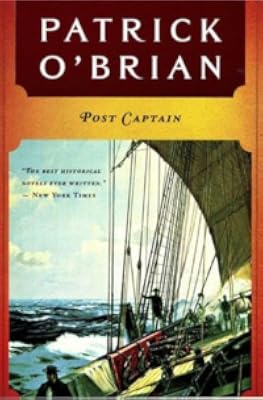
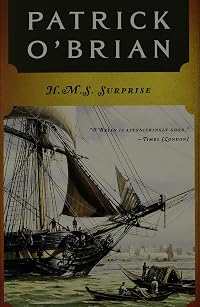
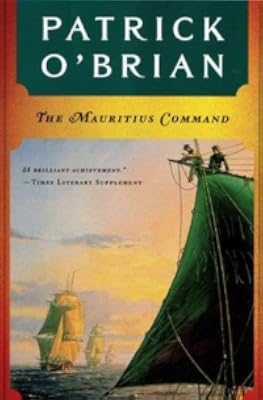
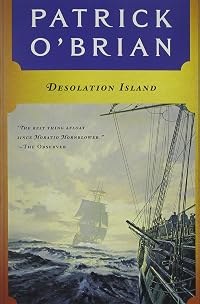
I haven't read many nautical books, save for the Aubrey/Maturin novels. Nevertheless, I don’t believe I will read a better account of a sea voyage, save for Conrad himself. I still have a lot of his novels to work to read.
I haven't read many nautical books, save for the Aubrey/Maturin novels. Nevertheless, I don’t believe I will read a better account of a sea voyage, save for Conrad himself. I still have a lot of his novels to work to read.
From The Cambridge Introduction to Joseph Conrad (2006):
"The unfortunately titled The Nigger of the 'Narcissus' (title Children of the Sea in the first American edition) is Conrad's best work of his early period. In fact, were it not for the book's title, it undoubtedly would be read more often than it is currently. At one time, it was one of Conrad's most frequently read books. In part because of its brevity, in part because of its adventure qualities, and in part because of its literary qualities, the novel used to attract a good deal of attention."
Of all the Conrad I've read thus far this is the most purely entertaining, encapsulating what I imagine as the essence of Conrad - a dark brooding sea story of adventure with cantankerous show more old sea salts, shifty sailors and stern captains. Unlike many of his works, the theme is not so subtle that one needs a professor in literature to explain it. The plot is straightforward and easy to follow and the characters are fully realized. The storm scene is one of the best of its type I have ever read.
--Review by Stephen Balbach, via CoolReading (c) 2008 cc-by-nd show less
"The unfortunately titled The Nigger of the 'Narcissus' (title Children of the Sea in the first American edition) is Conrad's best work of his early period. In fact, were it not for the book's title, it undoubtedly would be read more often than it is currently. At one time, it was one of Conrad's most frequently read books. In part because of its brevity, in part because of its adventure qualities, and in part because of its literary qualities, the novel used to attract a good deal of attention."
Of all the Conrad I've read thus far this is the most purely entertaining, encapsulating what I imagine as the essence of Conrad - a dark brooding sea story of adventure with cantankerous show more old sea salts, shifty sailors and stern captains. Unlike many of his works, the theme is not so subtle that one needs a professor in literature to explain it. The plot is straightforward and easy to follow and the characters are fully realized. The storm scene is one of the best of its type I have ever read.
--Review by Stephen Balbach, via CoolReading (c) 2008 cc-by-nd show less
Members
- Recently Added By
Lists

Best Sea Stories
33 works; 5 members

Ocean Setting
33 works; 5 members

"We" narration
49 works; 2 members

Conrad ranked
16 works; 2 members

Book Titles Mentioned In Newberry Medal And Honor Books
884 works; 3 members

Books Read in 2006
424 works; 8 members

Read in 2006
140 works; 1 member
Author Information

730+ Works 91,441 Members
Joseph Conrad is recognized as one of the 20th century's greatest English language novelists. He was born Jozef Konrad Nalecz Korzeniowski on December 3, 1857, in the Polish Ukraine. His father, a writer and translator, was from Polish nobility, but political activity against Russian oppression led to his exile. Conrad was orphaned at a young age show more and subsequently raised by his uncle. At 17 he went to sea, an experience that shaped the bleak view of human nature which he expressed in his fiction. In such works as Lord Jim (1900), Youth (1902), and Nostromo (1904), Conrad depicts individuals thrust by circumstances beyond their control into moral and emotional dilemmas. His novel Heart of Darkness (1902), perhaps his best known and most influential work, narrates a literal journey to the center of the African jungle. This novel inspired the acclaimed motion picture Apocalypse Now. After the publication of his first novel, Almayer's Folly (1895), Conrad gave up the sea. He produced thirteen novels, two volumes of memoirs, and twenty-eight short stories. He died on August 3, 1924, in England. (Bowker Author Biography) show less
Some Editions
Series
Belongs to Publisher Series
Work Relationships
Is contained in
Has as a student's study guide
Common Knowledge
- Canonical title
- The Nigger of the Narcissus
- Original title
- The Nigger of the 'Narcissus'
- Alternate titles
- Children of the Sea
- Original publication date
- 1897
- People/Characters
- James Wait
- Dedication
- To Edward Garnett
this tale about my friends of the sea - Original language
- English
- Disambiguation notice
- This edition contains only the story of the title. Do not combine with editions that also include other stories, eg, Penguin Modern Classics edition (with Typhoon and other stories).
Classifications
Statistics
- Members
- 1,033
- Popularity
- 25,203
- Reviews
- 12
- Rating
- (3.67)
- Languages
- 15 — Danish, Dutch, English, Estonian, Finnish, French, German, Hungarian, Italian, Norwegian (Bokmål), Portuguese, Russian, Spanish, Swedish, Turkish
- Media
- Paper, Audiobook, Ebook
- ISBNs
- 116
- UPCs
- 1
- ASINs
- 60