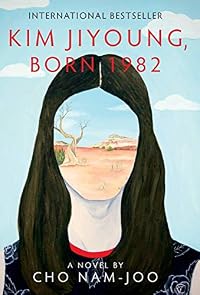
Kim Jiyoung, Born 1982
by Cho Nam-Joo
On This Page
Description
A New York Times Editors Choice SelectionA global sensation, Kim Jiyoung, Born 1982 "has become...a touchstone for a conversation around feminism and gender" (Sarah Shin, Guardian).
One of the most notable novels of the year, hailed by both critics and K-pop stars alike, Kim Jiyoung, Born 1982 follows one woman's psychic deterioration in the face of rampant misogyny. In a tidy apartment on the outskirts of Seoul, millennial "everywoman" Kim Jiyoung spends her days caring for her infant show more daughter. But strange symptoms appear: Jiyoung begins to impersonate the voices of other women, dead and alive. As she plunges deeper into this psychosis, her concerned husband sends her to a psychiatrist. Jiyoung narrates her story to this doctor—from her birth to parents who expected a son to elementary school teachers who policed girls' outfits to male coworkers who installed hidden cameras in women's restrooms. But can her psychiatrist cure her, or even discover what truly ails her? "A social treatise as well as a work of art" (Alexandra Alter, New York Times), Kim Jiyoung, Born 1982 heralds the arrival of international powerhouse Cho Nam-Joo. show less
Tags
Recommendations










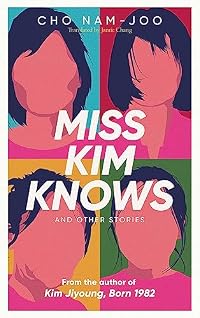




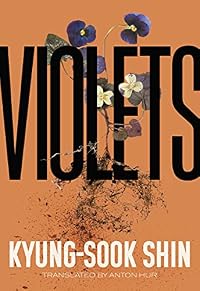
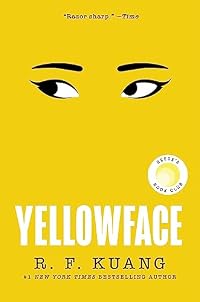

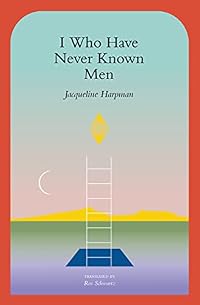


Member Recommendations
Member Reviews
Kim Jiyoung, Born 1982 by Cho Nam-Joo is a deeply moving and thought-provoking novel that sheds light on the everyday struggles of women in South Korea.
It follows Kim Jiyoung, a seemingly ordinary woman whose life is shaped by societal expectations, workplace discrimination, and gender-based limitations. Translated by Jamie Chang, the book offers a powerful portrayal of how normalised sexism leads to emotional and psychological breakdowns.
What stands out is the blend of fiction with real statistics, exposing the harsh realities many women face. I once believed South Korean women had more freedom than Indian women, but this book challenged that perception. The narrative is subtle yet impactful, never preachy, and leaves space for show more reflection.
Short, fast-paced, and incredibly hard-hitting, this book is unputdownable. I believe Kim Jiyoung, Born 1982, is a must-read for everyone, especially those who think gender inequality no longer exists.
Read the detailed review here: Books Chharming show less
It follows Kim Jiyoung, a seemingly ordinary woman whose life is shaped by societal expectations, workplace discrimination, and gender-based limitations. Translated by Jamie Chang, the book offers a powerful portrayal of how normalised sexism leads to emotional and psychological breakdowns.
What stands out is the blend of fiction with real statistics, exposing the harsh realities many women face. I once believed South Korean women had more freedom than Indian women, but this book challenged that perception. The narrative is subtle yet impactful, never preachy, and leaves space for show more reflection.
Short, fast-paced, and incredibly hard-hitting, this book is unputdownable. I believe Kim Jiyoung, Born 1982, is a must-read for everyone, especially those who think gender inequality no longer exists.
Read the detailed review here: Books Chharming show less
I first heard of this novel from TikTok (@wtfaleisa) who talked about how this book sparked the 4B Movement in South Korea, which has since updated my algorithm to show me TikToks about the actual history of South and North Korea, and my continual growing hate of the United States.
Moving on, I bought it for the library I currently work at and immediately checked it out once it arrived. It was definitely a quick read, only about 160 pages, but I took two evenings to read it for the heaviness of the book. I'm appalled most days by the sexism and misogyny still present in the United States that this has be outright furious on behalf of South Korean women. Obviously, sexism and misogyny exists in all countries but my education has been show more woefully lacking in South Korean history and culture.
The format of the book is a frame story were we start with Jiyoung married and the beginnings of her psychological deterioration, before then giving an entire history of Jiyoung's life from childhood up to marriage and the postpartum depression. The last chapter totally surprised me, and I wasn't expecting the book to actually be from that person's point of view. It starts to feel a tiny bit hopeful before it's all dashed away with the last sentence.
The style of writing was different from most novels I've read. Cho Nam-Joo wrote the history, culture, and stats of what was going on during certain aspects of Jiyoung's life, which is definitely helpful for those who may not know much about these issues. With these footnotes and the detached third-person point-of-view, the novel itself read like a memoir or case study. It's understandable why so many South Korean women saw themselves in Jiyoung, while fictional it's still representative of a culture and life. show less
Moving on, I bought it for the library I currently work at and immediately checked it out once it arrived. It was definitely a quick read, only about 160 pages, but I took two evenings to read it for the heaviness of the book. I'm appalled most days by the sexism and misogyny still present in the United States that this has be outright furious on behalf of South Korean women. Obviously, sexism and misogyny exists in all countries but my education has been show more woefully lacking in South Korean history and culture.
The format of the book is a frame story were we start with Jiyoung married and the beginnings of her psychological deterioration, before then giving an entire history of Jiyoung's life from childhood up to marriage and the postpartum depression. The last chapter totally surprised me, and I wasn't expecting the book to actually be from that person's point of view. It starts to feel a tiny bit hopeful before it's all dashed away with the last sentence.
The style of writing was different from most novels I've read. Cho Nam-Joo wrote the history, culture, and stats of what was going on during certain aspects of Jiyoung's life, which is definitely helpful for those who may not know much about these issues. With these footnotes and the detached third-person point-of-view, the novel itself read like a memoir or case study. It's understandable why so many South Korean women saw themselves in Jiyoung, while fictional it's still representative of a culture and life. show less
This novella uses the story of a fictional South Korean everywoman, Kim Jiyoung, to explore systemic misogyny, gender roles, and women's trauma. This is not a feel-good read, and the last chapter twists the knife quite effectively: you can present all the evidence you want, but denial is a powerful thing. Cho Nam-Joo adopts a deliberately detached, even banal, narrative style to tell Jiyoung's story. On a technical level, this works well. Why wouldn't Jiyoung go mad in a life so restricted on all sides? However, that style also locks us out from any real sense of Kim Jiyoung's interiority. Important as a conversation starter and a window into life for many women in South Korea, but I didn't find this very emotionally engaging.
This is one of the books every guy should read but they probably won’t. And I don’t mean only white, privileged conservatives, but also the nice guys who think themselves progressive cause they “help out their wives” by changing the baby or doing the dishes.
The story is written in a form of a report - no what-ifs, no opinions just facts. As if written from an unbiased perspective. It feels like trying to muffle and belittle the desperate cry of Jiyoung and other women, but it makes their message even more powerful. It’s a proof itself of how hopeless their situation is - you are telling our story, you know the facts and you still don’t get it!
Reading it is like walking on that glass ceiling that limits them, this thick show more surface of sexism and callousness disguised as “tradition” and “natural order”. You see them cry and bang at the glass from below, but there is nothing you can do about it and you are not encouraged to - that’s the way life is and it’s supposed to stay that way.
Besides, what are they even crying about?Sitting at home all day doing nothing, living off their husbands paycheck… show less
The story is written in a form of a report - no what-ifs, no opinions just facts. As if written from an unbiased perspective. It feels like trying to muffle and belittle the desperate cry of Jiyoung and other women, but it makes their message even more powerful. It’s a proof itself of how hopeless their situation is - you are telling our story, you know the facts and you still don’t get it!
Reading it is like walking on that glass ceiling that limits them, this thick show more surface of sexism and callousness disguised as “tradition” and “natural order”. You see them cry and bang at the glass from below, but there is nothing you can do about it and you are not encouraged to - that’s the way life is and it’s supposed to stay that way.
Besides, what are they even crying about?Sitting at home all day doing nothing, living off their husbands paycheck… show less
‘’Help out? What is it with you and ‘’helping out?’’ You’re going to ‘’help out’’ with chores. ‘’Help out’’ with raising your baby. ‘’Help out’’ with finding me a new job. Isn’t this your house, too? Your home? Your child? And if I work, don’t spend my pay, too? Why do you keep saying ‘’help out’’ like you’re volunteering to pitch in on someone else’s work?’’
You are harassed at school by a cruel boy. Your teacher smiles and tells you it’s because he ‘’likes’’ you, this is how boys communicate their...affection and you’ll eventually get used to it. You are threatened with rape at a bus stop, thankfully saved by a considerate lady. Your father blames your stubbornness show more in choosing an after-school activity and implies that your skirt is too short. Your idle, lazy, useless brother has the right to take the largest portion during dinner while you and your sister HAVE to be happy with whatever is left. I mean, why aren’t YOU happy with that? And it doesn’t stop there. Oh, no. Your mother supports you and urges you to follow your dream. And you do. You deserve a promotion but you’re overlooked because you lack a penis. You get married and go through the Holy Inquisition organised by your (moron) husband’s relatives on how to conceive a child. And it had better be a boy, ok? We need BOYS! The ones who will benefit our bloody society. You give up your work and you’re called a parasite living off your husband’s hard-earned money. And then, you fall apart...Once more, welcome to Hell.
Meaning, a society reserved only for men.
If you are one of those who glorify certain countries and their way of life, it is urgent that you should read this book. Without the need for elaborate language and flowery descriptions, Cho Nam-Joo creates a novel that is the very definition of a punch in the stomach. It exposes all the ways a society can and does go horribly wrong, oppressing, abusing, violating. All with the blessings of a system that changes too little, too slowly, too inadequately. It mirrors issues that have been going on for so long in every society of our world and the fact that every single one of our weaknesses will be exploited by states and family alike. Do you find the strength to stand up or do you let yourself be smothered by habit and shameless direct and indirect blackmailing and abusing? This outstanding novel leaves little room for hope…
‘’You’re right, in a world where doctors can cure cancer and do heart transplants, there isn’t a single pill to treat menstrual cramps.’ Her sister pointed at her own stomach. ‘’The world wants our uterus to be drug-free. Like sacred grounds in a virgin forest.’’
My reviews can also be found on https://theopinionatedreaderblog.wordpress.com/ show less
You are harassed at school by a cruel boy. Your teacher smiles and tells you it’s because he ‘’likes’’ you, this is how boys communicate their...affection and you’ll eventually get used to it. You are threatened with rape at a bus stop, thankfully saved by a considerate lady. Your father blames your stubbornness show more in choosing an after-school activity and implies that your skirt is too short. Your idle, lazy, useless brother has the right to take the largest portion during dinner while you and your sister HAVE to be happy with whatever is left. I mean, why aren’t YOU happy with that? And it doesn’t stop there. Oh, no. Your mother supports you and urges you to follow your dream. And you do. You deserve a promotion but you’re overlooked because you lack a penis. You get married and go through the Holy Inquisition organised by your (moron) husband’s relatives on how to conceive a child. And it had better be a boy, ok? We need BOYS! The ones who will benefit our bloody society. You give up your work and you’re called a parasite living off your husband’s hard-earned money. And then, you fall apart...Once more, welcome to Hell.
Meaning, a society reserved only for men.
If you are one of those who glorify certain countries and their way of life, it is urgent that you should read this book. Without the need for elaborate language and flowery descriptions, Cho Nam-Joo creates a novel that is the very definition of a punch in the stomach. It exposes all the ways a society can and does go horribly wrong, oppressing, abusing, violating. All with the blessings of a system that changes too little, too slowly, too inadequately. It mirrors issues that have been going on for so long in every society of our world and the fact that every single one of our weaknesses will be exploited by states and family alike. Do you find the strength to stand up or do you let yourself be smothered by habit and shameless direct and indirect blackmailing and abusing? This outstanding novel leaves little room for hope…
‘’You’re right, in a world where doctors can cure cancer and do heart transplants, there isn’t a single pill to treat menstrual cramps.’ Her sister pointed at her own stomach. ‘’The world wants our uterus to be drug-free. Like sacred grounds in a virgin forest.’’
My reviews can also be found on https://theopinionatedreaderblog.wordpress.com/ show less
Like a furious collective roar. Its power lies in how it's the story for so many women: the societal and cultural sexism supported by the wilful ignorance of those who benefit. The use of actual references were so effective in the way it removed the thin veneer of fiction from the stark reality. Like the reverse of a fictionalised documentary, this was a made-up story of one woman's life non-fictionalised for a collective experience. I'm haunted by Kim Jiyoung. Reading it consisted of me doing pained chuckles and feeling like the emoji with the tightly drawn lip smile and dead open eyes with one tear falling.
Kim JiYoung ist eine junge Frau in Seoul, studiert, glücklich verheiratet und Mutter eines kleinen Mädchens – eigentlich ein perfektes Leben. Eigentlich … Denn plötzlich verwandelt sie sich im Beisein ihres Mannes in andere Personen: ihre Mutter, eine frühere Freundin, immer Frauen aus ihrem näheren Umfeld.
Cho Nam-Joo erzählt sachlich und neutral die Lebensgeschichte JiYoungs, die sich vermutlich nur wenig von der anderer Südkoreanerinnen unterscheidet. Im Vergleich zur Generation ihrer Mutter eher modern aufgewachsen, muss sie nach Schule und abgeschlossenem Studium feststellen, dass die Begünstigungen ihrer Studienkollegen im Arbeitsleben noch wesentlich größer sind als zuvor, obwohl deren Abschlüsse deutlich schlechter show more sind. Und auch im Alltag muss sie immer wieder realisieren und selbst erfahren, wie respektlos Männer mit Frauen umgehen und auf sie herabschauen.
Die Geschichte ist ein einziges Trauerspiel, das nüchtern aufzeigt (zeitweilig wie ein Sachbuch), wie immens die Benachteiligung von Frauen noch immer ist. Auch wenn Südkorea wirtschaftlich betrachtet ein fortschrittliches Land sein mag, gesellschaftspolitisch scheint es sich in der Steinzeit zu befinden. Doch es wäre unbillig, alleine Südkorea an den Pranger zu stellen. Denn Kim JiYoungs Erlebnisse sind universal – ich wette: Jede Frau wird sich in diesem Buch wiederfinden; die eine mehr, die andere weniger, aber alle haben ihre Erfahrungen gemacht mit Benachteiligungen, Feindlichkeiten und Respektlosigkeiten ihresgleichen gegenüber.
Auch wenn Viele das Wort Emanzipation nicht mehr hören können oder wollen: Dieses Buch macht überdeutlich, dass es noch ein weiter Weg ist, und zwar auf der ganzen Welt, bis wir tatsächlich von Gleichberechtigung zwischen Frau und Mann reden können. show less
Cho Nam-Joo erzählt sachlich und neutral die Lebensgeschichte JiYoungs, die sich vermutlich nur wenig von der anderer Südkoreanerinnen unterscheidet. Im Vergleich zur Generation ihrer Mutter eher modern aufgewachsen, muss sie nach Schule und abgeschlossenem Studium feststellen, dass die Begünstigungen ihrer Studienkollegen im Arbeitsleben noch wesentlich größer sind als zuvor, obwohl deren Abschlüsse deutlich schlechter show more sind. Und auch im Alltag muss sie immer wieder realisieren und selbst erfahren, wie respektlos Männer mit Frauen umgehen und auf sie herabschauen.
Die Geschichte ist ein einziges Trauerspiel, das nüchtern aufzeigt (zeitweilig wie ein Sachbuch), wie immens die Benachteiligung von Frauen noch immer ist. Auch wenn Südkorea wirtschaftlich betrachtet ein fortschrittliches Land sein mag, gesellschaftspolitisch scheint es sich in der Steinzeit zu befinden. Doch es wäre unbillig, alleine Südkorea an den Pranger zu stellen. Denn Kim JiYoungs Erlebnisse sind universal – ich wette: Jede Frau wird sich in diesem Buch wiederfinden; die eine mehr, die andere weniger, aber alle haben ihre Erfahrungen gemacht mit Benachteiligungen, Feindlichkeiten und Respektlosigkeiten ihresgleichen gegenüber.
Auch wenn Viele das Wort Emanzipation nicht mehr hören können oder wollen: Dieses Buch macht überdeutlich, dass es noch ein weiter Weg ist, und zwar auf der ganzen Welt, bis wir tatsächlich von Gleichberechtigung zwischen Frau und Mann reden können. show less
Members
- Recently Added By
Lists

Books Read in 2020
4,379 works; 123 members

Books Read in 2021
5,361 works; 114 members

BookTok Adult
115 works; 2 members

Korean literature
68 works; 5 members

WSL
3 works; 1 member

Favorite Books in Translation
320 works; 133 members
Author Information

8 Works 1,935 Members
Some Editions
Awards and Honors
Awards
Distinctions
Common Knowledge
- Canonical title
- Kim Jiyoung, Born 1982
- Original title
- 82년생 김지영
- Original publication date
- 2016-10
- People/Characters
- Kim Yi-Jeong; Hye-Soo; Kim Ji-Young; Ji-Suk; Young-Soo; Mi-Sook
- Related movies
- Kim Ji-young: Born 1982 (2019)
- First words
- Kim Jiyoung is thirty-three years old, or thirty-four in Korean age.
- Blurbers
- Ma, Ling; Wang, Weike; Batuman, Elif
- Original language
- Korean
Classifications
- Genres
- General Fiction, Fiction and Literature
- DDC/MDS
- 895.73 — Literature & rhetoric Literatures of other languages Literatures of East and Southeast Asia Korean Korean fiction
- LCC
- PL994.17 .N36 .A61613 — Language and Literature Languages and literatures of Eastern Asia, Africa, Oceania Languages of Eastern Asia, Africa, Oceania Korean language and literature Korean literature Individual authors and works
- BISAC
Statistics
- Members
- 1,702
- Popularity
- 12,979
- Reviews
- 84
- Rating
- (3.96)
- Languages
- 14 — Chinese, Czech, Dutch, English, French, German, Hungarian, Italian, Korean, Polish, Romanian, Spanish, Turkish, Portuguese (Portugal)
- Media
- Paper, Audiobook, Ebook
- ISBNs
- 39
- ASINs
- 16