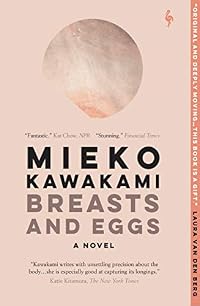
Breasts and Eggs
by Mieko Kawakami
On This Page
Description
Breasts & Eggs paints a portrait of contemporary womanhood in Japan and recounts the intimate journeys of three women as they confront oppressive mores and their own uncertainties on the road to finding peace and futures they can truly call their own. It tells the story of three women: the thirty-year-old Natsu, her older sister, Makiko, and Makiko's daughter, Midoriko. Makiko has traveled to Tokyo in search of an affordable breast enhancement procedure. She is accompanied by Midoriko, who show more has recently grown silent, finding herself unable to voice the vague yet overwhelming pressures associated with growing up. Her silence proves a catalyst for each woman to confront her fears and frustrations. On another hot summer's day ten years later, Natsu, on a journey back to her native city, struggles with her own indeterminate identity as she confronts anxieties about growing old alone and childless. show lessTags
Recommendations


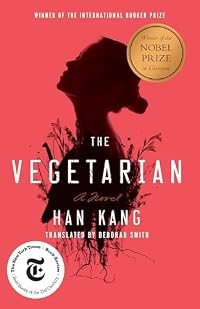
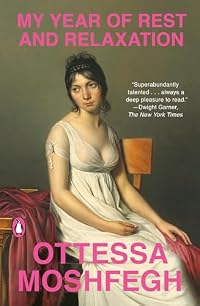
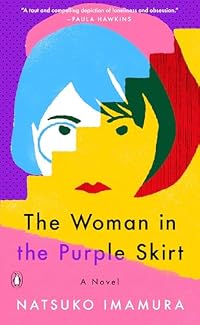

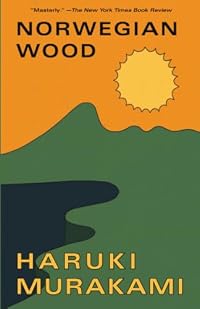






Member Recommendations
Member Reviews
I can't claim to be any kind of expert on Japanese literature, "Breasts and Eggs" struck me as something new. It's a novel far removed both from Japanese tradition and from the high-tech miracle economy that the country experienced in the eighties. It's set not in Tokyo but in the downtrodden sections of Osaka, a grimy port city. Many of its characters had upbringings that were economically impoverished psychologically painful. Most of all, I was struck by this novel's language. While many works translated from Japanese seem to aim for austere, beautifully composed minimalism, "Breasts and Eggs" is full of slang and improper usage, a reflection, perhaps, of the Osakan dialect that its characters sometimes converse in. If Haruki show more Murakami's scenes sometimes seem like antiseptic miniatures and his characters sometimes exude little but an intriguing blankness, this novel's main characters might as well exist in another universe from his. A good portion of the narrator's memories come straight from the karaoke bars that she, her mother, and her sister once worked in. I wondered more than once if the author was in conscious conflict with standard images of Japanese society as universally prosperous and orderly while writing this one.
"Breasts and Eggs" is also -- perhaps unsurprisingly, given its not-for-high-school-libraries-in-Florida cover -- a novel that's largely about female experience, decisions, and concerns. There are few men around the plot, but men are notable mostly by their absence here: it's the narrator's mother and grandmother that worked their whole lives to keep their family afloat. As the narrative progresses, the narrator enters another sort of female space -- literature and the publishing industry -- while her sister, still amusing men for cash as a bar hostess, considers the costs and benefits of breast implants. But it's after our narrator experiences a bit of success and starts to wonder if she should have a child of her own that things get really philosophically interesting. She becomes interested -- perhaps obsessed -- with the concept of sperm donation, attending both informatinal seminars and meetings for people who don't know the identity of their fathers. There are some anti-natalist arguments in this part of the book that -- although they're beautifully rendered -- some readers may find depressing, but there's also something else here that the author can't quite bring herself to spell out: once you get some hands on some sperm for reproductive purposes, just how necessary is a male figure in any Japanese woman's life? The question isn't just an abstraction to our narrator: she has had little love life to speak of, her father -- most fathers in this book, really -- mostly meted out punishments and misery, and her everyday experiences with men are frequently far from pleasant. Kawakami seems to be asking whether the human race go on and how much of a role men should play in it. While play little enough in "Breasts and Eggs," I found the book sad, thoughtful, and often surprising. It's a heavy read, sometimes, but I'd certainly recommend it. show less
"Breasts and Eggs" is also -- perhaps unsurprisingly, given its not-for-high-school-libraries-in-Florida cover -- a novel that's largely about female experience, decisions, and concerns. There are few men around the plot, but men are notable mostly by their absence here: it's the narrator's mother and grandmother that worked their whole lives to keep their family afloat. As the narrative progresses, the narrator enters another sort of female space -- literature and the publishing industry -- while her sister, still amusing men for cash as a bar hostess, considers the costs and benefits of breast implants. But it's after our narrator experiences a bit of success and starts to wonder if she should have a child of her own that things get really philosophically interesting. She becomes interested -- perhaps obsessed -- with the concept of sperm donation, attending both informatinal seminars and meetings for people who don't know the identity of their fathers. There are some anti-natalist arguments in this part of the book that -- although they're beautifully rendered -- some readers may find depressing, but there's also something else here that the author can't quite bring herself to spell out: once you get some hands on some sperm for reproductive purposes, just how necessary is a male figure in any Japanese woman's life? The question isn't just an abstraction to our narrator: she has had little love life to speak of, her father -- most fathers in this book, really -- mostly meted out punishments and misery, and her everyday experiences with men are frequently far from pleasant. Kawakami seems to be asking whether the human race go on and how much of a role men should play in it. While play little enough in "Breasts and Eggs," I found the book sad, thoughtful, and often surprising. It's a heavy read, sometimes, but I'd certainly recommend it. show less
Breasts and Eggs is really two novels in one.
Part one follows our main character as she hosts her sister, who wants a boob job she can't afford, and her niece. who is going through puberty and the angst surrounding it all. It's the highlight of the novel, and as a standalone novella, is one of the most visceral explorations of the female body and women's beauty expectations I've ever read. It's a heartbreaking and all-too-common story of single-parenthood, unease in growing into a body you don't want, and frankly, poverty.
Part two is much longer: it follows the same main character, this time debating if she should go through a sperm donation to have a child by herself, while navigating her writing career and feelings for others as show more someone unable and unwilling to have sexual intercourse. It covers about 2/3 of the novel and like the former, is written as a string of dialogues about parenthood had with the main character. It's a really interesting and invigorating construction; a bit film like, a bit dreamlike.
As I noted though, the book felt more like two novels: part one and two are definitely linked by character and theme, but the time shift, the length, and the focus were almost too different to fit together with ease. The second part also... dragged. I felt its length at times, and not in a good way. I wish the class themes would have continued in the second part as well, but oh well. The ending was similarly quite ambivalent to me: I thought the buildup of this novel would lead to acceptance and joy of childlessness, or at least something akin to it, but... I don't know. I can tell how important a work like this would be to women in contemporary Japan, and I'm glad it exists.
In all, the prose was captivating and the translation awesome, and I'd love to read more of her work. But. The plot got kind of lost halfway and I can't say it's perfect. show less
Part one follows our main character as she hosts her sister, who wants a boob job she can't afford, and her niece. who is going through puberty and the angst surrounding it all. It's the highlight of the novel, and as a standalone novella, is one of the most visceral explorations of the female body and women's beauty expectations I've ever read. It's a heartbreaking and all-too-common story of single-parenthood, unease in growing into a body you don't want, and frankly, poverty.
Part two is much longer: it follows the same main character, this time debating if she should go through a sperm donation to have a child by herself, while navigating her writing career and feelings for others as show more someone unable and unwilling to have sexual intercourse. It covers about 2/3 of the novel and like the former, is written as a string of dialogues about parenthood had with the main character. It's a really interesting and invigorating construction; a bit film like, a bit dreamlike.
As I noted though, the book felt more like two novels: part one and two are definitely linked by character and theme, but the time shift, the length, and the focus were almost too different to fit together with ease. The second part also... dragged. I felt its length at times, and not in a good way. I wish the class themes would have continued in the second part as well, but oh well. The ending was similarly quite ambivalent to me: I thought the buildup of this novel would lead to acceptance and joy of childlessness, or at least something akin to it, but... I don't know. I can tell how important a work like this would be to women in contemporary Japan, and I'm glad it exists.
In all, the prose was captivating and the translation awesome, and I'd love to read more of her work. But. The plot got kind of lost halfway and I can't say it's perfect. show less
A poetic and raw depiction of contemporary life for working class women in Japan, the hardships they endure, the friendships that sustain them and the resolve that they show.
Part one introduces the narrator, her sister and her niece, exploring their family history and how they have come to be where they are now.
In part two, the narrator decides she wants a baby and, for reasons I won't divulge here, explores donor insemination and discovers the drawbacks for children of anonymous donors. I found this fascinating.
Surrounding this are the friendships she makes and the people she encounters as she tries to unpick her feelings about womanhood and isolation.
Kawakami's writing is beautiful, too. She draws in the seasons and landscape to give show more a sense of time and place and to help convey how her narrator is feeling.
I loved it. show less
Part one introduces the narrator, her sister and her niece, exploring their family history and how they have come to be where they are now.
In part two, the narrator decides she wants a baby and, for reasons I won't divulge here, explores donor insemination and discovers the drawbacks for children of anonymous donors. I found this fascinating.
Surrounding this are the friendships she makes and the people she encounters as she tries to unpick her feelings about womanhood and isolation.
Kawakami's writing is beautiful, too. She draws in the seasons and landscape to give show more a sense of time and place and to help convey how her narrator is feeling.
I loved it. show less
I have a fascination with Japanese fiction. It comes from learning the language and standing in the biggest bookstore I’ve ever seen, which happened to be in Japan. (Knowing that I’d struggle to read past the picture books was a sobering moment). The next best thing is reading in translation. Breasts and Eggs brings a new author to me in Mieko Kawakami and a new style, fiction about women in Japan. I haven’t read too much of the latter from the female perspective.
Breasts and Eggs is divided into two parts. In the first book, we meet Natsuko, her sister Makiko and Makiko’s daughter Midoriko. Natsuko and Makiko come from a very poor family in Osaka where their mother and grandmother struggled to make ends meet. Both the daughters show more ended up working in bars and as hostesses to supplement the family income. Now, Natsuko is a struggling writer in Tokyo and Makiko is a single mother, continuing her hostess work. One summer, Makiko and Midoriko come to Tokyo. Makiko has been researching breast implants and wants to look at some clinics. Midoriko has stopped talking, communicating only through a notebook. Her private thoughts about growing up are written in a diary. Then, everything blows up… Book Two begins ten years later and focuses on Natsuko, now a successful author writing a book that doesn’t seem to go anywhere. She has some choices to make about her single, childless state and asks friends and Makiko as she thinks about what she wants from the future.
As you may have guessed from the title, much of Breasts and Eggs is about women and their bodies. Midoriko is struggling with the idea of growing up and the functions of her body. Makiko is dissatisfied with her breasts. Natsuko considers the options available to her to get pregnant, researching and asking friends. The opinions she receives are varied, with one character having an almost violent opposition to bringing children into the world. It’s perhaps the most unguarded, spontaneous moment of the novel, made all the more raw by the character’s own past. The story brings up a lot of questions regarding the ethics and consequences of anonymous sperm donor insemination, mixed in with the official Japanese policy on them. It’s an interesting contrast to that from other countries, as are the Japanese societal attitudes.
What I enjoyed about Breasts and Eggs was that it puts Japanese women as the focus of the novel, without hiding aspects of their persona behind manners and societal norms. It’s blunt and offers no apology for the characters’ actions. There are some parts in Book One where Natsuko’s mind wanders off into Murakami-esque visualisations that didn’t do a lot for me. Book Two refrains from doing this and is much more direct in the way it tells the story, but Natsuko’s journey is slower and more meandering as she weighs up her options. Some parts feel overlong, while other events speed by. Overall, it’s something new in the world of Japanese fiction and I’ve already marked when Kawakami’s next English translation is released.
Thank you to Pan Macmillan for the copy of this book. My review is honest.
http://samstillreading.wordpress.com show less
Breasts and Eggs is divided into two parts. In the first book, we meet Natsuko, her sister Makiko and Makiko’s daughter Midoriko. Natsuko and Makiko come from a very poor family in Osaka where their mother and grandmother struggled to make ends meet. Both the daughters show more ended up working in bars and as hostesses to supplement the family income. Now, Natsuko is a struggling writer in Tokyo and Makiko is a single mother, continuing her hostess work. One summer, Makiko and Midoriko come to Tokyo. Makiko has been researching breast implants and wants to look at some clinics. Midoriko has stopped talking, communicating only through a notebook. Her private thoughts about growing up are written in a diary. Then, everything blows up… Book Two begins ten years later and focuses on Natsuko, now a successful author writing a book that doesn’t seem to go anywhere. She has some choices to make about her single, childless state and asks friends and Makiko as she thinks about what she wants from the future.
As you may have guessed from the title, much of Breasts and Eggs is about women and their bodies. Midoriko is struggling with the idea of growing up and the functions of her body. Makiko is dissatisfied with her breasts. Natsuko considers the options available to her to get pregnant, researching and asking friends. The opinions she receives are varied, with one character having an almost violent opposition to bringing children into the world. It’s perhaps the most unguarded, spontaneous moment of the novel, made all the more raw by the character’s own past. The story brings up a lot of questions regarding the ethics and consequences of anonymous sperm donor insemination, mixed in with the official Japanese policy on them. It’s an interesting contrast to that from other countries, as are the Japanese societal attitudes.
What I enjoyed about Breasts and Eggs was that it puts Japanese women as the focus of the novel, without hiding aspects of their persona behind manners and societal norms. It’s blunt and offers no apology for the characters’ actions. There are some parts in Book One where Natsuko’s mind wanders off into Murakami-esque visualisations that didn’t do a lot for me. Book Two refrains from doing this and is much more direct in the way it tells the story, but Natsuko’s journey is slower and more meandering as she weighs up her options. Some parts feel overlong, while other events speed by. Overall, it’s something new in the world of Japanese fiction and I’ve already marked when Kawakami’s next English translation is released.
Thank you to Pan Macmillan for the copy of this book. My review is honest.
http://samstillreading.wordpress.com show less
What connects these two linked novel(la)s that focus so greatly on being female in contemporary Japan is an existential worry with a religious and philosophical history going back to ancient times. From Book One:
From Book Two:
This is the antinatalist viewpoint, popularized in recent times by the philosopher David Benatar in his 2006 book [b:Better Never to Have Been: The Harm of Coming into Existence|660518|Better Never to Have Been The Harm of Coming into Existence|David Benatar|https://i.gr-assets.com/images/S/compressed.photo.goodreads.com/books/1348531771l/660518._SY75_.jpg|646592]. Writing, "It is curious that while good people go to great lengths to spare their children from suffering, few of them seem to notice that the one (and only) guaranteed way to prevent all the suffering of their children is not to bring those children into existence in the first place," Benatar traces this idea back to Sophocles (“Never to have been born is best") and even into the Bible ("I have praised the dead that are already dead more than the living that are yet alive; but better than both of them is he who has not yet been, who has not seen the evil work that is done under the sun" - Ecclesiastes).
Benatar argues that there is a mismatch between pleasure and pain. While pleasure's presence is good and pain's presence is bad, pleasure's absence is not bad if there is no one existing to miss it, while pain's absence is always good. Since existing results in both pleasure and pain, while not existing results in missing pleasure, which is not bad, and missing pain, which is good, not existing is better. Thus the ethical choice is to not have children, to not bring a being into existence as it would have been better off not existing.
Book Two of Breasts and Eggs presents this argument and asks if it convinces an adult considering procreation, while Book One asks, from the point of view of a child, if it's true or not. Kawakami's text doesn't offer a clear answer I don't think, leaving it to the reader to consider if they so choose to... not being a question that most people actually ever consider, I don't think.
In Book One, originally an independent novella, a woman in Tokyo is visited by her sister and 12 year old niece. The niece, Midoriko, is suffering through the early stages of adolescence and has stopped talking to her single mother, Makiko, only writing short responses to her on a pad of paper. Makiko drinks to escape her own pain and has come to Tokyo for a breast implant consultation, something she has become obsessed with. The combination of her own painful transition into womanhood and her mother's painful experiencing of womanhood has pushed Midoriko into a highly charged but blocked emotional state.
This impasse breaks open in a stunning scene in her aunt Natsuko's kitchen in Tokyo. She confronts her mother, sobbing, smashing raw eggs into her own head, begging for something that she's unable to clearly articulate. Makiko is unable to provide her daughter a verbal reassurance that makes sense, that makes all the suffering understandable and true. So,
This award winning novella is fantastic. Powerful and tight and a perfect length, and as above, occasionally funny in the middle of all of it. For its English language publication, a second story has been added afterwards picking these characters up about a decade later. This second story is twice as long, far more meandering and a bit of a slog to get through though not without merit as well. It features Natsuko, now a successful writer struggling to finish a second novel, while perhaps actually more focused on how she can have a child. Single and asexual, as a woman in Japan she faces high barriers to fulfilling a desire she can't quite rationally explain the existence of, but which nevertheless powerfully drives her onward, even in the face of another character's arguments against having children as noted above.
There's a lot of discussion in this second section about what it means to have a child and what it means to be a woman, either with children or childless/childfree. How the characters deal with and try to escape the misogyny that surrounds them. There's also a lot of sagging exposition that makes it harder to enjoy and recommend it.
5 stars for Book One, 3 stars for Book Two, so 4 stars together. show less
"Do you have any idea how scared I am? I don't get it, any of it. My eyes hurt. They hurt. Why does everything change? Why? It hurts. Why was I born? Why did any of us have to be born? If we were never born, none of these things would have happened, none of it would - "
From Book Two:
"You have no idea what I'm talking about, do you?" She exhaled through her nose. "it's really simple, I promise. Why is it that people think this is okay? Why do people see no harm in having children? They do it with smiles on their faces, as ifshow more
it's not an act of violence. You force this other being into the world, this other being that never asked to be born. You do this absurd thing because that's what you want for yourself... Once they've had a baby, most parents would do anything to shelter them from any form of pain or suffering. But here it is, the only way to actually keep your child from ever knowing pain. Don't have them in the first place... No one should be doing this," Yuriko nearly whispered. "Nobody."
This is the antinatalist viewpoint, popularized in recent times by the philosopher David Benatar in his 2006 book [b:Better Never to Have Been: The Harm of Coming into Existence|660518|Better Never to Have Been The Harm of Coming into Existence|David Benatar|https://i.gr-assets.com/images/S/compressed.photo.goodreads.com/books/1348531771l/660518._SY75_.jpg|646592]. Writing, "It is curious that while good people go to great lengths to spare their children from suffering, few of them seem to notice that the one (and only) guaranteed way to prevent all the suffering of their children is not to bring those children into existence in the first place," Benatar traces this idea back to Sophocles (“Never to have been born is best") and even into the Bible ("I have praised the dead that are already dead more than the living that are yet alive; but better than both of them is he who has not yet been, who has not seen the evil work that is done under the sun" - Ecclesiastes).
Benatar argues that there is a mismatch between pleasure and pain. While pleasure's presence is good and pain's presence is bad, pleasure's absence is not bad if there is no one existing to miss it, while pain's absence is always good. Since existing results in both pleasure and pain, while not existing results in missing pleasure, which is not bad, and missing pain, which is good, not existing is better. Thus the ethical choice is to not have children, to not bring a being into existence as it would have been better off not existing.
Book Two of Breasts and Eggs presents this argument and asks if it convinces an adult considering procreation, while Book One asks, from the point of view of a child, if it's true or not. Kawakami's text doesn't offer a clear answer I don't think, leaving it to the reader to consider if they so choose to... not being a question that most people actually ever consider, I don't think.
In Book One, originally an independent novella, a woman in Tokyo is visited by her sister and 12 year old niece. The niece, Midoriko, is suffering through the early stages of adolescence and has stopped talking to her single mother, Makiko, only writing short responses to her on a pad of paper. Makiko drinks to escape her own pain and has come to Tokyo for a breast implant consultation, something she has become obsessed with. The combination of her own painful transition into womanhood and her mother's painful experiencing of womanhood has pushed Midoriko into a highly charged but blocked emotional state.
This impasse breaks open in a stunning scene in her aunt Natsuko's kitchen in Tokyo. She confronts her mother, sobbing, smashing raw eggs into her own head, begging for something that she's unable to clearly articulate. Makiko is unable to provide her daughter a verbal reassurance that makes sense, that makes all the suffering understandable and true. So,
Face smeared with yolk and shell, she stood and went back to Midoriko, grabbed another egg, and cracked it right between her eyes. Midoriko was still in tears but paying close attention, watching everything. She grabbed another egg for herself and rammed it into her temple. Its insides ran down her cheek, followed by bits of shell. Makiko grabbed the last two eggs, then broke them on her face, one after the other, then turned to me.
"No more?" she asked.
"There's some in the fridge," I said.
This award winning novella is fantastic. Powerful and tight and a perfect length, and as above, occasionally funny in the middle of all of it. For its English language publication, a second story has been added afterwards picking these characters up about a decade later. This second story is twice as long, far more meandering and a bit of a slog to get through though not without merit as well. It features Natsuko, now a successful writer struggling to finish a second novel, while perhaps actually more focused on how she can have a child. Single and asexual, as a woman in Japan she faces high barriers to fulfilling a desire she can't quite rationally explain the existence of, but which nevertheless powerfully drives her onward, even in the face of another character's arguments against having children as noted above.
There's a lot of discussion in this second section about what it means to have a child and what it means to be a woman, either with children or childless/childfree. How the characters deal with and try to escape the misogyny that surrounds them. There's also a lot of sagging exposition that makes it harder to enjoy and recommend it.
5 stars for Book One, 3 stars for Book Two, so 4 stars together. show less
"Isn't that the way life is? There's always something there, demanding all your attention."
This quote, from one of this novel's characters, encapsulates the choppy, high simmering day-to-day life of Ms. Kawakami's hyper-urban Japan, in which sense of self (who am I? where am I going?) seems always naggingly elusive, and for women exponentially magnified.
How healthy can a culture be that makes the decision to become a mother so horrifyingly perilous?
Telling this story draws on raw and ragged emotion, but also requires dedicated artistry and fidelity. Ms. Kawakami supplies everything needed to tell it deeply, truthfully, and unforgettably.
This quote, from one of this novel's characters, encapsulates the choppy, high simmering day-to-day life of Ms. Kawakami's hyper-urban Japan, in which sense of self (who am I? where am I going?) seems always naggingly elusive, and for women exponentially magnified.
How healthy can a culture be that makes the decision to become a mother so horrifyingly perilous?
Telling this story draws on raw and ragged emotion, but also requires dedicated artistry and fidelity. Ms. Kawakami supplies everything needed to tell it deeply, truthfully, and unforgettably.
Mieko Kawakami's novel Breasts and Eggs is a bold literary statement and another first person, modern, feminist novel from Japan. Staking a claim among literary celebrities like Banana Yoshimoto, Hiromi Kawakami, Natsuo Kirino, and Yoko Ogawa, it would almost appear that the future of Japanese Literature is female. It would make sense, in a way, since its past was male though and through with the notable exception of Murasaki's monumental Tale of Genji. I first heard of M. Kawakami when I read her short stories in Monkey Business and various anthologies. All of the stories were good. Her first novel in English, called Ms. Ice Sandwich, was disappointingly simple, unmemorable, and almost unmentionable. This work is far more complex, show more substantial and controversial.
Mieko Kawakami is one of the few Japanese authors I know of who has been granted interview time with the reclusive Haruki Murakami. In fact, Murakami was so taken by this book, that he announced his new favorite Japanese author, namely, Mieko Kawakami. She then went on to do a book length interview with the literary superstar. Hopefully we will get this interview in English soon.
The novel was quite uneven in my opinion. The first 40% I would rate 5 stars, the last 30% would get 4 stars and the middle 30% would earn 2 stars. The voice took on entrancing rhythm from the start, as intimate and easy to read as I had hoped. An absorbing, fast-paced chronicle involving complicated family issues ensued, including the ramifications of plastic surgery and some relatively common concerns and reminiscences of a young girl in the modern age. A very readable and rewarding first part overall. The second part falls into many tedious repetitions on the theme of fertility and the morality of artificial insemination. If you can get through it you will be rewarded by a satisfactory ending. The main character is a writer who offers us another cliched and idealistic view of the writerly life. Do writers really spend 90% of their time in restaurants discussing their meals and their work with literati? Hemingway would have you think so. Kawakami loads her novel with table conversations, and wastes our time with the inaccurate writer's complaints. Do writers really have to fend off their editors in person with clever dog-ate-my-manuscript excuses? Of course, she has writer's block - almost never touches the keyboard, yet still embodies all of the qualities we have come to associate with the ideal writer figure. She is an artist, who can't be rushed. You might begin to notice the influence of Haruki Murakami at this point. Yet, the protagonist's fixation with childbirth, its unfeasible application to her own ambition, and the relationships, hardships and sacrifices involved paint the picture of a self-absorbed artist on an existential ego trip. The character mentions this in the book, pointing out her own flaws. I commend the author for her well-rounded exploration, but the obsession infiltrates the plot so heavily that it weighs the book down for a large part.
Toward the end of the novel, many moral issues are explored with erudition and insight. Kawakami is an astute observer, and very confident in her ability to wrangle emotion out of the reader. She doesn't shirk or bow politely, she cooks up charm and smarm and really goes for broke sometimes. There is a scene detailing a meeting with a potential sperm donor that had me laughing out loud. It was the kind of masterful confrontation Murakami could have written. I was highly intrigued by Kawakami's stance or explanation of the value and demerits of sexual relationships. How they stand in stark contrast to Murakami's portrayal of sex in his novels was fascinating. It is not always productive to assume that just because a writer's main character is a writer who treats women like objects, that the writer treats women like objects. Or is it? Does writing about mistreating women constitute mistreating women? Kawakami faces off with Murakami's controversial female characters by lambasting male character tropes. She bashes men throughout the novel and takes a firm moral stance on women rights while exploring the emotional content of fertility choices. It is a vast and moving essay on the matter and an entertaining coming of age story.
The painful flaw of this novel lies in the repetition, which Murakami's style suffers from as well. It is a sort of dumbing down of the themes. But the themes are still there. The characters, their voices, and the strangled atmosphere of Japanese polite educated class strugglers tugged at my nostalgic love for Japan's literary past. I really adored parts of Breasts and Eggs, and you should give it a read.
Thanks to NetGalley for the free ARC. show less
Mieko Kawakami is one of the few Japanese authors I know of who has been granted interview time with the reclusive Haruki Murakami. In fact, Murakami was so taken by this book, that he announced his new favorite Japanese author, namely, Mieko Kawakami. She then went on to do a book length interview with the literary superstar. Hopefully we will get this interview in English soon.
The novel was quite uneven in my opinion. The first 40% I would rate 5 stars, the last 30% would get 4 stars and the middle 30% would earn 2 stars. The voice took on entrancing rhythm from the start, as intimate and easy to read as I had hoped. An absorbing, fast-paced chronicle involving complicated family issues ensued, including the ramifications of plastic surgery and some relatively common concerns and reminiscences of a young girl in the modern age. A very readable and rewarding first part overall. The second part falls into many tedious repetitions on the theme of fertility and the morality of artificial insemination. If you can get through it you will be rewarded by a satisfactory ending. The main character is a writer who offers us another cliched and idealistic view of the writerly life. Do writers really spend 90% of their time in restaurants discussing their meals and their work with literati? Hemingway would have you think so. Kawakami loads her novel with table conversations, and wastes our time with the inaccurate writer's complaints. Do writers really have to fend off their editors in person with clever dog-ate-my-manuscript excuses? Of course, she has writer's block - almost never touches the keyboard, yet still embodies all of the qualities we have come to associate with the ideal writer figure. She is an artist, who can't be rushed. You might begin to notice the influence of Haruki Murakami at this point. Yet, the protagonist's fixation with childbirth, its unfeasible application to her own ambition, and the relationships, hardships and sacrifices involved paint the picture of a self-absorbed artist on an existential ego trip. The character mentions this in the book, pointing out her own flaws. I commend the author for her well-rounded exploration, but the obsession infiltrates the plot so heavily that it weighs the book down for a large part.
Toward the end of the novel, many moral issues are explored with erudition and insight. Kawakami is an astute observer, and very confident in her ability to wrangle emotion out of the reader. She doesn't shirk or bow politely, she cooks up charm and smarm and really goes for broke sometimes. There is a scene detailing a meeting with a potential sperm donor that had me laughing out loud. It was the kind of masterful confrontation Murakami could have written. I was highly intrigued by Kawakami's stance or explanation of the value and demerits of sexual relationships. How they stand in stark contrast to Murakami's portrayal of sex in his novels was fascinating. It is not always productive to assume that just because a writer's main character is a writer who treats women like objects, that the writer treats women like objects. Or is it? Does writing about mistreating women constitute mistreating women? Kawakami faces off with Murakami's controversial female characters by lambasting male character tropes. She bashes men throughout the novel and takes a firm moral stance on women rights while exploring the emotional content of fertility choices. It is a vast and moving essay on the matter and an entertaining coming of age story.
The painful flaw of this novel lies in the repetition, which Murakami's style suffers from as well. It is a sort of dumbing down of the themes. But the themes are still there. The characters, their voices, and the strangled atmosphere of Japanese polite educated class strugglers tugged at my nostalgic love for Japan's literary past. I really adored parts of Breasts and Eggs, and you should give it a read.
Thanks to NetGalley for the free ARC. show less
Members
- Recently Added By
Lists

Japanese Literature
230 works; 37 members

2021 Tournament of Books
18 works; 12 members

Best Japanese Fiction
41 works; 10 members

Elena Ferrante's 40 favourite books by female authors
40 works; 10 members

2021 Notable Books for Adults
24 works; 4 members

Mothers and Daughters
114 works; 11 members

Books Read in 2022
5,164 works; 113 members

Want to Read... Asian Authors
11 works; 1 member

sad girl books
51 works; 3 members

Books recommended by Calgary Public Library staff
1,588 works; 4 members

feminism & gender studies
17 works; 1 member

Not the NYT list of top 100 21st century books
100 works; 6 members

2024
34 works; 1 member
Author Information

Some Editions
Awards and Honors
Awards
Distinctions
Series
Belongs to Publisher Series
Work Relationships
Is contained in
Is an expanded version of
Common Knowledge
- Canonical title
- Breasts and Eggs
- Original title
- 夏物語; Natsu monogatari; Summer Stories
- Original publication date
- 2019; 2008-02
- People/Characters
- Makiko; Midoriko; Natsuko Natsume; Natsu
- Important places
- Tokyo, Japan
- First words
- If you want to know how poor somebody was growing up, ask them how many windows they had.
- Last words
- (Click to show. Warning: May contain spoilers.)I watched her, this baby girl, letting her cry into my breast.
- Blurbers
- Murakami, Haruki; Chow, Kat; van den Berg, Laura; Kitamura, Katie
- Original language
- Japanese
- Disambiguation notice
- The author has written two works with the title "Breasts and Eggs" in translation. Please distinguish between the following works when combining different language editions:
1. 乳と卵 [Chichi to ran ; "Breasts and E... (show all)ggs"], ~100 page novella originally published in 2008. It was translated into other languages between 2008 and 2013, including Chinese, Norwegian, French, and Spanish, but may not have been published in English: https://search.worldcat.org/formats-ed...
2. 夏物語 [Natsu monogatari ; "Summer Story"], ~400 pages, expanded and rewritten into a novel originally published in 2019. Published in English under the novella's title in 2020; other translations are also published under "Breasts and Eggs" or "Summer Story."
This work is for 2., the expanded novel and its translations, and in particular the English language edition of Breasts and Eggs.
Classifications
- Genres
- Fiction and Literature, General Fiction
- DDC/MDS
- 895.636 — Literature & rhetoric Literatures of other languages Literatures of East and Southeast Asia Japanese Japanese fiction 2000–
- LCC
- PL872.5 .A89 .N3813 — Language and Literature Languages and literatures of Eastern Asia, Africa, Oceania Languages of Eastern Asia, Africa, Oceania Japanese language and literature Japanese literature
- BISAC
Statistics
- Members
- 1,559
- Popularity
- 14,571
- Reviews
- 37
- Rating
- (3.74)
- Languages
- 14 — Czech, Dutch, English, French, German, Italian, Japanese, Polish, Portuguese, Romanian, Slovenian, Spanish, Swedish, Turkish
- Media
- Paper, Audiobook, Ebook
- ISBNs
- 46
- ASINs
- 10