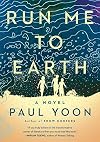
Run Me to Earth
by Paul Yoon
On This Page
Description
"Alisak, Prany, and Noi--three orphans united by devastating loss--must do what is necessary to survive the perilous landscape of 1960s Laos. When they take shelter in a bombed out field hospital, they meet Vang, a doctor dedicated to helping the wounded at all costs. Soon the teens are serving as motorcycle couriers, delicately navigating their bikes across the fields filled with unexploded bombs, beneath the indiscriminate barrage from the sky. In a world where the landscape and the roads show more have turned into an ocean of bombs, we follow their grueling days of rescuing civilians and searching for medical supplies, until Vang secures their evacuation on the last helicopters leaving the country. It's a move with irrevocable consequences--and sets them on disparate and treacherous paths across the world"-- show lessTags
Recommendations






Member Reviews
In Paul Yoon's "Run Me to Earth," he considers the ghosts that haunt all of us as we age: childhood friends, the kindnesses of strangers, the horrors that resurface when our memories are nudged by a single bird calling to its mate.
The particular ghosts in this small, graceful, and very literary novel may be too familiar to some readers as they rise like the morning mist out of the humidity of Laos. Laos, like Cambodia, was a pawn in the brutal chess game waged in Vietnam by the French and then the Americans.
Some of you remember, I'm sure, the devastation wrought by both countries in Southeast Asia. The excuse of multiple administrations and governments? Making the world safe for democracy.
Ask Noi, Prany, and Alisak how safe their show more young lives really were. Ask them about the Plain of Jars and the buried incendiary bombs they navigated to bring medical supplies back to the doctors and nurses at a makeshift civilian hospital. Ask them about the fragile comfort they gave at the hospital to mangled, bedridden blast survivors pumped full of the last morphine. Ask them about the moments of near nighttime quiet when, laying entwined together for warmth, they'd share their hopes about where they might be taken as refugees. Thailand? France?
This novel is a must-read for any who lived through that era of misguided interference fueled by the privileged arrogance of first-world governments. And, for those somewhat younger, this novel and its ghosts will speak to the very same endless chess game being played out now in the Middle East and South America. show less
The particular ghosts in this small, graceful, and very literary novel may be too familiar to some readers as they rise like the morning mist out of the humidity of Laos. Laos, like Cambodia, was a pawn in the brutal chess game waged in Vietnam by the French and then the Americans.
Some of you remember, I'm sure, the devastation wrought by both countries in Southeast Asia. The excuse of multiple administrations and governments? Making the world safe for democracy.
Ask Noi, Prany, and Alisak how safe their show more young lives really were. Ask them about the Plain of Jars and the buried incendiary bombs they navigated to bring medical supplies back to the doctors and nurses at a makeshift civilian hospital. Ask them about the fragile comfort they gave at the hospital to mangled, bedridden blast survivors pumped full of the last morphine. Ask them about the moments of near nighttime quiet when, laying entwined together for warmth, they'd share their hopes about where they might be taken as refugees. Thailand? France?
This novel is a must-read for any who lived through that era of misguided interference fueled by the privileged arrogance of first-world governments. And, for those somewhat younger, this novel and its ghosts will speak to the very same endless chess game being played out now in the Middle East and South America. show less
Run Me to Earth by Paul Yoon (5 stars)
Laos in the 1960s is in the throes of civil war and is under heavy aerial bombardment by the USA.
Alisak, Prany and Noi have lost their parents and are surviving by whatever means they can. By
1969 where the novel opens, the three teenagers are running dangerous missions across fields of
bombs, collecting medical supplies, the injured, food, messages, for a makeshift hospital set up in
a remote farmhouse.
I finished this book with an ache in my heart. We’re so familiar with the history of neighbouring
Vietnam but I had no idea of the desperate and dark history of 1960s and 1970s Laos. Paul Yoon
has a lightness of touch which conveys fear and hope, compassion and brutality, the bonds and
friendship and the show more ties of war. This is a novel I will remember. show less
Laos in the 1960s is in the throes of civil war and is under heavy aerial bombardment by the USA.
Alisak, Prany and Noi have lost their parents and are surviving by whatever means they can. By
1969 where the novel opens, the three teenagers are running dangerous missions across fields of
bombs, collecting medical supplies, the injured, food, messages, for a makeshift hospital set up in
a remote farmhouse.
I finished this book with an ache in my heart. We’re so familiar with the history of neighbouring
Vietnam but I had no idea of the desperate and dark history of 1960s and 1970s Laos. Paul Yoon
has a lightness of touch which conveys fear and hope, compassion and brutality, the bonds and
friendship and the show more ties of war. This is a novel I will remember. show less
Run Me to Earth has received some enthusiastic pre-publication buzz—and I want to open by saying that buzz is well deserved. At less than 300 pages, Run Me to Earth is a relatively quick read, but its characters and scope consistently invite the reader to slow down and to appreciate what author Paul Yoon has accomplished.
Run Me to Earth tells the story of three children in Laos, orphaned by war, who work together as couriers for a "freelance" field hospital run by a very independent doctor. As the war ends, the doctor arranges to have the children taken out of Laos in a final round of airlifts, but things don't go as planned and the three are separated. Run Me to Earth is the story of how their lives play out on multiple show more continents.
One of the beauties of Run Me to Earth is that each chapter has a different narrator, which lets the reader see the world from the perspective of each of the children and through the eyes of other characters. A not-quite-chronological structure emphasizes the composite nature of the narrative as the reader pieces together events, filling in gaps along the way. This structure feels particularly fitting for a novel that begins in the chaos of war.
Run me to Earth is definitely one of 2020's must-reads. show less
Run Me to Earth tells the story of three children in Laos, orphaned by war, who work together as couriers for a "freelance" field hospital run by a very independent doctor. As the war ends, the doctor arranges to have the children taken out of Laos in a final round of airlifts, but things don't go as planned and the three are separated. Run Me to Earth is the story of how their lives play out on multiple show more continents.
One of the beauties of Run Me to Earth is that each chapter has a different narrator, which lets the reader see the world from the perspective of each of the children and through the eyes of other characters. A not-quite-chronological structure emphasizes the composite nature of the narrative as the reader pieces together events, filling in gaps along the way. This structure feels particularly fitting for a novel that begins in the chaos of war.
Run me to Earth is definitely one of 2020's must-reads. show less
Run Me to Earth by Paul Yoon is the story of three teen-aged children who have known nothing but war their whole lives. Alisak, along with brother and sister Prany and Noi are orphans who are alive through their own cunning and abilities. From 1964 to 1973 the tiny country of Laos became the most heavily bombed country per capita as estimated2 million tons of ordnance was dropped by the U.S. Air Force.
Through a series of interwoven short stories the author tells the story of these orphans and their fight for survival. Opening in 1969, the children have taken refuge in a makeshift hospital, they assist the staff and act as couriers for a small salary and shelter. The hospital is surrounded by land mines and many patients are blown to show more bits as they try to make their way to the hospital. As the bombing comes ever closer the hospital is evacuated. In the rush to escape, the three children become separated. Throughout the multiple narratives we learn the fate of each child and what the future held for them.
Run Me To Earth is a story of war and the trauma it leaves in it’s wake. Powerful and intense the author has produced a descriptive and layered novel that defines the various directions a displaced person’s life can take. My only quibble with this book was that the frequent jumps in time and the many POVs expressed became a little confusing at times. show less
Through a series of interwoven short stories the author tells the story of these orphans and their fight for survival. Opening in 1969, the children have taken refuge in a makeshift hospital, they assist the staff and act as couriers for a small salary and shelter. The hospital is surrounded by land mines and many patients are blown to show more bits as they try to make their way to the hospital. As the bombing comes ever closer the hospital is evacuated. In the rush to escape, the three children become separated. Throughout the multiple narratives we learn the fate of each child and what the future held for them.
Run Me To Earth is a story of war and the trauma it leaves in it’s wake. Powerful and intense the author has produced a descriptive and layered novel that defines the various directions a displaced person’s life can take. My only quibble with this book was that the frequent jumps in time and the many POVs expressed became a little confusing at times. show less
The word that comes to mind for me is: "well-intentioned."
Why it didn't work better for me: the narrative voice is distancing, formal, and a little vague. Everything felt mysteriously shrouded. I wasn't let into the story.
I have a feeling that these characters might live large, rich, three-dimensional lives in Yoon’s imagination, but when it came to writing the words down, he wouldn’t let loose of his literary intention to let these characters tell their story.
Why it didn't work better for me: the narrative voice is distancing, formal, and a little vague. Everything felt mysteriously shrouded. I wasn't let into the story.
I have a feeling that these characters might live large, rich, three-dimensional lives in Yoon’s imagination, but when it came to writing the words down, he wouldn’t let loose of his literary intention to let these characters tell their story.
Yoon tells the story of three friends torn from their homes and families by the Laotian conflict in the 1960’s. The three children, Noi, Pranny, and Alisak have taken refuge in the home of a Frenchman who fled the violence. The home, damaged by bombs and the humid climate, has been turned into a field hospital. Helping the doctors and coming face to face with the horror of war, the children cope as best they can. They all plan to leave with the doctors hoping the helicopters will take them to France or to Thailand. Only Alisak makes it onto the helicopter, leaving the other two behind when a hidden bomb destroys Noi’s motorcycle. Alisak makes it to France, not knowing what happened to the others. The daughter of a woman for whom show more Alisak cared in the Laos hospital escapes to New York and is determined to find Alisak and tell him about Noi’s death and the capture of Pranny and the doctor. I found hope and simple beauty and caring amidst the chaos and violence of war and finished the book with far more hope than I expected to find. show less
Members
- Recently Added By
Lists

2021 Notable Books for Adults
24 works; 4 members

Books Read in 2020
4,379 works; 123 members

Fiction: Historical
288 works; 3 members

Global Reads: Books Set in East Asia
139 works; 12 members

Books Read in 2021
5,361 works; 114 members
Author Information

10+ Works 905 Members
Awards and Honors
Awards
Common Knowledge
- Original publication date
- 2020
Classifications
Statistics
- Members
- 255
- Popularity
- 126,474
- Reviews
- 19
- Rating
- (3.85)
- Languages
- English
- Media
- Paper, Audiobook, Ebook
- ISBNs
- 10
- ASINs
- 3