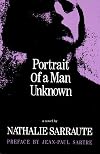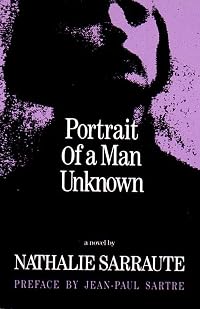
Portrait of a Man Unknown
by Nathalie Sarraute
On This Page
Description
In this major work of avant-garde literature, first published by Braziller in 1958, Nathalie Sarraute probes deeply into the nature of human relationships through her depiction of an elderly father and his spinster daughter. In his preface to Portrait of a Man Unknown, Jean-Paul Sartre applauded Sarraute for writing an "anti-novel," one that resists the traditional premises of plot and character. The narrator, a neurotic neighbor obsessed with the pair, shows the persistence of a sleuth, show more taking every opportunity to snoop and eavesdrop. He follows the couple's every step, awaiting the final explosion: the ultimate confrontation between the two characters over money necessary for the daughter's medical needs. --Amazon.com. show lessTags
Recommendations

































Member Recommendations
JuliaMaria Essay von Sartre zu Sarrautes "Portrait eines Unbekannten"
Member Reviews
I wanted to like this more than I actually did. It's French, it's experimental, and it was recommended to me by smart folks. But I just didn't feel it. I thought her prose was enjoyable enough, but a bit tedious. The format of her similes are always the same, i.e. something simple compared to something long drawn out. And I wanted some variation in her technique. The whole "mystery" aspect was interesting for a little bit until I thought I figured it out, which was about 10 pages in. I am still not sure if I am right or not, since no answers are ever revealed (which I don't mind, I actually prefer it this way), but the nagging sense that I was right, and that the book was really about the writing of a book, i.e. about a man (the show more narrator) who has actually imagined the lives of these other people, who couldn't help himself but imagine them, and who depended on these people of his creation (whether or not they really existed, or whether they existed as separate forms) screamed 'metafiction' to me in a way that didn't increase my pleasure. . I know I spent the whole review complaining about this book, but I actually found it generally enjoyable to read. I just didn't like it as much as I wanted to like it, or thought I would like it. show less
Ratings
Members
- Recently Added By
Author Information

Nathalie Sarraute has been an eloquent spokesperson and theorist of the new novel, as well as one of its most talented practitioners. In her essay on the art of fiction, The on The Age of Suspicion (1956), she condemned the techniques used in the novel of the past and took a stand beside Robbe-Grillet as a leader of the avant-garde. The novel, she show more feels, must express "that element of indetermination, of opacity, and mystery that one's own actions always have for the one who lives them." Her works have now become known to an international public. Her ability to render fleeting awareness and the psychological states underlying articulate speech has won both praise and disdain. Janet Flanner has called Sarraute "the only one among the New Novel experimenters who appears finally to have struck her own style---intense, observational, and personal." Of her novels, The Golden Fruits (1963)---about the Paris literary fortunes of an imaginary novel of the same name---is "the most barren of extraneous decor, the most accomplished from the standpoint of her esthetic aims" (SRSR). Tropisms (1939), her earliest (very brief) book, contains "all the raw material I have continued to develop in my later works." Her "tropisms," she says, are instinctive "sensations," or even "movements," "produced in us by the presence of others, or by objects from the outside world. [They hide] beneath the most commonplace conversations and the most everyday gestures." She regards her novels as composed of a series of tropisms of varying intensity. Sarraute died at the age of 99 in Paris, France. 020 show less
Series
Belongs to Publisher Series
Gallimard, Folio (942)
Common Knowledge
- Canonical title*
- Portrait d'un inconnu
- Original title
- Portrait d'un inconnu
*Some information comes from Common Knowledge in other languages. Click "Edit" for more information.
Classifications
Statistics
- Members
- 170
- Popularity
- 193,497
- Reviews
- 1
- Rating
- (3.76)
- Languages
- 9 — Czech, Dutch, English, Finnish, French, German, Norwegian, Portuguese, Spanish
- Media
- Paper, Ebook
- ISBNs
- 13
- ASINs
- 4