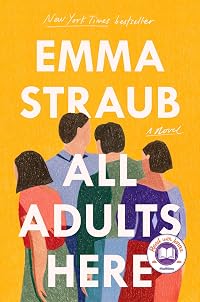
All Adults Here
by Emma Straub
On This Page
Description
"When Astrid Strick witnesses a school bus accident in the center of town, it jostles loose a repressed memory from her young parenting days, decades years earlier. Suddenly, Astrid realizes she was not quite the parent she thought she'd been to her three, now-grown children. But to what consequence? Astrid's youngest son is drifting and unfocused, making parenting mistakes of his own. Her daughter is intentionally pregnant yet struggling to give up her own adolescence. And her eldest seems show more to measure his adult life according to standards no one else shares. But who gets to decide, so many years later, which long-ago lapses were the ones that mattered? Who decides which apologies really count? It might be that only Astrid's 13-year-old granddaughter and her new friend really understand the courage it takes to tell the truth to the people you love the most. In All Adults Here, Emma Straub's unique alchemy of wisdom, humor and insight come together in a deeply satisfying story about adult siblings, aging parents, high school boyfriends, middle school mean girls, the lifelong effects of birth order, and all the other things that follow us into adulthood, whether we like them to or not"-- show lessTags
Recommendations


Member Reviews
Y'all. I love Emma Straub as a person and author. She is adorable in her online presence, and visiting her bookstore is on my bucket list. Plus, her writing style is perfection. She truly gets people and captures the most intricate nuances in her characters and settings. All Adults Here is another great example of her ability to create stories that are as real as anything you will come across in your everyday life.
The thing is, while I can appreciate just how well Ms. Straub writes and how amazing her stories are, including her newest book, I realized once and for all that I don't like to read family dramas. They do nothing for me. In fact, they make me feel uncomfortable as if I am a total creeper voyeur spying on someone else's life. show more Plus, they don't help me escape my own life when I read. Parental drama makes me think about my own parents. Sibling drama makes me think about my brother. It is the exact opposite of why I read.
I am someone who reads to escape, so I want worlds that are unfamiliar, lives so not like mine as to be foreign. Ms. Straub in All Adults Here does not provide me with that. Her setting of a fictional town in New York feels universal and could be any small town in America. Similarly, the Strick family is normal, filled with the same doubts, bad choices, trauma, secrets, and flaws that make up any family. It isn't escapism so much as it is a confirmation and potential comfort that you are not alone in your family's weirdness or issues.
I get why such novels are popular, and I truly believe that All Adults Here is a gorgeous story. Unfortunately, it did nothing for me, and I was really happy when I finished it so that I could move onto something weird and fantastical. But this is me. Fans of such dramas are going to go ga-ga over this novel, and rightly so. show less
The thing is, while I can appreciate just how well Ms. Straub writes and how amazing her stories are, including her newest book, I realized once and for all that I don't like to read family dramas. They do nothing for me. In fact, they make me feel uncomfortable as if I am a total creeper voyeur spying on someone else's life. show more Plus, they don't help me escape my own life when I read. Parental drama makes me think about my own parents. Sibling drama makes me think about my brother. It is the exact opposite of why I read.
I am someone who reads to escape, so I want worlds that are unfamiliar, lives so not like mine as to be foreign. Ms. Straub in All Adults Here does not provide me with that. Her setting of a fictional town in New York feels universal and could be any small town in America. Similarly, the Strick family is normal, filled with the same doubts, bad choices, trauma, secrets, and flaws that make up any family. It isn't escapism so much as it is a confirmation and potential comfort that you are not alone in your family's weirdness or issues.
I get why such novels are popular, and I truly believe that All Adults Here is a gorgeous story. Unfortunately, it did nothing for me, and I was really happy when I finished it so that I could move onto something weird and fantastical. But this is me. Fans of such dramas are going to go ga-ga over this novel, and rightly so. show less
There is not much a plot here, but there is a lot of character development, and it is fun to watch. These people are interesting and also stunted, really stunted, and all move forward just by cracking a little. Just like Leonard Cohen said, that is how the light gets in. I enjoyed these stories, and Straub writes them so well. This book is both fizzy and literary, and for me was a delightful escape from the closed in reality of Coronavirus.
I feel like I need to respond to a couple of criticisms here in reviews that really bothered me. The first is that Straub gratuitously throws in what some people think of as a "kitchen sink" full of provocative "modern" issues. I can't imagine that there are non-Amish parents who are not concerned show more about their kids connecting with pedophiles online. It happens all the time. I also cannot believe anyone lives a life that does not include interaction with people who identify as trans or gender non-binary and some who are lesbian, gay or bi, but maybe those people exist. I can say that every day of my life includes interaction with LGBT+ co-workers, neighbors, friends, and relatives even though my immediate family is made up of straight cis people. If your life does not include any interaction with LGBT+ people, I would guess that means that the people around you don't trust you enough to share their identities. In any event, this is pretty everyday stuff. Though we have moved forward it is certainly not unusual that people who are LGBT+ are bullied, especially while in school, though certainly as adults as well. So the inclusion of two plotlines that deal with characters who are LGBT+, one with the bullying of a trans teen and the other with someone publically coming out as bi, seems appropriate. No one seems to mind when 100% of the characters in a book spend their time focused on issues unique to white cis straight people, so what is the problem when perhaps 15% of the story focuses away from cisgendered heterosexual people? I recoiled when I read those comments saying these issues were props to make things seem scandalous or of-the-moment, and since I do my best to be an ally to my fellow humans who are LGBT+ I have to say, if this bothers you, that is a problem with you, not with the book.
Another line of criticism is that this book (and Straub's earlier books) focused on white, educated, economically secure people who enjoy a high degree of privilege. (Porter is the most economically privileged goat farmer you will ever find, and that is especially weird because she NEVER works.) To those commenters I say, "true" and also, "what is the issue?" Being open to hearing the voices of people from historically underrepresented groups and those from the developing world does not mean the problems of middle and upper-middle-class white people in the US, Europe and the UK are any less interesting or valid. I fit in this group, and I want to hear these stories along with the stories of people whose lived experience differs from mine. If you don't want to read about my tribe, that is cool, don't read these books, but the stories still deserve to be heard and they have an audience. show less
I feel like I need to respond to a couple of criticisms here in reviews that really bothered me. The first is that Straub gratuitously throws in what some people think of as a "kitchen sink" full of provocative "modern" issues. I can't imagine that there are non-Amish parents who are not concerned show more about their kids connecting with pedophiles online. It happens all the time. I also cannot believe anyone lives a life that does not include interaction with people who identify as trans or gender non-binary and some who are lesbian, gay or bi, but maybe those people exist. I can say that every day of my life includes interaction with LGBT+ co-workers, neighbors, friends, and relatives even though my immediate family is made up of straight cis people. If your life does not include any interaction with LGBT+ people, I would guess that means that the people around you don't trust you enough to share their identities. In any event, this is pretty everyday stuff. Though we have moved forward it is certainly not unusual that people who are LGBT+ are bullied, especially while in school, though certainly as adults as well. So the inclusion of two plotlines that deal with characters who are LGBT+, one with the bullying of a trans teen and the other with someone publically coming out as bi, seems appropriate. No one seems to mind when 100% of the characters in a book spend their time focused on issues unique to white cis straight people, so what is the problem when perhaps 15% of the story focuses away from cisgendered heterosexual people? I recoiled when I read those comments saying these issues were props to make things seem scandalous or of-the-moment, and since I do my best to be an ally to my fellow humans who are LGBT+ I have to say, if this bothers you, that is a problem with you, not with the book.
Another line of criticism is that this book (and Straub's earlier books) focused on white, educated, economically secure people who enjoy a high degree of privilege. (Porter is the most economically privileged goat farmer you will ever find, and that is especially weird because she NEVER works.) To those commenters I say, "true" and also, "what is the issue?" Being open to hearing the voices of people from historically underrepresented groups and those from the developing world does not mean the problems of middle and upper-middle-class white people in the US, Europe and the UK are any less interesting or valid. I fit in this group, and I want to hear these stories along with the stories of people whose lived experience differs from mine. If you don't want to read about my tribe, that is cool, don't read these books, but the stories still deserve to be heard and they have an audience. show less
Barbara Baker gets hit and killed by a bus right in front of Astrid Strick. Astrid had known (and not particularly liked) Barbara for more than 40 years, but it suddenly changes everything for Astrid, and we are lucky to witness it in Emma Straub’s All Adults Here. Short chapters told by a revolving door of characters from Astrid’s family reveal the drama and history of their lives rapidly, painfully and comically. If you can get past the unrealistic idea that all of these events occur to this one small family, something pretty great happens in this book. All Adults Here is full of funny observations (“They were both in their weekend attire, which meant chino shorts with belts and polo shirts. They could golf at a moment’s show more notice, like rich superheroes”) and poignant moments as the Stricks navigate the modern world. This is a novel about families--raising them, living with them and coming to grips with their histories to find a way forward. A highly recommended book for Straub fans and other contemporary lit readers looking for a fun but meaningful and resonant read. show less
My first Emma Straub experience and it was a good one. This review needs to be broken into two parts: the book and the writing.
Part One: All Adults Here.
There are no giants in this book and no villains. Nothing will stand out as an ah-ha moment, and you won't be haunted because of shock value after reading it. There is an abundance of truth and openness about how the family is generationally dysfunctional in ways, perfect in others, closeted and open simultaneously, and just as crazy, unpredictable, and loyal as yours.
There is a lot of head nodding, mm-hmm moments where you will recognize yourself, your siblings, or even your parent in one or another character. You will see that what you thought was uniquely off about your own family show more isn't. And that what you thought was remarkably special to your relationship is also noteworthy in others.
In other words, All Adults Here will help you open your eyes to family, its imperfections, and its constraints. You will watch Cecilia be sent to live with her grandmother at age 13 because she did the right thing but was bullied because of it; it was easier on her parents to remove her than deal with it. You will see Astrid, the matriarch, find love in the arms of a woman after being a widow for decades. As the firstborn, Elliot will finally be able to express the pressures of the same. Porter, the unwed, pregnant by choice from a sperm bank, still having an affair with her high-school sweetheart middle child, sees she is loved by her mother and both her older and younger brothers. And Nicholas, oh, precious, last born, never at fault, Nickey shows his downfalls and fears just like his siblings.
Set in small town USA, the townspeople are just as nosy and awful and loving and loyal and plagued with turmoil as in any other town; we all hate to love where we are from and couldn't imagine wanting to be from anywhere else if we were being honest. You will fall in love with some of the ancillary characters, root for Robin to find herself, and hope that Sidney falls off the float.
That is All Adults Here. I love this book. It is a book about nothing and everything and is an important book to read if you belong to a family.
Part Two: Emma Straub.
What an insightful writer Ms. Straub is. She captures the tiniest of nuances in grand ways without making a spectacle. In one stroke she can paralyze you by seeing your deepest secrets and open your mind while allowing you to feel okay about all of it. She is a rare writer that requires you must read every. single. word. Because if you don't, you might have missed something. Scratch that; you will miss something.
Take your time, read every word, and think about it. Put it into the context of your own life and come out the other side knowing you are not alone with how upside down according to the perfection on social media your life is. You are okay.
Thank you, Emma Straub, for writing truth. show less
Part One: All Adults Here.
There are no giants in this book and no villains. Nothing will stand out as an ah-ha moment, and you won't be haunted because of shock value after reading it. There is an abundance of truth and openness about how the family is generationally dysfunctional in ways, perfect in others, closeted and open simultaneously, and just as crazy, unpredictable, and loyal as yours.
There is a lot of head nodding, mm-hmm moments where you will recognize yourself, your siblings, or even your parent in one or another character. You will see that what you thought was uniquely off about your own family show more isn't. And that what you thought was remarkably special to your relationship is also noteworthy in others.
In other words, All Adults Here will help you open your eyes to family, its imperfections, and its constraints. You will watch Cecilia be sent to live with her grandmother at age 13 because she did the right thing but was bullied because of it; it was easier on her parents to remove her than deal with it. You will see Astrid, the matriarch, find love in the arms of a woman after being a widow for decades. As the firstborn, Elliot will finally be able to express the pressures of the same. Porter, the unwed, pregnant by choice from a sperm bank, still having an affair with her high-school sweetheart middle child, sees she is loved by her mother and both her older and younger brothers. And Nicholas, oh, precious, last born, never at fault, Nickey shows his downfalls and fears just like his siblings.
Set in small town USA, the townspeople are just as nosy and awful and loving and loyal and plagued with turmoil as in any other town; we all hate to love where we are from and couldn't imagine wanting to be from anywhere else if we were being honest. You will fall in love with some of the ancillary characters, root for Robin to find herself, and hope that Sidney falls off the float.
That is All Adults Here. I love this book. It is a book about nothing and everything and is an important book to read if you belong to a family.
Part Two: Emma Straub.
What an insightful writer Ms. Straub is. She captures the tiniest of nuances in grand ways without making a spectacle. In one stroke she can paralyze you by seeing your deepest secrets and open your mind while allowing you to feel okay about all of it. She is a rare writer that requires you must read every. single. word. Because if you don't, you might have missed something. Scratch that; you will miss something.
Take your time, read every word, and think about it. Put it into the context of your own life and come out the other side knowing you are not alone with how upside down according to the perfection on social media your life is. You are okay.
Thank you, Emma Straub, for writing truth. show less
I loved every bit of this messy family story, which begins with the mother Astrid, witnessing the hit and run accident of someone she really doesn't like named Barbara. The incident causes her to examine her relationships with her three children Elliott, Porter and Nicky. Eliott is a developer and builder, who has some resentment of his mother from years ago. Porter, is pregnant by a sperm doner, yet can't seem to stop seeing her teenage boyfriend, who is married with children. Nicky has sent his daughter Cecilia to live with Astrid after a bullying incident at her school.
Astrid has a surprise for her children, that she is in love with Birdie, the town hairdresser, and wonders how they will take the news.
This was an enjoyable read which show more tackled many subjects, but with the overarching theme of love and family relationships. show less
Astrid has a surprise for her children, that she is in love with Birdie, the town hairdresser, and wonders how they will take the news.
This was an enjoyable read which show more tackled many subjects, but with the overarching theme of love and family relationships. show less
All Adults Here is a character driven novel about Astrid and her three grown children. When Astrid witnesses her frenemy Barbara get hit and killed by a school bus, she starts to reevaluate her own life choices. She wonders if it’s too late to right some of the parenting mistakes she makes when her kids were young. At the same time, her teenage granddaughter comes to live with her, giving her a chance to do things right on the first try.
Her oldest son is a tightly wound, somewhat bitter man. Her daughter is single and pregnant by choice and her youngest son is bohemian who is also a bit of a stoner. It’s his daughter that comes to live with Astrid.
Emma Straub writes fantastic characters. She’s able to make their inner monologues show more both introspective and full of wry humor. Astrid was my favorite. She had the greatest lines. Here’s one I really liked:
“She herself [Astrid] was an only child, and she found old people with siblings somewhat ridiculous, as if they were eighty-year-olds who still wore water wings in swimming pools. Siblings were for the very young and needy. She had given her children siblings to occupy each other in childhood.”
This book addresses so many facets of life, it would make a great book club selection. It’s got LGBT issues, single motherhood, adultery, bullying, death and divorce. It sounds like a lot but I didn’t think it was overloaded. Straub did a wonderful job weaving everything together in an organic way. Although the characters in All Adults Here deal with some serious problems, it never gets too heavy. You won’t feel depressed after reading it and that’s important in these times.
I’ve loved the books I’ve previously read by Emma Sraub and All Adults Here did not disappoint. Highly recommended. show less
Her oldest son is a tightly wound, somewhat bitter man. Her daughter is single and pregnant by choice and her youngest son is bohemian who is also a bit of a stoner. It’s his daughter that comes to live with Astrid.
Emma Straub writes fantastic characters. She’s able to make their inner monologues show more both introspective and full of wry humor. Astrid was my favorite. She had the greatest lines. Here’s one I really liked:
“She herself [Astrid] was an only child, and she found old people with siblings somewhat ridiculous, as if they were eighty-year-olds who still wore water wings in swimming pools. Siblings were for the very young and needy. She had given her children siblings to occupy each other in childhood.”
This book addresses so many facets of life, it would make a great book club selection. It’s got LGBT issues, single motherhood, adultery, bullying, death and divorce. It sounds like a lot but I didn’t think it was overloaded. Straub did a wonderful job weaving everything together in an organic way. Although the characters in All Adults Here deal with some serious problems, it never gets too heavy. You won’t feel depressed after reading it and that’s important in these times.
I’ve loved the books I’ve previously read by Emma Sraub and All Adults Here did not disappoint. Highly recommended. show less
All Adults Here was a delightful book about modern family life in a small town in the Hudson Valley. The writing is so engaging, and I found myself easily relating to the main character and matriarch, Astrid. Astrid has raised three children who are now adults. The story begins as she sees a long-time community member, Barbara, get hit by a bus while Astrid is awaiting the arrival of her thirteen-year-old granddaughter, Cecelia, who is coming to live with her after an incident at her school in Brooklyn.
As the story progresses, Astrid reflects on how she has raised her children and tries to atone for mistakes she has made that have probably led to the current communication issues with each of them. Each character's baggage and secrets show more from childhood, young adulthood, and adulthood are gradually revealed. It turns out that Astrid has been keeping a big secret herself, and as we learn more about her offspring and her granddaughter, we recognize how complicated families are. Through the integration of story elements, which include lesbian and trans characters, use of a sperm bank, teenage bullying, deviants on the internet, and more, Emma Straub presents much food for thought. Using a nonchalant manner and natural everyday language, she shows the reader through her characters, that we need to dissect our closest relationships, those with whom we shared parts of our homes and lives before we can begin to understand others. As all of the characters experience and confront their discomforts with each other and then attempt to grow beyond them, we learn how necessary disclosures and admissions in families will lead to the communication that is so lacking in our world. show less
As the story progresses, Astrid reflects on how she has raised her children and tries to atone for mistakes she has made that have probably led to the current communication issues with each of them. Each character's baggage and secrets show more from childhood, young adulthood, and adulthood are gradually revealed. It turns out that Astrid has been keeping a big secret herself, and as we learn more about her offspring and her granddaughter, we recognize how complicated families are. Through the integration of story elements, which include lesbian and trans characters, use of a sperm bank, teenage bullying, deviants on the internet, and more, Emma Straub presents much food for thought. Using a nonchalant manner and natural everyday language, she shows the reader through her characters, that we need to dissect our closest relationships, those with whom we shared parts of our homes and lives before we can begin to understand others. As all of the characters experience and confront their discomforts with each other and then attempt to grow beyond them, we learn how necessary disclosures and admissions in families will lead to the communication that is so lacking in our world. show less
Members
- Recently Added By
Lists

Books Read in 2022
5,168 works; 114 members

Read with Jenna
91 works; 2 members
Author Information

12+ Works 6,760 Members
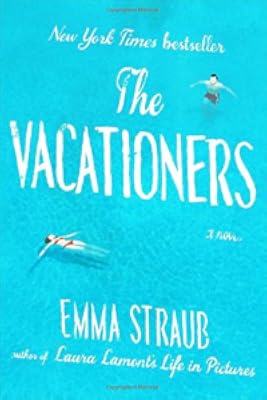
Emma Straub is an author, a bookseller, and a staff writer for Rookie. Her fiction and non-fiction works have been published in The Paris Review Daily, Time, and The New York Times. Her novels include Laura Lamont's Life in Pictures, Other People We Married, The Vacationers and Modern Lovers. (Bowker Author Biography)
Some Editions
Awards and Honors
Awards
Distinctions
Read with Jenna (2020-05 – 2020)
Common Knowledge
- Canonical title
- All Adults Here
- People/Characters
- Astrid Strick; Nicky Strick; Porter Strick; Elliot Strick; Cecelia Raskin-Strick
- Important places
- Clapham, New York, USA; Hudson Valley, New York, USA; New York, New York, USA
- Epigraph
- Every feeling you're showing
Is a boomerang you're throwing
—ABBA
No one's easy to love,
Don't look back, my dear, just say you tried
—Sharon Van Etten
You love to fail, that's all you love.
—The Magnetic Fields - Dedication
- For my parents, who did their best,
and for my children,
for whom I am doing mine - First words
- Astrid Strick had never liked Barbara Baker, not for a single day of their forty-year acquaintance, but when Barbara was hit and killed by the empty, speeding school bus at the intersection of Main and Morrison streets on the... (show all) eastern side of the town roundabout, Astrid knew that her life had changed, the shock of which was indistinguishable from relief.
- Quotations
- Astrid had seen death up close before, but not like this, not on the street like a raccoon.
Birdie also cut hair at the Heron Meadows, the assisted living facility on the edge of the Clapham border, and she had a certain sangfroid approach to the mortal coil. Everyone shuffled, in the end.
And now she was pregnant with a girl. Science worked, and miracles happened. The two were not mutually exclusive.
"You can still go back next year," his mom said. There was an internal countdown. August had one more summer before aging out. Like a stuffed animal on a teenager's bed, his days were numbered.
No one laughed at gorgeous white men. It was a design flaw in the universe.
Being a kid meant being in a constant state of transition, no matter what.
according to her dad, Elliot had always been uptight, and everyone knew that uptight people couldn't sing.
There were some people who just needed to be married, who felt like they were only wearing one shoe when they were alone.
"Oh, is that the face you make when you have to imagine a woman doing something just because she wants to? Do you know what year it is? It's the year of the woman! Again! Women can do anything. We can do stupid things and ama... (show all)zing things and smart things and dumb things. And we don't even need to get a permission slip!"
"You are such a kumbaya fucker," Elliot said. He took a drink. "I guess my problem is that she was always so hard, and that was our model, you know? Like, after Dad died, all we had was her, and she was this certain way. It's... (show all) like a mama duck turning around and telling all her ducklings that they've been waddling the wrong fucking way, even though she taught them how to do it."
There was applause down the block—the parade had started. Aidan and Zachary cheered, and Elliot and Wendy each hoisted one child into the air. Nicky spun around to knock on the window at Shear Beauty to let his mother know.... (show all) Porter and Juliette were craning their necks to see the floats begin their slow journey. It was like watching manatees race.
"Everyone makes mistakes, Porter," Astrid had said in the bathroom. "You don't have to be perfect. You don't even have to pretend to be perfect."
This was the job of a parent: to fuck up, over and over again. This was the job of a child: to grow up anyway.
If she hadn't learned anything else, she had learned this—say it. Say it now, while you have the chance.
She wasn't one of those people who needed to be stimulated all the time, with a smartphone and a TV screen and a podcast in her eardrum. She liked to be where she was.
This was how it was supposed to feel. It wasn't just that she belonged to someone else, it was that she belonged.
People said that everyone was born alone and everyone would die alone, but they were wrong. When someone was born, they brought so many people with them, generations of people zipped into the marrow of their tiny bones. - Last words
- (Click to show. Warning: May contain spoilers.)Astrid looked at their reflections on the blank screen, at herself and her wife, and felt so, so happy.
- Publisher's editor
- McGrath, Sarah
Classifications
Statistics
- Members
- 1,372
- Popularity
- 17,345
- Reviews
- 49
- Rating
- (3.63)
- Languages
- English, Hungarian, Portuguese (Portugal)
- Media
- Paper, Audiobook, Ebook
- ISBNs
- 24
- ASINs
- 5