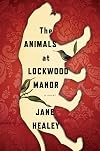
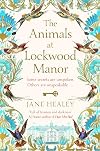
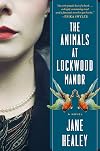
The Animals at Lockwood Manor
by Jane Healey
On This Page
Description
A debut novel for fans of Sarah Perry and Kate Morton: when a young woman is tasked with safeguarding a natural history collection as it is spirited out of London during WWII, she discovers her new manor home is a place of secrets and terror instead of protection.In August 1939, thirty-year-old Hetty Cartwright arrives at Lockwood Manor to oversee a natural history museum collection, whose contents have been taken out of London for safekeeping. She is unprepared for the scale of protecting show more her charges from party guests, wild animals, the elements, the tyrannical Major Lockwood and Luftwaffe bombs. Most of all, she is unprepared for the beautiful and haunted Lucy Lockwood.
For Lucy, who has spent much of her life cloistered at Lockwood suffering from bad nerves, the arrival of the museum brings with it new freedoms. But it also resurfaces memories of her late mother, and nightmares in which Lucy roams Lockwood hunting for something she has lost.
When the animals start to move of their own accord, and exhibits go missing, they begin to wonder what exactly it is that they might need protection from. And as the disasters mount up, it is not only Hetty's future employment that is in danger, but her own sanity too. There's something, or someone, in the house. Someone stalking her through its darkened corridors...
. show less
Tags
Recommendations












Member Recommendations
Member Reviews
You know how sometimes a book just has a hook that appeals to you immediately? That is what happened to me with The Animals at Lockwood Manor. I was straightaway fascinated by the idea of stuffed animals being evacuated from a museum during World War II to what is, in my head at least, something akin to a stately home.
For that is what happens when war breaks out and Hetty Cartwright must look after the animals from the museum where she works in London. She also is evacuated to Lockwood Manor with her beloved specimens. This is not a walk in the park for Hetty though. Major Lockwood is an irascible brute of a man, unkind, unpleasant and boorish. I must say that I inwardly cheered every time Hetty managed to stand up to him though. He and show more his daughter, Lucy, are the only 'above stairs' residents of the Manor since the death of his wife and mother. There is also a selection of servants and guards for the animals, and each character adds to the layers of the story.
This is a gothic read with many hidden depths. I really didn't expect a couple of the threads of the story at all. I loved the friendship that developed between Hetty and Lucy, two women of a similar age, both stymied by their families and their backgrounds, both looking for something more in their lives. I also found the descriptions of the animals absolutely enthralling. There are everyday creatures combined with the more exotic and it's quite clear Hetty is a little in love with them all!
There's a kind of supernatural aspect to some of the story and those dark corridors and recesses of the Manor provide ample opportunity for sinister happenings, including the mysterious disappearance of some of the animals. Is it ghostly goings on or is some of it down to human malevolence? I thought the author kept up the suspense really well.
This is an atmospheric read with the Manor being a character in its own right. It's not a fast-paced read, more one that takes the time to build up the mood. It's dark and unexpected, beautifully written, and I enjoyed it very much. show less
For that is what happens when war breaks out and Hetty Cartwright must look after the animals from the museum where she works in London. She also is evacuated to Lockwood Manor with her beloved specimens. This is not a walk in the park for Hetty though. Major Lockwood is an irascible brute of a man, unkind, unpleasant and boorish. I must say that I inwardly cheered every time Hetty managed to stand up to him though. He and show more his daughter, Lucy, are the only 'above stairs' residents of the Manor since the death of his wife and mother. There is also a selection of servants and guards for the animals, and each character adds to the layers of the story.
This is a gothic read with many hidden depths. I really didn't expect a couple of the threads of the story at all. I loved the friendship that developed between Hetty and Lucy, two women of a similar age, both stymied by their families and their backgrounds, both looking for something more in their lives. I also found the descriptions of the animals absolutely enthralling. There are everyday creatures combined with the more exotic and it's quite clear Hetty is a little in love with them all!
There's a kind of supernatural aspect to some of the story and those dark corridors and recesses of the Manor provide ample opportunity for sinister happenings, including the mysterious disappearance of some of the animals. Is it ghostly goings on or is some of it down to human malevolence? I thought the author kept up the suspense really well.
This is an atmospheric read with the Manor being a character in its own right. It's not a fast-paced read, more one that takes the time to build up the mood. It's dark and unexpected, beautifully written, and I enjoyed it very much. show less
''Lockwood had too many empty rooms. They sat there, hushed and gaping, waiting for my mind to fill them with horrors - spectres and shadows and strange creeping creatures. And sometimes what was already there was frightening enough: empty chairs; the hulk of a hollow wardrobe; a painting that slid off the wall on its own accord and shattered on the floor; the billowing of a curtain in a stray gust of wind; a light bulb that flickered like a message from the beyond. Empty rooms hold the possibility of people lurking inside them - truants, intruders, spirits.''
When we think of the ones that must be protected during a war, our mind always turns to human beings and understandably so. But what bout the treasures kept within the walls of our show more museums, the evidence of the human's evolution, the proof that we aren't only bringers of destruction but also able to create wonders? Hetty's duty is exactly that. She needs to find a shelter for the collection of mammals belonging to the Natural History Museum, as the Second World War is swiftly approaching Britain. She cannot know that Lockwood Manor hides sins of the past, terrible anger, injustice and corruption. Between a devil woman dressed in white, disappearances and a very real Satan, Hetty and Lucy need to find a way of those who try to dictate their lives.
Welcome to one of the finest novels of the decade...
''The house seemed to encourage wandering, hunting - the long corridor of its first floor, with the wall sconces leading you forward, the tall windows, the neat condition of each room that a dozen servants tended to; the hidden service stairs waiting to be found; the narrow warren of the servants' floor; and above all the vacuum of life, the absence of people in the rooms that had been so lovingly prepared for them.''
There is a long, long British tradition of haunting stories set in foreboding manors. Think of Wuthering Heights, Jane Eyre, The Turn of the Screw, Rebecca. Stories where the House walks side-by-side with the characters, ruling their fate. In Jane Healey's outstanding novel, this concept comes to life to perfection. Lockwood -the name evident of its mystery and darkness- isn't just a setting. It is the driving force behind all actions. Its closed doors and dark curtains, its silent corridors reflect the secrets and the oppression that permeate its walls. The spectres that may or may not haunt the Manor are a mirror of the choices and their repercussions once we allow others to take over our lives. I loved the way Healey links the games of our childhood to the haunting element. How most of them are based on a risky, often violent, premise. From hiding to chasing, to being blindfolded or unwittingly struck by a companion. What is this primal tendency? What does it reflect, I wonder?
But do not think this is just a story about a mysterious manor. No. In Hetty and Lucy, Jane Healey has created two excellent characters. Both at a crossroads, both struck by the lack of a mother in one way or another, both trying to overcome the norms of being ''proper ladies'', determined to swim against the current on so many levels. In the thoughts of the two young women and in their relationship, we can see the very notion of resilience, determination, and persistence, regardless of the cost. I would be frightfully negligent if I didn't mention the crucial and very mysterious role played by Lucy's mother, a character that deserves her own novel...
Extremely atmospheric, exquisitely written prose, excellent dialogue, brilliantly depicted themes, a wonderful continuation of the Gothic Manor sub-genre. A beautiful, beautiful novel!
''If there was a spirit in this house, it was me; if there was a haunting, it was my own.''
My reviews can also be found on https://theopinionatedreaderblog.wordpress.com/ show less
When we think of the ones that must be protected during a war, our mind always turns to human beings and understandably so. But what bout the treasures kept within the walls of our show more museums, the evidence of the human's evolution, the proof that we aren't only bringers of destruction but also able to create wonders? Hetty's duty is exactly that. She needs to find a shelter for the collection of mammals belonging to the Natural History Museum, as the Second World War is swiftly approaching Britain. She cannot know that Lockwood Manor hides sins of the past, terrible anger, injustice and corruption. Between a devil woman dressed in white, disappearances and a very real Satan, Hetty and Lucy need to find a way of those who try to dictate their lives.
Welcome to one of the finest novels of the decade...
''The house seemed to encourage wandering, hunting - the long corridor of its first floor, with the wall sconces leading you forward, the tall windows, the neat condition of each room that a dozen servants tended to; the hidden service stairs waiting to be found; the narrow warren of the servants' floor; and above all the vacuum of life, the absence of people in the rooms that had been so lovingly prepared for them.''
There is a long, long British tradition of haunting stories set in foreboding manors. Think of Wuthering Heights, Jane Eyre, The Turn of the Screw, Rebecca. Stories where the House walks side-by-side with the characters, ruling their fate. In Jane Healey's outstanding novel, this concept comes to life to perfection. Lockwood -the name evident of its mystery and darkness- isn't just a setting. It is the driving force behind all actions. Its closed doors and dark curtains, its silent corridors reflect the secrets and the oppression that permeate its walls. The spectres that may or may not haunt the Manor are a mirror of the choices and their repercussions once we allow others to take over our lives. I loved the way Healey links the games of our childhood to the haunting element. How most of them are based on a risky, often violent, premise. From hiding to chasing, to being blindfolded or unwittingly struck by a companion. What is this primal tendency? What does it reflect, I wonder?
But do not think this is just a story about a mysterious manor. No. In Hetty and Lucy, Jane Healey has created two excellent characters. Both at a crossroads, both struck by the lack of a mother in one way or another, both trying to overcome the norms of being ''proper ladies'', determined to swim against the current on so many levels. In the thoughts of the two young women and in their relationship, we can see the very notion of resilience, determination, and persistence, regardless of the cost. I would be frightfully negligent if I didn't mention the crucial and very mysterious role played by Lucy's mother, a character that deserves her own novel...
Extremely atmospheric, exquisitely written prose, excellent dialogue, brilliantly depicted themes, a wonderful continuation of the Gothic Manor sub-genre. A beautiful, beautiful novel!
''If there was a spirit in this house, it was me; if there was a haunting, it was my own.''
My reviews can also be found on https://theopinionatedreaderblog.wordpress.com/ show less
At its core, "The Animals at Lockwood Manor" is a feminist and queer love story about a museum curator and an heiress. Its overarching theme is that of the hunter and the hunted, and it becomes apparent quickly that it's not only describing people and animals, but the way men treat women; something to be domineered and kept.
This is obvious in the way Lucy's father treated her mother when she was alive, and less obvious with how he treats Lucy herself. He acts the concerned father but keeps his daughter as more of a trophy.
I loved Hetty and Lucy and the slow progression of their relationship.
Every other character in this book, however, is pretty much irredeemable. Even the character we're meant to sympathize with in the end...I show more personally could not. Not after everything she did.
Overall, I really liked The Animals at Lockwood Manor. I was drawn in quickly from the start and I finished it in a couple of days.
*ARC received from BookishFirst show less
This is obvious in the way Lucy's father treated her mother when she was alive, and less obvious with how he treats Lucy herself. He acts the concerned father but keeps his daughter as more of a trophy.
I loved Hetty and Lucy and the slow progression of their relationship.
Every other character in this book, however, is pretty much irredeemable. Even the character we're meant to sympathize with in the end...I show more personally could not. Not after everything she did.
Overall, I really liked The Animals at Lockwood Manor. I was drawn in quickly from the start and I finished it in a couple of days.
*ARC received from BookishFirst show less
World War II. A young woman finds herself curator of mammals at the British Museum as more and more men head off to fight. With the threat of air raids, the Mammals are shipped off to a country mansion. Where they are attacked by parasites, move about, disappear...? As the young curator grows increasingly close to the adult daughter living in the mansion, the Lord (and father) grows increasingly threatening.
If you've read much in the way of psychological suspense novels, you can pretty much guess most of what is to come—but that sense that you know this trope doesn't keep The Animals at Lockwood Manor from being engaging. Jane Healey knows how to bring characters alive. She has a pitch-perfect ear for dialogue. The unseen menace she show more paints with her words is unsettling enough that you'll want to finish this title before going to bed for the night.
The historical setting is a bonus here. As the novel progresses, we see the myriad ways the war affects ordinary lives. We also get hints of the class tensions that are emerging—and that will reshape post-war Britain.
Very highly recommended.
I received a free electronic review copy of this book from the publisher via EdelweissPlus. The opinions are my own. show less
If you've read much in the way of psychological suspense novels, you can pretty much guess most of what is to come—but that sense that you know this trope doesn't keep The Animals at Lockwood Manor from being engaging. Jane Healey knows how to bring characters alive. She has a pitch-perfect ear for dialogue. The unseen menace she show more paints with her words is unsettling enough that you'll want to finish this title before going to bed for the night.
The historical setting is a bonus here. As the novel progresses, we see the myriad ways the war affects ordinary lives. We also get hints of the class tensions that are emerging—and that will reshape post-war Britain.
Very highly recommended.
I received a free electronic review copy of this book from the publisher via EdelweissPlus. The opinions are my own. show less
The premise of this story introduced me to a bit of history I hadn't known: that much of the contents of the British Museum was evacuated to safer locations in the countryside during the Blitz. The "animals" of the title refers to the museum's mammal collection, whose most valuable specimens were relocated to a country estate, Lockwood Manor, along with their director, Hetty Cartwright. The house is huge, maze-like, and rumored to be haunted, and strange things start happening almost immediately as one of the exhibits, a stuffed jaguar, disappears, and others are moved from their places during the night. Hetty feels out of her element trying to care for her charges, and her only friend is Major Lockwood's daughter, Lucy, who suffers show more from anxiety and terrible nightmares. This story has a deliciously gothic atmosphere--with echoes of Rebecca and Jane Eyre--as well as a sweet romance and a mystery at the center: Who or what is the menace roaming the halls of Lockwood Manor? Highly enjoyable. show less
Jane Healey masters the craftwork of heavenly prose like a seamstress weaving silk - her descriptive prowess and articulation of dark atmospheric tone is simply divine. This book demands to be read by the hearth, with a mug of something warm, and in a smart, British accent (or at least that's what I did.)
Set in 1939, aspiring museum director Hetty Cartwright is tasked with the job of a lifetime - to oversee the relocation of a mammal exhibit for a London gallery to Lockwood Manor in an attempt to avoid the impending destruction of an escalating world war. Despite the protections afforded, keeping the animals safe is no easy feat - specimens are missing or being moved in the dead of night, shadowy figures loom in the corridors, rumors show more abound of a cursed woman in white haunting the grounds, and the caustic lord Major Lockwood treats Hetty and her animals as interlopers rather than welcomed guests. Hetty's only reprieve is the kindness of Major Lockwood's daughter, Lucy Lockwood, a mysterious beauty haunted by the ghosts of her past and in the walls of her home. A hesitant friendship turned blossoming romance ensues - their love is the only hope for happiness in the dark manor and amidst an even darker political climate of war-ridden Europe.
The Animals at Lockwood Manor was a pleasure to read through and through. Atmospheric and chilling, this debut surely demonstrates the author's ability to tap into our senses with wordplay. The supernatural elements are deeply symbolic and psychological, so readers expecting dramatic magic and occult horrors might be disappointed. It's a deliberately paced, beautifully written tale for the patient, open-minded reader. And the representation of a female-female romance is simply sublime. show less
Set in 1939, aspiring museum director Hetty Cartwright is tasked with the job of a lifetime - to oversee the relocation of a mammal exhibit for a London gallery to Lockwood Manor in an attempt to avoid the impending destruction of an escalating world war. Despite the protections afforded, keeping the animals safe is no easy feat - specimens are missing or being moved in the dead of night, shadowy figures loom in the corridors, rumors show more abound of a cursed woman in white haunting the grounds, and the caustic lord Major Lockwood treats Hetty and her animals as interlopers rather than welcomed guests. Hetty's only reprieve is the kindness of Major Lockwood's daughter, Lucy Lockwood, a mysterious beauty haunted by the ghosts of her past and in the walls of her home. A hesitant friendship turned blossoming romance ensues - their love is the only hope for happiness in the dark manor and amidst an even darker political climate of war-ridden Europe.
The Animals at Lockwood Manor was a pleasure to read through and through. Atmospheric and chilling, this debut surely demonstrates the author's ability to tap into our senses with wordplay. The supernatural elements are deeply symbolic and psychological, so readers expecting dramatic magic and occult horrors might be disappointed. It's a deliberately paced, beautifully written tale for the patient, open-minded reader. And the representation of a female-female romance is simply sublime. show less
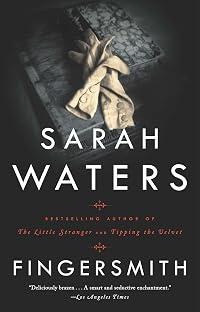
I loved this the way I love a Sarah Waters novel. Gothic and tense and SO tightly written, it unfolded so precisely and beautifully. Perfection.
Members
- Recently Added By
Lists

Top Five Books of 2020
982 works; 350 members

Best Lesbian Fiction (And Narrative Non-Fiction)
155 works; 36 members

Books Set in Great Britain
191 works; 13 members

Female Protagonist
1,056 works; 57 members

Houses and Buildings as Characters in Fiction
182 works; 29 members

Fiction: Historical
288 works; 3 members

World War II Novels
28 works; 4 members

Books Read in 2020
4,379 works; 124 members

Animals in the Title
498 works; 11 members

Adult Stories Involving Animals
76 works; 6 members
Historical fiction set in Britain
13 works; 1 member

Fiction Published in 2020
32 works; 1 member

Reading Group 2021
5 works; 1 member
Author Information

2 Works 487 Members
Awards and Honors
Awards
Common Knowledge
- Original publication date
- 2020-03-10
- Publisher's editor
- Humphreys, Sam
Classifications
Statistics
- Members
- 392
- Popularity
- 79,770
- Reviews
- 22
- Rating
- (3.44)
- Languages
- Dutch, English, German, Italian
- Media
- Paper, Audiobook, Ebook
- ISBNs
- 21
- ASINs
- 6