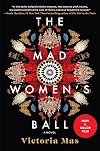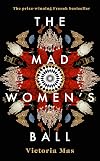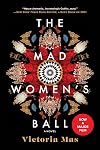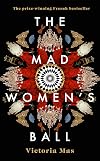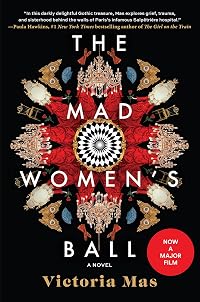
The Mad Women's Ball
by Victoria Mas
On This Page
Description
Soon to be a major film from Amazon Studios, the prizewinning French bestseller "In this darkly delightful Gothic treasure, Mas explores grief, trauma, and sisterhood behind the walls of Paris's infamous Salpêtrière hospital." -Paula Hawkins, #1 New York Times bestselling author of The Girl on the Train The Salpetriere Asylum: Paris, 1885. Dr. Charcot holds all of Paris in thrall with his displays of hypnotism on women who have been deemed mad and cast out from society. But the truth is show more much more complicated-these women are often simply inconvenient, unwanted wives, those who have lost something precious, wayward daughters, or girls born from adulterous relationships. For Parisian society, the highlight of the year is the Lenten ball-the Madwomen's Ball-when the great and good come to gawk at the patients of the Salpetriere dressed up in their finery for one night only. For the women themselves, it is a rare moment of hope. Genevieve is a senior nurse. After the childhood death of her sister Blandine, she shunned religion and placed her faith in both the celebrated psychiatrist Dr. Charcot and science. But everything begins to change when she meets Eugenie, the 19-year-old daughter of a bourgeois family that has locked her away in the asylum. Because Eugenie has a secret: she sees spirits. Inspired by the scandalous, banned work that all of Paris is talking about, The Book of Spirits, Eugenie is determined to escape from the asylum-and the bonds of her gender-and seek out those who will believe in her. And for that she will need Genevieve's help . . . show lessTags
Recommendations




































Member Recommendations
Member Reviews
Come along with us, to the glorious, annual madwoman's ball! (I had that damn song stuck in my head while reading, which was the only entertaining part of the experience.)
The plot is a mash-up of The Sixth Sense and Girl, Interrupted, but the writing fails to deliver - although maybe the nuance was lost in translation. A young woman who 'sees dead people' is sent to Salpêtrière, a hospital or asylum where well to do families could send problematic female relatives in nineteenth century Paris. Madame Geneviève, a middle-aged spinster married to science and reason, is in charge of looking after the 'madwomen'. Her loyalty to the hospital and rejection of spirituality are both challenged when she meets Eugénie, especially when the new show more patient helps her to communicate with her dead sister.
I admire that the story is based on historical reality and that women in the nineteenth century who were deemed an 'embarrassment' to the family were labelled 'hysterical' and institutionalised, but I didn't feel like the author balanced fact with fiction all that well. The book reads like a Wikipedia page told through roleplay, and I didn't believe in or warm to either of the main characters at all. Plus, the background research and themes of the novel are a little heavy-handed. For instance, the following modern, feminist interpretation on corsets is dropped on the reader's head from a great height to drive home how oppressed women have always been by the patriarchy:
The sole purpose of the corset was clearly to immobilize a woman’s body in a posture considered desirable – it was certainly not intended to allow her free movement. As if intellectual constraints were not sufficient, women had to be hobbled physically. One might almost think that, in imposing such restrictions, men did not so much scorn women as fear them.
Well, thanks, Emma Watson, I'm sure women of the Belle Époque were all preoccupied with their undergarments. Then a passing reference to the zoological gardens is followed by the observation that all the animals have been eaten because people were starving. The historical commentary is valid - 'Illness dehumanises; it makes puppets of these women' and 'women were not safe anywhere' - but the author's soapbox too often obscures the characters and the plot. In Geneviève's words: 'there was no possible emotional investment. One was simply presented with information.'
Not the most exciting afternoon I have ever lost to a book, but I'm curious to test if the film adaptation works better than the novel! show less
The plot is a mash-up of The Sixth Sense and Girl, Interrupted, but the writing fails to deliver - although maybe the nuance was lost in translation. A young woman who 'sees dead people' is sent to Salpêtrière, a hospital or asylum where well to do families could send problematic female relatives in nineteenth century Paris. Madame Geneviève, a middle-aged spinster married to science and reason, is in charge of looking after the 'madwomen'. Her loyalty to the hospital and rejection of spirituality are both challenged when she meets Eugénie, especially when the new show more patient helps her to communicate with her dead sister.
I admire that the story is based on historical reality and that women in the nineteenth century who were deemed an 'embarrassment' to the family were labelled 'hysterical' and institutionalised, but I didn't feel like the author balanced fact with fiction all that well. The book reads like a Wikipedia page told through roleplay, and I didn't believe in or warm to either of the main characters at all. Plus, the background research and themes of the novel are a little heavy-handed. For instance, the following modern, feminist interpretation on corsets is dropped on the reader's head from a great height to drive home how oppressed women have always been by the patriarchy:
The sole purpose of the corset was clearly to immobilize a woman’s body in a posture considered desirable – it was certainly not intended to allow her free movement. As if intellectual constraints were not sufficient, women had to be hobbled physically. One might almost think that, in imposing such restrictions, men did not so much scorn women as fear them.
Well, thanks, Emma Watson, I'm sure women of the Belle Époque were all preoccupied with their undergarments. Then a passing reference to the zoological gardens is followed by the observation that all the animals have been eaten because people were starving. The historical commentary is valid - 'Illness dehumanises; it makes puppets of these women' and 'women were not safe anywhere' - but the author's soapbox too often obscures the characters and the plot. In Geneviève's words: 'there was no possible emotional investment. One was simply presented with information.'
Not the most exciting afternoon I have ever lost to a book, but I'm curious to test if the film adaptation works better than the novel! show less
The Mad Women's Ball by Victoria Mas is set in 1885 at the Salpêtrière Asylum in Paris. At the time, women who were homeless, practising prostitution or suffering from a mental illness or neurological disorder found themselves committed to the asylum. A woman who publicly criticised her husband's infidelity could be locked away. If a woman didn't want to marry and was discovered to prefer same sex relationships, she was locked up. A middle aged woman flaunting herself on the arm of a much younger man could be incarcerated for debauchery, while today we'd call her a cougar.
According to the author, women of loose virtue, the dotards and the violent, the hysterics and the simpletons, the fantasists and the fabulists were all admitted. show more Basically, the Salpêtrière took in women Paris didn't know how to deal with.
A diagnosis of hysteria was easily made and I knew I'd find it frustrating at just how easy it was to pack a woman off to an insane asylum in this period of history.
"The Salpêtrière is a dumping ground for women who disturb the peace. An asylum for those whose sensitivities do not tally with what is expected of them. A prison for women guilty of possessing an opinion." Page 27
Primarily a dual narrative, Geneviève is the Matron of the Asylum and a stern mother figure to the nurses. Eugénie is from a well to-do family and finds herself sent to the Salpêtrière Asylum after confiding in her grandmother that she can see ghosts. Geneviève has devoted her life to the Asylum looking after the inmates, but things begin to change for her when Eugénie arrives.
Inspired by history and including the work of Jean-Martin Charcot - renowned for founding modern neurology as we know it - the title was drawn from the fact that a ball was held at the Salpêtrière Asylum every year. Patients were dressed in elaborate gowns and members of high society attended the ball to observe the madwomen from a safe distance and watch them dance. In the novel, the majority of patients look forward to the ball and the opportunity to dress up, be seen by the public and maybe meet a man while the spectacle and behaviour of Paris' elite left a lot to be desired.
A relatively short novel with a satisfying conclusion, I was hoping for a greater focus on Eugénie's ability and would happily follow her into a second novel to see what becomes of her.
Published in 2019 and translated from French, The Mad Women's Ball by Victoria Mas is about agency and the suppression of female autonomy in 19th century France and in 2021 it was also made into a movie in France. show less
According to the author, women of loose virtue, the dotards and the violent, the hysterics and the simpletons, the fantasists and the fabulists were all admitted. show more Basically, the Salpêtrière took in women Paris didn't know how to deal with.
A diagnosis of hysteria was easily made and I knew I'd find it frustrating at just how easy it was to pack a woman off to an insane asylum in this period of history.
"The Salpêtrière is a dumping ground for women who disturb the peace. An asylum for those whose sensitivities do not tally with what is expected of them. A prison for women guilty of possessing an opinion." Page 27
Primarily a dual narrative, Geneviève is the Matron of the Asylum and a stern mother figure to the nurses. Eugénie is from a well to-do family and finds herself sent to the Salpêtrière Asylum after confiding in her grandmother that she can see ghosts. Geneviève has devoted her life to the Asylum looking after the inmates, but things begin to change for her when Eugénie arrives.
Inspired by history and including the work of Jean-Martin Charcot - renowned for founding modern neurology as we know it - the title was drawn from the fact that a ball was held at the Salpêtrière Asylum every year. Patients were dressed in elaborate gowns and members of high society attended the ball to observe the madwomen from a safe distance and watch them dance. In the novel, the majority of patients look forward to the ball and the opportunity to dress up, be seen by the public and maybe meet a man while the spectacle and behaviour of Paris' elite left a lot to be desired.
A relatively short novel with a satisfying conclusion, I was hoping for a greater focus on Eugénie's ability and would happily follow her into a second novel to see what becomes of her.
Published in 2019 and translated from French, The Mad Women's Ball by Victoria Mas is about agency and the suppression of female autonomy in 19th century France and in 2021 it was also made into a movie in France. show less
This was a gift from my friend Leanna and an amazing recommendation. I normally don't pick up historical fiction, much less books which I know will infuriate me, so a historical fiction story about the way society treated inconvenient women in the late 1800s would not typically be at the top of my TBR.
I appreciate the reviews giving a bit of background on the Salpetriere and the dark chapter in Parisian history this novel covers. I also think its worth noting this book is SO WELL WRITTEN. It's a short 200 page novel (at least my English translated paperback is). It is so compelling. Mas writes beautifully complex and well rounded characters. Even in scenes that were completely expected (for example a character who starts the novel show more outside of the hospital is of course expected to end up committed), I was so swept up in the language and the stress of the moment that I was completely absorbed. The translation felt seamless as well.
This is the sort of book that quietly passes hands amongst good friends and becomes part of the shared tapestry of how we talk to each other and relate to our world. My copy has already been claimed. show less
I appreciate the reviews giving a bit of background on the Salpetriere and the dark chapter in Parisian history this novel covers. I also think its worth noting this book is SO WELL WRITTEN. It's a short 200 page novel (at least my English translated paperback is). It is so compelling. Mas writes beautifully complex and well rounded characters. Even in scenes that were completely expected (for example a character who starts the novel show more outside of the hospital is of course expected to end up committed), I was so swept up in the language and the stress of the moment that I was completely absorbed. The translation felt seamless as well.
This is the sort of book that quietly passes hands amongst good friends and becomes part of the shared tapestry of how we talk to each other and relate to our world. My copy has already been claimed. show less
‘’They imagine naked women running through the corridors, banging their heads against tilled walls, spreading their legs to welcome their imaginary lover, howling at the top of their lungs from dawn until dusk.’’
Paris is the City of Light, of Love and Joy. But these words are forbidden to the women who are locked behind the walls of Salpetrière. Abandoned by fathers, husbands, brothers, forsaken by society, they have found themselves in the asylum where they are paraded and ‘’examined’’ for the ‘’sake of Science’’. Locked in a prison of a different kind, Geneviève supervises the wards, wearing an impenetrable armour, fighting her own demons. When a young woman, a member of the upper class, is brought to the show more asylum for communicating with spirits, Geneviève will have to question everything she has taken for granted.
‘’Place Pigalle. A lamplighter reaches up with his long pole to kindle the gas mantles of a streetlamp. The rain has ceased. The pavements are wet and water still trickles from the drainpipes. At the windows, people shake rainwater from shutters while merchants and cafe workers jab at canvas awning with their broom handles to disgorge the water that has collected there. The lamplighter crosses the square and continues his twilight rounds.’’
In this marvellous novel, Victoria Mas highlights the dark side of Paris beyond the splendour and the wealth, two women represent Science and Spirituality, Reason and Faith. In their faces and in the personal stories of the women of the asylum, years and years and years of male cruelty are reflected. They are the Others, prostitutes, mad, disobedient, neurotic, hysterical, diabolical. Every adjective is used against them to denote that they are gangrenous limbs that have to be cut off the perfect body of society. Abandoned and betrayed by their families, left to rot. Geneviève, Eugénie, Louise, Thérèse. Each woman is one of us…
An atmospheric novel that doesn't fall into the trap of the "Historical Fiction grandiose complex". Instead, it focuses on the dynamics between the women who have been ostracised by men, labelled as "monsters" and locked away to die in oblivion…
"The women of Salpetrière were no longer pariahs whose existence had to remain hidden, but entertainment, thrust into the limelight without a flicker of regret."
My reviews can also be found on https://theopinionatedreaderblog.wordpress.com/ show less
Paris is the City of Light, of Love and Joy. But these words are forbidden to the women who are locked behind the walls of Salpetrière. Abandoned by fathers, husbands, brothers, forsaken by society, they have found themselves in the asylum where they are paraded and ‘’examined’’ for the ‘’sake of Science’’. Locked in a prison of a different kind, Geneviève supervises the wards, wearing an impenetrable armour, fighting her own demons. When a young woman, a member of the upper class, is brought to the show more asylum for communicating with spirits, Geneviève will have to question everything she has taken for granted.
‘’Place Pigalle. A lamplighter reaches up with his long pole to kindle the gas mantles of a streetlamp. The rain has ceased. The pavements are wet and water still trickles from the drainpipes. At the windows, people shake rainwater from shutters while merchants and cafe workers jab at canvas awning with their broom handles to disgorge the water that has collected there. The lamplighter crosses the square and continues his twilight rounds.’’
In this marvellous novel, Victoria Mas highlights the dark side of Paris beyond the splendour and the wealth, two women represent Science and Spirituality, Reason and Faith. In their faces and in the personal stories of the women of the asylum, years and years and years of male cruelty are reflected. They are the Others, prostitutes, mad, disobedient, neurotic, hysterical, diabolical. Every adjective is used against them to denote that they are gangrenous limbs that have to be cut off the perfect body of society. Abandoned and betrayed by their families, left to rot. Geneviève, Eugénie, Louise, Thérèse. Each woman is one of us…
An atmospheric novel that doesn't fall into the trap of the "Historical Fiction grandiose complex". Instead, it focuses on the dynamics between the women who have been ostracised by men, labelled as "monsters" and locked away to die in oblivion…
"The women of Salpetrière were no longer pariahs whose existence had to remain hidden, but entertainment, thrust into the limelight without a flicker of regret."
My reviews can also be found on https://theopinionatedreaderblog.wordpress.com/ show less
Some books are based on such an interesting premise that I can't wait to read them. Sometimes there's a brilliant payoff in discovering a great author or an new subgenre; other times the whole experience is meh. Victoria Mas' The Mad Women's Ball is certainly based on an interesting premise. And it is most definitely NOT meh.
Set in late 19th Century Paris, the novel follows several characters connected—through employment or institutionalization—connected to the Salpetriere Asylum. For its time, Salpetriere is ground-breaking. The new medical "tool" of hypnotism is being used to study female madness. Hundreds of medical men (and only men) gather to see Dr. Charcot, who directs Salpetriere, induce seizures in his patients, for reasons show more of medical research, of course.
The ball of the title is an annual event which the wealthiest, most powerful Parisians attend for a chance to rub shoulders with "madwomen," who for one night are allowed to dress in finery and mingle with those living outside the asylum. Yes, the mad women's ball was a real event. You can read more about it here: https://victorianparis.wordpress.com/2021/02/02/the-madwomens-ball-a-flattering-...
Of course, many of the mad women aren't mad at all. This is an era when it's easy for a man to "dispose" of an inconvenient wife, mother, or daughter by taking her to Salpetriere. There's Therese, a murderess with an excellent reason for her crime; Louise, subjected to her uncle's sexual abuse; and Eugenie, who is visited by the dead. Eugenie has been committed by her father—a wealthy authoritarian and rationalist—who disowns her shortly after she confesses her "gift" to her beloved grandmother.
The Mad Women's Ball explores two topics: perceptions of female madness and the possibility of spirit communication. The novel's characters have strong opinions about each. Victoria Mas shows us their many different responses when those opinions are challenged.
The Mad Women's Ball succeeds as a fast-paced story of adversity and (occasional) triumph. It also gives readers a great deal to chew over regarding both history, what it means to be female, and their own perceptions. I received a free electronic review copy of this title from the publisher via NetGalley; the opinions are my own. show less
Set in late 19th Century Paris, the novel follows several characters connected—through employment or institutionalization—connected to the Salpetriere Asylum. For its time, Salpetriere is ground-breaking. The new medical "tool" of hypnotism is being used to study female madness. Hundreds of medical men (and only men) gather to see Dr. Charcot, who directs Salpetriere, induce seizures in his patients, for reasons show more of medical research, of course.
The ball of the title is an annual event which the wealthiest, most powerful Parisians attend for a chance to rub shoulders with "madwomen," who for one night are allowed to dress in finery and mingle with those living outside the asylum. Yes, the mad women's ball was a real event. You can read more about it here: https://victorianparis.wordpress.com/2021/02/02/the-madwomens-ball-a-flattering-...
Of course, many of the mad women aren't mad at all. This is an era when it's easy for a man to "dispose" of an inconvenient wife, mother, or daughter by taking her to Salpetriere. There's Therese, a murderess with an excellent reason for her crime; Louise, subjected to her uncle's sexual abuse; and Eugenie, who is visited by the dead. Eugenie has been committed by her father—a wealthy authoritarian and rationalist—who disowns her shortly after she confesses her "gift" to her beloved grandmother.
The Mad Women's Ball explores two topics: perceptions of female madness and the possibility of spirit communication. The novel's characters have strong opinions about each. Victoria Mas shows us their many different responses when those opinions are challenged.
The Mad Women's Ball succeeds as a fast-paced story of adversity and (occasional) triumph. It also gives readers a great deal to chew over regarding both history, what it means to be female, and their own perceptions. I received a free electronic review copy of this title from the publisher via NetGalley; the opinions are my own. show less
"Madwomen fascinate and horrify." (7)Chilling and disturbing, not least because it is based on historical reality. In the late-1800s, the Salpetriere Hospital in Paris was an asylum for women suffering from hysteria and other misdiagnosed mental illness, or for behaving contrary to convention when it came to social status, religion, gender or power. "The Salpetriere is a dumping ground for women who disturb the peace. And asylum for those whose sensitivities do not tally with what is expected of them. A prison for women guilty of expressing an opinion." (27) It simply took a husband or father or brother to attest to questionable behavior for a woman to be admitted; some were traumatized victims of abuse. Under the supervision of Dr Jean show more Chacot, a 'cure' for these women was sought and intense observation and hypnosis was part of the process. It was yet another way these poor women were victimized. And yes, historically, the asylum held a society ball every year mid-Lent to provide diversion in the solemn time. Important people in the city coveted an invitation to attend and get a close-up look at the women. All this factual information is the basis for the fictional story which centers on some of the patients and the head nurse (matron), Genvieve Gliezes who does her job as a precursor to Nurse Ratchett, until one particular patient, Eugenie Clery changes that. Eugenie has just been committed by her father because she has contacts with the spirit world, very much in vogue at the time, though she truly has the 'gift;' he sees her as demonic. Nurse Gliezes lost her sister at a young age and Eugenie has 'seen' her. This is enough to turn her sympathetic to her patients' plight. Several factors add tension to the whole dynamic, though to divulge them would reveal spoilers. Just wrapping my head around this concept as it was brought to life through Mas' storytelling was feat enough. And though the story is a simple one, it is sprinkled with profound observations: "Although madness in men is not the same as that in women: men use it against others; women turn it in on themselves." (93) A timely read. show less
First thing, I totally dig the cover of the book (it was the reason why I bought it out of a sheer whim). Second thing, even though I don't usually read translated books because a lot of the nuance becomes lost, I felt so comfortable reading the prose that I never even realized it was a translation. So, huge kudos for the translator.
As a trad book with a lot of reviews already, I see no need to explain the plot. However, I am glad the book features not just 1 but two strong female lead characters, one of them is middle age. You don't typically see older single by choice female career women MCs especially in low paranormal fantasy novels, so reading this book felt like a breath of fresh air. It is proof a book written by a woman show more featuring an unlikely protagonist can be successful enough to get its own movie (BTW, the movie is really worth watching. I enjoyed it a lot.).
Readers with a medical background will instantly recognize the names of real life doctors Babinski and Charcot. And no, the book hides zero punches when it comes to its complete disdain for the mechanical and inhumane behavior of these all male doctors. Huge comparison to chief nurse Genevieve who is strict but she is nuturing to her patients on occasion.
The strong hatred of men that reaches an overbearing stench is one thing that made me even more surprised this book got a movie. I think the only truly redeemable male character in the whole book is the bookstore owner, with Theophile's weakness of character makes the reader feel somewhat indifferent to him (BTW, Theophile is much more likeable in the movie).
I think I have a better appreciation of the book because I saw the movie after reading the book and before writing the review. I tend to be harsher with trad books because they are supposed to have an arsenal of editors that improve pacing problems and plot holes. While this book is devoid of typos and plot holes, I believe the movie does a better job with the switch of POVs between Eugenie and Genevieve. The book seems to hop around too much making you believe Louise is the MC, whereas the movie handles her hypnotism session more fluidly by doing it after Eugenie is comitted to the asylum and we see the scene from Genevieve's eyes.
For all of the faults of the book being too short to really give us the chance to enter the minds of the secondary characters, I seldom read a book that sucks me in so damn much that I cannot literally stop reading it until I finish. So, huge props to the author for being capable of such a feat.
Usually when this happens, I award a book 5 stars. But due to the fact this is a trad book, I have to knock down a star because it oversimplifies the evil patriarchal society that demeans women to the degree of sadistic ridiculousness (if you have read as many Victorian era books as I have, you'd agree this book went a bit overboard). I also dropped a star because there are a lot of head hopping scenes where the POV switches without warning between Eugenie and Genevieve. I could forgive this in a self published book, but not in a trad where the army of editors overlooked this issue happening very abruptly without warning a sufficient number of times to be confusing. The last issue I have with the book is the surprising speed Louise's arm contracts. For a book that was so well researched into the works of neurologists of the era, it seems to forget it includes a calendar in each chapter where this happens in the span of... less than 5 days. In reality, spasticity takes around 6-8 weeks. Would take even longer with proper stretching exercises by the nurses. Still a minor greviance, but it made me lift my eyebrow when I saw it.
Despite those grips, I enjoyed both the book and film quite a lot. show less
As a trad book with a lot of reviews already, I see no need to explain the plot. However, I am glad the book features not just 1 but two strong female lead characters, one of them is middle age. You don't typically see older single by choice female career women MCs especially in low paranormal fantasy novels, so reading this book felt like a breath of fresh air. It is proof a book written by a woman show more featuring an unlikely protagonist can be successful enough to get its own movie (BTW, the movie is really worth watching. I enjoyed it a lot.).
Readers with a medical background will instantly recognize the names of real life doctors Babinski and Charcot. And no, the book hides zero punches when it comes to its complete disdain for the mechanical and inhumane behavior of these all male doctors. Huge comparison to chief nurse Genevieve who is strict but she is nuturing to her patients on occasion.
The strong hatred of men that reaches an overbearing stench is one thing that made me even more surprised this book got a movie. I think the only truly redeemable male character in the whole book is the bookstore owner, with Theophile's weakness of character makes the reader feel somewhat indifferent to him (BTW, Theophile is much more likeable in the movie).
I think I have a better appreciation of the book because I saw the movie after reading the book and before writing the review. I tend to be harsher with trad books because they are supposed to have an arsenal of editors that improve pacing problems and plot holes. While this book is devoid of typos and plot holes, I believe the movie does a better job with the switch of POVs between Eugenie and Genevieve. The book seems to hop around too much making you believe Louise is the MC, whereas the movie handles her hypnotism session more fluidly by doing it after Eugenie is comitted to the asylum and we see the scene from Genevieve's eyes.
For all of the faults of the book being too short to really give us the chance to enter the minds of the secondary characters, I seldom read a book that sucks me in so damn much that I cannot literally stop reading it until I finish. So, huge props to the author for being capable of such a feat.
Usually when this happens, I award a book 5 stars. But due to the fact this is a trad book, I have to knock down a star because it oversimplifies the evil patriarchal society that demeans women to the degree of sadistic ridiculousness (if you have read as many Victorian era books as I have, you'd agree this book went a bit overboard). I also dropped a star because there are a lot of head hopping scenes where the POV switches without warning between Eugenie and Genevieve. I could forgive this in a self published book, but not in a trad where the army of editors overlooked this issue happening very abruptly without warning a sufficient number of times to be confusing. The last issue I have with the book is the surprising speed Louise's arm contracts. For a book that was so well researched into the works of neurologists of the era, it seems to forget it includes a calendar in each chapter where this happens in the span of... less than 5 days. In reality, spasticity takes around 6-8 weeks. Would take even longer with proper stretching exercises by the nurses. Still a minor greviance, but it made me lift my eyebrow when I saw it.
Despite those grips, I enjoyed both the book and film quite a lot. show less
Members
- Recently Added By
Lists

Books I recommend to everyone
29 works; 1 member

Books Read in 2026
1,963 works; 66 members
Author Information

4+ Works 751 Members
Some Editions
Awards and Honors
Common Knowledge
- Canonical title
- The Mad Women's Ball
- Original title
- Le Bal des folles
- Original publication date
- 2019-08-21
- People/Characters
- Geneviève Gleizes; Théophile Cléry; Eugénie Cléry
- Important places
- Salpêtrière; Paris, France
- Related movies
- The Mad Women's Ball (2021)
- First words
- 'Louise. It is time.'
- Quotations
- Your greatest strength will be your greatest falling: you are free.
There was more to feel from the living than the dead.
It is a curious moment, when the world as you believed it to be is called into question, when your innermost convictions are shaken - when new ideas offer you a glimpse of a different reality.
... it does not seem impossible that Spirits exist and are intimately bound up with mankind; she can immagine that the reason for Man's existence on earth is so that he might develop morally; and the thought that something mi... (show all)ght endure after physical death is reassuring and means she no longer has to fear life or death.
Our choice is never between truth and lies, but the consequences that will follow each one.
Why is it acceptable to believe in God and yet unacceptable to believe in the Spirits?
You merely fear what you don't understand.
Fiction, on the other hand, aroused the passions, provoked outbursts, overwhelmed the mind; it did not appeal to reason or reflection, but drew its readers towards the catastrophe of sentiment.
If she must descend into the depths the better to rise again, then she will allow herself to fall.
Existence is fascinating, don't you think?
...their judgement stems from their own beliefs. Unswerving faith in any idea inevitably leads to prejudice... What is important is not to have beliefs, but to be able to doubt, to question anything, everything, even oneself. - Last words
- (Click to show. Warning: May contain spoilers.)The two women stand shoulder to shoulder, staring out at the gardens that grow paler as the snow continues to fall before them.
- Publisher's editor*
- Spectrum
- Blurbers
- Hawkins, Paula; Stonex, Emma
- Original language
- French
- Canonical DDC/MDS
- 843.92
- Canonical LCC
- PQ2713.A78
*Some information comes from Common Knowledge in other languages. Click "Edit" for more information.
Classifications
Statistics
- Members
- 697
- Popularity
- 40,985
- Reviews
- 38
- Rating
- (3.80)
- Languages
- 12 — Catalan, Czech, Dutch, English, French, German, Italian, Macedonian, Polish, Portuguese, Spanish, Swedish
- Media
- Paper, Audiobook, Ebook
- ISBNs
- 35
- ASINs
- 13