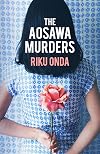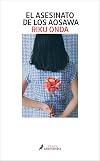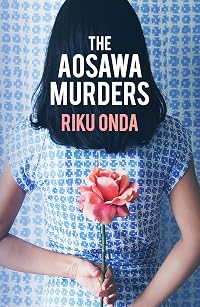
The Aosawa Murders
by Riku Onda
On This Page
Description
Fiction. Mystery. Thriller. Selected by NYT as one of MOST NOTABLE BOOKS of 2020. On a stormy summer day the Aosawas, owners of a prominent local hospital, host a large birthday party. The occasion turns into tragedy when 17 people die from cyanide in their drinks. The only surviving links to what might have happened are a cryptic verse that could be the killer's, and the physician's bewitching blind daughter, Hisako, the only person spared injury. But the youth who emerges as the prime show more suspect commits suicide that October, effectively sealing his guilt while consigning his motives to mystery. The police are convinced that Hisako had a role in the crime, as are many in the town, including the author of a bestselling book about the murders written a decade after the incident, who was herself a childhood friend of Hisako' and witness to the discovery of the murders. The truth is revealed through a skilful juggling of testimony by different voices: family members, witnesses and neighbours, police investigators and of course the mesmerizing Hisako herself. show lessTags
Recommendations







Member Reviews
The Aosawa Murders is less a whodunnit than it is a how-to-prove-whodunnit: when more than a dozen members of the wealthy, well-respected Aosawa family die a horrible death from poisoning in the early 70s, it seems fairly clear that the lone survivor is the likely culprit. But how did Hisako—a 13-year-old girl, and blind—manage to wipe out her entire family?
I struggled with this one. I respected Riku Onda's attempt to write a more meta kind of murder mystery which explores the relationship of readers to murder mysteries/fictional murderers. But I think for the novel to have been successful, Onda's characterisation needed to be stronger. I never particularly bought the characters presented here as fully fleshed-out people, or found show more myself all that invested in the solution (such as it was) to what happened. There's ambiguity and there's obscurantism, and I felt that the Aosawa Murders was too much the latter.
I also found myself dubious about how Onda depicted both blindness and mental illness. show less
I struggled with this one. I respected Riku Onda's attempt to write a more meta kind of murder mystery which explores the relationship of readers to murder mysteries/fictional murderers. But I think for the novel to have been successful, Onda's characterisation needed to be stronger. I never particularly bought the characters presented here as fully fleshed-out people, or found show more myself all that invested in the solution (such as it was) to what happened. There's ambiguity and there's obscurantism, and I felt that the Aosawa Murders was too much the latter.
I also found myself dubious about how Onda depicted both blindness and mental illness. show less
'What is the truth, really?
How do you go about proving what happened on a certain day in a certain place?'
Just when you think you know what happened, suddenly you're not so sure. And by the end, and the echo of the last sentence has faded into memory, you're still not entirely sure. If you like your crime novels all neat and tidy, Golden Age-style with a grand reveal and a confession, then boy oh boy, this is not the book for you!
Onda gives us various narrative perspectives and voices, as the truth about the events in which 17 people died of poison at a family birthday is 'revealed'. Ah, but what is truth, said jesting Pilate? I think I know what happened, but seriously, I had to read the last 50 pages twice just to get my head round it show more all. Brilliant, elusive, challenging, Onda's novel is a lyrical meditation on murder, family, truth and dreams. show less
How do you go about proving what happened on a certain day in a certain place?'
Just when you think you know what happened, suddenly you're not so sure. And by the end, and the echo of the last sentence has faded into memory, you're still not entirely sure. If you like your crime novels all neat and tidy, Golden Age-style with a grand reveal and a confession, then boy oh boy, this is not the book for you!
Onda gives us various narrative perspectives and voices, as the truth about the events in which 17 people died of poison at a family birthday is 'revealed'. Ah, but what is truth, said jesting Pilate? I think I know what happened, but seriously, I had to read the last 50 pages twice just to get my head round it show more all. Brilliant, elusive, challenging, Onda's novel is a lyrical meditation on murder, family, truth and dreams. show less
The Publisher Says: On a stormy summer day the Aosawas, owners of a prominent local hospital, host a large birthday party. The occasion turns into tragedy when 17 people die from cyanide in their drinks. The only surviving links to what might have happened are a cryptic verse that could be the killer's, and the physician's bewitching blind daughter, Hisako, the only person spared injury. But the youth who emerges as the prime suspect commits suicide that October, effectively sealing his guilt while consigning his motives to mystery. The police are convinced that Hisako had a role in the crime, as are many in the town, including the author of a bestselling book about the murders written a decade after the incident, who was herself a show more childhood friend of Hisako’s and witness to the discovery of the murders. The truth is revealed through a skillful juggling of testimony by different voices: family members, witnesses and neighbors, police investigators and of course the mesmerizing Hisako herself.
I RECEIVED A DIGITAL REVIEW COPY FROM THE PUBLISHER VIA EDELWEISS. THANK YOU!
My Review: I can't believe we've been denied the voice of Author Onda for lo! these many years. She's been creating a giant ouevre since 1991. It's wonderful that we have so much good stuff to come; it's a howling shame that English-language crime-fiction readers haven't had Author Onda's words until now.
But let me tell you why that's a crime. Mystery novels, ones with a sleuth you follow around as she pokes her nose into many places that people with secrets would strongly prefer she didn't or cops whose sense of honor will not let them close an unsolved case, are thick on the ground. The true-crime genre is booming in this Time of Plague. But these are books that run on formulas. They're hugely appealing formulas, ones that reinforce the ma'at of society and thus fly in the face of most peoples' lived experience. They sell in their millions because their audience (which skews female for series-mystery fiction and true crime) hungers with a near-starved need for Justice to be served, even if the law is flouted.
Author Onda, via the very talented Translator Alison Watts, doesn't present us with such a jigsaw puzzle of a book, with correct answers that form an interlocked and coherent image. She gives us a crossword puzzle...yes, there are correct answers...several of them...and it's your job to sort out which ones make the desired connections in the overall mass of information. Just don't expect a portrait of a killer!
And thus the source of my, frankly, mingy rating of four stars. Hisako, the blind (a great deal is made of this, many mentions) young woman who sat calmly by as seventeen people died in agony around her, is presumed guilty by everyone.
Except me.
Why did she do it? There's always a reason, no matter how twisted, that someone murders another person...let alone seventeen people...and that is what the story lacks. People have opinions, files contain facts, and none of it adds up to Hisako being the murderer to me. I don't necessarily need the ribbon tied in a bow on the solution; I do need a sense of the solution's fairness and rightness. I don't get that from this marvelous, multi-modal story. Every voice is well-crafted, as one would expect (this story was published in Japanese in 2005, some 14 years into Author Onda's career) from a storyteller at the peak of her powers. But they're all singing a dirge for Hisako when I want the story to be a threnody.
My reservation aside, I want to assure all and sundry that this read is rewarding, and provides that delicious shiver of Evil's presence albeit at a safe remove. It is delightful to discover the work that Author Onda has done is not going to run dry any time soon...if we buy Bitter Lemon Press's editions of them! I strongly urge you to do that pronto. show less
I RECEIVED A DIGITAL REVIEW COPY FROM THE PUBLISHER VIA EDELWEISS. THANK YOU!
My Review: I can't believe we've been denied the voice of Author Onda for lo! these many years. She's been creating a giant ouevre since 1991. It's wonderful that we have so much good stuff to come; it's a howling shame that English-language crime-fiction readers haven't had Author Onda's words until now.
But let me tell you why that's a crime. Mystery novels, ones with a sleuth you follow around as she pokes her nose into many places that people with secrets would strongly prefer she didn't or cops whose sense of honor will not let them close an unsolved case, are thick on the ground. The true-crime genre is booming in this Time of Plague. But these are books that run on formulas. They're hugely appealing formulas, ones that reinforce the ma'at of society and thus fly in the face of most peoples' lived experience. They sell in their millions because their audience (which skews female for series-mystery fiction and true crime) hungers with a near-starved need for Justice to be served, even if the law is flouted.
Author Onda, via the very talented Translator Alison Watts, doesn't present us with such a jigsaw puzzle of a book, with correct answers that form an interlocked and coherent image. She gives us a crossword puzzle...yes, there are correct answers...several of them...and it's your job to sort out which ones make the desired connections in the overall mass of information. Just don't expect a portrait of a killer!
And thus the source of my, frankly, mingy rating of four stars. Hisako, the blind (a great deal is made of this, many mentions) young woman who sat calmly by as seventeen people died in agony around her, is presumed guilty by everyone.
Except me.
Why did she do it? There's always a reason, no matter how twisted, that someone murders another person...let alone seventeen people...and that is what the story lacks. People have opinions, files contain facts, and none of it adds up to Hisako being the murderer to me. I don't necessarily need the ribbon tied in a bow on the solution; I do need a sense of the solution's fairness and rightness. I don't get that from this marvelous, multi-modal story. Every voice is well-crafted, as one would expect (this story was published in Japanese in 2005, some 14 years into Author Onda's career) from a storyteller at the peak of her powers. But they're all singing a dirge for Hisako when I want the story to be a threnody.
My reservation aside, I want to assure all and sundry that this read is rewarding, and provides that delicious shiver of Evil's presence albeit at a safe remove. It is delightful to discover the work that Author Onda has done is not going to run dry any time soon...if we buy Bitter Lemon Press's editions of them! I strongly urge you to do that pronto. show less
This unconventional Japanese psychological thriller was published in 2005 but not translated into English until this year. The author has won several Japanese writing awards and I certainly hope more of her books will be translated.
The novel is set 30 years after the murder of 17 people in an unnamed seaside city in 1973 during a family celebration. Drinks, delivered as a gift, prove to be poisoned. The only survivors are the housekeeper, who sipped only a little bit of a poisoned drink but suffers ill-effects for a long time afterwards, and Hisako, the beautiful, enigmatic, and blind daughter of the Aosawa family who was present at the party but did not have a drink. The case is considered solved when a man commits suicide and leaves a show more note admitting his guilt. There is, however, no explanation of motive so some people suspect that the mastermind of the murder plot has not been caught. Makiko Saiga, a neighbour of the Aosawa family, wrote a book about the tragedy a decade later, but she offered no conclusion.
The book has a non-traditional structure. The narrative unfolds through one-sided interviews (really monologues), letters, and diaries offering the perspective of various people. We hear from Saiga, her brothers, her assistant, her editor, the housekeeper’s daughter, the chief detective investigating the case, a shopkeeper, and others. Each sheds more light on the tragic event.
A theme is that truth is entirely subjective. This idea is introduced early on: “Each person has their own idiosyncratic biases, visual impressions and tricks of memory that shape their perception, and when one also takes into consideration the individual knowledge, education and personality that influence each single viewpoint, one can see how infinite possibilities are. Hence, when hearing about the same event from a number of people, one starts to notice that all the accounts are, without exception, slightly different. . . . it’s impossible to ever really know the truth behind events. Once one accepts this, it follows that everything written in newspapers or textbooks as ‘history’ is actually an amalgam of the greatest common factors from all the information available. . . . Only an all-seeing god – if there is such a thing – could ever possibly know the real truth (48 – 49). This idea is then repeated again and again: “truth is nothing more than one view of a subject seen from a particular perspective” (59) and “the truth is nothing more than a subject seen from a certain perspective” (69) and “What is the truth, really” (236)? Even in writing, “the notion of non-fiction is an illusion. All that can exist is fiction visible to the eye. And what is visible can also lie. The same applies to that which we hear and touch” (21).
More than one person suspects Hisako: “it’s a very simple story. If there are ten people in a house and nine die, who is the culprit? It’s not a whodunit. The answer’s easy – it’s the survivor, of course” (43). Several people believe that a woman was an accomplice, and one of the detectives feels strongly that Hisako arranged the mass murder. There is, however, no evidence linking Hisako to the poisonings. In interrogations, she remembers only being outside a blue room with a white crepe myrtle flower.
In a novel that argues it is probably impossible to ever really know the truth, the reader should not expect a tidy ending in which everything is resolved. A motive is suggested but not fully explained. Saiga’s book is described as follows: “The book was about the murders but wasn’t written as a mystery and didn’t have any kind of conclusion” (251). This description also fits this novel quite well.
This novel will not be to everyone’s liking, but I found it an intriguing read. It is cleverly constructed and actually requires re-reading to find the details that are missed on first reading.
Note: Please check out my reader's blog (https://schatjesshelves.blogspot.com/) and follow me on Twitter (@DCYakabuski). show less
The novel is set 30 years after the murder of 17 people in an unnamed seaside city in 1973 during a family celebration. Drinks, delivered as a gift, prove to be poisoned. The only survivors are the housekeeper, who sipped only a little bit of a poisoned drink but suffers ill-effects for a long time afterwards, and Hisako, the beautiful, enigmatic, and blind daughter of the Aosawa family who was present at the party but did not have a drink. The case is considered solved when a man commits suicide and leaves a show more note admitting his guilt. There is, however, no explanation of motive so some people suspect that the mastermind of the murder plot has not been caught. Makiko Saiga, a neighbour of the Aosawa family, wrote a book about the tragedy a decade later, but she offered no conclusion.
The book has a non-traditional structure. The narrative unfolds through one-sided interviews (really monologues), letters, and diaries offering the perspective of various people. We hear from Saiga, her brothers, her assistant, her editor, the housekeeper’s daughter, the chief detective investigating the case, a shopkeeper, and others. Each sheds more light on the tragic event.
A theme is that truth is entirely subjective. This idea is introduced early on: “Each person has their own idiosyncratic biases, visual impressions and tricks of memory that shape their perception, and when one also takes into consideration the individual knowledge, education and personality that influence each single viewpoint, one can see how infinite possibilities are. Hence, when hearing about the same event from a number of people, one starts to notice that all the accounts are, without exception, slightly different. . . . it’s impossible to ever really know the truth behind events. Once one accepts this, it follows that everything written in newspapers or textbooks as ‘history’ is actually an amalgam of the greatest common factors from all the information available. . . . Only an all-seeing god – if there is such a thing – could ever possibly know the real truth (48 – 49). This idea is then repeated again and again: “truth is nothing more than one view of a subject seen from a particular perspective” (59) and “the truth is nothing more than a subject seen from a certain perspective” (69) and “What is the truth, really” (236)? Even in writing, “the notion of non-fiction is an illusion. All that can exist is fiction visible to the eye. And what is visible can also lie. The same applies to that which we hear and touch” (21).
More than one person suspects Hisako: “it’s a very simple story. If there are ten people in a house and nine die, who is the culprit? It’s not a whodunit. The answer’s easy – it’s the survivor, of course” (43). Several people believe that a woman was an accomplice, and one of the detectives feels strongly that Hisako arranged the mass murder. There is, however, no evidence linking Hisako to the poisonings. In interrogations, she remembers only being outside a blue room with a white crepe myrtle flower.
In a novel that argues it is probably impossible to ever really know the truth, the reader should not expect a tidy ending in which everything is resolved. A motive is suggested but not fully explained. Saiga’s book is described as follows: “The book was about the murders but wasn’t written as a mystery and didn’t have any kind of conclusion” (251). This description also fits this novel quite well.
This novel will not be to everyone’s liking, but I found it an intriguing read. It is cleverly constructed and actually requires re-reading to find the details that are missed on first reading.
Note: Please check out my reader's blog (https://schatjesshelves.blogspot.com/) and follow me on Twitter (@DCYakabuski). show less
Published in 2007, The Aosawa Murders is a fictional account of the poisoning of a prominent Japanese family in the 1970s, and its continued reverberation decades later, as a number of interested people dig deep into the case to uncover who might have been the culprit. While the person who delivered the poison into the household was identified, following his suicide a number of investigators suspected he was prompted to carry out the act by someone else. The prime suspect was Hisako, the family’s blind daughter who survived the poisoning.
In the novel, author Riku Onda presents the case through a series of interviews with community members familiar with the Aosawa family and the lead policeman’s investigation of the murder. This is show more not your usual “who done it.” By presenting the case from so many different perspectives, Onda plays a slow hand in uncovering the truth of the matter. By casting her net so wide, she is able to describe the events from every possible angle. Even so, the story details how this family’s murder continued to haunt those associated with it throughout the rest of their lives.
The Aosawa Murders makes for a mesmerizing read, a mystery that rises about its genre. After its publication, the book won the Mystery Writers of Japan Award for Fiction. It is well deserved, as it upends expectations by taking the long view to show that no clear cut answer can tidily solve such a crime. For the reader wanting a mystery story that pushes boundaries, this one will delight. The ending does suggest who may have been the poisoning’s mastermind while at the same time providing several sad, unexpected twists decades after the fact. show less
In the novel, author Riku Onda presents the case through a series of interviews with community members familiar with the Aosawa family and the lead policeman’s investigation of the murder. This is show more not your usual “who done it.” By presenting the case from so many different perspectives, Onda plays a slow hand in uncovering the truth of the matter. By casting her net so wide, she is able to describe the events from every possible angle. Even so, the story details how this family’s murder continued to haunt those associated with it throughout the rest of their lives.
The Aosawa Murders makes for a mesmerizing read, a mystery that rises about its genre. After its publication, the book won the Mystery Writers of Japan Award for Fiction. It is well deserved, as it upends expectations by taking the long view to show that no clear cut answer can tidily solve such a crime. For the reader wanting a mystery story that pushes boundaries, this one will delight. The ending does suggest who may have been the poisoning’s mastermind while at the same time providing several sad, unexpected twists decades after the fact. show less
One stormy day, the wealthy Aosawa family gathers for a birthday celebration. The drinks are laced with poison, and all of them die, with the sole exception of the blind daughter Hisako, who sits there oblivious to what has occurred.
Onda reconstructs this event through the recollections of a range of people affected by the event, mostly from the distance of many years. While a perpetrator was identified and the case closed, his suicide left a lot of people unconvinced, including some of the police. Family friends, servants, detectives, casual acquaintances and other people peripherally involved in the event add their memories to Onda's story, which builds in a Rashomon-like fashion to its conclusion.
This is a slow-burn narrative that show more takes a bit of work from the reader, and rewards careful attention. It's not a book for people who like everything explained; Onda manages to preserve a sense of foreboding and mystery throughout her story, right to the end. show less
Onda reconstructs this event through the recollections of a range of people affected by the event, mostly from the distance of many years. While a perpetrator was identified and the case closed, his suicide left a lot of people unconvinced, including some of the police. Family friends, servants, detectives, casual acquaintances and other people peripherally involved in the event add their memories to Onda's story, which builds in a Rashomon-like fashion to its conclusion.
This is a slow-burn narrative that show more takes a bit of work from the reader, and rewards careful attention. It's not a book for people who like everything explained; Onda manages to preserve a sense of foreboding and mystery throughout her story, right to the end. show less
Mystery novels tend to be very hit or miss for me, and it can be hard for me to predict which ones will be hits and which will be misses. Because they have a fairly straightforward plot and tension baked in -- someone has committed a crime; someone else wants or needs to solve it -- many mystery writers get away with having otherwise dubious writing skills. But not so, here. Onda (and translator Watts) does an impressive job of indicating character purely through dialogue -- the vast majority of the book consists of interviews with various witnesses to the titular crime -- without sacrificing clarity or telegraphing too forcefully the reveals. And, unlike many mysteries, the pace at which reveals were delivered felt well-justified by show more the structure, since no one character has all the pieces. In some ways the resolution of who ultimately committed the murders is a bit of a foregone conclusion, but I nonetheless found it pretty compelling. show less
Members
- Recently Added By
Lists

Fiction: Crime, Detective, Mystery
350 works; 3 members

Fiction: Asia
85 works; 2 members
Author Information

65+ Works 768 Members
Some Editions
Awards and Honors
Awards
Distinctions
Notable Lists
Common Knowledge
- Original title
- Eugenia
- People/Characters
- Makiko Saiga; Hisako Aosawa
- Important places
- Kanto, Japan
- Dedication
- For Michael Petrucciani, who never lived to see the twenty-first century.
- First words
- What do you remember? (Prologue)
- Last words
- (Click to show. Warning: May contain spoilers.)Her eternal, never-ending summer.
- Canonical DDC/MDS
- 895.636
- Canonical LCC
- PL874.N33
Classifications
- Genres
- Fiction and Literature, Mystery
- DDC/MDS
- 895.636 — Literature & rhetoric Literatures of other languages Literatures of East and Southeast Asia Japanese Japanese fiction 2000–
- LCC
- PL874 .N33 — Language and Literature Languages and literatures of Eastern Asia, Africa, Oceania Languages of Eastern Asia, Africa, Oceania Japanese language and literature Japanese literature
- BISAC
Statistics
- Members
- 376
- Popularity
- 83,290
- Reviews
- 22
- Rating
- (3.55)
- Languages
- 5 — English, French, German, Japanese, Spanish
- Media
- Paper, Ebook
- ISBNs
- 9
- ASINs
- 4