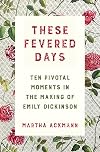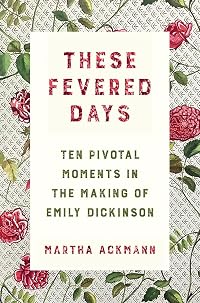
These Fevered Days: Ten Pivotal Moments in the Making of Emily Dickinson
by Martha Ackmann
On This Page
Description
"An engaging, intimate portrait of Emily Dickinson, one of America's greatest and most-mythologized poets, that sheds new light on her groundbreaking poetry. On August 3, 1845, young Emily Dickinson declared, "All things are ready"-and with this resolute statement, her life as a poet began. Despite spending her days almost entirely "at home" (the occupation listed on her death certificate), Dickinson's interior world was extraordinary. She loved passionately, was ambivalent toward show more publication, embraced seclusion, and created 1,789 poems that she tucked into a dresser drawer. In These Fevered Days, Martha Ackmann unravels the mysteries of Dickinson's life through ten decisive episodes that distill her evolution as a poet. Ackmann follows Dickinson through her religious crisis while a student at Mount Holyoke, her startling decision to ask a famous editor for advice, her anguished letters to an unidentified "Master," her exhilarating frenzy of composition, and her terror in confronting possible blindness. Together, these ten days provide new insights into Dickinson's wildly original poetry and render a concise and vivid portrait of American literature's most enigmatic figure"-- show lessTags
Recommendations













Member Reviews
In her Author's Note, Martha Ackmann tells of her first encounter with Emily Dickinson's poetry in high school English when she read, "After great pain, a formal feeling comes--"* Ackmann said she "woke up" and spent a lifetime trying to understand the poem and its effect on her. It's one of my favorite Dickinson poems.
Sadly, the selections in my high school American Lit textbook did nothing for me. When a college friend said he liked Dickinson, I shuddered.
It was Steve Allen's Meeting of Minds that changed my mind. The 1977 episode paired the poet with Charles Darwin, Atilla the Hun, and Galileo. Emily Dickinson recited, "I cannot live with You--" ending with, "So We must meet apart--/You there--I--here--/With just the Door ajar/That show more oceans are--and Prayer--/And that White Sustenance, Despair."** I stood up to attention. Wait! This couldn't be Dickinson! This was amazing stuff.
I bought her complete poems and soon became a fan.
Ackmann's These Fevered Dreams condescends Emily's life into ten moments that give insight into her life and work. Drawing from Emily's letters and poems, photographs and new understandings, she creates a vivid and fresh portrait of the poet.
Readers encounter Emily's strong, original, and independent mind.
She preferred the struggle of doubt over unexamined certainty, unwilling to profess her faith, regardless of social pressure at Mount Holyoke Seminary.
I loved learning that Emily dove into learning to play the piano, which taught her "style", and how she played late into the night, inventing her own "weird and beautiful melodies."
The vision of a girl with dandelions in her hair taught her how "one image could change everything."
We come to understand Emily's ambition, her life-long love affair with words, her dedication to perfecting her art. She strove to understand the impact of words on others, the responsibility of the writer, and how to remain anonymous while sharing her work. She created fascicles, handsewn booklets of her poems, found after her death.
She enjoyed her costly Mount Holyoke education--$60 a year--learning algebra, astronomy, and botany. When other girls hoped to teach or become missionaries, and of course marry and raise a family, Emily had no vocation but poetry. She returned to Amhurst and became mired in deadly household duties. She did enjoy bread making.
Amhurst is not portrayed as a back-water safe zone during the Civil War; we see how it impacted the community, the shared losses, and Emily's deep anxiety.
I had not known about the vision issue that threatened her sight that brought Emily to Boston for treatment.
Emily's friendships are there: Sue, who married Emily's brother, Austin Dickinson; her school friend and fellow author Helen Hunt Jackson; Samuel Bowles who published Emily's poems clandestinely shared with him; Carlo, her beloved dog.
Emily died a spinster, but she loved the special men in her life.
There was the Rev. Charles Wadsworth, the brilliant preacher Emily met in Philadelphia, "my closest earthly friend" she wrote, and who one day unexpectedly came to her door.
Emily sent poems to Thomas Wentworth Higginson (who with Mabel Loomis Todd, a family friend, and Austin's lover, would publish the first volume of Emily's poetry. During the Civil War, Col. Higginson lead the first Negro regiment of Union soldiers and when wounded was returned home by Louise May Alcott. When they finally met, Emily talked and a dazzled Higginson listened.
Other relationships are cloaked in mystery: the secret love between Emily and her father's peer Otis Phillips Lord, and the mysterious Master to whom she wrote unsent letters.
After Emily's early death at age 55, her family discovered her fascicles of nearly 2,000 poems--and the unsent Master letters. Emily had instructed her papers be burned after her death, but her sister Vinnie could not do that.
Emily comes alive through these ten moments, along with her family and friends and her beloved Amherst.
The book is illustrated with photographs of Emily's family, friends, and homes.
I was given access to a free ebook by the publisher through NetGalley. My review is fair and unbiased. show less
Sadly, the selections in my high school American Lit textbook did nothing for me. When a college friend said he liked Dickinson, I shuddered.
It was Steve Allen's Meeting of Minds that changed my mind. The 1977 episode paired the poet with Charles Darwin, Atilla the Hun, and Galileo. Emily Dickinson recited, "I cannot live with You--" ending with, "So We must meet apart--/You there--I--here--/With just the Door ajar/That show more oceans are--and Prayer--/And that White Sustenance, Despair."** I stood up to attention. Wait! This couldn't be Dickinson! This was amazing stuff.
I bought her complete poems and soon became a fan.
Ackmann's These Fevered Dreams condescends Emily's life into ten moments that give insight into her life and work. Drawing from Emily's letters and poems, photographs and new understandings, she creates a vivid and fresh portrait of the poet.
Readers encounter Emily's strong, original, and independent mind.
She preferred the struggle of doubt over unexamined certainty, unwilling to profess her faith, regardless of social pressure at Mount Holyoke Seminary.
I loved learning that Emily dove into learning to play the piano, which taught her "style", and how she played late into the night, inventing her own "weird and beautiful melodies."
The vision of a girl with dandelions in her hair taught her how "one image could change everything."
We come to understand Emily's ambition, her life-long love affair with words, her dedication to perfecting her art. She strove to understand the impact of words on others, the responsibility of the writer, and how to remain anonymous while sharing her work. She created fascicles, handsewn booklets of her poems, found after her death.
She enjoyed her costly Mount Holyoke education--$60 a year--learning algebra, astronomy, and botany. When other girls hoped to teach or become missionaries, and of course marry and raise a family, Emily had no vocation but poetry. She returned to Amhurst and became mired in deadly household duties. She did enjoy bread making.
Amhurst is not portrayed as a back-water safe zone during the Civil War; we see how it impacted the community, the shared losses, and Emily's deep anxiety.
I had not known about the vision issue that threatened her sight that brought Emily to Boston for treatment.
Emily's friendships are there: Sue, who married Emily's brother, Austin Dickinson; her school friend and fellow author Helen Hunt Jackson; Samuel Bowles who published Emily's poems clandestinely shared with him; Carlo, her beloved dog.
Emily died a spinster, but she loved the special men in her life.
There was the Rev. Charles Wadsworth, the brilliant preacher Emily met in Philadelphia, "my closest earthly friend" she wrote, and who one day unexpectedly came to her door.
Emily sent poems to Thomas Wentworth Higginson (who with Mabel Loomis Todd, a family friend, and Austin's lover, would publish the first volume of Emily's poetry. During the Civil War, Col. Higginson lead the first Negro regiment of Union soldiers and when wounded was returned home by Louise May Alcott. When they finally met, Emily talked and a dazzled Higginson listened.
Other relationships are cloaked in mystery: the secret love between Emily and her father's peer Otis Phillips Lord, and the mysterious Master to whom she wrote unsent letters.
After Emily's early death at age 55, her family discovered her fascicles of nearly 2,000 poems--and the unsent Master letters. Emily had instructed her papers be burned after her death, but her sister Vinnie could not do that.
Emily comes alive through these ten moments, along with her family and friends and her beloved Amherst.
The book is illustrated with photographs of Emily's family, friends, and homes.
I was given access to a free ebook by the publisher through NetGalley. My review is fair and unbiased. show less
While it was great to read such a detailed history of the Dickinson family and life in the 19th century, I’m disappointed to say I would not recommend this to those who want to know more about Emily Dickinson. The author makes one passing comment about Emily’s queerness, which is apparently common knowledge among Dickinson scholars. Ackman even brings up other scholars and their thoughts but makes NO mention to work that studies her queerness. There is research that strongly suggests she had a love affair with her sister-in-law Sue. This is clearly suggested in an edition of Emily’s poems compiled by Martha Bianchi, Emily’s niece and Sue’s daughter, titled “The Single Hound: Poems of Emily Dickinson.” I never want to judge show more a book by “what it isn’t” but to hardly mention this queer research is irresponsible writing and erasure. To learn more about her queerness, I recommend the movie “Wild Nights With Emily” directed by Madeleine Olnek. show less
I absolutely loved this book! Such an imaginative and emotionally rich way to "tell" a life. Really brought Emily to life in new ways. Martha finds the most telling details and really situates us in both the historical moment as well as the quotidien moments that make up a day.
A little bit of a dry read. The author specifically said it was not meant to be a biography, but read much like one - I didn't mind. There were lots of asides to explain the significance of certain people in Dickinson's life. However, the asides made it difficult to pay attention as those sections seem to be a bit longer than necessary.
The first three chapters dragged quite a bit, but by chapter four it felt like the author's pace and focus honed in, and the reading was able to hold my attention quite a bit more.
I very much liked how Dickinson's poems and rewrites were interwoven in the story as it gave her poetry more context and heft.
I may not have been in the right mindset when I chose to tackle this book, but I struggled to keep my show more attention on it. Regardless, I very much enjoyed learning about Dickinson's life and inspirations. I have also developed a much deeper appreciation for her poetry. show less
The first three chapters dragged quite a bit, but by chapter four it felt like the author's pace and focus honed in, and the reading was able to hold my attention quite a bit more.
I very much liked how Dickinson's poems and rewrites were interwoven in the story as it gave her poetry more context and heft.
I may not have been in the right mindset when I chose to tackle this book, but I struggled to keep my show more attention on it. Regardless, I very much enjoyed learning about Dickinson's life and inspirations. I have also developed a much deeper appreciation for her poetry. show less
Using ten pivotal moments, the author explores the life of the "at home" Emily Dickinson. From her early school days at Amherst to her early death and her life in between, her evolving talent of a poet is explored. One can follow, not only Emily, but the few people to which she had a strong connection. Her family members, her role in the family and the history of the time period in which she lived.
The Civil War plays out in the background as does the unexpected deaths of some of those she held dear. Her failing eyesight, which threatened both her reading and writing. Books, her family, a few friends, her dog and her poems were what meant the most. She was a homebody, embraced her solitude and didn't welcome unexpected visitors or show more travel. She was a unique and talented woman, but was never quite sure her poems were good enough.
In these ten moments that the author chooses, I felt we receive significant insight into what made Emily who she was. Each moment starts with the weather and barometer readings of that day, observations by s man who was important to Emily and Amherst. Many if her poems are also included, in part of whole.
I couldn't help but wonder what ten moments I would choose as having the most effect on my life.
ARC from Edelweiss. show less
The Civil War plays out in the background as does the unexpected deaths of some of those she held dear. Her failing eyesight, which threatened both her reading and writing. Books, her family, a few friends, her dog and her poems were what meant the most. She was a homebody, embraced her solitude and didn't welcome unexpected visitors or show more travel. She was a unique and talented woman, but was never quite sure her poems were good enough.
In these ten moments that the author chooses, I felt we receive significant insight into what made Emily who she was. Each moment starts with the weather and barometer readings of that day, observations by s man who was important to Emily and Amherst. Many if her poems are also included, in part of whole.
I couldn't help but wonder what ten moments I would choose as having the most effect on my life.
ARC from Edelweiss. show less
Lovely. I wish I could strike so true to my self as Emily did to herself.
Ratings
Members
- Recently Added By
Lists

Writing
81 works; 1 member
Author Information

4+ Works 604 Members
Martha Ackmann, also the author of Curve-ball and The Mercury 13, writes about women who have changed America. The recipient of a Guggenheim Fellowship, Ackmann taught a popular seminar on Dickinson at Mount Holyoke College and lives in western Massachusetts.
Awards and Honors
Awards
Notable Lists
Classifications
Statistics
- Members
- 127
- Popularity
- 257,107
- Reviews
- 6
- Rating
- (4.32)
- Languages
- English
- Media
- Paper, Audiobook, Ebook
- ISBNs
- 6
- ASINs
- 2