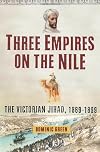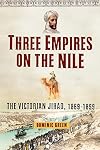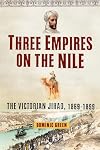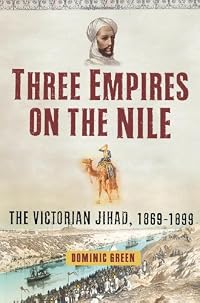
Three Empires on the Nile: The Victorian Jihad, 1869-1899
by Dominic Green
On This Page
Description
A secular regime is toppled by Western intervention, but an Islamic backlash turns the liberators into occupiers. Caught between interventionists at home and fundamentalists abroad, a prime minister flounders as his ministers betray him, alliances fall apart, and a runaway general makes policy in the field. As the media accuse Western soldiers of barbarity and a region slides into chaos, the armies of God clash on an ancient river and an accidental empire arises.This is not the Middle East show more of the early twenty-first century. It is Africa in the late nineteenth century, when the river Nile became the setting for an extraordinary collision between Europeans, Arabs, and Africans. A human and religious drama, the conflict defined the modern relationship between the West and the Islamic world. The story is not only essential for understanding the modern clash of civilizations but is also a gripping, epic, tragic adventure.Three Empires on the Nile tells of the rise of the first modern Islamic state and its fateful encounter with the British Empire of Queen Victoria. Ever since the self-proclaimed Islamic messiah known as the Mahdi gathered an army in the Sudan and besieged and captured Khartoum under its British overlord Charles Gordon, the dream of a new caliphate has haunted modern Islamists. Today, Shiite insurgents call themselves the Mahdi Army, and Sudan remains one of the great fault lines of battle between Muslims and Christians, blacks and Arabs. The nineteenth-century origins of it all were even more dramatic and strange than today's headlines.In the hands of Dominic Green, the story of the Nile's three empires is an epic in the tradition of Kipling, the bard of empire, and Winston Churchill, who fought in the final destruction of the Mahdi's army. It is a sweeping and very modern tale of God and globalization, slavers and strategists, missionaries and messianists. A pro-Western regime collapses from its own corruption, a jihad threatens the global economy, a liberation movement degenerates into a tyrannical cult, military intervention goes wrong, and a temporary occupation lasts for decades. In the rise and fall of empires, we see a parable for our own times and a reminder that, while American military involvement in the Islamic world is the beginning of a new era for America, it is only the latest chapter in an older story for the people of the region. show lessTags
Recommendations













Member Recommendations
Member Reviews
This book deserves a longer review than I really have the time for. It is a popular history about the contest for domination over the Nile (Egypt and Sudan) in the late Victorian period which involved 3 (4 actually, or even 6 if you include Abyssinia) empires: The Egyptian, the British, the French and the short-lived Mahdist empire in the Sudan. Generally the pros are that it is a well written, fairly well researched and exciting history about a place and time of great interest. The author manages the difficult task of packing in a great deal of detail about a great deal of different people and events spread across several continents, while never letting the pace of the narrative lag. The action is relentless and we're always in the show more thick of it, whether its a battle in the Sudan, intrigue in Alexandria, or a parliamentary debate in London. Its accessible in style and I suspect even readers with the most fleeting acquaintance with the era would be able to pick it up and immerse themselves very quickly in the world (or worlds) that Dominic Green describes.
However there are also a number of cons. The superficial attempt to give the story a contemporary resonance (thankfully limited to the introduction, the afterword and the blurb on the back) by mentioning Darfur and current political events doesn't really work. One suspects the publisher's marketing arm has had a hand in this. Another drawback is that primary sources (of which admittedly there are a plethora) are limited to English and French. One suspects that this may skew the narrative's perspective in a certain way. For example, the move by the Egyptian nationalists led by Urabi Pasha to end forced labour (the corvee) of poor peasants (the fellahin) to the state and Khedive is presented as a cynical ploy to win over support against the Khedive and his foreign backers. However Charles Gordon's re-legalization of slavery in the Sudan is presented as a necessary measure to win tribal support away from the rebels. Both actions are open to different interpretations. In fact I suspect many Egyptians would be pretty unhappy about the portrayal of Urabi Pasha in this book. Urabi Pasha's appeal to the British and French to not intervene in Egypt and pledge to repay Egyptian loans is scoffed at as unrealistic and barely worthy of contemplation, while swift, efficient British action is the order of the day. After the British occupation installs Lord Cromer in power, he is repeatedly praised for being a prudent and efficient administrator who is able to finally put Egyptian finances back on track. Later its briefly mentioned that only a rescheduling of the loans prevented a default. One can't help wondering what the nationalists would have achieved had they been allowed to rule the country and been given the same kind of breathing space vis a vis foreign debt when the Egyptian modernizers were still in charge. Egyptian anger at Cromer's austerity measures are also treated by the author as typical Egyptian obstructionism and inability to run a rational and thrifty administration. As we see in our own day, drastic austerity measures can and often do cause harm to people and are often opposed for very sound reasons. For example (one the author doesn't bother to mention), one of Cromer's austerity measures was to end free public education for girls, which had first been instituted in the 1870s. The number of government-run secondary girls schools was also reduced during the period of British rule. Lord Cromer actually justified these measures by saying that in an Islamic society, girls didn't need an education. Lord Cromer's relationship as the scion of the Baring family (owners of Barings bank, the dominant British merchant bank throughout most of the 19th century) and his connection with the British banking financial elite is not only considered unproblematic and a possible conflict of interest, but a mark in his favour. For the author modernity and liberalism march unreservedly hand in hand with free trade and British administration (though to his credit the author does mention the opium wars which "opened up" China to the British trade in opium as a somewhat problematic aspect of British free market ideology).
Some of the major characters that feature prominently in the events seem to be almost caricatures and the portraits we get of them don't seem to explain all their actions or words (e.g. Lord Cromer cared first and foremost about setting Egyptian finances on a sound footing and disliked the idea of Charles Gordon being sent to the Sudan... then why did he start agitating on Gordon's behalf later on and calling for an (expensive) military expedition, etc.?) Jamal al-din Afghani comes across as some kind of raving, paranoid occultist terrorist-in-the-making lurking in the background (which may not be too far off actually - did I mention that many of the people featured in this book were very colourful characters!). Charles Gordon comes off somewhat better, but not by much. Again, the author doesn't really offer any convincing kind of explanation of why he quit the governorship of the Sudan in disgust only to return to the task a couple of years later.
It is taken as a given, from public pronouncements, that the British Prime Minister Gladstone, and the British government had no desire to permanently occupy Egypt and that this remains the case until several years later when criticism over the "absence" of an Egyptian policy finally forces Britain to formalize its occupation against its will. The idea that the actual obstacle to an earlier permanent occupation was foreign (mostly French) opposition to British rule and France's ability to hamper British control because of the structure of the international debt commission is not entertained. An alternate reading to the reluctant Gladstone finally giving in to political and humanitarian pressure reading of Britain's take over of Egypt is that it was only following the 1881 Berlin Conference which divided up Africa between the European powers, and where Bismarck used "the Egyptian lever" to gain major concessions from the British in return for supporting their claim to Egypt, that Britain finally had the diplomatic muscle to formalize control. France was compensated elsewhere in Africa.
Other criticisms are minor. You'd never know from the author's description of the event that the British bombardment of Alexandria caused much damage, so the reader is somewhat surprised to hear several pages on, the admiral of the British fleet being accused of "destroying Alexandria" by another British military officer who is deeply offended that he and the murderous admiral should be given similar honours, or that the bombardment stirred up a controversy at home. At times one suspects the author also sidelines scholarly skepticism in order to tell a good tale. The death of Charles Gordon at Khartoum is a heroic affair, vividly described, and one of the most stirring episodes in the book, but one has to take a glance at the end-notes to discover that the actual circumstances of Gordon's death are disputed, based on differing "eyewitness" accounts. One would prefer that even if he does stick with the account that best suits the purpose of his narrative, the author might at least mention that there is some dispute about whether it is fact or fiction.
Overall its a fun book to read and as I said earlier, the events and people it describes are so inherently interesting that its certainly worth reading. However, I feel it isn't entirely problem-free. show less
However there are also a number of cons. The superficial attempt to give the story a contemporary resonance (thankfully limited to the introduction, the afterword and the blurb on the back) by mentioning Darfur and current political events doesn't really work. One suspects the publisher's marketing arm has had a hand in this. Another drawback is that primary sources (of which admittedly there are a plethora) are limited to English and French. One suspects that this may skew the narrative's perspective in a certain way. For example, the move by the Egyptian nationalists led by Urabi Pasha to end forced labour (the corvee) of poor peasants (the fellahin) to the state and Khedive is presented as a cynical ploy to win over support against the Khedive and his foreign backers. However Charles Gordon's re-legalization of slavery in the Sudan is presented as a necessary measure to win tribal support away from the rebels. Both actions are open to different interpretations. In fact I suspect many Egyptians would be pretty unhappy about the portrayal of Urabi Pasha in this book. Urabi Pasha's appeal to the British and French to not intervene in Egypt and pledge to repay Egyptian loans is scoffed at as unrealistic and barely worthy of contemplation, while swift, efficient British action is the order of the day. After the British occupation installs Lord Cromer in power, he is repeatedly praised for being a prudent and efficient administrator who is able to finally put Egyptian finances back on track. Later its briefly mentioned that only a rescheduling of the loans prevented a default. One can't help wondering what the nationalists would have achieved had they been allowed to rule the country and been given the same kind of breathing space vis a vis foreign debt when the Egyptian modernizers were still in charge. Egyptian anger at Cromer's austerity measures are also treated by the author as typical Egyptian obstructionism and inability to run a rational and thrifty administration. As we see in our own day, drastic austerity measures can and often do cause harm to people and are often opposed for very sound reasons. For example (one the author doesn't bother to mention), one of Cromer's austerity measures was to end free public education for girls, which had first been instituted in the 1870s. The number of government-run secondary girls schools was also reduced during the period of British rule. Lord Cromer actually justified these measures by saying that in an Islamic society, girls didn't need an education. Lord Cromer's relationship as the scion of the Baring family (owners of Barings bank, the dominant British merchant bank throughout most of the 19th century) and his connection with the British banking financial elite is not only considered unproblematic and a possible conflict of interest, but a mark in his favour. For the author modernity and liberalism march unreservedly hand in hand with free trade and British administration (though to his credit the author does mention the opium wars which "opened up" China to the British trade in opium as a somewhat problematic aspect of British free market ideology).
Some of the major characters that feature prominently in the events seem to be almost caricatures and the portraits we get of them don't seem to explain all their actions or words (e.g. Lord Cromer cared first and foremost about setting Egyptian finances on a sound footing and disliked the idea of Charles Gordon being sent to the Sudan... then why did he start agitating on Gordon's behalf later on and calling for an (expensive) military expedition, etc.?) Jamal al-din Afghani comes across as some kind of raving, paranoid occultist terrorist-in-the-making lurking in the background (which may not be too far off actually - did I mention that many of the people featured in this book were very colourful characters!). Charles Gordon comes off somewhat better, but not by much. Again, the author doesn't really offer any convincing kind of explanation of why he quit the governorship of the Sudan in disgust only to return to the task a couple of years later.
It is taken as a given, from public pronouncements, that the British Prime Minister Gladstone, and the British government had no desire to permanently occupy Egypt and that this remains the case until several years later when criticism over the "absence" of an Egyptian policy finally forces Britain to formalize its occupation against its will. The idea that the actual obstacle to an earlier permanent occupation was foreign (mostly French) opposition to British rule and France's ability to hamper British control because of the structure of the international debt commission is not entertained. An alternate reading to the reluctant Gladstone finally giving in to political and humanitarian pressure reading of Britain's take over of Egypt is that it was only following the 1881 Berlin Conference which divided up Africa between the European powers, and where Bismarck used "the Egyptian lever" to gain major concessions from the British in return for supporting their claim to Egypt, that Britain finally had the diplomatic muscle to formalize control. France was compensated elsewhere in Africa.
Other criticisms are minor. You'd never know from the author's description of the event that the British bombardment of Alexandria caused much damage, so the reader is somewhat surprised to hear several pages on, the admiral of the British fleet being accused of "destroying Alexandria" by another British military officer who is deeply offended that he and the murderous admiral should be given similar honours, or that the bombardment stirred up a controversy at home. At times one suspects the author also sidelines scholarly skepticism in order to tell a good tale. The death of Charles Gordon at Khartoum is a heroic affair, vividly described, and one of the most stirring episodes in the book, but one has to take a glance at the end-notes to discover that the actual circumstances of Gordon's death are disputed, based on differing "eyewitness" accounts. One would prefer that even if he does stick with the account that best suits the purpose of his narrative, the author might at least mention that there is some dispute about whether it is fact or fiction.
Overall its a fun book to read and as I said earlier, the events and people it describes are so inherently interesting that its certainly worth reading. However, I feel it isn't entirely problem-free. show less
This work covers the clash of empires in the Nile valley - the clash of the Egyptian empire with the British empire and the Ottoman empire. Others show in supporting roles, especially France and Germany. The various players are given detailed bios so you understand how they progressed toward their role of imperialist or anti-imperialist, but some of the things said and done are difficult for a twenty-first century mind to contemplate. The final outcome in the Sudan puts the lie to those who claim that the British Empire was a kinder, gentler empire (at least, it would if one could believe that after reading about their antics in India). The author does not show any obvious bias toward any of the players, and when he is done, it is show more difficult to have too much sympathy with any of them...only the people caught in the geopolitical web through no actions of their own are sympathetic. My main complaint with the book is some oddball quirks of writing - alternating Istanbul with Constantinople, though it was not during this short period that it changed, for example. There was a bit of eccentric punctuation, some of which could be due to his being English, but some of it just eccentric. His writing style is straightforward, not flowery, and for the most part satisfactory. The epilogue was welcome as it let you know what happened to those who were still standing when the smoke cleared. show less
This was one of those books that seems to overlap with lots of others I've read (history of the Suez Canal, history of the European exploration of the Nile, history of Sudan etc), but somehow it doesn't manage to add anything new or memorable. I am surprised because I selected the book expecting to get new insights into the characters involved in the origins of modern Egypt and Sudan. However, the author relies on fairly tired standard sources. Worse, there isn't much critical examination of the relative reliability of those sources, so a variety of old chestnuts get tossed out without any collaborating evidence. Not a bad book, just not anything new or engaging if you've already done any reading on the area and probably not enough show more narrative coherence if it's new material to the reader. show less
a quick history of the British occupation of Egypt. Truly disgusting behavior, like most dicatorships. Oh, but they were civilized, so they couldn't possibly be dictators?
Great book.
Ratings
Members
- Recently Added By
Lists

THE WAR ROOM
813 works; 24 members
Author Information

4 Works 298 Members
Common Knowledge
- People/Characters
- Charles George Gordon (General Charles "Chinese" Gordon)
- Important places
- Sudan; Africa
- Important events
- Mahdist War (1881 | 1899)
Classifications
Statistics
- Members
- 168
- Popularity
- 194,216
- Reviews
- 5
- Rating
- (3.98)
- Languages
- English
- Media
- Paper, Audiobook, Ebook
- ISBNs
- 9
- ASINs
- 2