On This Page
Description
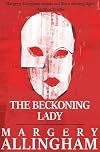
Murder darkens the bright days of summer in an idyllic Suffolk village, in an Albert Campion mystery that is simply "unforgettable" (A.S. Byatt). Private detective Albert Campion's glorious summer in Pontisbright is blighted by death. Amidst the preparations for Minnie and Tonker Cassand's fabulous summer party, a murder is discovered-and it falls to Campion to unravel the intricate web of motives, suspicion and deception. Danger is hardly unknown in this idyllic rural village, but it is a show more less romantic peril than Campion faced on his first visit, more than twenty years ago . . . "My very favourite of the four Queens of Crime is Allingham." -J. K. Rowling "Margery Allingham has precious few peers and no superiors." -The Sunday Times "Allingham has that rare gift in a novelist, the creation of characters so rich and so real that they stay with the reader forever." -Sara Paretsky. show lessTags
Recommendations



















Member Reviews
I read this on the heels of reading her 1933 Campion novel, Sweet Danger, which was an uneven but mostly enjoyable read. Twenty-two years on, Allingham's writing was tighter and her plotting clearer. Her strength--depicting the setting and characters and life of quirky, old village England--is also her weakness, in that for much of the earlier part of the book the plot itself is only faintly visible beneath it. Nevertheless, that ambling style itself fits well with the sleepy village dynamic, and Allingham's overwhelming delight in her characters and milieu are apparent at every turn.
If you like your murder mysteries to be thrilling page-turners then this is not the book for you. The 15th instalment in the Campion series, this one was much more like a traditional Campion mystery than the book immediately before and the book immediately after in which Campion barely features (I haven't read any further than that yet, but I wonder if the styles are now going to alternate). Here we have Campion visiting old friends and subtly investigating two murders. I guess the word to describe it would be 'gentle'. Campion's sleuthing is so tactful that it barely registers, with the majority of the story being about his friends organising a party. Yes, we learn little titbits and possible red herrings about various characters' show more motives and alibis, but they are treated so calmly or vaguely that I felt the story never really started. On top of this characters talk at right angles, so that their meaning was never said outright. I presume we were supposed to infer what they meant but I found it all rather obscure. I get that Campion is trying to avoid a scandal and might need to use his vague act with the police, but I don't know why Allingham is using it with the audience.
It's a little sad really, because this book felt very much 'one for the fans'. Not only is it a return to the norm with Campion in the lead after the odd ensemble piece of Tiger in the Smoke, but The Beckoning Lady has multiple call-backs to previous novels including Sweet Danger, The Case of The Late Pig and Dancers in Mourning. Not only that but Amanda features more heavily than she has ever since she married Campion and Rupert their son finally gets some focus, though I'd still like more. So that's all awesome, but the story itself, while interesting, was strangely slow and not terribly exciting. Anyway, I hope there will be more Campion-led stories after this, and I hope Amanda and Rupert are with him. show less
It's a little sad really, because this book felt very much 'one for the fans'. Not only is it a return to the norm with Campion in the lead after the odd ensemble piece of Tiger in the Smoke, but The Beckoning Lady has multiple call-backs to previous novels including Sweet Danger, The Case of The Late Pig and Dancers in Mourning. Not only that but Amanda features more heavily than she has ever since she married Campion and Rupert their son finally gets some focus, though I'd still like more. So that's all awesome, but the story itself, while interesting, was strangely slow and not terribly exciting. Anyway, I hope there will be more Campion-led stories after this, and I hope Amanda and Rupert are with him. show less
In this Campion mystery we go to Pontisbright, Amanda's homeland, for the midsummer feast. This is hosted by Tonker and Minnie Cassands at their house, The Beckoning Lady. They enlist any number of friends to help out with the arrangements for this massive event that the entire village turns out for. However there's a shadow over the sunny picture. William Faraday "Uncle William" to all and sundry has recently died in his sleep. And there's been a second murder that's not discovered immediately, being under a bridge. Charlie Luke has been down recuperating, but is now prey to affairs of the heart which the Campions fear will turn out badly. The party is very nearly derailed several times, with a final death threatening to put a real show more damper on the celebrations. It gets rather complicated, with Tonker's temper and Minnie's dealings with an old acquaintance complicating the investigation. It gets rather involved with a profit for on of Tonker's inventions, a gift from Uncle William that did not get past the 5 years gift threshold and Minnie's tax affairs. There's then a side hustle in horse racing and the potential for a new race circuit, for which Tonker & Minnie house is most certainly in the way. This is one of those times where I wonder if the solution is the real one or just the convenient one. Even Amanda casts doubt on the solution, leaving this as a slightly unsatisfactory solution. Feels a bit like cheating, somehow. show less
Summary: While friends prepare for a midsummer party, Campion tries to unravel two murders in Pontisbright.
A midsummer party in the village of Pontisbright hardly seems like the setting for murder. Except it is. Two murders in fact. Albert Campion, his wife Amanda, and son Rupert are visiting the hosts, Tonker and Minnie Cassands. Tonker is an inventor of sorts and Minnie is an artist, and the party will feature a show of her works.
Shortly before they arrived, the Cassands’ Uncle William has passed, not unexpectedly. But as Campion looks around, he suspects death had a helping hand. His body servant, Lugg does a lot of the work of sorting this out. Meanwhile, a body lies in a ditch, found after a week. He died of a blow to the head. show more It turns out he is a former Inland Revenue man, advising (or troubling) the Cassands about tax matters.
Charlie Luke appears to investigate the matter, although he seems is more taken up in an affair with “Prune.” Campion disapproves. Meanwhile, weaving through the investigation are interactions with a large cast of local characters including a real estate investor, inn operator, and Old Harry, who it turns out knew about the body in the ditch and the location of the murder weapon.
Both murders remain unsolved when the night of the party arrives. While the party is going on, another body is floating down the stream, spotted by everyone at the height of the festivities…a body that is the clue to the other murders.
The antics of Rupert and all the interactions of the eccentric set of characters are great good fun…until we remember that two murders have taken place. At times it is difficult to follow and I wonder if that was Allingham’s intent–red herrings by social diversion. The reader might find it helpful to keep a list of characters and their relations (none is provided).
Not unlike Ramses in Elizabeth Peters “Amelia Peabody” mysteries, Allingham is developing Albert and Amanda’s son into an interesting character in his own right. And Charlie Luke is a nice contrast to Inspector Oates. All great good fun. show less
A midsummer party in the village of Pontisbright hardly seems like the setting for murder. Except it is. Two murders in fact. Albert Campion, his wife Amanda, and son Rupert are visiting the hosts, Tonker and Minnie Cassands. Tonker is an inventor of sorts and Minnie is an artist, and the party will feature a show of her works.
Shortly before they arrived, the Cassands’ Uncle William has passed, not unexpectedly. But as Campion looks around, he suspects death had a helping hand. His body servant, Lugg does a lot of the work of sorting this out. Meanwhile, a body lies in a ditch, found after a week. He died of a blow to the head. show more It turns out he is a former Inland Revenue man, advising (or troubling) the Cassands about tax matters.
Charlie Luke appears to investigate the matter, although he seems is more taken up in an affair with “Prune.” Campion disapproves. Meanwhile, weaving through the investigation are interactions with a large cast of local characters including a real estate investor, inn operator, and Old Harry, who it turns out knew about the body in the ditch and the location of the murder weapon.
Both murders remain unsolved when the night of the party arrives. While the party is going on, another body is floating down the stream, spotted by everyone at the height of the festivities…a body that is the clue to the other murders.
The antics of Rupert and all the interactions of the eccentric set of characters are great good fun…until we remember that two murders have taken place. At times it is difficult to follow and I wonder if that was Allingham’s intent–red herrings by social diversion. The reader might find it helpful to keep a list of characters and their relations (none is provided).
Not unlike Ramses in Elizabeth Peters “Amelia Peabody” mysteries, Allingham is developing Albert and Amanda’s son into an interesting character in his own right. And Charlie Luke is a nice contrast to Inspector Oates. All great good fun. show less
This Campion mystery seems more self-contained than most. It's also got a nice set of characters, extending even to the corpses. Finally, the various threads are tied together pretty well without a lot of circumstantial glue. All in all, one of my favorites in the series.
Sadly, this book has aged badly. There are so many expressions and references that are no longer used, it's like entering a time capsule without a translator on board. Trying to get past the midway point, but too many livelier books beckon. For the record, I enjoyed Tiger in the Smoke and The Fashion in Shrouds more.
Hmmm...champers, anyone? That's champagne, of course, and it's on the menu at Minnie and Tonker's party of the season at the Beckoning Lady. This installment finds our hero, Albert Campion, down in the country for this party along with Amanda & their son Rupert; it all begins with the discovery of a dead body and the death of Uncle William. Uncle William, if you've been following the series, has been in a couple of Campion mysteries, and is much beloved by Campion and Amanda. So...Campion does not believe that Uncle William died peacefully, but rather was murdered, and while preparing for the party, must investigate to see if he was correct. He's also involved in the investigation into the other death, so he's very busy.
I liked this show more one, but it was rather silly in places, and if you aren't aware of current cultural references of the time you might be a bit lost. Otherwise, not quite as good as some of the Campion novels, but not too bad. Do NOT start with this one as an opener to the series. Campion is not at his detecting best here.
Recommended for those following the series and those who are fans of British mystery in general. show less
I liked this show more one, but it was rather silly in places, and if you aren't aware of current cultural references of the time you might be a bit lost. Otherwise, not quite as good as some of the Campion novels, but not too bad. Do NOT start with this one as an opener to the series. Campion is not at his detecting best here.
Recommended for those following the series and those who are fans of British mystery in general. show less
Members
- Recently Added By
Lists

Books Read in 2023
5,638 works; 147 members
Author Information

131+ Works 20,367 Members
Margery Allingham, one of England's leading mystery writers, was born on May 20, 1904, in Ealing, a western suburb of London, but grew up in a remote village in Essex. Both of her parents were writers, and Margery carried on that tradition when she sold her first short story as an eight-year-old. At the Regent Street Polytechnic, she continued show more writing and studied drama and speech. While there, she wrote a verse play, Dido and Aeneas, in which she had a starring role during performances in London. At age 19, Allington published her first novel, Blackkerchief Dick. She wrote another novel, The White Cottage Mystery, before creating her most famous character, Albert Campion, in The Black Dudley Murder (published in England as The Crime at Black Dudley) in 1929. Allington went on to create twenty-eight more Campion mysteries, including several collections. She wrote more than 10 other novels, some under the pseudonym Maxwell March, as well as four novellas and sixty-four short stories. During World War II, Allingham served as First Aid Commandant for her district, organized the billeting and care of evacuees from London, and allowed her house to be turned into a temporary military base for eight officers and two hundred men of the Cameronians. The war greatly deepened Allingham's passion for her country, as evidenced in her later works. Allingham died of cancer on June 30, 1966. (Bowker Author Biography) show less
Series

Belongs to Publisher Series
Work Relationships
Is contained in
Is abridged in
Common Knowledge
- Canonical title
- The Beckoning Lady
- Original title
- The Beckoning Lady
- Alternate titles
- The Estate of the Beckoning Lady
- Original publication date
- 1955-04
- People/Characters
- Albert Campion; Lady Amanda Fitton (Amanda Campion); Rupert Campion; William Faraday; Charles Luke (Detective Chief Inspector); Sir Leo Pursuivant (show all 7); Sidney Simon Smith
- Important places
- Pontisbright, England, UK
- Epigraph
- 'It is very unlucky to interfere with a marriage of long standing. If the man doesn't kill you, you'll certainly get an earful from the woman.'
Chief Superintendent Stanislaus Oates in a Lecture to Young Constables
'But who,' said Florizel at last, 'who is this lady who is for ever beckoning?'
'That,' replied he, 'is beyond my knowledge. Some aver that she is Love, or Dame Fortune. Some, honour in the field. Some, the Muse herself. A... (show all)nd the old have an unpleasant idea that she is Death. But all I can tell you about her for certain is that her eyes are laughing, and that she is without mercy.'
CONTES DES FEES
(from the translation by Anthony Greene, 1929) - Dedication
- This Book is Affectionately Inscribed to my Old Friends and their Merry Wives
- First words
- It was no time for dying.
- Last words
- (Click to show. Warning: May contain spoilers.)'Now that is a thought,' said Mr Campion.
Classifications
Statistics
- Members
- 702
- Popularity
- 40,759
- Reviews
- 14
- Rating
- (3.53)
- Languages
- Danish, English, German
- Media
- Paper, Audiobook, Ebook
- ISBNs
- 24
- ASINs
- 31