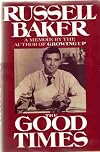
The Good Times
by Russell Baker
On This Page
Description
A "superb [and] often hilarious" memoir of a life in journalism, from the Pulitzer Prize-winning author of Growing Up ( The New York Times Book Review ). "Baker here recalls his years at the Baltimore Sun, where, on 'starvation wages, ' he worked on the police beat, as a rewrite man, feature writer and White House correspondent. Sent to London in 1953 to report on the coronation, he spent the happiest year of his life there as an innocent abroad. Moving to the New York Times and becoming a show more 'two-fisted drinker, ' he covered the Senate and the national political campaigns of 1956 and 1960, and, just as he was becoming bored with routine reporting and the obligation to keep judgments out of his stories, was offered the opportunity to write his own op-ed page column, 'The Observer.' With its lively stories about journalists, Washington politicians and topical scandals, the book will delight Baker's devotees-and significantly expand their already vast number." - Publishers Weekly "Aspiring writers will chuckle over Baker's first, horrible day on police beat, his panicked interview with Evelyn Waugh, and his arrival at Queen Elizabeth's coronation in top hat, tails, and brown-bag lunch." - Library Journal "A wonderful book." - Kirkus Reviews show lessTags
Recommendations






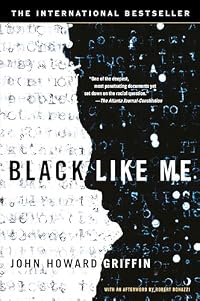


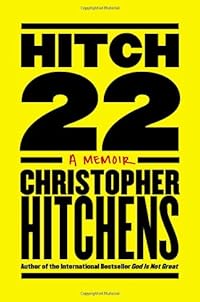
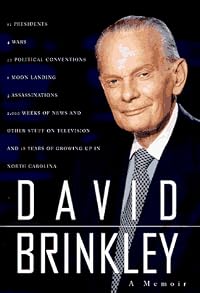
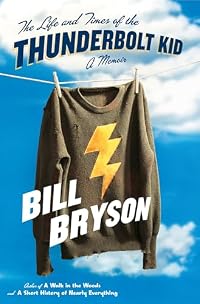










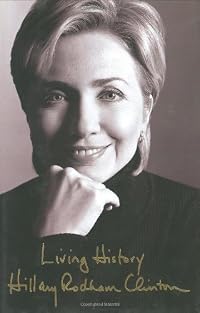
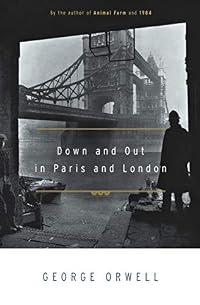
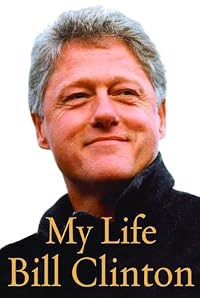
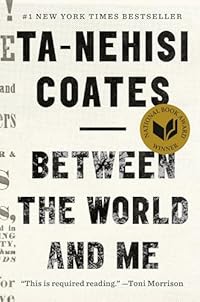

Member Recommendations

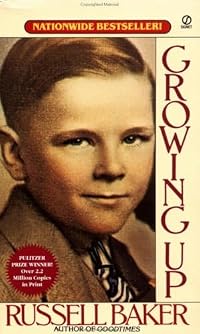
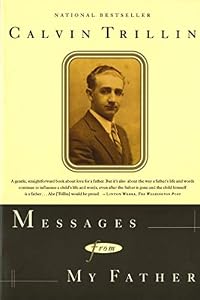
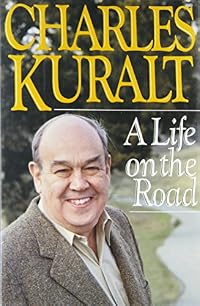
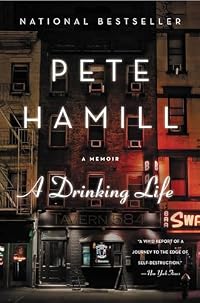
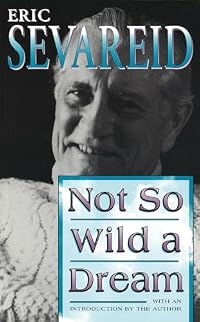
ghr4 Both are memoirs of journalists.
Member Reviews
The Good Times is a sequel of sorts to Baker’s classic memoir Growing Up. This part of his life covers mainly his newpaper career at the Baltimore Sun and the New York Times. Baker’s writing is familar, friendly, but shows the craft he perfected over the years working deadlines. His introspection about his own failings encourages the rest of us. “Oh, Russell, make something of yourself” his mother would tell him. Even the two Pulitzer Prizes he won probably wouldn’t have been very impressive to her. The end of the book is a discussion of Baker’s nose to the grindstone work ethic and how it contrasts with his own children’s more laid back attitude toward life. At first it bothered him. Then he realized, his was a show more generational attitude, one that came with the sorrow of the Depression, one that he wouldn’t have wished on his children. This book, like all of Russell Baker’s books, is a gem and a pleasure to read. show less
This was a nice, readable, enjoyable account of Baker's early adulthood, with fun glimpses into the world of newspapers in the mid-twentieth century. Baker frames the story with discussion of his mother's ambition for him. She was always telling him he should make something of himself, and even when he achieved success he was urged to try for greater things. His drive led him to a successful newspaper career. He served in London and did a lot of Senate, White House, and campaign reporting before finally settling into life as a columnist, where he ends this portion of his story.
Baker provides wonderful descriptions of life in London, his interactions with famous people, and the workings of the print media. He also provides a bit of show more commentary on the differences between his generation's ambition and his children's less ambitious, more freewheeling attitudes. Although he initially bemoans his mother's constant pressure to succeed, he eventually comes to the conclusion that this work ethic is a better approach.
I liked this one and would recommend it to anyone who is interested in journalism, history, or just a good memoir. show less
Baker provides wonderful descriptions of life in London, his interactions with famous people, and the workings of the print media. He also provides a bit of show more commentary on the differences between his generation's ambition and his children's less ambitious, more freewheeling attitudes. Although he initially bemoans his mother's constant pressure to succeed, he eventually comes to the conclusion that this work ethic is a better approach.
I liked this one and would recommend it to anyone who is interested in journalism, history, or just a good memoir. show less
Memoir that covers, roughly, the years from 1947 to 1962, when Baker was a reporter (at various levels) for the Baltimore Sun, later transitioning to the New York Times; the volume concludes when Baker was given the "Observer" column he later held for many years. There is a wealth of funny stories in the book, and Baker doesn't spare himself from being the butt of humour, though I did find his naif routine in the politics of the Times, when one of his colleagues was forced out, to be a little bit assumed. He also wears his poverty a bit like a hair-shirt at times, which means to me that he might have been rather difficult to deal with, in the chip-on-shoulder department. Still, I think this was better than the first volume (Growing Up), show more in that to a certain extent, Baker *did* grow up. Recommended. show less
Russell Baker's memoirs continued from where "Growing Up" left off. Perhaps not quite as charming as the first installment, but only because boyhood always has more charms than adulthood, no matter how well the adult chronicles his memoirs. This is a worthy successor, though, and details Baker's career from newsboy to New York Times columnist. Baker is one of my favorite columnists, and I have always felt he had hidden talents that his column rarely brought out. These two memoirs support that belief.
2719 The Good Times, by Russell Baker (read 12 Mar 1995) I read this because of how much I appreciated Baker's superlative book, Growing Up, which I read 11 Apr 1986.. This book, The Good Times, covers his time in newspapering from when he was a paper boy to when he became a columnist for the New York Times in about 1961. It is a fascinating account, and I much admire Baker. For one thing, he is still married to the girl he first married and who only had a 10th grade education. His account of being in England when the Queen was crowned and his time as White House and Senate correspondent in the fifties and sixties are sheerly absorbing reading. The last paragraph, on his mother's death, is a classic. The man is a superlative journalist.
1990: excellent story growing up + newspaper boy to reporter
1996: 2nd part growing up — ok — family interesting @ LBJ
Russell Baker rose steadily, from newsboy to college paper, from police reporter to rewrite man, from White House correspondent to Washington columnist. In outline these stages read like a successful resume, but it is Baker's recall of detail that make the story live. Nothing was easy. Success never is. Behind every triumph lies a pitfall, behind every joy a hard lesson. Baker tells it all from the mean streets of Baltimore to a seat at the coronation of Queen Elizabeth II, and from watching Ike fish to sharing LBJ's secrets.
1996: 2nd part growing up — ok — family interesting @ LBJ
Russell Baker rose steadily, from newsboy to college paper, from police reporter to rewrite man, from White House correspondent to Washington columnist. In outline these stages read like a successful resume, but it is Baker's recall of detail that make the story live. Nothing was easy. Success never is. Behind every triumph lies a pitfall, behind every joy a hard lesson. Baker tells it all from the mean streets of Baltimore to a seat at the coronation of Queen Elizabeth II, and from watching Ike fish to sharing LBJ's secrets.
Pulitzer Prize winning reporter talks about growing up in Baltimore MD in the 50'd; his first jobs as a reporter, and the famous people that he has covered.
Members
- Recently Added By
Author Information

22+ Works 2,560 Members
Russell Wayne Baker was born in Loudoun County, Virginia on August 14, 1925. He joined the Navy in 1943 and received pilot training. He never went abroad during World War II and left the service in 1945. He received a bachelor's degree in English from Johns Hopkins University in 1947. After graduating, he became a night police reporter for The show more Baltimore Sun. By 1950, he had become a rewrite man, taking phoned notes from reporters at the scene and writing stories on deadline. He eventually became The Sun's London correspondent and then it's White House correspondent. He was hired by The New York Times in 1954 as a Washington correspondent. He covered the State Department, the White House, and the presidential campaigns of 1956 and 1960. In 1962, he became a columnist for The Times and its news service. He wrote the Observer columns until his retirement in 1998. He received the 1979 Pulitzer Prize for distinguished commentary and two George Polk Awards, for commentary in 1978 and career achievement in 1998. His columns were collected in several books including No Cause for Panic, Baker's Dozen, All Things Considered, and Poor Russell's Almanac. After his retirement from The Times, he wrote for The New York Review of Books on politics, history, journalism, and other subjects. A collection of 11 of those essays was published in 2002 under the title Looking Back. His other collections included So This Is Depravity and The Rescue of Miss Yaskell and Other Pipe Dreams. His other books included An American in Washington, the novel Our Next President: The Incredible Story of What Happened in the 1968 Elections, and The Good Times. Growing Up received a Pulitzer Prize for biography in 1983. He was the host of the PBS series Masterpiece Theater from 1993 to 2004. He died from complications of a fall on January 21, 2019 at the age of 93. (Bowker Author Biography) show less
Awards and Honors
Distinctions
Work Relationships
Is contained in
Common Knowledge
- Original publication date
- 1989
- People/Characters
- Russell Baker; Mimi Baker; Buck Dorsey; Ed Young; Bill Lawrence; Scotty Reston (show all 8); John F. Kennedy; Lyndon Baines Johnson
- Important places
- Baltimore, Maryland, USA; Washington, D.C., USA; London, England, UK; New York, New York, USA
- Epigraph
- At the age of twenty-two I believed myself to be unextinguishable.
--Siegfried Sassoon, "Memoirs of a Fox-hunting Man" - Dedication
- To Mimi
- First words
- My mother, dead now to this world but still roaming free in my mind, wakes me some mornings before daybreak.
- Last words
- (Click to show. Warning: May contain spoilers.)"If there's one thing I can't stand, Russell, it's a quitter."
Lord, I can hear her still.
Classifications
- Genres
- Biography & Memoir, Nonfiction
- DDC/MDS
- 070.92 — Computer science, information & general works News media, journalism & publishing Documentary media, educational media, news media; journalism; publishing Biography And History Biographies
- LCC
- PS3552 .A4343 .Z465 — Language and Literature American literature American literature Individual authors 1961-
- BISAC
Statistics
- Members
- 386
- Popularity
- 80,527
- Reviews
- 8
- Rating
- (3.72)
- Languages
- English
- Media
- Paper, Audiobook, Ebook
- ISBNs
- 7
- ASINs
- 8