On This Page
Description
Whoever looked at an elderly lady and saw the young heroine she once was? England, 1840. Two decades after the death of her beloved sister, Jane, Cassandra Austen returns to the village of Kintbury and the home of her family friends, the Fowles. In a dusty corner of the vicarage, there is a cache of Jane's letters that Cassandra is desperate to find. Dodging her hostess and a meddlesome housemaid, Cassandra eventually hunts down the letters and confronts the secrets they hold, secrets not show more only about Jane but about Cassandra herself. Will Cassandra bare the most private details of her life to the world, or commit her sister's legacy to the flames? Moving back and forth between the vicarage and Cassandra's vibrant memories of her years with Jane, interwoven with Jane's brilliantly reimagined lost letters, Miss Austen is the untold story of the most important person in Jane's life. With extraordinary empathy, emotional complexity, and wit, Gill Hornby finally gives Cassandra her due, bringing to life a woman as captivating as any Austen heroine. show lessTags
Recommendations










Member Reviews
For whoever looked at an elderly lady and saw the young heroine she once was?~from Miss Austen by Gill Hornby
I am old. I am older than my mother and her brothers and two grandfathers were when they died. I am two aunts away from being the eldest on my mother's side of the family, and an aunt and a cousin away from being the eldest on my father's side. I have become a living keeper of memories of times that predate most of my family's birth.
I am also the family genealogist, a role inherited from my grandfather along with his papers after his death. I know things. I know things no one else knows, things that I have kept mostly to myself. I debate about making public this knowledge but am reluctant to cast a dark shadow on the memory of show more beloved relatives.
I understand why Cassandra Austen was adamant about obtaining Jane's private letters, culling out those too personal, that revealed too much about her beloved sister's life. For as small a footprint as our lives may leave, some things should remain unknown, private, sacred.
And Cassandra saw now, understood for the first time, the immensity of the task she had lately set herself: How impossible it was to control the narrative of one family's history.~ from Miss Austen by Gill Hornby
Miss Austen is the story of an aging Cassandra Austen on a mission to retrieve her sister's letters from the estate of a beloved friend. For in these letters Jane had poured out her despair and depression following her father's retirement and later death, her hasty acceptance of the marriage proposal she soon broke, and the startling story of Cassandra's rejection of a marriage proposal, which had she accepted would have entailed breaking her vow to marry Tom Fowle or no man.
Church tradition allowed the relicts of the family two months to vacate the house for the next incumbent.(...)Poor Isabella. The task before her was bleak, miserable, arduous: just two months to clear the place that had been their home for ninety-nine years!~from Miss Austen by Gill Hornby
Tom Fowle's family included three generations of clergymen who inhabited the vicarage, but the chain had ended. The widow of the last vicar, Isabella Fowle had to pack it all up, distribute family heirlooms to her brothers, and find herself a place to live--all in two months. The new vicar was pressing for an even earlier removal.
--to leave a vicarage was to be cast out of Eden. There were only trial and privation ahead.~from Miss Austen by Gill Hornby
Cassandra Austen arrives to 'help' out, but really to locate the letters she and Jane had sent to Isabella's mother Eliza, their dear friend.
The trip brings back memories. Tom was one of Rev. Austen's boarding scholars and had known Cassandra since she was a young child. When Cassandra agreed to marry him, he was impatient to gain a position to support them. When Lord Craven offered Tom a living if he accompanied him as his private minister to the Caribbean he readily agreed. Yellow Fever claimed his life.
Reading the letters she finds takes Cassandra back to when her family had to leave Stevenson. After their father's death, Jane and Cassandra and their mother had no permanent abode, little income, and no place for Jane to flourish and write her novels. Their society of beloved friends was replaced by a turnstile of acquaintances and vapid conversation.
Oh, how deeply I felt for these removals from a parsonage home! After the birth of our son, living in a parsonage became problematic for me. If anything happened to my husband, I had one month to move out! I had no job or income, a baby, a house full of belongings. It terrified me to know how vulnerable I was because of the parsonage system.
The scenes in Pride and Prejudice with Mrs. Bennett agonizing over the Collinses inheriting her home mirrors what Jane must have known, losing the only home she had ever known, the piano, the library, friends, everything that made life enjoyable.
Gill Hornby's portrait feels probable but upset me because I wanted Cassandra to have a happy ending, not the one she chooses.
Miss Austen is a dark novel, like Persuasion which Cassandra reads aloud in the book. Jane appears in flashback scenes with the wicked wit we love her for, but also in her darkest days, the Jane we would prefer to forget.
I also have to mention that during her visit to Manydown, Cassandra works on a patchwork quilt. With swollen fingers, she plied her needle intermittently.
I was given access to a free ebook by the publisher through NetGalley. My review is fair and unbiased. show less
I am old. I am older than my mother and her brothers and two grandfathers were when they died. I am two aunts away from being the eldest on my mother's side of the family, and an aunt and a cousin away from being the eldest on my father's side. I have become a living keeper of memories of times that predate most of my family's birth.
I am also the family genealogist, a role inherited from my grandfather along with his papers after his death. I know things. I know things no one else knows, things that I have kept mostly to myself. I debate about making public this knowledge but am reluctant to cast a dark shadow on the memory of show more beloved relatives.
I understand why Cassandra Austen was adamant about obtaining Jane's private letters, culling out those too personal, that revealed too much about her beloved sister's life. For as small a footprint as our lives may leave, some things should remain unknown, private, sacred.
And Cassandra saw now, understood for the first time, the immensity of the task she had lately set herself: How impossible it was to control the narrative of one family's history.~ from Miss Austen by Gill Hornby
Miss Austen is the story of an aging Cassandra Austen on a mission to retrieve her sister's letters from the estate of a beloved friend. For in these letters Jane had poured out her despair and depression following her father's retirement and later death, her hasty acceptance of the marriage proposal she soon broke, and the startling story of Cassandra's rejection of a marriage proposal, which had she accepted would have entailed breaking her vow to marry Tom Fowle or no man.
Church tradition allowed the relicts of the family two months to vacate the house for the next incumbent.(...)Poor Isabella. The task before her was bleak, miserable, arduous: just two months to clear the place that had been their home for ninety-nine years!~from Miss Austen by Gill Hornby
Tom Fowle's family included three generations of clergymen who inhabited the vicarage, but the chain had ended. The widow of the last vicar, Isabella Fowle had to pack it all up, distribute family heirlooms to her brothers, and find herself a place to live--all in two months. The new vicar was pressing for an even earlier removal.
--to leave a vicarage was to be cast out of Eden. There were only trial and privation ahead.~from Miss Austen by Gill Hornby
Cassandra Austen arrives to 'help' out, but really to locate the letters she and Jane had sent to Isabella's mother Eliza, their dear friend.
The trip brings back memories. Tom was one of Rev. Austen's boarding scholars and had known Cassandra since she was a young child. When Cassandra agreed to marry him, he was impatient to gain a position to support them. When Lord Craven offered Tom a living if he accompanied him as his private minister to the Caribbean he readily agreed. Yellow Fever claimed his life.
Reading the letters she finds takes Cassandra back to when her family had to leave Stevenson. After their father's death, Jane and Cassandra and their mother had no permanent abode, little income, and no place for Jane to flourish and write her novels. Their society of beloved friends was replaced by a turnstile of acquaintances and vapid conversation.
Oh, how deeply I felt for these removals from a parsonage home! After the birth of our son, living in a parsonage became problematic for me. If anything happened to my husband, I had one month to move out! I had no job or income, a baby, a house full of belongings. It terrified me to know how vulnerable I was because of the parsonage system.
The scenes in Pride and Prejudice with Mrs. Bennett agonizing over the Collinses inheriting her home mirrors what Jane must have known, losing the only home she had ever known, the piano, the library, friends, everything that made life enjoyable.
Gill Hornby's portrait feels probable but upset me because I wanted Cassandra to have a happy ending, not the one she chooses.
Miss Austen is a dark novel, like Persuasion which Cassandra reads aloud in the book. Jane appears in flashback scenes with the wicked wit we love her for, but also in her darkest days, the Jane we would prefer to forget.
I also have to mention that during her visit to Manydown, Cassandra works on a patchwork quilt. With swollen fingers, she plied her needle intermittently.
I was given access to a free ebook by the publisher through NetGalley. My review is fair and unbiased. show less
I review I wrote in February 2020:
Miss Austen by Gill Hornby (5 stars)
I confess I was prepared to not like Miss Austen; I came to the book with a preconceived notion
that I don’t like novels which are spin-offs of my favourite classic authors. What a silly notion! Gill
Hornby is clearly a Jane Austen super fan and has imagined Cassandra’s later life and Jane
Austen’s letters with great sensitivity. I read this in one long sitting; I couldn’t put it down.
The novel begins by looking back to 1795 and Cassandra’s engagement to Tom Fowles. It then
jumps forwards to 1840, some 23 years after Jane’s death, and Cassandra returns to Kintbury
vicarage in Berkshire. The Reverend Fulwar Craven Fowles has recently died, the house must show more be
cleared and Cassandra is desperate to retrieve family letters, specifically Jane’s letters, before
other family members arrive to clear personal possessions from the vicarage. Cassandra is certain
that the contents of these letters must not be revealed, in order to preserve Jane’s legacy and
literature for generations to come.
Gill Hornby alternates between the present and Cassandra’s past; a very believable take on the
past of the two Austen sisters. It’s a novel of kindness and empathy, exploring relationships
between women in particular and difficulties they faced in the late eighteenth and nineteenth
centuries. Well researched and compelling, a must read for any Jane Austen fan. show less
Miss Austen by Gill Hornby (5 stars)
I confess I was prepared to not like Miss Austen; I came to the book with a preconceived notion
that I don’t like novels which are spin-offs of my favourite classic authors. What a silly notion! Gill
Hornby is clearly a Jane Austen super fan and has imagined Cassandra’s later life and Jane
Austen’s letters with great sensitivity. I read this in one long sitting; I couldn’t put it down.
The novel begins by looking back to 1795 and Cassandra’s engagement to Tom Fowles. It then
jumps forwards to 1840, some 23 years after Jane’s death, and Cassandra returns to Kintbury
vicarage in Berkshire. The Reverend Fulwar Craven Fowles has recently died, the house must show more be
cleared and Cassandra is desperate to retrieve family letters, specifically Jane’s letters, before
other family members arrive to clear personal possessions from the vicarage. Cassandra is certain
that the contents of these letters must not be revealed, in order to preserve Jane’s legacy and
literature for generations to come.
Gill Hornby alternates between the present and Cassandra’s past; a very believable take on the
past of the two Austen sisters. It’s a novel of kindness and empathy, exploring relationships
between women in particular and difficulties they faced in the late eighteenth and nineteenth
centuries. Well researched and compelling, a must read for any Jane Austen fan. show less
This book is in a class by itself when it comes to Jane Austen-related fiction. Far more than the ubiquitous Regency fan-fic full of meet-cutes and enjoyable enough fluff, this work sits neatly on the line between biography and fiction. It is a thoughtful, well-written reflection upon Jane Austen's closest friend, her sister Cassandra. Cassandra and Jane are both somewhat shrouded in mystery: there is just so much that we can't know. Which is the very point of this book. It deals with themes of privacy, family legacy, and the strange ways that narratives get shaped once other people or later generations take over.
There's not much plot here; the story alternates between elderly Cassandra (1840) and young Cassandra and Jane. In this show more setup, Cassandra in later life journeys to visit extended family with the goal of retrieving letters written by Jane. As she reads through the letters, she remembers in detail the events of her life with Jane. She also ponders on the way that life has turned out, the dreams vs. the realities, and what kind of legacy people might foist upon Jane compared to the way she and Jane really felt about their lives. Of course, the author introduces some speculative material, but none of it is wildly improbable, and it beautifully illustrates the themes. While Cassandra has sometimes been given short shrift as the destroyer of Jane's letters, this novel explores why she did it and reflects us readers back to ourselves as we ask, really, how much right do we have to intrude on all the details of a life, or make judgments in areas where there is bound to be complexity and context?
I initially passed by this book on NetGalley, but then I heard the author interviewed on the Bonnets at Dawn podcast and it convinced me that the book would have substance. I'm glad that I was convinced to go back and request it!
Thanks to NetGalley and Flatiron Books for this advance review copy. show less
There's not much plot here; the story alternates between elderly Cassandra (1840) and young Cassandra and Jane. In this show more setup, Cassandra in later life journeys to visit extended family with the goal of retrieving letters written by Jane. As she reads through the letters, she remembers in detail the events of her life with Jane. She also ponders on the way that life has turned out, the dreams vs. the realities, and what kind of legacy people might foist upon Jane compared to the way she and Jane really felt about their lives. Of course, the author introduces some speculative material, but none of it is wildly improbable, and it beautifully illustrates the themes. While Cassandra has sometimes been given short shrift as the destroyer of Jane's letters, this novel explores why she did it and reflects us readers back to ourselves as we ask, really, how much right do we have to intrude on all the details of a life, or make judgments in areas where there is bound to be complexity and context?
I initially passed by this book on NetGalley, but then I heard the author interviewed on the Bonnets at Dawn podcast and it convinced me that the book would have substance. I'm glad that I was convinced to go back and request it!
Thanks to NetGalley and Flatiron Books for this advance review copy. show less
What a delicious first chapter there is to ‘Miss Austen’ by Gill Hornby. Elderly Cassandra Austen arrives unannounced to visit a family friend in Kintbury, endures a parsimonious supper and a difficult evening without much conversation. Why, I wondered, is Cassandra there. And then at bedtime, comes a hint at her reason.
Cassandra visits Isabella, a family friend who is grieving the death of her father. Cassandra’s objective, is to retrieve any incriminating letters between her sister Jane and Isabella’s mother, Eliza, before Isabella leaves the family vicarage. With both letter writers dead, and knowledge of the novelist Jane Austen more widely sought than ever before, Cassandra is anxious to protect Jane’s legacy.
What follows show more is a gentle telling of the sisters’ relationship as Hornby pieces together the real letters of the Austen sisters and the known biography of the family, combined with events and dialogue of her own imagination. This is a meandering read without a real focus, there is the imagined threat to Jane’s reputation as Cassandra searches for the missing letters under threat of exposure by her sister-in-law Mary. But this threat is not wholly formed and the story goes back and forth between Cassandra reading the letters at the dead of night, to key times in the life of Jane.
Not until three-quarters of the way through does the dilemma becomes personal to Cassandra. Until this point, it is oddly numb. Cassandra has been seeking private – and very personal – letters written to Eliza but instead finds letters that cast what she, Cassandra, believes to be a bad light on her own life. Not Jane’s. The stakes are raised and I wanted to see more than a snapshot of the man involved and don’t really care if he was a real person or the author’s invention.
Cassandra in her old age is dismissive of those who do not read or don’t appreciate the art of her sister’s books, and has a lack of interest in anyone not an Austen. ‘Those other mortals, whose poor veins must somehow pulse with no Austen blood in them, always appeared to her comparatively pale’. This quote reminded me of Marianne’s dismissal of Edward’s underwhelming reading of Shakespeare sonnets and made me want a 360 degree picture of Cassandra’s own life.
I finished ‘Miss Austen’ reflecting on the difficulty of writing this novel. What an awkward task it is for an author, to balance biography and real letters with invention and how strong must be the impulse to stick with the truth. I longed for Hornby to take a bigger risk and show us more of the life, and loves, Cassandra may have had.
Read more of my book reviews at http://www.sandradanby.com/book-reviews-a-z/ show less
Cassandra visits Isabella, a family friend who is grieving the death of her father. Cassandra’s objective, is to retrieve any incriminating letters between her sister Jane and Isabella’s mother, Eliza, before Isabella leaves the family vicarage. With both letter writers dead, and knowledge of the novelist Jane Austen more widely sought than ever before, Cassandra is anxious to protect Jane’s legacy.
What follows show more is a gentle telling of the sisters’ relationship as Hornby pieces together the real letters of the Austen sisters and the known biography of the family, combined with events and dialogue of her own imagination. This is a meandering read without a real focus, there is the imagined threat to Jane’s reputation as Cassandra searches for the missing letters under threat of exposure by her sister-in-law Mary. But this threat is not wholly formed and the story goes back and forth between Cassandra reading the letters at the dead of night, to key times in the life of Jane.
Not until three-quarters of the way through does the dilemma becomes personal to Cassandra. Until this point, it is oddly numb. Cassandra has been seeking private – and very personal – letters written to Eliza but instead finds letters that cast what she, Cassandra, believes to be a bad light on her own life. Not Jane’s. The stakes are raised and I wanted to see more than a snapshot of the man involved and don’t really care if he was a real person or the author’s invention.
Cassandra in her old age is dismissive of those who do not read or don’t appreciate the art of her sister’s books, and has a lack of interest in anyone not an Austen. ‘Those other mortals, whose poor veins must somehow pulse with no Austen blood in them, always appeared to her comparatively pale’. This quote reminded me of Marianne’s dismissal of Edward’s underwhelming reading of Shakespeare sonnets and made me want a 360 degree picture of Cassandra’s own life.
I finished ‘Miss Austen’ reflecting on the difficulty of writing this novel. What an awkward task it is for an author, to balance biography and real letters with invention and how strong must be the impulse to stick with the truth. I longed for Hornby to take a bigger risk and show us more of the life, and loves, Cassandra may have had.
Read more of my book reviews at http://www.sandradanby.com/book-reviews-a-z/ show less
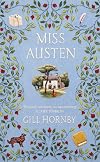
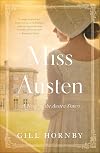
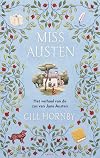
I totally fell in love with the creative process behind the embroidered cover design for Miss Austen by Gill Hornby after watching this video created by Chloe Giordano.
I've been stitching - mostly cross stitch - on and off for years and Miss Austen was a complete cover buy. I hardly ever pre-order books, but went all out to pre-order this Waterstones signed hardback edition, with dust jacket showing the reverse of the embroidered fabric (so clever), sprayed edges and stunning endpapers. You can see a flip through of the book here.
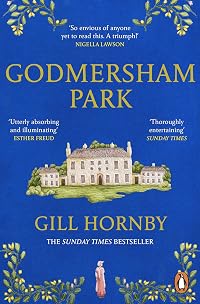
Chloe Giordano went on to design and stitch the embroidered cover for Godmersham Park by Gill Hornby and I really admire the publisher for seeking a different design style and process for these historical show more fiction novels.
Miss Austen by Gill Hornby is a novel of the Austen sisters, focussing on Cassandra Austen. Being unfamiliar with the members of the Austen family and in-laws, the handy family list at the beginning of the novel was immensely helpful and I constantly needed to flip back to refer to it.
"And she decided that other families must be one of life's most unfathomable mysteries. It was no use sitting as an outsider and even trying to fathom them. One could have no idea of what it must be like to be in there, on the inside. She would share that thought later in her letter to Jane." Page 69
The primary thrust of the novel is discovering why Cassandra Austen burned so many of her sister Jane Austen's letters, thus depriving future readers and scholars from reading her words. The dialogue is witty and enjoyable, and despite only having read one book by Jane Austen, felt authentic to her writing style.
"Half of Caroline's story was plainly ridiculous. The girl had always had a strong imagination, as well as a talent for embroidery, and was employing both quite liberally here." Page 161
'Well, what a lovely confection of nothing at all that was, my dear,' she began... 'Most charming, indeed; so charming I almost wish it had happened.' Page 161
The bond between Jane and Cassandra ran deep, with both seeming to sacrifice their happiness and future prospects for one another. The lack of female agency, the bonds of family and the relationships between women formed the base of this historical fiction novel:
"Now, here, in this vicarage, Cassandra had found another; most unexpected, excellent woman. She had quite forgotten the feeling, that deep, joyful and satisfying feeling brought by good feminine companionship. What a blessing to enjoy it once more." Page 170
In reflecting on Jane's death, the author highlights the importance of inheritance and legacy, noting:
"... these are the things by which most of us are remembered, these small acts of love, the only evidence that we, too, once lived on this earth. The preserves in the larder, the stitch on the kneeler. The mark of the pen on the page." Page 20
Jane's temperament and moods were mentioned throughout Miss Austen, although I'm lacking any opinion as to how close to her true medical history the author was steering us. Having only read Pride and Prejudice, I felt somewhat ill prepared and poorly equipped to enjoy all of the subtleties and easter eggs no doubt on offer here in Miss Austen.
Fans familiar with the Austen canon or the author's life in any detail, will no doubt recognise plot points, locations (Godmersham Park, Chawton House), family members, engagements, marriages and deaths mentioned throughout, however these were unfortunately lost on me.
Not knowing how much of the narrative in Miss Austen is based on history and fact and how much was fictionalised, I wasn't able to enjoy the novel at the level it was intended. Instead, I chose to read Miss Austen as a stand-alone novel of sorts, knowing as I did so that I was missing many layers by being unfamiliar with the Austen canon.
The constant moving of the family members was a surprise although I did enjoy Mrs Austen's dialogue, especially when it concerned her own health:
'My bowels feel much steadier now, thanks be to the Lord, after what was, as you of all people know, Cass, the most frightful evacuation. I think I shall like this apothecary. He has a good feel for my system.' Page 198
Love it! Miss Austen by Gill Hornby will be remembered by this reader for having one of the most attractive cover designs I've seen and was an enjoyable read. show less
I've been stitching - mostly cross stitch - on and off for years and Miss Austen was a complete cover buy. I hardly ever pre-order books, but went all out to pre-order this Waterstones signed hardback edition, with dust jacket showing the reverse of the embroidered fabric (so clever), sprayed edges and stunning endpapers. You can see a flip through of the book here.
Chloe Giordano went on to design and stitch the embroidered cover for Godmersham Park by Gill Hornby and I really admire the publisher for seeking a different design style and process for these historical show more fiction novels.
Miss Austen by Gill Hornby is a novel of the Austen sisters, focussing on Cassandra Austen. Being unfamiliar with the members of the Austen family and in-laws, the handy family list at the beginning of the novel was immensely helpful and I constantly needed to flip back to refer to it.
"And she decided that other families must be one of life's most unfathomable mysteries. It was no use sitting as an outsider and even trying to fathom them. One could have no idea of what it must be like to be in there, on the inside. She would share that thought later in her letter to Jane." Page 69
The primary thrust of the novel is discovering why Cassandra Austen burned so many of her sister Jane Austen's letters, thus depriving future readers and scholars from reading her words. The dialogue is witty and enjoyable, and despite only having read one book by Jane Austen, felt authentic to her writing style.
"Half of Caroline's story was plainly ridiculous. The girl had always had a strong imagination, as well as a talent for embroidery, and was employing both quite liberally here." Page 161
'Well, what a lovely confection of nothing at all that was, my dear,' she began... 'Most charming, indeed; so charming I almost wish it had happened.' Page 161
The bond between Jane and Cassandra ran deep, with both seeming to sacrifice their happiness and future prospects for one another. The lack of female agency, the bonds of family and the relationships between women formed the base of this historical fiction novel:
"Now, here, in this vicarage, Cassandra had found another; most unexpected, excellent woman. She had quite forgotten the feeling, that deep, joyful and satisfying feeling brought by good feminine companionship. What a blessing to enjoy it once more." Page 170
In reflecting on Jane's death, the author highlights the importance of inheritance and legacy, noting:
"... these are the things by which most of us are remembered, these small acts of love, the only evidence that we, too, once lived on this earth. The preserves in the larder, the stitch on the kneeler. The mark of the pen on the page." Page 20
Jane's temperament and moods were mentioned throughout Miss Austen, although I'm lacking any opinion as to how close to her true medical history the author was steering us. Having only read Pride and Prejudice, I felt somewhat ill prepared and poorly equipped to enjoy all of the subtleties and easter eggs no doubt on offer here in Miss Austen.
Fans familiar with the Austen canon or the author's life in any detail, will no doubt recognise plot points, locations (Godmersham Park, Chawton House), family members, engagements, marriages and deaths mentioned throughout, however these were unfortunately lost on me.
Not knowing how much of the narrative in Miss Austen is based on history and fact and how much was fictionalised, I wasn't able to enjoy the novel at the level it was intended. Instead, I chose to read Miss Austen as a stand-alone novel of sorts, knowing as I did so that I was missing many layers by being unfamiliar with the Austen canon.
The constant moving of the family members was a surprise although I did enjoy Mrs Austen's dialogue, especially when it concerned her own health:
'My bowels feel much steadier now, thanks be to the Lord, after what was, as you of all people know, Cass, the most frightful evacuation. I think I shall like this apothecary. He has a good feel for my system.' Page 198
Love it! Miss Austen by Gill Hornby will be remembered by this reader for having one of the most attractive cover designs I've seen and was an enjoyable read. show less
After the death of her fiancé, Cassandra Austen devotes herself to her family, especially her beloved sister Jane, a budding author whose talent Cassandra tirelessly defends. After Jane's untimely death, Cassandra spends many years alone, visiting family and friends. But as she reaches her 60s and begins to feel her health fading, she is determined to discover a the contents of a collection of Jane's letters. Even as Cassandra nears death, the only thing that concerns her is maintaining her famous sister's reputation. It is paramount that she destroy anything in these letters that would embarrass Jane before they fall into less noble hands.
However, Cassandra is not prepared herself for the content of these letters or the potent show more memories they will awaken. The story passes back and forth between Cassandra's present mission and the many adventures and heartbreaks of her past. The rich world of the Austen family is vividly rendered as we follow these two sisters who are eternally bound by friendship and acceptance. It's a lovely story of longing, loss, and enduring loyalty over every kind. show less
However, Cassandra is not prepared herself for the content of these letters or the potent show more memories they will awaken. The story passes back and forth between Cassandra's present mission and the many adventures and heartbreaks of her past. The rich world of the Austen family is vividly rendered as we follow these two sisters who are eternally bound by friendship and acceptance. It's a lovely story of longing, loss, and enduring loyalty over every kind. show less
As a companion piece to Jane Austen's life, as told through her sister Cass, this novelization performs a kind of alchemy, a pretty recollection of biography told in a proper regency-romance style.
For everything it achieves, bringing Jane and her sisters to life, it does well, but I have a single quibble:
As fans, we're ALL set to sink our teeth into the juiciest mystery of all: the reason why the personal letters were burned!
No spoilers. But I will mention that I was slightly... let down. For how well the characters of these real-life personages were portrayed, I think I rather expected something a bit more extraordinary. On the other hand, it DOES fit.
No real complaints here, but I will mention that I prefer Jane Austen's actual show more novels more. :) show less
For everything it achieves, bringing Jane and her sisters to life, it does well, but I have a single quibble:
As fans, we're ALL set to sink our teeth into the juiciest mystery of all: the reason why the personal letters were burned!
No spoilers. But I will mention that I was slightly... let down. For how well the characters of these real-life personages were portrayed, I think I rather expected something a bit more extraordinary. On the other hand, it DOES fit.
No real complaints here, but I will mention that I prefer Jane Austen's actual show more novels more. :) show less
Members
- Recently Added By
Published Reviews
"A delightfully astute reimagining of Jane Austen's life that offers a shrewd take on Regency gender roles... Ms. Hornby enlivens the exhumation with inspired touches of social comedy and a cast of appealing eccentrics."
added by SaraElizabeth11
Lists

Books Read in 2023
5,638 works; 147 members

Netgalley Reads
468 works; 3 members

Books Read in 2025
4,128 works; 98 members

Author Information
9 Works 1,078 Members
Some Editions
Awards and Honors
Series

Common Knowledge
- Canonical title
- Miss Austen
- Original publication date
- 2020
- People/Characters
- Jane Austen; Cassandra Austen; Isabella Fowle; Tom Fowle
- Important places
- Kintbury, Berkshire, England, UK; Steventon, Hampshire, England, UK; Bath, Somerset, England, UK
- Epigraph
- Men have had every advantage of us in telling their own story.... The pen has been in their hands.
—JANE AUSTEN, Persuasion - Dedication
- For Holly and Matilda
- First words
- "LET US TAKE THAT PATH."
- Quotations
- Cassandra had often privately observed that when the gentleman of the house died, fine dining died with him.
"There is so much to do that I know not how to begin it," said Isabella with a sigh. "It is all organizing ... arranging ... sorting through. These are not the things that best suit my talents."
Which were what, exactly? C... (show all)assandra wondered. They were thus far mysterious. But she had an unshakable belief in God's design of humanity: We all have our uses. She looked forward to Isabella's being revealed.
Cassandra again was all sympathy. For the family—and most especially for its single women—to leave a vicarage was to be cast out of Eden. There were only trial and privation ahead.
What worried her more was this new evidence of Isabella's dependency. Very bad on her own? She was a single woman! Solitude was an inescapable part of her very condition.
Cassandra sipped at her tea, quite lost for words. It was not the first time that she had heard this assumption: that the divine blessing of a male presence somehow made a household more desirable, superior.
Isabella had clearly not grasped the truth of her own situation: Her sisters were her future; single women have only each other. For many, mutual support was their only means of financial survival, but for most ... (show all)it brought other riches with it: a whole wealth of comfort, companionship, and joy.
"But what would constitute a happy ending, in your view?"
"Well, marriage, of course!" Isabella retorted. "What other sort is there?"
Cassandra looked up, raised an eyebrow, and paused. She could now protest and proclai... (show all)m, saying: Look at me, Isabella! I have known happiness. Without men or marriage, I found a happiness, true and sublime! But who would believe her? She was now an old woman, and such proclamations were really not in her style.
Economy is as ever at war with Romance.
And Cassandra saw now, understood for the first time, the immensity of the task she had lately set herself: How impossible it was to control the narrative of one family's history.
"There is no cause for concern. Your grandmother likes to take to her bed whenever we arrive somewhere new. It is her way of feeling at home. She can then test the mattress, meet the best doctors, sample the wares of the loca... (show all)l apothecary, and know just what to expect should real illness afflict her. Which it never does, incidentally. But perhaps that is her wisdom: prevention by good preparation. Like all the best invalids, she will outlive us all."
Still, she thought she preferred even this to bowels and their behavior. "It is our dearest wish to see you girls both settled before the Lord comes to call us: And with my poor old stomach, that could happen any day." This w... (show all)as a new hell: a fusion of spinsterhood with the troubles of digestion: "The next time I suffer an evacuation of that magnitude..."
"Indeed, no one will find any sort of fault with your Mr. Hobday. It seems he is the very model of masculine perfection. The universe has met and agreed upon it. It is all most infuriating." Jane sighed. "You know that, as a ... (show all)woman of many faults, I abhor faultlessness in others. What is there to be done with them if they cannot change or improve?"
Eliza stitched in silence.
"But you know the Austens as well as anymore: We have more than our fair share of blessings in general but—alas!—money will always elude us. Not doubt we will survive."
"Disaster often brings out the best in her. It is success that disturbs her good nature." - Last words
- (Click to show. Warning: May contain spoilers.)Berkshire started to fall away from her now, Hampshire was opening up: the soft contours of the country she had once thought her sure destiny yielding to the dear shape of home.
- Blurbers
- Fowler, Karen Joy; Tomalin, Claire; Prescott, Lara; Le Faye, Deirdre; Kelly, Helena; Nattress, Laurel Ann (show all 7); Jenner, Natalie
Classifications
Statistics
- Members
- 470
- Popularity
- 64,924
- Reviews
- 19
- Rating
- (3.97)
- Languages
- 5 — Dutch, English, Hungarian, Italian, Spanish
- Media
- Paper, Audiobook, Ebook
- ISBNs
- 24
- ASINs
- 5