On This Page
Description
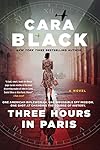
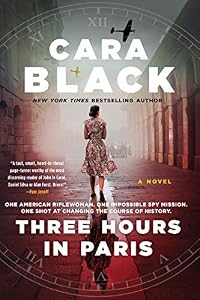
In June of 1940, when Paris fell to the Nazis, Hitler spent a total of three hours in the City of Light—abruptly leaving, never to return. To this day, no one knows why.Kate Rees, a young American markswoman, has been recruited by British intelligence to drop into Paris with a dangerous assignment: assassinate the Führer. Wrecked by grief after a Luftwaffe bombing killed her husband and infant daughter, she is armed with a rifle, a vendetta, and a fierce resolve. But other than rushed show more and rudimentary instruction, she has no formal spy training. Thrust into the red-hot center of the war, a country girl from rural Oregon finds herself holding the fate of the world in her hands. When Kate misses her mark and the plan unravels, Kate is on the run for her life—all the time wrestling with the suspicion that the whole operation was a set-up.
New York Times bestselling author Cara Black is at her best as she brings Occupation-era France to vivid life in this masterful, pulse-pounding story about one young woman with the temerity—and drive—to take on Hitler himself.
*Features an illustrated map of 1940s Paris as full color endpapers.. show less
Tags
Recommendations











Member Reviews
According to author Cara Black, Three Hours in Paris stemmed from a footnote in history. In June of 1940, Hitler came to newly occupied Paris for three hours. Only three hours and then left, with no victory parade or fanfare of any kind. Black says she knew there was more to this and the fact Goebbels, his propaganda minister, and pioneer of faux news, edited the newsreel of Hitler's visit! And from this little bit of hidden history she has reimagined events and crafted a masterful thriller.
Life doesn’t have much meaning for American Kate Rees since she lost her husband and infant daughter in a Luftwaffe bombing, so when she is recruited by British intelligence to put her markswoman skills to use and parachute into Paris and show more assassinate Hitler she sees her chance for revenge. Even if she is killed or captured, by killing the Führer she will have achieved a small victory in honor of her dead family. She is given a crash course in spy craft and put on the plane. And from that point the story takes off and never slows down until the very last page.
The description of the book barely scratches the surface. There is so much more beneath.
Fate, happenstance, (bad) luck, coincidence, whatever it is, nothing is as it seems or goes as expected. This book is deliciously complicated and convoluted. It’s as if they are all making connections but the connections are slightly off, and nobody realizes it. Very exciting, tense, short, short chapters work perfectly because about the time your stress level is at its breaking point the scene or POV shifts. You get a little breather, but then more suspense. About halfway through and I still had no idea at all how this might end. It’s one of those books where you really want to take a peek at the end because you can’t stand it, but you won’t do it because you are enjoying this terrifying ride too much. There is such a ripple effect of tragedy and ruination to all those Kate innocently touches as she blunders around trying to get back to England, and so many aspects of her mission, and the missions of others, that I just did not see coming.
The writing is masterful, characters captivating, and the plot moves along at breakneck pace. Scenes are brought vividly to life. You can feel the heat, smell the cigarette smoke, hear the water in the fountains. Thanks to Penguin Random House for providing an advance copy of Three Hours in Paris. All opinions are my own. I thoroughly enjoyed this book and highly recommend it. show less
Life doesn’t have much meaning for American Kate Rees since she lost her husband and infant daughter in a Luftwaffe bombing, so when she is recruited by British intelligence to put her markswoman skills to use and parachute into Paris and show more assassinate Hitler she sees her chance for revenge. Even if she is killed or captured, by killing the Führer she will have achieved a small victory in honor of her dead family. She is given a crash course in spy craft and put on the plane. And from that point the story takes off and never slows down until the very last page.
The description of the book barely scratches the surface. There is so much more beneath.
Fate, happenstance, (bad) luck, coincidence, whatever it is, nothing is as it seems or goes as expected. This book is deliciously complicated and convoluted. It’s as if they are all making connections but the connections are slightly off, and nobody realizes it. Very exciting, tense, short, short chapters work perfectly because about the time your stress level is at its breaking point the scene or POV shifts. You get a little breather, but then more suspense. About halfway through and I still had no idea at all how this might end. It’s one of those books where you really want to take a peek at the end because you can’t stand it, but you won’t do it because you are enjoying this terrifying ride too much. There is such a ripple effect of tragedy and ruination to all those Kate innocently touches as she blunders around trying to get back to England, and so many aspects of her mission, and the missions of others, that I just did not see coming.
The writing is masterful, characters captivating, and the plot moves along at breakneck pace. Scenes are brought vividly to life. You can feel the heat, smell the cigarette smoke, hear the water in the fountains. Thanks to Penguin Random House for providing an advance copy of Three Hours in Paris. All opinions are my own. I thoroughly enjoyed this book and highly recommend it. show less
In June of 1940, when Paris fell to the Nazis, Hitler spent a total of three hours in the city-- abruptly leaving, never to return. To this day, no one knows why. When a fascinating little nugget of information like this falls into the lap of a talented writer like Cara Black, it immediately becomes the catalyst for a high-octane historical thriller.
Kate Rees is a fascinating character, and I loved following her through the streets of Paris as she tried to get out alive. With no formal training in spycraft, she only had her quick wits, her instincts, and the bits and pieces of information she gleaned from the man who recruited her for the mission to aid in her survival. She is in a situation where she can trust absolutely no one, and show more this adds to the fast pace and suspense of Three Hours in Paris-- especially as she's being followed by a straight-arrow Munich cop named Gunter Hoffman. Kate may have her own obstacles to overcome, but so does Hoffman in the form of layer upon layer of Hitler's flunkies. The point of view switches from Kate to Hoffman in a riveting game of cat and mouse.
As I read, I also found myself becoming angrier and angrier. Why? Because this book reminded me of all the nameless, faceless, utterly dedicated and brave men and women who have been deliberately sacrificed by governments around the world in the name of Victory. I have always had a difficult time believing that any human being is a "throwaway." So, yes, Three Hours in Paris did rouse some ire in me, but first and foremost, it is a thrilling tale of survival.
From the map of Paris on the endpieces of the book to the very last page, I found myself rooting for Kate Rees. I think you will, too. I certainly hope Cara Black has more thrillers like Three Hours in Paris up her sleeve! show less
Kate Rees is a fascinating character, and I loved following her through the streets of Paris as she tried to get out alive. With no formal training in spycraft, she only had her quick wits, her instincts, and the bits and pieces of information she gleaned from the man who recruited her for the mission to aid in her survival. She is in a situation where she can trust absolutely no one, and show more this adds to the fast pace and suspense of Three Hours in Paris-- especially as she's being followed by a straight-arrow Munich cop named Gunter Hoffman. Kate may have her own obstacles to overcome, but so does Hoffman in the form of layer upon layer of Hitler's flunkies. The point of view switches from Kate to Hoffman in a riveting game of cat and mouse.
As I read, I also found myself becoming angrier and angrier. Why? Because this book reminded me of all the nameless, faceless, utterly dedicated and brave men and women who have been deliberately sacrificed by governments around the world in the name of Victory. I have always had a difficult time believing that any human being is a "throwaway." So, yes, Three Hours in Paris did rouse some ire in me, but first and foremost, it is a thrilling tale of survival.
From the map of Paris on the endpieces of the book to the very last page, I found myself rooting for Kate Rees. I think you will, too. I certainly hope Cara Black has more thrillers like Three Hours in Paris up her sleeve! show less
This was a fast-moving story that held my interest to the extent that I didn't skip ahead to see what would happen. However, I didn't quite believe that Kate could become such a proficient fighter in such a short time. There seemed to be one fiasco after another throughout her mission and I couldn't imagine being as effective as she was with so little help and assistance, let alone finding her way around Paris so efficiently, even though she had been a student there.
In 1940, Adolf Hitler visited Paris for three hours. Witnesses gave conflicting dates for this visit. He never returned, and it’s a mystery what he did while in the City of Light – a mystery Cara Black, author of the long-running Aimée Leduc series, couldn’t resist. In her stand-alone historical thriller, she imagines what could have happened during that brief visit and in the hours following.
As the book opens, Kate Rees is standing at a window overlooking the entrance to Sacré Coeur, her Lee-Enfield rifle at the ready, awaiting the arrival of the Fuhrer who, British intelligence has discovered, is making a visit to the city his troops have recently occupied. Her first shot misses, but doesn’t attract attention. A second show more strikes a man behind her target. The third attempt is lost to hesitation. If only he hadn’t picked up a child just as she took aim, her mission would have been accomplished. Instead, she has to go on the run, with a dogged German detective on her heels. As we accompany her on her quest to acquire information about plans for an invasion that British intelligence badly needs and make her escape, the suspense grows. Kate’s resourcefulness and courage makes her a winning protagonist in a gripping read.
In a departure from her series, now up to nineteen entries, Black has woven a taut, well-researched thriller that contains elements of her previous work – a love of all things French, a bit of romance, a lot of emotional drama as a woman grieving the loss of her husband and daughter pours herself into revenge. This engaging stand-alone is likely to bring her new fans. show less
As the book opens, Kate Rees is standing at a window overlooking the entrance to Sacré Coeur, her Lee-Enfield rifle at the ready, awaiting the arrival of the Fuhrer who, British intelligence has discovered, is making a visit to the city his troops have recently occupied. Her first shot misses, but doesn’t attract attention. A second show more strikes a man behind her target. The third attempt is lost to hesitation. If only he hadn’t picked up a child just as she took aim, her mission would have been accomplished. Instead, she has to go on the run, with a dogged German detective on her heels. As we accompany her on her quest to acquire information about plans for an invasion that British intelligence badly needs and make her escape, the suspense grows. Kate’s resourcefulness and courage makes her a winning protagonist in a gripping read.
In a departure from her series, now up to nineteen entries, Black has woven a taut, well-researched thriller that contains elements of her previous work – a love of all things French, a bit of romance, a lot of emotional drama as a woman grieving the loss of her husband and daughter pours herself into revenge. This engaging stand-alone is likely to bring her new fans. show less
One Sunday in late June 1940, Kate Rees parachutes from a British airplane into France and reaches Paris, a city she knows well from before the war, now barely weeks into the German Occupation. But this visit, she won’t be frequenting the cafés she recalls so fondly, or the booksellers by the Seine, places where her late husband courted her. Kate’s in Paris to shoot Hitler, because British Intelligence has decoded German wire traffic and learned he’ll be there.
A gripping premise, to be sure, and from first to last, Three Hours in Paris never lets up. I admire the storytelling, which lives inside a flashing sign that says, “Count on nothing.” But I have to take issue with just about everything else, because if the breathless show more pace ever paused, the absurd circumstances defy belief.
Kate’s American, a neutral citizen in June 1940, which makes her a peculiar choice for such a mission. Though she’s a crack shot, having grown up on a ranch in Oregon, that’s her sole qualification, aside from her American-accented French. What's more, her handlers somehow gloss over the eventuality that she might be caught, and for some reason, she doesn’t press them.
That's typical of her training, rudimentary and brief, and of the vague, amateurish atmosphere of British Intelligence, rather like a classroom that's slipped the teacher's control. (To be fair, this isn't the famed Special Operations Executive, but its predecessor, known as Section D.)
The German side of this equation seems almost as absurd. We have Gunter Hoffman, a Munich homicide detective somehow working for the Reichsicherheitsdienst, or security service, assigned to track down who fired at Hitler. In a very tired trope, Hoffman doesn’t particularly care for the Führer; with so many novels about disaffected Germans, it’s a wonder the war ever happened. But that’s less the problem here than the overhyped interservice rivalries. Those add a few reversals for the detective to grapple with, improbable as they are.
As for Paris, the city seems wide open for business, an unusual situation for a Sunday, as any Francophile traveler knows. Finally, Kate’s mission quickly morphs into much bigger game, which ups the stakes, always a plus, but at further expense to credulity.
However, to her credit, Black manages to finesse a few of these clunkers, countering expectations. That’s where Three Hours in Paris does best; nothing is certain, ever, and Kate never knows whom to trust, if anybody. If the author has chosen an unlikely protagonist on an improbable mission, she makes up for that in part by wedging her heroine into a tight space and tightens it further without respite. Human laxity does Kate a favor, every now and again, but every time she slips through a net, she’s earned her escape with ingenious, on-the-spot thinking, and you know her respite will be temporary.
That’s Black’s payoff from deciding to use an untrained agent; everything’s a surprise, nothing has been planned. But Kate’s up against a crack detective in Hoffman, tireless, equally adept at quick thinking. It’s a pleasure following his reasoning, wondering how he’ll box Kate in; you have to admire his skill. Black’s known for her Aimée Leduc mysteries, set in Paris, and the author has police procedure and the city down pat; I’m sure she realizes her Sunday portrayal stretches the truth. If the military and espionage operations appear fuzzy, Paris comes in crystal clear.
You have to like the two main characters, though neither comes through with much depth. Emotional transitions happen in an eyeblink, and more than a few sentences in these passages restate the obvious. But if you read Three Hours in Paris, you’re reading for a high-octane plot, and in that, the novel delivers. show less
A gripping premise, to be sure, and from first to last, Three Hours in Paris never lets up. I admire the storytelling, which lives inside a flashing sign that says, “Count on nothing.” But I have to take issue with just about everything else, because if the breathless show more pace ever paused, the absurd circumstances defy belief.
Kate’s American, a neutral citizen in June 1940, which makes her a peculiar choice for such a mission. Though she’s a crack shot, having grown up on a ranch in Oregon, that’s her sole qualification, aside from her American-accented French. What's more, her handlers somehow gloss over the eventuality that she might be caught, and for some reason, she doesn’t press them.
That's typical of her training, rudimentary and brief, and of the vague, amateurish atmosphere of British Intelligence, rather like a classroom that's slipped the teacher's control. (To be fair, this isn't the famed Special Operations Executive, but its predecessor, known as Section D.)
The German side of this equation seems almost as absurd. We have Gunter Hoffman, a Munich homicide detective somehow working for the Reichsicherheitsdienst, or security service, assigned to track down who fired at Hitler. In a very tired trope, Hoffman doesn’t particularly care for the Führer; with so many novels about disaffected Germans, it’s a wonder the war ever happened. But that’s less the problem here than the overhyped interservice rivalries. Those add a few reversals for the detective to grapple with, improbable as they are.
As for Paris, the city seems wide open for business, an unusual situation for a Sunday, as any Francophile traveler knows. Finally, Kate’s mission quickly morphs into much bigger game, which ups the stakes, always a plus, but at further expense to credulity.
However, to her credit, Black manages to finesse a few of these clunkers, countering expectations. That’s where Three Hours in Paris does best; nothing is certain, ever, and Kate never knows whom to trust, if anybody. If the author has chosen an unlikely protagonist on an improbable mission, she makes up for that in part by wedging her heroine into a tight space and tightens it further without respite. Human laxity does Kate a favor, every now and again, but every time she slips through a net, she’s earned her escape with ingenious, on-the-spot thinking, and you know her respite will be temporary.
That’s Black’s payoff from deciding to use an untrained agent; everything’s a surprise, nothing has been planned. But Kate’s up against a crack detective in Hoffman, tireless, equally adept at quick thinking. It’s a pleasure following his reasoning, wondering how he’ll box Kate in; you have to admire his skill. Black’s known for her Aimée Leduc mysteries, set in Paris, and the author has police procedure and the city down pat; I’m sure she realizes her Sunday portrayal stretches the truth. If the military and espionage operations appear fuzzy, Paris comes in crystal clear.
You have to like the two main characters, though neither comes through with much depth. Emotional transitions happen in an eyeblink, and more than a few sentences in these passages restate the obvious. But if you read Three Hours in Paris, you’re reading for a high-octane plot, and in that, the novel delivers. show less
This is the first book written by Cara Black that I have read. It will not be the last. The book moves with non-stop action from start to finish. You are drawn through Nazi-occupied Paris as the heroine is pursued by a German detective as well as SS troops after she attempts to assassinate Hitler. This American woman has lost her English husband and their young daughter to a German raid on Great Britain. While overcome with grief, she is recruited by British Intelligence for an undercover mission in France that will either fulfill her need for revenge or end her suffering once and for all. When her mission goes bust, she realizes that she is going to have to use her own judgement on whom to trust in a German occupied Paris or die at the show more hands of the murderers of her beloved family. I was a little let down towards the ending, but many will find it satisfying. show less
The hero of Cara Black’s spy thriller is Kate Rees. Unfortunately, Black’s treatment of her female protagonist misses a golden opportunity to explore a unique role for women in the war effort. Instead, she gives us the classical hero of the genre—a skilled, ruthless, resourceful and intelligent outsider. As portrayed, Kate demonstrates few traits that could be construed as uniquely feminine. Nevertheless, her handler back in London seems surprised that she survives at all. Following her deployment with little training in spy craft, Kate comes to understand that there never was a plan to rescue her. She was meant to be captured. Indeed, her role in the scheme to assassinate Hitler was only a diversion from what the real men were show more there to do. Regrettably, this intriguing plot point is not developed well enough in the novel.
The plot focus of THREE HOURS IN PARIS consists mainly of a breakneck dash through the neighborhoods, parks, cafes and bars of Nazi occupied Paris in 1939. Kate is pursued throughout by an unusually sympathetic German policeman. All Gunter wants is to capture her before the deadline set by the Führer. He carries a teddy bear, a gift for his daughter’s birthday, and is constantly harassed by the Gestapo who want to thwart his efforts for their own political gains. Clearly, he has little sympathy for Hitler’s plans for European domination or for the Gestapo.
Black’s strength undoubtedly is her research into the background of her story. Adolf Hitler did indeed go to Paris on June 23, 1940 to celebrate his victory but mysteriously only stayed for three hours. Black builds her plot around this mystery. A German U-boat did break into the British naval port at Scapa Flow and sank the battleship Royal Oak. This event and the attendant death of her husband and child serve as the point of departure for Kate’s escapade and the source of her revenge motive. The French Resistance was undeniably active in repatriating downed Allied aviators. Black succeeds at evoking the extreme risks involved in their activities. Her handling of the Parisian scene also is excellent, especially the Sacre Coeur neighborhood where the assassination attempt takes place and the Left Bank area around the Sorbonne where a lot of action occurs. Although it explains Kate’s skill as a marksman, her backstory on a ranch in Oregon seems superficial. Likewise, her student life in Paris where she met her future husband and became familiar with the city along with her family life on Orkney could have been more believable. Despite these shortcomings, Black succeeds in creating a high energy narrative with plenty of daring, suspense and surprise. show less
The plot focus of THREE HOURS IN PARIS consists mainly of a breakneck dash through the neighborhoods, parks, cafes and bars of Nazi occupied Paris in 1939. Kate is pursued throughout by an unusually sympathetic German policeman. All Gunter wants is to capture her before the deadline set by the Führer. He carries a teddy bear, a gift for his daughter’s birthday, and is constantly harassed by the Gestapo who want to thwart his efforts for their own political gains. Clearly, he has little sympathy for Hitler’s plans for European domination or for the Gestapo.
Black’s strength undoubtedly is her research into the background of her story. Adolf Hitler did indeed go to Paris on June 23, 1940 to celebrate his victory but mysteriously only stayed for three hours. Black builds her plot around this mystery. A German U-boat did break into the British naval port at Scapa Flow and sank the battleship Royal Oak. This event and the attendant death of her husband and child serve as the point of departure for Kate’s escapade and the source of her revenge motive. The French Resistance was undeniably active in repatriating downed Allied aviators. Black succeeds at evoking the extreme risks involved in their activities. Her handling of the Parisian scene also is excellent, especially the Sacre Coeur neighborhood where the assassination attempt takes place and the Left Bank area around the Sorbonne where a lot of action occurs. Although it explains Kate’s skill as a marksman, her backstory on a ranch in Oregon seems superficial. Likewise, her student life in Paris where she met her future husband and became familiar with the city along with her family life on Orkney could have been more believable. Despite these shortcomings, Black succeeds in creating a high energy narrative with plenty of daring, suspense and surprise. show less
Members
- Recently Added By
Lists

Fiction: Historical
288 works; 3 members
Author Information

25+ Works 6,649 Members
Cara Black was born in Chicago, Illinois on November 14, 1951. She was educated at Cañada College in California, Sophia University in Yotsuya, Tokyo in Japan, and finished her degree at San Francisco State University with a BA and an MA in education. She has worked as a preschool teacher and as director of a preschool. Black is a bestselling show more American mystery writer. She is best known for her Aimée Léduc mystery novels featuring a female Paris-based private investigator. (Bowker Author Biography) show less
Some Editions
Awards and Honors
Awards
Notable Lists
Series

Common Knowledge
- Original publication date
- 2020
- People/Characters
- Kate Rees
- Important places
- Paris, France
- Important events
- World War II (1939 | 1945); German occupation of France
- Epigraph
- War is a political instrument, a continuation of politics by other means,
--Carl von Clausewitz, On War, 1832
Everything you do is going to be disliked by a lot of people in Whitehall - the more you succeed, the more they will dislike you and what you are trying to do.
-- Admiral Hugh Sinclair, Chief of the Secret I... (show all)ntelligence Service (M16), April 1938
It was very frustrating to have to observe the course of battle with just a single grenade in one's hand.
-- Lyudmila Pavlichenko, Russian sniper in the Second World War, 309 confirmed German kills
Never was so much owed by so many to so few.
-- Prime Minister Winston Churchill, August 20, 1940 - Dedication
- For those who lived this and the ghosts
- First words
- Sacré-Cœur's dome faded to a pale pearl in the light of dawn outside the fourth-story window.
- Last words
- (Click to show. Warning: May contain spoilers.)Kate found her seat. Never looked back.
- Publisher's editor
- Grames, Juliet
- Blurbers
- Jenoff, Pam; Bowen, Rhys; MacNeal, Susan Elia; Wein, Elizabeth
- Canonical DDC/MDS
- 813.54
- Canonical LCC
- PS3552.L297
Classifications
Statistics
- Members
- 479
- Popularity
- 63,066
- Reviews
- 24
- Rating
- (3.76)
- Languages
- English
- Media
- Paper, Audiobook, Ebook
- ISBNs
- 11
- ASINs
- 2