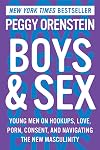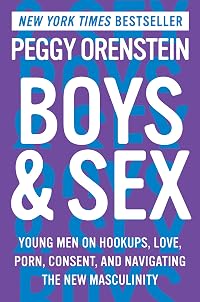
Boys & Sex: Young Men on Hookups, Love, Porn, Consent, and Navigating the New Masculinity
by Peggy Orenstein
On This Page
Description
The author of the groundbreaking New York Times bestsellers Girls & Sex and Cinderella Ate My Daughter now turns her focus to the sexual lives of young men, once again offering "both an examination of sexual culture and a guide on how to improve it" (Washington Post).Peggy Orenstein's Girls & Sex broke ground, shattered taboos, and launched conversations about young women's right to pleasure and agency in sexual encounters. It also had an unexpected effect on its author: Orenstein realized show more that talking about girls is only half the conversation. Boys are subject to the same cultural forces as girls—steeped in the same distorted media images and binary stereotypes of female sexiness and toxic masculinity—which equally affect how they navigate sexual and emotional relationships. In Boys & Sex, Peggy Orenstein dives back into the lives of young people to once again give voice to the unspoken, revealing how young men understand and negotiate the new rules of physical and emotional intimacy.
Drawing on comprehensive interviews with young men, psychologists, academics, and experts in the field, Boys & Sex dissects so-called locker room talk; how the word "hilarious" robs boys of empathy; pornography as the new sex education; boys' understanding of hookup culture and consent; and their experience as both victims and perpetrators of sexual violence. By surfacing young men's experience in all its complexity, Orenstein is able to unravel the hidden truths, hard lessons, and important realities of young male sexuality in today's world. The result is a provocative and paradigm-shifting work that offers a much-needed vision of how boys can truly move forward as better men.
. show less
Tags
Recommendations

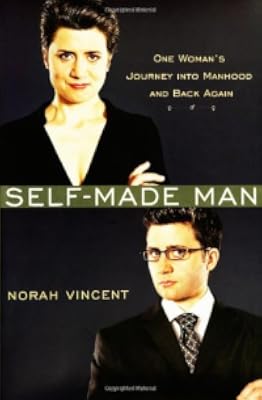

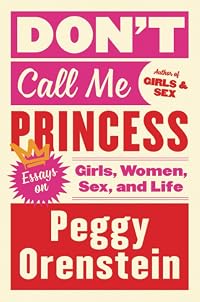
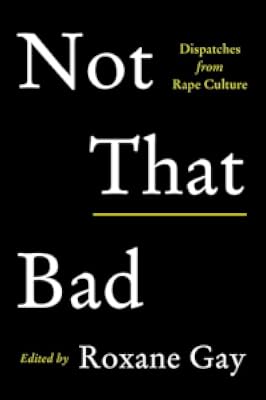
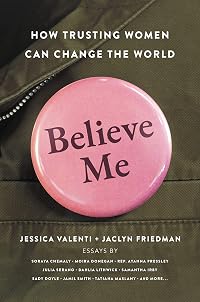
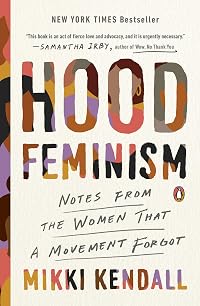



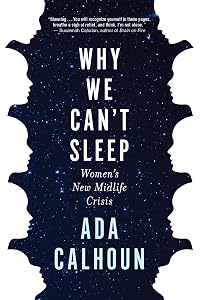


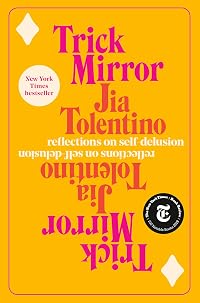



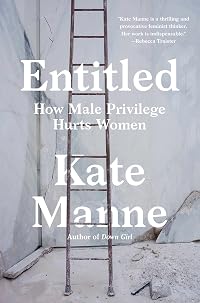
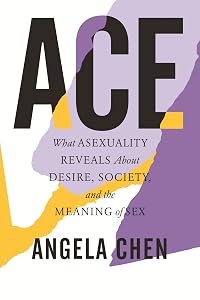









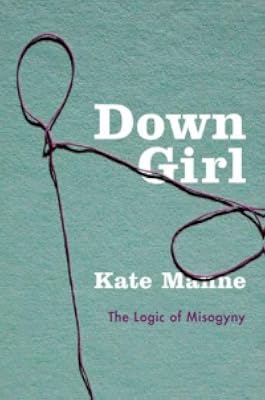
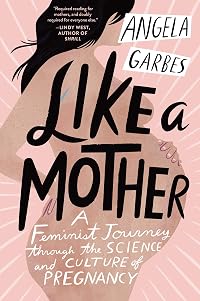
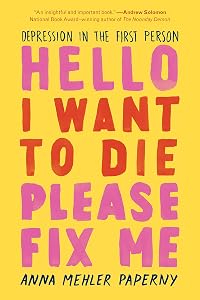



Member Recommendations
Jesse_wiedinmyer Don't waste your time on the Orenstein. Read this instead.
Member Reviews
an important book on just what the title says, boys and sex and information parents can use to fortify ourselves to have these crucial conversations with our boys before they become men.
"Girlfriends, mothers, and in some cases sisters, were the most commonly cited confidantes among boys I met. And while it's wonderful to know they have someone to talk to, and I'm sure mothers in particular savor the role, teaching boys that women are responsible for emotional labor, for processing men's emotional lives, in ways that would be emasculating for guys to do themselves, comes at a price to both sexes. Among other things, that dependence can leave boys stunted, in a state of arrested development, potentially unprepared to form caring, lasting, show more intimate relationships."
"When the men realized that their actions conflicted with their stated beliefs, they expanded their definitions of consent rather than questioning their behavior. Their ideas of 'yes' turned out to be so elastic that for some, they encompassed actions that met the legal criteria for assault."
"The truth is, research has shown young men to have a remarkably sophisticated and subtle understanding of sexual refusal, regardless of whether a partner ever utters the word 'no.' That renders dubious the common defense that they 'can't tell' or 'aren't mind readers.' What's more, where 'yes' is concerned, guys seem downright clairvoyant. [reseacher] subjects consider such non-sexual physical cues as direct eye contact to be clear propositions. Obviously looking into someone's eyes doesn't always signal seduction, and guys know that. When I, a middle aged woman, would look straight at them while asking about, say, cunnilingus, not a single one mistook that for a come-on. Yet when my eighteen-year-old female intern conducted interviews at her college, every guy hit on her. The same questions from an attractive peer were sexualized because the boys wanted them to be.
Some guys [researcher] talked to believed smiling indicated a girl wanted to have sex. It might, though people smile for all sorts of reasons, including discomfort and appeasement. Compliments were another frequently cited indicator, causing me to reconsider expressing admiration for a male passenger's stylish luggage the last time I was on an airplane. Standing close, dancing, touching someone's arm during conversation. A third of the supposed sexual signals came up only once in [the researcher's] study, making it hard to ever predict what a man might see as an invitation. A random emoji, the lack of a bra, sitting on a guy's lap in a crowded car. True, any of those might have meant sexual interest, or not. The only thing they all had in common, was that the guy in question read them as evidence. The boys also tended to equate enthusiastic participation in any sexual act, such as kissing, with enthusiastic consent to vaginal intercourse.
When they drink, young and not so young men are even more likely to overestimate female sexual interest, as well as to overstate women's roles as initiators, interpreting any expression of friendliness by a girl as 'it's on.'"
"They all described themselves as 'good guys.' And they were, most of the time. But the truth is a really good guy can do a really bad thing. The cost of admitting that, however, can feel perilously high."
"Men learn too often, subtly or overtly, to prioritize their pleasure over women's feelings. That may or may not lead to assault, but it does raise ethical questions over how men treat sexual partners, particularly in encounters that skirt the edges of consent."
"The narcissism of male desire is instilled early, reinforced by media, peers, and parental silence, and by girls themselves, who have been trained from an early age to take men's needs and desires more seriously than their own."
"...only 24 states and the District of Columbia currently mandate sex education, and only 10 require that it be medically accurate."
"Discomfort and embarrassment are not excuses to opt out of parenting."
"...boys grow up in the same distorted, commodified, misogynist culture as girls. The concern of porn, while valid, can distract from the damaging impact of mainstream entertainment. Remember that unchecked, media consumption of any kind is associated with greater tolerance for sexual harassment, belief in rape myths, early sexual initiation, sexual risk taking, a greater number of partners, and stereotyping of women." show less
"Girlfriends, mothers, and in some cases sisters, were the most commonly cited confidantes among boys I met. And while it's wonderful to know they have someone to talk to, and I'm sure mothers in particular savor the role, teaching boys that women are responsible for emotional labor, for processing men's emotional lives, in ways that would be emasculating for guys to do themselves, comes at a price to both sexes. Among other things, that dependence can leave boys stunted, in a state of arrested development, potentially unprepared to form caring, lasting, show more intimate relationships."
"When the men realized that their actions conflicted with their stated beliefs, they expanded their definitions of consent rather than questioning their behavior. Their ideas of 'yes' turned out to be so elastic that for some, they encompassed actions that met the legal criteria for assault."
"The truth is, research has shown young men to have a remarkably sophisticated and subtle understanding of sexual refusal, regardless of whether a partner ever utters the word 'no.' That renders dubious the common defense that they 'can't tell' or 'aren't mind readers.' What's more, where 'yes' is concerned, guys seem downright clairvoyant. [reseacher] subjects consider such non-sexual physical cues as direct eye contact to be clear propositions. Obviously looking into someone's eyes doesn't always signal seduction, and guys know that. When I, a middle aged woman, would look straight at them while asking about, say, cunnilingus, not a single one mistook that for a come-on. Yet when my eighteen-year-old female intern conducted interviews at her college, every guy hit on her. The same questions from an attractive peer were sexualized because the boys wanted them to be.
Some guys [researcher] talked to believed smiling indicated a girl wanted to have sex. It might, though people smile for all sorts of reasons, including discomfort and appeasement. Compliments were another frequently cited indicator, causing me to reconsider expressing admiration for a male passenger's stylish luggage the last time I was on an airplane. Standing close, dancing, touching someone's arm during conversation. A third of the supposed sexual signals came up only once in [the researcher's] study, making it hard to ever predict what a man might see as an invitation. A random emoji, the lack of a bra, sitting on a guy's lap in a crowded car. True, any of those might have meant sexual interest, or not. The only thing they all had in common, was that the guy in question read them as evidence. The boys also tended to equate enthusiastic participation in any sexual act, such as kissing, with enthusiastic consent to vaginal intercourse.
When they drink, young and not so young men are even more likely to overestimate female sexual interest, as well as to overstate women's roles as initiators, interpreting any expression of friendliness by a girl as 'it's on.'"
"They all described themselves as 'good guys.' And they were, most of the time. But the truth is a really good guy can do a really bad thing. The cost of admitting that, however, can feel perilously high."
"Men learn too often, subtly or overtly, to prioritize their pleasure over women's feelings. That may or may not lead to assault, but it does raise ethical questions over how men treat sexual partners, particularly in encounters that skirt the edges of consent."
"The narcissism of male desire is instilled early, reinforced by media, peers, and parental silence, and by girls themselves, who have been trained from an early age to take men's needs and desires more seriously than their own."
"...only 24 states and the District of Columbia currently mandate sex education, and only 10 require that it be medically accurate."
"Discomfort and embarrassment are not excuses to opt out of parenting."
"...boys grow up in the same distorted, commodified, misogynist culture as girls. The concern of porn, while valid, can distract from the damaging impact of mainstream entertainment. Remember that unchecked, media consumption of any kind is associated with greater tolerance for sexual harassment, belief in rape myths, early sexual initiation, sexual risk taking, a greater number of partners, and stereotyping of women." show less
Both sad and hopeful about the difficulties that her interviewees—American boys, mostly middle-class or wealthy, but varying in race, sexuality, and cis/trans status—face in navigating sexuality. I was most struck by the comment that they’re getting a clear message to “respect women” but no guidance in what that means, as if we handed car keys to teens and told them not to hit pedestrians. Orenstein also suggests, following Dan Savage, that gay sexuality holds important clues for healthy sexuality of any kind: in a same-sex encounter, she suggests, nothing specific is supposed to happen by default, so a key question must be asked: “what are you into?” Boys and girls generally, she argues, should be taught to ask and answer show more that question, and hear their partners’ answers. show less
Negotiating sexuality and relationships today is arguably more complicated than when I was teenager and as the mother of two teenage boys (and girls) I hoped Boys & Sex might provide me with some insights into areas I may have not considered as part of my discussions with them.
The ‘sex talk’ has never been a single conversation in our house, it’s been the subject of casual discourse over the years as they’ve grown, often initiated as the result of news stories, gossip, or issues faced by their peers. We’ve talked about most of the topics explored in this book, though I’ve learnt from Orenstein via the young men that she interviews, that I can do more.
Thankfully my sons are surrounded by good role models, but one of the most show more significant takeaways for me from the book is that my boys need the men in their life, particularly their father, to better verbalise their experience, opinions and feelings about relationships, sex and masculinity. Despite my best intentions, it will be the other men with whom they connect that will significantly shape their response to the situations raised in Boys & Sex, and my empathy is not a substitute for their shared experience.
I do feel Orenstein’s sampling for her research was quite small (100 young men), and very USA-centric, which meant for me there were elements I didn’t find directly relevant. Racial issues and the experience of college/university life differs here for example, also a Personal Development, Health, and Physical Education syllabus from years K-10 is compulsory in all public schools in Australia. In general this is a medically accurate, current, and inclusive program that explores physical, social and emotional aspects of sexuality in some detail (that abstinence-only is still a feature in any modern day curriculum is absurd). That said I do prefer the anecdotal approach Orenstein has taken, as scientific methodology tends to lack urgency and nuance.
I would recommend Boys & Sex to parents, and suggest it be shared and discussed with teens of both sexes, as both will benefit from the information. An extensive bibliography provides additional resources to ensure we raise “...our boys to be the men we know they can become.” show less
The ‘sex talk’ has never been a single conversation in our house, it’s been the subject of casual discourse over the years as they’ve grown, often initiated as the result of news stories, gossip, or issues faced by their peers. We’ve talked about most of the topics explored in this book, though I’ve learnt from Orenstein via the young men that she interviews, that I can do more.
Thankfully my sons are surrounded by good role models, but one of the most show more significant takeaways for me from the book is that my boys need the men in their life, particularly their father, to better verbalise their experience, opinions and feelings about relationships, sex and masculinity. Despite my best intentions, it will be the other men with whom they connect that will significantly shape their response to the situations raised in Boys & Sex, and my empathy is not a substitute for their shared experience.
I do feel Orenstein’s sampling for her research was quite small (100 young men), and very USA-centric, which meant for me there were elements I didn’t find directly relevant. Racial issues and the experience of college/university life differs here for example, also a Personal Development, Health, and Physical Education syllabus from years K-10 is compulsory in all public schools in Australia. In general this is a medically accurate, current, and inclusive program that explores physical, social and emotional aspects of sexuality in some detail (that abstinence-only is still a feature in any modern day curriculum is absurd). That said I do prefer the anecdotal approach Orenstein has taken, as scientific methodology tends to lack urgency and nuance.
I would recommend Boys & Sex to parents, and suggest it be shared and discussed with teens of both sexes, as both will benefit from the information. An extensive bibliography provides additional resources to ensure we raise “...our boys to be the men we know they can become.” show less
I just had to write a review about this book. I've been listening to the audiobook all day and have not been able to put it down! At first, the book was making me quite upset because it was highlighting the pervasiveness of misogynist thoughts and actions in our society. However, in the later chapters, Orenstein gave a very nuanced depiction of sexual misconduct that told the stories of the young men she interviewed but still asserted that what they had done was wrong and damaging to others. I think Orenstein did a lot to help readers understand the patterns of assault and sexism that occur over and over again for young people. Also, I appreciate how she pointed out that men could also be victims of sexual assault since that is not show more talked about a lot.
I'm considering buying a printed copy of this book because I think it will be beneficial to look back on! A good read! show less
I'm considering buying a printed copy of this book because I think it will be beneficial to look back on! A good read! show less
I'd listened to the author's book about girls, so when I spotted this, I jumped in.
The boys who talk to the author, I hold hope for them. But wow, I can't believe that boys are just as trapped as ever in peer pressure, lack of self-confidence and so forth.
There's been such a sexual revolution, a gender revolution, the women's movement - all good things, but nevertheless, it has come without a guidebook. The young people interviewed here feel like the blind leading the blind ...
The boys who talk to the author, I hold hope for them. But wow, I can't believe that boys are just as trapped as ever in peer pressure, lack of self-confidence and so forth.
There's been such a sexual revolution, a gender revolution, the women's movement - all good things, but nevertheless, it has come without a guidebook. The young people interviewed here feel like the blind leading the blind ...
4.5 stars.
I loved this book because it gives a voice to the emotional aspects of sex from a college age male perspective. It's a voice, not of anger, but more confusion. A cry for help. The book reminds us that we men generally have physical strength advantages over women .. but we still have emotional vulnerabilities.
Peggy went interviewing young men mostly going to college or about to. They opened up a lot to her and allow us a peek into their psyche.
I spent a lot of time reflecting on how much effort I spend to be "manly". I work in an industrywhere men normally outnumber the women. And I'm not a drinker, hunter, or care what kind of car anyone drives (one does it move? Two does it have working air conditioning?) I have at least show more graduated from scrawny to skinny in the past few years. I've grown up realizing that I'm more of a Samwise Gamgee archetype than an Aragon. More Sam Tully than Jon Snow. More Q then 007.
Because I lack some of the traditional manly characteristics, I changed the way to generate "manly" points. I can discuss musicals with the wife. I can make my 5 year old daughter laugh while I "walk" in a mermaid tale. And I totally know what a duvet is. Holding a job, providing for a family, keeping your word ... having people in your life who are happy to see you ... those are ways I earn manly points.
My daughter's 5 year old friend asked "Are there ugly people?"
I responded, "No, but there are ugly behaviors."
It's easy to vilify and condemn men for their monstrous actions. It's easy to vilify an condemn people for their beliefs. I find life is more complicated than that and we affect each other in so many ways (including sex). Emotionally humans are a strong as a butterfly ...fortunately and unfortunately, a flap of a butterfly wing can generate a hurricane. show less
I loved this book because it gives a voice to the emotional aspects of sex from a college age male perspective. It's a voice, not of anger, but more confusion. A cry for help. The book reminds us that we men generally have physical strength advantages over women .. but we still have emotional vulnerabilities.
Peggy went interviewing young men mostly going to college or about to. They opened up a lot to her and allow us a peek into their psyche.
I spent a lot of time reflecting on how much effort I spend to be "manly". I work in an industrywhere men normally outnumber the women. And I'm not a drinker, hunter, or care what kind of car anyone drives (one does it move? Two does it have working air conditioning?) I have at least show more graduated from scrawny to skinny in the past few years. I've grown up realizing that I'm more of a Samwise Gamgee archetype than an Aragon. More Sam Tully than Jon Snow. More Q then 007.
Because I lack some of the traditional manly characteristics, I changed the way to generate "manly" points. I can discuss musicals with the wife. I can make my 5 year old daughter laugh while I "walk" in a mermaid tale. And I totally know what a duvet is. Holding a job, providing for a family, keeping your word ... having people in your life who are happy to see you ... those are ways I earn manly points.
My daughter's 5 year old friend asked "Are there ugly people?"
I responded, "No, but there are ugly behaviors."
It's easy to vilify and condemn men for their monstrous actions. It's easy to vilify an condemn people for their beliefs. I find life is more complicated than that and we affect each other in so many ways (including sex). Emotionally humans are a strong as a butterfly ...fortunately and unfortunately, a flap of a butterfly wing can generate a hurricane. show less
As with Girls and Sex this is an important book as it breaks down the tropes and taboos about the sexual culture of up and coming adults. American culture has consistently failed to have an open and honest conversation about sexuality with itself, much less its children, and it shows in rates of unwanted pregnancy, assault, age of first sexual experience, etc.
The main contribution this book makes is to show how this lack of education harms boys as well as girls.
If there is any criticism, it is that the author, as with her previous book, exclusively focuses on high schoolers headed to college and college students. This necessarily skews the sample. It would be interesting to read a similar book on the sexual culture of young people show more outside of this environment show less
The main contribution this book makes is to show how this lack of education harms boys as well as girls.
If there is any criticism, it is that the author, as with her previous book, exclusively focuses on high schoolers headed to college and college students. This necessarily skews the sample. It would be interesting to read a similar book on the sexual culture of young people show more outside of this environment show less
Members
- Recently Added By
Lists

Featured in Fat Talk by Virginia Sole-Smith
103 works; 1 member

Books parents
30 works; 1 member

Men's healing resources
750 works; 1 member
Author Information

11 Works 2,950 Members
Peggy Orenstein is the New York Times bestselling author of Don't Call Me Princess, Girls Sex, Cinderella Ate My Daughter, Waiting for Daisy, Flux, and Schoolgirls. A contributing writer for the New York Times Magazine and Afar, she has also been published in New York. The Atlantic, The New Yorker, and other publications. She lives in Northern show more California with her husband and daughter. show less
Classifications
- Genres
- Nonfiction, General Nonfiction, Sexuality and Gender Studies
- DDC/MDS
- 305.235 — Society, government, & culture Social sciences, sociology & anthropology Social group - Age, Gender, Ethnicity Age groups Young people up to 20 Adolescents
- LCC
- HQ27.3 .O74 — Social sciences The family. Marriage, Women and Sexuality The Family. Marriage. Women Sexual life Sexual behavior and attitudes. Sexuality
- BISAC
Statistics
- Members
- 271
- Popularity
- 119,685
- Reviews
- 10
- Rating
- (4.03)
- Languages
- English
- Media
- Paper, Audiobook, Ebook
- ISBNs
- 12
- ASINs
- 3