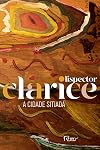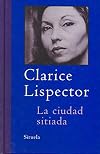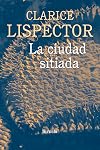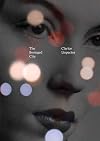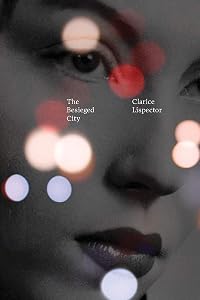
The Besieged City
by Clarice Lispector
On This Page
Description
Lucrécia Neves is ready to marry. Her suitors--soldierly Felipe, pensive Perseu, dependable Mateus--are attracted to her tawdry not-quite-beauty, which is of a piece with São Geraldo, the rough-and-ready township she inhabits. Civilization is on its way to this place, where wild horses still roam. As Lucrécia is tamed by marriage, São Geraldo gradually expels its horses; and as the town strives for the highest attainment it can conceive--a viaduct--it takes on the progressively more show more metropolitan manners that Lucrécia, with her vulgar ambitions, desires too. Yet it is precisely through this woman's superficiality--her identification with the porcelain knickknacks in her mother's parlor--that Clarice Lispector creates a profound and enigmatic meditation on "the mystery of the thing." show lessTags
Recommendations
















Member Reviews
The Publisher Says: Seven decades after its original publication, Clarice Lispector’s third novel—the story of a girl and the city her gaze reveals—is in English at last. Lucrécia Neves is ready to marry. Her suitors—soldierly Felipe, pensive Perseu, dependable Mateus—are attracted to her tawdry not-quite-beauty, which is of a piece with Sao Geraldo, the rough-and-ready township she inhabits. Civilization is on its way to this place, where wild horses still roam.
As Lucrécia is tamed by marriage, Sao Geraldo gradually expels its horses; and as the town strives for the highest attainment it can conceive—a viaduct—it takes on the progressively more metropolitan manners that Lucrécia, with her vulgar ambitions, desires too. show more Yet it is precisely through this woman’s superficiality—her identification with the porcelain knickknacks in her mother’s parlor—that Clarice Lispector creates a profound and enigmatic meditation on “the mystery of the thing.”
Written in Europe shortly after Clarice Lispector’s own marriage, The Besieged City is a proving ground for the intricate language and the radical ideas that characterize one of her century’s greatest writers—and an ironic ode to the magnetism of the material.
I RECEIVED A REVIEW COPY FROM THE PUBLISHER. THANK YOU.
My Review: Lucrécia Neves of São Geraldo belongs to a place as only a woman who exists in Clarice Lispector's bitter, resentful, passionate novels can. Her town exists, barely, as we learn of her early life in it. During the course of her narration, we learn that São Geraldo is a place in the throes of explosive, exponential growth. This novel's bitterness is directed at the sights of Life, of Nature, being subsumed and defiled by Human actions, for Human aesthetics:
The author's organizing principle in this visually driven narrative seems to me to be the manner in which Man, used in the sense of "all humanity" but (*I* think) really aimed at human males, rapes the entire natural universe to get what he needs to be in control. Only then will he be comfortable, on the way to being contented. And I chose that pronoun consciously and exclusively, as I am of the opinion Author Lispector did as well.
It's true that Clarice Lispector, born in Ukraine in 1920 but raised from infancy forward in Recife, Brazil, spoke and thought in a highly gendered language, Portuguese. It's also true that her Jewish family was part of the long patriarchal march of the religion. Clarice was intellectually gifted, gaining admission to the best schools in Pernambuco State, and later into the law school of the national university...I think it's pretty safe to assume she was formatively aware of how little women matter to the men who make the laws and set the course. I see no evidence in anything I've read by or about Author Lispector to suggest she was anything but keenly sensitive to women's absence from the discourses that directly impacted them all her life.
I could be reading into these words what she did not put there herself that "man's way" spoken with an authorial sniff of annoyed disdain. But, reading this least-loved of her novels, I am struck by her absolutely fierce anticipation of the ecofeminist ethos. I can't prove it. I readily admit that her life and its mysteries are outside my knowledge base. But it just *feels* like an angry woman's denunciation of the uncontrolled cancer of unrestrained capitalist "development" destroying the natural world.
I will also note that the critics whose reception of the novel were characterized as "lukewarm" were all males and writing in the 1940s. I suspect they responded to Lucrécia's rejection of two perfectly adequate suitors, Felipe (who disrespected Lucrécia's hometown quite insultingly) and Perseu (whose world was circumscribed by the few words he could be arsed to speak to her), for what felt to a man of the time like frivolous reasons. Mateus, older and "wiser" than Lucrécia, is her eventual ticket to the Big City. Where, mirabile dictu, she discovers that "{e}very man seemed to promise a woman a bigger city," but the promise carries a grim, undiscussed reality with it: She must give up her sense of place and surrender to the city's vast impersonality. It is not in Lucrécia to want this for herself. Her influence with Mateus leads them back to what was São Geraldo...and there to discover that it is not that place, that its development has created a place that is not the one Lucrécia's memories conjure when she thinks of São Geraldo.
A woman of 26, a Brazilian Jew living in Bern, Switzerland, wrote this novel. No, São Geraldo wasn't the Recife of her childhood, nor was the big city exactly Rio de Janeiro where she came of age and married. But she was a person cut off from Home. The nature of Lucrécia's relationship to her world is visually oriented. She speaks of and in images, shapes, sights and vistas; they evoke secondarily and (it feels to me) tangentially emotional responses in her. This makes sense in the context of Author Lispector's dislike for the Swiss countryside...it does, to be honest, live in my memory as shockingly, even surreally, tidy and manicured. Nothing about the place appealed to her, nor if I'm honest did it appeal to me. Visually spectacular, aesthetically wanting.
Is it, then, any wonder that woman Author Lispector looked at the astonishingly male (built, controlled, made to fit a purpose not the spectacular place it's sited within) world of Bern, of Switzerland, and wrote the story of a rather dull, fairly dim girl recording visually, passively, the consequences of male dominion on her world? Even when, after a dull marriage to Mateus palls, she finally falls in love with a man, it's one without a shred of agency to offer her. He is unavailable and uninterested in making himself so.
The world, then, is a place that acts on Lucrécia, a world made by, of, and for men, and she is reduced to eyes without a face recording recording recording the deeds of others, the way they wreak havoc and call it progress:
It's not what you call me, it's what I answer to. Lucrécia, her life a response and a reaction, then becomes only a queen in her imagination. She orders her mental world to suit her vision, her view...circumscribed, as always, be men and their power. show less
As Lucrécia is tamed by marriage, Sao Geraldo gradually expels its horses; and as the town strives for the highest attainment it can conceive—a viaduct—it takes on the progressively more metropolitan manners that Lucrécia, with her vulgar ambitions, desires too. show more Yet it is precisely through this woman’s superficiality—her identification with the porcelain knickknacks in her mother’s parlor—that Clarice Lispector creates a profound and enigmatic meditation on “the mystery of the thing.”
Written in Europe shortly after Clarice Lispector’s own marriage, The Besieged City is a proving ground for the intricate language and the radical ideas that characterize one of her century’s greatest writers—and an ironic ode to the magnetism of the material.
I RECEIVED A REVIEW COPY FROM THE PUBLISHER. THANK YOU.
My Review: Lucrécia Neves of São Geraldo belongs to a place as only a woman who exists in Clarice Lispector's bitter, resentful, passionate novels can. Her town exists, barely, as we learn of her early life in it. During the course of her narration, we learn that São Geraldo is a place in the throes of explosive, exponential growth. This novel's bitterness is directed at the sights of Life, of Nature, being subsumed and defiled by Human actions, for Human aesthetics:
Behold the flower—showing its thick stem, the round corolla: the flower was showing off. But atop the stem it too was untouchable. When it started to wilt, you could look at it directly but by then it would be too late...
The author's organizing principle in this visually driven narrative seems to me to be the manner in which Man, used in the sense of "all humanity" but (*I* think) really aimed at human males, rapes the entire natural universe to get what he needs to be in control. Only then will he be comfortable, on the way to being contented. And I chose that pronoun consciously and exclusively, as I am of the opinion Author Lispector did as well.
It's true that Clarice Lispector, born in Ukraine in 1920 but raised from infancy forward in Recife, Brazil, spoke and thought in a highly gendered language, Portuguese. It's also true that her Jewish family was part of the long patriarchal march of the religion. Clarice was intellectually gifted, gaining admission to the best schools in Pernambuco State, and later into the law school of the national university...I think it's pretty safe to assume she was formatively aware of how little women matter to the men who make the laws and set the course. I see no evidence in anything I've read by or about Author Lispector to suggest she was anything but keenly sensitive to women's absence from the discourses that directly impacted them all her life.
The struggle to reach reality—that’s the main objective of this creature who tries, in every way, to cling to whatever exists by means of a total vision of things. I meant to make clear too the way vision—the way of seeing, the viewpoint—alters reality, constructing it. A house is not only constructed with stones, cement etc. A man’s way of looking constructs it too.
I could be reading into these words what she did not put there herself that "man's way" spoken with an authorial sniff of annoyed disdain. But, reading this least-loved of her novels, I am struck by her absolutely fierce anticipation of the ecofeminist ethos. I can't prove it. I readily admit that her life and its mysteries are outside my knowledge base. But it just *feels* like an angry woman's denunciation of the uncontrolled cancer of unrestrained capitalist "development" destroying the natural world.
I will also note that the critics whose reception of the novel were characterized as "lukewarm" were all males and writing in the 1940s. I suspect they responded to Lucrécia's rejection of two perfectly adequate suitors, Felipe (who disrespected Lucrécia's hometown quite insultingly) and Perseu (whose world was circumscribed by the few words he could be arsed to speak to her), for what felt to a man of the time like frivolous reasons. Mateus, older and "wiser" than Lucrécia, is her eventual ticket to the Big City. Where, mirabile dictu, she discovers that "{e}very man seemed to promise a woman a bigger city," but the promise carries a grim, undiscussed reality with it: She must give up her sense of place and surrender to the city's vast impersonality. It is not in Lucrécia to want this for herself. Her influence with Mateus leads them back to what was São Geraldo...and there to discover that it is not that place, that its development has created a place that is not the one Lucrécia's memories conjure when she thinks of São Geraldo.
A woman of 26, a Brazilian Jew living in Bern, Switzerland, wrote this novel. No, São Geraldo wasn't the Recife of her childhood, nor was the big city exactly Rio de Janeiro where she came of age and married. But she was a person cut off from Home. The nature of Lucrécia's relationship to her world is visually oriented. She speaks of and in images, shapes, sights and vistas; they evoke secondarily and (it feels to me) tangentially emotional responses in her. This makes sense in the context of Author Lispector's dislike for the Swiss countryside...it does, to be honest, live in my memory as shockingly, even surreally, tidy and manicured. Nothing about the place appealed to her, nor if I'm honest did it appeal to me. Visually spectacular, aesthetically wanting.
Is it, then, any wonder that woman Author Lispector looked at the astonishingly male (built, controlled, made to fit a purpose not the spectacular place it's sited within) world of Bern, of Switzerland, and wrote the story of a rather dull, fairly dim girl recording visually, passively, the consequences of male dominion on her world? Even when, after a dull marriage to Mateus palls, she finally falls in love with a man, it's one without a shred of agency to offer her. He is unavailable and uninterested in making himself so.
The world, then, is a place that acts on Lucrécia, a world made by, of, and for men, and she is reduced to eyes without a face recording recording recording the deeds of others, the way they wreak havoc and call it progress:
Upon the rubble horses would reappear announcing the rebirth of the old reality, their backs without riders. Because thus it had always been. Until a few men would tie them to wagons, once again erecting a city that they wouldn't understand, once again building, with innocent skill, the things. And then once more they'd need a pointing finger to give them their old names.
It's not what you call me, it's what I answer to. Lucrécia, her life a response and a reaction, then becomes only a queen in her imagination. She orders her mental world to suit her vision, her view...circumscribed, as always, be men and their power. show less
Um dos melhores livros de Clarice, foi o que San Tiago Dantas disse sobre esse livro. Um livro parece uma caixa de joias, um quebra-cabeça meticulosamente construído, onde tudo se encaixa e tem um sentido. É preciso lê-lo mais de uma vez e com um lápis para sublinhar algumas passagens. O mais difícil é vencer o início, onde Clarice estabelece as regras que vai usar no texto, e nós leitores aceitamos resignadamente. É impossível não reconhecer uma referência ao "Rumo ao Farol" de Virginia Woolf, o único problema é que Clarice não leu esse livro! Recomendo o livro excelente que merece ser degustado vagarosamente.
The Besieged City
by Clarice Lispector
Translated from Portugese by Johnny Lorenz
1949 / 2019
New Directions
4.0 / 5.0
In a world of seeing vs. being seen, Lucrecia Neves, attempts to force the reader to see the innate life within the lifeless. Even inanimate objects - a porcelain figures or a doll, as well as fields of lavender-all hold a magnetism that brings them to life, for her. Lucrecia lives with her widowed mother in the small undeveloped area called Sao Geraldo. Of three very different suitors, Lucrecia attempts to re-create the city she is in to a place of distinction, with one who does not understand her imagination.
This is rich and beautiful, the prose at times challenging, but so brilliantly done you simply can not stop. show more Recommended. show less
by Clarice Lispector
Translated from Portugese by Johnny Lorenz
1949 / 2019
New Directions
4.0 / 5.0
In a world of seeing vs. being seen, Lucrecia Neves, attempts to force the reader to see the innate life within the lifeless. Even inanimate objects - a porcelain figures or a doll, as well as fields of lavender-all hold a magnetism that brings them to life, for her. Lucrecia lives with her widowed mother in the small undeveloped area called Sao Geraldo. Of three very different suitors, Lucrecia attempts to re-create the city she is in to a place of distinction, with one who does not understand her imagination.
This is rich and beautiful, the prose at times challenging, but so brilliantly done you simply can not stop. show more Recommended. show less
Después de leer "Cerca del corazón salvaje" es palpable cómo Clarice sabe escribir sobre la complejidad que atraviesa el alma femenina en momentos de la vida. En esta historia, Lucrecia lucha contra la domesticación, atrapada primero entre las paredes de su casa natal y luego en el matrimonio al que accede como si fuera un trámite. Luego se desdibuja y se valida a través de los ojos de otro hombre que ni la hora le daba. La mirada es algo clave en este libro. No encuentra su lugar propio, ve a las ciudades impregnadas con otras identidades; ni siquiera su ciudad natal es igual cuando ella regresa. Tiene final feliz, eso sí.
Jan 25, 2026Spanish
Ratings
Members
- Recently Added By
Lists

Kirkus Starred Fiction Reviews of Books Published in 2019
411 works; 12 members

2024
34 works; 1 member

Reading LIst
648 works; 1 member
Author Information

151+ Works 12,878 Members
Clarice Lispector was born in the Ukraine and was taken to Brazil as a young child. She was a law student, editor, translator, and newswriter, who traveled widely, spending eight years in the United States. "Family Ties" (1960) is a collection of short stories revealing Lispector's existentialist view of life and demonstrating that even family show more ties and social relationships are temporary. Although tied to each other and to the outside world, the characters are finally totally alone and separate. Lispector received praise from American critics for "The Apple in the Dark" (1967), a novel about a guilt-ridden man's search for the ultimate knowledge (Eve's apple), which he believes will bring him hope. Lispector's books are being translated into various languages in Europe, especially in France, where the critic Helene Cixous is one of her great admirers and a promoter of her works. (Bowker Author Biography) show less
Some Editions
Awards and Honors
Series
Belongs to Publisher Series
Common Knowledge
- Canonical title*
- Город в осаде
- Original title
- A cidade sitiada
- Alternate titles
- The Beseiged City
- Original publication date
- 1949
- People/Characters
- Lucrécia Neves
- Important places
- São Geraldo, Brazil
- Epigraph
- In heaven, learning is seeing;
On earth, remembering.
- Pindar - First words
- "Eleven o'clock," said Lieutenant Felipe.
- Original language
- Portuguese
*Some information comes from Common Knowledge in other languages. Click "Edit" for more information.
Classifications
- Genres
- Fiction and Literature, General Fiction
- DDC/MDS
- 869.3 — Literature & rhetoric Spanish Literature Literatures of Portuguese and Galician languages Portuguese fiction
- LCC
- PQ9697 .L585 .C5 — Language and Literature French, Italian, Spanish and Portuguese literatures Portuguese literature Provincial, local, colonial, etc. Brazil
- BISAC
Statistics
- Members
- 235
- Popularity
- 138,597
- Reviews
- 4
- Rating
- (3.87)
- Languages
- 5 — English, French, Portuguese, Russian, Spanish
- Media
- Paper, Ebook
- ISBNs
- 18
- ASINs
- 4