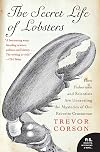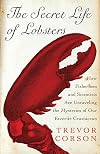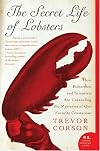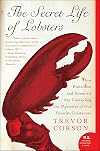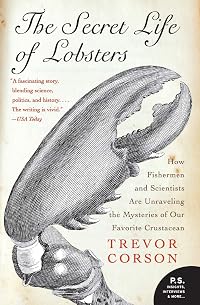
The Secret Life of Lobsters: How Fishermen and Scientists Are Unraveling the Mysteries of Our Favorite Crustacean
by Trevor Corson 
On This Page
Description
"Lobster is served three ways in this fascinating book: by fisherman, scientist and the crustaceans themselves. . . . Corson, who worked aboard commercial lobster boats for two years, weaves together these three worlds. The human worlds are surely interesting; but they can't top the lobster life on the ocean floor." - Washington Post In this intimate portrait of an island lobstering community and an eccentric band of renegade biologists, journalist Trevor Corson escorts the reader onto the show more slippery decks of fishing boats, through danger-filled scuba dives, and deep into the churning currents of the Gulf of Maine to learn about the secret undersea lives of lobsters. This P.S. edition features an extra 16 pages of insights into the book, including author interviews, recommended reading, and more. show lessTags
Recommendations


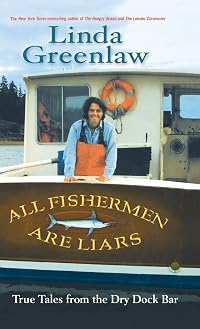
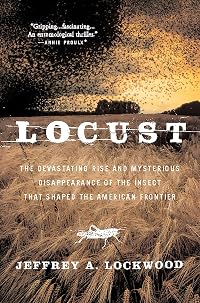
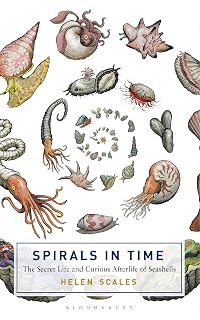
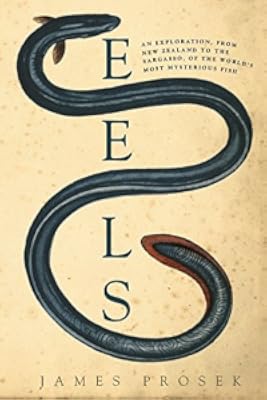


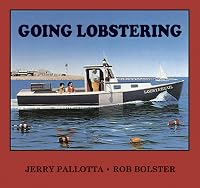
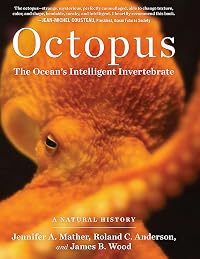

Member Recommendations
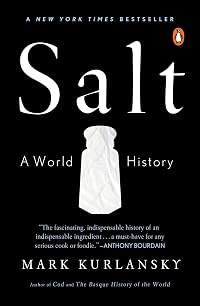
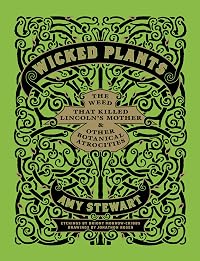
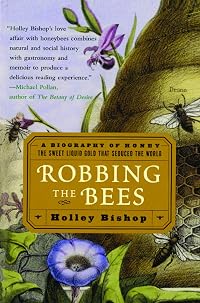
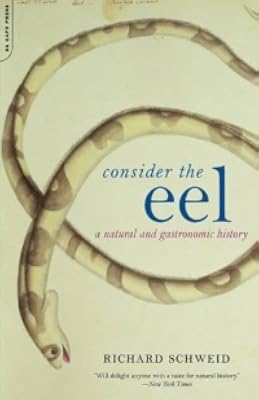
teaperson A history of lobstering in Maine.
20
Member Reviews
I originally put off reading The Secret Life of Lobsters thinking it was going to be bogged down with dry research statistics. Instead, I found a warm, and humorous yet fact-filled account of not only the life of lobsters but of the men who make their livelihood trying to catch them, Corson included. Chapters alternate between scientists and their research and lobstermen of Little Cranberry Island, Maine, and their struggle to farm the sea. There were things I knew (the cod is the biggest natural predator of lobsters and lobster is loaded with sodium) and lots more I didn't know, like there are 52 species of Crustacea and the sex life of a lobster is brutal!
In this fascinating mix of science and anecdote, Corson balances the habits of lobsters with the lives (and habits) of those fishermen and scientists whose lives revolve around the waters off of Maine and the lobsters within. Built from humor and science, the work nonetheless reads as something like a mystery novel, remaining compulsively readable throughout. Whether readers find this work because of interests in conservation or dinner menus, they'll find themselves entertained and amused, and learning far more than they thought there was to know or retain.
Absolutely recommended--there's something in this book for everyone, and it's nothing less than a readable roller coaster of ecology, politics, and humor.
Absolutely recommended--there's something in this book for everyone, and it's nothing less than a readable roller coaster of ecology, politics, and humor.
A couple of years ago my husband was browsing a “buy 2 get 1 free” table at our local B&N and could only find two books he wanted so he asked me to find a third one. I also couldn’t find one I really wanted but this book caught my eye and the rave reviews on the back made me think I might as well take it since it would be free. It has languished on a shelf in my guest room (my husband is a scientist and maybe it would appeal to one of the visiting scientists we periodically host) until a couple of weeks ago when librarything.com added the feature of putting on our profile page the names of librarything authors we have in our library. Trevor Corson was the only author I had represented so I decided to finally read the book for show more myself. What a revelation! Not only is the book well written but it is a page turner—you can hardly wait to find out what happens next. For nonfiction that can be a real treat. The day I started reading it my husband invited some visiting scientists to go out to lunch. He asked me to go to the restaurant to get a table for all of us and I took my book to read while I waited for them to arrive. When they came one of them asked me what the book was about and I said, “Science, sex, and politics. What more could you want?” Of course, I explained that the sex was among lobsters. One of the delights in the book is how Corson alternates the stories of the fisherman with the information about the lobsters and the stories of the scientists. In “Scent of a Woman” he alternates the sexual practices of the lobsters with the story of how one of the fishermen wooed his wife.
Corson does a magnificent job giving us glimpses into the lives of the fishermen and their families as well as a wonderful over-view of much of the science that has been conducted researching lobsters and the politics involved in trying to keep lobster fishing a viable business. He reveals so much about lobsters, how they live, reproduce, and behave that the reader is amazed at how intricate the lives of these creatures are. Also fascinating is the number of scientific experiments that have been going on for years and the variety of intricate apparati that have been developed to aid this research. But all this explanation of what the book covers doesn’t begin to describe the joy and satisfaction the reader feels as he reads this story. This book deserves to become a classic and I will be encouraging everyone I know to read it. It is an absolute pleasure and a literary treasure. I hope to read more books by Trevor Corson. show less
Corson does a magnificent job giving us glimpses into the lives of the fishermen and their families as well as a wonderful over-view of much of the science that has been conducted researching lobsters and the politics involved in trying to keep lobster fishing a viable business. He reveals so much about lobsters, how they live, reproduce, and behave that the reader is amazed at how intricate the lives of these creatures are. Also fascinating is the number of scientific experiments that have been going on for years and the variety of intricate apparati that have been developed to aid this research. But all this explanation of what the book covers doesn’t begin to describe the joy and satisfaction the reader feels as he reads this story. This book deserves to become a classic and I will be encouraging everyone I know to read it. It is an absolute pleasure and a literary treasure. I hope to read more books by Trevor Corson. show less
This book, published in 2004, is as much about the lobstering community in Maine as it is about the lobster. It talks about the ways in which the community has gone about the fishing business, how the fishery is managed, and how both fishers and scientists monitor the health of the population. The book explains how lobsters court, mate, reproduce, and go about their day-to-day lives. I found the lobster biology fascinating, particularly how they use smell to get around, and how female lobsters take charge of the mating aspect.
The main drawbacks to this book are of course the fact that it’s about 17 years old now (reading in February 2021) and that there aren’t any pictures. That said, some may consider the lack of pictures to be an show more advantage, because lobsters may not hold the same appeal as, say, kittens and puppies.
I’d recommend this if you like to read books about animals that are perhaps under-appreciated, or if you like books about the northeastern United States. show less
The main drawbacks to this book are of course the fact that it’s about 17 years old now (reading in February 2021) and that there aren’t any pictures. That said, some may consider the lack of pictures to be an show more advantage, because lobsters may not hold the same appeal as, say, kittens and puppies.
I’d recommend this if you like to read books about animals that are perhaps under-appreciated, or if you like books about the northeastern United States. show less
The Secret Life of Lobsters is a fascinating layperson's look at lobster biology and ecology from the perspectives of both the scientific community and the lobstermen. Corson chronicles the discoveries about lobster behavior that have been made over the past thirty or so years as biologists, oceanographers, ecologists, conservationists, and lobstering communities have worked, both together and against each other, to make sure that the lobster fisheries on the New England coast don't go the way of other similar fisheries - cod, for example - that were overfished to the brink of extinction during the nineteenth and twentieth centuries.
Corson is as in love with the subject of lobsters as the people he talks to and works alongside show more throughout the book, and they are fascinating creatures in ways the ordinary lobster-savorer can't imagine. The book is also a great look at the way science progresses from hypothesis through testing and data accumulation to new understanding and new hypotheses, making mistakes and course corrections along the way as better techniques and more and better data become available.
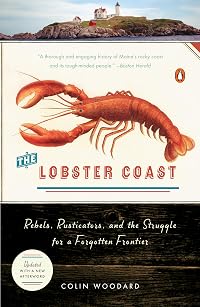
Corson's book is much more focused on the lobster itself than Woodard's The Lobster Coast, which is really a socio-political and economic history of much of the same parts of Maine. Corson is much less concerned with the characterization of Mainers and the degree to which they hate you, though the lobster and its history are inevitably tied to summer people and the socio-economic tensions that have always existed between them and the generally less-well-off year-round residents. It's a much more engaging read in many ways, and a much clearer picture of the conservation efforts that have kept the lobster fishery in Maine sustainable for over a hundred and fifty years. show less
Corson is as in love with the subject of lobsters as the people he talks to and works alongside show more throughout the book, and they are fascinating creatures in ways the ordinary lobster-savorer can't imagine. The book is also a great look at the way science progresses from hypothesis through testing and data accumulation to new understanding and new hypotheses, making mistakes and course corrections along the way as better techniques and more and better data become available.
Corson's book is much more focused on the lobster itself than Woodard's The Lobster Coast, which is really a socio-political and economic history of much of the same parts of Maine. Corson is much less concerned with the characterization of Mainers and the degree to which they hate you, though the lobster and its history are inevitably tied to summer people and the socio-economic tensions that have always existed between them and the generally less-well-off year-round residents. It's a much more engaging read in many ways, and a much clearer picture of the conservation efforts that have kept the lobster fishery in Maine sustainable for over a hundred and fifty years. show less
The Secret Life of Lobsters is about the marine scientists and lobstermen of the Cranberry Islands of Maine as much as it is about the crustacean. The author worked on a lobster boat for several years and his enthusiasm about the subject is apparent. I’d like to meet some of the people written about in these pages.
I took a few marine biology classes in school and so with that background, I did find the book interesting. I'm not sure the lay person with only a little curiosity could withstand chapter after chapter of experiments and minutiae. I found the pace lagging at times. I did learn a lot and I’m glad that I read it. No doubt, I will remember eggers and notchers, claw holding and face-peeing for a long time to come.
If I was show more going to recommend a Corson book to you though, I would suggest The Zen of Fish, which is about sushi. That was a five-star read for me. show less
I took a few marine biology classes in school and so with that background, I did find the book interesting. I'm not sure the lay person with only a little curiosity could withstand chapter after chapter of experiments and minutiae. I found the pace lagging at times. I did learn a lot and I’m glad that I read it. No doubt, I will remember eggers and notchers, claw holding and face-peeing for a long time to come.
If I was show more going to recommend a Corson book to you though, I would suggest The Zen of Fish, which is about sushi. That was a five-star read for me. show less
THE SECRET LIFE OF LOBSTERS: How Fishermen and Scientists are Unraveling the Mysteries of our Favorite Crustacean
by Trevor Corson
HarperCollins
June 2004, 304 pages, $24.95
Reviewed by James Tate, Jr.
How science and real-world experience can work together, but usually don’t…
It is seldom that a book about science, commercial fishing, and government regulation delves into sex, adventure, and even mystery. But Trevor Corson appears to have seen it all and reports his observations in a delightful book that covers the waterfront. The Secret Life of Lobsters is filled with wit, common sense, and experimentation to deliver a message for fishermen, bureaucrats and scientists alike.
The setting is Cranberry Island, a remote speck of land show more far Down East off the coast of Maine where residents know everything about their neighbors and summer visitors envy the simple life. The author understands some of both worlds, as he lived with the lobstermen for years, filling bait bags with rotten fish while trying to maintain his stomach and his footing in rough seas and cold winds. The waters off Cranberry Island team with lobsters [Homarus americanus]-- the edible crustation which grows, migrates, has sex infrequently, and if let alone lives to a ripe old age.
Lobsters appear to be exceedingly well adapted to the dark, cold sea bottoms that are their homes. They seem to know everything about each other, from taste, touch and smell alone. These are facts which scientists and lobstermen seek to understand, and which regulators need to know to formulate good public policy.
From the first, the author utilizes the creative tension between the lives of island-dwelling lobstermen and women and the government scientist-bureaucrats who would regulate their livelihoods. Enter the academics, underpaid and largely ignored, who team up with the fishermen and use creative scientific investigations to learn the ways of the lobster. They also listen to the traditional ecological or experiential knowledge of the fishermen and learn from each other. The book follows the lives of island families and scientists as knowledge of the home life of the lobster increases year-by-year. The biology is absolutely fascinating, even if a little intimate.
For example, lobsters defend their sea bottom shelters with pinch of a claw and informative blasts of pheromone laden body wastes. Courtship and copulation follow strict rules of engagement involving much touching, tasting and smelling. Lobster life history involves a single copulation just when the female takes off all of her protective outer garments, involves thousands of eggs that are protected by the female, and results in a tiny life stage that may settle on a suitable substrate subject to the waves and wind. Discovery of the details of this cryptic life under the sea is the source of innovative experiments, long hours of observation, and the fortuitous chance encounter between scientist and lobster. There is just a little technology and engineering using robo-lobsters and deep-sea exploration vessels. The debate between the regulators and the lobstermen comes down in the end not to the strides of new scientific knowledge but to the low-tech notching of the tails of gravid females released by fishermen. Without revealing the ending of the book on the debate on raising the size of legal lobster let it be said the traditional knowledge of the fishermen living with the tides, winds and the resource turns out to be of much value.
This book is a good read for anyone interested in science, experiential knowledge, or public policy. The flow of the lives of the principal protagonists is somewhat disjointed at times, making the reader wonder each time a character is mentioned if he has run into them before. But I strongly recommend that more students of ecology read the book and then get out in the realm of nature and learn for themselves. If there is any message here for government officials it is that you cannot regulate that which you don’t understand.
About the Author: Trevor Corson worked as sternman on lobster boats for two years and has written on subjects as diverse as organ transplants, Japanese Buddhism, and Chinese politics. His writing has appeared in the Atlantic Monthly, the New York Times, the Los Angeles Times, and the Boston Globe. He currently lives in Boston, Massachusetts.
Jim Tate watches birds, teaches ecology, and advises government from his home in Washington, D.C. show less
by Trevor Corson
HarperCollins
June 2004, 304 pages, $24.95
Reviewed by James Tate, Jr.
How science and real-world experience can work together, but usually don’t…
It is seldom that a book about science, commercial fishing, and government regulation delves into sex, adventure, and even mystery. But Trevor Corson appears to have seen it all and reports his observations in a delightful book that covers the waterfront. The Secret Life of Lobsters is filled with wit, common sense, and experimentation to deliver a message for fishermen, bureaucrats and scientists alike.
The setting is Cranberry Island, a remote speck of land show more far Down East off the coast of Maine where residents know everything about their neighbors and summer visitors envy the simple life. The author understands some of both worlds, as he lived with the lobstermen for years, filling bait bags with rotten fish while trying to maintain his stomach and his footing in rough seas and cold winds. The waters off Cranberry Island team with lobsters [Homarus americanus]-- the edible crustation which grows, migrates, has sex infrequently, and if let alone lives to a ripe old age.
Lobsters appear to be exceedingly well adapted to the dark, cold sea bottoms that are their homes. They seem to know everything about each other, from taste, touch and smell alone. These are facts which scientists and lobstermen seek to understand, and which regulators need to know to formulate good public policy.
From the first, the author utilizes the creative tension between the lives of island-dwelling lobstermen and women and the government scientist-bureaucrats who would regulate their livelihoods. Enter the academics, underpaid and largely ignored, who team up with the fishermen and use creative scientific investigations to learn the ways of the lobster. They also listen to the traditional ecological or experiential knowledge of the fishermen and learn from each other. The book follows the lives of island families and scientists as knowledge of the home life of the lobster increases year-by-year. The biology is absolutely fascinating, even if a little intimate.
For example, lobsters defend their sea bottom shelters with pinch of a claw and informative blasts of pheromone laden body wastes. Courtship and copulation follow strict rules of engagement involving much touching, tasting and smelling. Lobster life history involves a single copulation just when the female takes off all of her protective outer garments, involves thousands of eggs that are protected by the female, and results in a tiny life stage that may settle on a suitable substrate subject to the waves and wind. Discovery of the details of this cryptic life under the sea is the source of innovative experiments, long hours of observation, and the fortuitous chance encounter between scientist and lobster. There is just a little technology and engineering using robo-lobsters and deep-sea exploration vessels. The debate between the regulators and the lobstermen comes down in the end not to the strides of new scientific knowledge but to the low-tech notching of the tails of gravid females released by fishermen. Without revealing the ending of the book on the debate on raising the size of legal lobster let it be said the traditional knowledge of the fishermen living with the tides, winds and the resource turns out to be of much value.
This book is a good read for anyone interested in science, experiential knowledge, or public policy. The flow of the lives of the principal protagonists is somewhat disjointed at times, making the reader wonder each time a character is mentioned if he has run into them before. But I strongly recommend that more students of ecology read the book and then get out in the realm of nature and learn for themselves. If there is any message here for government officials it is that you cannot regulate that which you don’t understand.
About the Author: Trevor Corson worked as sternman on lobster boats for two years and has written on subjects as diverse as organ transplants, Japanese Buddhism, and Chinese politics. His writing has appeared in the Atlantic Monthly, the New York Times, the Los Angeles Times, and the Boston Globe. He currently lives in Boston, Massachusetts.
Jim Tate watches birds, teaches ecology, and advises government from his home in Washington, D.C. show less
Members
- Recently Added By
Published Reviews
Corson has no axes to grind, and his presentation is filled with insights into how and why scientists do what they do, and how and why lobstermen continue to do what they do. Fascinating new information about "our favorite crustacean" has resulted from research by all sides in the past five years, and Corson's highly readable account makes it accessible to scientists and layman alike
added by John_Vaughan
Lists

Best "Foodie" Books
114 works; 40 members

BingoDOG - Books About Scientists: Nonfiction
9 works; 4 members

Best Books on Fisheries, Fishing Fleets and Fish
42 works; 3 members

Books Read in 2014
2,344 works; 89 members
Author Information

2+ Works 1,465 Members
Trevor Corson worked aboard commercial lobster boats for two years and has written on subjects as diverse as organ transplants, Japanese Buddhism, and Chinese politics. His writing has appeared in the Atlantic Monthly, the New York Times, the Los Angeles Times, and the Boston Globe. He lives in Boston, Massachusetts
Trevor Corson is a LibraryThing Author, an author who lists their personal library on LibraryThing.
Awards and Honors
Notable Lists
Common Knowledge
- Canonical title
- The Secret Life of Lobsters: How Fishermen and Scientists Are Unraveling the Mysteries of Our Favorite Crustacean
- Original publication date
- 2004
- People/Characters
- Bruce Fernald; Jason Pickering; Bob Steneck; Jack Merril
- Important places
- Little Cranberry Island, Maine; Woods Hole, Massachusetts, USA
- Epigraph
- It is the unexpected or neglected place that you will find the lobster.
-Irish Saying - First words
- The morning sky was glowing pink in the southeast but a chill hung in the salt air.
- Last words
- (Click to show. Warning: May contain spoilers.)I believe we should strive for this in all corners of our lives.
Classifications
Statistics
- Members
- 866
- Popularity
- 31,550
- Reviews
- 29
- Rating
- (3.92)
- Languages
- English, French
- Media
- Paper, Audiobook, Ebook
- ISBNs
- 5
- ASINs
- 9