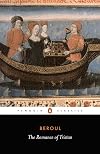
The Romance of Tristan
by Béroul
On This Page
Description
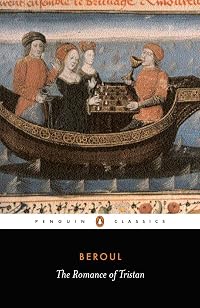
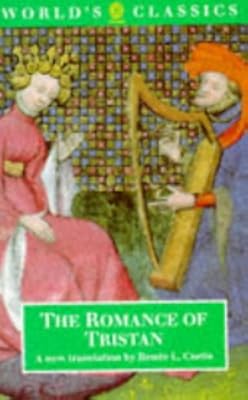
One of the earliest extant versions of the Tristan and Yseut story, Beroul's French manuscript of The Romance of Tristan dates back to the middle of the twelfth century. It recounts the legend of Tristan, nephew of King Mark of Cornwall, and the king's Irish wife Yseut, who fall passionately in love after mistakenly drinking a potion. Their illicit romance remains secret for many years, but the relentless suspicion of the king's barons and the fading effects of the magic draught eventually show more lead to tragedy for the lovers. While Beroul's work emphasizes the impulsive and often brutal behaviour of the characters, its sympathetic depiction of two people struggling against their destiny is one of the most powerful versions of this enduringly popular legend. show lessTags
Recommendations








Member Reviews
In my ongoing crusade to confute stories in which horrific, mind-bendingly irritating men and women are meant to be seen as heroes on the basis of the fact that
i) they're really hot
ii) they're a little bit damaged and
iii) they can't keep it in their pants,
the story of Tristan is like the Platonic form of evil, if there was such a thing (I am aware that the forms don't work like that).
Tristan, who is a bit of a scumbag, 'falls in love with' Yseut, who strongly resembles a 15 year old girl in her moral acuity, because of a love potion. When the potion wears off he realizes the error of his ways, and returns her to her husband... except he still seems to be pretty hot for her. Etc etc., they die and in death their love turns into two show more trees, which grow entwined with one another.
All that said, because the author avoids all the modern-day desiderata of moral complexity and so on, this turns out to be a great read. Beroul doesn't even try to suggest that his heroes are anything other than what they are, so even though he's always telling you how wonderful Tristan and Yseut are, and how villainous everyone else is, you're much more free to make up your own mind than in those show-instead-of-tell stories that lack an objective narrator. So, my mind is made up: beautiful, noble, chaste and charming T&Y deserve much worse than they got, and poor, villainous King Mark stands in for every man or woman who just wanted to be left alone to enjoy their family.
One downside: prose translations of poetry are always very odd, unless the poetry is on the facing page. That is not the case here. show less
i) they're really hot
ii) they're a little bit damaged and
iii) they can't keep it in their pants,
the story of Tristan is like the Platonic form of evil, if there was such a thing (I am aware that the forms don't work like that).
Tristan, who is a bit of a scumbag, 'falls in love with' Yseut, who strongly resembles a 15 year old girl in her moral acuity, because of a love potion. When the potion wears off he realizes the error of his ways, and returns her to her husband... except he still seems to be pretty hot for her. Etc etc., they die and in death their love turns into two show more trees, which grow entwined with one another.
All that said, because the author avoids all the modern-day desiderata of moral complexity and so on, this turns out to be a great read. Beroul doesn't even try to suggest that his heroes are anything other than what they are, so even though he's always telling you how wonderful Tristan and Yseut are, and how villainous everyone else is, you're much more free to make up your own mind than in those show-instead-of-tell stories that lack an objective narrator. So, my mind is made up: beautiful, noble, chaste and charming T&Y deserve much worse than they got, and poor, villainous King Mark stands in for every man or woman who just wanted to be left alone to enjoy their family.
One downside: prose translations of poetry are always very odd, unless the poetry is on the facing page. That is not the case here. show less
Strangely, I'd never read it all the way through until just now. Good thing, too, since I'm teaching it in about a month.
Among other reasons, it's interesting because the 'villainous' characters are all quite reasonable in their objections to Tristan and Iseult's affair, and Tristan himself is kind of a cad. Watch for the bit where Tristan agonizes over whether or not he needs to kill his dog because of its barking.
Among other reasons, it's interesting because the 'villainous' characters are all quite reasonable in their objections to Tristan and Iseult's affair, and Tristan himself is kind of a cad. Watch for the bit where Tristan agonizes over whether or not he needs to kill his dog because of its barking.
The Romance of Tristan should be appreciated as a work of developing or ancient literature. Tristan sets numerous romantic (actually in the contemporary sense of the word) archetypes that we use now, especially in lieu of chivalry and literature that reminisces on the medieval period. Similar to the conundrum I have thus faced with other Arthurian texts, it is hard to "rate" Tristan given the fact that it resembles palatable writing of its time, and significantly sets the standard for other texts to follow, despite how "enjoyable" it is to read.
While the Romance of Tristan is better written than some of its other Arthurian contemporaries, its writing style is not perfect. At times, the Tristan is slightly confusing for a casual reader, show more and the fact that the beginning and the ending are lost or incomplete doesn't help either.
That said, as a historian, and a consumer of fiction, I recommend Tristan as an enlightening read into a history of romantic literature. show less
While the Romance of Tristan is better written than some of its other Arthurian contemporaries, its writing style is not perfect. At times, the Tristan is slightly confusing for a casual reader, show more and the fact that the beginning and the ending are lost or incomplete doesn't help either.
That said, as a historian, and a consumer of fiction, I recommend Tristan as an enlightening read into a history of romantic literature. show less
This is not a very well-written story, either by modern standards or by ancient (Greco-Roman) standards. There is a good deal of inconsistency and lack of motivation for actions. The structure is episodic, and the episodes do not always fit together perfectly. To be fair, it makes a more coherent whole than, say, Mallory. It is also a great deal shorter.
A handful of unrelated details stand out as interesting. Arthur shows up in a small role. Gwynevere, Gawain, Kay, and the round table receive brief mentions.
Old Germanic ways show through in the idea of justice by individual combat. Tristan and Yseult are caught by King Mark in flagrante delicto, yet Tristan immediately swears that he will prove his innocence on the body of any man who show more dares accuse him. Since no one dares accuse him, he is deemed legally innocent.
Madmen are considered untouchable. They are allowed to walk into court and insult the king, and they are laughed at but not hindered. The parallel to the treatment of madmen by the Iroquois - if you believe the account in The Last of the Mohicans - is striking.
On the whole, not to be recommended as an entertaining read, but plenty of food for thought, and it is edifying to read the Arthurian romances in their original form. show less
A handful of unrelated details stand out as interesting. Arthur shows up in a small role. Gwynevere, Gawain, Kay, and the round table receive brief mentions.
Old Germanic ways show through in the idea of justice by individual combat. Tristan and Yseult are caught by King Mark in flagrante delicto, yet Tristan immediately swears that he will prove his innocence on the body of any man who show more dares accuse him. Since no one dares accuse him, he is deemed legally innocent.
Madmen are considered untouchable. They are allowed to walk into court and insult the king, and they are laughed at but not hindered. The parallel to the treatment of madmen by the Iroquois - if you believe the account in The Last of the Mohicans - is striking.
On the whole, not to be recommended as an entertaining read, but plenty of food for thought, and it is edifying to read the Arthurian romances in their original form. show less
This is the earliest Tristan that I possess. From some time in the 1100's this is a primitive work. We are lacking the first third of the manuscript, and the cast list doesn't include Dinadan, my obvious favourite character. Even king Arthur gets no mention in this version. Mr. Fedrick's translation is quite readable. I've noted reading it twice.
Storage 2025
La historia de los amantes Tristán e Iseo nació en la tradición oral francesa. Hasta el siglo XII no encontramos las primeras versiones escritas. Una delas más bellas es la de Béroul, traducida ahora por vez primera al castellano.
Por debajo de la elaboración poética del desconocido Béroul laten episodios ambientados en una atmósfera arcaica y de extremado salvajismo. Quizá sea esta versión la que más nos acerque a la remota raíz y fuerza mítica de este relato universal
Por debajo de la elaboración poética del desconocido Béroul laten episodios ambientados en una atmósfera arcaica y de extremado salvajismo. Quizá sea esta versión la que más nos acerque a la remota raíz y fuerza mítica de este relato universal
Dec 28, 2011Spanish
Members
- Recently Added By
Lists

In Our Time books
4,934 works; 2 members
Author Information
14+ Works 870 Members
All Editions
Some Editions
Series
Belongs to Publisher Series
Work Relationships
Common Knowledge
- Canonical title
- The Romance of Tristan
- Original publication date
- 12th century
- People/Characters
- Tristan; Iseult the Fair; King Mark
- Important places
- Cornwall, England, UK
- Dedication
- To My Parents
- First words
- Once upon a time, King Mark reigned over Cornwall.
- Disambiguation notice
- This is the 12th century French poem written by Beroul. Do not combine with other versions of the story.
In spite of this, this LT work included editions of the "Prose Tristan", a 13th century compilation by Luce de G... (show all)at and Helie de Boron which includes much material not in Beroul's version. Confusingly, both Beroul's and the later version have been published as 'The Romance of Tristan'. The Prose Tristan (Oxford isbn 0192827928, edited by Renee Curtis) has now been separated out into its own work.
Classifications
Statistics
- Members
- 814
- Popularity
- 34,032
- Reviews
- 8
- Rating
- (3.71)
- Languages
- 10 — Dutch, English, French, French (Middle), Old French, German, Italian, Polish, Portuguese, Spanish
- Media
- Paper, Ebook
- ISBNs
- 40
- ASINs
- 11