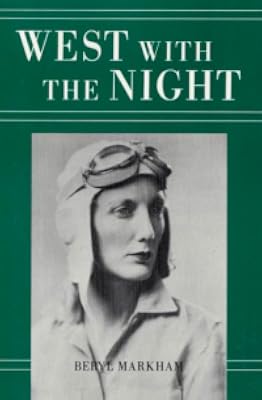
West with the Night
by Beryl Markham
On This Page
Description
This beautifully written autobiography brings us the remarkable life story of Beryl Markham, the first person to fly solo across the Atlantic from east to west. Brought up on a farm in Kenya, Markham chose to stay in Africa when, at seventeen, her father lost their farm and went to Peru. She began an apprenticeship as a racehorse trainer which turned into a highly successful career. In her twenties, Markham gave up horses for airplanes and became the first woman in East Africa to be granted show more a commercial pilot's license, piloting passengers and supplies in a small plane to remote corners of Africa. As rich and inspiring as when it was first written, West with the Night captures the spirit of a true pioneer woman.. show less
Tags
Recommendations







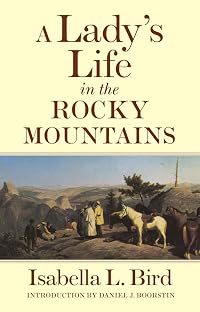
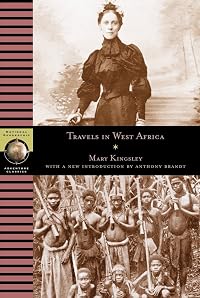
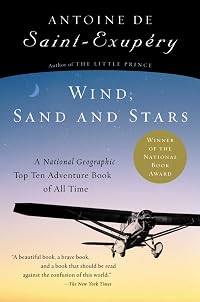
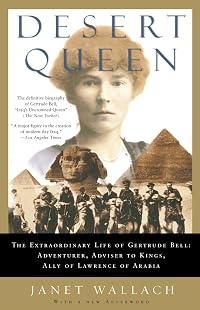



Member Recommendations

Member Reviews
I'm sorry to say I haven't heard of Beryl Markham until I read this memoir written in 1936, first published in 1942 and reprinted in the 1980s. Markham was born in 1902 and went to what is now Kenya with her father in 1906. Like her father she was a racehorse trainer but she fell in love with flying and became a bush pilot eventually scouting for elephant from the air and working with people like Baron von Blixen. In 1936 she was the first woman to fly solo east-to-west across the Atlantic.
She was the most adventurous woman I can imagine, afraid of nothing. And to top it all produced this fantastic memoir using the most poetic, beautiful prose that even Hemingway envied. This mesmerizing book goes back on the shelf because it will show more definitely be read again. Now I plan to read Mary S. Lovell's biography West with the Night and Circling the Sun a fictional story of her life by Paula McLain. There has been some controversy about whether or not Markham wrote the book, but Lovell is said to have been in no doubt about the authorship after meeting Markham. show less
She was the most adventurous woman I can imagine, afraid of nothing. And to top it all produced this fantastic memoir using the most poetic, beautiful prose that even Hemingway envied. This mesmerizing book goes back on the shelf because it will show more definitely be read again. Now I plan to read Mary S. Lovell's biography West with the Night and Circling the Sun a fictional story of her life by Paula McLain. There has been some controversy about whether or not Markham wrote the book, but Lovell is said to have been in no doubt about the authorship after meeting Markham. show less
"I stumble out of the plane and sink to my knees in muck and stand there foolishly staring, not at the lifeless land, but at my watch. Twenty-one hours and twenty-five minutes. Atlantic flight. Abingdon, England, to a nameless swamp – nonstop."
It is probably sacrilege to have read West with the Night and not to have loved it more.
To be fair, when I read the book I could hardly put it down. It was a charmingly written memoir of what must have been an extraordinarily interesting person. Beryl Markham was funny, witty, daring, confident, dashing...in short all one would associate with an adventurer. Most strikingly, she was not at all what I would have expected from someone growing up in colonial Africa, where expats are said to have show more formed an exclusive society about whom history books and literature seem to like reporting in terms of stereotypes and cliches.
Markham was not like that. She grew up in the remote wilderness of Kenya as an equal to the local Nandi and Masai and it seems from her writing that she saw herself as African.
"Competitors in conquest have overlooked the vital soul of Africa herself, from which emanates the true resistance to conquest. The soul is not dead, but silent, the wisdom not lacking, but of such simplicity as to be counted non-existent in the tinker’s mind of modern civilization. Africa is of an ancient age and the blood of many of her peoples is as venerable and as chaste as truth. What upstart race, sprung from some recent, callow century to arm itself with steel and boastfulness, can match in purity the blood of a single Masai Murani whose heritage may have stemmed not far from Eden?"
The book is full of passages that show her reverence for Africa in a way that is neither sentimental nor frightened by the unknown. Africa is Africa - what may seem as drama to European society is just a fact of life. To some extent, Markham even makes fun of the attitudes that seem to long for the theatrical:
"I do not suggest that the lion of the Serengetti have become so blasé about the modern explorer’s motion-picture camera that their posing has already become a kind of Hollywoodian habit. But many of them have so often been bribed with fresh-killed zebra or other delicacies that it is sometimes possible to advance with photographic equipment to within thirty or forty yards of them if the approach is made in an automobile. To venture that close on foot, however, would mean the sudden shattering of any kindly belief that the similarity of the lion and the pussy cat goes much beyond their whiskers. But then, since men still live by the sword, it is a little optimistic to expect the lion to withdraw his claws, handicapped as he is by his inability to read our better effusions about the immorality of bloodshed."
However, on finishing the book, I realised that even though I enjoy reading about her exploits - nearly being mauled by a lion, becoming a racehorse trainer, taking up flying, and organising safaris with Bror Blixen - there was something amiss with the recollection of stories. There was a guarded hesitation about the way she told the stories.
Markham, of course, is known for being a famous aviatrix but she is more famous for being one of the cornerstones of the love triangle described in the oh-so-famous Out of Africa - except that Karen Blixen does not mention her. Markham in return writes much about Denys Finch-Hatton and Bror Blixen, but does not mention Blixen's wife.
So, despite the humorous eloquence of Markham's book, I was left wondering what other relevant details were left out. Not that it is necessary for West with the Night to be a truthful, tell-all memoir. Not at all. It was just that the book seemed to suffer from a lack of credibility once I read more about the characters involved in her life. show less
It is probably sacrilege to have read West with the Night and not to have loved it more.
To be fair, when I read the book I could hardly put it down. It was a charmingly written memoir of what must have been an extraordinarily interesting person. Beryl Markham was funny, witty, daring, confident, dashing...in short all one would associate with an adventurer. Most strikingly, she was not at all what I would have expected from someone growing up in colonial Africa, where expats are said to have show more formed an exclusive society about whom history books and literature seem to like reporting in terms of stereotypes and cliches.
Markham was not like that. She grew up in the remote wilderness of Kenya as an equal to the local Nandi and Masai and it seems from her writing that she saw herself as African.
"Competitors in conquest have overlooked the vital soul of Africa herself, from which emanates the true resistance to conquest. The soul is not dead, but silent, the wisdom not lacking, but of such simplicity as to be counted non-existent in the tinker’s mind of modern civilization. Africa is of an ancient age and the blood of many of her peoples is as venerable and as chaste as truth. What upstart race, sprung from some recent, callow century to arm itself with steel and boastfulness, can match in purity the blood of a single Masai Murani whose heritage may have stemmed not far from Eden?"
The book is full of passages that show her reverence for Africa in a way that is neither sentimental nor frightened by the unknown. Africa is Africa - what may seem as drama to European society is just a fact of life. To some extent, Markham even makes fun of the attitudes that seem to long for the theatrical:
"I do not suggest that the lion of the Serengetti have become so blasé about the modern explorer’s motion-picture camera that their posing has already become a kind of Hollywoodian habit. But many of them have so often been bribed with fresh-killed zebra or other delicacies that it is sometimes possible to advance with photographic equipment to within thirty or forty yards of them if the approach is made in an automobile. To venture that close on foot, however, would mean the sudden shattering of any kindly belief that the similarity of the lion and the pussy cat goes much beyond their whiskers. But then, since men still live by the sword, it is a little optimistic to expect the lion to withdraw his claws, handicapped as he is by his inability to read our better effusions about the immorality of bloodshed."
However, on finishing the book, I realised that even though I enjoy reading about her exploits - nearly being mauled by a lion, becoming a racehorse trainer, taking up flying, and organising safaris with Bror Blixen - there was something amiss with the recollection of stories. There was a guarded hesitation about the way she told the stories.
Markham, of course, is known for being a famous aviatrix but she is more famous for being one of the cornerstones of the love triangle described in the oh-so-famous Out of Africa - except that Karen Blixen does not mention her. Markham in return writes much about Denys Finch-Hatton and Bror Blixen, but does not mention Blixen's wife.
So, despite the humorous eloquence of Markham's book, I was left wondering what other relevant details were left out. Not that it is necessary for West with the Night to be a truthful, tell-all memoir. Not at all. It was just that the book seemed to suffer from a lack of credibility once I read more about the characters involved in her life. show less
Beryl Markham (1902-1986) certainly led an adventurous life. Born in England, she moved to Kenya (then British East Africa) at age four. Her life included “up close and personal” experiences with African wildlife, training racehorses, and flying aircraft. She flew the African bush, bringing medical supplies to remote locations, spotting wildlife, and searching for downed pilots. She flew from Nairobi to London. She was the first woman to fly solo east to west over the Atlantic, from England to Nova Scotia.
Published in 1942, the majority of the book is focused on her life in Africa. She encounters lions, elephants, warthogs, zebras, and more. The final two chapters describe her solo flight. She keeps her private life private, show more sticking to career, colleagues, friends, and family.
What a wonderful memoir. Markham definitely had a way with words. Her writing is descriptive, eloquent, and artistic. Her love for Africa is unmistakable. I felt a sense of accompanying her on her flights. If you are looking for well-written non-fiction about a strong woman that led the life of a non-conformist, pick this one up. As an added bonus, Anna Fields does a first-rate job of voice acting in the audio book. show less
Published in 1942, the majority of the book is focused on her life in Africa. She encounters lions, elephants, warthogs, zebras, and more. The final two chapters describe her solo flight. She keeps her private life private, show more sticking to career, colleagues, friends, and family.
What a wonderful memoir. Markham definitely had a way with words. Her writing is descriptive, eloquent, and artistic. Her love for Africa is unmistakable. I felt a sense of accompanying her on her flights. If you are looking for well-written non-fiction about a strong woman that led the life of a non-conformist, pick this one up. As an added bonus, Anna Fields does a first-rate job of voice acting in the audio book. show less
On the back cover of [West with the Night] is an encomium from Ernest Hemingway:
I knew her [Beryl Markham] in Africa and never would have suspected that she could and would put pen to paper except to write in her flyer's log book. As it is, she has written so well, and marvelously well, that I was completely ashamed of myself as a writer...But [she] can write rings around all of us who consider ourselves as writers....[R]ead it because it is really a bloody wonderful book.
I do agree with Hem on this. I give West with the Night both thumbs up. It is a wonderful book.
Markham's memoir begins with a tale of rescue. She's awakened by a messenger bringing a request from a remote encampment to fly in with a tank of oxygen to save a desperately show more sick gold miner. Oxygen strapped into the passenger seat of her biplane, she flies in the dark to the spot where a few torches delineate a very rough landing strip. She's confident she can land her plane, but questions whether she'll be able to take off from so short a strip. She needs to get airborne by daylight to continue a search for a fellow aviator who is presumed down. It's the life of a pioneering flier in a vast and largely unexplored, unmapped country.
Africa is mystic; it is wild; it is a sweltering inferno; it is a photographer's paradise, a hunter's Valhalla, an escapist's Utopia. It is what you will, and it withstands all interpretations. It is the last vestige of a dead world or a cradle of a shiny new one. To a lot of people, as to myself, it is just "home." It is all these things but one thing—it is never dull.
Born in England, Beryl moves at the age of 4 with her father, an accomplished thoroughbred trainer, to what was then (in the early 1900s) British East Africa, now Kenya. There's no farmhouse on the farm he establishes, only individual huts for himself and his daughter. While her father tends to business, Beryl learns about her new homeland from the children of the native workers. She follows two boys along their path to manhood, which will be completed when the two are circumcised. As part of their maturation, the three, along with Beryl's dog Buller, venture into the bush to hunt warthogs, armed only with spears and bush knives. Lions are confronted.
From her father she learns about horses and how to train them. A drought destroys her father's farm, he heads to Peru, and at age 17, Beryl is on her own, running a training stable, a venture that peaks in a race expected to be dominated by a stallion named Wrack, a horse she trained until its owner succumbed to a fear-mongering rival trainer. No 17-year-old girl could successfully prepare a winner. She preps a different horse, a filly named Wise Child. The race is thrilling, as is Markham's narration. "Wrack is a picture of driving power—Wise Child a study in coordination of muscle and bone and nerve. She's fast, she's smooth. She's smooth as a blade. She cuts the daylight between Wrack and herself to a hand's breadth—to a hair's breath—to nothing."
Sometime later she turns to flying, inspired by a pioneering flier named Tom Black who glides into Nairobi carrying "a message of enterprise, a cargo of pain, and a vessel of death." A pair of hunters cornered a lion and shot it, the pilot tells Beryl, and Beryl tells us.
He was an old lion, prepared from birth to lose his life rather than leave it. But he had the dignity of all free creatures, and so he was allowed his moment. It was hardly a glorious moment…[The hunters] shot him without killing him, and then turned the unconscionable eye of a camera upon his agony. It was a small, a stupid, but a callous crime.
When Tom Black...landed...at the camp site near Muscoma, one man lay dead and a second, mangled and helpless, was alive only by the caprice of chance.
Black educates Markham as a pilot. She buys a plane and begins a career as a free-lance aviator, ferrying machine parts, critical supplies, and other cargo to isolated towns and encampments. She shared flying and hunting adventures with a variety of men, particularly Denys Hatton-Finch and Baron von Blixen. These two were introduced in 1938 in the pages of the novel [Out of Africa], written by Baron von Blixen's wife Karen, better known to the literary world as Isak Dinesen. Eventually tiring of her African business and drawn to England, she flies north. In England, Markham finds a new venture, flying east from England to America, and a financial backer who has a plane built for the flight. And she does make it to Nova Scotia before fuel-system icing ends the flight.
A wonderful book it is. show less
I knew her [Beryl Markham] in Africa and never would have suspected that she could and would put pen to paper except to write in her flyer's log book. As it is, she has written so well, and marvelously well, that I was completely ashamed of myself as a writer...But [she] can write rings around all of us who consider ourselves as writers....[R]ead it because it is really a bloody wonderful book.
I do agree with Hem on this. I give West with the Night both thumbs up. It is a wonderful book.
Markham's memoir begins with a tale of rescue. She's awakened by a messenger bringing a request from a remote encampment to fly in with a tank of oxygen to save a desperately show more sick gold miner. Oxygen strapped into the passenger seat of her biplane, she flies in the dark to the spot where a few torches delineate a very rough landing strip. She's confident she can land her plane, but questions whether she'll be able to take off from so short a strip. She needs to get airborne by daylight to continue a search for a fellow aviator who is presumed down. It's the life of a pioneering flier in a vast and largely unexplored, unmapped country.
Africa is mystic; it is wild; it is a sweltering inferno; it is a photographer's paradise, a hunter's Valhalla, an escapist's Utopia. It is what you will, and it withstands all interpretations. It is the last vestige of a dead world or a cradle of a shiny new one. To a lot of people, as to myself, it is just "home." It is all these things but one thing—it is never dull.
Born in England, Beryl moves at the age of 4 with her father, an accomplished thoroughbred trainer, to what was then (in the early 1900s) British East Africa, now Kenya. There's no farmhouse on the farm he establishes, only individual huts for himself and his daughter. While her father tends to business, Beryl learns about her new homeland from the children of the native workers. She follows two boys along their path to manhood, which will be completed when the two are circumcised. As part of their maturation, the three, along with Beryl's dog Buller, venture into the bush to hunt warthogs, armed only with spears and bush knives. Lions are confronted.
From her father she learns about horses and how to train them. A drought destroys her father's farm, he heads to Peru, and at age 17, Beryl is on her own, running a training stable, a venture that peaks in a race expected to be dominated by a stallion named Wrack, a horse she trained until its owner succumbed to a fear-mongering rival trainer. No 17-year-old girl could successfully prepare a winner. She preps a different horse, a filly named Wise Child. The race is thrilling, as is Markham's narration. "Wrack is a picture of driving power—Wise Child a study in coordination of muscle and bone and nerve. She's fast, she's smooth. She's smooth as a blade. She cuts the daylight between Wrack and herself to a hand's breadth—to a hair's breath—to nothing."
Sometime later she turns to flying, inspired by a pioneering flier named Tom Black who glides into Nairobi carrying "a message of enterprise, a cargo of pain, and a vessel of death." A pair of hunters cornered a lion and shot it, the pilot tells Beryl, and Beryl tells us.
He was an old lion, prepared from birth to lose his life rather than leave it. But he had the dignity of all free creatures, and so he was allowed his moment. It was hardly a glorious moment…[The hunters] shot him without killing him, and then turned the unconscionable eye of a camera upon his agony. It was a small, a stupid, but a callous crime.
When Tom Black...landed...at the camp site near Muscoma, one man lay dead and a second, mangled and helpless, was alive only by the caprice of chance.
Black educates Markham as a pilot. She buys a plane and begins a career as a free-lance aviator, ferrying machine parts, critical supplies, and other cargo to isolated towns and encampments. She shared flying and hunting adventures with a variety of men, particularly Denys Hatton-Finch and Baron von Blixen. These two were introduced in 1938 in the pages of the novel [Out of Africa], written by Baron von Blixen's wife Karen, better known to the literary world as Isak Dinesen. Eventually tiring of her African business and drawn to England, she flies north. In England, Markham finds a new venture, flying east from England to America, and a financial backer who has a plane built for the flight. And she does make it to Nova Scotia before fuel-system icing ends the flight.
A wonderful book it is. show less
Beryl Markham approaches the story of her remarkable life with the mindset of a literary novelist and the result, West with the Night, possesses all the advantages and drawbacks of such a strategy. The book is often lacking as autobiography – it omits or undersells a great many important events and relationships in Markham's life, and its non-linear, anecdotal approach allows for little appreciation of the chronological arc of her life. A novelist, in comparison to a memoirist or diarist, is more reticent about being part of the story. They put themselves into the writing, of course – it cannot be helped – but they leave much unrevealed about their character. A memoirist, in contrast, is meant to deliver their whole personal show more character on the page; Markham, whether consciously or not, chooses the approach of the novelist.
It has mixed results, but largely positive ones. The narrative can be disorientingly vague at times and, like many a first-time writer, Markham tries some things which don't come off. For the most part her writing is pleasingly clean and understated, but some lines which are meant to sound regal instead sound inflated. That said, such lines are relatively few, and for the most part Markham delivers exemplary prose. Ernest Hemingway praised the book, saying its author could 'write rings around all of us', and Markham certainly possesses keen powers of observation, writing particularly vividly about animals, aviation and Africa. You can be reading the book through at times, only to suddenly realise that she's just told you a really immersive story in an understated way. More than any autobiographical achievements – and Markham certainly led an impressive life – it is these immaculate examples of anecdotal writing which I will remember most about West with the Night. show less
It has mixed results, but largely positive ones. The narrative can be disorientingly vague at times and, like many a first-time writer, Markham tries some things which don't come off. For the most part her writing is pleasingly clean and understated, but some lines which are meant to sound regal instead sound inflated. That said, such lines are relatively few, and for the most part Markham delivers exemplary prose. Ernest Hemingway praised the book, saying its author could 'write rings around all of us', and Markham certainly possesses keen powers of observation, writing particularly vividly about animals, aviation and Africa. You can be reading the book through at times, only to suddenly realise that she's just told you a really immersive story in an understated way. More than any autobiographical achievements – and Markham certainly led an impressive life – it is these immaculate examples of anecdotal writing which I will remember most about West with the Night. show less
Beryl Markham was born in England, but grew up with her father in Kenya in the early part of the 20th century. Her childhood afforded her considerable independence; on her father's farm she mingled freely with native people and even learned to hunt game. As a young woman she became an accomplished horse trainer, and then learned to fly aircraft. This memoir takes the reader up to her most notable aeronautic feat, being the first woman to fly the Atlantic Ocean from east to west in 1936.
Beryl's childhood and young adulthood were fascinating. Hers was far from a typical colonial upbringing, and it seemed she was almost exclusively in the company of men. She was one of very few women in the horse racing world, but proved herself to the show more skeptical and more experienced. Later, she flew her plane on scouting missions for safari operators -- again, probably the only woman to make a living in this way.
Reading this memoir, I was fascinated with her life experiences, although I found the elephant safari segments extremely unsettling. While she focused entirely on her role -- locating herds and reporting back to the safari leader -- and didn't glamorize it in the least, Beryl clearly contributed to the slaughter of elephants for ivory. This was acceptable practice at the time, but it's still awful when seen through 21st century eyes. West With the Night was also surprisingly devoid of women. Beryl's mother left her father, she had no female friends growing up, and her professional colleagues were all men. Was this reality, or due to the scope of this memoir?
Still, this was a fascinating portrait of a fascinating woman. show less
Beryl's childhood and young adulthood were fascinating. Hers was far from a typical colonial upbringing, and it seemed she was almost exclusively in the company of men. She was one of very few women in the horse racing world, but proved herself to the show more skeptical and more experienced. Later, she flew her plane on scouting missions for safari operators -- again, probably the only woman to make a living in this way.
Reading this memoir, I was fascinated with her life experiences, although I found the elephant safari segments extremely unsettling. While she focused entirely on her role -- locating herds and reporting back to the safari leader -- and didn't glamorize it in the least, Beryl clearly contributed to the slaughter of elephants for ivory. This was acceptable practice at the time, but it's still awful when seen through 21st century eyes. West With the Night was also surprisingly devoid of women. Beryl's mother left her father, she had no female friends growing up, and her professional colleagues were all men. Was this reality, or due to the scope of this memoir?
Still, this was a fascinating portrait of a fascinating woman. show less
Raised in British East Africa, almost as free as the native children she grew up with, or the lions they hunted with spears, Beryl Markham lived a long and eventful life. She was a pioneering aviatrix, a bush pilot, a race horse trainer, and a woman for whom living was a full time activity. This memoir, written when her life was barely half over, is fairly brief. Knowing only a few bare facts about her going in, I find what she left out almost as remarkable as what she included. Although she was married three times, and had several notable affairs, neither husbands nor lovers are mentioned as such in the book at all. The reader would never know she was married even once, or that she bore a child. Nor does her friend Karen Blixen (Isak show more Dinesen) make an appearance, although Baron Bror Blixen features prominently in more than one chapter. There’s not a single anecdote about Ernest Hemingway, who in his own words, “knew her fairly well in Africa.” These omissions, however, detract not at all from the power and magic of this book. The prose is exquisite. Her outlook is so honest, natural and forthright that she went directly onto my fantasy dinner party list before I’d finished her first chapter. I don’t even care if some of it was exaggerated or embellished in the telling; it’s all “true” in the best sense of the word. show less
Members
- Recently Added By
Lists

Best Biographies, Autobiographies and Memoirs
465 works; 160 members

Best Autobiographies and Memoirs
370 works; 67 members

Recommend the 20 best books you've read in the last five years
2,168 works; 608 members

Top Five Books of 2015
811 works; 240 members

Modern Library 100 Best Nonfiction Books
100 works; 8 members

Books Set In Africa
81 works; 4 members

Most Popular Books Tagged Africa
35 works; 3 members

Allie's Wishlist
217 works; 2 members
100 Biographies and Memoirs to Read in a (Single) Lifetime
98 works; 12 members

500 Great Books by Women
507 works; 60 members

Carole's List
445 works; 13 members

Mustich's 1000 Books to Read Before You Die: A Life Changing List
1,001 works; 20 members
Club Read's Recommended Nonfiction Written by Women
618 works; 30 members

Best Biographies of Notable Women
424 works; 102 members

Books We Love to Reread
695 works; 299 members

Top Five Books of 2024
795 works; 264 members

Books We Discovered On LibraryThing
530 works; 130 members
Author Information

2+ Works 4,283 Members
Some Editions
Awards and Honors
Distinctions
Notable Lists
Series
Belongs to Publisher Series
Work Relationships
Is abridged in
Common Knowledge
- Canonical title
- West with the Night
- Original title
- West with the Night
- Original publication date
- 1942
- People/Characters
- Beryl Markham; Bror Blixen; Denys Finch-Hatton; Tom Black; Eric Gooch; Arab Ruta
- Important places
- Africa; East Africa; Kenya
- Epigraph
- "I speak of Africa and golden joys." -- Shakespeare, Henry IV, Act V, Sc. 3
- Dedication
- For my Father
"I wish to express my gratitude to Raoul Schumacher for his constant encouragement and his assistance in the preparations for this book." - First words
- "How is it possible to bring order out of memory?"
- Quotations
- Namen sind die Schlüssel für Türen, hinter denen Halbverschüttetes liegt, verschwommen für den Verstand, vertraut jedoch im Herzen. - S.14
Niemals zögern oder zaudern, niemals sich umdrehen und niemals glauben, dass eine Stunde, an die man sich erinnert, eine bessere Stunde ist, weil sie tot ist. Vergangene Jahre scheinen sichere Jahre zu sein, eine entschwunde... (show all)ne, gefahrlose Zeit, während die Zukunft, wie in einer konturlosen Wolke, aus der Ferne bedrohlich wirkt. Dringt man in die Wolke ein, so klart sie auf. - S. 144
Ich lernte, was jedes träumende Kind wissen muss - dass kein Horizont zu weit ist, um bis zu ihm und über ihn hinaus vorzustoßen. - S. 198
Was immer der Mensch unternimmt, Würde erlangt sein Bemühen erst, wenn echte Arbeit dahintersteckt, und fühlt man dann das Bedürfnis, sein - im Wortsinn - Handwerk auszuüben, so begreift man, dass die anderen Dinge - all... (show all) die Experimente, die Eitel- und Nichtigkeiten, denen man nachjagte - ganz einfach unsinnig waren. - S. 298
...every farmer is a midwife. There is no time for mystery. There is only time for patience and care, and hope that what is born is worthy and good. p. 121
No human pursuit achieves dignity until it can be called work, and when you can experience a physical loneliness for the tools of your trade, you see that the other things--the experiments, the irrelevant vocations, the vanit... (show all)ies you used to hold--were false to you. p. 278
Life is life and fun is fun, but it's all so quiet when the goldfish die. p. 218
I am incapable of a profound remark on the workings of Destiny. It seems to get up early and go to bed very late, and it acts most generously toward the people who nudge it off the road whenever they meet it.
They were dark days heavy-scented with gloom. All the petty joys of early youth, the games, the friendships with the Nandi totos lost their lustre. Time became a weight that would not be moved until the bodies themselves had ... (show all)been moved and grass roots had found the new earth of the graves, and the women had cleaned the vacant huts of the dead and you could see the sun again.
Wherever you are, it seems, you must have news of some other place, some bigger place, so that a man on his deathbed in the swamplands of Victoria Nyanza is more interested in what had lately happened in this life than in wha... (show all)t may happen in the next. It is really this that makes death so hard—curiosity unsatisfied.
I wanted to call out for Ebert, for anyone. But I couldn't say anything and no one would have heard, so I stood there with my hands on Bergner's shoulders feeling the tremor of his muscles pass through my fingertips and heari... (show all)ng the rest of his life run out in a stream of little words carrying no meaning, bearing no secrets—or perhaps he had none.
The farm at Njoro was endless, but it was no farm at all until my father made it. He made it out of nothing and out of everything—the things of which all farms are made.
They wore hats, bandannas, jackets of home-cured hide, shukas, shorts, boots or no boots, and it didn't matter. Altogether it made a uniform—not for a man, but for a body of men. Each contributed to the distinguished style ... (show all)and colour of a regiment that had had its predecessors once in America, but had not, in this war, a counterpart.¶ They had come to fight, and they stayed and fought—some because they could read and understand what they read, some because they had listened to other men, and some because they were told that this, in the name of civilization—a White Man's God more tangible than most—was their new duty.
The days that marked the war went on like the ticking of a clock that had no face and showed no time.
What a child does not know and does not want to know of race and colour and class, he learns soon enough as he grows to see each man flipped inexorably into some predestined groove like a penny or a sovereign in a banker's ra... (show all)ck. Kibii, the Nandi boy, was my good friend. Arab Ruta, who sits before me, is my good friend, but the handclasp will be shorter, the smile will not be so eager on his lips, and though the path is for a while the same, he will walk behind me now, when once, in the simplicity of our nonage, we walked together.¶ No, my friend, I have not learned more than this. Nor in all these years have I met many who have learned as much.
In any country almost empty of men, 'love thy neighbor' is less a pious injunction than a rule of survival. If you meet one in trouble, you stop—another time he may stop for you.
there was nothing but rolling downs that went on and on in easy waves until they broke against the wall of the sky.
If a man has any greatness in him, it comes to light, not in one flamboyant hour, but in the ledger of his daily work.
I think he could track a honeybee through a bamboo forest.
But on that morning you could see nothing; mountain mist had stolen down from Kenya during the night and captured the country.
You could expect many things of God at night when the campfire burned before the tents. You could look through and beyond the veils of scarlet and see shadows of the world as God first made it and hear the voices of the beast... (show all)s He put there. It was a world as old as Time, but as new as Creation's hour had left it.¶ In a sense it was formless. When the low stars shone over it and the moon clothed it in silver fog, it was the way the firmament must have been when the waters had gone and the night of the Fifth Day had fallen on creatures still bewildered by the wonder of their being.
I wonder if I should have a change—a year in Europe this time—something new, something better, perhaps. A life has to move or it stagnates. Even this life, I think.¶ It is no good telling yourself that one day you will w... (show all)ish you had never made that change; it is no good anticipating regrets. Every tomorrow ought not to resemble every yesterday.
Each humid, tropic day is stillborn, and does not breathe, however lustily pregnant the night that gave it birth. - Last words
- (Click to show. Warning: May contain spoilers.)She was old and weather-weary, and she had learned to let the world come round to her."
- Blurbers
- Hemingway, Ernest
Classifications
- Genres
- Biography & Memoir, Travel, Nonfiction, General Nonfiction
- DDC/MDS
- 629.13092 — Applied science & technology Engineering Transportation Vehicles Airplanes, Helicopters, and other aircrafts Aviation engineering Biography; History By Place Biography
- LCC
- TL540 .M345 .A3 — Technology Motor vehicles. Aeronautics. Astronautics Motor vehicles. Aeronautics. Astronautics Aeronautics. Aeronautical engineering
- BISAC
Statistics
- Members
- 4,007
- Popularity
- 3,926
- Reviews
- 143
- Rating
- (4.13)
- Languages
- 12 — Danish, Dutch, English, Estonian, Finnish, French, German, Italian, Norwegian (Bokmål), Norwegian, Spanish, Swedish
- Media
- Paper, Audiobook, Ebook
- ISBNs
- 83
- UPCs
- 1
- ASINs
- 35