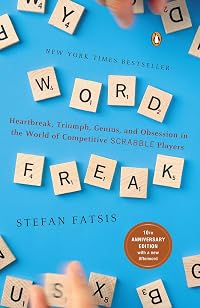
Word Freak: Heartbreak, Triumph, Genius, and Obsession in the World of Competitive Scrabble Players
by Stefan Fatsis
On This Page
Description
Stefan Fatsis, a former Wall Street Journal reporter and National Public Radio regular, recounts his remarkable rise through the ranks of elite Scrabble players while exploring the game's strange, potent hold over them-and him. Scrabble might truly be called America's game. More than two million sets are sold every year and at least thirty million American homes have one. But the game's most talented competitors inhabit a sphere far removed from the masses of "living room players." Theirs is show more a surprisingly diverse subculture whose stars include a vitamin-popping standup comic; a former bank teller whose intestinal troubles earn him the nickname "G.I. Joel"; a burly, unemployed African American from Baltimore's inner city; the three-time national champion who plays according to Zen principles; and Fatsis himself, who we see transformed from a curious reporter to a confirmed Scrabble nut. He begins by haunting the gritty corner of a Greenwich Village park where pickup Scrabble games can be found whenever weather permits. His curiosity soon morphs into compulsion, as he sets about memorizing thousands of obscure words and fills his evenings with solo Scrabble played on his living room floor. Before long he finds himself at tournaments socializing-and competing-with Scrabble's elite. But this book is about more than hardcore Scrabblers, for the game yields insights into realms as disparate as linguistics, psychology, and mathematics. Word Freak extends its reach even further, pondering the light Scrabble throws on such notions as brilliance, memory, competition, failure, and hope. It is a geography of obsession that celebrates the uncanny powers locked in all of us. This edition includes a new 2013 afterword by the author. show lessTags
Recommendations








Member Recommendations
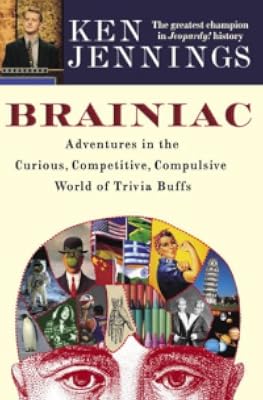
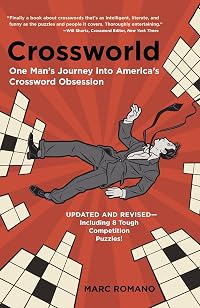
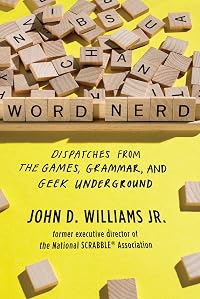
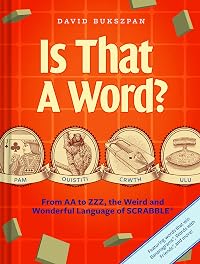
The Kings of New York: A Year Among the Geeks, Oddballs, and Genuises Who Make Up America's Top High School Chess Team by Michael Weinreb
jseger9000 Both books are filled with profiles of unusual people who devote time and resources to competitively play something most of us consider a pastime.
30

LynnB Also written by a journalist who becomes a competitor,this book looks at the world of competitive memorization.
Member Reviews
Wall Street Journal sports reporter Stefan Fatsis gets assigned to cover Scrabble™, and explores what it means to be the best at a competitive activity. Fatsis follows the Scrabble™ careers of such characters as “GI” Joel (not veteran status, but gastrointestinal problems); Marlon from Baltimore, black and unemployed but a word genius; and Matt, who would be banned if Scrabble™ players were drug tested. Fatsis finds himself getting gradually drawn into the world, memorizing word lists and unscrambling anagrams for fun. There are asides about Alfred Mosher Butts, the inventor of the game; and about its publishing history (moving from handmade in Butt’s living room to semi-handmade by James Brunot in an old schoolhouse to show more printers Selchow & Righter to big businesses Coleco and Hasbro). It’s noted that after Selchow & Righter, the companies that owned Scrabble™ never seemed to be quite sure what to do with it, especially in the age of computer games. Fatsis gradually gets better and better, moving up in the rankings – and eventually playing with almost Zen-like detachment.
So what does it mean to be a “world class” Scrabble™ player? You’re never going to get to do celebrity product endorsements (although the concept of Scrabble™ athletic shoes does seem mildly amusing). You end up with a small circle of fellow players as friends – all interesting people, but rather single-minded. But you’ve accomplished something that took brainpower and hard work, even if only other players are impressed. An interesting and enlightening read. show less
So what does it mean to be a “world class” Scrabble™ player? You’re never going to get to do celebrity product endorsements (although the concept of Scrabble™ athletic shoes does seem mildly amusing). You end up with a small circle of fellow players as friends – all interesting people, but rather single-minded. But you’ve accomplished something that took brainpower and hard work, even if only other players are impressed. An interesting and enlightening read. show less
I love a good behind-the-scenes underbelly story and the more seemingly off the wall the better. I am not sure where I ran across a mention of this book but since I grew up playing lots of Scrabble it of course caught my attention. What happened next was both a trip down memory lane and a recognition of some things within my own family.
"Joe is describing one of the core facts about Scrabble: It is a game of imperfect information. Chess is a game of perfect information. Both players have access to all of the information about the game."
This was an aha moment for me as I have never liked chess. I have always wanted to like it and always wanted to be good at it but I am not, nor will I ever be. So this quote explained a lot about the way I show more think. I like imperfect information because it leaves room to learn and grow. In my opinion once you have only perfect information there is no need to learn anything new or grow any more.
The other thing that I learned about this book is that competitive Scrabble apparently allows for "phonies" which are made up words that appear to be legitimate; the trick is to know when to play them. This made me laugh out loud because the Grandma that I played Scrabble with the most was always making up words and she would often get caught. She probably didn't realize this was a legitimate tactic but it was something that we often laughed about.
In any event, this was a fun book with the kind of quirky cast of characters to be expected in this type of book and if you enjoy(ed) playing Scrabble at all, I do recommend this book. Oh, and I learned some new Scrabble words along the way. show less
"Joe is describing one of the core facts about Scrabble: It is a game of imperfect information. Chess is a game of perfect information. Both players have access to all of the information about the game."
This was an aha moment for me as I have never liked chess. I have always wanted to like it and always wanted to be good at it but I am not, nor will I ever be. So this quote explained a lot about the way I show more think. I like imperfect information because it leaves room to learn and grow. In my opinion once you have only perfect information there is no need to learn anything new or grow any more.
The other thing that I learned about this book is that competitive Scrabble apparently allows for "phonies" which are made up words that appear to be legitimate; the trick is to know when to play them. This made me laugh out loud because the Grandma that I played Scrabble with the most was always making up words and she would often get caught. She probably didn't realize this was a legitimate tactic but it was something that we often laughed about.
In any event, this was a fun book with the kind of quirky cast of characters to be expected in this type of book and if you enjoy(ed) playing Scrabble at all, I do recommend this book. Oh, and I learned some new Scrabble words along the way. show less
Outstanding. Fatsis' embedding of himself in the culture of competitive play is engaging even if you're not a Scrabble fan. The mental game he so carefully examines of both aspiring and top players reveals how many layers of emotion and calculation go into playing at higher levels. How can you do well at such a specialized pursuit without flirting with mania?
An obsessively detailed book about obsessive people, including, perhaps, the author. If you think you play serious Scrabble, you're probably wrong -- at least I hope so. When you watch the movie, SuperSize Me, at some point you begin to fear for Morgan Spurlock's long-term well-being. So too, as you follow Stefan Fatsis into the world of competitive Scrabble, you begin to fear for his sanity. He appears to have survived (we'll see), though traces of the obsession still cause the book to spend perhaps 10% too much time on every game and missed opportunity. A fascinating book, with hints of train wreck.
Word Freak was lent to me by a person who I was losing pretty badly to in Words With Friends. Perhaps he thought it would help me raise my game. Fatsis is a journalist who in short order, about two years, became an expert division one Scrabble player, attaining a rank of 1733. His book has chapters on the history and origins of the game, its commercialization and continuing success, and a number of the more colorful characters or "freaks" who are among the upper echelon players and who serve as coaches and mentors for Fatsis's own trajectory from journeyman to top flight tournament player. This "it takes a community to make a champion" vibe reminded me of all the players who helped prodigy Beth Harmon face the Russian chess masters in show more the popular Netflix documentary, The Queen's Gambit. Fatsis himself draws other parallels between the two games: the fanatic devotion, the innate talent, the tens of thousands of hours of study, the strategizing. But if top flight chess players are often depicted as veering on the edge of insanity, Fatsis's fellow gamers are more like high school misfits and nerds. At the end of the day, I learned a lot about how Fatsis improved his game through incessant study of dictionaries and word lists. Through anagramming, playing tons of games with his new friends, entering tournaments, studying games played, analyzing key moves, creating anamonic phrases, and much much more. That said, this book, did not make me better at Words with Friends. But it was an amusing and enjoyable glimpse into a world filled with zany and passionate and intelligent word freaks. They were great company. show less
I've always thought I was good at Scrabble, but wowzers! These competitive players are impressive. And a little scary and sad, in a way. Fatsis details his time among them, primarily between 1998 and 2000 or so. He alternates his own rise up the competitive ranks and his relationships with other players with chapters about the history of the game and other context. It's interesting - up to a point. I couldn't help thinking it was a little long, but I enjoyed most of it and am happy to remain an occasional player.
I love playing Scrabble! It's a popular word game of skill and chance and journalist Stefan Fatsis entered the competitive world of Scrabble hoping for some material worthy of publishing.
What he discovered was an intense sub culture with its own rules and guiding principles and a range of dedicated, intelligent and sometimes eccentric players all striving to win. Word Freak - Heartbreak, Triumph, Genius, and Obsession in the World of Competitive Scrabble Players by Stefan Fatsis is the result of his research and complete immersion in the Scrabble scene.
First, it's important to know Scrabble can be played on a competitive level and the book largely takes place in the USA.
"To play competitive Scrabble, one has to get over the conceit of show more refusing to acknowledge certain words as real and accept that the game requires learning words that may not have any outside utility." Page 40
This is why competitive Scrabble doesn't appeal to me as a player. The author explains that vocabulary defines the better player in a living room situation, but in a competitive environment it's about mastering the rules of the game and memorising words. Two letter words are 'twos', three letter words 'threes' and so forth. Players keep track of tiles the way a card shark counts cards and there are endless strategies for discarding tiles, playing offensive and defensive and more.
Fatsis explains that players who compete at tournaments receive ranking points based on a very complicated system of wins and margins and are paired within divisions according to their latest ranking. A competitor will play multiple games at each tournament and Fatsis tells us just how hierarchical these tournaments are:
"In the playing room, you can't just sit wherever you fancy. The top-division tables typically are farthest from the main doors. And Table 1 of Division 1 - where the players with the best records meet in the latter stages of most tournaments - is usually in the farthest corner. The quality of play descends to the weakest novices in the room's opposite corner. And there isn't much interdivisional mingling. Experts have no interest in novice boards, and novices, who could benefit from learning new words or watching experts analyze positions, appear afraid to cross class boundaries." Page 37
In this way, the author quickly establishes the basics of competitive Scrabble and is glad to be warmly welcomed into the fold so to speak. Players knows he's a journalist from The Wall Street Journal and readily answer his questions while encouraging him to improve his game.
Many of the top players enjoy anagramming with each other in a playfully competitive nature and intellect is celebrated. Anagramming involves arranging tiles alphabetically on a rack - or saying them aloud - and identifying words made from the letters. This helps the players refine their skills and see the potential in the rack, and the majority of highly ranked players have created or implemented some kind of study program to learn and remember words.
There's quite a lot of content around the accepted dictionary of words, how it began and how it's updated etc.
"The Scrabble world decided that The Official Scrabble Players Dictionary [OSPD], first published in 1978, would for the purposes of the game, answer the question: What is a word?" Pages 40-41
But just to complicate things, there are two separate word sources that govern the game of Scrabble in North America and Great Britain.
"The new book is called the Official Tournament and Club Word List, and is known as the OWL." Page 41
I'd elaborate further but it gets quite confusing, suffice to say that Americans are at a significant disadvantage when playing overseas. Some embrace the additional words available to them, whilst others - predictably - refuse to change; essentially creating two camps. The deletion of offensive words caused a ruckus in the Scrabble community and several players who did a lot of work contributing to dictionary entries and study programs have been screwed over and distanced themselves from competitive play as a result.
There was even drama at the top level, with the dissolution of the National Scrabble Association (NSA) and the formation of the North American Scrabble Players Association (NASPA) in its place. Some players had various issues with the way NASPA was organising things and while many readers may find this overkill or boring, my interest - just - carried me through. It seems politics and drama exists everywhere.
It's unclear when exactly Fatsis becomes subsumed by Scrabble, but he quickly fixates on his rating, loses his temper when he doesn't play well and embarks on a range of study techniques, implementing tips from top players along the way.
Here's an example of some advice from Joe Edley that we can all learn from:
"Studying Scrabble words is like walking around the world, but as you start walking your feet start getting bigger. Every step you take is taking you farther. The more you study, the more ability you develop and the easier it becomes to learn more." Page 133
I'd say reading is the same! This is excellent advice and it can be applied to more than just Scrabble. Witnessing the author's improvement and progression through the rankings as he dedicated more and more time to it was satisfying. Often frustrating for the author himself, it was hard not to become invested in the nitty gritty details of specific plays gone wrong, missed opportunities, excellent plays and hard won victories.
Towards the end of the book, the author acknowledges that he's played more than a thousand games of Scrabble since embarking on his journey to write about the sub culture and it's taken him to unexpected places. I was surprised at the depth of relationships he developed over the course of the book, always rooming and carpooling with fellow players, regularly socialising outside of competitions and playing endless games in between.
Openly sharing their advice, strategies and study techniques, Fatsis also shared personal observations of their character, personality and lifestyle choices giving the reader quite an intimate view of some of the players. I often wondered whether he'd crossed the line and later learned in the Afterword that at least one player was unhappy about the way in which he was portrayed in the book.
Originally published in 2001, my new copy has an updated Preface and - cleverly titled - Afterwordfreak published in 2011. I particularly enjoyed reading updates on players who featured quite prominently in the book, and in a very meta way, the impact Word Freak had on new and upcoming players in the ten years it's been on shelves. The increase in technology and the emergence of new players who grew up playing bots online and using apps to improve their skills have now entered the fray. You'd assume the old-school players would feel threatened by them, but they seem to enjoy seeing new talent emerging and celebrate the successes of players decades younger than themselves.
While reading Word Freak I started playing the odd game of Scrabble online - against the computer - and found myself enjoying the game immensely and implementing many of the techniques outlined in this book. Word Freak by Stefan Fatsis was a terrific deep dive into the competitive world of Scrabble and I hope to watch the subsequent documentary Word Wars. show less
What he discovered was an intense sub culture with its own rules and guiding principles and a range of dedicated, intelligent and sometimes eccentric players all striving to win. Word Freak - Heartbreak, Triumph, Genius, and Obsession in the World of Competitive Scrabble Players by Stefan Fatsis is the result of his research and complete immersion in the Scrabble scene.
First, it's important to know Scrabble can be played on a competitive level and the book largely takes place in the USA.
"To play competitive Scrabble, one has to get over the conceit of show more refusing to acknowledge certain words as real and accept that the game requires learning words that may not have any outside utility." Page 40
This is why competitive Scrabble doesn't appeal to me as a player. The author explains that vocabulary defines the better player in a living room situation, but in a competitive environment it's about mastering the rules of the game and memorising words. Two letter words are 'twos', three letter words 'threes' and so forth. Players keep track of tiles the way a card shark counts cards and there are endless strategies for discarding tiles, playing offensive and defensive and more.
Fatsis explains that players who compete at tournaments receive ranking points based on a very complicated system of wins and margins and are paired within divisions according to their latest ranking. A competitor will play multiple games at each tournament and Fatsis tells us just how hierarchical these tournaments are:
"In the playing room, you can't just sit wherever you fancy. The top-division tables typically are farthest from the main doors. And Table 1 of Division 1 - where the players with the best records meet in the latter stages of most tournaments - is usually in the farthest corner. The quality of play descends to the weakest novices in the room's opposite corner. And there isn't much interdivisional mingling. Experts have no interest in novice boards, and novices, who could benefit from learning new words or watching experts analyze positions, appear afraid to cross class boundaries." Page 37
In this way, the author quickly establishes the basics of competitive Scrabble and is glad to be warmly welcomed into the fold so to speak. Players knows he's a journalist from The Wall Street Journal and readily answer his questions while encouraging him to improve his game.
Many of the top players enjoy anagramming with each other in a playfully competitive nature and intellect is celebrated. Anagramming involves arranging tiles alphabetically on a rack - or saying them aloud - and identifying words made from the letters. This helps the players refine their skills and see the potential in the rack, and the majority of highly ranked players have created or implemented some kind of study program to learn and remember words.
There's quite a lot of content around the accepted dictionary of words, how it began and how it's updated etc.
"The Scrabble world decided that The Official Scrabble Players Dictionary [OSPD], first published in 1978, would for the purposes of the game, answer the question: What is a word?" Pages 40-41
But just to complicate things, there are two separate word sources that govern the game of Scrabble in North America and Great Britain.
"The new book is called the Official Tournament and Club Word List, and is known as the OWL." Page 41
I'd elaborate further but it gets quite confusing, suffice to say that Americans are at a significant disadvantage when playing overseas. Some embrace the additional words available to them, whilst others - predictably - refuse to change; essentially creating two camps. The deletion of offensive words caused a ruckus in the Scrabble community and several players who did a lot of work contributing to dictionary entries and study programs have been screwed over and distanced themselves from competitive play as a result.
There was even drama at the top level, with the dissolution of the National Scrabble Association (NSA) and the formation of the North American Scrabble Players Association (NASPA) in its place. Some players had various issues with the way NASPA was organising things and while many readers may find this overkill or boring, my interest - just - carried me through. It seems politics and drama exists everywhere.
It's unclear when exactly Fatsis becomes subsumed by Scrabble, but he quickly fixates on his rating, loses his temper when he doesn't play well and embarks on a range of study techniques, implementing tips from top players along the way.
Here's an example of some advice from Joe Edley that we can all learn from:
"Studying Scrabble words is like walking around the world, but as you start walking your feet start getting bigger. Every step you take is taking you farther. The more you study, the more ability you develop and the easier it becomes to learn more." Page 133
I'd say reading is the same! This is excellent advice and it can be applied to more than just Scrabble. Witnessing the author's improvement and progression through the rankings as he dedicated more and more time to it was satisfying. Often frustrating for the author himself, it was hard not to become invested in the nitty gritty details of specific plays gone wrong, missed opportunities, excellent plays and hard won victories.
Towards the end of the book, the author acknowledges that he's played more than a thousand games of Scrabble since embarking on his journey to write about the sub culture and it's taken him to unexpected places. I was surprised at the depth of relationships he developed over the course of the book, always rooming and carpooling with fellow players, regularly socialising outside of competitions and playing endless games in between.
Openly sharing their advice, strategies and study techniques, Fatsis also shared personal observations of their character, personality and lifestyle choices giving the reader quite an intimate view of some of the players. I often wondered whether he'd crossed the line and later learned in the Afterword that at least one player was unhappy about the way in which he was portrayed in the book.
Originally published in 2001, my new copy has an updated Preface and - cleverly titled - Afterwordfreak published in 2011. I particularly enjoyed reading updates on players who featured quite prominently in the book, and in a very meta way, the impact Word Freak had on new and upcoming players in the ten years it's been on shelves. The increase in technology and the emergence of new players who grew up playing bots online and using apps to improve their skills have now entered the fray. You'd assume the old-school players would feel threatened by them, but they seem to enjoy seeing new talent emerging and celebrate the successes of players decades younger than themselves.
While reading Word Freak I started playing the odd game of Scrabble online - against the computer - and found myself enjoying the game immensely and implementing many of the techniques outlined in this book. Word Freak by Stefan Fatsis was a terrific deep dive into the competitive world of Scrabble and I hope to watch the subsequent documentary Word Wars. show less
Members
- Recently Added By
Lists

Books To Get From The Library
115 works; 5 members
Author Information

Stefan Fatsis is a staff reporter for the "Wall Street Journal" & a regular commentator on NPR's "All Things Considered". He has written for the Associated Press, the "Village Voice", & "P.O.V." magazine & has appeared on "Good Morning, America" to discuss the 2000 National Scrabble Championship. In search of a story idea in 1997, Scrabble amateur show more Fatsis challenged the head of the National Scrabble Association to a game & won. He has since traveled the country playing in Scrabble tournaments & achieved "expert" status, & he currently ranks in the top 10 percent of tournament Scrabble players nationwide. (Bowker Author Biography) show less
Common Knowledge
- Canonical title
- Word Freak: Heartbreak, Triumph, Genius, and Obsession in the World of Competitive Scrabble Players
- Original publication date
- 2001-07-07
- People/Characters
- Stefan Fatsis; Joe Edley; Joel Sherman (aka "G.I. Joel"); Matt Graham; Marlon Hill; Lester Schonbrun (show all 8); Alfred Butts; James Brunot
- Important places
- New York, New York, USA; Reno, Nevada, USA; Melbourne, Victoria, Australia
- Epigraph
- "Virtually everyone suffers from the deeply ingrained habit of considering language as a medium of communication."
-- Dimitri Borgmann, Language on Vacation
"Without effort, he had learned English, French, Portuguese, Latin. I suspect, nevertheless, that he was not very capable of thought. To think is to forget a difference, to generalize, to abstract. In the overly replete wo... (show all)rld of Funes, there was nothing but details, almost contiguous details."
-- Jorge Luis Borges, "Funes, the Memorious"
"Words, words, words. I'm sick of words."
-- Eliza Doolittle, My Fair Lady - Dedication
- For Lampros, Cindy, and Michael
- First words
- The world of games and the world of words are governed by their own sets of elaborate rules. (Author's Note)
The cops arrive, as they always do, their Aegean blue NYPD cruiser bumping onto the sidewalk and into the northwest corner of Washington Square park. - Last words
- (Click to show. Warning: May contain spoilers.)And then we play a couple of games.
- Blurbers
- Costas, Bob; Shortz, Will; Deford, Frank
Classifications
- Genres
- General Nonfiction, Nonfiction, Biography & Memoir
- DDC/MDS
- 794 — Arts & recreation Recreation, sports, and performing arts Indoor games of skill
- LCC
- GV1507 .S3 .F38 — Geography, Anthropology and Recreation Recreation. Leisure Recreation. Leisure Games and amusements Parties. Party games and stunts Puzzles
- BISAC
Statistics
- Members
- 1,743
- Popularity
- 12,725
- Reviews
- 48
- Rating
- (3.83)
- Languages
- English
- Media
- Paper, Audiobook, Ebook
- ISBNs
- 7
- UPCs
- 1
- ASINs
- 11