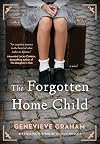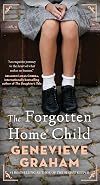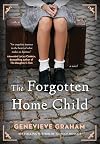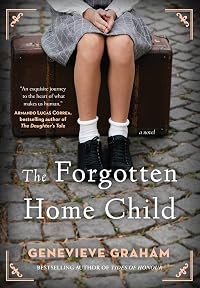
The Forgotten Home Child
by Genevieve Graham
On This Page
Description
The Home for Unwanted Girls meets Orphan Train in this unforgettable novel about a young girl caught in a scheme to rid England's streets of destitute children, and the lengths she will go to find her way home—based on the true story of the British Home Children.2018
At ninety-seven years old, Winnifred Ellis knows she doesn't have much time left, and it is almost a relief to realize that once she is gone, the truth about her shameful past will die with her. But when her great-grandson show more Jamie, the spitting image of her dear late husband, asks about his family tree, Winnifred can't lie any longer, even if it means breaking a promise she made so long ago...
1936
Fifteen-year-old Winny has never known a real home. After running away from an abusive stepfather, she falls in with Mary, Jack, and their ragtag group of friends roaming the streets of Liverpool. When the children are caught stealing food, Winny and Mary are left in Dr. Barnardo's Barkingside Home for Girls, a local home for orphans and forgotten children found in the city's slums. At Barkingside, Winny learns she will soon join other boys and girls in a faraway place called Canada, where families and better lives await them.
But Winny's hopes are dashed when she is separated from her friends and sent to live with a family that has no use for another daughter. Instead, they have paid for an indentured servant to work on their farm. Faced with this harsh new reality, Winny clings to the belief that she will someday find her friends again.
Inspired by true events, The Forgotten Home Child is a moving and heartbreaking novel about place, belonging, and family—the one we make for ourselves and its enduring power to draw us home. show less
Tags
Recommendations






Member Reviews
I didn’t know this story, a horrifying one for sure. Much like the unreported expulsion of all non-citizens and anyone with a Hispanic background in the US during the depression, there are nasty things not reported in our history books.
This makes Graham’s book vitally important. We need to have an accessible record of these historical mistakes/evils. Exporting children as slaves was both.
And this book is accessible. The writing is smooth, the characters are involving, the situations both realistic and horrifying. The book itself is perfect for young adult readers (and adult, but just broadening the catchment...). Though one situation involves a sexual situation, Graham carefully draws a veil over the actual events.
One of the lovely show more threads through the story is the long-term friendship, love, and loyalty between the characters. It is heartwarming, and I hope such ties did exist to support these isolated children. It’s also balancing to have some decent individuals reach out to help the youths, as I’m sure did happen.
Graham gives back stories to some characters that appear evil, describing the situation in which these families bought these children.
With the US government holding hundreds of children at the border (and adopting some out), this book about governments eagerly exporting their ‘problem’ individuals into toxic environments is a timely reminder of what can go wrong.
Please, may we have some more books from this author? Well worth a read, and highly recommended for those who want to know our history, even the shameful undersides. show less
This makes Graham’s book vitally important. We need to have an accessible record of these historical mistakes/evils. Exporting children as slaves was both.
And this book is accessible. The writing is smooth, the characters are involving, the situations both realistic and horrifying. The book itself is perfect for young adult readers (and adult, but just broadening the catchment...). Though one situation involves a sexual situation, Graham carefully draws a veil over the actual events.
One of the lovely show more threads through the story is the long-term friendship, love, and loyalty between the characters. It is heartwarming, and I hope such ties did exist to support these isolated children. It’s also balancing to have some decent individuals reach out to help the youths, as I’m sure did happen.
Graham gives back stories to some characters that appear evil, describing the situation in which these families bought these children.
With the US government holding hundreds of children at the border (and adopting some out), this book about governments eagerly exporting their ‘problem’ individuals into toxic environments is a timely reminder of what can go wrong.
Please, may we have some more books from this author? Well worth a read, and highly recommended for those who want to know our history, even the shameful undersides. show less
Wow, what a story! It was difficult to hear about all of these children and their lives in Canada but I learned so much. I wish I had read this book sooner. I loved the resilience of Winny and the other children in the book. I think having the present day timeline with Winny and her granddaughter gave the book the perspective to understand why the story of these children was not told sooner. Well done Genevieve Graham!
As you read The Forgotten Home Child written by Genevieve Graham, the most important thing to remember is that this fictional story is based on actual events. This book is well written, and the characters were soundly developed. What impressed me the most about this book was how impeccably and painstakingly the research was done. Ms. Graham uses real-life events to tell a heartbreaking story of how between 1869 to 1948, approximately 100,000 to 130,000 children were taken from England’s streets, orphanages, and homes and then shipped to other countries, under the guise of a better life. Some of these children’s stories were happy, but the majority of them ended in some tragedy. One of the countries these children were sent to was show more Canada. Unfortunately, the primary purpose these children were sent to Canada was to rid England of these unwanted children. Canada then embraced these children by making them indentured servants where they worked on farms or as domestic servants. These destitute children were between the ages of three and eighteen. Ms. Graham, a native of Canada, makes no excuses for the involvement of her country; when she came across this part of her country’s history, she was shocked and saddened and felt compelled to share the stories of the British Home Children.
In The Forgotten Home Child, Ms. Graham brings these children’s story to life, through the characters, Winny, Mary, Jack Cecil, and Edward. Ms. Graham takes the many stories she discovered through her research and applies them to these characters to tell this harrowing story of survival. As I read this novel, I fell in love with all these characters, who are authentic and believable. Ninety-seven-year-old Whinny narrates much of this story to her granddaughter and her great-grandson. Sharing her family history for the first time, Winny tells what happened in her life between 1936 to 2018. Through the writing of Ms. Graham, the humiliation and stigma these children endured daily is described in excruciating detail. These events which carried over and affected much of their adult lives are palpable throughout the entire book.
History does not always paint a pretty picture, but we must remember the mistakes that were made so that they are never repeated. There are over four million decedents of the British Home Children living across Canada. Everything you read in The Forgotten Home Child has happened to these children. This book was not always easy to read; there are many instances of child abuse. However, I believe it was necessary to give credence to this vital part of history. This book would work well in a book club setting as it lends itself to intense discussion. I highly recommend this book.
* I kindly received this galley by way of NetGalley, Simon & Schuster, and Genevieve Graham. I was not contacted, asked, or required to leave a review. I received no compensation, financial or otherwise. I have voluntarily read this book, and this review is my honest opinion. * show less
In The Forgotten Home Child, Ms. Graham brings these children’s story to life, through the characters, Winny, Mary, Jack Cecil, and Edward. Ms. Graham takes the many stories she discovered through her research and applies them to these characters to tell this harrowing story of survival. As I read this novel, I fell in love with all these characters, who are authentic and believable. Ninety-seven-year-old Whinny narrates much of this story to her granddaughter and her great-grandson. Sharing her family history for the first time, Winny tells what happened in her life between 1936 to 2018. Through the writing of Ms. Graham, the humiliation and stigma these children endured daily is described in excruciating detail. These events which carried over and affected much of their adult lives are palpable throughout the entire book.
History does not always paint a pretty picture, but we must remember the mistakes that were made so that they are never repeated. There are over four million decedents of the British Home Children living across Canada. Everything you read in The Forgotten Home Child has happened to these children. This book was not always easy to read; there are many instances of child abuse. However, I believe it was necessary to give credence to this vital part of history. This book would work well in a book club setting as it lends itself to intense discussion. I highly recommend this book.
* I kindly received this galley by way of NetGalley, Simon & Schuster, and Genevieve Graham. I was not contacted, asked, or required to leave a review. I received no compensation, financial or otherwise. I have voluntarily read this book, and this review is my honest opinion. * show less
This was the saddest book I've read in awhile. I'm glad I read it.
Did you know an estimated 100,000 - 120,000 children were trafficked from England to Canada, New Zealand, Australia, and elsewhere from around the 1860s-1948? And that 4 million Canadians today -- 12% of the population -- are estimated to descend from these kids?
A historical fiction, The Forgotten Home Child takes place during the mid-1930s (so, Depression-era) starting in London, England and then shifting to Ontario. Though the characters themselves are fictitious, they are based on real experiences of the Home Children.
The Home Children were in rare cases actual orphans, but in most cases, children to severely impoverished parents unable or unwilling to care for them. show more Orphanages sold off a surplus of these children to Canada, where they were indentured as servants until they turned 21. In this story, the kids were trained in various skills (boot making, cooking, sewing, etc) but in Canada, many were needed as farm laborers.
In this book, we follow five Home Children, and the story primarily focuses on Winny and Jack's experiences. These chapters are written in the third person. There are a handful of chapters in present day, told from Winny's perspective in the first person. The story takes us from 1936 to around 1952.
And oh, is this story a heart-breaker.
An excerpt (might be changed during final edits):
I cannot imagine what it must feel like to be so unwanted, so unloved, so unwelcome -- and to be further separated from your siblings and friends from the orphanage. The book made me think of my immigrant ancestors, my children, myself -- just trying to place myself in their situation, and it was rough. And then the shame that these people felt! There, but the grace of God, go I.
The story was beautifully written, and mercifully wasn't over-written (as so many historical fictions I've encountered). I came to know the characters and that time in history. I'd say the book leans more character-driven, with the ultimate plot of surviving/thriving in their circumstances pulling the story along. That, and the healing that can come with telling your truth to loved ones.
Some of the plot points I found a bit too convenient or otherwise unbelievable. But on the whole, I really appreciated this story and I'm glad I read it. These children should not be forgotten to history -- and I'd never known about the Home Children before reading this book.
Triggers abound in this story: child abuse of various kinds, rape (happens off-page), child taken away at birth, child death, World War II death and trauma, alcoholism, human trafficking, suicidal ideation, suicide.
Thanks to Netgalley and Simon & Schuster Canada for the free digital copy in exchange for my review. Pub date: March 2020. show less
Did you know an estimated 100,000 - 120,000 children were trafficked from England to Canada, New Zealand, Australia, and elsewhere from around the 1860s-1948? And that 4 million Canadians today -- 12% of the population -- are estimated to descend from these kids?
A historical fiction, The Forgotten Home Child takes place during the mid-1930s (so, Depression-era) starting in London, England and then shifting to Ontario. Though the characters themselves are fictitious, they are based on real experiences of the Home Children.
The Home Children were in rare cases actual orphans, but in most cases, children to severely impoverished parents unable or unwilling to care for them. show more Orphanages sold off a surplus of these children to Canada, where they were indentured as servants until they turned 21. In this story, the kids were trained in various skills (boot making, cooking, sewing, etc) but in Canada, many were needed as farm laborers.
In this book, we follow five Home Children, and the story primarily focuses on Winny and Jack's experiences. These chapters are written in the third person. There are a handful of chapters in present day, told from Winny's perspective in the first person. The story takes us from 1936 to around 1952.
And oh, is this story a heart-breaker.
An excerpt (might be changed during final edits):
“Careful not to touch them,” the other woman replied, placing a gloved hand on her friend’s elbow and turning her attention ahead. “You know what they say about these little gutter rats. They’re all diseased and contagious.” “It’s a travesty,” the first went on. “Shame on England for dumping their garbage on us, and shame on our government for actually paying for it. Can you imagine? I read somewhere that there’s thousands of these creatures infesting the country now, and they’re degenerates, every one of them. Criminals. You just know the girls will all end up as prostitutes, if they’re not already.”
I cannot imagine what it must feel like to be so unwanted, so unloved, so unwelcome -- and to be further separated from your siblings and friends from the orphanage. The book made me think of my immigrant ancestors, my children, myself -- just trying to place myself in their situation, and it was rough. And then the shame that these people felt! There, but the grace of God, go I.
"Only one person in the whole world knows my story, and he has been gone for fifteen long years. Not even my beautiful daughter Susan knew the humiliating truth about her parents. Chrissie and Jamie are watching me, waiting, and my heart races as if I am standing on the edge of a cliff. I am ashamed to tell my story, but now I have no choice. My family deserves a history. As much as I don’t want to talk about my past, I do not want them to wonder, as I always have, about their roots. I am haunted by the truth that I have kept from everyone I know, everyone I love. Everyone but him, of course."
The story was beautifully written, and mercifully wasn't over-written (as so many historical fictions I've encountered). I came to know the characters and that time in history. I'd say the book leans more character-driven, with the ultimate plot of surviving/thriving in their circumstances pulling the story along. That, and the healing that can come with telling your truth to loved ones.
Some of the plot points I found a bit too convenient or otherwise unbelievable. But on the whole, I really appreciated this story and I'm glad I read it. These children should not be forgotten to history -- and I'd never known about the Home Children before reading this book.
Triggers abound in this story: child abuse of various kinds, rape (happens off-page), child taken away at birth, child death, World War II death and trauma, alcoholism, human trafficking, suicidal ideation, suicide.
Thanks to Netgalley and Simon & Schuster Canada for the free digital copy in exchange for my review. Pub date: March 2020. show less
I had heard about Dr. Barnardo and the home children that came to Canada (and other places in the British Empire). Most notably, Will Ferguson's great book called Beyond Belfast mentioned them because Ferguson was descended from an Irish orphan who was cared for in the Barnardo home in Belfast. But I had never really heard anything much about the experience of the children once they came to Canada. This book fills in that gap.
Five young peopl were surviving on the streets of London in the 1930s. Not technically orphans because they had a surviving parent they were out on their own at a young age. Winny had left home because of her abusive stepfather and the others had similar stories or their families just couldn't afford to look after show more them. When they tried once too often to steal they were all picked up by the police and sent to Dr. Barnardo's homes. Winny and Mary go to The Barkingside Home for Girls while the three boys, Jack, Edward and Cecil, are put in a different home. The five are reunited though when they are all placed on the same ship to go to Canada. Jack and Mary are siblings as are Edward and Cecil and they all treat Winny like a sister so they are a close-knit group. They manage to stay together until they get to Toronto. Almost immediately the boys are sent to a farmer near London, ON. Winny and Mary go to separate farms near Peterborough. All of the children are treated like slave labour and only given the most basic of necessities. Winny's employer is a sister to the woman who has Mary so Winny eventually reunites with Mary but she is shocked by the change in her friend. Later she hears that Mary has been sent away from the farm because she has become pregnant, supposedly by one of the male home children at the same farm. But Winny knows that the male owner of the farm was bothering Mary and she thinks he is the father of her child. Winny confides her suspicions to her employer who tells her sister and when Mary comes back to the farm after giving birth she is left alone by the farmer. That only lasts for a while and when the sexual abuse starts up again Mary commits suicide. Winny makes a promise to find her son and raise him. Meanwhile the three boys and the other home child on the farm, Quinn, have been putting up with horrible living conditions but when their farmer almost beats Quinn to death they all leave the farm. They are lucky to wind up at the home of an old doctor and his wife who take the boys in. Unfortunately Quinn dies of his injuries. Soon after Jack starts riding the rails, picking up odd jobs across the country. He asks people he meets about Mary and Winny but never hears any news of them. When World War II breaks out Jack enlists and writes to Edward and Cecil suggesting they join him which they do. Winny has achieved her dream of becoming a nurse and also of finding and adopting Mary's son, Billy. We learn all this as flashbacks from 97 year old Winny describing to her granddaughter and great-grandson how she came to Canada, something she never talked about before.
I think Dr. Barnardo (and the other people who sent British children abroad) genuinely wanted the best for the children. However, with limited resources and staff, it seems like follow-up on the children's circumstances fell through the cracks. According to Library and Archives Canada, over 100,000 children came to Canada from Great Britain between 1869 and 1932. Many of these people, just like Winny, never talked about their experiences but geneologists and historians have done a lot of work to document at least 70,000. I confess I checked the records to see if any might be related because I have never really known how my ancestors came to Canada. If any of them were home children the records don't go back far enough to include the years when my great-grandparents were born so it's still a mystery. show less
Five young peopl were surviving on the streets of London in the 1930s. Not technically orphans because they had a surviving parent they were out on their own at a young age. Winny had left home because of her abusive stepfather and the others had similar stories or their families just couldn't afford to look after show more them. When they tried once too often to steal they were all picked up by the police and sent to Dr. Barnardo's homes. Winny and Mary go to The Barkingside Home for Girls while the three boys, Jack, Edward and Cecil, are put in a different home. The five are reunited though when they are all placed on the same ship to go to Canada. Jack and Mary are siblings as are Edward and Cecil and they all treat Winny like a sister so they are a close-knit group. They manage to stay together until they get to Toronto. Almost immediately the boys are sent to a farmer near London, ON. Winny and Mary go to separate farms near Peterborough. All of the children are treated like slave labour and only given the most basic of necessities. Winny's employer is a sister to the woman who has Mary so Winny eventually reunites with Mary but she is shocked by the change in her friend. Later she hears that Mary has been sent away from the farm because she has become pregnant, supposedly by one of the male home children at the same farm. But Winny knows that the male owner of the farm was bothering Mary and she thinks he is the father of her child. Winny confides her suspicions to her employer who tells her sister and when Mary comes back to the farm after giving birth she is left alone by the farmer. That only lasts for a while and when the sexual abuse starts up again Mary commits suicide. Winny makes a promise to find her son and raise him. Meanwhile the three boys and the other home child on the farm, Quinn, have been putting up with horrible living conditions but when their farmer almost beats Quinn to death they all leave the farm. They are lucky to wind up at the home of an old doctor and his wife who take the boys in. Unfortunately Quinn dies of his injuries. Soon after Jack starts riding the rails, picking up odd jobs across the country. He asks people he meets about Mary and Winny but never hears any news of them. When World War II breaks out Jack enlists and writes to Edward and Cecil suggesting they join him which they do. Winny has achieved her dream of becoming a nurse and also of finding and adopting Mary's son, Billy. We learn all this as flashbacks from 97 year old Winny describing to her granddaughter and great-grandson how she came to Canada, something she never talked about before.
I think Dr. Barnardo (and the other people who sent British children abroad) genuinely wanted the best for the children. However, with limited resources and staff, it seems like follow-up on the children's circumstances fell through the cracks. According to Library and Archives Canada, over 100,000 children came to Canada from Great Britain between 1869 and 1932. Many of these people, just like Winny, never talked about their experiences but geneologists and historians have done a lot of work to document at least 70,000. I confess I checked the records to see if any might be related because I have never really known how my ancestors came to Canada. If any of them were home children the records don't go back far enough to include the years when my great-grandparents were born so it's still a mystery. show less
When Winny is young, she finds herself in the streets of London and finds friends in Mary, Jack, Cecil and Edward. They are caught stealing one day and are taken to an orphanage. From there, they eventually are sent to Canada, where they will be sent out to families and should have a better life. They are split up, but vow to find each other again.
Apparently, between the mid-1800s and up to 1948(?) over 100,000 children – the British Home Children – were sent to Canada. Sadly, for the majority of these kids, it was not a better life. Many (most) were neglected, malnourished, abused. They were indentured servants and most were not treated well.
In the book, Winny is actually 90-some years old, and having been ashamed of her show more background all these years, she never told her family. But, the book goes back and forth between Winny telling her granddaughter and great-grandson her story and, of course, the story itself: Winny and her friends in the 1930s and through WWII.
This was very interesting. I had never heard of the British Home Children, and that’s why the author wanted to write the story. It’s not taught in schools, and many of the kids sent over kept their stories to themselves, so it’s not well-known. The author includes a good historical note at the end. The author used examples from many of the people she talked to – things that really happened. It was a quick read, but I hope I don’t forget it soon. show less
Apparently, between the mid-1800s and up to 1948(?) over 100,000 children – the British Home Children – were sent to Canada. Sadly, for the majority of these kids, it was not a better life. Many (most) were neglected, malnourished, abused. They were indentured servants and most were not treated well.
In the book, Winny is actually 90-some years old, and having been ashamed of her show more background all these years, she never told her family. But, the book goes back and forth between Winny telling her granddaughter and great-grandson her story and, of course, the story itself: Winny and her friends in the 1930s and through WWII.
This was very interesting. I had never heard of the British Home Children, and that’s why the author wanted to write the story. It’s not taught in schools, and many of the kids sent over kept their stories to themselves, so it’s not well-known. The author includes a good historical note at the end. The author used examples from many of the people she talked to – things that really happened. It was a quick read, but I hope I don’t forget it soon. show less
This is a story that needs to be told about a forgotten part of Canadian history. I did not know that over 100,000 orphaned children were shipped over to Canada from England between 1869 to 1948. The poverty in England during this time was very high, and many children were orphaned or abandoned by their families. The orphanages were full to overflowing, so it seemed a way to offer these children a better life in another country. They were indentured to families in Canada, then promptly forgotten. There was no follow-up to all these placements, and these children were kept in appalling conditions, and made to work on farms for very little food and often made to sleep in barns and outbuildings Many died from privation or exposure. Those show more that survivied had great difficulty trying to fit into normal life when their indenture was over and they were released from their captivity. This book is baed on true events, and the story of these hundreds of thousads of children is told through the recollections of five fictional children who were picked up off the streets of London. The two girls were placed in a girls orphanage and the three boys placed in the boys orphanage. All were emigrated to Canada and placed in terrible homes. The book is about their survival (or, in some cases, their deaths). The story time frame 1935 to the present day and told from two different viewpoints. When 97 year old Winny tells her story to her granddaughter and her great-grandson they had no idea what their grandmother had suffered. The story needs to be told about this shameful part of Canadian history, and I appreicate the research that Genevieve Graham put into this book. Unfortunately, the book did not engage me like it should have because I felt that the writing was average and acked depth. Thus the three stars i have given it. Thanks to Ms. Graham for writing this story and opening my eyes to something that I wasn't aware of. Thanks for all her research and the time it must have taken, not to mention the toll it must have taken on her well-being. It is a difficult thing to read about, never mind having to talk to people that experienced it first hand. This story belongs on a shelf, front and centre, along with Residential schools and other horrific things that our Canadian childen suffered during a brutal time in history. show less
Members
- Recently Added By
Lists

Canadian Historical Fiction 🇨🇦
157 works; 8 members

Globe and Mail | Canadian Fiction: October 12, 2024
10 works; 1 member
Globe and Mail | Canadian Fiction: October 19, 2024
10 works; 1 member

Globe and Mail | Canadian Fiction: October 26, 2024
10 works; 1 member
Globe and Mail | Canadian Fiction: November 2, 2024
10 works; 1 member
Author Information

13 Works 932 Members
Some Editions
Classifications
- Genres
- Fiction and Literature, Historical Fiction, General Fiction
- DDC/MDS
- 813.6 — Literature & rhetoric American literature in English American fiction in English 2000-
- LCC
- PZ7 .M768 .G734 — Language and Literature Fiction and juvenile belles lettres Fiction and juvenile belles lettres Juvenile belles lettres
- BISAC
Statistics
- Members
- 201
- Popularity
- 162,845
- Reviews
- 15
- Rating
- (4.20)
- Languages
- English
- Media
- Paper, Audiobook, Ebook
- ISBNs
- 7
- ASINs
- 3