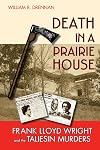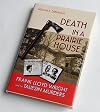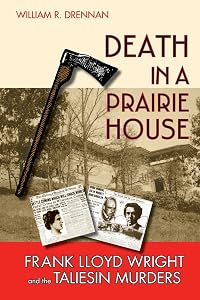
Death in a Prairie House: Frank Lloyd Wright and the Taliesin Murders
by William R. Drennan
On This Page
Description
The most pivotal and yet least understood event of Frank Lloyd Wright's celebrated life involves the brutal murders in 1914 of seven adults and children dear to the architect and the destruction by fire of Taliesin, his landmark residence, near Spring Green, Wisconsin. Unaccountably, the details of that shocking crime have been largely ignored by Wright's legion of biographers—a historical and cultural gap that is finally addressed in William Drennan's exhaustively researched Death in a show more Prairie House: Frank Lloyd Wright and the Taliesin Murders.In response to the scandal generated by his open affair with the proto-feminist and free love advocate Mamah Borthwick Cheney, Wright had begun to build Taliesin as a refuge and "love cottage" for himself and his mistress (both married at the time to others).
Conceived as the apotheosis of Wright's prairie house style, the original Taliesin would stand in all its isolated glory for only a few months before the bloody slayings that rocked the nation and reduced the structure itself to a smoking hull.
Supplying both a gripping mystery story and an authoritative portrait of the artist as a young man, Drennan wades through the myths surrounding Wright and the massacre, casting fresh light on the formulation of Wright's architectural ideology and the cataclysmic effects that the Taliesin murders exerted on the fabled architect and on his subsequent designs.
Best Books for General Audiences, selected by the American Association of School Librarians, and Outstanding Book, selected by the Public Library Association
. show less
Tags
Recommendations



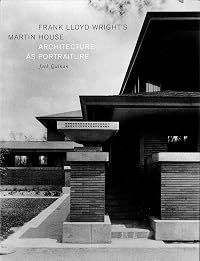

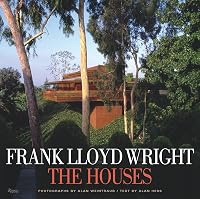
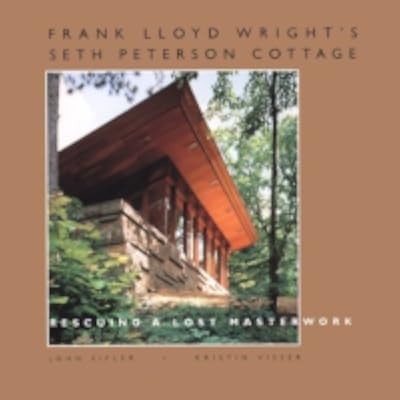

















Member Recommendations
bnbookgirl Frank Lloyd Wright
bnbookgirl Frank Lloyd Wright
Member Reviews
I read Loving Frank by Nancy Horan a few years ago and wanted to see if by chance Frank Lloyd Wright might be painted with a kinder palate, perhaps shades of pastel instead of grey and dark black.
Alas, Frank remains a very complicated, narcissistic, sociopathic, intelligent user.
When Frank left behind a wife and six children to run away with his mistress, he never looked back.
Likewise his lover Mamah Borthwick, left her husband and her two children. Long a feminist and free spirit, it appeared that moving with Frank and shedding her previous life was easy.
Frank could not comprehend the down right animosity and disdain the neighboring communities of Spring Green, Wisconsin would have for him.
Adding fuel to the fire, Frank spoke freely show more to the newspapers and stated that while lessor men, not as intelligent as he, needed rules to follow because basically, they were not capable of their own decisions, he was superior and was destined to a higher order and calling.
Using the transcendental writings and thoughts of Emerson, Frank justified his behaviors. Borrowing huge sums of money, with no intent of return from those he could charm, and in addition taking advance large commissions long before he even started projects, Frank was indeed a huckster.
With no care of how his actions impacted on those who needed to be paid for services and materials, Frank told them not to worry about it, because he didn't worry at all.
Building an exquisite prairie house where Frank and Mamah could live, townsfolk called it their den of sin.
Taliesin stood for a mere few months until a very tragic, horrific event occurred.
Julian Carlton, the only black servant, was in his mind sorely mistreated. In particular, one of the builders was indeed incessantly cruel.
Known for fits of bad temper, in August of 1914, while Frank was away supervising construction of a massive garden and edifice, Carlton brutally took a hatchet to the back of Mamah's head.
In addition, he meted the same treatment to her children who happened to be visiting at the time. Her ten year old daughter and twelve year old son died as a result.
Setting fire to Taliesin while co-workers were locked into a room, Carlton then hacked them when they tried to escape.
In the end, the toll was seven who lost their lives.
Grief stricken, Frank took a train back to Spring Green to see that most of his beautiful house was in ashes and to observe what was left of the bodies.
So hated in the community, at first there was speculation that he was responsible because perhaps he grew weary of his lover.
Within a year, Frank remarried. After reconstruction of Taliesin it again suffered a fire.
Frank's legacy of unique cantalevored structures still exists today.
After the fires, Frank's houses were designed more like fortresses made of concrete.
While it is easy to judge the man and his self absorbtion, likewise, it is not difficult to admire his creations and unique architectural achievements. show less
Alas, Frank remains a very complicated, narcissistic, sociopathic, intelligent user.
When Frank left behind a wife and six children to run away with his mistress, he never looked back.
Likewise his lover Mamah Borthwick, left her husband and her two children. Long a feminist and free spirit, it appeared that moving with Frank and shedding her previous life was easy.
Frank could not comprehend the down right animosity and disdain the neighboring communities of Spring Green, Wisconsin would have for him.
Adding fuel to the fire, Frank spoke freely show more to the newspapers and stated that while lessor men, not as intelligent as he, needed rules to follow because basically, they were not capable of their own decisions, he was superior and was destined to a higher order and calling.
Using the transcendental writings and thoughts of Emerson, Frank justified his behaviors. Borrowing huge sums of money, with no intent of return from those he could charm, and in addition taking advance large commissions long before he even started projects, Frank was indeed a huckster.
With no care of how his actions impacted on those who needed to be paid for services and materials, Frank told them not to worry about it, because he didn't worry at all.
Building an exquisite prairie house where Frank and Mamah could live, townsfolk called it their den of sin.
Taliesin stood for a mere few months until a very tragic, horrific event occurred.
Julian Carlton, the only black servant, was in his mind sorely mistreated. In particular, one of the builders was indeed incessantly cruel.
Known for fits of bad temper, in August of 1914, while Frank was away supervising construction of a massive garden and edifice, Carlton brutally took a hatchet to the back of Mamah's head.
In addition, he meted the same treatment to her children who happened to be visiting at the time. Her ten year old daughter and twelve year old son died as a result.
Setting fire to Taliesin while co-workers were locked into a room, Carlton then hacked them when they tried to escape.
In the end, the toll was seven who lost their lives.
Grief stricken, Frank took a train back to Spring Green to see that most of his beautiful house was in ashes and to observe what was left of the bodies.
So hated in the community, at first there was speculation that he was responsible because perhaps he grew weary of his lover.
Within a year, Frank remarried. After reconstruction of Taliesin it again suffered a fire.
Frank's legacy of unique cantalevored structures still exists today.
After the fires, Frank's houses were designed more like fortresses made of concrete.
While it is easy to judge the man and his self absorbtion, likewise, it is not difficult to admire his creations and unique architectural achievements. show less
A detailed history of the largest mass killing in Wisconsin history, that made national news not only for its brutality but for the fame and infamy of those involved. The murder took place in Frank Lloyd Wright's home in which he had ensconced his mistress after an extremely messy separation from his wife.
The locals were shocked and appalled by his conduct and, indeed, the entire country was astonished at his bold and amoral behavior. Despite local gossip, and national scandal, affairs in Taliesin were quiet and retiring. But the explosive murders of those staying there would shortly land Wright in the limelight again.
This detailed history dives deeply into the coverage of the crimes at the time, utilizing primary sources and reasoning show more through a web of rumors, speculation, and misinformation. It also serves as an abbreviated biography of Wright himself, at least in regard to how the murders came about and how they would go on to impact his life and career. show less
The locals were shocked and appalled by his conduct and, indeed, the entire country was astonished at his bold and amoral behavior. Despite local gossip, and national scandal, affairs in Taliesin were quiet and retiring. But the explosive murders of those staying there would shortly land Wright in the limelight again.
This detailed history dives deeply into the coverage of the crimes at the time, utilizing primary sources and reasoning show more through a web of rumors, speculation, and misinformation. It also serves as an abbreviated biography of Wright himself, at least in regard to how the murders came about and how they would go on to impact his life and career. show less
A riveting, read in two sittings book, but not a great book. It was a more sympathetic portrait of Wright than I expected and yet there seemed to be a lot of (academic?) agenda simmering just underneath the narrative. There's quite a bit of pursed lip head shaking, tsk tsk-ing and vaguely pejorative characterizations of other accounts of the crime, the murderer and his motives. I kept hoping he'd expand or include some primary sources, like court transcripts or witness statements, but though the book appears to be meticulously researched, he buries his sources in the copious footnotes chapter.
It really is a wonder these murders aren't the first thing we associate with Frank Lloyd Wright -- a testament his genius, I suppose, that when we show more hear his name we think of Falling Water, prairie houses and geometrical stained glass, not seven hacked and burned human beings and a ruined work of art. show less
It really is a wonder these murders aren't the first thing we associate with Frank Lloyd Wright -- a testament his genius, I suppose, that when we show more hear his name we think of Falling Water, prairie houses and geometrical stained glass, not seven hacked and burned human beings and a ruined work of art. show less
Short historical account of the Taliesin murders. If you have read [b:Loving Frank A Novel|898885|Loving Frank A Novel|Nancy Horan|http://photo.goodreads.com/books/1179285637s/898885.jpg|3345089] I suggest reading this concurrently. Or perhaps afterwards. Historically-based novels always bring out a thirst in me to find out what really happened. Wright was not a very nice man, but even so, his flight to Europe with the wife of a client remains puzzling and Nancy Horan's novel provides as reasonable an explanation as anything else since we have very little about her. Wright himself barely noted her existence in his notes.
The murders themselves, a servant/employee ran amok killing Mamah and her children as well as some other construction show more workers, may well have had an enormous influence on changing Wright's architectural style, which became much more fortress-like.This is an excellent companion book to Loving Frank. It provides a wealth of factual detail that supplements Horam's excellent novel. The irony is that apparently people in southern Wisconsin still believe that Wright was the murderer in spite of overwhelming evidence to the contrary. Clearly his years of stiffing the local merchants did not help his reputation.
The author suggests that the fire and murders at Taliesen were far more important than the mere facts of the case. "The murders involved the century's single most important residential design and the country's most celebrated and distinctive architect." Mahma was well on her way to becoming a prominent feminist. The fire also destroyed Wright's folio of drawings, which, Drennan suggests, set back Wright's fame in the United States by years. Drennan proposes more importantly, that because of the fire, Wright's designs became "more insular, more labyrinthine, even more fortress-like. . . [and:] the slaughter at Taliesen may well have exerted a significant influence on American residential design throughout the remainder of the twentieth century." (p. 6)
Lots of information, but only 3 stars because it felt a little rushed and could have provided more detail, I think. show less
The murders themselves, a servant/employee ran amok killing Mamah and her children as well as some other construction show more workers, may well have had an enormous influence on changing Wright's architectural style, which became much more fortress-like.This is an excellent companion book to Loving Frank. It provides a wealth of factual detail that supplements Horam's excellent novel. The irony is that apparently people in southern Wisconsin still believe that Wright was the murderer in spite of overwhelming evidence to the contrary. Clearly his years of stiffing the local merchants did not help his reputation.
The author suggests that the fire and murders at Taliesen were far more important than the mere facts of the case. "The murders involved the century's single most important residential design and the country's most celebrated and distinctive architect." Mahma was well on her way to becoming a prominent feminist. The fire also destroyed Wright's folio of drawings, which, Drennan suggests, set back Wright's fame in the United States by years. Drennan proposes more importantly, that because of the fire, Wright's designs became "more insular, more labyrinthine, even more fortress-like. . . [and:] the slaughter at Taliesen may well have exerted a significant influence on American residential design throughout the remainder of the twentieth century." (p. 6)
Lots of information, but only 3 stars because it felt a little rushed and could have provided more detail, I think. show less
History and true crime? Two of my favorite things! Except for the fact that Drennan throughout the book kind of gives the impression that he thinks Wright's mistress deserved what she got (which was an axe in the head, by the way) for living in sin in such a lovely place as Spring Green. WTF. The architectural analysis at the end was pretty thin, too; I think the guy really just wanted to write a thriller but didn't want to sacrifice his academic credentials to do it. Still entertaining, for all the author's bias.
The story of the Taliesin Murders. It was very informative yet it took a long time for the author to get to the point. He was super careful to include every possible point of view or insight from everyone involved. This made the reading tedious. Basically, too many words to say what happened.
Frank Lloyd Wright's home, Taliesin, is the subject of William R. Drennan's book, Death in a Prairie House.
I visited Taliesin in August 2022 in Spring Green, Wis., hometown of Frank Lloyd Wright. I took a flight to Chicago and an inexpensive Coach USA bus that travels from O'Hare Airport to Janesville, Wis. From there, I took a cab for the 45-minute ride to Spring Green.
Taliesin sits in the middle of a hilly rural region. The visitor center overlooks a river that divides two counties.
A bus took my tour group from the visitor center to the outbuildings and home. The tour is of the third version of the home.
Death in a Prairie House describes a set of murders that took place on the grounds. As a backdrop, here's what Wright had to say show more about the murders in his book, An Autobiography.
John Vogelsang worked with Wright on Midway Gardens. He recommended Julian Carlton, the supposed murderer, to Wright and said he was “an ideal servant.”
Wright had a disagreement with Vogelsang in Chicago while they were working on Midway Gardens. Wright stated, “Money troubles now. Anxiety. Anger. But still hopes and active promises aplenty.” He was in this frame of mind when the murders occurred.
Is there a possibility that Wright had an anger problem? We know from Death in a Prairie House that his mother did. She was accused of beating a child on the back with a rubber mallet. We know that she was unhappy with Wright over his marriage to Catherine Tobin. Throughout his life, Wright seemed to have problems separating from his paramours without conflict.
According to Wright's book, An Autobiography, he stayed, alone, after the murders, at Taliesin. He had one person standing guard with a rifle while he stayed there. He said the sky was black and there was no spiritual presence of the deceased. Mamah Cheney was “utterly gone.” Perhaps he was trying to extract her, like a spirit, from the home.
Wright and his son John buried her in an unmarked grave at his family cemetery. He was buried there, instead of at Taliesin West, next to Mamah Cheney’s grave. Olgivanna’s daughter had him exhumed and buried in Taliesin West.
Miriam Noel was Wright’s next paramour. She had written to Wright as a fan. He had burned all of the letters sent to him, unread, about Mamah Cheney’s murder. He accepted Noel’s letter and agreed to meet with her in person.
Their affair lasted several months. Then, like the Mamah Cheney affair, trouble occurred. In this case, Miriam Noel was high-strung and often emotionally disturbed. She was difficult to get along with. He eventually separated from her.
A second fire occurred at Taliesin thereafter. The “living half of Taliesin” always burned, he recalled. The work half or studio remained each time. This was an indication that no matter how fiery his personal relationships, his professional ones remained intact.
Miriam Noel died in a sanitorium after being in a coma several months. Wright called to make sure she was deceased. He said in his book that she was insane. By then, he had remarried and was with Olgivanna Lloyd Wright.
Death in a Prairie House is a great book to contemplate Frank Lloyd Wright's character and personal history. Form your own conclusions about the mysterious murders after reading this book.
Taliesin is a great source to learn about Frank Lloyd Wright, southern Wisconsin, and Usonian architecture. Tours are offered of the estate, house, and landscape. Prices range from $25 to $93. Hours are 8:30 a.m. to 5:30 p.m. daily.
Taliesin
5607 County Road C
Spring Green, WI 53588
(608) 588-7900
tours@taliesinpreservation.org
taliesinpreservation.org
Buy on Amazon: https://www.amazon.com/Death-Prairie-House-Taliesin-Murders/dp/0299222144 show less
I visited Taliesin in August 2022 in Spring Green, Wis., hometown of Frank Lloyd Wright. I took a flight to Chicago and an inexpensive Coach USA bus that travels from O'Hare Airport to Janesville, Wis. From there, I took a cab for the 45-minute ride to Spring Green.
Taliesin sits in the middle of a hilly rural region. The visitor center overlooks a river that divides two counties.
A bus took my tour group from the visitor center to the outbuildings and home. The tour is of the third version of the home.
Death in a Prairie House describes a set of murders that took place on the grounds. As a backdrop, here's what Wright had to say show more about the murders in his book, An Autobiography.
John Vogelsang worked with Wright on Midway Gardens. He recommended Julian Carlton, the supposed murderer, to Wright and said he was “an ideal servant.”
Wright had a disagreement with Vogelsang in Chicago while they were working on Midway Gardens. Wright stated, “Money troubles now. Anxiety. Anger. But still hopes and active promises aplenty.” He was in this frame of mind when the murders occurred.
Is there a possibility that Wright had an anger problem? We know from Death in a Prairie House that his mother did. She was accused of beating a child on the back with a rubber mallet. We know that she was unhappy with Wright over his marriage to Catherine Tobin. Throughout his life, Wright seemed to have problems separating from his paramours without conflict.
According to Wright's book, An Autobiography, he stayed, alone, after the murders, at Taliesin. He had one person standing guard with a rifle while he stayed there. He said the sky was black and there was no spiritual presence of the deceased. Mamah Cheney was “utterly gone.” Perhaps he was trying to extract her, like a spirit, from the home.
Wright and his son John buried her in an unmarked grave at his family cemetery. He was buried there, instead of at Taliesin West, next to Mamah Cheney’s grave. Olgivanna’s daughter had him exhumed and buried in Taliesin West.
Miriam Noel was Wright’s next paramour. She had written to Wright as a fan. He had burned all of the letters sent to him, unread, about Mamah Cheney’s murder. He accepted Noel’s letter and agreed to meet with her in person.
Their affair lasted several months. Then, like the Mamah Cheney affair, trouble occurred. In this case, Miriam Noel was high-strung and often emotionally disturbed. She was difficult to get along with. He eventually separated from her.
A second fire occurred at Taliesin thereafter. The “living half of Taliesin” always burned, he recalled. The work half or studio remained each time. This was an indication that no matter how fiery his personal relationships, his professional ones remained intact.
Miriam Noel died in a sanitorium after being in a coma several months. Wright called to make sure she was deceased. He said in his book that she was insane. By then, he had remarried and was with Olgivanna Lloyd Wright.
Death in a Prairie House is a great book to contemplate Frank Lloyd Wright's character and personal history. Form your own conclusions about the mysterious murders after reading this book.
Taliesin is a great source to learn about Frank Lloyd Wright, southern Wisconsin, and Usonian architecture. Tours are offered of the estate, house, and landscape. Prices range from $25 to $93. Hours are 8:30 a.m. to 5:30 p.m. daily.
Taliesin
5607 County Road C
Spring Green, WI 53588
(608) 588-7900
tours@taliesinpreservation.org
taliesinpreservation.org
Buy on Amazon: https://www.amazon.com/Death-Prairie-House-Taliesin-Murders/dp/0299222144 show less
Members
- Recently Added By
Lists

True Crime
216 works; 16 members
Author Information

1 Work 287 Members
William R. Drennan is professor emeritus of English at the University of Wisconsin-Baraboo/Sauk County and adjunct instructor in the Department of English at Appalachian State University, in Boone, North Carolina
Common Knowledge
- People/Characters
- Frank Lloyd Wright; Mamah Borthwick Cheney
- Important places
- Taliesin, Spring Green, Wisconsin, USA
- Epigraph
- It would be easy to regard [his] personal inconsistencies as mere pecadilloes that fade into irrelevancy when set against Wright's undeniably brilliant artistic achievements. Certainly there is much to be learned by moving ... (show all)beyond the distractions of his formidable personality to confront his buildings directly. The trouble, unfortunately, is that Wright himself clearly believed his architecture to be an organic expression of the very personality that, in many ways, seems so problematic.--William Cronon. // Those who are alive receive a mandate from those who are silent forever. They can fulfill their duties only be trying to reconstruct precisely things as they were and by wresting the past from fiction and legends.--Czelaw Milosz
- Blurbers
- Christofferson, Bill; Jacobsen, Craig; Lind, Carla
Classifications
- Genres
- Nonfiction, Art & Design, General Nonfiction, Biography & Memoir, History
- DDC/MDS
- 364.152 — Society, government, & culture Social problems and social services Crime Criminal offenses Offenses against the person Homicide
- LCC
- NA737 .W7 .D74 — Fine Arts 2599.5-2599.9 Architectural criticism Architecture History
- BISAC
Statistics
- Members
- 287
- Popularity
- 112,258
- Reviews
- 11
- Rating
- (3.48)
- Languages
- English
- Media
- Paper, Ebook
- ISBNs
- 6
- ASINs
- 2