
On This Page
Description
Stolen jewels, secret identities, and death abound in this sparkling tale of suspense set in Victorian England, from New York Times bestselling author Tasha Alexander. London's social season is in full swing, and Victorian aristocracy can't stop whispering about a certain gentleman who claims to be the direct descendant of Louis XVI and Marie Antoinette. But he's not the only topic of wagging tongues. Drawing rooms, boudoirs, and ballrooms are abuzz with the latest news of an audacious cat show more burglar who has been systematically stealing valuable items that once belonged to the ill-fated queen. Light gossip turns serious when the owner of one of the pilfered treasures is found murdered, and the mysterious thief develops a twisted obsession with Lady Emily Ashton. It will take all of Lady Emily's wit and perseverance to unmask her stalker and ferret out the murderer, while faced with a brewing scandal that threatens both her reputation and her romance with her late husband's best friend, the dashing Colin Hargreaves. show lessTags
Recommendations



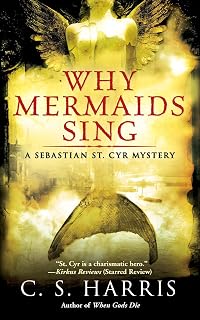
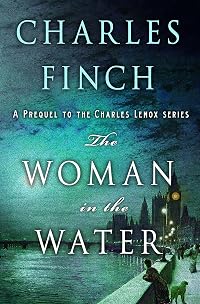
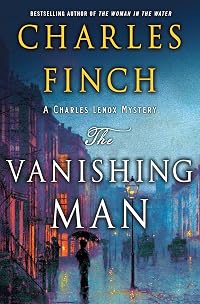
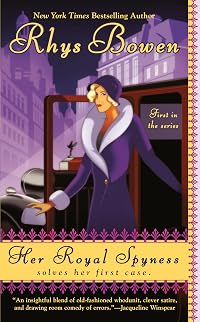


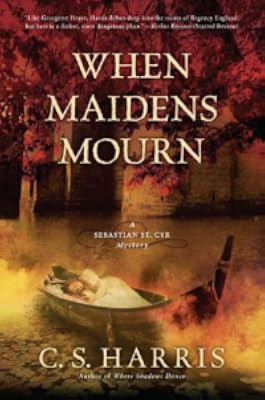
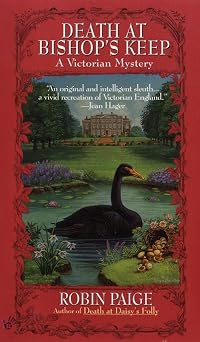
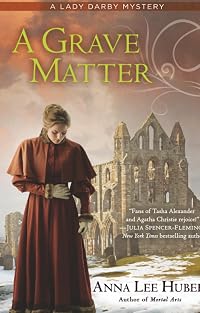
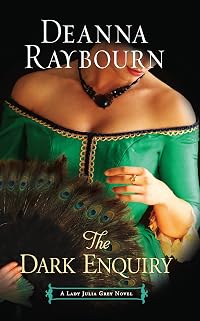




Member Recommendations
Member Reviews
I picked this up without realizing that it was the second book in the Lady Emily series, but it provided enough explanation of what went on in the first book that it didn't matter much.
I don't really read mysteries (I can probably count the mysteries I've read on one hand) but I love the Edwardian period, so I thought I'd give it a chance. I certainly didn't guess either of the mysteries in the book, but I have to say that more than the desire to see who dunnit, I kept reading because I thoroughly enjoyed Emily as a heroine and Colin as her romantic hero.
Aside from a few bits of dialogue that seemed a bit modern to me, the author seemed ot have a very good grasp on society and fashion etc of the period. More importantly (since this is show more the part that a lot of writers of historical fiction neglect) I thought she also did a very good job of staying true to the tone and mores of the times. Like most heroines in historical fiction, Emily has some 'unlady-like' hobbies (the study of Greek) but what I liked about this book is that it actually showed how these hobbies would reflect on her character to the rest of society. In fact, a good deal of the plot turns on how her unconventional hobbies (including sleuthing), desire for independence and lack of desire to get married to Colin, despite how much she love (and is attracted) to him all combine to give her a pretty scandalous reputation, which she shes repercussions for. I also like how the author managed to portray some really nice UST between Emily and Colin while staying true to the conventions of the times. (Colin decides that he shouldn't kiss her (any more) until she's agreed to be his wife, for example.)
I would definitely pick up the next volume of the series.
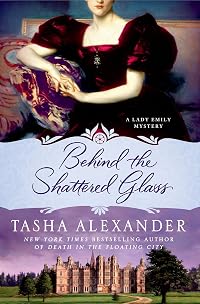
Also, I want to say how much I LOVE the cover of the book. It fits perfectly, and kept me wanting to pick it up again. show less
I don't really read mysteries (I can probably count the mysteries I've read on one hand) but I love the Edwardian period, so I thought I'd give it a chance. I certainly didn't guess either of the mysteries in the book, but I have to say that more than the desire to see who dunnit, I kept reading because I thoroughly enjoyed Emily as a heroine and Colin as her romantic hero.
Aside from a few bits of dialogue that seemed a bit modern to me, the author seemed ot have a very good grasp on society and fashion etc of the period. More importantly (since this is show more the part that a lot of writers of historical fiction neglect) I thought she also did a very good job of staying true to the tone and mores of the times. Like most heroines in historical fiction, Emily has some 'unlady-like' hobbies (the study of Greek) but what I liked about this book is that it actually showed how these hobbies would reflect on her character to the rest of society. In fact, a good deal of the plot turns on how her unconventional hobbies (including sleuthing), desire for independence and lack of desire to get married to Colin, despite how much she love (and is attracted) to him all combine to give her a pretty scandalous reputation, which she shes repercussions for. I also like how the author managed to portray some really nice UST between Emily and Colin while staying true to the conventions of the times. (Colin decides that he shouldn't kiss her (any more) until she's agreed to be his wife, for example.)
I would definitely pick up the next volume of the series.
Also, I want to say how much I LOVE the cover of the book. It fits perfectly, and kept me wanting to pick it up again. show less
There is a lot happening in London this season -
Lady Ashton has earned the questionable esteem of society's own jewel thief who has been targeting treasures that once belonged to Marie Antoinette. When one of the victims of burglary turns up dead, however, Emily finds herself drawn into the investigation - and not always as discreetly as she might hope.
In addition, heaps of condemnation are being heaped on Emily Ashton's head for dallying with two of the ton's most eligible gentlemen: Colin Hargreaves and Jeremy, Duke of Bainbridge, one of her childhood friends. Her bluestocking inclinations and her disinclination to heed the strictures of polite society make her fodder for the gossips. And her attempts to help her friend Ivy in her show more troubled marriage don't turn out well at all.
I have a weakness for historical mysteries - I love Amelia Peabody and Emily Ashton (though aside from a desire to actually employ their brains, there's not much similar between the two sleuths). I enjoy Lady Ashton's interest in cryptography, her love of Greek, and even more I love Colin for helping her figure out various mysteries and helping her when needed instead of insisting she remain packed in cotton wool. He shows an immense respect for her intellectual abilities (along with concern for her physical well-being), and I love that in a hero. Plus, I'm highly amused by the kissing embargo that he institutes until she accepts his proposal of marriage! They are a delightful pair, and I'm looking forward to spending more time with them in the next book.
The mystery itself is very clever as well. There were several interesting twists and turns, and nothing turned out quite the way I expected. At the same time, I didn't feel as if I'd been manipulated or kept in the dark regarding the outcome of the mystery - which is difficult to pull off simultaneously.
This book referenced the affair of the necklace (which I know little about, but which interests me) and caused me to find The Lost King of France - a book about DNA evidence solving the mystery of the lost dauphin - sure to be an interesting read! show less
Lady Ashton has earned the questionable esteem of society's own jewel thief who has been targeting treasures that once belonged to Marie Antoinette. When one of the victims of burglary turns up dead, however, Emily finds herself drawn into the investigation - and not always as discreetly as she might hope.
In addition, heaps of condemnation are being heaped on Emily Ashton's head for dallying with two of the ton's most eligible gentlemen: Colin Hargreaves and Jeremy, Duke of Bainbridge, one of her childhood friends. Her bluestocking inclinations and her disinclination to heed the strictures of polite society make her fodder for the gossips. And her attempts to help her friend Ivy in her show more troubled marriage don't turn out well at all.
I have a weakness for historical mysteries - I love Amelia Peabody and Emily Ashton (though aside from a desire to actually employ their brains, there's not much similar between the two sleuths). I enjoy Lady Ashton's interest in cryptography, her love of Greek, and even more I love Colin for helping her figure out various mysteries and helping her when needed instead of insisting she remain packed in cotton wool. He shows an immense respect for her intellectual abilities (along with concern for her physical well-being), and I love that in a hero. Plus, I'm highly amused by the kissing embargo that he institutes until she accepts his proposal of marriage! They are a delightful pair, and I'm looking forward to spending more time with them in the next book.
The mystery itself is very clever as well. There were several interesting twists and turns, and nothing turned out quite the way I expected. At the same time, I didn't feel as if I'd been manipulated or kept in the dark regarding the outcome of the mystery - which is difficult to pull off simultaneously.
This book referenced the affair of the necklace (which I know little about, but which interests me) and caused me to find The Lost King of France - a book about DNA evidence solving the mystery of the lost dauphin - sure to be an interesting read! show less
I picked this up without realizing that it was the second book in the Lady Emily series, but it provided enough explanation of what went on in the first book that it didn't matter much.
I don't really read mysteries (I can probably count the mysteries I've read on one hand) but I love the Edwardian period, so I thought I'd give it a chance. I certainly didn't guess either of the mysteries in the book, but I have to say that more than the desire to see who dunnit, I kept reading because I thoroughly enjoyed Emily as a heroine and Colin as her romantic hero.
Aside from a few bits of dialogue that seemed a bit modern to me, the author seemed ot have a very good grasp on society and fashion etc of the period. More importantly (since this is show more the part that a lot of writers of historical fiction neglect) I thought she also did a very good job of staying true to the tone and mores of the times. Like most heroines in historical fiction, Emily has some 'unlady-like' hobbies (the study of Greek) but what I liked about this book is that it actually showed how these hobbies would reflect on her character to the rest of society. In fact, a good deal of the plot turns on how her unconventional hobbies (including sleuthing), desire for independence and lack of desire to get married to Colin, despite how much she love (and is attracted) to him all combine to give her a pretty scandalous reputation, which she shes repercussions for. I also like how the author managed to portray some really nice UST between Emily and Colin while staying true to the conventions of the times. (Colin decides that he shouldn't kiss her (any more) until she's agreed to be his wife, for example.)
I would definitely pick up the next volume of the series.
Also, I want to say how much I LOVE the cover of the book. It fits perfectly, and kept me wanting to pick it up again. show less
I don't really read mysteries (I can probably count the mysteries I've read on one hand) but I love the Edwardian period, so I thought I'd give it a chance. I certainly didn't guess either of the mysteries in the book, but I have to say that more than the desire to see who dunnit, I kept reading because I thoroughly enjoyed Emily as a heroine and Colin as her romantic hero.
Aside from a few bits of dialogue that seemed a bit modern to me, the author seemed ot have a very good grasp on society and fashion etc of the period. More importantly (since this is show more the part that a lot of writers of historical fiction neglect) I thought she also did a very good job of staying true to the tone and mores of the times. Like most heroines in historical fiction, Emily has some 'unlady-like' hobbies (the study of Greek) but what I liked about this book is that it actually showed how these hobbies would reflect on her character to the rest of society. In fact, a good deal of the plot turns on how her unconventional hobbies (including sleuthing), desire for independence and lack of desire to get married to Colin, despite how much she love (and is attracted) to him all combine to give her a pretty scandalous reputation, which she shes repercussions for. I also like how the author managed to portray some really nice UST between Emily and Colin while staying true to the conventions of the times. (Colin decides that he shouldn't kiss her (any more) until she's agreed to be his wife, for example.)
I would definitely pick up the next volume of the series.
Also, I want to say how much I LOVE the cover of the book. It fits perfectly, and kept me wanting to pick it up again. show less
I thoroughly enjoyed this second outing of Lady Emily; I was sucked back into her society from the first page. No more guilt-ridden, moony angst! But it was not without its issues and shortcomings.
A Poisoned Season picks up where the last book And Only to Deceive leaves off - Emily has returned from Greece in time for the London Season but still chafes against the rules set out for polite society. There's a pretender to the French throne in town, a cat burglar, and a murder - all contributing to the enlivenment of the season. In an attempt to help out her American friend Margaret, she unwittingly makes herself the focus of scandalous rumours concerning an illicit affair between herself and the Duke of Bainbridge. Colin is trying to show more stop a coup d'etat. Her best friend Ivy is having marital problems, and let's not forget the wager between Lady Emily and Colin...
I think the author tried to weave too many threads into the story. Bainbridge is so prominent as to be considered a main character in the first half of the book - then he all but disappears without so much as a line of dialogue between himself and Emily. Perhaps we'll see him again in a future book, but the reader isn't given any indication of that. Also, there's a growing animosity towards Lady Emily on the part of Robert's boss, culminating with a nasty scene at Ivy's ball - but it's never explained. What was up with that?!?
Mostly, though, I just enjoyed the story and the mystery(ies). The murder mystery was exceptionally well done. I was totally bamboozled; talk about Machiavellian planning. The secondary mysteries were entertaining, but not overly impressive; the identity of one of the characters was evident from the first clue.
If I found Colin less than swoon-worthy in the first book, I was a true convert by the end of this one. He's my idea of a romantic hero: confident enough of his own identity to be completely at ease with a strong, independent female. His gift at the end of the book was inspired for both it's real value and its metaphorical one. If I didn't like Lady Emily, he alone might be reason enough for me to keep reading. show less
A Poisoned Season picks up where the last book And Only to Deceive leaves off - Emily has returned from Greece in time for the London Season but still chafes against the rules set out for polite society. There's a pretender to the French throne in town, a cat burglar, and a murder - all contributing to the enlivenment of the season. In an attempt to help out her American friend Margaret, she unwittingly makes herself the focus of scandalous rumours concerning an illicit affair between herself and the Duke of Bainbridge. Colin is trying to show more stop a coup d'etat. Her best friend Ivy is having marital problems, and let's not forget the wager between Lady Emily and Colin...
I think the author tried to weave too many threads into the story. Bainbridge is so prominent as to be considered a main character in the first half of the book - then he all but disappears without so much as a line of dialogue between himself and Emily. Perhaps we'll see him again in a future book, but the reader isn't given any indication of that. Also, there's a growing animosity towards Lady Emily on the part of Robert's boss, culminating with a nasty scene at Ivy's ball - but it's never explained. What was up with that?!?
Mostly, though, I just enjoyed the story and the mystery(ies). The murder mystery was exceptionally well done. I was totally bamboozled; talk about Machiavellian planning. The secondary mysteries were entertaining, but not overly impressive; the identity of one of the characters was evident from the first clue.
If I found Colin less than swoon-worthy in the first book, I was a true convert by the end of this one. He's my idea of a romantic hero: confident enough of his own identity to be completely at ease with a strong, independent female. His gift at the end of the book was inspired for both it's real value and its metaphorical one. If I didn't like Lady Emily, he alone might be reason enough for me to keep reading. show less
The second book in the Emily Ashton series, I’ve always suspected that second books in a series are hard to writer, but Alexander manages it very well. Emily is an engaging central character, curious, fearless and unconventional, I love her spats with her rigidly conventional mother, the scene where she takes tea with Queen Victoria and her mother is a delight.
The mystery is interesting and I’m pleased to say that I didn’t guess the identity of the murderer until very late in the book. But Emily’s relationships with those around her are at the heart of the book. Her burgeoning relationship with Colin, man of mystery, is great, although his determination to keep to the rigid social conventions is annoying, and doesn’t save show more Emily from being at the centre of a scandal. But most of all I love the friendships with Margaret, as she waits to go up to Oxford, and Emily, married to a man with political aspirations who tries to prevent his wife reading the latest sensation novels, Emily, of course, has other ideas.
There are a few anachronisms which grate on this British reader, but otherwise this was a fun and fast read and I’m moving straight on to the third book in the series. show less
The mystery is interesting and I’m pleased to say that I didn’t guess the identity of the murderer until very late in the book. But Emily’s relationships with those around her are at the heart of the book. Her burgeoning relationship with Colin, man of mystery, is great, although his determination to keep to the rigid social conventions is annoying, and doesn’t save show more Emily from being at the centre of a scandal. But most of all I love the friendships with Margaret, as she waits to go up to Oxford, and Emily, married to a man with political aspirations who tries to prevent his wife reading the latest sensation novels, Emily, of course, has other ideas.
There are a few anachronisms which grate on this British reader, but otherwise this was a fun and fast read and I’m moving straight on to the third book in the series. show less
I love it when authors capture the tone and speech patterns of books set in the Victorian Period. It's an incredible challenge and success is an accomplishment. I thoroughly enjoyed this relatively tame romp through the social set of the time. I liked the heroine's unique position, independent and yet challenged by her position nonetheless. I'm looking for more books in the series!
Expanding on the first, we have a women who is walking the line between member of society and bluestocking and trying to craft our modern ideals of what a women is now, onto what a women was in the 1890s. A fine line that I think Ms. Alexander doesn't always hold well to, but fails more than she succeeds.
We also have to place in context the leading man, who, in the first book we did not even know existed as a possible worthy suitor for any lady, and someone our heroine, well connected, had no idea of until she married. Now, in this book, the hero is one of the two most eligible men in England. And rumors, since our writer is american, that his family refused a title on two separate occasions, even though they have been in England since show more before William.
Somethings just don't ring true.
The mystery this time out is stronger with red herrings and plot twists and though the premise one needs to suspend their disbelief, the journey is fun. The series remains engaging. Some historical tightening and good sense, not pandering to modern day assumptions, would make it better yet. show less
We also have to place in context the leading man, who, in the first book we did not even know existed as a possible worthy suitor for any lady, and someone our heroine, well connected, had no idea of until she married. Now, in this book, the hero is one of the two most eligible men in England. And rumors, since our writer is american, that his family refused a title on two separate occasions, even though they have been in England since show more before William.
Somethings just don't ring true.
The mystery this time out is stronger with red herrings and plot twists and though the premise one needs to suspend their disbelief, the journey is fun. The series remains engaging. Some historical tightening and good sense, not pandering to modern day assumptions, would make it better yet. show less
Members
- Recently Added By
Published Reviews
ThingScore 100
The author deftly works in background material pertinent to Emily's life as well as period detail that never slows the narrative. Emily sometimes behaves in unlikely ways. . . , but readers looking for a lighter version of Anne Perry will be well rewarded.
added by 4leschats
Lists

Detective/Mystery Fiction set in the Gilded Age
12 works; 6 members

Best Historical Crime
44 works; 17 members

Majkia's Mystery/ Thriller TBR
86 works; 3 members
Author Information

29+ Works 8,650 Members
Tasha Alexander is a graduate of Notre Dame. Following graduation, she traveled for several years, eventually settling with her family in Tennessee. When not reading, she can be found hard at work writing. She is the author of the bestselling Emily Ashton Series. She also wrote the novelization for Elizabeth: The Golden Age. (Bowker Author show more Biography) show less

Tasha Alexander is a LibraryThing Author, an author who lists their personal library on LibraryThing.
Series

Work Relationships
Common Knowledge
- Canonical title
- A Poisoned Season
- Original publication date
- 2007-04-10
- People/Characters
- Emily Ashton; Colin Hargreaves; Sebastian Capet; Margaret Seward; Ivy Brandon; Cecile du Lac (show all 8); Jeremy Sheffield, Duke of Bainbridge; Lady Elinor Routledge
- Important places
- London, England, UK
- Epigraph
- At last the secret is out, as it always must come in the end, the delicious story is ripe to tell to the intimate friend; over the tea-cups and in the square the tongue has its desire; still waters run deep, my dear, there's ... (show all)never smoke without fire. Behind the corpse in the reservoir, behind the ghost on the links, behind the lady who dances and the man who madly drinks, under the look of fatigue, the attack of a migraine and the sigh there is always another story, there is more than meets the eye. For the clear voice suddenly singing, high up in the convent wall, the scent of elder bushes, the sporting prints in the hall, the croquet matches in summer, the handshake, the cough, the kiss, there is always a wicked secret, a private reason for this.--W.H. Auden
- Dedication
- For Xander, who prefers his books read aloud.
- First words
- There are several things one can depend upon during the London Season: an overwhelming barrage of invitations, friends whose loyalties turn suspect, and at least one overzealous suitor.
- Quotations
- "I'm to meet Margaret here," he said, dropping into a chair after greeting the two of us with perfect politeness. "It's exhausting arranging these clandestine meetings for public consumption."
"I hope it was the gentleman. I didn't like the docent's beard."
"Really?"
"Too scruffy."
"Is that so? I was thinking of growing one. It might look fashionable." He rubbed his smooth chin.
"Since when are you conc... (show all)erned with fashion?"
"A wife, Emily, might be able to influence matters concerning her husband's appearance. As it is, I have no one to answer to but myself. I'd look quite distinguished with a beard."
"I shan't dignify that with a response," I said.
"I'm beginning to despise my no-kissing policy," he said, leaning so close to me that our heads nearly touched.
"Only beginning to despise it? I've deplored it from the moment you adopted it."
We stopped in front of a decent, middle-class house, nothing at all like I had expected. I must confess that my reaction horrified me. For all that I thought I was enlightened, liberated, free from the ignorant biases of soci... (show all)ety, I had judged this woman from the moment I knew she was having an affair with someone else's husband.
"Can't do that, madam. I offer my clients absolute confidentiality."
Apparently, absolute confidentiality was worth somewhere in the vicinity of six shillings. - Last words
- (Click to show. Warning: May contain spoilers.)I can say without hesitation that all the time I'd waited had served only to heighten the moment; never before had there been such a kiss.
- Publisher's editor
- Civiletto, Jennifer (HarperCollins Books)
- Blurbers
- Clinch, Jon; Spencer-Fleming, Julia; Vantrease, Brenda Rickman; Harris, C.S.; Thompson, Victoria; Healey, Judith Koll (show all 8); Cowell, Stephanie; Tallman, Shirley
Classifications
Statistics
- Members
- 1,117
- Popularity
- 22,794
- Reviews
- 52
- Rating
- (3.82)
- Languages
- English, Spanish
- Media
- Paper, Audiobook, Ebook
- ISBNs
- 11
- ASINs
- 6