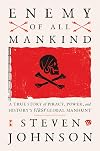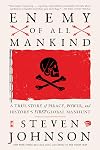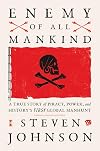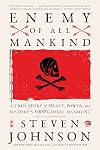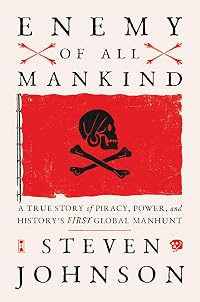
Enemy of All Mankind: A True Story of Piracy, Power, and History's First Global Manhunt
by Steven Johnson
On This Page
Description
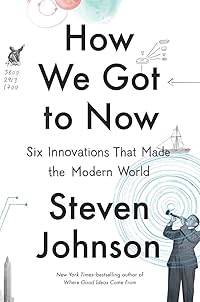
"How did a single manhunt spark the modern era of multinational capitalism? Henry Avery was the seventeenth century's most notorious pirate. The press published wildly popular--and wildly inaccurate--reports of his nefarious adventures. The British government offered enormous bounties for his capture, alive or (preferably) dead. But Steven Johnson argues that Avery's most lasting legacy was his inadvertent triggering of a new model for the global economy. Enemy of All Mankind focuses on one show more key event--the attack of an Indian treasure ship by Avery and his crew--and its surprising repercussions across time and space. Johnson uses the extraordinary story of Henry Avery and his crimes to explore the emergence of the modern global marketplace: a densely interconnected planet ruled by nations and corporations. Like the bestselling How We Got To Now and The Ghost Map, Enemy of All Mankind crosses disciplinary boundaries to recount its history: the chemistry behind the invention of gunpowder; the innovations in navigation that enabled the age of exploration; the cultural history of pirates; the biographical history of Avery and his crew; the rise of the Moghul dynasty; and the commercial ambition of the East India Company. In this compelling work of history and ideas, Johnson deftly traces the path from a single struck match to a global conflagration"-- show lessTags
Recommendations









Member Reviews
"...few human beings had ever captured the imagination of so many strangers around the world without commanding an army, presiding over a major religious sect or being born with royal blood."
Henry Every was one of the richest pirates in history and not how you'd expect. Instead of vying for Spanish Treasure Fleets, Every took his men to Madagascar. In the 17th century, India and the Mughal Empire, boasted the richest kingdom in the world. Despite the East India Co.'s attempts to dominate, the Grand Mughal Aurangzeb kept them on a tight leash. But whatever beneficial relationship the British had soon crumbled after Every took the Ganj-i-Sawai. The "Ganj-i-Sawai" or Gunsway, was massive, far larger than Every's "Fancy" and carried an show more astounding amount of treasure as well as pilgrims from Mecca. These were all noblewomen of Aurangzeb's own family. What happens next, as Every's men took the ship, I won't describe in detail. Suffice it to say Aurangzeb anger could not be contained. The East India factory in Surat was seized and an international bounty was put on Every's head.
While I can't seem to find the perfect biography of Every, this one is still better than "The Pirate King." Unlike "The Pirate King," Johnson does not try to romanticize Every in any way. The men "were r*pists of the worst order" and as captain, Every bears full responsibility. Referring to Indian narrative and survivor testimonies, Johnson effectively dispels the myth of Every as the "Robin Hood" of the seas. In fact, Every also promised to never attack English ships, but he did. Using an alias, he even money launders some of his loot in exchange for slaves, the "universal currency," to sell in the colonies. While Johnson included so much that is often ignored or glossed over, it did help that I had read Woodard and Cordingly first. It needed just a bit more leading into the Golden Age. show less
Henry Every was one of the richest pirates in history and not how you'd expect. Instead of vying for Spanish Treasure Fleets, Every took his men to Madagascar. In the 17th century, India and the Mughal Empire, boasted the richest kingdom in the world. Despite the East India Co.'s attempts to dominate, the Grand Mughal Aurangzeb kept them on a tight leash. But whatever beneficial relationship the British had soon crumbled after Every took the Ganj-i-Sawai. The "Ganj-i-Sawai" or Gunsway, was massive, far larger than Every's "Fancy" and carried an show more astounding amount of treasure as well as pilgrims from Mecca. These were all noblewomen of Aurangzeb's own family. What happens next, as Every's men took the ship, I won't describe in detail. Suffice it to say Aurangzeb anger could not be contained. The East India factory in Surat was seized and an international bounty was put on Every's head.
While I can't seem to find the perfect biography of Every, this one is still better than "The Pirate King." Unlike "The Pirate King," Johnson does not try to romanticize Every in any way. The men "were r*pists of the worst order" and as captain, Every bears full responsibility. Referring to Indian narrative and survivor testimonies, Johnson effectively dispels the myth of Every as the "Robin Hood" of the seas. In fact, Every also promised to never attack English ships, but he did. Using an alias, he even money launders some of his loot in exchange for slaves, the "universal currency," to sell in the colonies. While Johnson included so much that is often ignored or glossed over, it did help that I had read Woodard and Cordingly first. It needed just a bit more leading into the Golden Age. show less
I like a good pirate story and this is a good one! Vast oceans, a bit of mutiny, fabulous treasure in exotic locales, and finally a bit of mystery.
The least appealing part of this book was the frequent hand wringing over slavery, rape, and colonialism. I don't think any of those were good things and I realize that contemporary writers are obliged to make some sort of statement abhorring all three if they feature in their work at all. I think Johnson goes on about them a bit too much. Slavery gets a lot of text, but really does not seem to be central to the story. There is a connection. Slaves were a major part of international trade in the 17th-19th centuries and any story about pirates, trade, and the new world will have some show more connection to slavery. This is on the short side for a history. Maybe the moralizing is there to bulk it up a little? show less
The least appealing part of this book was the frequent hand wringing over slavery, rape, and colonialism. I don't think any of those were good things and I realize that contemporary writers are obliged to make some sort of statement abhorring all three if they feature in their work at all. I think Johnson goes on about them a bit too much. Slavery gets a lot of text, but really does not seem to be central to the story. There is a connection. Slaves were a major part of international trade in the 17th-19th centuries and any story about pirates, trade, and the new world will have some show more connection to slavery. This is on the short side for a history. Maybe the moralizing is there to bulk it up a little? show less
Enemy of All Mankind: A True Story of Piracy, Power, and History's First Global Manhunt by Steven Johnson is a very highly recommended account of Henry Every, the seventeenth century’s most notorious pirate.
"In the case of these two ships confronting each other in the Indian Ocean, those nearly microscopic causes will trigger a wave of effects that resonate around the world. Most confrontations like this one, viewed from the wide angle of history, are minor disputes, sparks that quickly die out. But every now and then, someone strikes a match that lights up the whole planet. This is the story of one of those strikes."
In September 1695, English pirate and mutineer Henry Every, captain of the Fancy, attacked and seized a Grand Mughal show more treasure ship returning to India from Mecca. This act, one of the most lucrative crimes in history (about $20 million today), had global ramifications and sparked the first international manhunt and the trial of the 17th century. Every's name is even somewhat disputed. It may have been "John Avery" but he also briefly went by Benjamin Bridgeman. It is agreed that he was born near Plymouth, in Devonshire, on the southwest coast of England in the late 1650s.
Johnson also covers the history of piracy before Every, starting with the Sea People in the Bronze Age, up to Every's act that triggered of a major shift in the global economy in the emerging power of the expanding British Empire, the East India Company, and the modern global marketplace. While the British Crown put a huge price on Every's head, only five of his crew were arrested, tried twice, and hanged. Every's daring piracy and escape also marked the spread of his fame as a working class hero. He and his crew became celebrities of a sort and legends, even inspiring a song.
As expected, Enemy of All Mankind is a fascinating, well-researched, and thoroughly enjoyable account of a little known pirate and the repercussions of his actions. I completely enjoyed reading this detailed examination of how one act of piracy placed in a historical context reverberate across centuries and had far-reaching consequences. Like Johnson's other books, this narrative is highly readable making it interesting to both the curious and history buffs and shows how one event can result in lasting, far-reaching consequences.
Disclosure: My review copy was courtesy of Penguin Random House.
http://www.shetreadssoftly.com/2020/05/enemy-of-all-mankind.html
https://www.goodreads.com/review/show/3329080789 show less
"In the case of these two ships confronting each other in the Indian Ocean, those nearly microscopic causes will trigger a wave of effects that resonate around the world. Most confrontations like this one, viewed from the wide angle of history, are minor disputes, sparks that quickly die out. But every now and then, someone strikes a match that lights up the whole planet. This is the story of one of those strikes."
In September 1695, English pirate and mutineer Henry Every, captain of the Fancy, attacked and seized a Grand Mughal show more treasure ship returning to India from Mecca. This act, one of the most lucrative crimes in history (about $20 million today), had global ramifications and sparked the first international manhunt and the trial of the 17th century. Every's name is even somewhat disputed. It may have been "John Avery" but he also briefly went by Benjamin Bridgeman. It is agreed that he was born near Plymouth, in Devonshire, on the southwest coast of England in the late 1650s.
Johnson also covers the history of piracy before Every, starting with the Sea People in the Bronze Age, up to Every's act that triggered of a major shift in the global economy in the emerging power of the expanding British Empire, the East India Company, and the modern global marketplace. While the British Crown put a huge price on Every's head, only five of his crew were arrested, tried twice, and hanged. Every's daring piracy and escape also marked the spread of his fame as a working class hero. He and his crew became celebrities of a sort and legends, even inspiring a song.
As expected, Enemy of All Mankind is a fascinating, well-researched, and thoroughly enjoyable account of a little known pirate and the repercussions of his actions. I completely enjoyed reading this detailed examination of how one act of piracy placed in a historical context reverberate across centuries and had far-reaching consequences. Like Johnson's other books, this narrative is highly readable making it interesting to both the curious and history buffs and shows how one event can result in lasting, far-reaching consequences.
Disclosure: My review copy was courtesy of Penguin Random House.
http://www.shetreadssoftly.com/2020/05/enemy-of-all-mankind.html
https://www.goodreads.com/review/show/3329080789 show less
The central narrative of this book – the story of the man who may have been called Henry Every, and who in 1694 carried out an act of piracy against a treasure ship of the Mughal emperor Aurangzeb - hangs on a very slender historical thread; which is why the author has had to pad it out with a great deal of collateral history. For all that it is a bit of a potpourri, the story is told in good potboiler fashion, and the author’s excursions into the history of the Mughals, piracy in general, the invention of the joint stock company, and other topics vaguely connected to the central story, do sustain the reader’s interest.
All that is known for sure about Every is that he led a mutiny, making off with a fast merchantman, of which he show more was first mate, in the harbor of La Coruna Spain, and then attacking and plundering the treasure ship in the Indian Ocean. Nothing certain is known about about his origins or early years, and the last sighting of him was in the Bahamas a few months after the attack, where he dumped the stolen ship and eventually made his way back - presumably to the British Isles. Because the treasure ship was carrying some high-ranking members of the the Mughal court – possibly including a granddaughter of the emperor – back from a pilgrimage to Mecca, and as the pirates were known to be English, the emperor took reprisals against the British East India Company. The Company had not yet reached that later stage in which it became the effective ruler of the subcontinent; at this point, its operations were still at the pleasure of the Mughal emperor. The owners and board members in London were sufficiently alarmed at its possible expulsion from India – which, as the author points out, would have changed the whole later course of Indian history – that they convinced the government to make the capture and punishment of Every and his crew official British government policy. Five members of Every’s crew were subsequently arrested in England and hanged following a show trial at the Old Bailey; Every himself was never found or punished, and became a subject of many legendary stories and popular ballads throughout the 18th century.
Although the author seems to have a good grasp of the early modern period, his knowledge of earlier periods is far less certain. It may seem like a quibble, but his chapter locating the origins of piracy in the so-called Sea Peoples of the Late Bronze Age is very misleading. The Sea Peoples were not, as the author presents them, prototype pirates “living an entirely nautical existence”. They were only known as Sea People because, to the Egyptians and other people of the Levant who recorded their unwelcome arrival, they came from the Sea. The “prevailing theory” is not that they were a collection of refugees from Mycenean Greece; it is considered much more likely that, although there were clearly cultural connections to Mycene, they came from much farther east, the Aegean area and mainland Asian Minor. The most well-known element among the Sea People, the Philistines - whose name is still perpetuated in the country once known as Palestine - readily abandoned their boats to settle down in the fertile coastal plain of the the southern Levant. Even the idea of piracy, in an age when there was no concept of territorial sovereignty – let alone a “Law of the Sea” - and when people routinely took whatever they could by force, is anachronistic. One could also mention his assertion that “the last vestiges of the Roman Empire were toppled by AD 650”, ignoring its survival as Byzantium for a further 800 years. Or, in discussing the origins of Islam and the Haj, the “seven thousand years” since Abraham had divine vision. But I won’t.
It’s a good read; the author provides very vivid descriptions of life at sea in the 17th century, and of pirate society. He probably exaggerates the historical significance of the central event. But who cares? show less
All that is known for sure about Every is that he led a mutiny, making off with a fast merchantman, of which he show more was first mate, in the harbor of La Coruna Spain, and then attacking and plundering the treasure ship in the Indian Ocean. Nothing certain is known about about his origins or early years, and the last sighting of him was in the Bahamas a few months after the attack, where he dumped the stolen ship and eventually made his way back - presumably to the British Isles. Because the treasure ship was carrying some high-ranking members of the the Mughal court – possibly including a granddaughter of the emperor – back from a pilgrimage to Mecca, and as the pirates were known to be English, the emperor took reprisals against the British East India Company. The Company had not yet reached that later stage in which it became the effective ruler of the subcontinent; at this point, its operations were still at the pleasure of the Mughal emperor. The owners and board members in London were sufficiently alarmed at its possible expulsion from India – which, as the author points out, would have changed the whole later course of Indian history – that they convinced the government to make the capture and punishment of Every and his crew official British government policy. Five members of Every’s crew were subsequently arrested in England and hanged following a show trial at the Old Bailey; Every himself was never found or punished, and became a subject of many legendary stories and popular ballads throughout the 18th century.
Although the author seems to have a good grasp of the early modern period, his knowledge of earlier periods is far less certain. It may seem like a quibble, but his chapter locating the origins of piracy in the so-called Sea Peoples of the Late Bronze Age is very misleading. The Sea Peoples were not, as the author presents them, prototype pirates “living an entirely nautical existence”. They were only known as Sea People because, to the Egyptians and other people of the Levant who recorded their unwelcome arrival, they came from the Sea. The “prevailing theory” is not that they were a collection of refugees from Mycenean Greece; it is considered much more likely that, although there were clearly cultural connections to Mycene, they came from much farther east, the Aegean area and mainland Asian Minor. The most well-known element among the Sea People, the Philistines - whose name is still perpetuated in the country once known as Palestine - readily abandoned their boats to settle down in the fertile coastal plain of the the southern Levant. Even the idea of piracy, in an age when there was no concept of territorial sovereignty – let alone a “Law of the Sea” - and when people routinely took whatever they could by force, is anachronistic. One could also mention his assertion that “the last vestiges of the Roman Empire were toppled by AD 650”, ignoring its survival as Byzantium for a further 800 years. Or, in discussing the origins of Islam and the Haj, the “seven thousand years” since Abraham had divine vision. But I won’t.
It’s a good read; the author provides very vivid descriptions of life at sea in the 17th century, and of pirate society. He probably exaggerates the historical significance of the central event. But who cares? show less
Great pirate story, with plenty of adventure and atrocities. I didn't realize this was the same author as Ghost Map, which I also really enjoyed years ago. I'll keep my eye out for others by him because they are informative and fascinating. Don't let the ship worms send you to Davey Jones' locker!
This is the first book I've read by Steven Johnson and I'm not sure if I care for his style. He genuinely tries to incorporate a lot of information and spells out how events that took place over 300 years ago still have ramification for how the world functions today. I understand too the need to try to set the tone for the environment of the late 17th century, it just doesn't flow. He jumps all over the place and it is just a little too abrupt, one page your with the pirates, next page you one to the Grand Mughal and then you off to one of the clerks of the East India Company. All very interesting information, but just not presented very well.
I enjoyed this book a lot. An interesting story about how one dramatic heist changed global law and economics.
Members
- Recently Added By
Lists

Non-Fiction Worth Reading
1,015 works; 261 members

True Crime
156 works; 1 member
Author Information

19+ Works 16,019 Members
Common Knowledge
- People/Characters
- Henry Every; Jeanne Louise de Belleville; Vice Admiral John Lawson; William Hawkins; King James I; Grand Mughal Jahangir (show all 33); Thomas Roe; Thomas Phillips; James Houblon; Andres Garsia Cassada; John Strong; Charles Gibson; Joseph Gravet; Thomas Druit; David Creagh; William May; John Dann; Edward Forsyth; Philip Middleton; John Sparkes; William Bishop; William Dampier; Grand Mughal Shah Jahan; Khafi Khan; Prince Dara; Joseph Dawson; Josiah Child; Samuel Annesley; Thomas Tew; John Gayer; Nicholas Trott; Robert Blackborne; Abdur Razzak
- Important places
- Newton Ferrers, Devonshire, England, UK; Bolan Pass, Balochistan, Pakistan; Algiers, Sidi M'Hamed District, Algiers Province, Algeria; Surat, Gujarat, India; Delhi, India; A Coruña, Galicia, Spain (show all 14); Yarmouth, Norfolk, England, UK; London, England, UK; Fernando Po, Gulf of Guinea; Perim, Yemen, Strait of Mandeb; Maydh, Sanaag, Somaliland; Bombay, Maharashtra, India; Réunion Island, Indian Ocean; Nassau, New Providence, Bahamas
- Important events
- The Vagabond Act (1597); Treaty of London (1604); Proclamation for the Apprehension of Pirates (1701)
- Epigraph
- Elegant and excellent was the pirate's answer to the great Macedonian Alexander, who had taken him: the king asking him how he dare molest the seas so, he replied with a free spirit, "How dare thou molest the whole world? But... (show all) because I do with a little ship only, I am called a thief: thou doing it with a great navy, art called an emperor. - St. Augustine, The City of God
Suffer pirates and the commerce of the world must cease. - Henry Newton - Dedication
- For Alexa
- First words
- On a clear day, the lookout perched atop the forty-foot mainmast of the Mughal treasure ship can see almost ten miles before hitting the visual limits of the horizon line.
- Last words
- (Click to show. Warning: May contain spoilers.)The offer of clemency applied to every single royal subject who had turned to piracy, except one: Henry Every.
Classifications
- Genres
- History, General Nonfiction, Nonfiction, Travel, Biography & Memoir
- DDC/MDS
- 910.4 — History & geography Geography & travel modified standard subdivisions of Geography and travel Pirates & Shipwrecks
- LCC
- G537 .A9 .J64 — Geography, Anthropology and Recreation Geography (General) Adventures, shipwrecks, buried treasure, etc.
- BISAC
Statistics
- Members
- 405
- Popularity
- 76,541
- Reviews
- 11
- Rating
- (3.69)
- Languages
- English, Spanish
- Media
- Paper, Audiobook, Ebook
- ISBNs
- 10
- ASINs
- 3