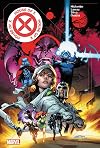
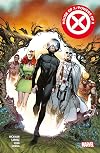
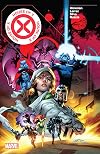
House of X/Powers of X
by Jonathan Hickman (Writer), Pepe Larraz (Illustrator), R. B. Silva (Illustrator)
House of X (2019) (1-6 & Powers of X 1-6 collected), Powers of X (2019) (1-6 & House of X 1-6 collected)
On This Page
Description
Collects Powers Of X #1-6, House Of X #1-6. Face the future - and fear the future - as superstar writer Jonathan Hickman (Infinity, New Avengers, Fantastic Four) changes everything for the X-Men! In House Of X, Charles Xavier reveals his master plan for mutantkind - one that will bring mutants out of humankind's shadow and into the light once more! Meanwhile, Powers Of X reveals mutant kind's secret history, changing the way you will look at every X-Men story before and after. But as Xavier show more sows the seeds of the past, the X-Men's future blossoms into trouble for all of mutantdom. Stories intertwine on an epic scale as Jonathan Hickman reshapes the X-Men's past, present and future!. show lessTags
Recommendations














Member Reviews
Jonathan Hickman's total relaunch of the X-Men mythos in 2019, otherwise known as the Krakoan Age which was to last in publishing terms through to 2024, is imaginatively masterful, so dense in its myth-making that it will eventually require a second reading.
It starts the new cycle as a massive reference text in which a 'present' (the creation of Krakoa) offsets a 'long future' or 'futures'. Hickman managed to draw relatively recent futurist speculation about the post-human into his core story of evolutionary competition between humans and mutants.
What was once a narrative about repression and cruelty that owed a great deal historically to a coming-to-terms with the crimes of national socialism has switched into a narrative of show more evolutionary struggle where one might be nervous of transformed national socialist tropes re-emerging.
In the older narratives mutants were persecuted victims but in the new they are a power in their own right engaged in a more equal struggle for dominance, initially intending to be moral but becoming less so out of necessity as humanity struggles to retain its species-dominant position.
The struggle is just a precursor to new states of being where post-humanity is not humanity at all and this post-humanity is destined for immersion in new forms of being that mean the end of all struggle. To cease to struggle is the end of evolution for both sides.
Where we end up can be seen as awe-inspiring or terrifying but Hickman creates an extremely clever multiversal model that offers more than one outcome, allowing the mythos to expand in one or many competing and conflicting directions, some in the novels and others to come.
Is Krakoa a form of futurist Israel? It is interesting to set it alongside the futurist and isolationist Wakanda. Is Krakoa caught up in struggle as victim or as perpetrator after the initial genocide of its type, with the genocided now enabled to become resurrected in a striking and distinctive eschatology?
There are many cultural tropes from our history but also from science being worked here into a creative whole. One is tempted to use the word 'genius' about Hickman. It is the sort of work that requires just a few paragraphs (as here) or a complete exegesis.
One might say that, in a wholly capitalist context (Marvel Publishing), Hinkman's market is responsive enough that he has been enabled to create a mythos that is transitional between a jaded Judaeo-Christianity and an inchoate transhumanism which definitely has religious leanings.
The two connected graphic novels are rhetorical ethical statements as obscure as those of the New Testament except that we know that it is all invention and not spiritual reality (if that even exists). The moral ambiguities of the tale are never resolved but force the reader into troubling thoughts.
Yes, it is just a set of comic books with all the posing and nonsense of a superhero universe but then most tales of gods and monsters are nonsense and made up of posturing, out of which our anxieties are expressed and our doubts and choices can be reflected.
It is good that it is just a capitalist exercise in nonsense because it reminds us of the status of all such exercises in high meaning - that they do not exist without some real world context - but Marvel has enabled Hinkman to do what Alan Moore was sometimes allowed to do, to expand thought. show less
It starts the new cycle as a massive reference text in which a 'present' (the creation of Krakoa) offsets a 'long future' or 'futures'. Hickman managed to draw relatively recent futurist speculation about the post-human into his core story of evolutionary competition between humans and mutants.
What was once a narrative about repression and cruelty that owed a great deal historically to a coming-to-terms with the crimes of national socialism has switched into a narrative of show more evolutionary struggle where one might be nervous of transformed national socialist tropes re-emerging.
In the older narratives mutants were persecuted victims but in the new they are a power in their own right engaged in a more equal struggle for dominance, initially intending to be moral but becoming less so out of necessity as humanity struggles to retain its species-dominant position.
The struggle is just a precursor to new states of being where post-humanity is not humanity at all and this post-humanity is destined for immersion in new forms of being that mean the end of all struggle. To cease to struggle is the end of evolution for both sides.
Where we end up can be seen as awe-inspiring or terrifying but Hickman creates an extremely clever multiversal model that offers more than one outcome, allowing the mythos to expand in one or many competing and conflicting directions, some in the novels and others to come.
Is Krakoa a form of futurist Israel? It is interesting to set it alongside the futurist and isolationist Wakanda. Is Krakoa caught up in struggle as victim or as perpetrator after the initial genocide of its type, with the genocided now enabled to become resurrected in a striking and distinctive eschatology?
There are many cultural tropes from our history but also from science being worked here into a creative whole. One is tempted to use the word 'genius' about Hickman. It is the sort of work that requires just a few paragraphs (as here) or a complete exegesis.
One might say that, in a wholly capitalist context (Marvel Publishing), Hinkman's market is responsive enough that he has been enabled to create a mythos that is transitional between a jaded Judaeo-Christianity and an inchoate transhumanism which definitely has religious leanings.
The two connected graphic novels are rhetorical ethical statements as obscure as those of the New Testament except that we know that it is all invention and not spiritual reality (if that even exists). The moral ambiguities of the tale are never resolved but force the reader into troubling thoughts.
Yes, it is just a set of comic books with all the posing and nonsense of a superhero universe but then most tales of gods and monsters are nonsense and made up of posturing, out of which our anxieties are expressed and our doubts and choices can be reflected.
It is good that it is just a capitalist exercise in nonsense because it reminds us of the status of all such exercises in high meaning - that they do not exist without some real world context - but Marvel has enabled Hinkman to do what Alan Moore was sometimes allowed to do, to expand thought. show less
I haven't read very many X-Men comics, certainly not for a long time but after watching X-Men '97 I was compelled to sample a highly recommended story and this blew me away. I couldn't believe how cool this was.
I dug the Memento style narrative - for example, sometimes previous panels will be shown again and while they seemed innocuous at the time, extra context and time make them hit like a brick. This is the coolest Magneto has ever looked. I loved how bold and rational Xavier's plan was, if a bit alarming and counter to his previous plan/dreams. The artwork is fantastic, some scenes are breathtaking.
It feels really big and I flew through it in a few days. Right up there with Superman: Secret Identity, Kingdom Come and Batman: White show more Knight in terms of my favorite comics. show less
I dug the Memento style narrative - for example, sometimes previous panels will be shown again and while they seemed innocuous at the time, extra context and time make them hit like a brick. This is the coolest Magneto has ever looked. I loved how bold and rational Xavier's plan was, if a bit alarming and counter to his previous plan/dreams. The artwork is fantastic, some scenes are breathtaking.
It feels really big and I flew through it in a few days. Right up there with Superman: Secret Identity, Kingdom Come and Batman: White show more Knight in terms of my favorite comics. show less
4.5 stars rounded up
What can I say about this book that hasn't already been said? It's incredible. It's epic in the truest sense of the word. It's groundbreaking and completely changes everything we know about and expect from X-Books.
So why not 5 stars? My one issue with it is the disconnect between the rhetoric and the reality around the Krakoan Language.
In universe, the characters talk about it as a brand new, autochthonous language for and by the Mutant Nation. Necessary for and foundational to building a unique and wholly mutant culture. And that makes a ton of sense! Our language shapes our reality. It shapes our perception and our culture in uncountable and subtle ways. The people who speak a language that doesn't have a word for show more something, can't ever totally grasp the existence of that thing. This is a pretty fundamental concept of comparative linguistics. And I was so excited to see a mutant language developed!
But then. Every actual use of the Krakoan alphabet we see on the page is just a simple substitution cipher for English. It's not a language. It's barely even an alphabet. It's just obfuscated English and that was a huge letdown.
It's very anglo-centric and kinda lazy... although I'll concede that comics do not lend themselves to extensive subtitles (the way a TV show or movie does, and how we got the full language of Klingon from Star Trek) nor do they lend themselves to extensive appendices (the way novels do, and how we got the full language of Elvish from Tolkien).
I'll also concede that the readership for "Cipher's Linguistic Adventures: The Krakoan Language Story" probably wouldn't be particularly large... But I would love it, and I'm sad that instead we got a substitution cipher for English masquerading as a "new and unique Mutant Language" show less
What can I say about this book that hasn't already been said? It's incredible. It's epic in the truest sense of the word. It's groundbreaking and completely changes everything we know about and expect from X-Books.
So why not 5 stars? My one issue with it is the disconnect between the rhetoric and the reality around the Krakoan Language.
In universe, the characters talk about it as a brand new, autochthonous language for and by the Mutant Nation. Necessary for and foundational to building a unique and wholly mutant culture. And that makes a ton of sense! Our language shapes our reality. It shapes our perception and our culture in uncountable and subtle ways. The people who speak a language that doesn't have a word for show more something, can't ever totally grasp the existence of that thing. This is a pretty fundamental concept of comparative linguistics. And I was so excited to see a mutant language developed!
But then. Every actual use of the Krakoan alphabet we see on the page is just a simple substitution cipher for English. It's not a language. It's barely even an alphabet. It's just obfuscated English and that was a huge letdown.
It's very anglo-centric and kinda lazy... although I'll concede that comics do not lend themselves to extensive subtitles (the way a TV show or movie does, and how we got the full language of Klingon from Star Trek) nor do they lend themselves to extensive appendices (the way novels do, and how we got the full language of Elvish from Tolkien).
I'll also concede that the readership for "Cipher's Linguistic Adventures: The Krakoan Language Story" probably wouldn't be particularly large... But I would love it, and I'm sad that instead we got a substitution cipher for English masquerading as a "new and unique Mutant Language" show less
I'm in the minority here. The artwork was exceptional but I thought the story was overly long and complicated.
Of the two I preferred House, which had exceptional art and concentrated on the present. Power just confused me, I barely knew what was going on for most of the POX issues and I cared even less.
There were moments I liked:
Campy Mr Sinister,
Cyclops and the FF,
the brief appearance of Havok (since he died in Uncanny),
The rebirth idea (although what happens if one of the 5 dies).
Cypher setting things up.
There were moments I hated:
the scene after the rebirth when Storm presented them to the crowd was more like religious fervour and had the feel of a cult.
And it's worrying when Magento appears the voice of reason.
All the show more tedious infographics. Honestly a map or two is fine but pages explaining the different variations of societies and sentinels had me yawning.
Previously Professor X had always made the X-men seem like a beacon if hope, that you could be different without losing your humanity. This took that away, made the mutants into the superior creatures that humans feared, almost made them appear like terrorists.
And that's what I hate the most about this book, that it took away the hope for acceptance that I've previously found in x-men books, the belief that one day humans and mutants could live side by side. And in these dark days that it a message I would much prefer. show less
Of the two I preferred House, which had exceptional art and concentrated on the present. Power just confused me, I barely knew what was going on for most of the POX issues and I cared even less.
There were moments I liked:
Campy Mr Sinister,
Cyclops and the FF,
the brief appearance of Havok (since he died in Uncanny),
The rebirth idea (although what happens if one of the 5 dies).
Cypher setting things up.
There were moments I hated:
the scene after the rebirth when Storm presented them to the crowd was more like religious fervour and had the feel of a cult.
And it's worrying when Magento appears the voice of reason.
All the show more tedious infographics. Honestly a map or two is fine but pages explaining the different variations of societies and sentinels had me yawning.
Previously Professor X had always made the X-men seem like a beacon if hope, that you could be different without losing your humanity. This took that away, made the mutants into the superior creatures that humans feared, almost made them appear like terrorists.
And that's what I hate the most about this book, that it took away the hope for acceptance that I've previously found in x-men books, the belief that one day humans and mutants could live side by side. And in these dark days that it a message I would much prefer. show less
Reading this to catch up with the Dawn of X series that just concluded and get into the Reign of X series that recently started, for work.
I've read sporadic issues of X-Men over the years and have watched every movie. While there's a lot I realize I don't know that is going on here (I have no prior experience with Krakoa or Sinister), most of this made relative sense to me. I say relative because some of those expositional text pages bog things down quite a bit. They're like glossaries thrown into the middle of a comic. Sometimes helpful, sometimes irritating. Overall though, I like the general direction this is going in and I'm excited to see where it goes. This is a rather solid jumping on point for someone with a generic familiarity show more with the X-Men. Not necessarily just a movie fan, but someone who has watched those and has read at least a few runs or issues from the past. show less
I've read sporadic issues of X-Men over the years and have watched every movie. While there's a lot I realize I don't know that is going on here (I have no prior experience with Krakoa or Sinister), most of this made relative sense to me. I say relative because some of those expositional text pages bog things down quite a bit. They're like glossaries thrown into the middle of a comic. Sometimes helpful, sometimes irritating. Overall though, I like the general direction this is going in and I'm excited to see where it goes. This is a rather solid jumping on point for someone with a generic familiarity show more with the X-Men. Not necessarily just a movie fan, but someone who has watched those and has read at least a few runs or issues from the past. show less
I kept hearing this was a great place to get back into X-Men.
It's a bloated, empty mess that could have told the entire story in three issues rather than 12. There's no characters to latch on to or even care about. Moira was the biggest character but I learned nothing about her.
Also, there were several points where whole multi-page scenes were recreated exactly which rubbed me the wrong way considering how much money individual issues of comics cost and how short they are. I would have gone back and asked for my money back after reading the exact same 6 page scene twice.
There were a few things I liked and I think the reboot and Krakoa are great, I love the concept. But this was just so many pages of boring blandness.
The art was amazing show more though. show less
It's a bloated, empty mess that could have told the entire story in three issues rather than 12. There's no characters to latch on to or even care about. Moira was the biggest character but I learned nothing about her.
Also, there were several points where whole multi-page scenes were recreated exactly which rubbed me the wrong way considering how much money individual issues of comics cost and how short they are. I would have gone back and asked for my money back after reading the exact same 6 page scene twice.
There were a few things I liked and I think the reboot and Krakoa are great, I love the concept. But this was just so many pages of boring blandness.
The art was amazing show more though. show less
Fascinating, deep changes to the X-verse
Good writing, intriguing world building, and marvelous art...but I’ve absolutely no idea what is now or what has been continuity nor does Moira’s power make sense to me (as she continually creates alternate realities each time, not changing same timeline)
Honestly, Hickman could have done this easier with the Inhumans as their original status is closest analogue to where he’s left the Xmen
Good writing, intriguing world building, and marvelous art...but I’ve absolutely no idea what is now or what has been continuity nor does Moira’s power make sense to me (as she continually creates alternate realities each time, not changing same timeline)
Honestly, Hickman could have done this easier with the Inhumans as their original status is closest analogue to where he’s left the Xmen
Members
- Recently Added By
Lists

2020 Hugo Eligible Graphic Stories
25 works; 3 members
Author Information

Jonathan Hickman is the creator of Nightly News, The
Manhattan Projects, East of West (Image), and Fantastic
Four, FF, and Infinity (Marvel).

Series

House of X (2019)
1 works (1-6 & Powers of X 1-6 collected)

Powers of X (2019)
1 works (1-6 & House of X 1-6 collected)
Belongs to Publisher Series
Work Relationships
Contains
Common Knowledge
- Canonical title
- House of X/Powers of X
- Original title
- House of X/Powers of X
- Original publication date
- 2019-12-04
- People/Characters
- Professor X (Charles Xavier); Magneto; Moira McTargget; Cyclops: Scott Summers; Marvel Girl: Jean Grey; Nightcrawler: Kurt Wagner (show all 7); Wolverine
- Important places
- Krakoa
- First words
- Humans of the planet Earth. While you slept, the word changed.
Classifications
- Genre
- Graphic Novels & Comics
- DDC/MDS
- 741.5973 — Arts & recreation Drawing & decorative arts Drawing Comic books, graphic novels, fotonovelas, cartoons, caricatures, comic strips History, geographic treatment, biography North American United States (General)
- LCC
- PN6728 .X2 .H68 — Language and Literature Literature (General) Literature (General) Collections of general literature Comic books, strips, etc.
- BISAC
Statistics
- Members
- 338
- Popularity
- 93,832
- Reviews
- 11
- Rating
- (4.34)
- Languages
- English, French, German, Italian
- Media
- Paper, Ebook
- ISBNs
- 10
- ASINs
- 2