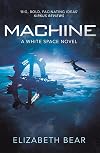
On This Page
Description
"Meet Doctor Jens. She hasn't had a decent cup of coffee in fifteen years. Her workday begins when she jumps out of perfectly good space ships and continues with developing treatments for sick alien species she's never seen before. She loves her life. Even without the coffee. But Dr. Jens is about to discover an astonishing mystery: two ships, one ancient and one new, locked in a deadly embrace. The crew is suffering from an unknown ailment and the shipmind is trapped in an inadequate body, show more much of her memory pared away. Unfortunately, Dr. Jens can't resist a mystery and she begins doing some digging. She has no idea that she's about to discover horrifying and life-changing truths."--Provided by publisher. show lessTags
Recommendations





























Member Reviews
A fast paced space opera with plenty of meat on its bones. You can read it as a stand-alone without any knowledge of Ancestral Night, the first in the series.
The bones: Dr. Brooklyn Jens, a trauma paramedic, and her multi-species crew, including the AI shipmind Sally, answer a distress call. They discover a centuries old human generational ship where the AI has cryogenically frozen all the crew because they have a virus. Transporting a few of the frozen crew and Helen, the AI, back to Core Central hospital somehow releases the virus, infecting the hospital AI. If Llyn Jens can't discover more about the virus and how to expunge it, the hospital and the Synarche are in danger of being destroyed.
The meat is both personal and societal. Jens show more suffered trauma as a child - her family all died while she was young and she grew up rough. She doesn't like to be emotionally close to people. She is also in constant pain and needs an exoskeleton to help her move. And she doesn't want her coworkers to know her medications don't adequately control her pain. While she's trying to complete the assignment she's been given, investigate the virus, and help the AI Helen adjust to a culture that is foreign to Helen, she begins to question who she can trust.
Jens has also been asked to investigate a situation at the hospital which brings to light questions about how altruistic the Synarche is, and whether the hospital complex, which treats everyone, is as benevolent as Llyn has believed.
I found myself reflecting on human politics, our bodies and chronic illness and how we cope, and larger questions of how society is always messed up, no matter our intentions. show less
The bones: Dr. Brooklyn Jens, a trauma paramedic, and her multi-species crew, including the AI shipmind Sally, answer a distress call. They discover a centuries old human generational ship where the AI has cryogenically frozen all the crew because they have a virus. Transporting a few of the frozen crew and Helen, the AI, back to Core Central hospital somehow releases the virus, infecting the hospital AI. If Llyn Jens can't discover more about the virus and how to expunge it, the hospital and the Synarche are in danger of being destroyed.
The meat is both personal and societal. Jens show more suffered trauma as a child - her family all died while she was young and she grew up rough. She doesn't like to be emotionally close to people. She is also in constant pain and needs an exoskeleton to help her move. And she doesn't want her coworkers to know her medications don't adequately control her pain. While she's trying to complete the assignment she's been given, investigate the virus, and help the AI Helen adjust to a culture that is foreign to Helen, she begins to question who she can trust.
Jens has also been asked to investigate a situation at the hospital which brings to light questions about how altruistic the Synarche is, and whether the hospital complex, which treats everyone, is as benevolent as Llyn has believed.
I found myself reflecting on human politics, our bodies and chronic illness and how we cope, and larger questions of how society is always messed up, no matter our intentions. show less
Review of eGalley
Assigned to the Synarche Medical Vessel “I Race To Seek the Living,” trauma doctor Brookllyn Jens is the rescue coordination specialist on the ambulance spaceship they call Sally. Answering a distress call from the centuries-old Terran generation ship “Big Rock Candy Mountain,” the rescuers discover the body of the long-dead captain, a cargo bay filled with cryogenic chambers, a memory-damaged artificial intelligence named Helen, and the modern “I Bring Tidings From Afar” docked with the ancient ship.
A strange, Tinkertoy-like structure fills the corridors of “Big Rock Candy Mountain” and the cargo bay of “Afar” holds an enormous space-crab-robot machine. The crew decides to take both ships, the cryo show more containers, a portion of the Tinkertoy structure, and Helen back to the immense space station hospital Core General along with the nonresponsive yet living crew of “Afar” and the strange craboid machine.
After their return to Core General, the rescue crew learns of critical sabotage incidents at the hospital and Llyn finds herself investigating them, unaware that what she discovers will change everything she knows and believes.
The detailed and impressive world-building will draw readers into the story from the outset. Both humans and aliens are well-drawn, interesting, and believable in a world where shipminds, artificial intelligence, and rightminding are all givens.
Brookllyn, suffering from an incurable combination of inflammation and polyarthralgia, relies on an exoskeleton to keep her mobile. Cynicism is her forte and puns abound, making the telling of the tale difficult to set aside. [The reference to the hospital administrator, a sentient tree, as the Administree, is perfect.]
The science is both inventive and credible while the mystery is compelling and flawlessly executed as the unfolding narrative takes some surprising twists and turns. Weaving the sabotage story together with artificial intelligence, sentient aliens, personality adjustments, cloning, personal rights, and a machine that is also an idea creates a masterful tapestry and an unputdownable tale.
Highly recommended.
I received a free copy of this eBook from Gallery Books / Saga Press and NetGalley
#Machine #NetGalley show less
Assigned to the Synarche Medical Vessel “I Race To Seek the Living,” trauma doctor Brookllyn Jens is the rescue coordination specialist on the ambulance spaceship they call Sally. Answering a distress call from the centuries-old Terran generation ship “Big Rock Candy Mountain,” the rescuers discover the body of the long-dead captain, a cargo bay filled with cryogenic chambers, a memory-damaged artificial intelligence named Helen, and the modern “I Bring Tidings From Afar” docked with the ancient ship.
A strange, Tinkertoy-like structure fills the corridors of “Big Rock Candy Mountain” and the cargo bay of “Afar” holds an enormous space-crab-robot machine. The crew decides to take both ships, the cryo show more containers, a portion of the Tinkertoy structure, and Helen back to the immense space station hospital Core General along with the nonresponsive yet living crew of “Afar” and the strange craboid machine.
After their return to Core General, the rescue crew learns of critical sabotage incidents at the hospital and Llyn finds herself investigating them, unaware that what she discovers will change everything she knows and believes.
The detailed and impressive world-building will draw readers into the story from the outset. Both humans and aliens are well-drawn, interesting, and believable in a world where shipminds, artificial intelligence, and rightminding are all givens.
Brookllyn, suffering from an incurable combination of inflammation and polyarthralgia, relies on an exoskeleton to keep her mobile. Cynicism is her forte and puns abound, making the telling of the tale difficult to set aside. [The reference to the hospital administrator, a sentient tree, as the Administree, is perfect.]
The science is both inventive and credible while the mystery is compelling and flawlessly executed as the unfolding narrative takes some surprising twists and turns. Weaving the sabotage story together with artificial intelligence, sentient aliens, personality adjustments, cloning, personal rights, and a machine that is also an idea creates a masterful tapestry and an unputdownable tale.
Highly recommended.
I received a free copy of this eBook from Gallery Books / Saga Press and NetGalley
#Machine #NetGalley show less
Originally posted on Tales to Tide You Over
When I chose this book, I only expected a fast-paced story with death-defying feats out in the vastness of the universe. A wild adventure filled with paramedics in space, dangerous artificial intelligences, and mysteries to solve.
Machine offers all that and more. It is a mix of space opera’s desperate rescues in near impossible situations and a philosophical examination of human and other cultures in the past and story present. This gives it both elements of Stardoc by S. L. Viehl and the culture clash found in City of Pearl by Karen Traviss. It’s not a quick read, but I had a lot of fun absorbing the story.
The world building unfolds through interactions between the characters and some show more flashbacks as well as in explaining the rules to the generation ship humans who left before humanity learned to clean up after itself. The multi-species civilization humans joined while the generation ship slowly moved out among the stars is founded on altruism rather than individualism. The definitions of personhood and value have also shifted in radical ways, especially considering the ship left before first contact.
You might imagine this results in several tense conversations, and there are more levels I will not mention, except to add it’s not a one-sided conversation. The world is complex and fascinating enough to make me want to check out the series it springs from, White Space. I don’t know whether this novel is intended to a standalone companion story with a favorite character for existing fans, a way to introduce new readers to the series, or a little of both, but I enjoyed what I saw. More than just that, though, it left me pondering questions the book raised.
Don’t think it’s all rumination, though. In fact, the characters rarely have time to contemplate everything going on around them. There’s the defrosting humans well past their time, AIs that aren’t as flawless as believed, giant bug monsters who are merely another sapient species, and interdepartmental politics, which only scratches the surface of what you’ll see.
The philosophy comes up within context and supports the growth of the characters rather than slowing the story. The same is true for character backstory and the universe they’re in. The information comes in dribbles at the right time rather than hard to swallow chunks, the sign of a good sociological science fiction work.
If you read yesterday’s post, you already know Dr. Brookllyn Jens, the protagonist, suffers from chronic pain. She uses a non-sapient exoskeleton along with medication to manage her symptoms, but that’s far from a cure or even total relief. She must work through her limitations and rise above the pain. Her portrayal matches my experience while her sophisticated support system enables her to contribute despite her condition.
Llyn is only one of a large, diverse cast, including the ambulance crew, some from the generation ship, and others back at Core General, the hospital. They each have recognizable characteristics having to do with their jobs, species, or attitudes such that I had no trouble keeping them apart whether human people or not, and whether organic or programmed.
Part of tracking the characters, though, comes from a well-seeded plot. I could see how some mysteries were unfolding before the characters did, but there was enough complexity to surprise me with a couple of reveals. What they uncover impacts the characters, especially Llyn, who has to re-examine the assumptions she’s worked under and decide how to react to the new discoveries. This is not a simple whodunit, but instead a nuanced situation where the clear path isn’t clear at all.
The clash between old and modern humans is a perfect example of this nuance. The differences are tackled head on, but in such a way to reveal Llyn’s biases even as she tries to prepare the rescued AI and its crew for current beliefs. While their modern civilization is advanced in many important elements, it’s the flaws that make for a deep description instead of a one-note ideal. Llyn does not always speak from a position of strength, even when she thinks she does.
The relationship between machine sapience and biological sapience is fascinating, especially in regard to treatment. The wounds might be different, but Core General does not distinguish between life began in primordial soup and that sprung from lines of code any more than it discriminates between crystalline methane breathers and organic oxygen breathers.
Ultimately, the story is about space paramedics who uncover mysteries where they expected a routine, if dangerous, search and rescue. The book stays true to this story even with all the soul searching and philosophies both personal and systemic. There’s a lot more meat on these bones than I’d expected, but I wouldn’t have it any other way. I signed on for an adventure, and that’s what I got on more levels than expected.
P.S. I received this Advanced Readers’ Copy from the publisher through NetGalley in return for an honest review. show less
When I chose this book, I only expected a fast-paced story with death-defying feats out in the vastness of the universe. A wild adventure filled with paramedics in space, dangerous artificial intelligences, and mysteries to solve.
Machine offers all that and more. It is a mix of space opera’s desperate rescues in near impossible situations and a philosophical examination of human and other cultures in the past and story present. This gives it both elements of Stardoc by S. L. Viehl and the culture clash found in City of Pearl by Karen Traviss. It’s not a quick read, but I had a lot of fun absorbing the story.
The world building unfolds through interactions between the characters and some show more flashbacks as well as in explaining the rules to the generation ship humans who left before humanity learned to clean up after itself. The multi-species civilization humans joined while the generation ship slowly moved out among the stars is founded on altruism rather than individualism. The definitions of personhood and value have also shifted in radical ways, especially considering the ship left before first contact.
You might imagine this results in several tense conversations, and there are more levels I will not mention, except to add it’s not a one-sided conversation. The world is complex and fascinating enough to make me want to check out the series it springs from, White Space. I don’t know whether this novel is intended to a standalone companion story with a favorite character for existing fans, a way to introduce new readers to the series, or a little of both, but I enjoyed what I saw. More than just that, though, it left me pondering questions the book raised.
Don’t think it’s all rumination, though. In fact, the characters rarely have time to contemplate everything going on around them. There’s the defrosting humans well past their time, AIs that aren’t as flawless as believed, giant bug monsters who are merely another sapient species, and interdepartmental politics, which only scratches the surface of what you’ll see.
The philosophy comes up within context and supports the growth of the characters rather than slowing the story. The same is true for character backstory and the universe they’re in. The information comes in dribbles at the right time rather than hard to swallow chunks, the sign of a good sociological science fiction work.
If you read yesterday’s post, you already know Dr. Brookllyn Jens, the protagonist, suffers from chronic pain. She uses a non-sapient exoskeleton along with medication to manage her symptoms, but that’s far from a cure or even total relief. She must work through her limitations and rise above the pain. Her portrayal matches my experience while her sophisticated support system enables her to contribute despite her condition.
Llyn is only one of a large, diverse cast, including the ambulance crew, some from the generation ship, and others back at Core General, the hospital. They each have recognizable characteristics having to do with their jobs, species, or attitudes such that I had no trouble keeping them apart whether human people or not, and whether organic or programmed.
Part of tracking the characters, though, comes from a well-seeded plot. I could see how some mysteries were unfolding before the characters did, but there was enough complexity to surprise me with a couple of reveals. What they uncover impacts the characters, especially Llyn, who has to re-examine the assumptions she’s worked under and decide how to react to the new discoveries. This is not a simple whodunit, but instead a nuanced situation where the clear path isn’t clear at all.
The clash between old and modern humans is a perfect example of this nuance. The differences are tackled head on, but in such a way to reveal Llyn’s biases even as she tries to prepare the rescued AI and its crew for current beliefs. While their modern civilization is advanced in many important elements, it’s the flaws that make for a deep description instead of a one-note ideal. Llyn does not always speak from a position of strength, even when she thinks she does.
The relationship between machine sapience and biological sapience is fascinating, especially in regard to treatment. The wounds might be different, but Core General does not distinguish between life began in primordial soup and that sprung from lines of code any more than it discriminates between crystalline methane breathers and organic oxygen breathers.
Ultimately, the story is about space paramedics who uncover mysteries where they expected a routine, if dangerous, search and rescue. The book stays true to this story even with all the soul searching and philosophies both personal and systemic. There’s a lot more meat on these bones than I’d expected, but I wouldn’t have it any other way. I signed on for an adventure, and that’s what I got on more levels than expected.
P.S. I received this Advanced Readers’ Copy from the publisher through NetGalley in return for an honest review. show less
I really, really like this protagonist -- a story about someone who routinely jumps out of space ambulances to rescue people is extremely my kind of thing. The setting is great, both the immediate setting of Core General (the multi-species space station is delightful and reminds me of Babylon 5) and the larger setting of the Synarche. I love that the complexities of the Synarche and how it works are taken seriously by the story and the characters, and not allowed to just fade into the background. I look forward to where the series seems to be going.
I really want to like Elizabeth Bear. I'd also really like to sink into a book about a doctor in space. But something about Bear and I seem to be incompatible. This review is 100% for carol, by carol, so if you aren't me, you should probably move along, or risk being bored or offended. If you enjoyed it, awesome! Now move along.
I loved [b:Bone and Jewel Creatures|6903857|Bone and Jewel Creatures|Elizabeth Bear|https://i.gr-assets.com/images/S/compressed.photo.goodreads.com/books/1253765031l/6903857._SX50_.jpg|7127770], and the companion novella, [b:Book of Iron|17386908|Book of Iron|Elizabeth Bear|https://i.gr-assets.com/images/S/compressed.photo.goodreads.com/books/1378041330l/17386908._SX50_.jpg|24194866]. I thought her writing show more enjoyable, if unsurprisingly plotted, at least it did it in an interesting manner. Mostly, I loved her imagery and ability to make me feel like I could see the jeweled skeleton in front of me, or the unexplored cliffs and pools the team were navigating.
But, and this is a big one, when she gets a full-length novel, something goes awry. Description and asides replace dialogue and action. Worse, dialogue here sounds stilted and didactic. It is, quite honestly, terrible. At 5%, as her supervisor and her explore a derelict generation ship, and she is starting to panic about her inability to reach the ship AI, they have this dialogue:
"Do you remember a time before the chronic pain?"
I could claim that wasn't a preceptive question, but then I'd have to explain why I stood there silently for a good thirty seconds before I found an answer. "No," I admitted. "There's always been the pain."
'So how would you, as a kid, have learned that things were going to be okay, or that adults could solve your problems? Why would you ever have cause to think things would turn out all right?'
'Huh,' I said, eloquently, While the tinkertoys went click click click...'So you think I never learned trust because, as a child, I had nothing to believe in?'
'You trust, though. You trust Sally with your life--'
'That's not what I mean,' I sighed. 'Yes, I can decide to take a risk on Sally, or on you. But I know it's a risk. Whereas I've heard people talk about the belief that somebody would never hurt them. Or the sense that everything will turn out all right in the end. I've never had those.'"
This was pop psychology at its worst. Nevermind that Dr. Jens is the medical officer and spent at least a page affirming why she was the best person for the mission, being the only one with a reinforced exo-skeleton and so forth; nevermind that she uses hormone boluses to moderate her physical reactions (can you 'panic' without adrenalin spikes?); nevermind that she is a medical person apparently being surprised by basic attachment theory; nevermind that 'always been the pain' opens up a complex neurobiological discussion on what pain is. Her supervisor is choosing to do a little free-form analysis on a dangerous mission? Just ugh.
It is followed up by a large chunk of didactic on machine intelligences and her 'duty to care' for an AI that has clearly played a pivotal role in the entire human shipboard population going into cryogenic chambers while it continued to cannibalize the ship. The logical thing to do? Bring it over to her own ship. Just no. Basic infection precautions don't seem to apply, despite Bear saying earlier they were suited up "because our microbes won't play nicely with microbes from a millennia ago." It's like Bear is playing at being a scientist, and making her doctor do whatever the plot needs to explore her issues rather than look at the integrity of the character creation.
There's so much head-talk here! And normally I am down for head-talk, but this isn't noticing the world, it's babble.
"Intuition is a real thing, though there's nothing supernatural about it. It's not without mysteries, however. The human brain (and presumably, the nonhuman brain as well) gathers and processes a lot of information in excess of that which we are consciously aware. It doesn't use words or often even images. It deals with feelings and instincts, and that glitchy sensation that you can't trust somebody, or that something is wrong.
So when I say that I had the increasing, creeping conviction that the generation ship's endlessly rolling wheel was deserted, that it felt empty, I don't pretend there was any higher knowledge behind it. But I was sure there were plenty of subtle clues, even if I couldn't have named one of them."
You mean like the absence of people you already noted? The absence of your radio waves being acknowledged earlier? The weird 'tinkertoy' structure in the hallways? The lack of heat signatures on your infrared cameras? The generally unpredictable occurrence of a generation ship from a thousand years ago traveling at a speed it should not be traveling it? You mean those subtle, factual cues?
Also, way to blow a sense of creeping dread. Now I'm just bored with you explaining intuition to me.
Awkward science integration, crappy pop psychology acting as dialogue and inner voice, and TSTL™ decisions mean DNF at 10% after she lets her ship AI, Sally, hook up with the mentally unstable one. I absolutely do not have tolerance for medical lecturing about personhood for AI intelligences (ah, for Martha Wells, who does it so much more elegantly with Murderbot) from a doctor who can't seem to recognize sociopathic behavior ("I protected my people by putting them to sleep forever"). If there's some elegant point in here about how we deal with such things (pain, AI, brains), it is absolutely lost in this writing.
I could go on, but I risk boring myself. I think Bear needs to be banned from my 'buy without reading' list unless she's forced into novella form. I really, really want to read a space book about a cool doctor doing medically things and dealing with alien somethings. This is definitely not it.
Tomislav has an excellent review that sums up the plot and his positive experience of it. show less
I loved [b:Bone and Jewel Creatures|6903857|Bone and Jewel Creatures|Elizabeth Bear|https://i.gr-assets.com/images/S/compressed.photo.goodreads.com/books/1253765031l/6903857._SX50_.jpg|7127770], and the companion novella, [b:Book of Iron|17386908|Book of Iron|Elizabeth Bear|https://i.gr-assets.com/images/S/compressed.photo.goodreads.com/books/1378041330l/17386908._SX50_.jpg|24194866]. I thought her writing show more enjoyable, if unsurprisingly plotted, at least it did it in an interesting manner. Mostly, I loved her imagery and ability to make me feel like I could see the jeweled skeleton in front of me, or the unexplored cliffs and pools the team were navigating.
But, and this is a big one, when she gets a full-length novel, something goes awry. Description and asides replace dialogue and action. Worse, dialogue here sounds stilted and didactic. It is, quite honestly, terrible. At 5%, as her supervisor and her explore a derelict generation ship, and she is starting to panic about her inability to reach the ship AI, they have this dialogue:
"Do you remember a time before the chronic pain?"
I could claim that wasn't a preceptive question, but then I'd have to explain why I stood there silently for a good thirty seconds before I found an answer. "No," I admitted. "There's always been the pain."
'So how would you, as a kid, have learned that things were going to be okay, or that adults could solve your problems? Why would you ever have cause to think things would turn out all right?'
'Huh,' I said, eloquently, While the tinkertoys went click click click...'So you think I never learned trust because, as a child, I had nothing to believe in?'
'You trust, though. You trust Sally with your life--'
'That's not what I mean,' I sighed. 'Yes, I can decide to take a risk on Sally, or on you. But I know it's a risk. Whereas I've heard people talk about the belief that somebody would never hurt them. Or the sense that everything will turn out all right in the end. I've never had those.'"
This was pop psychology at its worst. Nevermind that Dr. Jens is the medical officer and spent at least a page affirming why she was the best person for the mission, being the only one with a reinforced exo-skeleton and so forth; nevermind that she uses hormone boluses to moderate her physical reactions (can you 'panic' without adrenalin spikes?); nevermind that she is a medical person apparently being surprised by basic attachment theory; nevermind that 'always been the pain' opens up a complex neurobiological discussion on what pain is. Her supervisor is choosing to do a little free-form analysis on a dangerous mission? Just ugh.
It is followed up by a large chunk of didactic on machine intelligences and her 'duty to care' for an AI that has clearly played a pivotal role in the entire human shipboard population going into cryogenic chambers while it continued to cannibalize the ship. The logical thing to do? Bring it over to her own ship. Just no. Basic infection precautions don't seem to apply, despite Bear saying earlier they were suited up "because our microbes won't play nicely with microbes from a millennia ago." It's like Bear is playing at being a scientist, and making her doctor do whatever the plot needs to explore her issues rather than look at the integrity of the character creation.
There's so much head-talk here! And normally I am down for head-talk, but this isn't noticing the world, it's babble.
"Intuition is a real thing, though there's nothing supernatural about it. It's not without mysteries, however. The human brain (and presumably, the nonhuman brain as well) gathers and processes a lot of information in excess of that which we are consciously aware. It doesn't use words or often even images. It deals with feelings and instincts, and that glitchy sensation that you can't trust somebody, or that something is wrong.
So when I say that I had the increasing, creeping conviction that the generation ship's endlessly rolling wheel was deserted, that it felt empty, I don't pretend there was any higher knowledge behind it. But I was sure there were plenty of subtle clues, even if I couldn't have named one of them."
You mean like the absence of people you already noted? The absence of your radio waves being acknowledged earlier? The weird 'tinkertoy' structure in the hallways? The lack of heat signatures on your infrared cameras? The generally unpredictable occurrence of a generation ship from a thousand years ago traveling at a speed it should not be traveling it? You mean those subtle, factual cues?
Also, way to blow a sense of creeping dread. Now I'm just bored with you explaining intuition to me.
Awkward science integration, crappy pop psychology acting as dialogue and inner voice, and TSTL™ decisions mean DNF at 10% after she lets her ship AI, Sally, hook up with the mentally unstable one. I absolutely do not have tolerance for medical lecturing about personhood for AI intelligences (ah, for Martha Wells, who does it so much more elegantly with Murderbot) from a doctor who can't seem to recognize sociopathic behavior ("I protected my people by putting them to sleep forever"). If there's some elegant point in here about how we deal with such things (pain, AI, brains), it is absolutely lost in this writing.
I could go on, but I risk boring myself. I think Bear needs to be banned from my 'buy without reading' list unless she's forced into novella form. I really, really want to read a space book about a cool doctor doing medically things and dealing with alien somethings. This is definitely not it.
Tomislav has an excellent review that sums up the plot and his positive experience of it. show less
Once I found myself wondering whether it was worth continuing with this novel, as for me it had turned into a slog, I went back to my review of "Ancestral Night," the first book Ms. Bear set in this milieu. Yep, the same virtues and faults are still evident, most notably the enervating internal blather of the sole POV character which saps all narrative drive. Matters are further not helped by the really stupid conspiracy at the core of this story. Yet again though, Ms. Bear manages to stick the landing and gives the reader some emotional satisfaction, but if I do give her next book a chance, the hook will be really short.
Matters are not helped that this is the third book I've read this year where the setting is a space station where all show more events are going straight to hell, but Taran Hunt's "The Immortality Thief" and R.E. Stearns' "Barbary Station" I liked better to varying degrees. A lot of it coming down to how their stories didn't grind along in second gear for way too long. show less
Matters are not helped that this is the third book I've read this year where the setting is a space station where all show more events are going straight to hell, but Taran Hunt's "The Immortality Thief" and R.E. Stearns' "Barbary Station" I liked better to varying degrees. A lot of it coming down to how their stories didn't grind along in second gear for way too long. show less
Brookllyn (Llyn) Jens routinely jumps out of a perfectly serviceable spaceship (or rather Space Ambulance) to rescue people who need to be rescued. She's a trauma doctor and knows trauma. She lost her family as a kid and has complex medical issues that require an exo-skeleton and medication to help her get through her days.
When she returns to her home station she has to deal with the aftermath of the rescue and a rogue virus that is affecting AIs and could take down the ship.
Llyn is somehow convinced she's alone despite several people who insist on helping her and on her getting sleep and food.
It reminded me of James White's Inspector General series and I would like to read more about this station and this world. I enjoyed the read and show more was a little disappointed that I have to wait a few months for the next instalment. show less
When she returns to her home station she has to deal with the aftermath of the rescue and a rogue virus that is affecting AIs and could take down the ship.
Llyn is somehow convinced she's alone despite several people who insist on helping her and on her getting sleep and food.
It reminded me of James White's Inspector General series and I would like to read more about this station and this world. I enjoyed the read and show more was a little disappointed that I have to wait a few months for the next instalment. show less
Members
- Recently Added By
Lists

Favorite Science Fiction by Women Authors
737 works; 202 members

Top Five Books of 2020
982 works; 350 members
Author Information

176+ Works 16,468 Members

Elizabeth Bear is a LibraryThing Author, an author who lists their personal library on LibraryThing.
Some Editions
Awards and Honors
Awards
Notable Lists
Series

Common Knowledge
- Canonical title
- Machine
- Original publication date
- 2020
Classifications
Statistics
- Members
- 382
- Popularity
- 82,155
- Reviews
- 21
- Rating
- (3.76)
- Languages
- English
- Media
- Paper, Audiobook, Ebook
- ISBNs
- 10
- ASINs
- 3