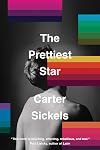
The Prettiest Star
by Carter Sickels
On This Page
Description
Small-town Appalachia doesn't have a lot going for it, but it's where Brian is from, where his family is, and where he's chosen to return to die. At eighteen, Brian, like so many other promising young gay men, arrived in New York City without much more than a love for the freedom and release from his past that it promised. But within six short years, AIDS would claim his lover, his friends, and his future. With nothing left in New York but memories of death, Brian decides to write his mother show more a letter asking to come back to the place, and family, he was once so desperate to escape. Set in 1986, a year after Rock Hudson's death shifted the public consciousness of the epidemic and brought the news of AIDS into living rooms and kitchens across America, The Prettiest Star is part Dog Years by Mark Doty and part Tell the Wolves I'm Home by Carol Rifka Brunt. But it is also an urgent story now: it a novel about the politics and fragility of the body; it is a novel about sex and shame. And it is a novel that speaks to the question of what home and family means when we try to forge a life for ourselves in a world that can be harsh and unpredictable. Contains mature themes. show lessTags
Recommendations

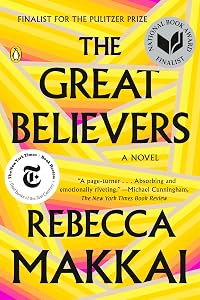







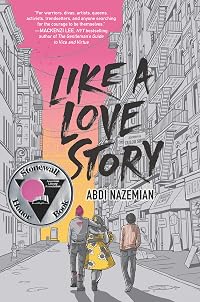
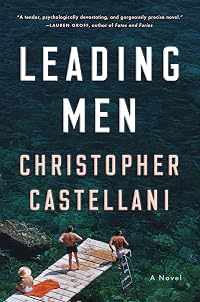
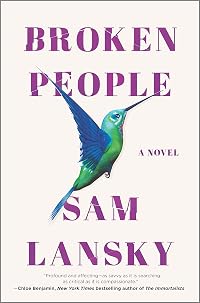
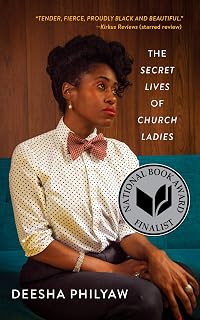
Member Reviews
I have been in the strangest mood the last several days. I am not generally a soft or weepy person, but life has been throwing me curves lately and I think the build up was like a dam bursting. At any rate, the crying sort of began before I read this book, but man, Carter Sickels touched every emotional nerve in my body and by the time I reached the finish I was crying so hard I could barely see the page to read. I kept having to pause and go into the bathroom and wash my face, then I would read a few sentences and start up again.
If it doesn’t affect you that way, you can just put it down to my hormones being aflutter, but I found this to be charged mainly because there was thoughtfulness and understanding for every character Sickels show more depicted, not just the main character, Brian. People are so multi-faceted. There are so few of us who are all good or all evil, every one of us falls in between, although some tip the scales more to one side than the other. (Okay, there is one character in this book that I would label evil, but he isn't a main character and even he is probably more insecure and afraid than we know).
It is 1986 and Brian has AIDS. He is from the mountains in Ohio but has been living in New York City, but the death of his partner and his knowledge that he is dying makes him decide to return home to his family; a family who has never openly acknowledged that Brian is even gay. I lived through the 1980s and the AIDS epidemic. I know the fear and horror of this time. I witnessed first hand the disgusting lack of compassion on the parts of so many and the difficult struggle of other, good people, to understand and not condemn in a world that was more accepting if you would.
What Brian endures, what his parents endure, how his little sister copes, how this small town reacts; all of these things rang 100% true. It made me hurt to see this young man lose his life when it had barely begun. I felt for his mother who just wanted to love her son and protect him from this horrible disease and, perhaps worse, from the viciousness of the town that she had felt so much a part of her life. I even felt sorry for the father who just could not come to grips with the truth, so buried his head in the sand, missing his only chance to know who his son was. My heart swelled with pride for Brian’s grandmother, who puts her love first and never feels an ounce of the shame her neighbors seem to want to force upon her, and for his friends Annie and Andrew who show that true love and bravery are what truly matter.
The only way for my family to get their lives back is for me to go. How sad would it be to feel that at the end of your life?
Sickels writes beautifully and thoughtfully. He tackles death and reminds us that any death, every death, is a loss and that the next death might be our own. Every character here must face the reality of death and reach for some kind of comfort. Brian’s sister, Jess, imagines that we become whales at our ends:
Nothing transforms, there is no magic. Or, does everything transform? I hesitate, and then reach up and touch my brother’s face. His skin is warm. I don’t pray anymore, but sometimes I dream. Giant, enormous, beautiful bodies. All of us together in the ocean. We die and we swim.
For one who has sat beside a sick bed and gone from hoping and praying for the survival of the ill to praying for the cessation of the suffering, I got how hard it was for this family to watch this slow deterioration.
We’re waiting. We don’t want the moment to come, we do.
I hated reading this book. I loved it. show less
If it doesn’t affect you that way, you can just put it down to my hormones being aflutter, but I found this to be charged mainly because there was thoughtfulness and understanding for every character Sickels show more depicted, not just the main character, Brian. People are so multi-faceted. There are so few of us who are all good or all evil, every one of us falls in between, although some tip the scales more to one side than the other. (Okay, there is one character in this book that I would label evil, but he isn't a main character and even he is probably more insecure and afraid than we know).
It is 1986 and Brian has AIDS. He is from the mountains in Ohio but has been living in New York City, but the death of his partner and his knowledge that he is dying makes him decide to return home to his family; a family who has never openly acknowledged that Brian is even gay. I lived through the 1980s and the AIDS epidemic. I know the fear and horror of this time. I witnessed first hand the disgusting lack of compassion on the parts of so many and the difficult struggle of other, good people, to understand and not condemn in a world that was more accepting if you would.
What Brian endures, what his parents endure, how his little sister copes, how this small town reacts; all of these things rang 100% true. It made me hurt to see this young man lose his life when it had barely begun. I felt for his mother who just wanted to love her son and protect him from this horrible disease and, perhaps worse, from the viciousness of the town that she had felt so much a part of her life. I even felt sorry for the father who just could not come to grips with the truth, so buried his head in the sand, missing his only chance to know who his son was. My heart swelled with pride for Brian’s grandmother, who puts her love first and never feels an ounce of the shame her neighbors seem to want to force upon her, and for his friends Annie and Andrew who show that true love and bravery are what truly matter.
The only way for my family to get their lives back is for me to go. How sad would it be to feel that at the end of your life?
Sickels writes beautifully and thoughtfully. He tackles death and reminds us that any death, every death, is a loss and that the next death might be our own. Every character here must face the reality of death and reach for some kind of comfort. Brian’s sister, Jess, imagines that we become whales at our ends:
Nothing transforms, there is no magic. Or, does everything transform? I hesitate, and then reach up and touch my brother’s face. His skin is warm. I don’t pray anymore, but sometimes I dream. Giant, enormous, beautiful bodies. All of us together in the ocean. We die and we swim.
For one who has sat beside a sick bed and gone from hoping and praying for the survival of the ill to praying for the cessation of the suffering, I got how hard it was for this family to watch this slow deterioration.
We’re waiting. We don’t want the moment to come, we do.
I hated reading this book. I loved it. show less
I have been waiting to read this novel set during the AIDS crisis of the mid 80s for so long, but honestly, despite not pulling any punches, The Prettiest Star didn't quite measure up to similar fiction (The Great Believers, Tell The Wolves I'm Home).
The story was one of two halves for me - the terrible tragedy of so many young men dying of a relatively unknown and (then) incurable disease, and the frankly depressing reality of middle America: religion, poverty, Reagan, marriage and children, and thinking that macaroni with beef and tomato constitutes 'goulash'. Small lives and smaller minds. I think I would rather have lived Brian's short life, leaving home for New York City after high school, discovering love, friendship ambition and show more fun, before contracting AIDS along with so many other gay men, than stultify in a small town.
'He went to live on another planet, one that's burning bright, but now he's back - faded, broken, frail.'
Brian's story - having to return home after his lover dies and he realises that his own painful end is close - is painful to read, but I hated more how he was victimised and condemned more than his fading health. Brian is based directly on Robert 'Mike' Sisco, a young gay man with AIDS who went on Oprah's show in 1987 after the hysterical reaction to his taking a dip in the community pool in his West Virginia hometown (replicated in the novel). It's not so much the fear and ignorance but the belief that there is only one way to live and think, backed up by the hypocritical church (of any denomination). As Brian's friend Annie says, it's like living in the 1950s.
There were some poignant moments and well-written scenes, but overall the characters were a bit flat and sounded very similar in their narratives, especially Sharon and Jess, along with the stereotypes, such as flamboyant Andrew, the 'only gay in the village', and spunky Annie, Brian's lesbian friend from New York. The early 'vlog' angle, with Brian recording his narrative onto VHS tapes, also fell flat for me. I liked that the family eventually came together, apart from tough guy Travis, and that the focus switched from the town's homophobia to Brian's health, but the only relationship that really felt true and emotional for me was Brian with his cousin Gus. show less
The story was one of two halves for me - the terrible tragedy of so many young men dying of a relatively unknown and (then) incurable disease, and the frankly depressing reality of middle America: religion, poverty, Reagan, marriage and children, and thinking that macaroni with beef and tomato constitutes 'goulash'. Small lives and smaller minds. I think I would rather have lived Brian's short life, leaving home for New York City after high school, discovering love, friendship ambition and show more fun, before contracting AIDS along with so many other gay men, than stultify in a small town.
'He went to live on another planet, one that's burning bright, but now he's back - faded, broken, frail.'
Brian's story - having to return home after his lover dies and he realises that his own painful end is close - is painful to read, but I hated more how he was victimised and condemned more than his fading health. Brian is based directly on Robert 'Mike' Sisco, a young gay man with AIDS who went on Oprah's show in 1987 after the hysterical reaction to his taking a dip in the community pool in his West Virginia hometown (replicated in the novel). It's not so much the fear and ignorance but the belief that there is only one way to live and think, backed up by the hypocritical church (of any denomination). As Brian's friend Annie says, it's like living in the 1950s.
There were some poignant moments and well-written scenes, but overall the characters were a bit flat and sounded very similar in their narratives, especially Sharon and Jess, along with the stereotypes, such as flamboyant Andrew, the 'only gay in the village', and spunky Annie, Brian's lesbian friend from New York. The early 'vlog' angle, with Brian recording his narrative onto VHS tapes, also fell flat for me. I liked that the family eventually came together, apart from tough guy Travis, and that the focus switched from the town's homophobia to Brian's health, but the only relationship that really felt true and emotional for me was Brian with his cousin Gus. show less
When I finished reading this book, I had to just set it aside for a while before writing my review. It wasn't that I was going to have difficulty writing a review... I just wanted to sit with all the emotions that it brought up for me. Full disclosure: I ran a consumer-driven AIDS support organization for over a decade so this book depicts a time I'm intimately familiar with. Sickels has written a stunning novel that is important and relevant.
This book is written from several points of view. At the very beginning of the book, the reader is introduced to Brian. Brian has lost his lover to AIDS, most of his friends, his career dreams and his health and he's contemplating putting an end to it all. He doesn't attempt to end his life; he show more returns to the home he fled right after high school. Set in the late 80s, early years in the battle against AIDS, Brian is returning home to a town that knows nothing about HIV and AIDS. He's returning to the subtle and blatant homophobia he fled. He's returning to a family that hardly knows him.
Brian's mother, Sharon and his sister Jess also take the reigns of this story from time to time. It's never jarring and it always weaves more detail into the strange tapestry of Brian's family. One of the most poignant POVs in the novel is the voice of the videos that Brian continues to film. He picked up a camera when he moved to New York... and he promised his dying lover that he would continue to document. He documents even if he doesn't always seem certain what he's supposed to be capturing. There is some subtle beautiful, fear and shame in all the words that come from Brian. He's a remarkable, authentic character.
I suppose this book is about shame in all its incarnations. There's shame in sex... something that once brought so much pleasure and now seems responsible for a deadly illness. There's shame in being born in a way that doesn't fit with the people around you. There's the shame of a family as they struggle to come to terms with sexuality and illness. Most poignant for me probably was the relationship - or lack thereof - between Brian and his father Travis. Sickels does a remarkable job of portraying the confusion, pain, anger, and fear that contributes to homophobia within the confines of an otherwise loving family.
Brian goes home... without even really knowing what he's seeking. I think part of this story is about family, and home and what those two things are. And once Brian is at home... it's another gay man named Andrew who steps in to care for him. It's a touching relationship that builds between the two men, a relationship based on the common ground of chosen family... the people who step in when everyone else is frozen with fear. There is a moment of clarity between Andrew and Brian's mother deep in the book that absolutely struck a chord in me. Sharon is a mother who has lost her way and it takes an almost-stranger to try and lead her in the right direction.
"I don't want to put you out. You don't have to do this."
Andrew neatly folds the towel and drapes it over the counter. "Yes, I do. I have to, and so do you. It's the only option." He looks at me, serious and clear-eyed. "This is the only thing we have to do. Take care of him."
I could pull many quotes from this book to show you the eloquence and beauty of Sickel's writing, but I would rather you read the book and draw your own conclusions.
This book is vital. The further we move away from the initial impact of HIV/AIDS and the horrendous loss of life that resulted, the less defined our memory of the time becomes. We mustn't forget what happened. We can't afford to forget that many people still live daily with the kind of homophobia and bigotry that is nestled so peacefully in some families under the guise of being "righteous". show less
This book is written from several points of view. At the very beginning of the book, the reader is introduced to Brian. Brian has lost his lover to AIDS, most of his friends, his career dreams and his health and he's contemplating putting an end to it all. He doesn't attempt to end his life; he show more returns to the home he fled right after high school. Set in the late 80s, early years in the battle against AIDS, Brian is returning home to a town that knows nothing about HIV and AIDS. He's returning to the subtle and blatant homophobia he fled. He's returning to a family that hardly knows him.
Brian's mother, Sharon and his sister Jess also take the reigns of this story from time to time. It's never jarring and it always weaves more detail into the strange tapestry of Brian's family. One of the most poignant POVs in the novel is the voice of the videos that Brian continues to film. He picked up a camera when he moved to New York... and he promised his dying lover that he would continue to document. He documents even if he doesn't always seem certain what he's supposed to be capturing. There is some subtle beautiful, fear and shame in all the words that come from Brian. He's a remarkable, authentic character.
I suppose this book is about shame in all its incarnations. There's shame in sex... something that once brought so much pleasure and now seems responsible for a deadly illness. There's shame in being born in a way that doesn't fit with the people around you. There's the shame of a family as they struggle to come to terms with sexuality and illness. Most poignant for me probably was the relationship - or lack thereof - between Brian and his father Travis. Sickels does a remarkable job of portraying the confusion, pain, anger, and fear that contributes to homophobia within the confines of an otherwise loving family.
Brian goes home... without even really knowing what he's seeking. I think part of this story is about family, and home and what those two things are. And once Brian is at home... it's another gay man named Andrew who steps in to care for him. It's a touching relationship that builds between the two men, a relationship based on the common ground of chosen family... the people who step in when everyone else is frozen with fear. There is a moment of clarity between Andrew and Brian's mother deep in the book that absolutely struck a chord in me. Sharon is a mother who has lost her way and it takes an almost-stranger to try and lead her in the right direction.
"I don't want to put you out. You don't have to do this."
Andrew neatly folds the towel and drapes it over the counter. "Yes, I do. I have to, and so do you. It's the only option." He looks at me, serious and clear-eyed. "This is the only thing we have to do. Take care of him."
I could pull many quotes from this book to show you the eloquence and beauty of Sickel's writing, but I would rather you read the book and draw your own conclusions.
This book is vital. The further we move away from the initial impact of HIV/AIDS and the horrendous loss of life that resulted, the less defined our memory of the time becomes. We mustn't forget what happened. We can't afford to forget that many people still live daily with the kind of homophobia and bigotry that is nestled so peacefully in some families under the guise of being "righteous". show less
THE PRETTIEST STAR is one of those stories that will stay with you forever. It's beautifully written from beginning to end, especially the final few pages. I have not been so emotionally shattered by a book in quite some time.
This book was... kind of disappointing. I appreciate as many stories about AIDS as we can tell, but so much of this felt flat in ways I struggle to describe. Maybe it's that the characters outside of a select few felt deeply predictable--a mom struggling with her love for her son and her own homophobia, a dad who wants to just hide it all, the grandmother whose love can go beyond her homophobia--and the growth arcs felt predictable. The most compelling and interesting parts of the story were kept to the sidelines for most of it in favor of this kind of melodramatic, flat narrative. I think if this is the first narrative you're being exposed to about the early years of the ongoing AIDS epidemic, maybe it seems fine? I'm not sure, but show more regardless it was disappointing to me. show less
A heartbreaking, cruel and painful story of a young man with AIDS who returns home to his family in rural Ohio to die.
Heartbreaking
Members
- Recently Added By
Lists

Feminism
167 works; 4 members
Author Information
3+ Works 318 Members
Some Editions
Awards and Honors
Awards
Distinctions
Notable Lists
Common Knowledge
- Original publication date
- 2020
- Blurbers
- Lisicky, Paul
Classifications
Statistics
- Members
- 226
- Popularity
- 144,307
- Reviews
- 7
- Rating
- (4.37)
- Languages
- English
- Media
- Paper, Ebook
- ISBNs
- 6
- ASINs
- 1