
Rasheed Newson
Author of My Government Means to Kill Me: A Novel
Works by Rasheed Newson
Tagged
Common Knowledge
- Gender
- male
Members
Reviews
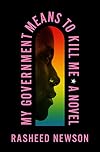
My Government Means to Kill Me is the debut novel of Rasheed Newton and what a debut this is! I loved every page of this political, activistic novel set in New York City during the AIDS epidemic in the 1980’s.
This is both a fictional story and a history book that is filled to the brim with information about people, institutions and grass root groups of those days. To inform readers that are not familiar with that time and age, Newson adds many notes, something that usually annoys me in show more literary novels but here it did not. Like magazine Vanity Fair wrote in its latest issue about this novel: “even the footnotes are gripping.”
But My Government Tries to Kill Me is also the coming of age story of Trey, a character that I came to love dearly when reading this novel. He evolves from a sex obsessed young man living his newfound Manhattan life mainly in gay bath houses to one of the figureheads of the AIDS movement. His story is not divided into traditional chapters but into lessons learned, which is done brilliantly.
After having read snippets of information about an amazing array of famous people like Martin Luther King, Luther Vandross, James Baldwin, Eartha Kitt, Marilyn Monroe, Prince, and about organizations and movements and institutions like ACT UP, GLAAD, the Black Panthers, City Lights Bookstore in SF, the Mt. Morris Baths, the Brummel Cafe, this heartfelt and deeply human story left me feeling rewarded in many ways.
I cannot recommend this novel highly enough. For those of us who lived through the AIDS epidemic it will be recognizable. And for those who are too young to have witnessed this period firsthand it will educate you in many ways. While at the same time reading fantastic prose and a main sassy character that you cannot stop yourself from loving.
Brilliant. show less
This is both a fictional story and a history book that is filled to the brim with information about people, institutions and grass root groups of those days. To inform readers that are not familiar with that time and age, Newson adds many notes, something that usually annoys me in show more literary novels but here it did not. Like magazine Vanity Fair wrote in its latest issue about this novel: “even the footnotes are gripping.”
But My Government Tries to Kill Me is also the coming of age story of Trey, a character that I came to love dearly when reading this novel. He evolves from a sex obsessed young man living his newfound Manhattan life mainly in gay bath houses to one of the figureheads of the AIDS movement. His story is not divided into traditional chapters but into lessons learned, which is done brilliantly.
After having read snippets of information about an amazing array of famous people like Martin Luther King, Luther Vandross, James Baldwin, Eartha Kitt, Marilyn Monroe, Prince, and about organizations and movements and institutions like ACT UP, GLAAD, the Black Panthers, City Lights Bookstore in SF, the Mt. Morris Baths, the Brummel Cafe, this heartfelt and deeply human story left me feeling rewarded in many ways.
I cannot recommend this novel highly enough. For those of us who lived through the AIDS epidemic it will be recognizable. And for those who are too young to have witnessed this period firsthand it will educate you in many ways. While at the same time reading fantastic prose and a main sassy character that you cannot stop yourself from loving.
Brilliant. show less
(This is a highly imperfect review, but I'm going with it because this book deserves every bit of attention it can get—and I'm tired of writing and erasing, writing and erasing while trying to find *the* right way to talk about it.)
Rasheed Newson's My Government Means to Kill Me is one of those absolutely essential novel that one doesn't realize is needed until one has read it. It's the fictional memoir of Trey Newson, a young, Black gay man who's moved from Indianapolis to New York City show more in the early 1980s at the start of the AIDS epidemic. Trey is naive, but observant, and realizes that, as the title states, his government does mean to kill him. He sees the lack of response to the AIDS epidemic and the disproportionate impact it's having on the Black community. He establishes an unlikely friendship with Bayard Rustin who acts as a sort of Socratic mentor, questioning Trey to help him explore his own experiences and values. He volunteers for gay Men's Health Crisis and takes part in the creation of ACT-UP. Trey's story makes for an engaging, frustrating, infuriating, and hopeful story of those years.
What I find particularly remarkable about this book is its use of footnotes. Yes, footnotes. Newson isn't just writing for those who lived through the AIDS epidemic and who will understand his references to real-life events and peoples. He's also writing for the "Treys" of today—young queer folk who we born two decades later than the time in which the novel is set.
In the 1980s, I was doing a good deal of outreach to teachers, urging them to embrace the fact that—whether or not they knew who was who—they had queer kids in their classes, and kids with queer parents, and that they had a particular responsibility to this student population. One of the points I kept emphasizing in my work was that growing up queer presents specific challenges. And one challenge I emphasized was that queer kids are members of a culture that involves far more than sexual or affectional identity. Being queer meant being part of a community—a community with its own cultural icons, its own history, its own popular culture, its own holidays, its own faith institutions. Yet, because of homophobia, along with the fact that most queer kids are raised within straight families, the kids had very little knowledge of that culture. And because it was a culture they were born into, but not *raised* in, they generally weren't able to draw on it as a source of strength and pride.
The queer community is much more visible now, but it's still not uncommon for a queer kid to feel as if they may be the only one, that there's no place where who they are is normal, where they can find others like themselves. And things were so much worse in the 80s.
What I love about this novel above all else is the footnotes. Yep, footnotes. Newson's writing is full of references to historical events, political movements, and real-world individuals, and he uses footnotes to explain in a clear and accessible way what and who those events, movements, and people are. If you were a queer adult during the 80s, you may not need all this supplemental information. But if you're straight or if you weren't yet born in the 80s, My Government Means to Kill Me makes those years accessible. It gives readers an entree into queer culture at a time of particular challenge and of powerful resistance. And we could definitely use that sort of resistance in meeting the challenges of our current challenges.
If you're able, you should be buying copies of My Government Means to Kill Me for every young adult in your life (queer or not) and for every public library around you. You should be leaving copies of it in those little free libraries people have on their front lawns. You should be giving copies to parents, to aunts, to uncles, to grandparents. We need this history. We need it now.
I received a free electronic review copy of this title from the publisher via NetGalley; the opinions are my own. show less
Rasheed Newson's My Government Means to Kill Me is one of those absolutely essential novel that one doesn't realize is needed until one has read it. It's the fictional memoir of Trey Newson, a young, Black gay man who's moved from Indianapolis to New York City show more in the early 1980s at the start of the AIDS epidemic. Trey is naive, but observant, and realizes that, as the title states, his government does mean to kill him. He sees the lack of response to the AIDS epidemic and the disproportionate impact it's having on the Black community. He establishes an unlikely friendship with Bayard Rustin who acts as a sort of Socratic mentor, questioning Trey to help him explore his own experiences and values. He volunteers for gay Men's Health Crisis and takes part in the creation of ACT-UP. Trey's story makes for an engaging, frustrating, infuriating, and hopeful story of those years.
What I find particularly remarkable about this book is its use of footnotes. Yes, footnotes. Newson isn't just writing for those who lived through the AIDS epidemic and who will understand his references to real-life events and peoples. He's also writing for the "Treys" of today—young queer folk who we born two decades later than the time in which the novel is set.
In the 1980s, I was doing a good deal of outreach to teachers, urging them to embrace the fact that—whether or not they knew who was who—they had queer kids in their classes, and kids with queer parents, and that they had a particular responsibility to this student population. One of the points I kept emphasizing in my work was that growing up queer presents specific challenges. And one challenge I emphasized was that queer kids are members of a culture that involves far more than sexual or affectional identity. Being queer meant being part of a community—a community with its own cultural icons, its own history, its own popular culture, its own holidays, its own faith institutions. Yet, because of homophobia, along with the fact that most queer kids are raised within straight families, the kids had very little knowledge of that culture. And because it was a culture they were born into, but not *raised* in, they generally weren't able to draw on it as a source of strength and pride.
The queer community is much more visible now, but it's still not uncommon for a queer kid to feel as if they may be the only one, that there's no place where who they are is normal, where they can find others like themselves. And things were so much worse in the 80s.
What I love about this novel above all else is the footnotes. Yep, footnotes. Newson's writing is full of references to historical events, political movements, and real-world individuals, and he uses footnotes to explain in a clear and accessible way what and who those events, movements, and people are. If you were a queer adult during the 80s, you may not need all this supplemental information. But if you're straight or if you weren't yet born in the 80s, My Government Means to Kill Me makes those years accessible. It gives readers an entree into queer culture at a time of particular challenge and of powerful resistance. And we could definitely use that sort of resistance in meeting the challenges of our current challenges.
If you're able, you should be buying copies of My Government Means to Kill Me for every young adult in your life (queer or not) and for every public library around you. You should be leaving copies of it in those little free libraries people have on their front lawns. You should be giving copies to parents, to aunts, to uncles, to grandparents. We need this history. We need it now.
I received a free electronic review copy of this title from the publisher via NetGalley; the opinions are my own. show less
Rasheed Newson has written an addictive narration of the life of a young, gay Black man in the midst of the AIDs crisis in the NYC of the mid-eighties. Eighteen year old Trey, our narrator, has landed in NYC without a friend or any prospects, and we follow his journey from naïve newcomer to fierce fighter, activist, and true New Yorker over the course of a whirlwind two years. Newson does not shy away from Trey's frank and joyous sexuality, and shows us gay bathhouse culture with countless show more anonymous encounters and colorful characters.
I will admit that when I picked up this book, I forgot that it had been labelled as fiction, and read it as I would a memoir- all the small historical details didn't deter me from this notion. With that in mind, I felt the ending was altogether too abrupt. After realizing it had been a novel all along, however, I think it wrapped up nicely. It left me with a sense of hope for Trey, and a curiosity about all the things he has yet to encounter in the fullness of time. I would welcome a sequel.
I received this advance reader copy of the audio-book from Netgalley in exchange for an honest review. show less
I will admit that when I picked up this book, I forgot that it had been labelled as fiction, and read it as I would a memoir- all the small historical details didn't deter me from this notion. With that in mind, I felt the ending was altogether too abrupt. After realizing it had been a novel all along, however, I think it wrapped up nicely. It left me with a sense of hope for Trey, and a curiosity about all the things he has yet to encounter in the fullness of time. I would welcome a sequel.
I received this advance reader copy of the audio-book from Netgalley in exchange for an honest review. show less
Fast-paced, cheeky and invigorating history of the 1980s as a Black gay young man in New York City as AIDS reinforces the difficulty in being oneself and trying to live one's best life.
Lists
Awards


You May Also Like
Associated Authors
Statistics
- Works
- 3
- Members
- 298
- Popularity
- #78,714
- Rating
- 3.8
- Reviews
- 9
- ISBNs
- 7