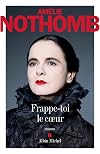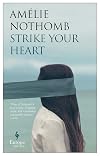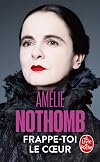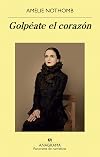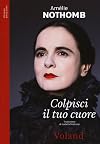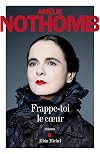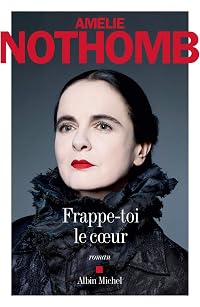
Strike Your Heart
by Amélie Nothomb
On This Page
Description
Marie is the prettiest girl in her provincial hometown and is dating the most popular boy in town. She is the envy of all her schoolmates and she loves it. When she falls pregnant and gives birth to Diana, things change. Diana steals the hearts of all who meet her, inciting nothing but jealousy in her mother. This is Diana's story. The story of a young, brilliant woman who grows up without maternal affection. It is the story of Diana's relationships with other women: her best friend, the show more sweet Elisabeth; her mentor, the selfish Olivia; her sister, the beloved Célia; and, of course, her mother. It is a story about the baser sentiments that often animate human relations: rivalry, jealousy, distrust. show lessTags
Recommendations









Member Reviews
Insightful, well-structured, well-written, and ultimately underwhelming. "Strike Your Heart" is the story of a beautiful, emotionally underdeveloped young girl whose careless life choices lead to decades worth of psychological trauma for just about everyone involved. It's up front about being a story of jealousy and, as far as it goes, it's psychologically coherent and its plotting is seamless and economical. The book's events unfold with the terrible, unstoppable logic of a classic tragedy, but, to the author's credit, I didn't see all of the plot points coming. The writing itself has a brushed, seamless quality that reads easily but doesn't leave a lot of room for nuance or atmosphere. Again, it's too the author's credit that the show more characters we meet in "Strike Your Heart" often seem do like real -- or at least believable -- people, even though much of the book feels sort of anonymous. We never learn the name of the French city that Marie calls home, for instance. Furthermore, many elements of "Strike Your Heart" are decidedly non-realist: it's a book in which the internal monologue of a three-year-old sounds exactly like that of a twenty-five-year-old. It's an impressive performance, but it didn't exactly make me love this book.
The problem is that even though they're well-rendered, this novel's character's don't seem to have any existence outside the exceedingly narrow story that the author wants to tell here. "Strike Your Heart" illustrates a psychological dynamic very well, but that's about it. In this sense, it's less a novel than a literary argument, albeit one that's impressively constructed. The entire exercise has a certain dryness to it: this is a novel that refuses to play around with its themes or exceed its narrow prerogatives. Amélie Nothomb's skill as a writer more-or-less wills these characters into existence, but you can't really feel them breathe. So while I can't deny Nothomb's talents, I never really warmed to this one. Perhaps she didn't intend me to. It's on to something else, then. show less
The problem is that even though they're well-rendered, this novel's character's don't seem to have any existence outside the exceedingly narrow story that the author wants to tell here. "Strike Your Heart" illustrates a psychological dynamic very well, but that's about it. In this sense, it's less a novel than a literary argument, albeit one that's impressively constructed. The entire exercise has a certain dryness to it: this is a novel that refuses to play around with its themes or exceed its narrow prerogatives. Amélie Nothomb's skill as a writer more-or-less wills these characters into existence, but you can't really feel them breathe. So while I can't deny Nothomb's talents, I never really warmed to this one. Perhaps she didn't intend me to. It's on to something else, then. show less
Like every other Amélie Nothomb novel I've read, Strike Your Heart felt deep, true, and perfect to me.
I try to understand why her books aren't gobbled up by my friends and anticipated before they are published.
One reason might be because she never strays beyond the nihilistic reality of what it's like to be a woman. There's a certain cut-throat realism in this novel, and in every other Nothomb novel I've ever read. She frequently writes about just how awful women can be to one another.
Another reason that she is less lauded than she deserves might be the utter simplicity of her prose style. I don't think there is a single dependent clause anywhere in this novel.
A third reason might be because she is prolific, writing one short show more perfect novel after another. I think people tend to doubt the quality of the work of any writer who puts out very short books, very fast. Or they don't know where to start. (I would recommend starting with [b:Loving Sabotage|71460|Loving Sabotage|Amélie Nothomb|https://images.gr-assets.com/books/1170779652s/71460.jpg|73063]).
Every time I pick up a Nothomb novel I'm gripped by it, and I sit very still, and end up reading to the end, at which point I feel like someone just metaphorically stabbed me in the heart twenty times or so, and in a way that leaves me baffled and in love with the world. show less
I try to understand why her books aren't gobbled up by my friends and anticipated before they are published.
One reason might be because she never strays beyond the nihilistic reality of what it's like to be a woman. There's a certain cut-throat realism in this novel, and in every other Nothomb novel I've ever read. She frequently writes about just how awful women can be to one another.
Another reason that she is less lauded than she deserves might be the utter simplicity of her prose style. I don't think there is a single dependent clause anywhere in this novel.
A third reason might be because she is prolific, writing one short show more perfect novel after another. I think people tend to doubt the quality of the work of any writer who puts out very short books, very fast. Or they don't know where to start. (I would recommend starting with [b:Loving Sabotage|71460|Loving Sabotage|Amélie Nothomb|https://images.gr-assets.com/books/1170779652s/71460.jpg|73063]).
Every time I pick up a Nothomb novel I'm gripped by it, and I sit very still, and end up reading to the end, at which point I feel like someone just metaphorically stabbed me in the heart twenty times or so, and in a way that leaves me baffled and in love with the world. show less
Marie a város legszebb lánya. És ezt tudja is. A paraziták egy bizonyos (speciális) típusát képviseli: mások féltékenységén élősködik. Ez az ő tejszínhabos eperkoktélja, dupla eszpresszója, ami feltölti energiával. Hogy maximalizálja a többi lány féltékenységfaktorát, össze is jön a város legjobb partijának számító patikusfiúval, és (kvázi véletlenül) szül neki egy gyönyörű gyereket. Csakhogy ezzel a másik oldalra kerül, abba a világba, ahol a gyermek (Diane) kapja a fényt helyette – megtapasztalja hát ő is a féltékenység fájdalmát, azt, amit másokban oly szívesen ébresztett. Innentől Diane a kulcsfigura, azt látjuk, hogyan hat rá az anyai szeretettelenség, hogyan dolgozza show more fel, hogy privát istennője kizárja őt az életéből.
Mindenképpen le kell szögeznünk: Nothomb nem annyira regényt írt, sokkal inkább példázatot. Vagy ha úgy tetszik, illusztrációt a lexikon „mérgező szülők” szócikkéhez. A karakterek erősek, élesen vannak megrajzolva, szinte el lehet velük vágni az ujjunk. De diverzifikáltságot ne nagyon várjunk tőlük: azért vannak, hogy szemléltessenek valamit, kiszolgáljanak egyetlen konkrét írói célt. Ugyanígy, a valószerűség is esetenként csorbát szenved. Itt van például Marie három gyermeke. Diane, akit nem szeret, Célia, akit túlságosan (egészségtelenül) szeret, és a középső csemete, Nicolas, akit viszont pont jól szeret. No most nem vagyok gyermekpszichológus, így nem zárnám ki, hogy egyetlen anya három gyereket tud három ennyire különböző módon szeretni. Ám azért merőben életszerűtlen. Inkább arról lehet szó, hogy tömörítési szempontból Nothombnak így volt praktikus, egyetlen anyán keresztül mutatni be mindkét szélsőséges viszonyulást, plusz még az optimálisat is. Ez a fajta megközelítés (az életszerű alávetése a mondanivalónak) így vagy úgy az egész regényt végigkíséri. Ami nem önmagában baj, csak ne érjen minket váratlanul. Különben meg lendületes és plasztikus, a maga finoman didaktikus módján elgondolkodtató pszichiátriai esetleírás, szépirodalmi köntösben. show less
Mindenképpen le kell szögeznünk: Nothomb nem annyira regényt írt, sokkal inkább példázatot. Vagy ha úgy tetszik, illusztrációt a lexikon „mérgező szülők” szócikkéhez. A karakterek erősek, élesen vannak megrajzolva, szinte el lehet velük vágni az ujjunk. De diverzifikáltságot ne nagyon várjunk tőlük: azért vannak, hogy szemléltessenek valamit, kiszolgáljanak egyetlen konkrét írói célt. Ugyanígy, a valószerűség is esetenként csorbát szenved. Itt van például Marie három gyermeke. Diane, akit nem szeret, Célia, akit túlságosan (egészségtelenül) szeret, és a középső csemete, Nicolas, akit viszont pont jól szeret. No most nem vagyok gyermekpszichológus, így nem zárnám ki, hogy egyetlen anya három gyereket tud három ennyire különböző módon szeretni. Ám azért merőben életszerűtlen. Inkább arról lehet szó, hogy tömörítési szempontból Nothombnak így volt praktikus, egyetlen anyán keresztül mutatni be mindkét szélsőséges viszonyulást, plusz még az optimálisat is. Ez a fajta megközelítés (az életszerű alávetése a mondanivalónak) így vagy úgy az egész regényt végigkíséri. Ami nem önmagában baj, csak ne érjen minket váratlanul. Különben meg lendületes és plasztikus, a maga finoman didaktikus módján elgondolkodtató pszichiátriai esetleírás, szépirodalmi köntösben. show less
A slight, shallow book. It’s not charming, not when the main character is all kinds of perfect: pretty, capable, hard-working, admired, super precocious. And especially not when the book has nothing substantial to say about maternal abuse.
Reading these Nothomb novels has become an annual chore rather than a pleasure. They are well past the point of diminishing returns. I should give up on them.
Reading these Nothomb novels has become an annual chore rather than a pleasure. They are well past the point of diminishing returns. I should give up on them.
ugh what a drag. her books used to be heart-pounding and challenging. this one reads like she wrote it in her sleep.
A modern fable about jealousy between mothers and daughters. Full review here http://annabookbel.net/strike-your-heart-amelie-nothumb-europa
Marie, joven belleza de provincias, despierta admiración, se sabe deseada, disfruta siendo el centro de atención y se deja cortejar por el galán más guapo de su entorno. Pero un embarazo imprevisto y una boda precipitada cortan en seco sus devaneos juveniles, y cuando nace su hija Diane vierte sobre ella toda su frialdad, envidia y celos.
Diane crecerá marcada por la carencia de afecto maternal e intentando comprender los motivos de la cruel actitud de su madre hacia ella. Años después, la fascinación por el verso de Alfred de Musset que da origen al título del libro la impulsará a estudiar cardiología en la universidad, donde se topará con una profesora llamada Olivia. Con ella, en la que creerá encontrar la anhelada figura show more materna, establecerá una ambigua y compleja relación, pero Olivia tiene a su vez una hija, y la historia dará un vuelco inesperado…
Esta es una novela de mujeres. Una narración sobre madres e hijas. Una fábula contemporánea deliciosamente ácida y malévola sobre los celos y la envidia, en la que también asoman otras complejidades de las relaciones humanas: las rivalidades, las manipulaciones, el poder que ejercemos sobre el otro, la necesidad que sentimos de ser amados…
Esta novela, la número veinticinco de Amélie Nothomb, es una muestra pluscuamperfecta de su endiablada inteligencia como narradora, de la perspicacia de su mirada y de la placentera liviandad repleta de secretas cargas de profundidad de su literatura. show less
Diane crecerá marcada por la carencia de afecto maternal e intentando comprender los motivos de la cruel actitud de su madre hacia ella. Años después, la fascinación por el verso de Alfred de Musset que da origen al título del libro la impulsará a estudiar cardiología en la universidad, donde se topará con una profesora llamada Olivia. Con ella, en la que creerá encontrar la anhelada figura show more materna, establecerá una ambigua y compleja relación, pero Olivia tiene a su vez una hija, y la historia dará un vuelco inesperado…
Esta es una novela de mujeres. Una narración sobre madres e hijas. Una fábula contemporánea deliciosamente ácida y malévola sobre los celos y la envidia, en la que también asoman otras complejidades de las relaciones humanas: las rivalidades, las manipulaciones, el poder que ejercemos sobre el otro, la necesidad que sentimos de ser amados…
Esta novela, la número veinticinco de Amélie Nothomb, es una muestra pluscuamperfecta de su endiablada inteligencia como narradora, de la perspicacia de su mirada y de la placentera liviandad repleta de secretas cargas de profundidad de su literatura. show less
Mar 28, 2019Spanish
Members
- Recently Added By
Lists

Kirkus Starred Fiction Reviews of Books Published in 2018
330 works; 3 members
Author Information

84+ Works 16,078 Members
Some Editions
Series
Belongs to Publisher Series
Le livre de poche (35124)
Common Knowledge
- Canonical title
- Strike Your Heart
- Original title
- Frappe-toi le cœur
- Original publication date
- 2017 (1e édition originale française ∙ Albin Michel) (1e é | dition originale franç | aise ∙ | Albin Michel); 2019 (Réédition française, Le livre de poche, Librairie générale française) (Ré | é | dition franç | aise, Le livre de poche, Librairie gé | né | rale franç | aise)
- Quotations*
- In seguito si pentì amaramente di quel passaggio al tu. L'abbandono del lei corrispose in Olivia all'abbandono delle ultime tracce di rispetto che ancora le manifestava. Quello che prima era un "Mi scusi, per caso ha finito ... (show all)di correggere gli scritti dei parziali?” ora era diventato: “Be’ sono finite queste correzioni?” Il grande assente di quel cambio di pronomi era proprio il tu. Olivia adesso non si rivolgeva neppure più a qualcuno.
Fedele alla sua inesorabile abitudine, la vita continuò. - Original language
- French
*Some information comes from Common Knowledge in other languages. Click "Edit" for more information.
Classifications
Statistics
- Members
- 199
- Popularity
- 164,554
- Reviews
- 17
- Rating
- (3.73)
- Languages
- 7 — Catalan, Dutch, English, French, German, Italian, Spanish
- Media
- Paper, Audiobook, Ebook
- ISBNs
- 21
- ASINs
- 9