On This Page
Description
"Narrator Jennifer Hale's outstanding performance brings this story of alien invasion to life...Hale's range of differentiation is masterly as she animates all the quirky characters Kira meets. From the rough, snarky slang of ex-military woman to the half-mad musings of a human "ship mind," every unique voice enhances the listening experience." — AudioFile Magazine, Earphones Award winnerThis program includes an afterword read by Christopher Paolini, as well as a bonus conversation show more between Christopher Paolini and Jennifer Hale.
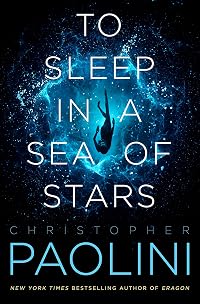
To Sleep in a Sea of Stars is a brand new epic novel from New York Times bestselling author Christopher Paolini.
**This program is read by Jennifer Hale, a Canadian American actress and singer who has appeared in hundreds of cartoon episodes and taken on roles in well over 185 video games, winning multiple awards. Her varied roles include Commander Shepard in Mass Effect, Rosalind Lutece in BioShock Infinite, Cinderella in both games and animation, Kronika in MK11, Naomi Hunter in the Metal Gear series, several roles in The Powerpuff Girls, Justice League, Avengers Assemble, the Emmy Award winning Lost In Oz, Jean Grey/Phoenix in both games and animated series and dozens more. This is her first audiobook.**
Kira Navárez dreamed of life on new worlds.
Now she's awakened a nightmare.
During a routine survey mission on an uncolonized planet, Kira finds an alien relic. At first she's delighted, but elation turns to terror when the ancient dust around her begins to move.
As war erupts among the stars, Kira is launched into a galaxy-spanning odyssey of discovery and transformation. First contact isn't at all what she imagined, and events push her to the very limits of what it means to be human.
While Kira faces her own horrors, Earth and its colonies stand upon the brink of annihilation. Now, Kira might be humanity's greatest and final hope . . .
A Macmillan Audio production from Tor Books
. show less
Tags
Recommendations






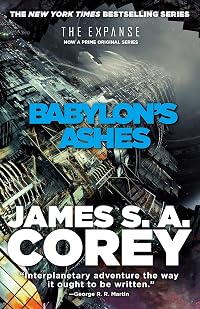
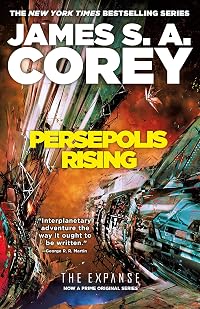
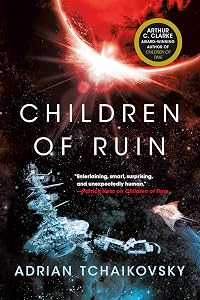

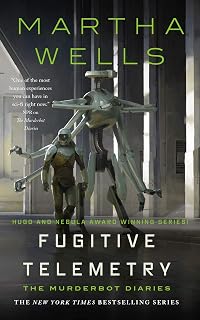

Member Recommendations
aethercowboy This is a much better sci-fi novel that deals with similar themes.
Member Reviews
I was all set to mark To Sleep in a Sea of Stars by Christopher Paolini as a DNF after the first chapter. There is so much in the first quarter of the novel which reads like an extension of The Expanse series by James S. A. Corey. This includes terminology, anti-Earth sentiment, newly-found alien artifacts, the blending of alien and human biology, and consequences of that blending that impact the entire known universe.
A funny thing happened as I progressed to that twenty-five percent marker whereupon I would make my final decision. I started to care about the main character. A lot. I wanted to know more about what she was going to do with her Soft Blade issue. Moreover, I couldn’t tear myself away from the idea of an show more honest-to-goodness alien invasion and universe-wide war. And so a DNF turned into an 880-page devour.
Characters are not the heart of To Sleep in a Sea of Stars. In fact, other than Kira, the rest of the cast consists of nothing but space opera archetypes with no character development. And there is nothing wrong with this. The near-constant action counteracts the lack of strong characters.
One of the best things about space operas, outside of the story, is how each author approaches aliens. More importantly, how each author approaches humanity’s reaction to concrete proof of aliens. In To Sleep in a Sea of Stars, that reaction is intriguing. The “shoot first, ask questions later” human traits takes a backseat to the need for adequate study and determination of threat level. In fact, it is the aliens who are the aggressors. Personally, I think this is a rather optimistic view of humanity, but it makes for interesting reading.
I thoroughly enjoyed To Sleep in a Sea of Stars. It has everything I love about such stories, including so much space travel that it allows you to finally grasp the vastness of space. I liked it so much that I would love to see more of Kira’s story. Thankfully, Mr. Paolini left the ending open for more should he so choose. show less
A funny thing happened as I progressed to that twenty-five percent marker whereupon I would make my final decision. I started to care about the main character. A lot. I wanted to know more about what she was going to do with her Soft Blade issue. Moreover, I couldn’t tear myself away from the idea of an show more honest-to-goodness alien invasion and universe-wide war. And so a DNF turned into an 880-page devour.
Characters are not the heart of To Sleep in a Sea of Stars. In fact, other than Kira, the rest of the cast consists of nothing but space opera archetypes with no character development. And there is nothing wrong with this. The near-constant action counteracts the lack of strong characters.
One of the best things about space operas, outside of the story, is how each author approaches aliens. More importantly, how each author approaches humanity’s reaction to concrete proof of aliens. In To Sleep in a Sea of Stars, that reaction is intriguing. The “shoot first, ask questions later” human traits takes a backseat to the need for adequate study and determination of threat level. In fact, it is the aliens who are the aggressors. Personally, I think this is a rather optimistic view of humanity, but it makes for interesting reading.
I thoroughly enjoyed To Sleep in a Sea of Stars. It has everything I love about such stories, including so much space travel that it allows you to finally grasp the vastness of space. I liked it so much that I would love to see more of Kira’s story. Thankfully, Mr. Paolini left the ending open for more should he so choose. show less
Overrated and underwhelming, To Sleep in a Sea of Stars shows that Eragon author Christopher Paolini has not matured as a writer since penning his way to a claim to fame at the age of 15. Almost 20 years later, the only thing that has changed is that now his characters swear. Like, a lot.
To Sleep in a Sea of Stars is a bland 800+ page story that, like Paolini's other novels, borrows heavily from things that came before. It's part Alien/Prometheus, part Venom (you know, the Spider-Man villain), part Witchblade, part StarCraft, and all Mary Sue.
Kira is a xenobiologist who while xenobiologisting discovers an alien artifact that gives her an alien symbiote that, at first, kills everybody she cares about, but also basically makes her a show more space goddess, so she's able to get over that pretty quickly, only occasionally delving into survivor guilt when the narrative needs that trusty plot handbrake to keep from getting to the end faster. She teams up with wave after wave of redshirts tracking down plot coupons and having pointless conversations that only act as filler before the next wave of cryosleep en route across the galaxy only to find out that most of the plot coupons have already expired. The big bad ultimately deflates like a Macy's Thanksgiving Day Parade with a not-so-slow leak, and you never are given any reason to care about the characters in the book (and maybe sometimes find yourself rooting for the giant space squid, if only to make the story end sooner).
In addition to being a slough of despondency to get through, the character of Kira is written with all the grace and sensitivity of somebody who lacks the grace and sensitivity to write believable female characters and is too afraid to ask anybody if she seems believable. Like many men writing women, Kira comes off as more the parody or a fantasy of a woman than a woman herself.
Additionally, Paolini takes great effort to explain the science that he researched in writing the book. Such great effort that even simple ideas come off as needlessly complex. I'm reminded of that quote often attributed to Einstein: "If you can't explain it simply, you don't understand it." Paolini stated that all his friends and family were telling him as he wrote this book that it wasn't working. Then he claims to have made a breakthrough. He was wrong. It still isn't working.
If you liked his other books, you might like this. If you like bland, uninspired sci-fi, you might also like this. Otherwise, you may be briefly amused by the subtle references to The Hitchhiker's Guide to the Galaxy or Red Dwarf, but in the end, like the attempts at humor in this book, it all falls flat.
Not recommended. show less
To Sleep in a Sea of Stars is a bland 800+ page story that, like Paolini's other novels, borrows heavily from things that came before. It's part Alien/Prometheus, part Venom (you know, the Spider-Man villain), part Witchblade, part StarCraft, and all Mary Sue.
Kira is a xenobiologist who while xenobiologisting discovers an alien artifact that gives her an alien symbiote that, at first, kills everybody she cares about, but also basically makes her a show more space goddess, so she's able to get over that pretty quickly, only occasionally delving into survivor guilt when the narrative needs that trusty plot handbrake to keep from getting to the end faster. She teams up with wave after wave of redshirts tracking down plot coupons and having pointless conversations that only act as filler before the next wave of cryosleep en route across the galaxy only to find out that most of the plot coupons have already expired. The big bad ultimately deflates like a Macy's Thanksgiving Day Parade with a not-so-slow leak, and you never are given any reason to care about the characters in the book (and maybe sometimes find yourself rooting for the giant space squid, if only to make the story end sooner).
In addition to being a slough of despondency to get through, the character of Kira is written with all the grace and sensitivity of somebody who lacks the grace and sensitivity to write believable female characters and is too afraid to ask anybody if she seems believable. Like many men writing women, Kira comes off as more the parody or a fantasy of a woman than a woman herself.
Additionally, Paolini takes great effort to explain the science that he researched in writing the book. Such great effort that even simple ideas come off as needlessly complex. I'm reminded of that quote often attributed to Einstein: "If you can't explain it simply, you don't understand it." Paolini stated that all his friends and family were telling him as he wrote this book that it wasn't working. Then he claims to have made a breakthrough. He was wrong. It still isn't working.
If you liked his other books, you might like this. If you like bland, uninspired sci-fi, you might also like this. Otherwise, you may be briefly amused by the subtle references to The Hitchhiker's Guide to the Galaxy or Red Dwarf, but in the end, like the attempts at humor in this book, it all falls flat.
Not recommended. show less
I’ve read an enormous amount of science fiction over the years, from Asimov, Herbert and Clarke to more recently, Stephenson, Reynolds and Hamilton. This book appeared intriguing, so I picked it up with high hopes. Unfortunately, it was a disappointment.
If I could choose one word to describe it, it would be “bloated”, terribly bloated. The book checks in at around 900 pages. It could easily have been reduced to 600 pages. Now, I don’t mind long books. I read Peter Hamilton’s 3,000 page Night’s Dawn trilogy. This book was simply way longer than it needed to be. I enjoy reading before sleeping and can usually go through a 500 page book in 10-12 days. It took me forever to finish this book because I simply began falling to show more sleep after reading 20 pages or so. It dragged terribly.
In addition, it was needlessly confusing, introducing an assortment of alien races and using different names to identify them. Every race seemed to have 2-3 different names, depending upon who was speaking.
The world building was not bad and the science fiction was pretty hard. In fact, there are a couple of appendices with charts and tables that purport to explain the science behind FTL travel. Not being a physicist, I cant comment on their accuracy, other than to say, if they were accurate, we would have FTL travel.
I can’t recommend spending the time required to wade through this one. show less
If I could choose one word to describe it, it would be “bloated”, terribly bloated. The book checks in at around 900 pages. It could easily have been reduced to 600 pages. Now, I don’t mind long books. I read Peter Hamilton’s 3,000 page Night’s Dawn trilogy. This book was simply way longer than it needed to be. I enjoy reading before sleeping and can usually go through a 500 page book in 10-12 days. It took me forever to finish this book because I simply began falling to show more sleep after reading 20 pages or so. It dragged terribly.
In addition, it was needlessly confusing, introducing an assortment of alien races and using different names to identify them. Every race seemed to have 2-3 different names, depending upon who was speaking.
The world building was not bad and the science fiction was pretty hard. In fact, there are a couple of appendices with charts and tables that purport to explain the science behind FTL travel. Not being a physicist, I cant comment on their accuracy, other than to say, if they were accurate, we would have FTL travel.
I can’t recommend spending the time required to wade through this one. show less
When I read that this book took Christopher Paolini 9 years to write, I realized he had put all of his creative effort into telling a story that really meant something to him. Nobody puts 9 years into something that is only a "story.'' I knew I had to read this book! I enjoyed his first books -- The Inheritance Cycle. And I love, love, LOVE science fiction. So I was hopeful that this book would really wow me....
And it did.
OMG. I got pulled right into the characters, the action, the plot. I enjoyed reading my digital galley...got half way through....and started over again with the audio book version because this was a story that I wanted to HEAR told to me. Not just that....but I can listen more than I can sit down and read a physical show more copy due to commuting to work, household chores...you know, adulting. The audio book let me devour this story much faster than I could have reading the physical review copy....
The basics: Kira Navarez is a xenobiologist. She is assigned a routine survey mission, and dutifully goes about her job. But, then it all goes wrong....or right and then wrong from her point of view. She discovers an alien relic and is overjoyed, but that joy soon turns to horror as she has an encounter with something on the planet that will change her life forever.
I'm not saying anything else about the plot! Read (or listen to) the book! If you enjoy sci-fi action or space operas -- you will love this book!
The audio is 32 hours long -- but worth every minute. Jennifer Hale does a superb job of voice acting. Very enjoyable listen! The front cover art is phenomenal, too!
This story is action packed, emotional, thought provoking and very very entertaining for this sci-fi fan! I can't wait to see what else Paolini is going to write! I hope I don't have 9 years to wait! But, even if I do, I will gladly read whatever he publishes next!
**I voluntarily read both the digital galley and the audiobook versions of this novel from Macmillan/Tor-Forge/Macmillan Audio for review purposes. All opinions expressed are entirely my own.** show less
And it did.
OMG. I got pulled right into the characters, the action, the plot. I enjoyed reading my digital galley...got half way through....and started over again with the audio book version because this was a story that I wanted to HEAR told to me. Not just that....but I can listen more than I can sit down and read a physical show more copy due to commuting to work, household chores...you know, adulting. The audio book let me devour this story much faster than I could have reading the physical review copy....
The basics: Kira Navarez is a xenobiologist. She is assigned a routine survey mission, and dutifully goes about her job. But, then it all goes wrong....or right and then wrong from her point of view. She discovers an alien relic and is overjoyed, but that joy soon turns to horror as she has an encounter with something on the planet that will change her life forever.
I'm not saying anything else about the plot! Read (or listen to) the book! If you enjoy sci-fi action or space operas -- you will love this book!
The audio is 32 hours long -- but worth every minute. Jennifer Hale does a superb job of voice acting. Very enjoyable listen! The front cover art is phenomenal, too!
This story is action packed, emotional, thought provoking and very very entertaining for this sci-fi fan! I can't wait to see what else Paolini is going to write! I hope I don't have 9 years to wait! But, even if I do, I will gladly read whatever he publishes next!
**I voluntarily read both the digital galley and the audiobook versions of this novel from Macmillan/Tor-Forge/Macmillan Audio for review purposes. All opinions expressed are entirely my own.** show less
I don't usually like books set in space. As a consequence, I rarely read books set in space. In fact, I can think of only three books set in space that I've thoroughly enjoyed.* So where do I get off picking up an epic science fiction novel set in space that comes in at an impressive 880 pages? What can I say? Christopher Paolini made me do it!
This year I finished the Inheritance Cycle by Christopher Paolini and when I learned To Sleep In A Sea of Stars was Paolini's first novel for adults, I requested an advance copy from the publisher immediately; such is my faith in his writing. I considered that if anyone could lure me into an interstellar battle to save humanity and hold my attention, it was Paolini. Thankfully I was right and I show more loved this chunkster!
Published today, To Sleep In A Sea of Stars kicks off very quickly with Xenobiologist Kira Navarez conducting a routine survey mission on a planet ahead of a planned colonisation. Kira finds an ancient alien relic and the action doesn't stop from that point on. There is always something happening with the only respite being when the crew are in cryo or recovering from their last skirmish.
I really enjoyed the pace and the character growth, and here's an example from Page 486:
Falconi: "So stop blaming yourself."
Kira: "I can't seem to help it."
Falconi: "Bullshit. The truth is you don't want to. It makes you feel good to blame yourself. You know why?"
Kira shook her head, mute.
Falconi: "Because it gives you a sense of control. The hardest lesson in life is learning to accept that there are some things we can't change."
The history and world building in the novel were very convincing and I enjoyed the introduction of different species and their back stories. My favourite character of the entire book was Itari and I adored the conversations between Kira and Itari. Thinking of them now brings a smile to my face.
Throughout the entire novel I was fully immersed in the world of battleships, cryo tubes, laser blasters, skinsuits, orbital rings, docking hubs and ship minds and I never felt like an impostor.
Travelling FTL (faster than light) didn't phase me, alien technology didn't confuse me and not once did I want to be 'spaced' out of the book. (That's when you're jettisoned out of an air lock to your inevitable death).
Since finishing the book, I've noticed that an enterprising Spotify user has created a playlist to listen to while reading the book. I've been enjoying it this week and it's fantastic. Just search for the book's title on Spotify to find the playlist.
Another thing I enjoyed about To Sleep In A Sea of Stars was the Afterword and Acknowledgements section where Paolini shares with the reader the way in which this novel came to life. The project ups and downs, multiple re-writes and detailed research over the course of many years, gave me an even greater appreciation for the depth and scope of the book, and respect for the author for not rushing it.
To Sleep In A Sea of Stars by Christopher Paolini is a whopping epic science fiction novel bursting with adventure and I loved it! It even gave me pause to re-consider my reading tastes when it comes to science fiction and space operas and you can't ask for more than that.
Highly recommended!
* Check out my blog review for the titles: https://www.carpelibrum.net/2020/09/review-to-sleep-in-a-sea-of-stars-by-christo...
* Copy courtesy of Pan Macmillan Australia * show less
This year I finished the Inheritance Cycle by Christopher Paolini and when I learned To Sleep In A Sea of Stars was Paolini's first novel for adults, I requested an advance copy from the publisher immediately; such is my faith in his writing. I considered that if anyone could lure me into an interstellar battle to save humanity and hold my attention, it was Paolini. Thankfully I was right and I show more loved this chunkster!
Published today, To Sleep In A Sea of Stars kicks off very quickly with Xenobiologist Kira Navarez conducting a routine survey mission on a planet ahead of a planned colonisation. Kira finds an ancient alien relic and the action doesn't stop from that point on. There is always something happening with the only respite being when the crew are in cryo or recovering from their last skirmish.
I really enjoyed the pace and the character growth, and here's an example from Page 486:
Falconi: "So stop blaming yourself."
Kira: "I can't seem to help it."
Falconi: "Bullshit. The truth is you don't want to. It makes you feel good to blame yourself. You know why?"
Kira shook her head, mute.
Falconi: "Because it gives you a sense of control. The hardest lesson in life is learning to accept that there are some things we can't change."
The history and world building in the novel were very convincing and I enjoyed the introduction of different species and their back stories. My favourite character of the entire book was Itari and I adored the conversations between Kira and Itari. Thinking of them now brings a smile to my face.
Throughout the entire novel I was fully immersed in the world of battleships, cryo tubes, laser blasters, skinsuits, orbital rings, docking hubs and ship minds and I never felt like an impostor.
Travelling FTL (faster than light) didn't phase me, alien technology didn't confuse me and not once did I want to be 'spaced' out of the book. (That's when you're jettisoned out of an air lock to your inevitable death).
Since finishing the book, I've noticed that an enterprising Spotify user has created a playlist to listen to while reading the book. I've been enjoying it this week and it's fantastic. Just search for the book's title on Spotify to find the playlist.
Another thing I enjoyed about To Sleep In A Sea of Stars was the Afterword and Acknowledgements section where Paolini shares with the reader the way in which this novel came to life. The project ups and downs, multiple re-writes and detailed research over the course of many years, gave me an even greater appreciation for the depth and scope of the book, and respect for the author for not rushing it.
To Sleep In A Sea of Stars by Christopher Paolini is a whopping epic science fiction novel bursting with adventure and I loved it! It even gave me pause to re-consider my reading tastes when it comes to science fiction and space operas and you can't ask for more than that.
Highly recommended!
* Check out my blog review for the titles: https://www.carpelibrum.net/2020/09/review-to-sleep-in-a-sea-of-stars-by-christo...
* Copy courtesy of Pan Macmillan Australia * show less
4.5/5
NOTE: I won an advance copy of this book from BookishFirst. All reactions are my own.
I never read The Inheritance Cycle as a kid. I tried reading Eragon a few times and I made it partway through the film, but it was never something I could get into. I'm very picky about what kinds of fantasy books I like - the higher the fantasy and the more complex the world, the less likely I am to like it. Which is exactly what happened with Christopher Paolini's beloved books. It was a classic case of it's me not them. In that context, I was unsure what to expect when approaching To Sleep in a Sea of Stars, Paolini's first book for adults, and his first foray into science fiction. While I love a lot of sci-fi, would I like this? Would this show more novel connect with me in the way I wanted his others to? In short: yes. To Sleep in a Sea of Stars is a masterclass in genre storytelling. Intricately plotted, stuffed with multidimensional and endearing characters, and filled with enough action to make Hollywood jealous, it is a thrill from start to finish.
To get the obvious out of the way, To Sleep in a Sea of Stars is a long book. I mean, it's really long. But it manages to feel much shorter than it is. For the most part, it never feels like a moment is wasted. Paolini finds a good balance between world-building and character/plot development. It is apparent that he has created a sprawling universe in which the story is set, but he shows quite a bit of restraint in sharing that information. We learn about this world as it becomes relevant. Things may seem confusing at first, but they become clearer as the book progresses. There are plenty of exposition dumps, sure, but they are handled in ways that feel rooted in the needs of the characters and, as a result, feel natural to the reader. Plus, they’re balanced by some excellent action sequences - but more on that shortly.
So, with the novel deftly handling its world-building, you might think it has an insanely complex plot. And you'd be partially right, but not exactly. The novel's plot could fairly easily be boiled down to something simple. Something like: Kira, a xenobiologist, accidentally discovers and pairs with an alien symbiote. Then, all hell breaks loose as she finds herself at the center of a battle she is ill-prepared for. This wouldn't be an inaccurate synopsis, but it wouldn't do the book justice, either. I'd liken To Sleep in a Sea of Stars to some of the best-serialized television shows. It's a long story told over several parts. Various elements build off of those introduced early on, guiding the audience through twists and turns until eventually arriving at a resolution that takes all the threads of what's come before and weaves them into something new.
Now, sure, that could describe any and every well-told story. And you're right; it could. But what makes To Sleep in a Sea of Stars feel special is how well it does all of this. Paolini tells a complex story with a lot of moving Parts over the 800-odd pages. There is constantly a lot going on. There are few moments of true calm. But at no point does any of this feel overwhelming. At no point is it more confusing than it should be. It is expertly plotted, put together like a massive puzzle. Every piece has its place and it all adds up to the tapestry that is the whole of the narrative. It is insanely well-paced. The beginning of the book takes the requisite time to acquaint you with its world before speeding off into the meat of the story. From there, there is never a dull moment. There is a perfect blend of quieter moments where characters can shine and the narrative can be explored and big action scenes and tension-filled sequences that make you itch to keep reading. Every element of the narrative works in perfect harmony, demanding your attention.
Perhaps no element works as well as the novel's characters - and there are many of them. Our lead character, Kira, is the one whose story we follow. The narrative follows her perspective and it is her journey we track. She is both an audience surrogate, getting introduced to much of the book's crazier aspects at the same time as the audience, and a fully developed character who we immediately empathize with. It is through her that many of the novel's bigger ideas are explored - what makes us human? If given power, would we create or would we destroy? How can the isolation of space change a person? These questions, and others, are central to Kira's journey and are central to the novel. Paolini crafts a compelling story around this already compelling character and it makes for an engaging read.
Kira isn't the only interesting character, though. She's surrounded by a cast of equally interesting characters, both human and alien alike. Much of the novel is spent with Kira aboard the Wallfish, a smuggling ship crewed by Falconi and his crew. Every member of the crew is given the chance to shine, with each of them feeling multi-dimensional and as real as someone you might find on the street. Populating the novel with characters as realistic as these grounds some of the crazier elements of the books. It makes the whole universe feel lived in, which makes us more receptive to the weirder characters we meet. And we meet a lot of weird characters - from aliens to artificial intelligences to sentient technology. To Sleep in a Sea of Stars is filled to the brim with creative and engaging characters, all of whom compel you to spend time with them and all of whom feel wholly unique and interesting.
As impressive as all this is, Paolini's prose is almost as impressive. As I said, I wasn't sure what to expect from this book, having never read one of his novels to completion. But here, Paolini manages a good balance between thoroughly describing things and leaving things to his readers' imaginations. I, personally, am not a big fan of lots of descriptions. I like it when authors describe enough so that I get the gist of what something looks like, but leaves the rest up to my imagination. Paolini does this very well here, particularly when it comes to describing the aliens. He gives enough details that you have a good starting place but allows you to fill the rest in. The same is true with his action scenes, another element that is easy to overly describe. At no point do you ever feel lost in the action, stranded without a clue what's going on, but you're also not bogged down in endless descriptions of tactical moves. Paolini keeps everything very brisk and maintains a good tension throughout all of his prose. That's actually a good way of describing his writing here in general. For a book that's as long as To Sleep in a Sea of Stars is, Paolini manages to make it feel brisk and filled with tension and excitement. It's no easy task and it's something worth praising.
At the end of the day, I can't praise To Sleep in a Sea of Stars enough. While I didn't know what to expect from this book, I was blown away by what I read. It's a long book that feels about half as long as it is. It's so intricately plotted that it manages to be both understandable and hints at rewards to be found in subsequent rereads. It's filled with sympathetic and relatable characters who feel distinct, fully developed, and realistic. There's blockbuster-level action scenes and engaging moments of thought and philosophy. It's everything you want from a sci-fi epic, and even more. If you've never read a book from Christopher Paolini, this is the place to start. And if you're looking for a sprawling space opera, packed with intriguing ideas and an exciting story, you should absolutely read this book. show less
NOTE: I won an advance copy of this book from BookishFirst. All reactions are my own.
I never read The Inheritance Cycle as a kid. I tried reading Eragon a few times and I made it partway through the film, but it was never something I could get into. I'm very picky about what kinds of fantasy books I like - the higher the fantasy and the more complex the world, the less likely I am to like it. Which is exactly what happened with Christopher Paolini's beloved books. It was a classic case of it's me not them. In that context, I was unsure what to expect when approaching To Sleep in a Sea of Stars, Paolini's first book for adults, and his first foray into science fiction. While I love a lot of sci-fi, would I like this? Would this show more novel connect with me in the way I wanted his others to? In short: yes. To Sleep in a Sea of Stars is a masterclass in genre storytelling. Intricately plotted, stuffed with multidimensional and endearing characters, and filled with enough action to make Hollywood jealous, it is a thrill from start to finish.
To get the obvious out of the way, To Sleep in a Sea of Stars is a long book. I mean, it's really long. But it manages to feel much shorter than it is. For the most part, it never feels like a moment is wasted. Paolini finds a good balance between world-building and character/plot development. It is apparent that he has created a sprawling universe in which the story is set, but he shows quite a bit of restraint in sharing that information. We learn about this world as it becomes relevant. Things may seem confusing at first, but they become clearer as the book progresses. There are plenty of exposition dumps, sure, but they are handled in ways that feel rooted in the needs of the characters and, as a result, feel natural to the reader. Plus, they’re balanced by some excellent action sequences - but more on that shortly.
So, with the novel deftly handling its world-building, you might think it has an insanely complex plot. And you'd be partially right, but not exactly. The novel's plot could fairly easily be boiled down to something simple. Something like: Kira, a xenobiologist, accidentally discovers and pairs with an alien symbiote. Then, all hell breaks loose as she finds herself at the center of a battle she is ill-prepared for. This wouldn't be an inaccurate synopsis, but it wouldn't do the book justice, either. I'd liken To Sleep in a Sea of Stars to some of the best-serialized television shows. It's a long story told over several parts. Various elements build off of those introduced early on, guiding the audience through twists and turns until eventually arriving at a resolution that takes all the threads of what's come before and weaves them into something new.
Now, sure, that could describe any and every well-told story. And you're right; it could. But what makes To Sleep in a Sea of Stars feel special is how well it does all of this. Paolini tells a complex story with a lot of moving Parts over the 800-odd pages. There is constantly a lot going on. There are few moments of true calm. But at no point does any of this feel overwhelming. At no point is it more confusing than it should be. It is expertly plotted, put together like a massive puzzle. Every piece has its place and it all adds up to the tapestry that is the whole of the narrative. It is insanely well-paced. The beginning of the book takes the requisite time to acquaint you with its world before speeding off into the meat of the story. From there, there is never a dull moment. There is a perfect blend of quieter moments where characters can shine and the narrative can be explored and big action scenes and tension-filled sequences that make you itch to keep reading. Every element of the narrative works in perfect harmony, demanding your attention.
Perhaps no element works as well as the novel's characters - and there are many of them. Our lead character, Kira, is the one whose story we follow. The narrative follows her perspective and it is her journey we track. She is both an audience surrogate, getting introduced to much of the book's crazier aspects at the same time as the audience, and a fully developed character who we immediately empathize with. It is through her that many of the novel's bigger ideas are explored - what makes us human? If given power, would we create or would we destroy? How can the isolation of space change a person? These questions, and others, are central to Kira's journey and are central to the novel. Paolini crafts a compelling story around this already compelling character and it makes for an engaging read.
Kira isn't the only interesting character, though. She's surrounded by a cast of equally interesting characters, both human and alien alike. Much of the novel is spent with Kira aboard the Wallfish, a smuggling ship crewed by Falconi and his crew. Every member of the crew is given the chance to shine, with each of them feeling multi-dimensional and as real as someone you might find on the street. Populating the novel with characters as realistic as these grounds some of the crazier elements of the books. It makes the whole universe feel lived in, which makes us more receptive to the weirder characters we meet. And we meet a lot of weird characters - from aliens to artificial intelligences to sentient technology. To Sleep in a Sea of Stars is filled to the brim with creative and engaging characters, all of whom compel you to spend time with them and all of whom feel wholly unique and interesting.
As impressive as all this is, Paolini's prose is almost as impressive. As I said, I wasn't sure what to expect from this book, having never read one of his novels to completion. But here, Paolini manages a good balance between thoroughly describing things and leaving things to his readers' imaginations. I, personally, am not a big fan of lots of descriptions. I like it when authors describe enough so that I get the gist of what something looks like, but leaves the rest up to my imagination. Paolini does this very well here, particularly when it comes to describing the aliens. He gives enough details that you have a good starting place but allows you to fill the rest in. The same is true with his action scenes, another element that is easy to overly describe. At no point do you ever feel lost in the action, stranded without a clue what's going on, but you're also not bogged down in endless descriptions of tactical moves. Paolini keeps everything very brisk and maintains a good tension throughout all of his prose. That's actually a good way of describing his writing here in general. For a book that's as long as To Sleep in a Sea of Stars is, Paolini manages to make it feel brisk and filled with tension and excitement. It's no easy task and it's something worth praising.
At the end of the day, I can't praise To Sleep in a Sea of Stars enough. While I didn't know what to expect from this book, I was blown away by what I read. It's a long book that feels about half as long as it is. It's so intricately plotted that it manages to be both understandable and hints at rewards to be found in subsequent rereads. It's filled with sympathetic and relatable characters who feel distinct, fully developed, and realistic. There's blockbuster-level action scenes and engaging moments of thought and philosophy. It's everything you want from a sci-fi epic, and even more. If you've never read a book from Christopher Paolini, this is the place to start. And if you're looking for a sprawling space opera, packed with intriguing ideas and an exciting story, you should absolutely read this book. show less
So when I first heard about this book, it was the story that lured me in. I had read some of the Eragon series but the author wasn't the reason I wanted to read it. I then heard some negative feedback which made me hesitate momentarily about reading but boy am I glad I took the plunge. This was a fantastic, large scale science fiction story which I have not had the pleasure of reading for some time. The characters are well written, developed and relatable.
Kira, the main character was so great getting to know. She really ended up being a real bad ass super hero!
I felt like the Matrix soundtrack could be playing while she fought aliens! LOL
I really loved the crew of the Wallfish. When Kira met up with them and got them involved with her show more journey I really got a "Firefly" vibe off of the ragtag crew. The characters were funny and engaging. Their relationships were believable.
Without saying anything about how it ended, well it was mind blowing. I really felt that it left an opening for there to be more to the story but it could easily work as a stand alone story. I highly recommend this book. show less
Kira, the main character was so great getting to know. She really ended up being a real bad ass super hero!
I felt like the Matrix soundtrack could be playing while she fought aliens! LOL
I really loved the crew of the Wallfish. When Kira met up with them and got them involved with her show more journey I really got a "Firefly" vibe off of the ragtag crew. The characters were funny and engaging. Their relationships were believable.
Without saying anything about how it ended, well it was mind blowing. I really felt that it left an opening for there to be more to the story but it could easily work as a stand alone story. I highly recommend this book. show less
Members
- Recently Added By
Lists

Books Read in 2022
5,166 works; 114 members

mom
729 works; 1 member

Books Read in 2023
5,547 works; 145 members

2023 Christmas Gifts
39 works; 11 members

Books Read in 2024
4,623 works; 126 members
Author Information

36+ Works 106,813 Members
Christopher Paolini was born in Southern California on November 17, 1983, but grew up primarily in Paradise Valley, Montana. He was home schooled and at the age of 15, graduated from high school through an accredited correspondence course at American School in Chicago, Illinois. He decided to write a book and after three years of writing and show more editing, Eragon was self-published in 2001. The Paolini family spent the following year promoting the book themselves by giving presentations to the local library and high school and then eventually branching out to libraries, bookstores, and schools across the United States. After his step-son read a copy of the book, author Carl Hiaasen brought Eragon to the attention of publisher Alfred A. Knopf, who acquired the rights to publish Eragon and the rest of the Inheritance Cycle in 2003. The other books in the cycle include Eldest, Brisingr, and Inheritance. Eragon was made into a movie in December 2006. (Bowker Author Biography) show less
Some Editions
Awards and Honors
Series

Work Relationships
Is contained in
Contains
Is abridged in
Common Knowledge
- Canonical title
- To Sleep in a Sea of Stars
- Original title
- To Sleep in a Sea of Stars
- Original publication date
- 2020-09-15
- Epigraph
- O goddess-born of great Anchises’ line,
The gates of hell are open night and day;
Smooth the descent, and easy is the way:
But to return, and view the cheerful skies,
In this the task and mighty ... (show all)labor lies.
—AENEID 6.126–129
JOHN DRYDEN TRANSLATION - Dedication
- AS ALWAYS, THIS IS FOR MY FAMILY.
And also for the scientists, engineers, and dreamers working to build our future among the stars. - First words
- The orange gas giant, Zeus, hung low above the horizon, huge and heavy and glowing with a ruddy half-light.
- Last words
- (Click to show. Warning: May contain spoilers.)And so she sailed on, content to hold and wait and there to sleep, to sleep in a sea of stars.
(Click to show. Warning: May contain spoilers.)(Appendix) 2257–58:
Survey of the moon Adrasteia and subsequent events. - Original language
- English
- Canonical DDC/MDS
- 813.6
- Canonical LCC
- PS3616.A55
Classifications
Statistics
- Members
- 3,343
- Popularity
- 5,054
- Reviews
- 98
- Rating
- (3.69)
- Languages
- 8 — Dutch, English, Finnish, French, German, Italian, Spanish, Portuguese (Portugal)
- Media
- Paper, Audiobook, Ebook
- ISBNs
- 35
- ASINs
- 9