On This Page
Description
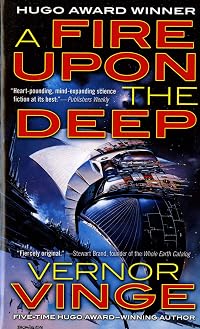
In this popular and widely praised novel, a rescue mission races against time to save a pair of human children being held captive by a medieval lupine race-and to recover the weapon that will keep the universe from being changed forever.Tags
Recommendations
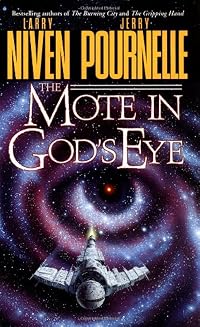
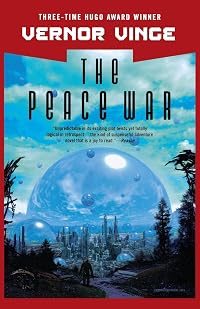

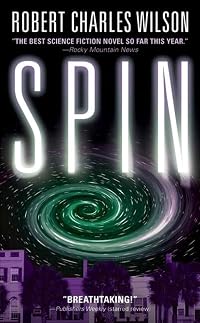
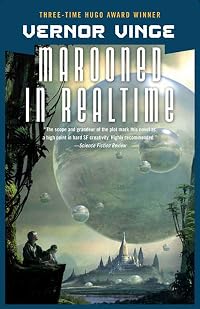

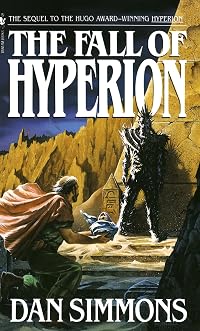
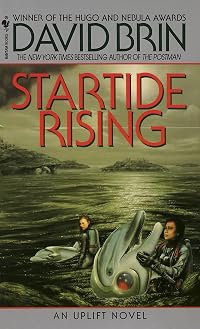
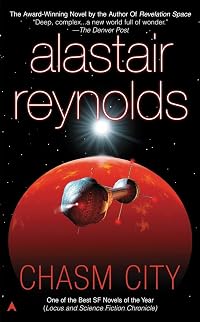
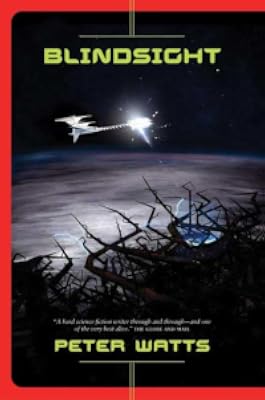

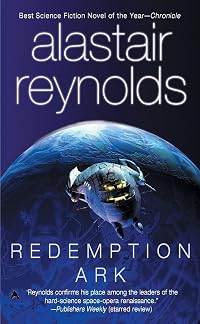
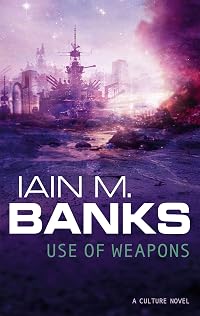
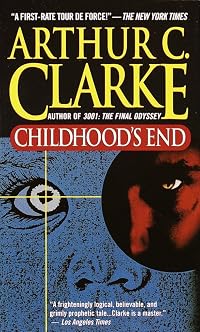
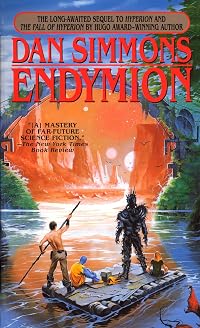
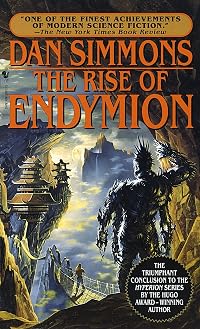
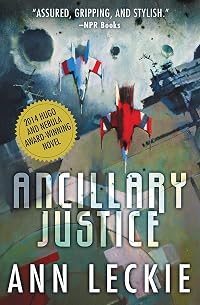
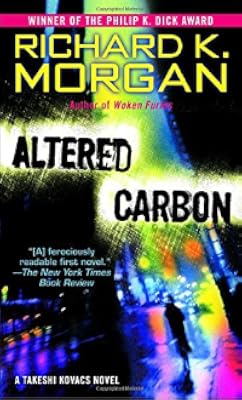
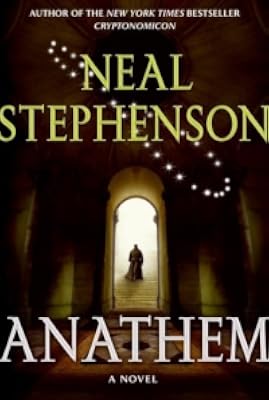
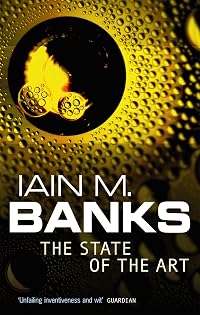
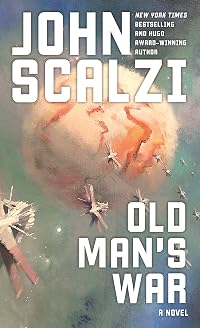
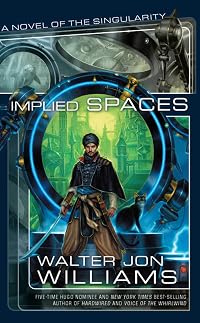
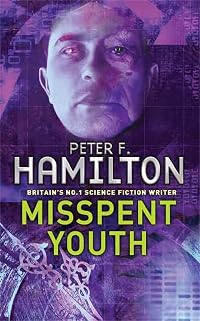
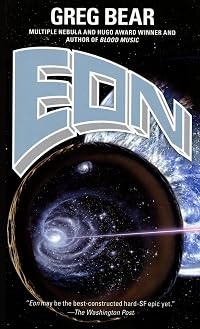
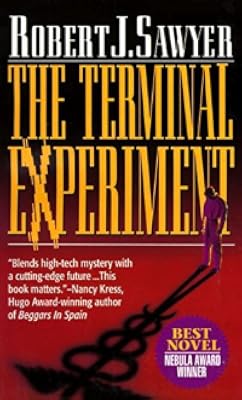
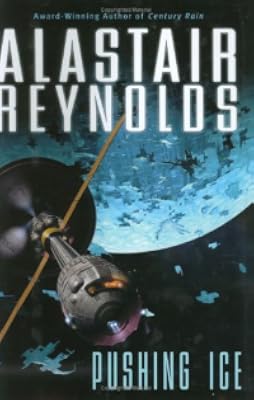
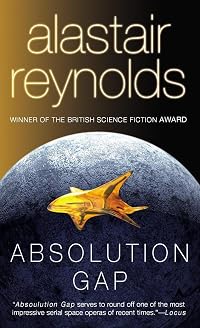
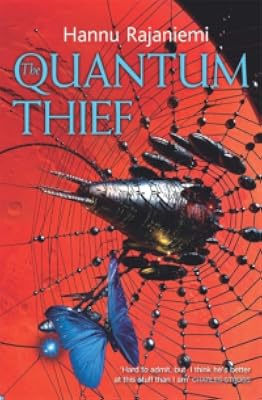
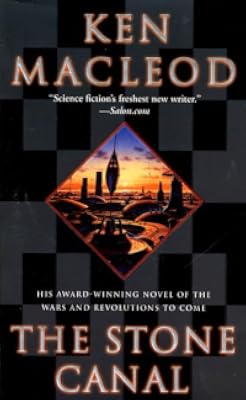
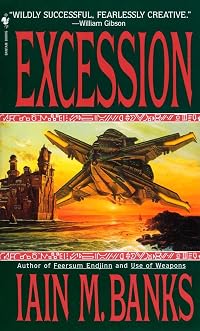
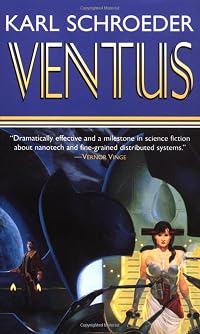
Member Recommendations
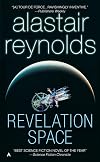
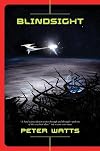
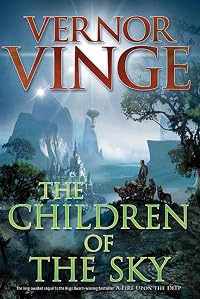
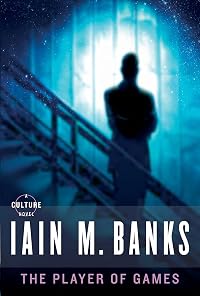
electronicmemory Excellent hard sci-fi which contains concepts which will challenge your mind.
30
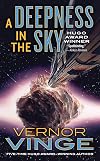

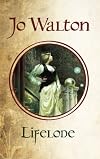
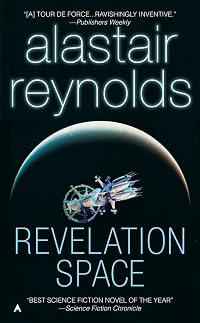
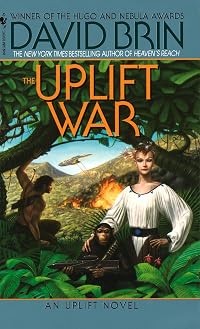
sandstone78 What if the zones of thought were within walking distance of each other? Gods live in the East, time passes at a rapid rate in the West, and a stranger from each direction comes to the manor of Applekirk in the Marches between them.
20
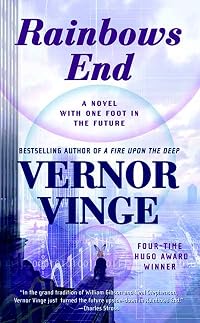
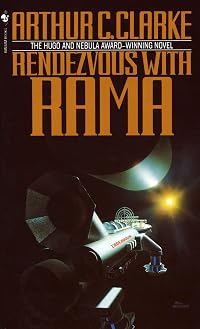
orange_epsilon If you like reading about space travel and alien cultures, then this is the book for you.
21
Member Reviews
Not since reading Hyperion have I felt this divided about a work of SF. There's no way that I would be able to cover the plot of A Fire Upon the Deep in an appropriate amount of time, but I'll cover the basics for posterity's sake.
The Milky Way is split up into concentric rings radiating out from the galactic center that define the upper limit of thought and technology. At the core, in the Unthinking Depths, there is no rational thinking, no civilization, no sophonts of any kind. On the outskirts of the galaxy, in the Transcend, intelligent species become what essentially amount to gods. It is here, at the edge of the Transcend, that a group of human researchers discover an ancient, forgotten data archive. It is here that they show more unknowingly awaken something called the Blight, a virus in the data that is capable of spreading and assimilating all life into a corrupted hive mind. Some of these researchers escape with a potential antidote to the Blight, and flee to the lower levels of the galaxy in an effort to escape it. Their shuttle crashes on a world of medieval technology inhabited by the Tines, a species of intelligent weasels/dogs that function as a collective intelligence; 4-8 individual members that are otherwise only semi-conscious combining to create one whole individual. The plot centers around these humans as they struggle to survive and understand the Tines, and another group's desperate attempt to find and recover the antidote; to prevent the destruction of the galaxy.
Like I said, it's a lot. That's just the bare bones of it. And what sweet, delicious, dopamine filled bones they are. A significant portion of Vinge's ideas give me the adrenaline rush of creativity and newness that I think is stereotypically associated with SF. I love the Zones of Thought. I love the Tines, their collective intelligence, the philosophical questions about the soul that they raise. I love the skroderiders and their adaptation to long-term versus short-time memory. I love that the galaxy feels vast and unknowable in the quantity of intelligent species. I love the implied billions of years in history that sits under these transient cultures. The richness and sheer quantity of ideas in A Fire Upon the Deep make it super memorable.
Surprisingly enough, I even enjoyed the ending, which is not something I can say about many of these sweeping space operas (or to be frank SF in general). The motif of oceans, waves, the inter-tidal space was quite striking. It is often in the messy and violent spaces between two disparate things, where they meet and cohabitate, that some of the most unique creatures and ideas can come from. As this is true of the ocean and the shore, such is true of the contact points between layers of the galaxy. Much like the ocean, the galaxy also follows a cyclical pattern of events, like the tides or the discrete repetition of an individual wave on the shore, that have massive effects on the species that call that place home. Even though the effects may indeed be world ending on a small scale, the system as whole continues to function, and will provide refuge for new individuals, species, and ideas in the future. I enjoyed how Vinge tied the Skroderiders and Tines into this broader analogy.
Where Vinge fails miserably is in the details: in the moment by moment execution of these ideas and the plot that holds it together. Battle sequences are often muddled, confusing, and poorly drawn. The plot follows several side tangents for far too long, which is ultimately one of the factors leading to its undeniable bloat. The actions of the Blight always happen the background; we barely get to see one of the coolest things in the whole book. Most of the characters are tossed off and shallow in their portrayal. The main Tinish villain is not just intellectually stupid, but cartoonishy so. The love interest between Pham and Ravna was completely unnecessary. Too often Vinge's writing is amateurish and beneath his true capabilities, because infrequently he throws in a line or two that actually have some artistry to them.
None of these flaws are a death sentence on their own, but totaled together they make for a nasty quagmire of quicksand that Vinge frequently dives headfirst into. There's also the dated idea of the Net, that all intelligent species communicate on. Perhaps in 1992 this was forward looking, but today it's a hunk of limestone amongst glittering diamonds. Are we really meant to believable that the best communication that the galaxy can muster is a 4chan forum?
Unfortunately, what I am left feeling is that; had these concepts and ideas been given to a better writer, this could've easily been one of the best books I've ever read. Vinge's capabilities as a writer acted as an anchor dragging everything down. I also fear that much of my enjoyment derived from the novelty and unknown of the zones of thought. Were I to re-read this novel, I wouldn't have the newness to balance out the drudgery. More than most books, A Fire Upon the Deep benefits from a blind reading. Even though the first hundred pages were by far my favorite, I still understand why it has the massive reputation it does. show less
The Milky Way is split up into concentric rings radiating out from the galactic center that define the upper limit of thought and technology. At the core, in the Unthinking Depths, there is no rational thinking, no civilization, no sophonts of any kind. On the outskirts of the galaxy, in the Transcend, intelligent species become what essentially amount to gods. It is here, at the edge of the Transcend, that a group of human researchers discover an ancient, forgotten data archive. It is here that they show more unknowingly awaken something called the Blight, a virus in the data that is capable of spreading and assimilating all life into a corrupted hive mind. Some of these researchers escape with a potential antidote to the Blight, and flee to the lower levels of the galaxy in an effort to escape it. Their shuttle crashes on a world of medieval technology inhabited by the Tines, a species of intelligent weasels/dogs that function as a collective intelligence; 4-8 individual members that are otherwise only semi-conscious combining to create one whole individual. The plot centers around these humans as they struggle to survive and understand the Tines, and another group's desperate attempt to find and recover the antidote; to prevent the destruction of the galaxy.
Like I said, it's a lot. That's just the bare bones of it. And what sweet, delicious, dopamine filled bones they are. A significant portion of Vinge's ideas give me the adrenaline rush of creativity and newness that I think is stereotypically associated with SF. I love the Zones of Thought. I love the Tines, their collective intelligence, the philosophical questions about the soul that they raise. I love the skroderiders and their adaptation to long-term versus short-time memory. I love that the galaxy feels vast and unknowable in the quantity of intelligent species. I love the implied billions of years in history that sits under these transient cultures. The richness and sheer quantity of ideas in A Fire Upon the Deep make it super memorable.
Surprisingly enough, I even enjoyed the ending, which is not something I can say about many of these sweeping space operas (or to be frank SF in general). The motif of oceans, waves, the inter-tidal space was quite striking. It is often in the messy and violent spaces between two disparate things, where they meet and cohabitate, that some of the most unique creatures and ideas can come from. As this is true of the ocean and the shore, such is true of the contact points between layers of the galaxy. Much like the ocean, the galaxy also follows a cyclical pattern of events, like the tides or the discrete repetition of an individual wave on the shore, that have massive effects on the species that call that place home. Even though the effects may indeed be world ending on a small scale, the system as whole continues to function, and will provide refuge for new individuals, species, and ideas in the future. I enjoyed how Vinge tied the Skroderiders and Tines into this broader analogy.
Where Vinge fails miserably is in the details: in the moment by moment execution of these ideas and the plot that holds it together. Battle sequences are often muddled, confusing, and poorly drawn. The plot follows several side tangents for far too long, which is ultimately one of the factors leading to its undeniable bloat. The actions of the Blight always happen the background; we barely get to see one of the coolest things in the whole book. Most of the characters are tossed off and shallow in their portrayal. The main Tinish villain is not just intellectually stupid, but cartoonishy so. The love interest between Pham and Ravna was completely unnecessary. Too often Vinge's writing is amateurish and beneath his true capabilities, because infrequently he throws in a line or two that actually have some artistry to them.
None of these flaws are a death sentence on their own, but totaled together they make for a nasty quagmire of quicksand that Vinge frequently dives headfirst into. There's also the dated idea of the Net, that all intelligent species communicate on. Perhaps in 1992 this was forward looking, but today it's a hunk of limestone amongst glittering diamonds. Are we really meant to believable that the best communication that the galaxy can muster is a 4chan forum?
Unfortunately, what I am left feeling is that; had these concepts and ideas been given to a better writer, this could've easily been one of the best books I've ever read. Vinge's capabilities as a writer acted as an anchor dragging everything down. I also fear that much of my enjoyment derived from the novelty and unknown of the zones of thought. Were I to re-read this novel, I wouldn't have the newness to balance out the drudgery. More than most books, A Fire Upon the Deep benefits from a blind reading. Even though the first hundred pages were by far my favorite, I still understand why it has the massive reputation it does. show less
[a:Vernor Vinge|44037|Vernor Vinge|https://d.gr-assets.com/authors/1215099239p2/44037.jpg] is brilliant, and his [b:Fire Upon The Deep|7685668|Fire Upon The Deep|Vernor Vinge|https://s.gr-assets.com/assets/nophoto/book/50x75-6121bf4c1f669098041843ec9650ca19.png|1253374] has got everything that really good science fiction should have.
In his Zones of Thought universe, Vinge has divided the Milky Way galaxy into zones in which technology, thought, and intelligence increases the further you move from the galactic core. These zones--the "Unthinking Depths," the "Slow," the "Beyond," and the "Transcend"--allow for fascinating dynamics that Vinge uses with great aplomb. In the Unthinking Depths, biological intelligence is impossible, so space show more ships that accidentally end up there are stranded as their crews become too stupid to even manage the ship. Humanity is said to have originated in the Slow, though only one branch of humanity--descended from Norwegians--appears to have escaped the Slow limits against faster-than-light (FTL) travel and communication and inability to create artificial intelligence. Ending up in the Slow--which has boundaries that are constantly moving--is a major hazard to space travel in the Beyond.
The Beyond allows FTL travel and communication, as well as artificial intelligence. Species there are connected by a network that is, in sophistication at least, not quite up to par with the modern internet, but not dramatically indistinguishable from the blackboards and net groups of the early days of the Internet. Call the Net or, more derisively, the "Net of a Million Lies," it has a lot in common with our modern World Wide Web in that just as much of the content is driven by paranoia, guesses, speculations as by news and information. Also like the real "net" the Net is the main source for information and news.
And this was published in 1992.
Meanwhile, there's the Transcend, an area so far out from the core that the entities there are beyond the understanding of the beings in the Beyond, almost god-like. They interact with species in the Beyond, but only peripherally.
Yet, it is from the Transcend that the villain appears, gobbling up and destroying whole civilizations throughout the Beyond in days and weeks.
Vernor would be clever with a space opera in this kind of setting, but he doesn't settle there. While battles and plots are unfolding in the top of the Beyond, a parallel story is happening down in the Slowness. A ship of human lands on an unexplored (to them) world, find a species that is capable of thought--and personality--only when it works in packs of three or four or more. Medieval technologically and culturally, they find themselves in the midst of a war. Watch as two children and a dataset reverse engineer technology that we find so common that we take it for granted: radio, black powder, and more.
It's incredibly interesting, and Vernor, who thinks of everything (as Jo Walton notes), weaves a lot of really complex elements out of what is, really, just a hunt for a MacGuffin. It's very cool. show less
In his Zones of Thought universe, Vinge has divided the Milky Way galaxy into zones in which technology, thought, and intelligence increases the further you move from the galactic core. These zones--the "Unthinking Depths," the "Slow," the "Beyond," and the "Transcend"--allow for fascinating dynamics that Vinge uses with great aplomb. In the Unthinking Depths, biological intelligence is impossible, so space show more ships that accidentally end up there are stranded as their crews become too stupid to even manage the ship. Humanity is said to have originated in the Slow, though only one branch of humanity--descended from Norwegians--appears to have escaped the Slow limits against faster-than-light (FTL) travel and communication and inability to create artificial intelligence. Ending up in the Slow--which has boundaries that are constantly moving--is a major hazard to space travel in the Beyond.
The Beyond allows FTL travel and communication, as well as artificial intelligence. Species there are connected by a network that is, in sophistication at least, not quite up to par with the modern internet, but not dramatically indistinguishable from the blackboards and net groups of the early days of the Internet. Call the Net or, more derisively, the "Net of a Million Lies," it has a lot in common with our modern World Wide Web in that just as much of the content is driven by paranoia, guesses, speculations as by news and information. Also like the real "net" the Net is the main source for information and news.
And this was published in 1992.
Meanwhile, there's the Transcend, an area so far out from the core that the entities there are beyond the understanding of the beings in the Beyond, almost god-like. They interact with species in the Beyond, but only peripherally.
Yet, it is from the Transcend that the villain appears, gobbling up and destroying whole civilizations throughout the Beyond in days and weeks.
Vernor would be clever with a space opera in this kind of setting, but he doesn't settle there. While battles and plots are unfolding in the top of the Beyond, a parallel story is happening down in the Slowness. A ship of human lands on an unexplored (to them) world, find a species that is capable of thought--and personality--only when it works in packs of three or four or more. Medieval technologically and culturally, they find themselves in the midst of a war. Watch as two children and a dataset reverse engineer technology that we find so common that we take it for granted: radio, black powder, and more.
It's incredibly interesting, and Vernor, who thinks of everything (as Jo Walton notes), weaves a lot of really complex elements out of what is, really, just a hunt for a MacGuffin. It's very cool. show less
Hard to overstate how wild and fresh and breathtaking this was when it first came out. Also hard to overstate that decades later it is still one of, if not the, towering works of space opera. Not only does it situate itself in a vast teeming galactic stage, it also manages to encompass that setting from its top to its lower depths with gripping drama and amazing vistas, and even if part of that setting is medieval, undeveloped cultures beingg changed through meeting a more advanced culture is a staple of space opera, it still manages to strike awe in its alien group-mind species, the Tines, to say nothing of the Skroderiders.
Ambitious humans venture into the edge of space known as the Transcend and awaken a Blight, a terrifying threat show more that immediately overwhems them. An escaping family make it to a distant uncharted planet, carrying with them something that the Blight either fears or needs. A rescue attempt is dispatched, pursued by at least three fleets, so while the ship races against time, the survivors on the planet are trapped in the politics and machinations of the native Tines.
Honestly as fresh and exciting and mindbending as when I first read it way back when. show less
Ambitious humans venture into the edge of space known as the Transcend and awaken a Blight, a terrifying threat show more that immediately overwhems them. An escaping family make it to a distant uncharted planet, carrying with them something that the Blight either fears or needs. A rescue attempt is dispatched, pursued by at least three fleets, so while the ship races against time, the survivors on the planet are trapped in the politics and machinations of the native Tines.
Honestly as fresh and exciting and mindbending as when I first read it way back when. show less
Oooh boy.
I went into this one with a lot of expectations. It came highly recommended by one of my favorite booktubers and it sat in my to-read shortlist for a few months, during which I probably built it up in my head.
First of all, Vernor Vinge is certainly an accomplished sci-fi author, and he deserves all the praise bestowed upon him by the sci-fi community. I heard that he passed away 3 days ago. RIP.
The author exhibits incredible capabilities when it comes to worldbuilding, describing the fascinating inner workings of alien societies and physiology, coming up with concepts and rules of the world, and all the other things that make or break a good hard sci-fi novel.
There are concepts in this book that I've never come across show more anywhere else in my long journey through the genre, like the best-ever description of the hive mind, the idea of the Zones that regulate the natural laws in the Galaxy, etc.
However, despite all these positives, I didn't enjoy the read all that much. It is usually a given that the sci-fi novel doesn't have to feature high-quality prose or character-driven stories, but even with that in mind, this book was hard to read. I didn't relate to any of the characters and didn't care about them because none of them felt real. The Tine creatures were written especially cartoonishly. You have your "evil villain", "loyal brave friend", "adventurous hero" and "wise mentor".
The author likes using ellipses a lot, to the point that it gets annoying. Another thing I didn't like was one-word sentences to describe actions or emotions, like, instead of saying "She laughed", it's "Laughter."; "It confused him" - "Confusion."
There is a lot of repetition. For instance, we read how character A learns about X. Then character A tells character B about X. And we read the full description of X again. Then we are in character B's perspective and we read something like, "B thought about the conversation with A. A told him that X works in this and that way..." and there is another full description of X.
In short, the story is grand and epic and all, but the writing is not on a level to support such a great ambitious vision. I won't be reading the sequel. show less
I went into this one with a lot of expectations. It came highly recommended by one of my favorite booktubers and it sat in my to-read shortlist for a few months, during which I probably built it up in my head.
First of all, Vernor Vinge is certainly an accomplished sci-fi author, and he deserves all the praise bestowed upon him by the sci-fi community. I heard that he passed away 3 days ago. RIP.
The author exhibits incredible capabilities when it comes to worldbuilding, describing the fascinating inner workings of alien societies and physiology, coming up with concepts and rules of the world, and all the other things that make or break a good hard sci-fi novel.
There are concepts in this book that I've never come across show more anywhere else in my long journey through the genre, like the best-ever description of the hive mind, the idea of the Zones that regulate the natural laws in the Galaxy, etc.
However, despite all these positives, I didn't enjoy the read all that much. It is usually a given that the sci-fi novel doesn't have to feature high-quality prose or character-driven stories, but even with that in mind, this book was hard to read. I didn't relate to any of the characters and didn't care about them because none of them felt real. The Tine creatures were written especially cartoonishly. You have your "evil villain", "loyal brave friend", "adventurous hero" and "wise mentor".
The author likes using ellipses a lot, to the point that it gets annoying. Another thing I didn't like was one-word sentences to describe actions or emotions, like, instead of saying "She laughed", it's "Laughter."; "It confused him" - "Confusion."
There is a lot of repetition. For instance, we read how character A learns about X. Then character A tells character B about X. And we read the full description of X again. Then we are in character B's perspective and we read something like, "B thought about the conversation with A. A told him that X works in this and that way..." and there is another full description of X.
In short, the story is grand and epic and all, but the writing is not on a level to support such a great ambitious vision. I won't be reading the sequel. show less
A Fire Upon the Deep is an action-packed space opera that also manages to be a fascinating exploration of radically different modes of thought, in a rich and surprising alien setting. Vinge's cosmology is based on an addition to the laws of physics, the Zones of Thought radiating out from the galactic: In the Unthinking Depths towards the galactic core, intelligent life is impossible. In the Slow Zone, physics works more or less like it does in real life (and in setting, Earth is buried somewhere in the Slow Zone.) In the Beyond, FTL, intuitive computers, and other sci-fi supertech work. And in the Transcend, vast and cool god-like intelligences live mayfly lives, lost in their own contemplation before leaving reality entirely, and show more occasionally sending artifacts and emissaries downwards. The action starts when an human expedition into the Transcend opens a 5 billion year-old archive, and instead of building a God, unleashes an ancient demon called the Blight. Two ships flee, and one is destroyed while the other jumps to an uncharted planet at the bottom of the Beyond, crewed by a family and 150 odd children in cold sleep. They have the bad luck to land in the territory of a local dictator, Lord Steel, and the parents are murdered in an ignorant attack on their ship. The children are separated and captured, 8-year old Jefri taken by Lord Steel and 14-year old Johanna rescued by travelers and taken to the more liberal realm of the Woodcarver. Meanwhile, up in the transcend, Ravna, a human librarian apprenticed to a major interstellar communications firms, puts together a rescue mission with the help of Pham Nuwen, a legendary hu,am hero reconstructed from a spaceship wreck by a Transcend Power, and two Skroderider traders; aliens descended from a sea anemone-like creature, and given mobility and short-term memory through the use of carts. They escape an attack by the Blight by the barest of margins, and it's a chase for the highest stakes.
The break-out stars of the books are the Tines, the alien species that Lord Steel and Wordcarver belong too, which captures Jefri and Johanna. The Tines are a dog-like group intelligence. A single Tine is a pathetic creature, but four or six of them together form a mind as intelligent as any human, using ultrasonic 'mindspeech' to create a coherent identity. Vinge explores the implications of Tine biology with both ease and depth, avoiding lengthy info-dumps while clearly laying out an alternative course of development. Because Tines think in the ultrasonic, pack-minds must stay fairly close together, and two packs can't mingle without losing all conscious control. The gestalt intelligence that is a Tine can be stable for centuries, adding new members as older bodies fade away, but inbreeding limits the successful lifespan. Much of the political conflict on the Tine's world is between Woodcarver's slow scientific experimentation, and the radical and unethical efforts Lord Steel and Flenserists to remake minds entirely, using torture and novel architectures to create Tines with singular capabilities never before seen on their world.
Johanna and Jefri are thrown into this mess and exploited to advance Tine technology, starting with gunpowder. Ironically, Johanna fights against Woodcarver, and the more or less benign Peregrine and Scriber, while Jefri is complete taken in by Lord Steel. Since Lord Steel has the starship, and the communication link to Ranva, he gets actual how-to guides for kickstarting a stagnant tech base, including breech loading howitzers and radios.
Meanwhile, in the Beyond, Ravna gets to see how dangerous the universe is close up. The Beyond culture expects things like a Class 2 Perversion to show up from the Transcend every thousand years or so and turn a few planets worth of sentients into tele-operated zombies, but the Blight is a threat of different level, and human polities are utterly destroyed by a combination of the Blight an opportunistic genocidal aliens. Pham Nuwen is an uncertain ally, either a true hero or an elaborate fraud constructed from a few strands of damaged DNA and memories faked up from adventure stories. The Skroderiders are revealed to be unwitting agents of the Blight, their billion-year old species containing backdoors that enable them to be mind-controlled.
One aspect of the book which I'm ambivalent on is the Net of a Millions Lies. While FTL communication is possible, the low bandwidth means it looks and works a lot like USENET circa 1993. The idiotic flamewars and misconceptions percolating through the Net Messages Ravna reads are entirely familiar even on the contemporary web. I'm not sure if it's great world-building (somethings never change), or edges on too-cute. Regardless, the great investigation of the minds of the Tines, and hints at the vast powers of the Transcend, along with a high-octane adventure plot, make for an ambitious book that succeeds at all of it's goals. show less
The break-out stars of the books are the Tines, the alien species that Lord Steel and Wordcarver belong too, which captures Jefri and Johanna. The Tines are a dog-like group intelligence. A single Tine is a pathetic creature, but four or six of them together form a mind as intelligent as any human, using ultrasonic 'mindspeech' to create a coherent identity. Vinge explores the implications of Tine biology with both ease and depth, avoiding lengthy info-dumps while clearly laying out an alternative course of development. Because Tines think in the ultrasonic, pack-minds must stay fairly close together, and two packs can't mingle without losing all conscious control. The gestalt intelligence that is a Tine can be stable for centuries, adding new members as older bodies fade away, but inbreeding limits the successful lifespan. Much of the political conflict on the Tine's world is between Woodcarver's slow scientific experimentation, and the radical and unethical efforts Lord Steel and Flenserists to remake minds entirely, using torture and novel architectures to create Tines with singular capabilities never before seen on their world.
Johanna and Jefri are thrown into this mess and exploited to advance Tine technology, starting with gunpowder. Ironically, Johanna fights against Woodcarver, and the more or less benign Peregrine and Scriber, while Jefri is complete taken in by Lord Steel. Since Lord Steel has the starship, and the communication link to Ranva, he gets actual how-to guides for kickstarting a stagnant tech base, including breech loading howitzers and radios.
Meanwhile, in the Beyond, Ravna gets to see how dangerous the universe is close up. The Beyond culture expects things like a Class 2 Perversion to show up from the Transcend every thousand years or so and turn a few planets worth of sentients into tele-operated zombies, but the Blight is a threat of different level, and human polities are utterly destroyed by a combination of the Blight an opportunistic genocidal aliens. Pham Nuwen is an uncertain ally, either a true hero or an elaborate fraud constructed from a few strands of damaged DNA and memories faked up from adventure stories. The Skroderiders are revealed to be unwitting agents of the Blight, their billion-year old species containing backdoors that enable them to be mind-controlled.
One aspect of the book which I'm ambivalent on is the Net of a Millions Lies. While FTL communication is possible, the low bandwidth means it looks and works a lot like USENET circa 1993. The idiotic flamewars and misconceptions percolating through the Net Messages Ravna reads are entirely familiar even on the contemporary web. I'm not sure if it's great world-building (somethings never change), or edges on too-cute. Regardless, the great investigation of the minds of the Tines, and hints at the vast powers of the Transcend, along with a high-octane adventure plot, make for an ambitious book that succeeds at all of it's goals. show less
When I first read this book, years ago, I was blown away by the scope of the story and the intricacy and originality of the plot. Reading it again, I'm amazed at how well this book has weathered the years (it was written in 1992). Of the two parallel plot lines, the first time I read it I was more interested in the fate of the two children shipwrecked on the Tines' World among hostile, group-minded aliens and their complex and Machiavellian culture. This time, it was the story of the transcendent Power/Artificial Intelligence that is threatening to destroy the universe, and the small crew of four (one human female, one male human/puppet/zombie, two wagon-mounted kelp-like aliens) who are trying simultaneously to rescue the children and show more defeat the Power/A.I. Perversion. How these two stories tie together, and the deep history and culture of this far future galactic civilization, is an amazing and satisfying read. show less
Cartea se derulează în două planuri:
- unul space opera; mediocru și banal, pe alocuri de-a dreptul prost, cam 2,5/5; multă imaginație de formă (specii în diverse forme) dar aproape deloc de fond (o amenințare foarte meh și aventuri foarte ”seen those before”); o singură bătălie spațială, prost descrisă, personaje unidimensionale (Pham) sau practic lipsite de personalitate (plantoizii); l-am comparat constant cu Hamilton, și Vinge a pierdut de departe;
- unul ”first contact” excelent, 5 /5, cu o rasă originală ca idee și interesantă, cu intrigi, trădări și războaie bine descrise și captivante; cu personaje credibile, imprevizibile și complexe (Oțel, Pelerinul, Jupuitorul, regina - foarte bine create); show more m-a făcut mereu să mă gândesc la ”Shogun”, în sensul bun;
Per total, e undeva la 4 și ceva; am avut tendința să-i dau un 5, dar nu pot, pentru că m-au enervat foarte tare personajele care acționează stupid și orbește, credule până la tâmpenie (Ravna), sau fixate unidimesional doar pe-o obsesie (Johanna, Pham); de asemenea, telegramele mi s-au părut obositoare prin întreruperea constantă a ritmului și prin faptul că reprezintă o metodă foarte leneșă de a prezenta fundalul. O carte foarte bună, chiar și-așa, deci voi citi și continuările. show less
- unul space opera; mediocru și banal, pe alocuri de-a dreptul prost, cam 2,5/5; multă imaginație de formă (specii în diverse forme) dar aproape deloc de fond (o amenințare foarte meh și aventuri foarte ”seen those before”); o singură bătălie spațială, prost descrisă, personaje unidimensionale (Pham) sau practic lipsite de personalitate (plantoizii); l-am comparat constant cu Hamilton, și Vinge a pierdut de departe;
- unul ”first contact” excelent, 5 /5, cu o rasă originală ca idee și interesantă, cu intrigi, trădări și războaie bine descrise și captivante; cu personaje credibile, imprevizibile și complexe (Oțel, Pelerinul, Jupuitorul, regina - foarte bine create); show more m-a făcut mereu să mă gândesc la ”Shogun”, în sensul bun;
Per total, e undeva la 4 și ceva; am avut tendința să-i dau un 5, dar nu pot, pentru că m-au enervat foarte tare personajele care acționează stupid și orbește, credule până la tâmpenie (Ravna), sau fixate unidimesional doar pe-o obsesie (Johanna, Pham); de asemenea, telegramele mi s-au părut obositoare prin întreruperea constantă a ritmului și prin faptul că reprezintă o metodă foarte leneșă de a prezenta fundalul. O carte foarte bună, chiar și-așa, deci voi citi și continuările. show less
Members
- Recently Added By
Published Reviews
ThingScore 75
Mr. Vinge writes what might be called thoughtful space opera. His setting is nothing less than the galaxy we call the Milky Way. I don't mean that he simply lets loose a few spaceships and has them chase one another among the stars to act out another old-fashioned shoot-'em-up plot. The human and nonhuman characters of "A Fire Upon the Deep" live in a complex galactic society that Mr. Vinge show more has worked out in admirable if economical detail, and the scope of his story is such that it requires just a background. show less
added by Aerrin99
Lists

Best Science Fiction Novels
816 works; 430 members

Hugo Award Winning Novels
63 works; 23 members

NPRs your picks: top 100 Sci-Fi/Fantasy books
297 works; 80 members

Hugo Awards - Best Novel
69 works; 10 members

S.F. Masterworks (Complete)
229 works; 15 members

Recommend the 20 best books you've read in the last five years
2,168 works; 606 members
Broderick and Di Filippo's Science Fiction: The 101 Best Novels 1985-2010
103 works; 7 members

SF Masterworks
193 works; 8 members

What Makes This Book So Great
102 works; 16 members

Truly alien aliens (SF)
42 works; 3 members

Nonhuman Protagonists
243 works; 35 members

Top Five Books of 2015
811 works; 241 members

Singularity
12 works; 1 member

Speculative Fiction to Read
706 works; 32 members

Schisms in transhumanity - SF
34 works; 1 member

Wishlist
50 works; 1 member

Isaac Arthur’s Book Recommendations
98 works; 3 members
An evolving science fiction novel canon
50 works; 2 members

Maybe This Year? Books to Look Forward To
412 works; 9 members
Favorite Science Fiction
456 works; 218 members

Top Five Books of 2025
954 works; 303 members

Gaming Bookclub
3 works; 1 member

Unread books
1,063 works; 82 members

2023 Christmas Gifts
39 works; 11 members
Books With the Most Memorable Titles
478 works; 158 members

Books Read in 2021
5,361 works; 113 members

Books Read in 2017
4,249 works; 129 members

Five star books
1,767 works; 110 members

Books Read in 2020
4,379 works; 124 members
Unshelved Book Clubs
579 works; 5 members

Blue Pyramid 1,276 Best Books of All Time
1,248 works; 32 members

Cryptology - non-fiction and fiction
57 works; 4 members
Books Set on Extraterrestrial Planets
27 works; 5 members

Best Books With Aliens
67 works; 10 members

Libertarian Books
102 works; 19 members
Talk Discussions
Past Discussions
JUNE READ - SPOILERS - A Fire Upon the Deep in The Green Dragon (June 2013)
JUNE READ - NO SPOILERS - A Fire Upon the Deep in The Green Dragon (May 2013)
"A Fire Upon the Deep" Group Discussion in Group Reads - Sci-Fi (March 2009)
Author Information

58+ Works 23,219 Members
Some Editions
Awards and Honors
Awards
Notable Lists
Series

Belongs to Publisher Series
Work Relationships
Is contained in
Contains
Has the (non-series) sequel
Has as a student's study guide
Common Knowledge
- Canonical title
- A Fire upon the Deep
- Original title
- A Fire upon the Deep
- Original publication date
- 1992
- People/Characters
- Jefri Olsndot; Joanna Olsndot; Ravna Bergsndot; Pham Nuwen; Woodcarver; Pilgrim (show all 14); Flenser; Lord Steel; Amdi; Blueshell; Greenstalk; Peregrine Wickwrackrum; Tyrathect; Scriber Jaqueramaphan
- Important places
- Tines World
- Dedication
- To my father, Clarence L. Vinge, with love.
- First words
- How to explain? How to describe? Even the omniscient viewpoint quails.
- Last words
- (Click to show. Warning: May contain spoilers.)Again: if you receive this message, please respond!
- Publisher's editor
- Frenkel, James
- Blurbers
- Brin, David; Clute, John; Bear, Greg; Brand, Stewart; Cleaver, Fred
- Canonical DDC/MDS
- 813.087625
Classifications
- Genres
- Science Fiction, Fiction and Literature
- DDC/MDS
- 813.087625 — Literature & rhetoric American literature in English American fiction in English By type Genre fiction Adventure fiction Speculative fiction Science fiction Space opera
- LCC
- PS3572 .I534 .F57 — Language and Literature American literature American literature Individual authors 1961-
- BISAC
Statistics
- Members
- 7,190
- Popularity
- 1,628
- Reviews
- 165
- Rating
- (4.09)
- Languages
- 15 — Czech, Dutch, English, Finnish, French, German, Hebrew, Hungarian, Italian, Lithuanian, Polish, Romanian, Russian, Serbian, Spanish
- Media
- Paper, Audiobook, Ebook
- ISBNs
- 46
- ASINs
- 25