On This Page
Description
Hugo and Shirley Jackson award-winning Peter Watts stands on the cutting edge of hard SF with his acclaimed novel, Blindsight Two months since the stars fell... Two months of silence, while a world held its breath. Now some half-derelict space probe, sparking fitfully past Neptune's orbit, hears a whisper from the edge of the solar system: a faint signal sweeping the cosmos like a lighthouse beam. Whatever's out there isn't talking to us. It's talking to some distant star, perhaps. Or show more perhaps to something closer, something en route. So who do you send to force introductions with unknown and unknowable alien intellect that doesn't wish to be met? You send a linguist with multiple personalities, her brain surgically partitioned into separate, sentient processing cores. You send a biologist so radically interfaced with machinery that he sees x-rays and tastes ultrasound. You send a pacifist warrior in the faint hope she won't be needed. You send a monster to command them all, an extinct hominid predator once called vampire, recalled from the grave with the voodoo of recombinant genetics and the blood of sociopaths. And you send a synthesist--an informational topologist with half his mind gone--as an interface between here and there. Pray they can be trusted with the fate of a world. They may be more alien than the thing they've been sent to find. show lessTags
Recommendations




Member Recommendations
Waldheri Similar because it also is full of philosophical and scientific concepts, and also has a first-contact theme.
50
electronicmemory Classic bleak sci-fi.
electronicmemory Excellent hard sci-fi which contains concepts which will challenge your mind.

jen.e.moore Slightly misanthropic stories about how humanity is not necessarily the apex of creation.
11
electronicmemory Two books that push the boundaries on our understanding of what constitutes alien cultures and intelligences.
01
Member Reviews
Each generation has to re-tackle the major themes of science fiction anew, because the human world that aliens contact is changing all the time. You have but to look at, say, David Brin's 'Forge of God' to see that it was a situation where aliens were contacting the Earth of the mid- to late 1980s. Even when the first contact is set in the future, our view of that future hinges on how we view that future based on the concerns and emergent technologies of our own day. Arthur C. Clarke's '2001' was set in a very 1960s vision of a Big Science power block future. And the same applies to 'Blindsight'.
But there is so much more to 'Blindsight' than just first contact with aliens. The world Peter Watts has built (his afterword to the novel show more seems to hint that there are some connections with the world of an earlier trilogy of his, 'Rifters') is way in advance of ours in terms of genetic manipulation, personality restructuring, space colonisation and virtual worlds. Oh, and Watts has found a use for matter transmission that is restricted to sending single sub-atomic particles from a to b.
Having said that, Watts' Earth is only really sketched through the eyes of his characters; and we see comparatively little of it, mainly in passing. That's not really the point. And the aliens remain a puzzle, right up to the end where their belligerence is laid bare for all to see. And that is how it should be. Alien life is going to turn out to be more unknowable than we can imagine; Peter Watts gives us some pointers towards that.
But 'Blindsight' isn't even really a novel about aliens. Rather, he takes a group of characters from our world on a journey to find aliens who were responsible for manifesting an encounter with the unknown on Earth, the sudden appearance of 62,000 alien probes that burn up in Earth's atmosphere and in that short time very possibly found out much more about us than we did about them. The crew that is sent to try to find the beings responsible for that act is comprised of a number of individuals, all of whom are in some way or another damaged; the bulk of the novel is taken up with exploring those personalities and finding (for the most part) the humanity limping along inside them, even though many readers might reject those personalities as barely human. There are a couple of exceptions - the extinct evolutionary line of human vampires, which disappeared way back in our prehistory, have been genetically re-engineered back for their predator's skills in organisation and strategy. 'Human' hardly describes them (most of the time).
In the end, this is hardly a novel of first contact; rather, it's about us, about humanity at its weakest, when we are so damaged as to hardly seem human for one reason or another; and how, despite that, we are still human despite everything. Along the way, we have to get to grips with some serious science (as someone once said of another novel from another hand, "this isn't just Hard Science Fiction, it's bl**dy DIFFICULT science fiction!"). And then, just when you've resigned yourself to a long critique of the human condition, the action roars back with a vengeance - I had to read the last fifty pages or so in a couple of fairly breathless sittings because the story pulled me along. And all the science stuff fell into place, because it is important.
Anyone who thinks science fiction is merely escapist adventure needs to read this book. show less
But there is so much more to 'Blindsight' than just first contact with aliens. The world Peter Watts has built (his afterword to the novel show more seems to hint that there are some connections with the world of an earlier trilogy of his, 'Rifters') is way in advance of ours in terms of genetic manipulation, personality restructuring, space colonisation and virtual worlds. Oh, and Watts has found a use for matter transmission that is restricted to sending single sub-atomic particles from a to b.
Having said that, Watts' Earth is only really sketched through the eyes of his characters; and we see comparatively little of it, mainly in passing. That's not really the point. And the aliens remain a puzzle, right up to the end where their belligerence is laid bare for all to see. And that is how it should be. Alien life is going to turn out to be more unknowable than we can imagine; Peter Watts gives us some pointers towards that.
But 'Blindsight' isn't even really a novel about aliens. Rather, he takes a group of characters from our world on a journey to find aliens who were responsible for manifesting an encounter with the unknown on Earth, the sudden appearance of 62,000 alien probes that burn up in Earth's atmosphere and in that short time very possibly found out much more about us than we did about them. The crew that is sent to try to find the beings responsible for that act is comprised of a number of individuals, all of whom are in some way or another damaged; the bulk of the novel is taken up with exploring those personalities and finding (for the most part) the humanity limping along inside them, even though many readers might reject those personalities as barely human. There are a couple of exceptions - the extinct evolutionary line of human vampires, which disappeared way back in our prehistory, have been genetically re-engineered back for their predator's skills in organisation and strategy. 'Human' hardly describes them (most of the time).
In the end, this is hardly a novel of first contact; rather, it's about us, about humanity at its weakest, when we are so damaged as to hardly seem human for one reason or another; and how, despite that, we are still human despite everything. Along the way, we have to get to grips with some serious science (as someone once said of another novel from another hand, "this isn't just Hard Science Fiction, it's bl**dy DIFFICULT science fiction!"). And then, just when you've resigned yourself to a long critique of the human condition, the action roars back with a vengeance - I had to read the last fifty pages or so in a couple of fairly breathless sittings because the story pulled me along. And all the science stuff fell into place, because it is important.
Anyone who thinks science fiction is merely escapist adventure needs to read this book. show less
40% of the way in, I wanted to go back through my Goodreads account and downgrade all non-DFW or PDK science fiction by at least a star. This is the kind of hard sci-fi that it is impossible (for me) not to love[1], where the chemistry rubber hits the biology road, and one starts poking at edge-cases of both.
The back half, alas, is considerably more conventional, and delves more into philosophical domains on which I have firmer foundation, thus subduing the mania that accompanies new knowledge and instead leaving more time to pull apart the aspects that are less riveting.
To wit: there’s a convention in recent fiction in which action is described as if the geometry should be easy to sketch[2], but because the main character doesn’t show more understand what is going on, the reader, likewise, can’t understand what is going on. This lack of reader understanding is later rectified by subsequent explanation. The theory, I think, is that the reader is supposed to barrel through the sequence and then be kept in suspense as to what “actually” happened. I really don’t like this convention because it usually takes me several rereads of the offending pages to realize this is an intentional gambit, and not some weird neural misfiring on my part in which I’m just too distracted (or too stupid) to understand words. Since this is a dominant stylistic tic in more fiction from the last ten years than the several centuries before, I’m sure somebody likes it, but it aggravates the hell out of me.
Also, on the philosophical issues, I am at something like the exact opposite end of every one of Watts’ conclusions about consciousness[3]. His militantly utilitarian view of biology and evolution is weirdly small-minded in my estimation, but that is why I’m agnostic, rather than atheist. I’m fundamentally optimistic about the limits of our understanding, and Watts…isn’t.
That said, still the best sci-fi book I’ve read since, maybe Infinite Jest? It just doesn’t break the curve the way I thought it might, early on.
____________________________________
[1] OK, the vampires are pretty silly, but whatever. The Space Vampire episode of Buck Rogers scared the kittens out of me as an extremely young lad, so…
[2] “Sarasti raised his hands, fading in and out of focus. I hit something, kicked without aiming, bounced away through swirling mist and startled voices. Metal cracked the back of my head and spun me around.”
[3] And I would go so far as to say that if you are looking for what the book is actually about, its driving thesis is that consciousness is not, evolutionarily, all it’s cracked up to be. show less
The back half, alas, is considerably more conventional, and delves more into philosophical domains on which I have firmer foundation, thus subduing the mania that accompanies new knowledge and instead leaving more time to pull apart the aspects that are less riveting.
To wit: there’s a convention in recent fiction in which action is described as if the geometry should be easy to sketch[2], but because the main character doesn’t show more understand what is going on, the reader, likewise, can’t understand what is going on. This lack of reader understanding is later rectified by subsequent explanation. The theory, I think, is that the reader is supposed to barrel through the sequence and then be kept in suspense as to what “actually” happened. I really don’t like this convention because it usually takes me several rereads of the offending pages to realize this is an intentional gambit, and not some weird neural misfiring on my part in which I’m just too distracted (or too stupid) to understand words. Since this is a dominant stylistic tic in more fiction from the last ten years than the several centuries before, I’m sure somebody likes it, but it aggravates the hell out of me.
Also, on the philosophical issues, I am at something like the exact opposite end of every one of Watts’ conclusions about consciousness[3]. His militantly utilitarian view of biology and evolution is weirdly small-minded in my estimation, but that is why I’m agnostic, rather than atheist. I’m fundamentally optimistic about the limits of our understanding, and Watts…isn’t.
That said, still the best sci-fi book I’ve read since, maybe Infinite Jest? It just doesn’t break the curve the way I thought it might, early on.
____________________________________
[1] OK, the vampires are pretty silly, but whatever. The Space Vampire episode of Buck Rogers scared the kittens out of me as an extremely young lad, so…
[2] “Sarasti raised his hands, fading in and out of focus. I hit something, kicked without aiming, bounced away through swirling mist and startled voices. Metal cracked the back of my head and spun me around.”
[3] And I would go so far as to say that if you are looking for what the book is actually about, its driving thesis is that consciousness is not, evolutionarily, all it’s cracked up to be. show less
*Blindsight* is a smart, unsettling novel built around a genuinely fascinating central idea: what if human consciousness is not an advantage, but an evolutionary mistake? Watts explores this through first contact, post-human modification, and radically altered forms of intelligence, and on a conceptual level the book is impressive.
I enjoyed the core story and admired the ambition. The science is serious, the tone is disciplined, and the book never talks down to the reader. It clearly comes from a writer who thinks deeply about biology, cognition, and evolution.
However, for me, the novel ultimately felt incomplete.
Watts presents a future in which children are genetically modified, empathy is devalued, and “vampires” (treated as an show more extinct hominid offshoot) are revived for space travel. These are bold ideas—but they are largely presented as finished facts. We are rarely shown how society arrived at them.
I kept getting stuck on questions the book does not want to answer:
Why did genetic modification become normalized?
Why was it done this way?
Who resisted it, and why?
Why vampires specifically?
What cultural or political processes led here?
These aren’t minor details to me. They are the connective tissue that makes a future feel real.
Because those “whys” are mostly implied rather than explored, I found myself mentally circling them instead of being carried forward by the story. Rather than watching consequences unfold, I was trying to reconstruct missing history.
In contrast, writers like Neal Stephenson or even Whitley Strieber tend to do the narrative labor of showing how systems evolve—how good intentions, institutional pressures, and social compromises produce strange futures. *Blindsight* largely skips that step in favor of focusing on philosophical implications.
That is a deliberate artistic choice, and many readers will love it. Watts is more interested in ideas than in social causation. The novel functions almost like a thought experiment in narrative form.
But for me, that approach limited my engagement.
I wanted more context, more process, more sense of how this world came to be. Without that, the future felt intellectually stimulating but emotionally distant.
In the end, I’m glad I read *Blindsight*. It is original, challenging, and serious science fiction. But it is not fully my kind of book. I value worldbuilding that shows its work, and this novel prefers to leave much of that work offstage.
Readers who enjoy idea-driven, minimalist science fiction will likely find it powerful. Readers who need social and historical grounding may, like me, find themselves admiring it more than loving it. show less
I enjoyed the core story and admired the ambition. The science is serious, the tone is disciplined, and the book never talks down to the reader. It clearly comes from a writer who thinks deeply about biology, cognition, and evolution.
However, for me, the novel ultimately felt incomplete.
Watts presents a future in which children are genetically modified, empathy is devalued, and “vampires” (treated as an show more extinct hominid offshoot) are revived for space travel. These are bold ideas—but they are largely presented as finished facts. We are rarely shown how society arrived at them.
I kept getting stuck on questions the book does not want to answer:
Why did genetic modification become normalized?
Why was it done this way?
Who resisted it, and why?
Why vampires specifically?
What cultural or political processes led here?
These aren’t minor details to me. They are the connective tissue that makes a future feel real.
Because those “whys” are mostly implied rather than explored, I found myself mentally circling them instead of being carried forward by the story. Rather than watching consequences unfold, I was trying to reconstruct missing history.
In contrast, writers like Neal Stephenson or even Whitley Strieber tend to do the narrative labor of showing how systems evolve—how good intentions, institutional pressures, and social compromises produce strange futures. *Blindsight* largely skips that step in favor of focusing on philosophical implications.
That is a deliberate artistic choice, and many readers will love it. Watts is more interested in ideas than in social causation. The novel functions almost like a thought experiment in narrative form.
But for me, that approach limited my engagement.
I wanted more context, more process, more sense of how this world came to be. Without that, the future felt intellectually stimulating but emotionally distant.
In the end, I’m glad I read *Blindsight*. It is original, challenging, and serious science fiction. But it is not fully my kind of book. I value worldbuilding that shows its work, and this novel prefers to leave much of that work offstage.
Readers who enjoy idea-driven, minimalist science fiction will likely find it powerful. Readers who need social and historical grounding may, like me, find themselves admiring it more than loving it. show less
Holy. Shit.
I'd heard Blindsight was good for ages, and never got around to reading it despite it being released as CC. Well, that gap has finally been rectified.
Siri Keeton is a synthesist, a specialist in translating the research of cutting edge post-human scientists into terms mere humans can comprehend. He's part of a small crew sent to make contact with an alien artifact, along with a linguist who's cut her consciousness into multiple personalities, a soldier commanding a squad of combat drones, a biologist who has traded motor function for extra senses, all commanded by a vampire. (Yes, vampires are real, and scientific).
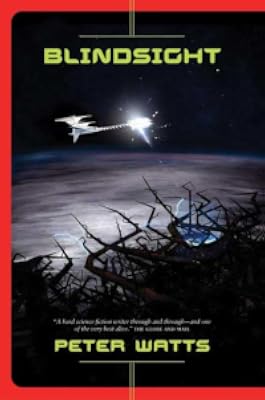
They are the best humanity can produce. They are utterly inadequate. The alien artifact, an immense wreath of show more spikes orbiting a dark gas giant in the Oort cloud, calls itself Rorschach and warns the explorers to stay away. It torments them with magnetically induced hallucinations, and it is inhabited by perfect predators.
Blindsight is grim, atmospheric, and ultimately an extended argument on the philosophy of mind. Watts is down on consciousness as slow, metabolically inefficient, and just plain suboptimal in an evolutionary sense. Rather, the universe belongs to pattern recognizers without the illusion of "I", intelligences unburdened by the problems of the self.
Dark, brilliant, and grim, a technofetistic masterpiece, Blindsight is every bit as good as I told it was. show less
I'd heard Blindsight was good for ages, and never got around to reading it despite it being released as CC. Well, that gap has finally been rectified.
Siri Keeton is a synthesist, a specialist in translating the research of cutting edge post-human scientists into terms mere humans can comprehend. He's part of a small crew sent to make contact with an alien artifact, along with a linguist who's cut her consciousness into multiple personalities, a soldier commanding a squad of combat drones, a biologist who has traded motor function for extra senses, all commanded by a vampire. (Yes, vampires are real, and scientific).
They are the best humanity can produce. They are utterly inadequate. The alien artifact, an immense wreath of show more spikes orbiting a dark gas giant in the Oort cloud, calls itself Rorschach and warns the explorers to stay away. It torments them with magnetically induced hallucinations, and it is inhabited by perfect predators.
Blindsight is grim, atmospheric, and ultimately an extended argument on the philosophy of mind. Watts is down on consciousness as slow, metabolically inefficient, and just plain suboptimal in an evolutionary sense. Rather, the universe belongs to pattern recognizers without the illusion of "I", intelligences unburdened by the problems of the self.
Dark, brilliant, and grim, a technofetistic masterpiece, Blindsight is every bit as good as I told it was. show less
If you're looking for a cheerful book to read on a sunny afternoon, "Blindsight" is not for you. On the other hand, if you're in the mood for a mix of hard science fiction, horror, and existential crises, you may find that it's a real treat.
"Blindsight" is the story of the crew of Theseus, a spacecraft sent to make first contact with an alien intelligence approaching the solar system in 2087. It is narrated by Siri Keaton, a 'synthesist' who's job it is to observe the rest of the crew and report back to Earth what he sees. His sole purpose on the mission - or sole intended purpose, until the mission commander gets other ideas - is to translate what they find into terms the typical person can understand.
There's Amanda Bates, a soldier show more linked directly to her array of combat drones, and Isaac Szpindel, a biologist likewise so connected to his laboratory that it is an extension of his own body and senses. Susan James, the linguist, has deliberately-caused Multiple Personality Syndrome and is home to four distinct personalities. The final member of the crew is their commander, Jukka Sarasti, a genetically engineered member of a reborn species that went extinct when mankind invented right angles: a vampire. Even Siri himself is altered because of brain surgery to fix epilepsy, which left him a high-functioning autistic. He's there because the rest of the crew barely fits into the category of 'human' anymore, a necessity when the skills required to complete the mission are so specialized that only the post-human can have them. It's something that's echoed through society as industry becomes increasingly automated and the only jobs left are those that require augmented brains and bodies, one idea of many that Watts touches on.
The book is in many ways like a rollercoaster. The first half is mostly setup, as Watts constructs piece by piece the universe and the mystery of what waits for the crew, and is engaging despite the relative lack of action: like the characters themselves, readers are drawn in by the pieces of the puzzle and by curiosity about what will come next. Then everything starts slotting into place and the story expends all of the pent-up tension in a accelerating rush towards the final conclusion.
Along the way, the book discusses human nature and what it really means to be a person; the interaction and difference between intelligence and consciousness; and whether self-awareness is really worth it or an evolutionary dead end, or if free will even exists at all. Watts, a biologist by career, backs up his idea with several pages of footnotes drawn from the latest research. Even if you don't disagree with his conclusions - or perhaps the characters' conclusions, because despite his best effort Siri Keaton is no unbiased observer and interjects his own values - they're intellectually interesting. Sometimes parsing out the techno-jargon can be hard, but its worth it. show less
"Blindsight" is the story of the crew of Theseus, a spacecraft sent to make first contact with an alien intelligence approaching the solar system in 2087. It is narrated by Siri Keaton, a 'synthesist' who's job it is to observe the rest of the crew and report back to Earth what he sees. His sole purpose on the mission - or sole intended purpose, until the mission commander gets other ideas - is to translate what they find into terms the typical person can understand.
There's Amanda Bates, a soldier show more linked directly to her array of combat drones, and Isaac Szpindel, a biologist likewise so connected to his laboratory that it is an extension of his own body and senses. Susan James, the linguist, has deliberately-caused Multiple Personality Syndrome and is home to four distinct personalities. The final member of the crew is their commander, Jukka Sarasti, a genetically engineered member of a reborn species that went extinct when mankind invented right angles: a vampire. Even Siri himself is altered because of brain surgery to fix epilepsy, which left him a high-functioning autistic. He's there because the rest of the crew barely fits into the category of 'human' anymore, a necessity when the skills required to complete the mission are so specialized that only the post-human can have them. It's something that's echoed through society as industry becomes increasingly automated and the only jobs left are those that require augmented brains and bodies, one idea of many that Watts touches on.
The book is in many ways like a rollercoaster. The first half is mostly setup, as Watts constructs piece by piece the universe and the mystery of what waits for the crew, and is engaging despite the relative lack of action: like the characters themselves, readers are drawn in by the pieces of the puzzle and by curiosity about what will come next. Then everything starts slotting into place and the story expends all of the pent-up tension in a accelerating rush towards the final conclusion.
Along the way, the book discusses human nature and what it really means to be a person; the interaction and difference between intelligence and consciousness; and whether self-awareness is really worth it or an evolutionary dead end, or if free will even exists at all. Watts, a biologist by career, backs up his idea with several pages of footnotes drawn from the latest research. Even if you don't disagree with his conclusions - or perhaps the characters' conclusions, because despite his best effort Siri Keaton is no unbiased observer and interjects his own values - they're intellectually interesting. Sometimes parsing out the techno-jargon can be hard, but its worth it. show less
When I picked this novel up I wasn't sure that I should respect it for being anymore then some haunted-house story in outer space. What you get is a grim meditation on the question of whether Humanity has hit the glass ceiling of its own evolutionary fitness. Remember that the truth will set you free, not make you happy.
Póngase una buena cantidad de H.P. Lovecraft. A continuación, añádase un buen chorro de Alastair Reynolds, y una pizca de Greg Egan. Y como ingrediente secreto, un chorrito de H.R. Giger. Agítese bien y ya tenemos el resultado: 'Visión ciega', de Peter Watts. Sírvase con precaución, ya que este cocktail no es para cualquier paladar.
Esta es una novela de primer contacto, pero maneja ideas tan complejas y poco comunes, que la alejan de cualquier otra novela que haya tratado este tema anteriormente. Es oscura, muy oscura; está ambientada en una atmósfera sumamente claustrofóbica y temible.
Decir que es ciencia ficción hard es quedarse corto. De hecho, al final del libro hay un apéndice con cantidad de notas explicativas y show more bibliografía utilizadas por Watts durante la concepción de su obra.
Pequeña sinopsis: en el año 2082, aparecieron en el cielo más de 65.000 sondas que rodearon la Tierra por completo. Tras un destello, se desintegraron. El resultado: acababan de hacernos una foto. Era una prueba de la existencia de vida extraterrestre, pero ¿hostil o pacífica? Se decidió mandar una misión tripulada formada por: Jukka Sarasti, un vampiro y jefe de la misión (sí amigos, se han encontrado pruebas científicas de hace más de 500.000 años que atestiguan la existencia del Homo sapiens vampiris, una subespecie humana, que en la novela ha sido traída de nuevo a la vida genéticamente); Isaac Szpindel, biólogo, para estudiar a los alienígenas; Amanda Bates, mayor del ejército, por si hay que luchar; la Banda de los Cuatro, que posee cuatro personalidades diferentes al tener el cerebro dividido, especialista en lingüística, para hablar con ellos; y Siri Keeton, sinteticista o jergonauta, para observar, debido a su capacidad de análisis de subtextos y topologías.
El narrador y protagonista es Siri, a través del cual iremos conociendo los sucesos que están pasando; al mismo tiempo, irá recordando episodios de su pasado anteriores a la misión.
Hay partes verdaderamente escalofriantes y memorables, como el Big Ben, una masa joviana de magnitudes gigantescas, o la nave alienígena, de verdadera pesadilla.
Recomendaría este libro sólo a aquellos lectores con un cierto bagaje en el género de la ciencia ficción, en especial en la ciencia ficción hard, más dura, ya que, aunque no es una novela de Greg Egan, sí hay ciertos pasajes algo áridos para el neófito. show less
Esta es una novela de primer contacto, pero maneja ideas tan complejas y poco comunes, que la alejan de cualquier otra novela que haya tratado este tema anteriormente. Es oscura, muy oscura; está ambientada en una atmósfera sumamente claustrofóbica y temible.
Decir que es ciencia ficción hard es quedarse corto. De hecho, al final del libro hay un apéndice con cantidad de notas explicativas y show more bibliografía utilizadas por Watts durante la concepción de su obra.
Pequeña sinopsis: en el año 2082, aparecieron en el cielo más de 65.000 sondas que rodearon la Tierra por completo. Tras un destello, se desintegraron. El resultado: acababan de hacernos una foto. Era una prueba de la existencia de vida extraterrestre, pero ¿hostil o pacífica? Se decidió mandar una misión tripulada formada por: Jukka Sarasti, un vampiro y jefe de la misión (sí amigos, se han encontrado pruebas científicas de hace más de 500.000 años que atestiguan la existencia del Homo sapiens vampiris, una subespecie humana, que en la novela ha sido traída de nuevo a la vida genéticamente); Isaac Szpindel, biólogo, para estudiar a los alienígenas; Amanda Bates, mayor del ejército, por si hay que luchar; la Banda de los Cuatro, que posee cuatro personalidades diferentes al tener el cerebro dividido, especialista en lingüística, para hablar con ellos; y Siri Keeton, sinteticista o jergonauta, para observar, debido a su capacidad de análisis de subtextos y topologías.
El narrador y protagonista es Siri, a través del cual iremos conociendo los sucesos que están pasando; al mismo tiempo, irá recordando episodios de su pasado anteriores a la misión.
Hay partes verdaderamente escalofriantes y memorables, como el Big Ben, una masa joviana de magnitudes gigantescas, o la nave alienígena, de verdadera pesadilla.
Recomendaría este libro sólo a aquellos lectores con un cierto bagaje en el género de la ciencia ficción, en especial en la ciencia ficción hard, más dura, ya que, aunque no es una novela de Greg Egan, sí hay ciertos pasajes algo áridos para el neófito. show less
Members
- Recently Added By
Lists

Best Science Fiction Novels
816 works; 430 members

Recommend the 20 best books you've read in the last five years
2,168 works; 606 members

Truly alien aliens (SF)
42 works; 3 members

Top Five Books of 2015
811 works; 241 members

Otherland Book Club
36 works; 2 members

Schisms in transhumanity - SF
34 works; 1 member

Isaac Arthur’s Book Recommendations
98 works; 3 members

Best Vampire & Werewolf Fiction
221 works; 146 members
Favorite Science Fiction
456 works; 218 members

Linguistics in Science Fiction
27 works; 4 members

Books That Changed Our Perspective
423 works; 168 members

Books Read in 2024
4,727 works; 128 members

TBR - Older Books
92 works; 1 member

Fate vs. Free Will
63 works; 8 members

Books Read 2024
23 works; 1 member

Books We'd Want on a Desert Island
203 works; 131 members

Books Read in 2022
5,226 works; 112 members

Books Read in 2019
4,052 works; 110 members

Broderick and Di Filippo's Science Fiction: The 101 Best Novels 1985-2010
103 works; 7 members

Simulated Reality in Fiction
124 works; 7 members

Books Read in 2015
3,299 works; 129 members

Books Read in 2026
1,994 works; 67 members
Talk Discussions
Past Discussions
ISO: Blindsight in Centipede Press (November 2021)
Author Information

47+ Works 8,785 Members
Peter Watts is a reformed marine biologist whom Canada's Globe and Mail has proclaimed "one of the very best hard-SF writers alive"
Some Editions
Awards and Honors
Awards
Series

Belongs to Publisher Series
Work Relationships
Is contained in
Was inspired by
Has as a commentary on the text
Common Knowledge
- Canonical title*
- Vision aveugle
- Original publication date
- 2006-10-03
- People/Characters
- Siri Keeton; Jukka Sarasti; Amanda Bates; Susan James; Michelle; Sascha (show all 11); Cruncher; Robert Cunningham; Theseus; Stretch; Clench
- Important places
- Theseus (spaceship); Rorschach (spaceship); Oort cloud
- Epigraph
- Try to touch the past. Try to deal with the past. It's not real. It's just a dream.
- Ted Bundy
This is what fascinates me most in existence:
the peculiar necessity of imagining what is, in fact, real.
– Philip Gourevitch
You will die like a dog for no good reason.
– Ernest Hemingway - Dedication
- For Lisa
If we're not in pain, we're not alive. - First words
- It didn't start out here.
- Quotations*
- Les animaux vivant en meute mettent toujours en pièces les plus faibles d'entre eux. Tous les enfants le savent d'instinct.
On oubliait facilement l'IA quantique au cœur de notre vaisseau. Elle restait discrètement fondue dans le décor, nous nourrissant, nous transportant, imprégnant notre existence comme un dieu discret, mais tout comme Dieu,... (show all) elle ne prenait jamais nos appels.
Il est beaucoup plus facile de vivre en se sachant vandale que meurtrier. - Last words
- (Click to show. Warning: May contain spoilers.)You'll just have to imagine you're Siri Keaton.
- Original language
- English
- Canonical DDC/MDS
- 813.6
- Canonical LCC
- PR9199.3.W386
*Some information comes from Common Knowledge in other languages. Click "Edit" for more information.
Classifications
Statistics
- Members
- 3,683
- Popularity
- 4,389
- Reviews
- 170
- Rating
- (3.90)
- Languages
- 10 — Czech, English, Finnish, French, German, Polish, Russian, Spanish, Turkish, Ukrainian
- Media
- Paper, Audiobook, Ebook
- ISBNs
- 37
- ASINs
- 11