
There is 1 current discussion about this work.
On This Page
Description
This is the story of humans stranded on an alien planet, the world of the atevi, where registered assassination is a way of life. They are the descendants of a space ship which lost its way 500 years earlier. Now humanity lives in exile on the island of Mospheira, trading tidbits of advanced technology for continued peace and a secluded refuge that no atevi will ever visit. Only a single human, Bret Cameron, the paidhi, (the foreigner of the novel) is allowed off the island and into the show more complex and dangerous society of the atevi, brought there to act as interpreter and technological liaison to the leader of the most powerful of the atevi factions. He realizes he must find a way to build a truer understanding between his people and the atevi or else they will all die. Can he do it? show lessTags
Recommendations


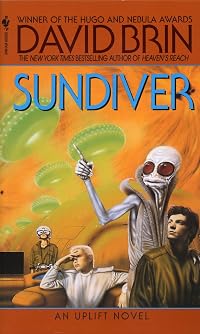



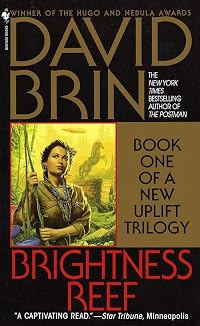
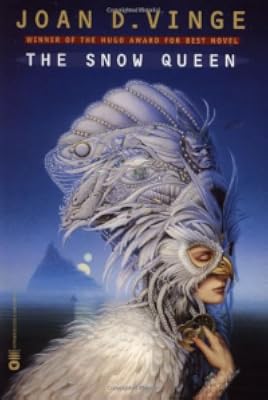



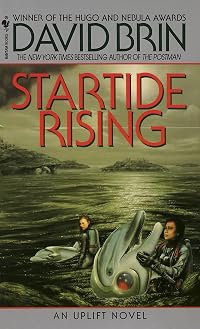

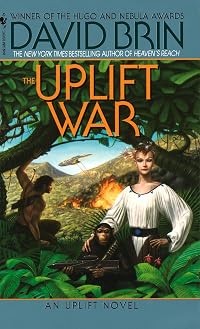
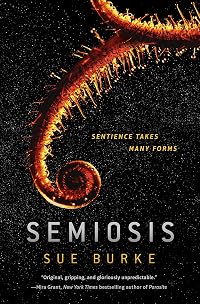
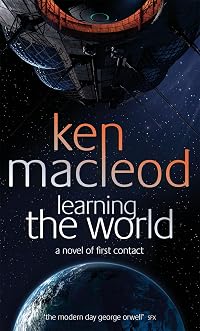



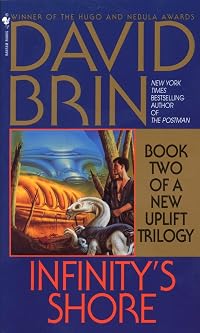













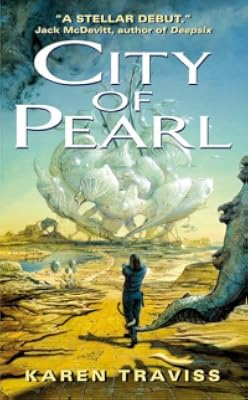
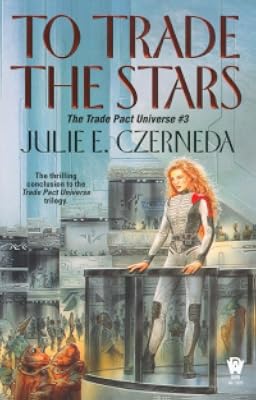








Member Recommendations
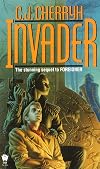

sandstone78 Leckie has said that Cherryh's Foreigner books were a big influence on Ancillary Justice and sequels
20

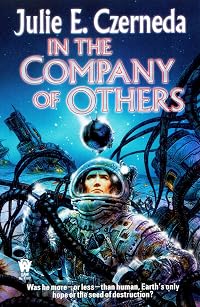
electronicmemory Two books that push the boundaries on our understanding of what constitutes alien cultures and intelligences.
12

reading_fox Both character driven social SF rather than technologically focused.
03
Jarandel Diplomats exploring alien mindsets.

Jarandel Ambassadors to aliens
Member Reviews
This was a gift from a friend who I met while teaching abroad, so there was a lot I could relate to, as far as being a guest in another culture. But I also wonder if anyone has applied critical race theory to this series--it was a very interesting decision to make the main character white and the atevi jet-black, and made me draw parallels between this and historical imperialism...which definitely struck home during those moments when I felt Bren getting a little whiny about not being better taken care of by his atevi comrades. :) I do agree with some of the other reviewers that the way she skimmed over the descriptions of the atevi was a little maddening--we shouldn't have to rely on cover art to paint a picture of them for us. But I show more saw her intent with the deeply introspective writing, because that's the way Bren as the paidhi has to write. There was a really musical quality to the way Cherryh's words flowed for me that I deeply enjoyed. I'm really looking forward to getting into this series. show less
Cherryh, C. J. Foreigner. Foreigner No. 1. Daw, 1994.
Rereading the first novel in C. J. Cherryh’s long-running Foreigner series, I was impressed by how many clues we get to themes and plot elements that are developed much later in the series. First, Cherryh is careful to establish that human scientific superiority does not mean that they can implement all they know. Their existence on land and in space is marginal and fraught with political division. When their undermanned starship abandons the station built in orbit around the only habitable planet within reach, the station cannot maintain its population. Their goal is to plant a colony on the planet and use the Atevi, its native humanoid species, to create the technological base show more they need. But the Atevi confine the colonists to one island and negotiate with them for the technology they want, which is not always the technology the humans want to give them. When the starship returns two-hundred years later, the fragile détente is endangered. This background story, told in the first fifteen percent of the novel, grounds the political drama developed in the next several trilogies in the series.
Most of Foreigner follows protagonist Bren Cameron and his relationship with the Atevi family, with whom humans have established political relations. Bren is primarily a linguist charged with learning to communicate efficiently with the Atevi. He finds that he cannot learn the language without partially assimilating into Atevi culture. His efforts to balance his duty and connection with his human family and colleagues as he begins to think almost like an Atevi are the core of the series.
The Atevi are a conservative, xenophobic society that is just beginning to industrialize. They look to numerology to evaluate every new idea and have no concept of emotions like love and friendship. Atevi society is a patchwork of loose associations with conflicting clan loyalties. Justice is dispensed by a guild of assassins that act has bodyguards for the rich and powerful. Tabini, who would be the head of state if the Atevi had such things as states, is interested in using his connection with the human colony to increase Atevi power and secure his position against his Atevi rivals. His powerful and dangerous grandmother does more than anyone to educate Bren into the Atevi rituals and values. Bren’s two assassin bodyguards are his closest companions. Even in this first novel, there is already sexual tension between Bren and one of the bodyguards. Cherryh’s adroit limited third-person narration let us follow Bren’s conflicted emotions and calculations as he works to understand what it will take to survive. Foreigner is character-driven science fiction at its best. 5 stars. show less
Rereading the first novel in C. J. Cherryh’s long-running Foreigner series, I was impressed by how many clues we get to themes and plot elements that are developed much later in the series. First, Cherryh is careful to establish that human scientific superiority does not mean that they can implement all they know. Their existence on land and in space is marginal and fraught with political division. When their undermanned starship abandons the station built in orbit around the only habitable planet within reach, the station cannot maintain its population. Their goal is to plant a colony on the planet and use the Atevi, its native humanoid species, to create the technological base show more they need. But the Atevi confine the colonists to one island and negotiate with them for the technology they want, which is not always the technology the humans want to give them. When the starship returns two-hundred years later, the fragile détente is endangered. This background story, told in the first fifteen percent of the novel, grounds the political drama developed in the next several trilogies in the series.
Most of Foreigner follows protagonist Bren Cameron and his relationship with the Atevi family, with whom humans have established political relations. Bren is primarily a linguist charged with learning to communicate efficiently with the Atevi. He finds that he cannot learn the language without partially assimilating into Atevi culture. His efforts to balance his duty and connection with his human family and colleagues as he begins to think almost like an Atevi are the core of the series.
The Atevi are a conservative, xenophobic society that is just beginning to industrialize. They look to numerology to evaluate every new idea and have no concept of emotions like love and friendship. Atevi society is a patchwork of loose associations with conflicting clan loyalties. Justice is dispensed by a guild of assassins that act has bodyguards for the rich and powerful. Tabini, who would be the head of state if the Atevi had such things as states, is interested in using his connection with the human colony to increase Atevi power and secure his position against his Atevi rivals. His powerful and dangerous grandmother does more than anyone to educate Bren into the Atevi rituals and values. Bren’s two assassin bodyguards are his closest companions. Even in this first novel, there is already sexual tension between Bren and one of the bodyguards. Cherryh’s adroit limited third-person narration let us follow Bren’s conflicted emotions and calculations as he works to understand what it will take to survive. Foreigner is character-driven science fiction at its best. 5 stars. show less
Classic Cherryh set-up! Some poor schmuck ends up alone among an alien group (sometimes human) trying to figure out what he/she has to do to survive. In this case a spaceship en route to set up a new space station along a trade corridor is thrown of course, like, wayyyyy of course, into an utterly unrecognizable galaxy. The culture on the ship is divided in two--the Guild of pilots and the civilians who will build the station. After a long search they find a habitable planet and build a station around it. They know there is an advancing culture down there (they have steam, for ex). The pilots want to keep exploring, the civs want to go live on the planet. A deal is struck. Down they go. The real story begins 200 years after, with Bren show more Cameron, the designated Paidhi, whose job is to act as the speaker of humans to atevi. Humans are, bit by bit, doling out the technology they think the atevi can "handle" ecologically and culturally (e.g. peacefully), but things are coming to a crisis and Bren is caught in the vortex of change. The atevi are marvelous. You can say "humanoid"-- their basic structure is similar to ours, but the point is that they have evolved differently and do not have the same emotions or social structures as humans. No words for "trust" or "friend", no tears, adult are not so much organized by family groups as a web of alliances and allegiances. They are brilliant with number, the atevi, so humans are nervously aware that likely they are progressing secretly, in ways they can't control, less and less, as they approach a tipping-point of knowledge of physics. There are atevi factions that fear and loathe humans, are convinced that they plan to take over the entire planet, etc. that have kept them banished on a large island, isolated and apart, and the paidhi is the only human who interacts with them (and only at the highest level) and then something unexpected happens which triggers . . . major upheaval. And a lot of pain and suffering for poor old Bren. The atevi around him, mainly the guard, Banichi and Jago, come through as individuals, and as truly different, fearfully unknowable. There is a feisty grandma who rides their version of a horse like a whirlwind. . . and the atevi, Tabini, who runs the Western Association, Bren's lifeline. I love it, I'll be reading this like a mad thing all winter, I expect. ****1/2 show less
Third read, 8/18/16:
What can I say? Until it gets to Bren, I'm not attached to the story much, but the fact that so much of them comes back to haunt us in subsequent novels makes me *want* to pay attention. But other than that, once Bren is in the spotlight and we're in his head, I'm there, and this becomes one of my favorite novels. :)
Why? The psychology, mainly. The Atevi are really fantastic aliens and the real diamond in this series is the fact that they are not hardwired the same way as us. Their knee-jerk reactions are *not* ours, and Bren, our interpreter/diplomat, starts out in the middle of an assassination attempt on his life for reasons he doesn't understand and political associations and alien emotions that refuse to be show more cracked. It doesn't help that the Atevi think of everything in a type of numerology, that word orders and groupings of people or objects are either fortunate or unfortunate, that Bren must do the equivalent of tensor calculus with ever sentence, and then he gets thrown into the really life-threatening situations.
The whole novel is about trying to understand his situation, and its harrowing and I'm just as concerned and confused as the MC. And this is still true even when I've read a good portion of the rest of the series and this is my third read for this one. Can I be even more impressed than this?
Will Bren's decisions alter the destinies of the stranded human colony and the aliens? Is he betraying his own kind? Or can he rely on his gut reactions? Can he ever trust the Atevi?
Totally amazing thriller. :)
Original review:
My personal favorites of Cherryh are the Foreigner books, hands down. And that's even while excluding her actual Hugo winners, Downbelow Station and Cyteen.
It's been so long since I started the Foreigner series that I only very vaguely recall having to struggle a little bit at the beginning. The second readthrough, on the other hand, was an absolute joy, picking up and retaining all those previously annoying details that then brought the tale to life. Nothing is wasted. The tension between remaining loyal to the human community and getting sucked into the political tensions of an interesting alien race that could seriously benefit from a greater stream of technology was like a draft of pure clean water in comparison to so many years of ham-fisted Star Trek.
The seriously twisted mental gymnastics of having to speak through numerology made me really believe, deep down, that these aliens were not only brighter than us, but they were also natural Shakespearean poets. I also learned more about herd mentality from this book than I did from any other source, and she made it truly exciting.
What will Bren do? Will he betray his own kind? Is it right to do so? Is he being set up to die?
The poor Paidhi was so lost. I loved it. show less
What can I say? Until it gets to Bren, I'm not attached to the story much, but the fact that so much of them comes back to haunt us in subsequent novels makes me *want* to pay attention. But other than that, once Bren is in the spotlight and we're in his head, I'm there, and this becomes one of my favorite novels. :)
Why? The psychology, mainly. The Atevi are really fantastic aliens and the real diamond in this series is the fact that they are not hardwired the same way as us. Their knee-jerk reactions are *not* ours, and Bren, our interpreter/diplomat, starts out in the middle of an assassination attempt on his life for reasons he doesn't understand and political associations and alien emotions that refuse to be show more cracked. It doesn't help that the Atevi think of everything in a type of numerology, that word orders and groupings of people or objects are either fortunate or unfortunate, that Bren must do the equivalent of tensor calculus with ever sentence, and then he gets thrown into the really life-threatening situations.
The whole novel is about trying to understand his situation, and its harrowing and I'm just as concerned and confused as the MC. And this is still true even when I've read a good portion of the rest of the series and this is my third read for this one. Can I be even more impressed than this?
Will Bren's decisions alter the destinies of the stranded human colony and the aliens? Is he betraying his own kind? Or can he rely on his gut reactions? Can he ever trust the Atevi?
Totally amazing thriller. :)
Original review:
My personal favorites of Cherryh are the Foreigner books, hands down. And that's even while excluding her actual Hugo winners, Downbelow Station and Cyteen.
It's been so long since I started the Foreigner series that I only very vaguely recall having to struggle a little bit at the beginning. The second readthrough, on the other hand, was an absolute joy, picking up and retaining all those previously annoying details that then brought the tale to life. Nothing is wasted. The tension between remaining loyal to the human community and getting sucked into the political tensions of an interesting alien race that could seriously benefit from a greater stream of technology was like a draft of pure clean water in comparison to so many years of ham-fisted Star Trek.
The seriously twisted mental gymnastics of having to speak through numerology made me really believe, deep down, that these aliens were not only brighter than us, but they were also natural Shakespearean poets. I also learned more about herd mentality from this book than I did from any other source, and she made it truly exciting.
What will Bren do? Will he betray his own kind? Is it right to do so? Is he being set up to die?
The poor Paidhi was so lost. I loved it. show less
This had a very slow start, with two different prologues. And the entire first half was mostly a lot of internal monologuing and descriptions. But I'm still giving it four stars because the aliens were just that good. They have their own fully-constructed world, culture, animals, history, everything. And the human ambassador, who is the main character, has spent his life studying them and still doesn't understand.
There's a plot, but it's not really about the plot. It's about the impossibility of understanding and predicting someone who doesn't think or feel the way you do.
As a science fiction writer myself, I shut this one with a mind teeming with ideas of how to make my work better. That makes it one of the most important books I've show more read this year. I'm glad I didn't give up on it. show less
There's a plot, but it's not really about the plot. It's about the impossibility of understanding and predicting someone who doesn't think or feel the way you do.
As a science fiction writer myself, I shut this one with a mind teeming with ideas of how to make my work better. That makes it one of the most important books I've show more read this year. I'm glad I didn't give up on it. show less
To read more reviews, check out my blog keikii eats books!
Quote:
Review:
I genuinely don't know what I was expecting when I picked up this book. I put it on my list months ago and quite forgot what it was about. Yet, whatever I was expecting it couldn't possibly have been what I got. Because what I got was even better than I could have hoped for.
Foreigner is pure political intrigue. It is about trying to avoid war between two people who have to live together due to circumstance, but being incapable of fully understanding each other due show more to differences in biology. It is about very complex ideas that humans cannot understand, and aliens cannot understand - and there is always misunderstanding. It is about trying to stay alive when people want you dead. And it is about the main character, Bren, being completely and totally out of his depth.
Bren is a political attache to the Atevi from the humans. They call him the paidhi, and he is there to systematically release scientific information slowly to the Atevi, as a condition of a treaty to stop a war between the two races. He has to do it so he doesn't disrupt the way of life of the Atevi race, so they don't devolve into war and try to kill each other. Or humans. Yet his personal goal is to get the Atevi to the space age.
Bren is the only human amongst the Atevi. The humans live on an island. And on the mainland, there is a Guild of assassins. Which is where the book opens up - with an assassination attempt on the paidhi's, on Bren's, life. An unsanctioned attempted. It devolves from there, basically. Bren is sent to a crotchety old lady, Ilisidi, for safety. Everyone fears Ilisidi because of who she is and the power she can wield. And she is the best. Bren has to navigate the political minefield (mindfield? lol) that is Ilisidi, who happen's to be the Grandmother of the current ruler of the Atevi. And it is just minefield after minefield and Bren desperately just trying to stay alive and get to the bottom of what the problem truly is.
This book was absolutely perfect for me. Political stories aren't typically my favourite things. Yet, I couldn't put this down, and I couldn't just stop with one book, either. (Or, chance would have it, with 19 books since I read the whole damn series at once and now I have to pay the piper and write all 19 reviews.)
However: is it still infodumping if it takes up half the book? Because that is what it feels like. Especially with those two short stories in the beginning that I highly recommend skipping because it left the book feeling disjointed. There are so many complex topics that Cherryh introduces into the story that it takes forever to set things up so the reader can understand them. Complex topics about the aliens that Bren struggles to understand, and complex topics about humans bren struggles to translate for the aliens. Plus the entirety of the setup for the politics this book is completely about takes a while to lay out because of all the factions.
The infodump went on and on and... I loved it. I absolutely loved it. I loved figuring out every single piece. I loved the feeling of being completely overwhelmed - because Bren was overwhelmed. I loved this book and I could not wait to read further books.
...Could have done without his musing on his lovelife, though. Just saying. show less
Quote:
-“Trust was a word you couldn't translate. But the atevi had fourteen words for betrayal.”
-"Fourteen words, the language had for betrayal, and one of them doubled for ‘taking the obvious course.’
Review:
I genuinely don't know what I was expecting when I picked up this book. I put it on my list months ago and quite forgot what it was about. Yet, whatever I was expecting it couldn't possibly have been what I got. Because what I got was even better than I could have hoped for.
Foreigner is pure political intrigue. It is about trying to avoid war between two people who have to live together due to circumstance, but being incapable of fully understanding each other due show more to differences in biology. It is about very complex ideas that humans cannot understand, and aliens cannot understand - and there is always misunderstanding. It is about trying to stay alive when people want you dead. And it is about the main character, Bren, being completely and totally out of his depth.
Bren is a political attache to the Atevi from the humans. They call him the paidhi, and he is there to systematically release scientific information slowly to the Atevi, as a condition of a treaty to stop a war between the two races. He has to do it so he doesn't disrupt the way of life of the Atevi race, so they don't devolve into war and try to kill each other. Or humans. Yet his personal goal is to get the Atevi to the space age.
Bren is the only human amongst the Atevi. The humans live on an island. And on the mainland, there is a Guild of assassins. Which is where the book opens up - with an assassination attempt on the paidhi's, on Bren's, life. An unsanctioned attempted. It devolves from there, basically. Bren is sent to a crotchety old lady, Ilisidi, for safety. Everyone fears Ilisidi because of who she is and the power she can wield. And she is the best. Bren has to navigate the political minefield (mindfield? lol) that is Ilisidi, who happen's to be the Grandmother of the current ruler of the Atevi. And it is just minefield after minefield and Bren desperately just trying to stay alive and get to the bottom of what the problem truly is.
This book was absolutely perfect for me. Political stories aren't typically my favourite things. Yet, I couldn't put this down, and I couldn't just stop with one book, either. (Or, chance would have it, with 19 books since I read the whole damn series at once and now I have to pay the piper and write all 19 reviews.)
However: is it still infodumping if it takes up half the book? Because that is what it feels like. Especially with those two short stories in the beginning that I highly recommend skipping because it left the book feeling disjointed. There are so many complex topics that Cherryh introduces into the story that it takes forever to set things up so the reader can understand them. Complex topics about the aliens that Bren struggles to understand, and complex topics about humans bren struggles to translate for the aliens. Plus the entirety of the setup for the politics this book is completely about takes a while to lay out because of all the factions.
The infodump went on and on and... I loved it. I absolutely loved it. I loved figuring out every single piece. I loved the feeling of being completely overwhelmed - because Bren was overwhelmed. I loved this book and I could not wait to read further books.
...Could have done without his musing on his lovelife, though. Just saying. show less
This was a fantastic (albeit surprising) science fiction novel. Generally I'm not a fan of the whole new worlds, alien creatures type of scifi-a lot of times I feel inundated with extraneous technical information, which bores me, frankly. However, Cherryh has done an outstanding job of creating a believable "new" world, while keeping the techy stuff to a minimum. What I loved most, apart from her created language, was the obvious tension and conflict felt between the atevi and human races. Bren Cameron, a sort of human diplomat to the atevi race, simply CANNOT make himself understood and in turn has an impossible time coming to terms with the motivations of this alien race. It was an incredibly fascinating read, and I can't wait to show more continue the trilogy (story arc? here's another reason I don't normally like books like this-it branches off into different story arcs and simply confuses me). show less
Members
- Recently Added By
Lists

Best Science Fiction Novels
816 works; 427 members

Favorite Science Fiction by Women Authors
741 works; 203 members

Space Colonization
100 works; 26 members

Science Fiction by female authors
43 works; 4 members

Best SciFi and Fantasy Classics
53 works; 6 members

Amazon's 100 Science Fiction & Fantasy Books to Read in a Lifetime
87 works; 23 members

Books Read in 2013
1,630 works; 51 members

Books Read in 2016
4,666 works; 199 members

things to read next
23 works; 1 member

unread and uncatalogued
48 works; 1 member

Books Read in 2019
4,052 works; 110 members

Linguistics in Science Fiction
27 works; 4 members

Books We Want To Read Again For The First Time
384 works; 160 members
Talk Discussions
Current Discussions
Book Discussion: Foreigner SPOILER ALERT - Finish the Book First in The Green Dragon (April 28)
Past Discussions
Book Discussion: Foreigner SPOILER FREE Thread in The Green Dragon (February 2008)
Author Information

256+ Works 75,075 Members
A multiple award-winning author of more than thirty novels, C. J. Cherryh received her B.A. in Latin from the University of Oklahoma, and then went on to earn a M.A. in Classics from Johns Hopkins University. Cherryh's novels, including Tripoint, Cyteen, and The Pride of Chanur, are famous for their knife-edge suspense and complex, realistic show more characters. Cherryh won the John W. Campbell Award for Best New Writer in 1977. She was also awarded the Hugo Award for her short story Cassandra in 1979, and the novels Downbelow Station in 1982 and Cyteen in 1989. (Bowker Author Biography) show less
Some Editions
Awards and Honors
Awards
Series

Belongs to Publisher Series
DAW Book Collectors (941)
Work Relationships
Is contained in
Common Knowledge
- Canonical title
- Foreigner
- Original title
- Foreigner
- Original publication date
- 1994-02-01 (First US Edition) (First US Edition); 1994-08 (First UK Edition) (First UK Edition)
- People/Characters
- Bren Cameron; Tabini; Ilisidi; Banichi; Jago; Tano (show all 8); Algini; Cenedi
- Important places
- Mospheira; The Western Association; Malguri; The Phoenix
- First words
- It was the deep dark, unexplored except for robotic visitors.
- Last words
- (Click to show. Warning: May contain spoilers.)But in the way of such things, maybe atevi hadn't found the exact words for it, either.
- Publisher's editor
- Wollheim, Betsy
Classifications
Statistics
- Members
- 2,603
- Popularity
- 7,320
- Reviews
- 70
- Rating
- (3.91)
- Languages
- 5 — Czech, English, French, German, Spanish
- Media
- Paper, Audiobook, Ebook
- ISBNs
- 15
- UPCs
- 2
- ASINs
- 13