On This Page
Description
With the scope of Dune and the commercial action of Independence Day, this near-future trilogy is the first chance for English-speaking readers to experience this multple-award-winning phenemonenon from China's most beloved science fiction author. Set against the backdrop of China's Cultural Revolution, a secret military project sends signals into space to establish contact with aliens. An alien civilization on the brink of destruction captures the signal and plans to invade Earth. show more Meanwhile, on Earth, different camps start forming, planning to either welcome the superior beings and help them take over a world seen as corrupt, or to fight against the invasion. The result is a science fiction masterpiece of enormous scope and vision. show lessTags
Recommendations
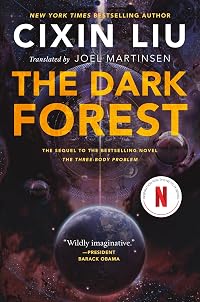
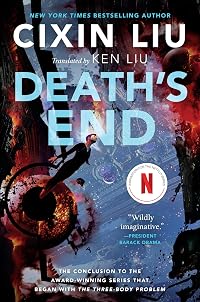

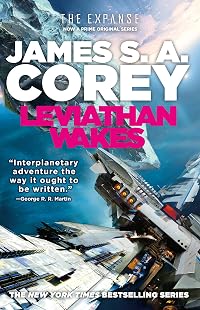
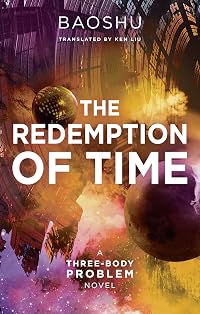
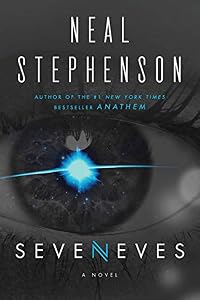

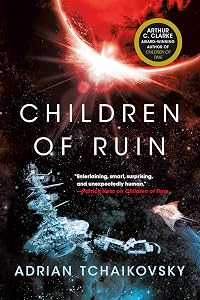
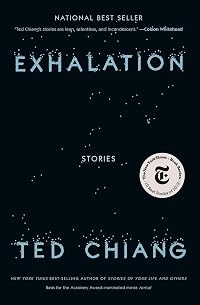
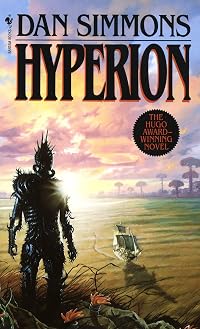
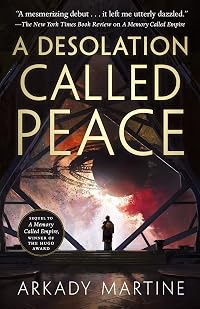
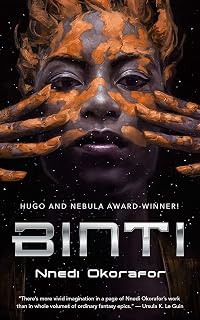
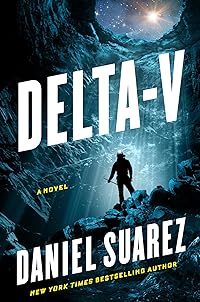
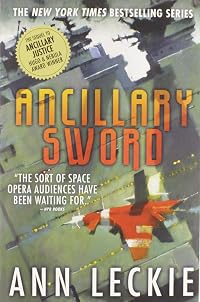
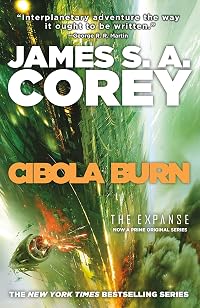
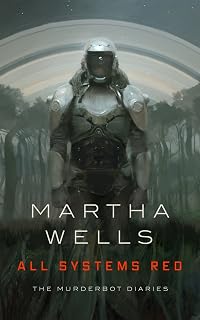
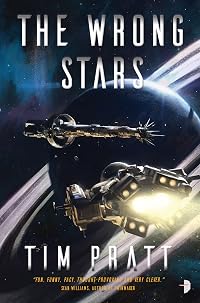
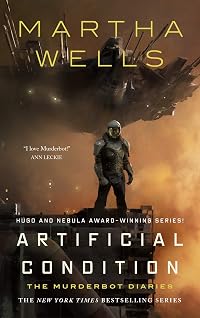
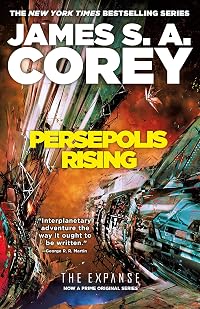
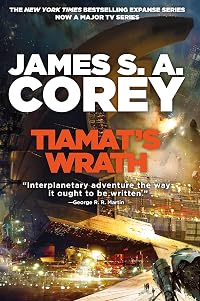

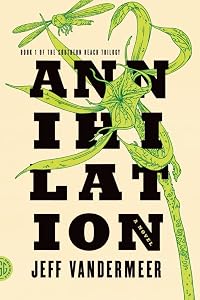
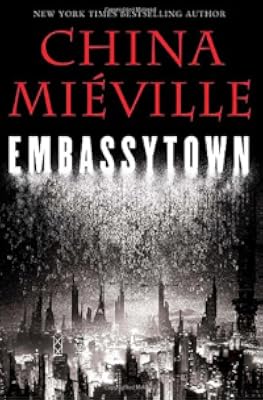
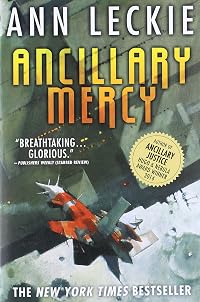
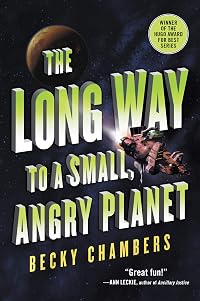
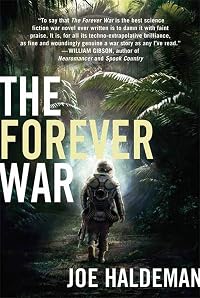


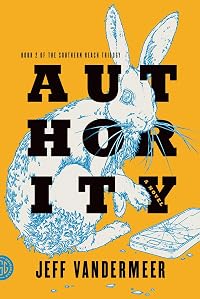
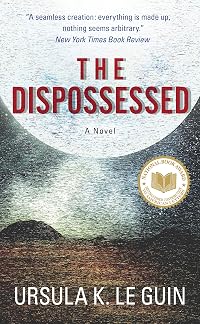
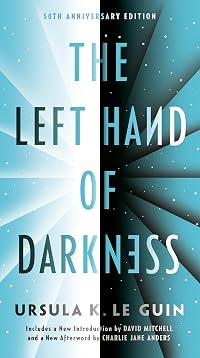
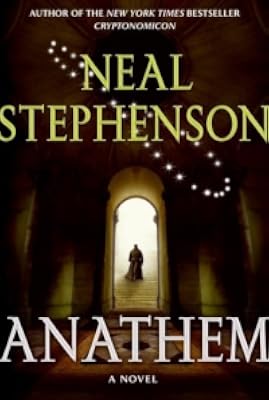
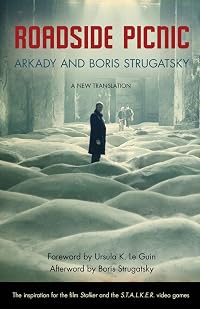
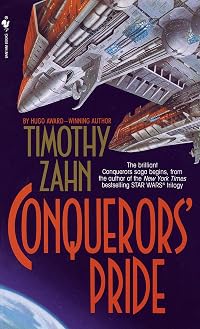
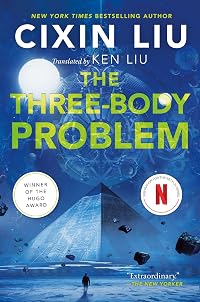
Member Recommendations
storyjunkie There are stylistic and societal-implications similarities between the English translation of The Three-Body Problem and Anathem, despite being of very different worlds, and deep into different scientific areas.
42
CGlanovsky Stories about man's search for intelligent life in the universe with elements of hard science
20
br77rino I put this because both books are what I would consider hard science fiction.
Member Reviews
This is one of those books where the degree of pleasure I take in having read it far exceeds the degree of pleasure I took in reading it. I am very glad I read this, for the perspective it gave me on China and on what science fiction is, for the way it made me think about storytelling structure and how our expectations for it may be tied to the culture/s we've grown up in, for the pure fact that I think it's good to read outside our comfort zones, outside our nations of familiarity, and in translation. But while there were several sections of the book that wowed me in a purely readerly sense, on the whole, I did not enjoy this. It takes a very long time to get going, parts of it are grimmer than I usually prefer in fiction, and show more ultimately I feel a little held captive by the fact that (despite there being no cliffhanger) I will have to read two more books if I want fully to understand what is going on. I'm just not sure I have the stamina to get through two more of these, though I would like to. (And I'm curious to see how the second book, which was translated by a different translator, reads. I didn't care for the translation of Three Body, and I see from the translator's note that I disagree with him about what translation should do.) On the other hand, some of the author's science fiction ideas, his use of science to speculate about where science might go and how science might be used, were enthralling and mind-bending. There was also one development in particular that was fascinating, compelling, and alarming. So while I certainly took a lot away from this read, and while I don't read just for (or always for) enjoyment, I do wish I had found more to enjoy here in addition to finding much to appreciated. For anyone who hasn't read this yet who thinks they might like to, I say do. show less
After I learned that President Obama recommended this, I decided to try it because I had never read any SciFi not written by an American author. Plus, it had won the Hugo. While I found it to be an excellent story, it was also a very challenging read.
The first challenge was reading a translated work. I know very little of Chinese history (just some key events, all through the lens of US history), so it was a struggle at first to follow the story because it is intimately tied into China’s Cultural Revolution. In fact, more than a third of the book simply follows a primary character through her horrific experiences during a period when science was rejected and academicians were attacked and even killed. The translator included many show more footnotes to help give context, but it had the effect of feeling like a history book rather than a SciFi story. I actually checked the synopsis more than once since the alien invasion plotline doesn’t come into play until more than halfway through.
The second challenge was that this is definitely “hard SciFi.” The title comes from an actual problem of orbital mechanics which is explored via an online game in the story, and which ties directly into the alien civilization. I found myself skimming through some of the mathematical exposition, but it served very well to ground the story. While the first half was a slog, the second half was far more interesting. I’ve read more than a few alien invasion plots, and seen even more films. But, it’s rare that a story devotes so much time to how different factions of humanity are likely to react (governments, scientists, religious, etc.) even before the invasion occurs. If an alien race were to come to Earth, traveling light years means it’s not going to happen quickly! I found this part fascinating.
Overall, I’d give the book 3.5 stars, but was hooked enough I ordered the remainder of the trilogy. I expect the story to be much better now that so much history/framing is out of the way. Recommended. show less
The first challenge was reading a translated work. I know very little of Chinese history (just some key events, all through the lens of US history), so it was a struggle at first to follow the story because it is intimately tied into China’s Cultural Revolution. In fact, more than a third of the book simply follows a primary character through her horrific experiences during a period when science was rejected and academicians were attacked and even killed. The translator included many show more footnotes to help give context, but it had the effect of feeling like a history book rather than a SciFi story. I actually checked the synopsis more than once since the alien invasion plotline doesn’t come into play until more than halfway through.
The second challenge was that this is definitely “hard SciFi.” The title comes from an actual problem of orbital mechanics which is explored via an online game in the story, and which ties directly into the alien civilization. I found myself skimming through some of the mathematical exposition, but it served very well to ground the story. While the first half was a slog, the second half was far more interesting. I’ve read more than a few alien invasion plots, and seen even more films. But, it’s rare that a story devotes so much time to how different factions of humanity are likely to react (governments, scientists, religious, etc.) even before the invasion occurs. If an alien race were to come to Earth, traveling light years means it’s not going to happen quickly! I found this part fascinating.
Overall, I’d give the book 3.5 stars, but was hooked enough I ordered the remainder of the trilogy. I expect the story to be much better now that so much history/framing is out of the way. Recommended. show less
it would not be fitting for me to give this deeply affecting book any less than five stars. that's not say i enjoyed it unreservedly—it had some curiosities of pacing and other little imperfections, which i suspect may be due to the fact that this storytelling comes from a tradition i am wholly unfamiliar with. also, as a physicist reading a book about physics, there were some elements which asked too much of me with regards to suspension of disbelief; some "you've lost me there" moments. that said, i found the inclusion of science and its role in the story to be incredibly satisfying. the historical and cultural examination contained within was what really made this special, for me. it's a book so fundamentally about human nature; show more even when alien civilisations are brought into the mix they reflect us like, say, a giant parabolic mirror in the sky. the translation was excellent, least of all in the amount of technical detail that had to make its way between languages. i found the footnotes very helpful when it came to chinese history. and the story itself—it seemed like when i thought i couldn't be surprised any further, there was something shocking around the corner—but not in a shlocky plot twist kind of way. it was like a journey of discovery, with crucial information being revealed only when you needed it, and absolutely no sooner. as such, and with the deep impact this book made on me, i rate it highly as one of the best works of sci-fi i've read. show less
OH MY GOD I FINISHED.
The Three-Body Problem is honestly one of the most bizarre books I've read in a long time. I tend to like bizarre books. I appreciate when authors take risks and try out something unusual and new that might not work over a safer route.
Sadly, for The Three-Body Problem, bizarre is not really a good thing.
The Three-Body Problem's main problem is not, in fact, the three-body problem. It's that the book's characters have no personality. The only exception to this is Da Shi, whose personality starts and ends with "sass" (this isn't a bad thing). Everyone else is startlingly bland and blank. Wang in particular is a bland, boring ass. He ignores his wife and child, frequently pulling all-nighters in pursuit of his show more research and leaving them wondering where he is. When he does pause to consider the female half of the species, he limits his romantic musings to Yang Dong, a female physicist who he never spoke to but he saw her once backlit by a sunny window and she was really pretty (wut). Wang is supposed to be our main character but he really has no personality or character traits beyond "bad husband". The same goes for everyone.
It's pretty clear that Liu is just not interested in his characters, even a tiny bit. He's here for the science. Too bad for him I'm a humanities girl, through and through. I could actually deal with the science, except it's explained in a fairly confusing way (how protons can disrupt a hadron collider is beyond me). But the real issue with ignoring the characters is that so much of this book depends on character decisions.
The plot of the book mainly turns on Ye Wenjie's decision to betray humanity to the Trisolarans. While I intellectually understand Ye's decision--her father was murdered in the Cultural Revolution, she suffered horribly in prison and was treated with distrust and disrespect at the base because of her father's criminal status, and she watched the beautiful forest surrounding the base get pointlessly destroyed by zealous Red Guards--I also don't understand Ye at all. Her character is entirely swathed in mystery. The camera, per se, is incredibly distant from the narrators throughout the book, which means the reader gets little to no insight into the POV character's thoughts. Rather than exploring Ye's mental and emotional state, Liu simply demonstrates the abuse she endures over the years until she finally snaps and contacts the Trisolarans a second time. But why? Who is Ye, really? What does it say about Ye and her ETO comrades that they would condemn humanity to destruction in favor of an alien overlord they know nothing about? Liu isn't interested in any of these questions, even though they should be the focus of the narrative.
Books without real characters can only work when the characters are entirely ancillary to the plot, and when the plot is entirely independent from the characters. Then it doesn't matter that the characters are essentially cardboard cutouts, because they are just a tool to give us the plot and world of the book. But The Three-Body Problem turns entirely on human decision, and is therefore not that kind of book. Consequently, it simply doesn't work.
I haven't read many Chinese novels, so I can't comment on whether this is Liu's fault or whether his writing is typical for Chinese novels and I'm missing some kind of cultural translation. But I think it's the former. Liu's writing reminds me of Michael Crichton (at least in The Andromeda Strain which is the only Crichton book I've read). He's in it for the plot. Or really, the science.
But that's not how I like my sci fi. I prefer the Ray Bradbury school, where the science is imprecise and frequently plain wrong because the science isn't the point. Science is a tool to further the characters, plot, and theme. Sci fi is never about the science. Because at the end of the day, I'm still a humanities girl. And fiction is always so much more interesting than science. show less
The Three-Body Problem is honestly one of the most bizarre books I've read in a long time. I tend to like bizarre books. I appreciate when authors take risks and try out something unusual and new that might not work over a safer route.
Sadly, for The Three-Body Problem, bizarre is not really a good thing.
The Three-Body Problem's main problem is not, in fact, the three-body problem. It's that the book's characters have no personality. The only exception to this is Da Shi, whose personality starts and ends with "sass" (this isn't a bad thing). Everyone else is startlingly bland and blank. Wang in particular is a bland, boring ass. He ignores his wife and child, frequently pulling all-nighters in pursuit of his show more research and leaving them wondering where he is. When he does pause to consider the female half of the species, he limits his romantic musings to Yang Dong, a female physicist who he never spoke to but he saw her once backlit by a sunny window and she was really pretty (wut). Wang is supposed to be our main character but he really has no personality or character traits beyond "bad husband". The same goes for everyone.
It's pretty clear that Liu is just not interested in his characters, even a tiny bit. He's here for the science. Too bad for him I'm a humanities girl, through and through. I could actually deal with the science, except it's explained in a fairly confusing way (how protons can disrupt a hadron collider is beyond me). But the real issue with ignoring the characters is that so much of this book depends on character decisions.
Books without real characters can only work when the characters are entirely ancillary to the plot, and when the plot is entirely independent from the characters. Then it doesn't matter that the characters are essentially cardboard cutouts, because they are just a tool to give us the plot and world of the book. But The Three-Body Problem turns entirely on human decision, and is therefore not that kind of book. Consequently, it simply doesn't work.
I haven't read many Chinese novels, so I can't comment on whether this is Liu's fault or whether his writing is typical for Chinese novels and I'm missing some kind of cultural translation. But I think it's the former. Liu's writing reminds me of Michael Crichton (at least in The Andromeda Strain which is the only Crichton book I've read). He's in it for the plot. Or really, the science.
But that's not how I like my sci fi. I prefer the Ray Bradbury school, where the science is imprecise and frequently plain wrong because the science isn't the point. Science is a tool to further the characters, plot, and theme. Sci fi is never about the science. Because at the end of the day, I'm still a humanities girl. And fiction is always so much more interesting than science. show less
‘The Three-Body Problem’ reminded me of my teenage years, as it seemed rather like the classic sci-fi that I read so much of then. The narrative is preoccupied with big questions of science and space exploration, in a manner that no longer seems to be the case with most Western sci-fi at the moment. In the afterword, Cixin Liu comments that he isn’t interested in sci-fi that dwells on the problems of the present (ie the dystopian tendency), so much as exploring the possibilities of scientific endeavour. Yet ‘The Three Body Problem’ reflects upon the events of the 1960s and 70s, especially the cultural revolution, and has a cynicism about it, if that’s the right word. It feels new and original, yet also distinct from show more anglophone sci-fi. Although I sometimes found the pacing a little odd, the events and ideas were fascinating and compelling. Even if Cixin Liu is not consciously reflecting on the present, there are definitely elements that I read as such. The current fatalistic ennui regarding environmental degradation that we feel powerless to stop as it is integral to global capitalism, notably. He is also preoccupied with the intersection of politics and science, a theme that is explored very well.
The triple sun alien world within the book is a compelling thought experiment, albeit one that struggles slightly to emerge from its original video game format. I expect that the aliens are given more cultural complexity in subsequent books in the trilogy. The sequence with the sophons was amazing, and surprisingly funny, but left me curious about the Trisolarian economy and politics. Such are the first books in trilogies, I guess.
I appreciated the complexity and periodic ruthlessness of female characters, which is definitely not characteristic of classic sci-fi. In short, I enjoyed ‘The Three-Body Problem’ a lot and will definitely look for the next in series. It sets up a complex and interesting situation, well-grounded in recent history, and spins it out in a deft, sometimes playful, manner. The translation seems really well done - both author and translator’s notes at the end are very much worth reading. show less
I appreciated the complexity and periodic ruthlessness of female characters, which is definitely not characteristic of classic sci-fi. In short, I enjoyed ‘The Three-Body Problem’ a lot and will definitely look for the next in series. It sets up a complex and interesting situation, well-grounded in recent history, and spins it out in a deft, sometimes playful, manner. The translation seems really well done - both author and translator’s notes at the end are very much worth reading. show less
Though I try to read all the Hugo-winning novels eventually my basic response to this book is that if the efforts to sabotage the normal course of Hugo voting in 2015 hadn't occurred this book wouldn't have won, as while it has its virtues there were better books that would have been on the final ballot; particularly Robert Bennett's "City of Stairs" (never mind Jeff VanderMeer's Nebula-winning "Annihilation"). The irony is that while the "Sad/Rabid Puppy" bloc had an issue with novels that were overtly polemical (unless they were of their preferred polemical stripe), whatever else you want to say about this novel is that it's quite polemical, Liu, as much as anything else, having written a rebuttal to Carl Sagan's "Contact" (Liu being show more much more skeptical of the likely turn of events in the case of first contact for Humanity). On the other hand, Liu also seems to have an issue with a certain East Asian mentality where much is excused on the basis of "sincerity," as his traumatized female protagonist undertakes dubious actions out of the sincere belief that the book's aliens have to be superior to humans. The more I think about it the more this work reminds me of something that might have been written by Kurt Vonnegut. As for myself I found the best writing in this book to be the initial section depicting a Red Guards' "reeducation" session turned ugly; nothing else I read quite measured up to it. show less
This book is the embodiment of Fridge Horror- I'd read something, go on reading, then stop dead as the implications of the thing I read ten pages ago finally hit me. Science as horror, and a very real sense that humanity is utterly outclassed.
Members
- Recently Added By
Published Reviews
ThingScore 83
The Three-Body Problem is a masterclass in sci-fi with a thesis, telling a complex story about the perseverance of intelligent life and the psychology of cultures in crisis.
added by Charon07
The Three-Body Problem turns a boilerplate, first-contact concept into something absolutely mind-unfolding. While in the virtual world of Three Body, Miao confronts philosophical conundrums that border on the psychedelic, all while remaining scientifically rigorous. The way the book's alien race seeks to assert its presence on Earth is nothing short of awe-inspiring.
added by Charon07
In concept and development, it resembles top-notch Arthur C. Clarke or Larry Niven but with a perspective—plots, mysteries, conspiracies, murders, revelations and all—embedded in a culture and politic dramatically unfamiliar to most readers in the West, conveniently illuminated with footnotes courtesy of translator Liu.
added by Charon07
Lists

Best Science Fiction Novels
816 works; 426 members

Hugo Award Winning Novels
63 works; 23 members

Best Science Fiction Originally Published in a Language Other Than English
449 works; 34 members

Best 21st Century Books (So Far)
679 works; 86 members

Hugo Awards - Best Novel
69 works; 10 members

NPR Summer 2021: 50 Favorite Sci-Fi And Fantasy Books Of The Past Decade
50 works; 8 members
SF & Fantasy in Translation
95 works; 18 members

Expand Your Reading Demographics!
47 works; 15 members

Favourite Science Fiction Books of the 21st Century
47 works; 8 members

Recommend the 20 best books you've read in the last five years
2,168 works; 607 members

Recommended Speculative Fiction by Women and People of Color
298 works; 45 members

Diversity in Fantasy and Science Fiction
219 works; 33 members

2023
32 works; 1 member

Top Five Books of 2015
811 works; 241 members

Top Five Books of 2020
982 works; 350 members

Top Five Books of 2019
387 works; 111 members

Finished in 2021
18 works; 1 member

Wishlist
50 works; 1 member

Stories set in China
10 works; 2 members

Speculative Fiction to Read
706 works; 32 members

Books With Numbers in the Title
308 works; 13 members
Best Books With Aliens
67 works; 10 members

Favorite Books from the 2010s
76 works; 4 members

Read-alike - Murderbot Diaries, Martha Wells
22 works; 1 member

The China Project Book List
100 works; 2 members

Global Reads: Books Set in East Asia
139 works; 12 members
An evolving science fiction novel canon
50 works; 2 members
Favorite Science Fiction
457 works; 220 members

Top Five Books of 2025
954 works; 303 members

Books We Want To Read Again For The First Time
384 works; 160 members

Books Read in 2024
4,727 works; 128 members
DG hard and slightly less hard science fiction
12 works; 1 member

.
184 works; 1 member

Book Club: There aren’t any [Blank] authors in Sci Fi/Fantasy!
12 works; 1 member
Top Five Books of 2024
795 works; 264 members

Books Read in 2025
4,128 works; 98 members

Favorite Books in Translation
320 works; 133 members

um actually
76 works; 3 members
Book Worlds We'd Like To Visit
322 works; 158 members

"the china pill"
96 works; 2 members

io9 Book Club
70 works; 4 members

Obama Reads
181 works; 3 members

Books Read in 2015
3,299 works; 126 members

Overdue Podcast
808 works; 9 members

CHINESE FICTION (in translation)
33 works; 1 member

Very Very Bad
22 works; 7 members

Top Five Books of 2017
757 works; 231 members

Books recommended by Barack Obama
295 works; 29 members
Books Read in 2016
4,666 works; 197 members
Books Read in 2018
4,360 works; 110 members

SomethingAwful TBB BOTM
66 works; 2 members

Best of World Literature
437 works; 52 members

Speculative Fiction from around the World
610 works; 18 members

Books Read in 2019
4,052 works; 110 members

Recommended Science-Fiction Books
40 works; 3 members

Books Read in 2020
4,379 works; 124 members

infjsarah's wishlist
408 works; 2 members

2010s
241 works; 3 members
Five star books
1,767 works; 110 members

KayStJ's to-read list
1,616 works; 11 members

Books Read in 2021
5,361 works; 114 members

Books Read in 2017
4,249 works; 129 members

Maybe This Year? Books to Look Forward To
412 works; 9 members

Books Read in 2026
2,122 works; 70 members
Talk Discussions
Past Discussions
Jeff's 2019 Reads in The Green Dragon (April 2021)
Author Information

92+ Works 26,515 Members
Cixin Liu is the author of The Three Body Problem, which won Best Novel at the Hugo Awards 2015. (Bowker Author Biography)
Some Editions
Awards and Honors
Awards
Distinctions
Notable Lists
Series

Belongs to Publisher Series
Work Relationships
Is contained in
Has the adaptation
Has as a commentary on the text
Common Knowledge
- Canonical title*
- Die drei Sonnen
- Original title
- 三体
- Alternate titles*
- The Three-Body Problem
- Original publication date
- 2008 (Chinese novel) (Chinese novel); 2006 (serialized in Science Fiction World) (serialized in Science Fiction World); 2014 (English novel) (English novel)
- People/Characters
- Ye Wenjie; Wang Miao; Shi Qiang; Wei Cheng; Mike Evans; Shen Yufei (show all 7); Ding Yi
- Important places
- Beijing, China; Red Coast Base, Inner Mongolia, China
- Important events
- Cultural Revolution
- First words
- The Red Union had been attacking the headquarters of the April Twenty-eighth Brigade for two days. Their red flags fluttered restlessly around the brigade building like flames yearning for firewood.. -Chapter 1, The Madness Y... (show all)ears, China 1967
A night from my childhood remains crisply etched in my memory: I was standing by a pond before a village somewhere in Luoshan County, Henan Province, where generations of my ancestors had lived. (Author's Postscript for the A... (show all)merican Edition)
When I was asked to translate The Three-Body Problem, I was incredibly honored, but also full of trepidation: Translating another writer's work is a heavy responsibility. (Translator's Postscript) - Quotations
- Mais Ye Wenjie avait un esprit scientifique, elle refusait d'oublier. Elle observait la folie et la haine qui l'avaient tant blessée avec le regard de la raison.
La raison était impuissante face à la folie.
L'abbé a secoué la tête en disant : "Le vide n'est pas le néant, le vide est une forme d'existence. Tu dois te remplir de cette existence du vide". Ces paroles m'ont inspiré. Plus tard en y repensant, je me suis fait la ... (show all)réflexion que ce n'était pas du tout un précepte bouddhiste, mais plutôt une théorie physique moderne. L'abbé a ajouté que nous ne parlerions par de bouddhisme ensemble (...) : pour quelqu'un comme moi, c'était une perte de temps. (p. 237)
N'aviez-vous jamais entendu parler de Poincaré* ? l'interrompit Wang Miao. *Le mathématicien français prouva que la trajectoire des trois corps ne pouvait être déterminée avec certitude par les mathématiques. L'équati... (show all)on différentielle du problème à trois corps lui inspira une nouvelle méthode mathématique. (p. 240)
Qu'est-ce que ça signifie lorsque quelqu'un prie un dieu de protéger d'autres dieux ? (p. 244)
Mais le plus intolérable à mes yeux, c'est l'uniformité et l'assèchement de notre vie spirituelle. Tout ce qui peut conduire à une faiblesse de l'esprit est décrété pernicieux. Nous n'avons ni littérature ni arts, no... (show all)us ne cherchons ni la beauté ni l'extase. Nous n'avons même pas de mots pour parler d'amour... Chancelier, cette vie-là a-t-elle un sens ? (p. 447)
Nous exploiterons les contre-effets néfastes de la technologie pour susciter au sein de la population humaine une peur et une haine de la science. (p. 455)
En considérant les humains comme de la vermine, les Trisolariens semblent avoir oublié quelque chose : personne n'a jamais triomphé de la vermine. (p. 493) - Last words
- (Click to show. Warning: May contain spoilers.)"My sunset," Ye whispered. "And sunset for humanity."
(Click to show. Warning: May contain spoilers.)I am grateful to China Educational Publications Import & Export Corporation Ltd. (CEPIEC), Science Fiction World Publishing, and Tor Books, whose trust and faith have made this publication possible. (Author's Postscript for the American Edition)
(Click to show. Warning: May contain spoilers.)Finally, I thank Liu Cixin, who entrusted me with his work and, in this process, became my friend. (Translator's Postscript) - Publisher's editor
- Gorinsky, Liz (English translation)
- Blurbers
- Robinson, Kim Stanley; Brin, David; Bova, Ben; de Bodard, Aliette; Resnick, Mike; Tidhar, Lavie (show all 8); Obama, Barack; Martin, George R.R.
- Original language
- Chinese
- Canonical DDC/MDS
- 895.135
- Canonical LCC
- PL2947.C59
*Some information comes from Common Knowledge in other languages. Click "Edit" for more information.
Classifications
- Genres
- Science Fiction, Fiction and Literature
- DDC/MDS
- 895.135 — Literature & rhetoric Literatures of other languages Literatures of East and Southeast Asia Chinese Chinese fiction Modern period 1912–2010
- LCC
- PL2947 .C59 — Language and Literature Languages and literatures of Eastern Asia, Africa, Oceania Languages of Eastern Asia, Africa, Oceania Chinese language and literature Chinese literature Individual authors and works
- BISAC
Statistics
- Members
- 12,591
- Popularity
- 666
- Reviews
- 531
- Rating
- (3.82)
- Languages
- 18 — Catalan, Czech, Dutch, English, Estonian, Finnish, French, German, Hungarian, Italian, Japanese, Polish, Portuguese, Romanian, Spanish, Swedish, Turkish, Chinese, traditional
- Media
- Paper, Audiobook, Ebook
- ISBNs
- 101
- UPCs
- 1
- ASINs
- 35