On This Page
Description
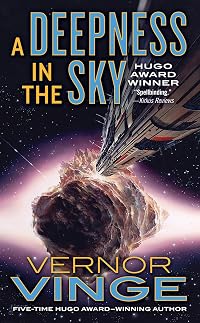
After thousands of years searching, humans stand on the verge of first contact with an alien race. Two human groups: the Qeng Ho, a culture of free traders, and the Emergents, a ruthless society based on the technological enslavement of minds.The group that opens trade with the aliens will reap unimaginable riches. But first, both groups must wait at the aliens' very doorstep for their strange star to relight and for their planet to reawaken, as it does every two hundred and fifty show more years....Then, following terrible treachery, the Qeng Ho must fight for their freedom and for the lives of the unsuspecting innocents on the planet below, while the aliens themselves play a role unsuspected by the Qeng Ho and Emergents alike.More than just a great science fiction adventure, A Deepness in the Sky is a universal drama of courage, self-discovery, and the redemptive power of love. Vernor Vinge's A Deepness in the Sky, the second installment of the Zones of Thought series, is a 1999 Nebula Award Nominee for Best Novel and the winner of the 2000 Hugo Award for Best Novel. show lessTags
Recommendations

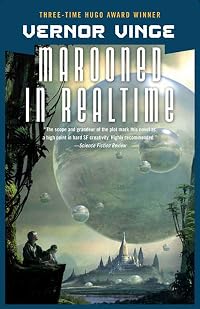
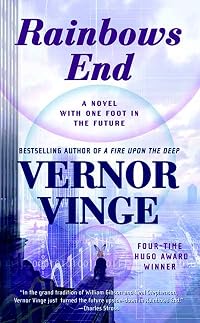
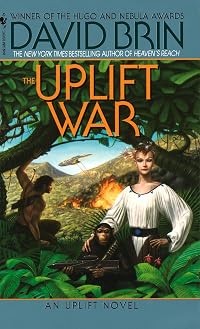
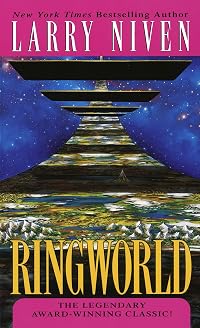

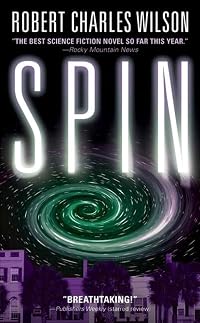

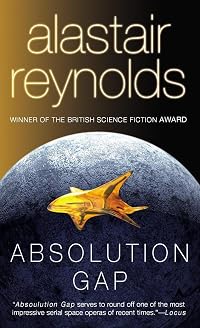
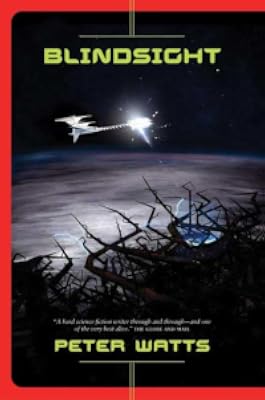
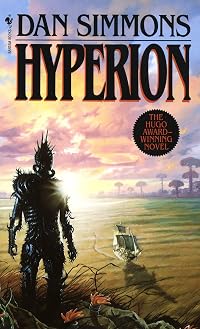
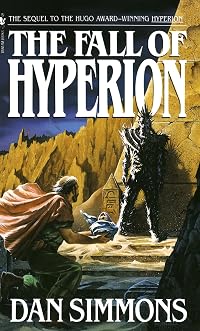
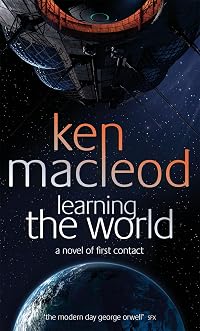
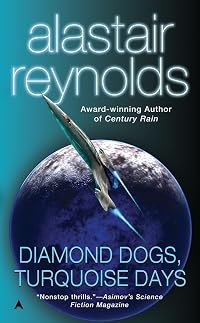
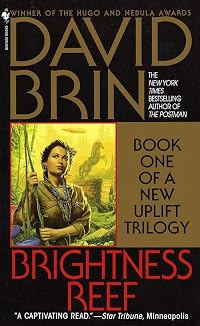





Member Recommendations
Member Reviews
I am reading Vernor Vinge's Zones of Thought novels in publication order. This second book is set earlier than the first. It does not engage the "Zonological" ideas introduced in A Fire Upon the Deep. It is structured very similarly however, with two parallel and converging narratives, one of which is cutting-edge space drama featuring (the original, in this case) Pham Nuwen, and the other of which takes place in a radically non-human planet-bound society.
The space story involves grappling between two human spacefaring societies. The Qeng Ho are Nuwen's mature interstellar mercantile culture, while the Emergents are the totalitarian development of a more local society whose hypostasized Emergency has resulted in an innovative form of show more enslavement. Simultaneous missions to contact the nascently industrializing aliens of Arachna erupt into catastrophic conflict, leaving the two competitors in a lopsided symbiosis full of intrigue.
The business on the world of Arachna is translated for the reader using conventions later rationalized as the work of the humans surveilling the planet from space. Although the denizens are quasi-arthropod "Spiders," they are characterized with Hobbitsy sorts of English names and traits, such as Sherkaner Underhill and Victory Smith. Since their technological level and social challenges better match our own, these creatures actually come off as more "human" than the either of the human cultures, at least during the first three-quarters of the book before the first in-person meetings between humans and Spiders.
I found it interesting what a mature figure Pham Nuwen is in this book, "resurrected" at its start in a more figurative manner than in A Fire Upon the Deep, but still with an enormous prior history. Despite a serious developmental arc within the scope of the current story, and some significant retrospectives to flesh out his character and motivation, Vinge has left many centuries to play with if he should ever want to compose a pre-prequel using Nuwen as the connective thread.
Big ideas that are central to this book include the coercive management of human attention, and the epistemological weaponization of networked information technology. These both feel more topical now than they would have been when the book was first published in 1999. Vinge also seems to have put a new turn on Ibn Khaldūn's theories of civilizational growth and decay, and the practical superiority of organized merchants to wealthy despots. These notions become intrinsic to the premise that a sufficient "industrial ecology" is needed to support productive interaction with interstellar travelers, who cannot carry such an ecology themselves even at the scale of a fleet. But the industrialized civilizations are necessarily finite in duration, acquiring vulnerabilities with their efficiencies.
Like the previous Zones of Thought book, A Deepness in the Sky is long--eventful, characterful, and thoughtful--and it took all my reading attention for a couple of weeks in order to get through it. Looking back at my review of A Fire Upon the Deep, I find myself in the same position of being glad to have read it and being unwilling to charge on to the next one without a significant pause to recover. And I already own a copy of The Children of the Sky. show less
The space story involves grappling between two human spacefaring societies. The Qeng Ho are Nuwen's mature interstellar mercantile culture, while the Emergents are the totalitarian development of a more local society whose hypostasized Emergency has resulted in an innovative form of show more enslavement. Simultaneous missions to contact the nascently industrializing aliens of Arachna erupt into catastrophic conflict, leaving the two competitors in a lopsided symbiosis full of intrigue.
The business on the world of Arachna is translated for the reader using conventions later rationalized as the work of the humans surveilling the planet from space. Although the denizens are quasi-arthropod "Spiders," they are characterized with Hobbitsy sorts of English names and traits, such as Sherkaner Underhill and Victory Smith. Since their technological level and social challenges better match our own, these creatures actually come off as more "human" than the either of the human cultures, at least during the first three-quarters of the book before the first in-person meetings between humans and Spiders.
I found it interesting what a mature figure Pham Nuwen is in this book, "resurrected" at its start in a more figurative manner than in A Fire Upon the Deep, but still with an enormous prior history. Despite a serious developmental arc within the scope of the current story, and some significant retrospectives to flesh out his character and motivation, Vinge has left many centuries to play with if he should ever want to compose a pre-prequel using Nuwen as the connective thread.
Big ideas that are central to this book include the coercive management of human attention, and the epistemological weaponization of networked information technology. These both feel more topical now than they would have been when the book was first published in 1999. Vinge also seems to have put a new turn on Ibn Khaldūn's theories of civilizational growth and decay, and the practical superiority of organized merchants to wealthy despots. These notions become intrinsic to the premise that a sufficient "industrial ecology" is needed to support productive interaction with interstellar travelers, who cannot carry such an ecology themselves even at the scale of a fleet. But the industrialized civilizations are necessarily finite in duration, acquiring vulnerabilities with their efficiencies.
Like the previous Zones of Thought book, A Deepness in the Sky is long--eventful, characterful, and thoughtful--and it took all my reading attention for a couple of weeks in order to get through it. Looking back at my review of A Fire Upon the Deep, I find myself in the same position of being glad to have read it and being unwilling to charge on to the next one without a significant pause to recover. And I already own a copy of The Children of the Sky. show less
Its been awhile since I read straight science fiction- and this book is a sequel to "A Fire Upon the Deep", which I enjoyed.
It's more of a prequel, than a sequel, set hundreds or thousands years in the past (its been awhile since I read the first book). And the story is good, really really good. The comparison between the trade society Queng Ho, and the Emergents, a totalitarian society bent on domination. The premise of the odd world On/Off, and the strange spider-like creatures who live there is very well done.
I appreciate an author who knows where his boundary is. I suspect the character of Pham Trinli is based on the author. This character is old, and grew up in a very patriarchal society. Pham knows that his values are long show more passed, but also out of date and has trouble reconciliating them.
As for the Spider Society, by setting the society on a star that goes "dead" for 30 years bringing the entire world to go into hibernation is a bit of brilliance for the book - this means that the individual spiders have similar lifespans of the humans - that humans are on shift for a bit of time, than go into cold sleep while off shift. The author writes about the Spiders as people. Description are very minor, until the very end, when humans and Spiders meet for the first time. This allowed readers to see the Spiders as people, rather than insects. Its a neat writing tool, and worked effectively for this book.
As for the writing, the book manages to hit the sweet spot of technologically interesting, with interesting flawed characters. The end of the book came from left field, but, was hinted at throughout the story, if a reader could read between the lines. show less
It's more of a prequel, than a sequel, set hundreds or thousands years in the past (its been awhile since I read the first book). And the story is good, really really good. The comparison between the trade society Queng Ho, and the Emergents, a totalitarian society bent on domination. The premise of the odd world On/Off, and the strange spider-like creatures who live there is very well done.
I appreciate an author who knows where his boundary is. I suspect the character of Pham Trinli is based on the author. This character is old, and grew up in a very patriarchal society. Pham knows that his values are long show more passed, but also out of date and has trouble reconciliating them.
As for the Spider Society, by setting the society on a star that goes "dead" for 30 years bringing the entire world to go into hibernation is a bit of brilliance for the book - this means that the individual spiders have similar lifespans of the humans - that humans are on shift for a bit of time, than go into cold sleep while off shift. The author writes about the Spiders as people. Description are very minor, until the very end, when humans and Spiders meet for the first time. This allowed readers to see the Spiders as people, rather than insects. Its a neat writing tool, and worked effectively for this book.
As for the writing, the book manages to hit the sweet spot of technologically interesting, with interesting flawed characters. The end of the book came from left field, but, was hinted at throughout the story, if a reader could read between the lines. show less
A Deepness in the Sky is the first Vinge novel that I read, and while it lacks the cosmological intensity of A Fire in the Deep, I think it holds up as the superior work.
In the distant future humanity has hit a plateau of development. Human planetary civilizations rise and fall over their century-long cycles, while the interstellar traders of the Qeng Ho skip from system to system in sublight ships, hoping to find a technological civilization worth trading with when they arrive. Just outside of human space is the OnOff star, a stellar anomaly that recently begun crude radio transmissions. The possibility of aliens inspires two great expeditions: a Qeng Ho trading fleet and one from the Emergents, a small interstellar empire that uses a show more unique form of neurological slavery. What they find is a civilization of giant spiders gone into hibernation, at the threshold of a leap into the information age. It's the most profitable time to arrive, and with the first contact the technological aliens, the value of the prize is infinite.
Above a frozen alien world the fleets collide, nearly annihilate each other in a flurry of nuclear sneak attacks, and the Qeng Ho and Emergents settle into an uneasy unified society. Both sides need each other for survival, and neither trusts the other. The only hope is to last until the locals Spiders develop a tech base that can be bootstrapped to space-flight. Qeng Ho 'peddling' is practically treason to the Emergents, who's use of Focused slaves (people infected with a specialized disease and turned into monomaniacal experts) is anathema to the basic concept of human rights. The Emergents have all the guns, but the Qeng Ho have a secret weapon. In hiding is Pham Nuwen, the legendary founder of the Qeng Ho and a practiced programmer-at-arms. All he has to do is evade the unblinking eye of the most effective police state imaginable, where the will of sadists is backed up by enslaved analysts capable of putting together the pieces of any plans. Meanwhile, the Spiders are facing their own annihilation, with the specter of a nuclear exchange overshadowing mastery of technology that would overturn their long history under the strange OnOff star.
This is a book of slow exploration of three alien societies--even the humans are foreign to us--and then rapid bursts of violent action. Vinge has a real eye for espionage, and the way that slow plans explode into violence and split-second decisions. He uses the multiple points-of-view to maximum effect, revealing how ordinary Qeng Ho see Pham Nuwen's disguise, and the plots of the Emergent dictators. Two technologies, the neurological Focus and the localizers (tiny internet-of-things chips) that Nuwen uses as his backdoor, stand out as some great sci-fi. The Spiders are deliberate cast as twee Victorian Heroic Engineers, a some-what grating narrative choice that is explained in book.
There are some similarities with A Fire in the Deep: Pham Nuwen, an alien society reaching new levels of technology, a Machiavellian antagonist, but this book handles the same themes with greater elegance and style, absent the hoary space-opera-isms of the earlier book. show less
In the distant future humanity has hit a plateau of development. Human planetary civilizations rise and fall over their century-long cycles, while the interstellar traders of the Qeng Ho skip from system to system in sublight ships, hoping to find a technological civilization worth trading with when they arrive. Just outside of human space is the OnOff star, a stellar anomaly that recently begun crude radio transmissions. The possibility of aliens inspires two great expeditions: a Qeng Ho trading fleet and one from the Emergents, a small interstellar empire that uses a show more unique form of neurological slavery. What they find is a civilization of giant spiders gone into hibernation, at the threshold of a leap into the information age. It's the most profitable time to arrive, and with the first contact the technological aliens, the value of the prize is infinite.
Above a frozen alien world the fleets collide, nearly annihilate each other in a flurry of nuclear sneak attacks, and the Qeng Ho and Emergents settle into an uneasy unified society. Both sides need each other for survival, and neither trusts the other. The only hope is to last until the locals Spiders develop a tech base that can be bootstrapped to space-flight. Qeng Ho 'peddling' is practically treason to the Emergents, who's use of Focused slaves (people infected with a specialized disease and turned into monomaniacal experts) is anathema to the basic concept of human rights. The Emergents have all the guns, but the Qeng Ho have a secret weapon. In hiding is Pham Nuwen, the legendary founder of the Qeng Ho and a practiced programmer-at-arms. All he has to do is evade the unblinking eye of the most effective police state imaginable, where the will of sadists is backed up by enslaved analysts capable of putting together the pieces of any plans. Meanwhile, the Spiders are facing their own annihilation, with the specter of a nuclear exchange overshadowing mastery of technology that would overturn their long history under the strange OnOff star.
This is a book of slow exploration of three alien societies--even the humans are foreign to us--and then rapid bursts of violent action. Vinge has a real eye for espionage, and the way that slow plans explode into violence and split-second decisions. He uses the multiple points-of-view to maximum effect, revealing how ordinary Qeng Ho see Pham Nuwen's disguise, and the plots of the Emergent dictators. Two technologies, the neurological Focus and the localizers (tiny internet-of-things chips) that Nuwen uses as his backdoor, stand out as some great sci-fi. The Spiders are deliberate cast as twee Victorian Heroic Engineers, a some-what grating narrative choice that is explained in book.
There are some similarities with A Fire in the Deep: Pham Nuwen, an alien society reaching new levels of technology, a Machiavellian antagonist, but this book handles the same themes with greater elegance and style, absent the hoary space-opera-isms of the earlier book. show less
Vernor Vinge, a scientist who can tell a good yarn, another anomaly among genre writers, the other anomalous authors being China Miéville and David Brin, and they are all bald! Makes me want to shave my head, I bet Patrick Stewart can write amazing books if he wanted to, make it so Pat!
A few months ago I read [b:A Fire Upon the Deep|77711|A Fire Upon the Deep (Zones of Thought, #1)|Vernor Vinge|https://d.gr-assets.com/books/1333915005s/77711.jpg|1253374], Vinge's first "Zones of Thought" novel, it quickly barged its way into my all-time top 20 list. A Deepness in the Sky is not going to dislodge another book from that list but it is still an indispensable read all the same. This is a book that I imagine would be great all the way show more through on the second read because there would be no need to figure out the meaning of the setting of the book and the numerous characters' motivations. Initially I just could not understand Vinge's choices. Why did he anthropomorphise the aliens? Why do spidery aliens have names like Underhill, Brent, and Smith? Why not call them Zark or Vygphm or something more alienesque? The author really threw me for loop for the first quarter of the book, I thought may be he is too lazy to think up weird alien names, silly bast that I am.
I won't reveal the reason for Vinge's strange anthropomorphism, but it all makes perfect sense as you read on, and read on you must. My favorite "sf notion" from this book is Focus, a more elaborate type of mind control with no element of hypnotism. A Focused person is sort of ultra fixated on the single task they programmed to do, everything else eating, bowel movements and grooming become completely irrelevant.
Part of the book is a hoary sf trope of alien invasion turned on its head, in that humans are the invading aliens and the Spider race are the invadees. This leads to a humdinger of a climax and an Uplifting ending!
Vinge's gift for characterization is again evident here though, with lovable aliens, eccentrics and a mustache twirling Machiavellian archvillain (OK, no mustache!) called Nau. This seems to be something of a Vinge trope as Nau is cut from the exact same cloth as the villain of A Fire Upon the Deep Mr. Steel. The character Pham Nuwen is the only one from A Fire Upon the Deep, though his role is much larger here and he is not quite the same character.
I did get lost in some scientific details but most of them do become self explanatory as you read on. However, if you want some help with ramscoop, localizer and podmaster you may want to check out this Reddit thread.
I would rate this as a 4.5 stars book as I personally find it harder to "engage" with than the previous book. To engage is not merely to understand what is going on but to feel involved in the proceeding, to empathize with the characters, and generally to immerse in the book as an experience rather words printed on a book. It is for me the single most wonderful thing about reading fiction. Any way, from the half way point onward this book is very involving and you may need a deFocus treatment afterward. show less
A few months ago I read [b:A Fire Upon the Deep|77711|A Fire Upon the Deep (Zones of Thought, #1)|Vernor Vinge|https://d.gr-assets.com/books/1333915005s/77711.jpg|1253374], Vinge's first "Zones of Thought" novel, it quickly barged its way into my all-time top 20 list. A Deepness in the Sky is not going to dislodge another book from that list but it is still an indispensable read all the same. This is a book that I imagine would be great all the way show more through on the second read because there would be no need to figure out the meaning of the setting of the book and the numerous characters' motivations. Initially I just could not understand Vinge's choices. Why did he anthropomorphise the aliens? Why do spidery aliens have names like Underhill, Brent, and Smith? Why not call them Zark or Vygphm or something more alienesque? The author really threw me for loop for the first quarter of the book, I thought may be he is too lazy to think up weird alien names, silly bast that I am.
I won't reveal the reason for Vinge's strange anthropomorphism, but it all makes perfect sense as you read on, and read on you must. My favorite "sf notion" from this book is Focus, a more elaborate type of mind control with no element of hypnotism. A Focused person is sort of ultra fixated on the single task they programmed to do, everything else eating, bowel movements and grooming become completely irrelevant.
Part of the book is a hoary sf trope of alien invasion turned on its head, in that humans are the invading aliens and the Spider race are the invadees. This leads to a humdinger of a climax and an Uplifting ending!
Vinge's gift for characterization is again evident here though, with lovable aliens, eccentrics and a mustache twirling Machiavellian archvillain (OK, no mustache!) called Nau. This seems to be something of a Vinge trope as Nau is cut from the exact same cloth as the villain of A Fire Upon the Deep Mr. Steel. The character Pham Nuwen is the only one from A Fire Upon the Deep, though his role is much larger here and he is not quite the same character.
I did get lost in some scientific details but most of them do become self explanatory as you read on. However, if you want some help with ramscoop, localizer and podmaster you may want to check out this Reddit thread.
I would rate this as a 4.5 stars book as I personally find it harder to "engage" with than the previous book. To engage is not merely to understand what is going on but to feel involved in the proceeding, to empathize with the characters, and generally to immerse in the book as an experience rather words printed on a book. It is for me the single most wonderful thing about reading fiction. Any way, from the half way point onward this book is very involving and you may need a deFocus treatment afterward. show less
A surprisingly good classic SF. I've not read it before, and despite being over 20 years old (thought it was older) it has held up very well. Aidan Tchaicovsky's Children Time is similar but maybe not quite as good which is a very unusual statement for me to make having loved all his works!
A trader family sets off on a new expedition. A world has been found orbiting a most unusual star and such things can bring fame and fortune. The traders are part of a galaxy spanning network, enforcing a common culture because how else would you trade with anyone. Some of the crew turn out to be from 'conquered' worlds and have not forgotten their history and culture. The ensuing struggle ruins both factions and the survivors are left huddled on the show more moon watching the civilisation develop beneath them. Both sides are in agreement the only way home is (as oft before) to nurture the aliens to sufficient technological prowess that they can provide the necessary equipment to get them all home. An uneasy truce prevails.
But the aliens below are far stranger than anything the civilisation has ever faced before, and the planet itself even weirder. The sun periodically bakes or freezes the world, and only in the interregnum does life prosper. A full understanding of their culture will be required, and this is never a one-way process.
Thoroughly enjoyed this, wonderful politics, invention, aliens and the importance of culture. show less
A trader family sets off on a new expedition. A world has been found orbiting a most unusual star and such things can bring fame and fortune. The traders are part of a galaxy spanning network, enforcing a common culture because how else would you trade with anyone. Some of the crew turn out to be from 'conquered' worlds and have not forgotten their history and culture. The ensuing struggle ruins both factions and the survivors are left huddled on the show more moon watching the civilisation develop beneath them. Both sides are in agreement the only way home is (as oft before) to nurture the aliens to sufficient technological prowess that they can provide the necessary equipment to get them all home. An uneasy truce prevails.
But the aliens below are far stranger than anything the civilisation has ever faced before, and the planet itself even weirder. The sun periodically bakes or freezes the world, and only in the interregnum does life prosper. A full understanding of their culture will be required, and this is never a one-way process.
Thoroughly enjoyed this, wonderful politics, invention, aliens and the importance of culture. show less
A Deepness in the Sky paints a picture of a humanity that has evolved into an interstellar trading culture. Because of lengths of time it takes to travel between systems at sublight speeds, these Qeng Ho traders rely on building up the technology level of client worlds so that they can refuel and trade. This book relates the story of one such encounter, but this time with the first ever alien culture encountered by humans. This is complicated when the Qeng Ho arrive at the same time as another human culture, the authoritarian Emergents, who ambush and subjugate the Qeng Ho despite the traders' attempts to cooperate. The story weaves back and forth between the various human groups, particularly Qeng Ho traders who cooperate with or try show more to undermine their Emergent masters, and the alien Spiders whose 1950's-like culture is undergoing their own scientific revolution amidst a tense political atmosphere. The humans know that failure to work with the Spiders means they will never escape the system, but cooperating with the Emergents may have even worse consequences. This book was fantastic--it had many layers of politics and intrigue along with compelling and believable characters, all set within an fascinating thought experiment of a setting. show less
I've read it at least three times, with varying experiences.
I think the first time I wanted more of ADOtD and didn't quite get it, but did get lots of other great stuff (particularly programmer-archaeologists who still knew about the unix epoch), and just want along for the thrill ride.
Second time I was focused on the Focused, and got a bit blindsided at the ending.
Third time, I read it quite slow and found a lot of things I'd not found before, including the exquisite way the last quarter was put together.
I think the first time I wanted more of ADOtD and didn't quite get it, but did get lots of other great stuff (particularly programmer-archaeologists who still knew about the unix epoch), and just want along for the thrill ride.
Second time I was focused on the Focused, and got a bit blindsided at the ending.
Third time, I read it quite slow and found a lot of things I'd not found before, including the exquisite way the last quarter was put together.
Members
- Recently Added By
Lists

Best Science Fiction Novels
816 works; 426 members
Survey of Classic Science Fiction
171 works; 48 members

Hugo Award Winning Novels
63 works; 23 members

Best First Contact Stories
33 works; 16 members

S.F. Masterworks (Complete)
229 works; 15 members

Hugo Awards - Best Novel
69 works; 10 members

Top-Rated Books on LibraryThing
272 works; 116 members

Stories About Other Worlds
145 works; 13 members

SF Masterworks
193 works; 8 members

What Makes This Book So Great
102 works; 16 members

Nonhuman Protagonists
243 works; 35 members

Arthur C. Clarke Award Winners and Shortlisted Books
219 works; 14 members

Speculative Fiction to Read
706 works; 31 members

Best Books With Aliens
67 works; 10 members
Favorite Long Books
330 works; 42 members

Good (mostly) modern science fiction
40 works; 4 members

Books Read in 2019
4,052 works; 108 members
Favourite Books
1,819 works; 316 members
Books Read in 2018
4,360 works; 110 members

Books Read in 2017
4,249 works; 130 members

Books You Couldn't Finish
202 works; 30 members

Unread books
1,063 works; 87 members
Favorite Science Fiction
456 works; 218 members

Libertarian Books
102 works; 19 members
Author Information

58+ Works 23,219 Members
Some Editions
Awards and Honors
Awards
Series

Belongs to Publisher Series
PFAF (90)
SF Masterworks (New design)
Work Relationships
Is contained in
Common Knowledge
- Canonical title*
- Au tréfonds du ciel
- Original title
- A Deepness in the Sky
- Original publication date
- 1999
- People/Characters
- Pham Nuwen; Tomas Nau; Qiwi Lin Lisolet; Ezr Vinh; Anne Reynolt; Sherkaner Underhill (show all 7); Victory Smith
- Important places
- Arachna (planet); OnOff star; L1
- Dedication
- To Poul Anderson,
In learning to write science fiction, I have had many great models, but Poul Anderson's work has meant more to me than any other. Beyond that, Poul has provided me and the world with an enormous treas... (show all)ure of wonderful, entertaining stories - and he continues to do so.
On a personal note, I will always be grateful to Poul and Karen Anderson for the hospitality that they showed a certain young science fiction writer back in the 1960s.
--V.V. - First words
- The manhunt extended across more than one hundred light-years and eight centuries. It had always been a secret search, unacknowledged even among some of the participants.
- Last words
- (Click to show. Warning: May contain spoilers.)Somewhere down there the old Spider might still sleep, waiting for his lady lost ... and beginning on his greatest Lurk of all.
(Click to show. Warning: May contain spoilers.)So high, so low, so many things to know. - Publisher's editor
- Frenkel, James
- Blurbers
- Brin, David; Bear, Greg; Niven, Larry; Benford, Gregory; Steele, Allen; Resnick, Mike (show all 8); Letson, Russell; Strahan, Jonathan
*Some information comes from Common Knowledge in other languages. Click "Edit" for more information.
Classifications
Statistics
- Members
- 4,456
- Popularity
- 3,328
- Reviews
- 79
- Rating
- (4.25)
- Languages
- 13 — Chinese, Czech, Dutch, English, Finnish, French, German, Italian, Lithuanian, Polish, Romanian, Russian, Spanish
- Media
- Paper, Audiobook, Ebook
- ISBNs
- 32
- ASINs
- 12