On This Page
Description
Hostile aliens take an Earth colony hostage in this New York Times-bestselling hard science fiction adventure by the author of Startide Rising. Although they were uplifted and given full sapience, the Bururalli clearly weren't ready to run a planet, almost wrecking Garth. As a "salvage world," it was given to despised Earthlings, assigned to reclaim it from the brink. Many senior Galactics-leaders of the Five Galaxies-hoped humanity would fail. But now Garth is peacefully surging back, show more tended by human and neo-chimpanzee colonists. Meanwhile, enemies desperately seek some way to coerce Earthclan, looking for a possible answer to the secret of the Progenitors. One of them-the Gubru avian race-prepares to invade and hold hostage defenseless Garth. With Earth itself under attack by other militant forces, no relief is coming for the embattled colonists. If they are to survive, they have no choice but to band together, improvise, and learn the tactics of guerilla warfare. show lessTags
Recommendations
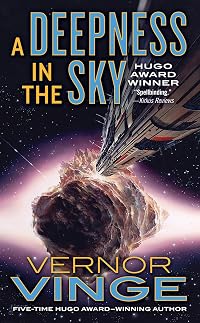
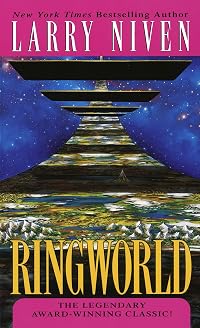
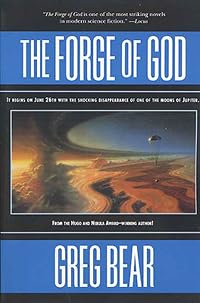
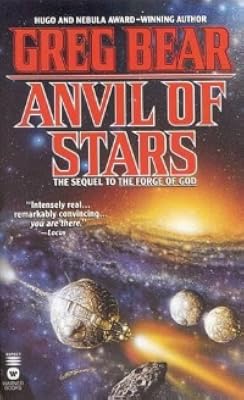


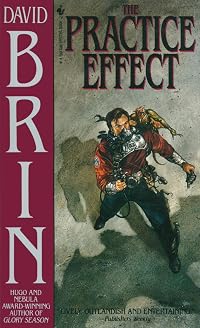
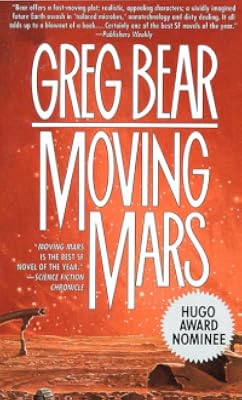
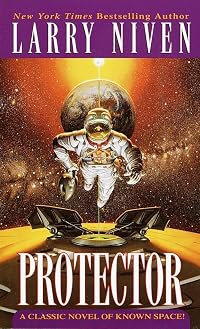
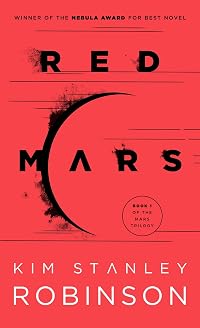











Member Recommendations

Member Reviews
The Uplift War parallels Startide Rising with a slightly bigger story, this time starring uplifted chimps instead of dolphins, and focuses on a smaller group of aliens with the bird-like Gubru as the enemy, and a few friendly Tymbrimi diplomats. The plot is fairly similar to the previous book. In the wake of discovery of an ancient fleet, aliens hold human hostage in hopes of concessions, and humans fight back using cunning guerrilla tactics. Young people come into their own against a backdrop of war. Brin doesn't reveal any big secrets here, but some parts of the setting are fleshed out further.
The story takes place on Garth, a planet devastated when an older uplifted predatory race reverted and killed everything larger than a mouse. show more Terrans got the colony in the hopes that'd they'd repair the collapsing ecosystem. The outpost is overwhelmed by an aggressive galactic race who use a delayed-action gas to hold the humans hostage, and it's up to kids to fight the good fight. Robert Oneagle is the son of the colony administrator and the last free human, who becomes a Tarzan-like warrior. Athlaclena is the daughter of the Tymbrimi ambassador, and must navigate her own feelings of isolation while being the only 'neutral' adult active in the resistance. Fiben is a young chimpanzee who doesn't know when to give up on the resistance.
There are lots of moments that are really neat: Garth's trees exchange molecules at jungle cenotes, forming a continental molecular web that the resistance uses as a secure comms network; The chimps have developed their own rave-like Thunder Dance party culture; The whole mystery of how the Gubru can unerringly track down all human technology; the triune Gubru command structure; Rumors of surviving native Garthlings, and how it leads to the ultimate practical joke. After reading this book, I finally get why Galactic culture looks the way it does, how the elaborate rituals and rules protect the galaxy from holocaust, and why the Terrans are so threatening to the established order.
There are a lot of fun moments, cool bits of science and culture, and some decent characters, but this story still feels peripheral. All the parts are better developed, but the plot and character beats still feel a lot like Startide Rising. Less dolphin haiku, but also less gonzo. I can't quite put my finger on it, but some indefinable thing is missing, and that prevents this book from being truly great. show less
The story takes place on Garth, a planet devastated when an older uplifted predatory race reverted and killed everything larger than a mouse. show more Terrans got the colony in the hopes that'd they'd repair the collapsing ecosystem. The outpost is overwhelmed by an aggressive galactic race who use a delayed-action gas to hold the humans hostage, and it's up to kids to fight the good fight. Robert Oneagle is the son of the colony administrator and the last free human, who becomes a Tarzan-like warrior. Athlaclena is the daughter of the Tymbrimi ambassador, and must navigate her own feelings of isolation while being the only 'neutral' adult active in the resistance. Fiben is a young chimpanzee who doesn't know when to give up on the resistance.
There are lots of moments that are really neat: Garth's trees exchange molecules at jungle cenotes, forming a continental molecular web that the resistance uses as a secure comms network; The chimps have developed their own rave-like Thunder Dance party culture; The whole mystery of how the Gubru can unerringly track down all human technology; the triune Gubru command structure; Rumors of surviving native Garthlings, and how it leads to the ultimate practical joke. After reading this book, I finally get why Galactic culture looks the way it does, how the elaborate rituals and rules protect the galaxy from holocaust, and why the Terrans are so threatening to the established order.
There are a lot of fun moments, cool bits of science and culture, and some decent characters, but this story still feels peripheral. All the parts are better developed, but the plot and character beats still feel a lot like Startide Rising. Less dolphin haiku, but also less gonzo. I can't quite put my finger on it, but some indefinable thing is missing, and that prevents this book from being truly great. show less
I enjoyed this book very much. Like Startide Rising, it offers an ambitious plot that develops several related storylines that are ultimately brought together to reach a satisfying conclusion. The best things about the book are the well developed non-human characters: the neo-chimps, the invading bird-like Gubru aliens, and the two important Tymbrimi alien characters. Brin does a very good job of making the aliens profoundly different from humans in interesting yet reasonably plausible ways.
As in Startide Rising, I found the human characters to be less compelling and less sympathetic. The romance between Robert O'Neagle and the Tymbrimi Athaclena didn't really work for me, and the gung-ho "shoot 'em up, blow 'em up" human marine major show more felt like a caricature. Still, I give this an 8//10 enjoyability rating and wouldn’t hesitate to recommend it to any scifi fan. I would also point out that this story is only loosely related to the Sundiver story told in the first Uplift book; it certainly can be read out of series order. show less
As in Startide Rising, I found the human characters to be less compelling and less sympathetic. The romance between Robert O'Neagle and the Tymbrimi Athaclena didn't really work for me, and the gung-ho "shoot 'em up, blow 'em up" human marine major show more felt like a caricature. Still, I give this an 8//10 enjoyability rating and wouldn’t hesitate to recommend it to any scifi fan. I would also point out that this story is only loosely related to the Sundiver story told in the first Uplift book; it certainly can be read out of series order. show less
The Uplift War - David Brin
The senior races which make up Galactic civilization are engaged in a dangerous struggle for power, which is accumulated by becoming patrons of client races, uplifting them to sentience and thereafter binding them in servitude for many thousands of years before permitting them to exist in their own right. Some of these senior patron races are highly displeased when human 'wolflings' appear on the scene and in no time at all acquire two clients of their own, dolphins and chimpanzees. To make matters worse, these upstart humans apparently bootstrapped themselves into sentience, something which is considered impossible by all Galactic races.
The title of the book may lead some to imagine that this is a work of show more military science fiction, but that would be an incorrect assumption. So, what war is referred to here? Firstly, there is the general warring between the Galactics for status and the right to uplift other races, and then there is the specific war which becomes the focus of this story. This is the conflict between the avian Gubru and humans who have been granted a charter to care for the ecology of a backwater planet named Garth. The Gubru intend to employ superior military force and their detailed knowledge of Galactic Law to demonstrate that humans are not qualified to serve as a patron race to the sentient chimps, and they are prepared to go to extraordinary lengths to take those clients and the planet Garth away from mankind. So, while it is true that certain battles are described in some detail, the overall emphasis is always on the process and implications of Uplift rather than on military technology and strategy.
One of the strengths of Startide Rising and its sequel The Uplift War is the outstanding quality of David Brin’s world-building. Each alien race has its own rich culture, thought patterns and foibles. They all find it almost impossible to comprehend one another. One of the few alien civilizations which is openly friendly to humanity is that of the Tymbrimi, who are known for their highly-developed and rather wicked sense of humor. And since the narrative alternates between several protagonists, we get to view what is happening through alien eyes, as well as through those of humans and uplifted chimps.
A reader expecting this book to answer the questions raised in Startide Rising regarding the Dolphin starship Streaker and the ancient derelict fleet it discovered may well feel somewhat disappointed. I think it is natural to hope that a sequel would provide more information on the mythical progenitors, which patron race originally uplifted humanity, and why they disappeared. However, David Brin fails to do the obvious by satisfying the reader's curiosity on those points, and perhaps this in a sense makes the story more realistic.
There is a lot of science in this book, and some of the fields drawn on include linguistics, biology, chemistry, and environmental science. Although it certainly contains many fantastic elements, The Uplift War can still be considered hard science fiction because many of the plot drivers involve plausible scientific and technological developments.
One main theme seems to be this: In the same way that humans consider themselves vastly superior to animals, the Galactic patron races consider themselves infinitely more advanced than humans and client races. However, throughout The Uplift War, we see that all walk a fine line between rational behavior on the one hand and purely instinctive responses to situations on the other. In Startide Rising, we saw how the senior patron races of the Soro and the Tandu frequently act in vicious and animalistic ways, and how many of these Galactics are tainted by religious fanaticism. Now, in the sequel we see how the Gubru are almost completely bound by convention, ritual and genetic programming. Readers can draw their own conclusions from this, but what the author intended is hinted at in a postscript at the end of the book.
show less
The senior races which make up Galactic civilization are engaged in a dangerous struggle for power, which is accumulated by becoming patrons of client races, uplifting them to sentience and thereafter binding them in servitude for many thousands of years before permitting them to exist in their own right. Some of these senior patron races are highly displeased when human 'wolflings' appear on the scene and in no time at all acquire two clients of their own, dolphins and chimpanzees. To make matters worse, these upstart humans apparently bootstrapped themselves into sentience, something which is considered impossible by all Galactic races.
The title of the book may lead some to imagine that this is a work of show more military science fiction, but that would be an incorrect assumption. So, what war is referred to here? Firstly, there is the general warring between the Galactics for status and the right to uplift other races, and then there is the specific war which becomes the focus of this story. This is the conflict between the avian Gubru and humans who have been granted a charter to care for the ecology of a backwater planet named Garth. The Gubru intend to employ superior military force and their detailed knowledge of Galactic Law to demonstrate that humans are not qualified to serve as a patron race to the sentient chimps, and they are prepared to go to extraordinary lengths to take those clients and the planet Garth away from mankind. So, while it is true that certain battles are described in some detail, the overall emphasis is always on the process and implications of Uplift rather than on military technology and strategy.
One of the strengths of Startide Rising and its sequel The Uplift War is the outstanding quality of David Brin’s world-building. Each alien race has its own rich culture, thought patterns and foibles. They all find it almost impossible to comprehend one another. One of the few alien civilizations which is openly friendly to humanity is that of the Tymbrimi, who are known for their highly-developed and rather wicked sense of humor. And since the narrative alternates between several protagonists, we get to view what is happening through alien eyes, as well as through those of humans and uplifted chimps.
A reader expecting this book to answer the questions raised in Startide Rising regarding the Dolphin starship Streaker and the ancient derelict fleet it discovered may well feel somewhat disappointed. I think it is natural to hope that a sequel would provide more information on the mythical progenitors, which patron race originally uplifted humanity, and why they disappeared. However, David Brin fails to do the obvious by satisfying the reader's curiosity on those points, and perhaps this in a sense makes the story more realistic.
There is a lot of science in this book, and some of the fields drawn on include linguistics, biology, chemistry, and environmental science. Although it certainly contains many fantastic elements, The Uplift War can still be considered hard science fiction because many of the plot drivers involve plausible scientific and technological developments.
One main theme seems to be this: In the same way that humans consider themselves vastly superior to animals, the Galactic patron races consider themselves infinitely more advanced than humans and client races. However, throughout The Uplift War, we see that all walk a fine line between rational behavior on the one hand and purely instinctive responses to situations on the other. In Startide Rising, we saw how the senior patron races of the Soro and the Tandu frequently act in vicious and animalistic ways, and how many of these Galactics are tainted by religious fanaticism. Now, in the sequel we see how the Gubru are almost completely bound by convention, ritual and genetic programming. Readers can draw their own conclusions from this, but what the author intended is hinted at in a postscript at the end of the book.
show less
David Brin just keeps becoming a better and better writer.
The Uplift War is the third novel of the first Uplift trilogy. It follows the invasion of the planet Garth by the avian Gubru, who seek to hold humans hostage to find more information about the NeoFins and the discovery of the Streaker
The plot is solid. Told from multiple perspectives, both antagonists and protagonists alive, the story unfolds as a wonderful web of relationships and politics. There are multiple twists and surprises. The only issue I had with it was pacing: the middle dragged a bit and the climax came and went very fast, which I felt lessened the impact of it.
Like with the other books, the non-human characters are the most fleshed out, layered, and compelling. show more The NeoChimps were a blast to read, particularly Fiben, and had full arcs in the story. The enigmatic Tymbrimi, fox-like humanoids with psychic face tentacles, felt a little flat. The Gubru were the most alien of the Galactics. The bits of the story from their perspective were a bit challenging as they used no names, just long, similar titles. Their politics, relationships, and viewpoints shifted a lot over the course of the novel, and working out how this impacted the Garth invasion (and the character's gender development) was a bit like a Sudoku puzzle.
This novel does not stand alone as well as Sundiver and Startide Rising. This is not bad, it just means one needs to commit a little to the series before diving into this novel. Overall, this felt like a solid installment for the series.
TL;DR: Despite some pacing issues, this book is a solid installment of the series, a worthy use of time for Uplift fans, and evidence that Brin's writing chops continue to improve. show less
The Uplift War is the third novel of the first Uplift trilogy. It follows the invasion of the planet Garth by the avian Gubru, who seek to hold humans hostage to find more information about the NeoFins and the discovery of the Streaker
The plot is solid. Told from multiple perspectives, both antagonists and protagonists alive, the story unfolds as a wonderful web of relationships and politics. There are multiple twists and surprises. The only issue I had with it was pacing: the middle dragged a bit and the climax came and went very fast, which I felt lessened the impact of it.
Like with the other books, the non-human characters are the most fleshed out, layered, and compelling. show more The NeoChimps were a blast to read, particularly Fiben, and had full arcs in the story. The enigmatic Tymbrimi, fox-like humanoids with psychic face tentacles, felt a little flat. The Gubru were the most alien of the Galactics. The bits of the story from their perspective were a bit challenging as they used no names, just long, similar titles. Their politics, relationships, and viewpoints shifted a lot over the course of the novel, and working out how this impacted the Garth invasion (and the character's gender development) was a bit like a Sudoku puzzle.
This novel does not stand alone as well as Sundiver and Startide Rising. This is not bad, it just means one needs to commit a little to the series before diving into this novel. Overall, this felt like a solid installment for the series.
TL;DR: Despite some pacing issues, this book is a solid installment of the series, a worthy use of time for Uplift fans, and evidence that Brin's writing chops continue to improve. show less
The Uplift War is another fantastic entry in the space opera genre by David Brin, even if the parts of the book that actually occur in space is limited. The author presents a wide variety of interesting and likable characters, from the human, alien, and (intelligent) chimpanzee populations. The nonhuman characters feel strange, but relatable, and Brin avoids the trap of making some of his characters too potent, as was the case to some extent in his previous books. The plot is large in scope (even without the occasional mentions of greater galactic politics), but all parts of it are interesting and easy to follow. I even enjoyed when he cut to the enemy Gubru, as it often occurred just as I was wondering what their reaction to events show more would be. The book is well tied together at the end, but there are plenty of open questions that can be explored in future books. An excellent read. show less
Fiben had often wondered how much of the popularity of the thunder dance came from innate, inherited feelings of brontophilia and how much from the well-known fact that fallow, unmodified chimps in the jungles of Earth were observed to “dance” in some crude fashion during lightning storms. He suspected that a lot of neo-chimpanzee “tradition” came from elaborating on the publicized behavior of their unmodified cousins.
Like many college-trained chims, Fiben liked to think he was too sophisticated for such simple-minded ancestor worship. And generally he did prefer Bach or whale songs to simulated thunder.
And yet there were times, alone in his apartment, when he would pull a tape by the Fulminates out of a drawer, put on the show more headphones, and try to see how much pounding his skull could take without splitting open. Here, under the driving amplifiers, he couldn’t help feeling a thrill” run up his spine as “lightning” bolted across the room and the beating drums rocked patrons, furniture, and fixtures alike.
"Startide Rising" ended with the dolphin-crewed spaceship Streaker on the run from various warring Galactic races who are all desperate to win possession of the ship and its discoveries. As this book opens, the human and neo-chimpanzee inhabitants of Garth are expecting to be invaded at any moment, as one of the Galactic species has decided to take Garth hostage in an attempt to force the Terragen Council to hand over Streaker's discoveries. With diplomats and other visiting aliens fleeing the planet in droves, the Tymbrini ambassador Uthacalthing and his daughter Athaclena have decided to stay. The Tymbrini are the Terrans closest allies, and are known for their capricious sense of humour and Ambassador Uthacalthing seems to have some devious ploy in mind when he sets off into the wilds of Garth with the ambassador of a species less friendly to Terra in tow.
Garth is a planet that suffered ecological disaster when a newly uplifted predator species who had been granted a lease on the planet reverted to savagery and ran amok, wiping out all the larger native wildlife (although old legends say that some of the mysterious Garthlings may survive in out of the way areas). Now the Galactic Civilisation has leased Garth to the Terrans, who are trying to rebuild the shattered ecology, introducing Terran plants and animals to fill empty ecological niches. The Galactics chose the Terrans for this because of the unusual amount of biodiversity on Earth compared to other planets, but the amount of biodiversity also worries the Galactics, who got the humans to sign an agreement saying that they won't start uplifting any other species.
The uplift of chimpanzees is an on-going process and although humans govern their client species with a light hand compared to the other Galactics, breeding rights are tightly controlled. Only the coveted white card allows unlimited breeding and an unofficial class system has developed among the chimpanzees based on which colour card they have been allocated, and the ethics of uplift are one of the major themes of this novel. show less
Like many college-trained chims, Fiben liked to think he was too sophisticated for such simple-minded ancestor worship. And generally he did prefer Bach or whale songs to simulated thunder.
And yet there were times, alone in his apartment, when he would pull a tape by the Fulminates out of a drawer, put on the show more headphones, and try to see how much pounding his skull could take without splitting open. Here, under the driving amplifiers, he couldn’t help feeling a thrill” run up his spine as “lightning” bolted across the room and the beating drums rocked patrons, furniture, and fixtures alike.
"Startide Rising" ended with the dolphin-crewed spaceship Streaker on the run from various warring Galactic races who are all desperate to win possession of the ship and its discoveries. As this book opens, the human and neo-chimpanzee inhabitants of Garth are expecting to be invaded at any moment, as one of the Galactic species has decided to take Garth hostage in an attempt to force the Terragen Council to hand over Streaker's discoveries. With diplomats and other visiting aliens fleeing the planet in droves, the Tymbrini ambassador Uthacalthing and his daughter Athaclena have decided to stay. The Tymbrini are the Terrans closest allies, and are known for their capricious sense of humour and Ambassador Uthacalthing seems to have some devious ploy in mind when he sets off into the wilds of Garth with the ambassador of a species less friendly to Terra in tow.
Garth is a planet that suffered ecological disaster when a newly uplifted predator species who had been granted a lease on the planet reverted to savagery and ran amok, wiping out all the larger native wildlife (although old legends say that some of the mysterious Garthlings may survive in out of the way areas). Now the Galactic Civilisation has leased Garth to the Terrans, who are trying to rebuild the shattered ecology, introducing Terran plants and animals to fill empty ecological niches. The Galactics chose the Terrans for this because of the unusual amount of biodiversity on Earth compared to other planets, but the amount of biodiversity also worries the Galactics, who got the humans to sign an agreement saying that they won't start uplifting any other species.
The uplift of chimpanzees is an on-going process and although humans govern their client species with a light hand compared to the other Galactics, breeding rights are tightly controlled. Only the coveted white card allows unlimited breeding and an unofficial class system has developed among the chimpanzees based on which colour card they have been allocated, and the ethics of uplift are one of the major themes of this novel. show less
http://nwhyte.livejournal.com/1383307.html
One of Brin's novels of the future universe where humanity has become part of a galactic culture of species Uplifting each other from pre-sapience to civilisation, homo sapiens being unique in that we achieved that status without external intervention.
The book is fun in a lot of ways - smart humans and chimps, and their allies, manage to overcome the prejudices and wishful thinking of the more nasty aliens. The most sympathetic male characters get to have sex (more or less) with the most sympathetic female characters. There is a lovely plot twist involving gorillas.
But I have to say the book is not one I can recommend. Partly it is that the humans (and their allies) rarely lose a battle or an show more argument; we are rather compelled to cheer for our boys. But more seriously, I think the novel's take on race issues is naïve and complacent. The intelligent chimpanzee characters are not allowed to rebel from the human agenda, yet disply no resentment of the control exerted over them, including their reproductive rights. Those who do make common cause with humanity's enemies get their come-uppance. (The only Bad Human who displays racial and gender prejudice is explicitly South Asian.) I think I would have been happier if the book had explored colonialism and race a little more profoundly. show less
One of Brin's novels of the future universe where humanity has become part of a galactic culture of species Uplifting each other from pre-sapience to civilisation, homo sapiens being unique in that we achieved that status without external intervention.
The book is fun in a lot of ways - smart humans and chimps, and their allies, manage to overcome the prejudices and wishful thinking of the more nasty aliens. The most sympathetic male characters get to have sex (more or less) with the most sympathetic female characters. There is a lovely plot twist involving gorillas.
But I have to say the book is not one I can recommend. Partly it is that the humans (and their allies) rarely lose a battle or an show more argument; we are rather compelled to cheer for our boys. But more seriously, I think the novel's take on race issues is naïve and complacent. The intelligent chimpanzee characters are not allowed to rebel from the human agenda, yet disply no resentment of the control exerted over them, including their reproductive rights. Those who do make common cause with humanity's enemies get their come-uppance. (The only Bad Human who displays racial and gender prejudice is explicitly South Asian.) I think I would have been happier if the book had explored colonialism and race a little more profoundly. show less
Members
- Recently Added By
Lists

Best Science Fiction Novels
816 works; 426 members

Hugo Award Winning Novels
63 works; 23 members

Hugo Awards - Best Novel
69 works; 10 members

One Book, Many Authors
441 works; 40 members
Locus Award for Best Novel/SF Novel
53 works; 6 members

Nonhuman Protagonists
235 works; 34 members

Novels Published in 1987
81 works; 19 members

Speculative Fiction to Read
706 works; 31 members

BingoDOG - Animals in Adult Fiction
78 works; 20 members

Books Read in 2016
4,666 works; 197 members

Good (mostly) modern science fiction
40 works; 4 members
Author Information

153+ Works 40,386 Members
David Brin is a scientist, writer, and public speaker. He was born in Pasadena, California, on October 9, 1950. Brin attended the California Institute of Technology (Caltech) and later earned a doctorate at the University of California. He accepted a position as an engineer at Hughes Aircraft Company. Brin is a former fellow at the California show more Space Institute and serves on several government and nongovernment advisory committees dealing with issues involved with technological growth. Brin has lectured all over the world on such topics as space flight, ecology, and the search for extraterrestrial life. Brin deals with global warming, the destruction of the ozone layer, and pollution of Earth. His 1987 novel, The Uplift War, received the Hugo Award and the Locus Award. His novels have been translated into 20 languages. (Bowker Author Biography) show less

David Brin is a LibraryThing Author, an author who lists their personal library on LibraryThing.
Some Editions
Awards and Honors
Awards
Series


Belongs to Publisher Series
Pasaulinės fatastikos aukso fondas (59, 60)
Gallimard, Folio SF (254)
Work Relationships
Common Knowledge
- Canonical title
- The Uplift War
- Original title
- The Uplift War
- Original publication date
- 1987
- People/Characters
- Athaclena; Fiben Bolger; Gailet Jones; Kault; Mathicluanna; Lydia McCue (show all 12); Megan Oneagle; Robert Oneagle; Major Prathachulthorn; Suzerain; Sylvie; Uthacalthing
- Important places
- Garth; Port Helenia, Garth
- Epigraph
- Let them uplift us, shoulder high. Then we will see over their heads to the several promised lands, from which we have come, and to which we trust to go. - W. B. Yeats
- Dedication
- To Jane Goodall, Sarah Hrdy,
and all the others who are
helping us at last to learn to understand.
And to Dian Fossey, who died fighting
so that beauty and potential might live. - First words
- Prelude
How strange, that such an insignificant little world should come to matter so much. - Last words
- (Click to show. Warning: May contain spoilers.)"T'rifically funny, Uthacalthing."
- Original language
- English
Classifications
Statistics
- Members
- 3,506
- Popularity
- 4,702
- Reviews
- 36
- Rating
- (3.94)
- Languages
- 10 — Czech, English, French, German, Italian, Lithuanian, Polish, Portuguese, Romanian, Spanish
- Media
- Paper, Audiobook, Ebook
- ISBNs
- 30
- ASINs
- 15