
Wayne D. Barlowe
Author of Barlowe's Guide to Extraterrestrials
About the Author
Image credit: Photograph courtesy of Wayne Douglas Barlowe
Series
Works by Wayne D. Barlowe
Barlowe's Guide to Fantasy: Great Heroes and Bizarre Beings from Imaginative Literature (1996) 286 copies, 4 reviews
Expedition: Being an Account in Words and Artwork of the 2358 A.D. Voyage to Darwin IV (1990) 277 copies, 1 review
Associated Works
Operation Chaos (1971) — Cover artist, some editions; Illustrator, some editions — 592 copies, 8 reviews
Dawn for a Distant Earth: The Forever Hero, Volume 1 (1987) — Cover artist, some editions — 193 copies, 2 reviews
Empire and Ecolitan: Two Complete Novels of the Galactic Empire: The Ecolitan Operation and The Ecologic Secession (1989) — Cover artist, some editions — 177 copies, 1 review
The engines of the night: Science fiction in the eighties (1982) — Cover artist, some editions — 58 copies
Isaac Asimov's Science Fiction Magazine: Vol. 8, No. 6 [June 1984] (1984) — Cover artist — 21 copies
Analog Science Fiction/Science Fact: Vol. CII, No. 1 (January 1982) (1982) — Cover artist — 20 copies
Analog Science Fiction/Science Fact: Vol. CI, No. 4 (March 30, 1981) (1981) — Illustrator, some editions; Cover artist, some editions — 16 copies
Isaac Asimov's Science Fiction Magazine: Vol. 7, No. 11 [November 1983] (1983) — Cover artist — 13 copies
Tagged
Common Knowledge
- Canonical name
- Barlowe, Wayne D.
- Legal name
- Barlowe, Wayne Douglas
- Other names
- Barlowe, Wayne
- Birthdate
- 1958-01-06
- Gender
- male
- Education
- Cooper Union (School of Art)
- Occupations
- painter
science fiction writer - Relationships
- Barlowe, Sy (father)
Barlowe, Dorothea (mother) - Nationality
- USA
- Birthplace
- Glen Cove, New York, USA
- Places of residence
- Glen Cove, New York, USA
- Associated Place (for map)
- Glen Cove, New York, USA
Members
Reviews
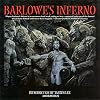
Wayne Douglas Barlowe has a successful career as an illustrator for fantasy and science fiction books. Even if one doesn’t know him by name, his style is unmistakable. While fellow illustrator Boris Vallejo takes his cue from the noble tradition of the American pin-up, Barlowe renders his subjects with the disinterested expertise of a natural history illustrator. Barlowe’s pictures retain the flavor of John James Audubon. What Audubon did for birds, Barlowe does for Guild Steersmen, show more dinosaurs, and Overlords. The Audubonian emulation continued with the publication of Barlowe’s Guide to Extraterrestrials (1979) and the companion volume Barlowe’s Guide to Fantasy (1996). In each book, the aliens or mythological creatures possess a physical presence that bespeaks a plausible reality. He designs these beings with a meticulous anatomical accuracy. Beneath the fantastical exteriors (scales, skin, fur, etc.), one can observe the bones and muscles.
Barlowe gave vision to his own imagination, not the ideas of others, in Expedition: Being an Account in Words and Artwork of the 2358 A.D. Voyage of Darwin IV (1990). The world and creatures are entirely fabricated, but the book itself has a feel of a National Geographic feature article. Writing as a participant on the voyage, Barlowe and a fellow alien species travel to Darwin IV. The planet presents an alternate evolutionary track with varieties of animals in a coherent ecological system. Unlike Earth, the animals lack jaws and eyes, Barlowe theorizing Darwin IV experienced a prolonged period where the sun was blocked by clouds or fog. The results are visionary, beautiful, and thought provoking. (Barlowe brought this same artistic and scientific rigor to the creature design of Avatar, the only saving grace in that otherwise overlong, tedious, morally simplistic cinematic train wreck.)
Barlowe’s Inferno brings together the two strands of his previous work and welds them into a uniquely innovative version of Hell. He reprises his role as the artist-traveler, in this case working like a netherworldly John Singer Sargeant painting portraits and landscapes. Instead of the Post-Reconstruction nouveau riche and the Grand Tour, we see Belial, Lilith, and Molech. Instead of cathedrals and canals, we see the teeth of Leviathan crushing cities made of bricks, the bricks made of souls hammered and smashed into place, Procrustean and sadistic. Because Barlowe’s work espouses a natural history ethic, he also included the portrait of an Australopithecine demon, a kind of Darwinian Cain and a wry callback to the opening scenes of Stanley Kubrick’s 2001. A “firstborn” chews a soul in the desolate landscape, the creature a remnant of the original inhabitants of this alien environment. Barlowe posits that Hell was colonized following Satan’s Fall in the same manner of human colonizations. The fallen angels became demons and then dominated the landscape in the manner akin to human deforestation, urban development, and gentrification. Demons have designer handbags, this time made from filleted human skin.
Barlowe renders the textures with haunting precision. Demons have skin like stone and the damned have bodies warped like funhouse mirrors, their stony bodies morphed into ironic tortures. The book, a combination travelogue-natural history catalogue, makes, to paraphrase Milton’s description of Hell, “darkness visible.” Barlowe’s darkness is culturally diverse, physically horrific, and uniquely visionary. It represents a modern homage to Dante’s Inferno and a daring extrapolation on the theme of damnation.
This review is part of a blog post examining how different artists depict Hell:
http://driftlessareareview.wordpress.com/2010/11/14/critical-appraisal-the-lands... show less
Barlowe gave vision to his own imagination, not the ideas of others, in Expedition: Being an Account in Words and Artwork of the 2358 A.D. Voyage of Darwin IV (1990). The world and creatures are entirely fabricated, but the book itself has a feel of a National Geographic feature article. Writing as a participant on the voyage, Barlowe and a fellow alien species travel to Darwin IV. The planet presents an alternate evolutionary track with varieties of animals in a coherent ecological system. Unlike Earth, the animals lack jaws and eyes, Barlowe theorizing Darwin IV experienced a prolonged period where the sun was blocked by clouds or fog. The results are visionary, beautiful, and thought provoking. (Barlowe brought this same artistic and scientific rigor to the creature design of Avatar, the only saving grace in that otherwise overlong, tedious, morally simplistic cinematic train wreck.)
Barlowe’s Inferno brings together the two strands of his previous work and welds them into a uniquely innovative version of Hell. He reprises his role as the artist-traveler, in this case working like a netherworldly John Singer Sargeant painting portraits and landscapes. Instead of the Post-Reconstruction nouveau riche and the Grand Tour, we see Belial, Lilith, and Molech. Instead of cathedrals and canals, we see the teeth of Leviathan crushing cities made of bricks, the bricks made of souls hammered and smashed into place, Procrustean and sadistic. Because Barlowe’s work espouses a natural history ethic, he also included the portrait of an Australopithecine demon, a kind of Darwinian Cain and a wry callback to the opening scenes of Stanley Kubrick’s 2001. A “firstborn” chews a soul in the desolate landscape, the creature a remnant of the original inhabitants of this alien environment. Barlowe posits that Hell was colonized following Satan’s Fall in the same manner of human colonizations. The fallen angels became demons and then dominated the landscape in the manner akin to human deforestation, urban development, and gentrification. Demons have designer handbags, this time made from filleted human skin.
Barlowe renders the textures with haunting precision. Demons have skin like stone and the damned have bodies warped like funhouse mirrors, their stony bodies morphed into ironic tortures. The book, a combination travelogue-natural history catalogue, makes, to paraphrase Milton’s description of Hell, “darkness visible.” Barlowe’s darkness is culturally diverse, physically horrific, and uniquely visionary. It represents a modern homage to Dante’s Inferno and a daring extrapolation on the theme of damnation.
This review is part of a blog post examining how different artists depict Hell:
http://driftlessareareview.wordpress.com/2010/11/14/critical-appraisal-the-lands... show less
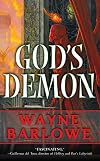
This was awesome. I actually finished it more than a week ago but I’m just getting around to reviewing it. I’ve enjoyed Barlowe’s Inferno books even thought I don’t think the art itself is amazing I love the concepts – how all the structures in Hell are huge, how the souls carry their essence in black spheres that protrude and move about their bodies. I love the glyphs above the demons heads. All that is brought to life with many more ideas that make Hell a very memorable setting. show more
The plot was original, there was plenty of action, and the “bad” guys (or this is hell so the “badder” guys”) were really freaking bad. Beelzebub was scary and I actually felt myself cringing at the helplessness of his victims. The addition of Lillith was definitely a cool touch and I could see any sequel most likely involving her as one of the main characters. The story also inspired me. One line inspired the entire plot of a short story – of course I would have to write it to prove truly inspired.
So I’m very curious what Mr. Barlowe will have for us next, though I’m not sure how well it will hold up to this amazing piece of fiction show less
The plot was original, there was plenty of action, and the “bad” guys (or this is hell so the “badder” guys”) were really freaking bad. Beelzebub was scary and I actually felt myself cringing at the helplessness of his victims. The addition of Lillith was definitely a cool touch and I could see any sequel most likely involving her as one of the main characters. The story also inspired me. One line inspired the entire plot of a short story – of course I would have to write it to prove truly inspired.
So I’m very curious what Mr. Barlowe will have for us next, though I’m not sure how well it will hold up to this amazing piece of fiction show less
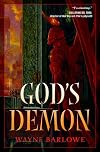
I picked this one up at Macmillan's free book day back in 2013 and finally got around to reading it! On top of the fact that it looked and sounded interesting, it has a blurb from Guillermo del Toro--so yeah, that was one time when I actually read a blurb. Also, this is totally a case of judging a book by its cover, and with good reason.
The author is actually an artist, a film concept designer who did work on Hellboy and at least two Harry Potter movies--at it shows in the book. The cover, show more of course, is gorgeous and insanely detailed, not to mention incredibly helpful for visualizing Hell--which is, if I'm perfectly honest, a bit difficult to do. There are definitely places where the book reads more like an artist or director describing their vision for a movie than it does a typical book. This has its pluses and minuses: while it can slow the pace down and be a little distracting from the plot, Barlowe's extraordinary vision of Hell is a key selling point of the book. I've read so many books that it's hard for me to come across completely new ideas, but those did exist here in the descriptions of the demons' appearances, in the construction of the cities of Hell, and in the makeup of Hell's geography. This is a very Gaiman-esque Hell, not one full of fire and brimstone, but one that's disgusting and inhumane even as it's incredibly, personally human.
(I have one cool (I think) theory about Hell, never confirmed: that it's actually located on the absent Lucifer's body. )
This book was world-building at its finest, with engaging characters even if a bit frustrating. Why were all of the demons male? I must admit that I find it refreshing when otherworldly creatures are basically sex/genderless--and I was annoyed at the very contrived, unfortunately practically inevitable romance with Lilith. I would have been just as (if not more) invested in a relationship of equals founded entirely on respect. It would have been more tragically romantic, which I think would have better fit Barlowe's vision of Hell, not to mention more realistic (I'm pretty sure) for a woman with Lilith's sexual trauma. (I'm not listing that as a spoiler because this is a book written by a man and populated almost exclusively by men. Talk about Hell!)
My biggest beef with the book? Sargatanas' belief that starting a war against the Beelzebub, the reigning monarch of Hell, will redeem him in the eyes of the Creator. When has holy war ever been something admirable? Starting a war in order to better one's station--not including others--to a better state seems like the the most selfish act possible, and certainly not one that God would condone. But then, it's never totally clear if the god of this book reflects the Christian God. Probably not, given how unreligious the book is overall. (Quite a feat for a book based on one of the greatest works of Biblical fanfiction ever written!)
Yeah, there's more action than plot here...but if it was made into a movie based on Barlowe's designs--especially if directed by del Toro--I would totally go and see it.
Quote Roundup
Note: Since the awesome environmental descriptions were too long to quote, most of these relate to my annoyance about the means by which these demons are going to reclaim Heaven.
37: I'd just read a series of parodies of dude writers describing women, contrasted with almost equally painful actual descriptions of women written by men, when I reached this introduction to Lilith, who just happens to be casually masturbating while waiting for her servant to return. Never mind that she has a horrifying life filled with regular, Hellishly nightmarish rape, she's just going to lie there and please herself for the titillation of male readers. Ugh.
96: "Henceforth, in this new time, you and your Guard will have to add secret police to your list of many tasks. I must know of the shifting thoughts of those closest to my throne. As seemingly unimpeachable as my inner circle is, no one is safe from corruption."
Yup. Secret police. This sounds more like Nazi Germany than the way to Heaven.
107: The palace was so vast, so filled with administrative levels, that it came as no real surprise to him that they might be in an area that he had not traversed.
No. Freaking. Way. An undying demon with all the time in the world to kill, and endless curiosity, and he hasn't explored every inch of that place? No way. Also, I have no idea what kind of administration Sargatanas needs to manage Hell. It seems like a pretty straightforward place.
108-109: "We have fulfilled every one of Their claims against us, prove ourselves to be anything but the angels we once were, and denied ourselves any consideration for return. We must show that after all these grim millennia, after all the pain and punishment, we are capable of change. I am convinced that if our intentions and actions are clear--that our opposition to Beelzebub and his government is in earnest--They will take notice. And that is the first step to regaining our lost grace."
Yeah. I'm really not buying it. It sounds like he's just picking a fight to show off. What's the goal of this, if he's just going to leave it behind? To wreck half of Hell? How is that heavenly? I pretty much knew that Barlowe was going to have his characters win, but I was also really hoping there'd be some kind of shock at some point, when Sargatanas is told that he's not doing this for the right reasons, and he'd have to reevaluate his goals. Alas, this was not to be.
172: Sargatanas is giving a speech to rally the troops.
"What is it that keeps us here? ... Are we here because we are all truly evil or were some of us misled and misdirected, carried away on the scalding winds of rhetoric? ... Or is it, perhaps, our damaged pride that keeps us filled with shame and bound to this place?"**
*My gosh, he was basically a Trump supporter, except with Lucifer!
**I'm pretty sure it's pride making you think you're good enough to prove yourself worthy of going back to heaven. And pride is kind of a deadly sin and all...
238: This scene where Hani takes on Moloch was particularly cinematic, and nicely condensed so that it didn't get exhausting. I really do appreciate Hani. He seems more honestly self-reflective than Sargatanas, and I respect his blunt awareness of his own motives. I know he's in Hell for a reason...but it's kind of hard not to end up rooting for him.
256: Sargatanas does have a moment of clarity to reflect on the purpose/selfishness of his goals. But it's not a long reflection, and the result is pretty much the same coming out as it was coming in: we fight and kill for the right to regain Heaven. He compares his war to Lucifer's and even questions whether his motives are selfish--but those questions are never answered! Argh!
258: As a writer and a being capable of logic and a storytelling grump and a woman, I object to this page.
303: We're only 50 pages from the end of the book when we learn that Lilith has interests other than carving statues, being interested in souls, and having sex. Surely Barlowe could have spared a sentence here or there to tell us about her non-lover-related activities in Adamantinarx-upon-the-Acheron rather than shoehorning it all in here at the end. Can this poor woman have some non-male-related characterization, please? I just feel like there was so much potential for her to be a more interesting character than she ended up being, and it's really frustrating to me.
343: The reason for Sargatanas's fate is as full of holes as Swiss cheese. This book could have been a good bit more philosophical. i'd have sacrificed some between-battle prep for a little more depth to the discussions of good and evil.
349: We learn two pages from the end that Lilith had some sword fighting training. Why couldn't we have read about this? Why couldn't Lilith have fought, even if just alongside the souls?
Ugh!
Okay, so my responses to the quotes came out sounding like I didn't like the book much. But the fact is, I did. It's practically the definition of world-building, which is something that I highly value, and I did care about the characters even if they weren't as three-dimensional as they could have been. I guess I might say that there was never a "sublime" moment to lift this book out of the action-orientation. It felt a bit like a lot of today's action movies, which try to give a nod to deeper ideas but push through them to get back to the action. But then, that goes hand in hand with the kinds of films that Barlowe works on.
That said, check out his art--he's got a website and the work he did is absolutely stunning. He apparently illustrated a book based on Dante's Inferno, and I'd be interested to take a look at it sometime. show less
The author is actually an artist, a film concept designer who did work on Hellboy and at least two Harry Potter movies--at it shows in the book. The cover, show more of course, is gorgeous and insanely detailed, not to mention incredibly helpful for visualizing Hell--which is, if I'm perfectly honest, a bit difficult to do. There are definitely places where the book reads more like an artist or director describing their vision for a movie than it does a typical book. This has its pluses and minuses: while it can slow the pace down and be a little distracting from the plot, Barlowe's extraordinary vision of Hell is a key selling point of the book. I've read so many books that it's hard for me to come across completely new ideas, but those did exist here in the descriptions of the demons' appearances, in the construction of the cities of Hell, and in the makeup of Hell's geography. This is a very Gaiman-esque Hell, not one full of fire and brimstone, but one that's disgusting and inhumane even as it's incredibly, personally human.
(
This book was world-building at its finest, with engaging characters even if a bit frustrating. Why were all of the demons male? I must admit that I find it refreshing when otherworldly creatures are basically sex/genderless--and I was annoyed at the very contrived, unfortunately practically inevitable romance with Lilith. I would have been just as (if not more) invested in a relationship of equals founded entirely on respect. It would have been more tragically romantic, which I think would have better fit Barlowe's vision of Hell, not to mention more realistic (I'm pretty sure) for a woman with Lilith's sexual trauma. (I'm not listing that as a spoiler because this is a book written by a man and populated almost exclusively by men. Talk about Hell!)
My biggest beef with the book? Sargatanas' belief that starting a war against the Beelzebub, the reigning monarch of Hell, will redeem him in the eyes of the Creator. When has holy war ever been something admirable? Starting a war in order to better one's station--not including others--to a better state seems like the the most selfish act possible, and certainly not one that God would condone. But then, it's never totally clear if the god of this book reflects the Christian God. Probably not, given how unreligious the book is overall. (Quite a feat for a book based on one of the greatest works of Biblical fanfiction ever written!)
Yeah, there's more action than plot here...but if it was made into a movie based on Barlowe's designs--especially if directed by del Toro--I would totally go and see it.
Quote Roundup
Note: Since the awesome environmental descriptions were too long to quote, most of these relate to my annoyance about the means by which these demons are going to reclaim Heaven.
37: I'd just read a series of parodies of dude writers describing women, contrasted with almost equally painful actual descriptions of women written by men, when I reached this introduction to Lilith, who just happens to be casually masturbating while waiting for her servant to return. Never mind that she has a horrifying life filled with regular, Hellishly nightmarish rape, she's just going to lie there and please herself for the titillation of male readers. Ugh.
96: "Henceforth, in this new time, you and your Guard will have to add secret police to your list of many tasks. I must know of the shifting thoughts of those closest to my throne. As seemingly unimpeachable as my inner circle is, no one is safe from corruption."
Yup. Secret police. This sounds more like Nazi Germany than the way to Heaven.
107: The palace was so vast, so filled with administrative levels, that it came as no real surprise to him that they might be in an area that he had not traversed.
No. Freaking. Way. An undying demon with all the time in the world to kill, and endless curiosity, and he hasn't explored every inch of that place? No way. Also, I have no idea what kind of administration Sargatanas needs to manage Hell. It seems like a pretty straightforward place.
108-109: "We have fulfilled every one of Their claims against us, prove ourselves to be anything but the angels we once were, and denied ourselves any consideration for return. We must show that after all these grim millennia, after all the pain and punishment, we are capable of change. I am convinced that if our intentions and actions are clear--that our opposition to Beelzebub and his government is in earnest--They will take notice. And that is the first step to regaining our lost grace."
Yeah. I'm really not buying it. It sounds like he's just picking a fight to show off. What's the goal of this, if he's just going to leave it behind? To wreck half of Hell? How is that heavenly? I pretty much knew that Barlowe was going to have his characters win, but I was also really hoping there'd be some kind of shock at some point, when Sargatanas is told that he's not doing this for the right reasons, and he'd have to reevaluate his goals. Alas, this was not to be.
172: Sargatanas is giving a speech to rally the troops.
"What is it that keeps us here? ... Are we here because we are all truly evil or were some of us misled and misdirected, carried away on the scalding winds of rhetoric? ... Or is it, perhaps, our damaged pride that keeps us filled with shame and bound to this place?"**
*My gosh, he was basically a Trump supporter, except with Lucifer!
**I'm pretty sure it's pride making you think you're good enough to prove yourself worthy of going back to heaven. And pride is kind of a deadly sin and all...
238: This scene where Hani takes on Moloch was particularly cinematic, and nicely condensed so that it didn't get exhausting. I really do appreciate Hani. He seems more honestly self-reflective than Sargatanas, and I respect his blunt awareness of his own motives. I know he's in Hell for a reason...but it's kind of hard not to end up rooting for him.
256: Sargatanas does have a moment of clarity to reflect on the purpose/selfishness of his goals. But it's not a long reflection, and the result is pretty much the same coming out as it was coming in: we fight and kill for the right to regain Heaven. He compares his war to Lucifer's and even questions whether his motives are selfish--but those questions are never answered! Argh!
258: As a writer and a being capable of logic and a storytelling grump and a woman, I object to this page.
303: We're only 50 pages from the end of the book when we learn that Lilith has interests other than carving statues, being interested in souls, and having sex. Surely Barlowe could have spared a sentence here or there to tell us about her non-lover-related activities in Adamantinarx-upon-the-Acheron rather than shoehorning it all in here at the end. Can this poor woman have some non-male-related characterization, please? I just feel like there was so much potential for her to be a more interesting character than she ended up being, and it's really frustrating to me.
343: The reason for Sargatanas's fate is as full of holes as Swiss cheese. This book could have been a good bit more philosophical. i'd have sacrificed some between-battle prep for a little more depth to the discussions of good and evil.
349: We learn two pages from the end that Lilith had some sword fighting training. Why couldn't we have read about this? Why couldn't Lilith have fought, even if just alongside the souls?
Ugh!
Okay, so my responses to the quotes came out sounding like I didn't like the book much. But the fact is, I did. It's practically the definition of world-building, which is something that I highly value, and I did care about the characters even if they weren't as three-dimensional as they could have been. I guess I might say that there was never a "sublime" moment to lift this book out of the action-orientation. It felt a bit like a lot of today's action movies, which try to give a nod to deeper ideas but push through them to get back to the action. But then, that goes hand in hand with the kinds of films that Barlowe works on.
That said, check out his art--he's got a website and the work he did is absolutely stunning. He apparently illustrated a book based on Dante's Inferno, and I'd be interested to take a look at it sometime. show less
Expedition: Being an Account in Words and Artwork of the 2358 A.D. Voyage to Darwin IV by Wayne D. Barlowe
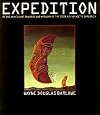
Expedition is, without qualification, the single most inspired visual work of science fiction ever produced by a single artist. What Barlowe set out to do had never been attempted before: to illustrate the various ecosystems of a fictional alien world. As the child of two natural history illustrators, he was, perhaps, better equipped than most to tackle this daunting task.
And what a task it must have been. The resulting 192-page book is a lavish tour-de-force, dripping color off every page show more and chock full of illustrations, sketches and all manner of fascinating descriptions. That the vast majority of alien fauna depicted here is improbable isn't the point--the fact that they are (at least at first blush) plausible, and perhaps more importantly, decidedly alien, is.
The conceit of this book is that it's an artifact from 300 years into our future, a time when humanity has poisoned and polluted our world so that only a handful of grotesque, mutant species remain to eke out a living in the toxic environment. Arriving in the nick of time to save us from ourselves, the alien Yma now manage the environmental restoration of the Earth, even as they attempt to teach us how to do so on our own. As part of humanity's education, a joint mission is launched to Darwin IV, so that the importance of biodiversity can be witnessed firsthand. Barlowe, an artist, is a member of the mission charged with capturing the elusive spirit of the world that is beyond mere photographs. As framing devices go, it is a bit heavy-handed and pretentious, and is easily the weakest part of the book. Once the artist descends to the surface of Darwin IV, however, things kick into high gear and don't let up.
Barlowe gives careful consideration to the ecology and evolutionary adaptations of each species here, often drawing on Earth analogs to enhance the verisimilitude of each piece. The bipedal herbivore Symet, for example, has a tail that closely resembles its head, a trait that confuses predators just long enough to allow the Symet to escape an attack--a survival trick that is not unknown among terrestrial animals. Other choices Barlowe makes are farther "out there."
Throughout the book, Barlowe goes out of his way to tease the reader with hints of a far greater and extensive ecology than that contained in the notes. Landscape scenes show herds of unidentified creatures in the distance, odd mushroom-like growths discharging nasty-looking electrical shocks, giant gourd-like trees and towering amoebic blobs that presumably roam around the world as they will. Frustratingly, none of these are discussed or even mentioned. Frustrating, yes, but very clever. These incidental additions to the paintings--creatures and plants ubiquitous to Darwin IV, yet not "interesting" enough to devoted limited page space to--add an additional layer of depth and nuance to the book, cluing the reader in that there is far more at work here than a by-the-numbers encyclopedia cataloging of impossible creatures from one man's imagination.
Despite Expedition's flaws--biology that stretches the limits of credibility in some cases, and an over-reliance on the eco-catastrophe framing device--the book is nothing short of inspirational. With science fiction in television, movies and books overrun by a tedious lineage of uninspired humanoid extraterrestrials that may sport cranial ridges but speak perfect English nonetheless, Barlowe shows what is possible if people would just let their imaginations soar. Aside from that, the artwork in the book is undeniably beautiful. Were they available, I'd gladly buy full-sized prints of any of these scenes in a heartbeat. show less
And what a task it must have been. The resulting 192-page book is a lavish tour-de-force, dripping color off every page show more and chock full of illustrations, sketches and all manner of fascinating descriptions. That the vast majority of alien fauna depicted here is improbable isn't the point--the fact that they are (at least at first blush) plausible, and perhaps more importantly, decidedly alien, is.
The conceit of this book is that it's an artifact from 300 years into our future, a time when humanity has poisoned and polluted our world so that only a handful of grotesque, mutant species remain to eke out a living in the toxic environment. Arriving in the nick of time to save us from ourselves, the alien Yma now manage the environmental restoration of the Earth, even as they attempt to teach us how to do so on our own. As part of humanity's education, a joint mission is launched to Darwin IV, so that the importance of biodiversity can be witnessed firsthand. Barlowe, an artist, is a member of the mission charged with capturing the elusive spirit of the world that is beyond mere photographs. As framing devices go, it is a bit heavy-handed and pretentious, and is easily the weakest part of the book. Once the artist descends to the surface of Darwin IV, however, things kick into high gear and don't let up.
Barlowe gives careful consideration to the ecology and evolutionary adaptations of each species here, often drawing on Earth analogs to enhance the verisimilitude of each piece. The bipedal herbivore Symet, for example, has a tail that closely resembles its head, a trait that confuses predators just long enough to allow the Symet to escape an attack--a survival trick that is not unknown among terrestrial animals. Other choices Barlowe makes are farther "out there."
Throughout the book, Barlowe goes out of his way to tease the reader with hints of a far greater and extensive ecology than that contained in the notes. Landscape scenes show herds of unidentified creatures in the distance, odd mushroom-like growths discharging nasty-looking electrical shocks, giant gourd-like trees and towering amoebic blobs that presumably roam around the world as they will. Frustratingly, none of these are discussed or even mentioned. Frustrating, yes, but very clever. These incidental additions to the paintings--creatures and plants ubiquitous to Darwin IV, yet not "interesting" enough to devoted limited page space to--add an additional layer of depth and nuance to the book, cluing the reader in that there is far more at work here than a by-the-numbers encyclopedia cataloging of impossible creatures from one man's imagination.
Despite Expedition's flaws--biology that stretches the limits of credibility in some cases, and an over-reliance on the eco-catastrophe framing device--the book is nothing short of inspirational. With science fiction in television, movies and books overrun by a tedious lineage of uninspired humanoid extraterrestrials that may sport cranial ridges but speak perfect English nonetheless, Barlowe shows what is possible if people would just let their imaginations soar. Aside from that, the artwork in the book is undeniably beautiful. Were they available, I'd gladly buy full-sized prints of any of these scenes in a heartbeat. show less
Lists
Awards


You May Also Like


Associated Authors
Statistics
- Works
- 12
- Also by
- 52
- Members
- 2,116
- Popularity
- #12,162
- Rating
- 3.9
- Reviews
- 32
- ISBNs
- 31
- Languages
- 2
- Favorited
- 3