
H. R. Giger (1940–2014)
Author of HR Giger ARh+
About the Author
Image credit: JaSunni
Works by H. R. Giger
"Alien" (Hansen Galleries Poster) 2 copies
HR Giger art 1 copy
HR Giger in Prague 1 copy
Passagen 1 copy
H.R. Giger Revealed 1 copy
Tarot 1 copy
Associated Works
Lost Transmissions: The Secret History of Science Fiction and Fantasy (2019) — Art/illustration — 154 copies, 5 reviews
A Lovecraft Retrospective: Artists Inspired by H.P. Lovecraft (2008) — Illustrator — 39 copies, 2 reviews
Tagged
Common Knowledge
- Canonical name
- Giger, H. R.
- Legal name
- Giger, Hans Ruedi
- Birthdate
- 1940-02-05
- Date of death
- 2014-05-12
- Gender
- male
- Education
- School of Applied Arts, Zurich, Switzerland
- Occupations
- painter
sculptor
set designer
film director - Awards and honors
- Academy Award for Visual Design (1980)
Science Fiction and Fantasy Hall Of Fame (2013)
Inkpot Award (1979) - Relationships
- Giger, Carmen Maria Scheifele (wife)
- Short biography
- H.R. Giger was born in Chur, Switzerland, in 1940. As a child he developed a strong passion for all things surreal and macabre. His need to express himself and share the unique aspects of his powerful imagination drew him to the visual arts. Giger's own dreams and the brilliant imagery of such fantastic geniuses as Gustav Meyrink, Jean Cocteau, Alfred Kubin and H.P. Lovecraft combined to form a rich soil from which the amzing imagery of Giger's own art has come to sprout. It has since bloomed into the vast wealth of exotic women, wondrously bizarre landscapes, and frightening creatures that have captured the fascination of millions of fans worldwide.
Meticulously detailed, Giger's paintings are usually done in large formats and worked and reworked by this maestro of the airbrush. It was Giger's popular art book, ‘Necronomicon', that caught the eye of director Ridley Scott as he was searching for the right look for a creature in his upcoming film. That creature, of course, turned out to be the Alien, and Giger's masterful designs for the film of the same name garnered him a much-deserved Academy Award.
Giger's fascinating biomechanical style, that brilliant synthesis of flesh and machine, has been realized not only through his remarkable paintings but also via sculpture pieces, elegantly fashioned furniture, and architectural and interior design projects. His paintings have been displayed in galleries and museums throughout the world.
Giger's alien aesthetic, his ‘biomechanics', goes beyond talent, and even art. It enters the rarified realm of the near magical, and certainly the land of genius. The ensuing art is a mere taste of the phenomenal oeuvre that this unique Swiss maestro has created.
https://www.hrgigermuseum.com/index2.p... - Nationality
- Switzerland
- Birthplace
- Chur, Graubünden, Switzerland
- Places of residence
- Zurich, Switzerland
- Place of death
- Zürich, Switzerland
- Associated Place (for map)
- Switzerland
Members
Reviews
Giger by H. R. Giger
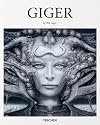
Darkly beautiful reflections of a very dark mind.
I had no idea until now that this was the mastermind behind the morbid, fascinating creature of the Alien franchise, but some of his other work makes that look like child's play, and learning about the man behind the art was almost more intriguing than viewing the art itself. Giger's anecdotes illustrate how so much of his work was inspired by the same obsessions and fears that began in his early life - women, weapons, worm-like creatures, show more death, and ghosts. Much of his work pays homage to the dark sides of these subjects not only with their color scheme (various black and gray tones which, for some reason, remind me of early X-ray crystallography images), but also in their oddly structured nature and an abundance of phallic and sexual symbolism.
I may not be a diehard fan like the writer of the foreword - Giger's work doesn't exactly send me into poetic rhapsodies - but I love the "biomechanical" aesthetic for which his art is famous. At the end of the day our bodies are, in a sense, highly evolved machines with a precisely regulated array of functions to keep us alive. To visualize our internal machinery using gears and springs and the like - while simultaneously illustrating the flip side of our existence, our darkest desires and fears, takes a very unique mind with a penchant for the ominous. And I love how, with the then highly-disdained airbrush, Giger managed to produce works of such realism that he was even questioned at one point whether they weren't actual photos.
My 2 favorite works from his collection are Li I and Li II, particularly memorable because of Li Tobler's tragic fate and how they almost seem like posthumous homages to her struggles. The paintings where her face makes an appearance seem to have a surreal aspect to them simply because of that presence. But I guess that's the essence of the word "surreal" - it wouldn't exist without the "real." And whether I like all his art or not, I can definitely say that H.R. Giger was a master of the surreal, as well as the shocking and provocative. I'd recommend his art to anyone who likes horror and is up for some interesting dreams (and/or nightmares). show less
I had no idea until now that this was the mastermind behind the morbid, fascinating creature of the Alien franchise, but some of his other work makes that look like child's play, and learning about the man behind the art was almost more intriguing than viewing the art itself. Giger's anecdotes illustrate how so much of his work was inspired by the same obsessions and fears that began in his early life - women, weapons, worm-like creatures, show more death, and ghosts. Much of his work pays homage to the dark sides of these subjects not only with their color scheme (various black and gray tones which, for some reason, remind me of early X-ray crystallography images), but also in their oddly structured nature and an abundance of phallic and sexual symbolism.
I may not be a diehard fan like the writer of the foreword - Giger's work doesn't exactly send me into poetic rhapsodies - but I love the "biomechanical" aesthetic for which his art is famous. At the end of the day our bodies are, in a sense, highly evolved machines with a precisely regulated array of functions to keep us alive. To visualize our internal machinery using gears and springs and the like - while simultaneously illustrating the flip side of our existence, our darkest desires and fears, takes a very unique mind with a penchant for the ominous. And I love how, with the then highly-disdained airbrush, Giger managed to produce works of such realism that he was even questioned at one point whether they weren't actual photos.
My 2 favorite works from his collection are Li I and Li II, particularly memorable because of Li Tobler's tragic fate and how they almost seem like posthumous homages to her struggles. The paintings where her face makes an appearance seem to have a surreal aspect to them simply because of that presence. But I guess that's the essence of the word "surreal" - it wouldn't exist without the "real." And whether I like all his art or not, I can definitely say that H.R. Giger was a master of the surreal, as well as the shocking and provocative. I'd recommend his art to anyone who likes horror and is up for some interesting dreams (and/or nightmares). show less
Giger by H. R. Giger
I love Taschen's Basic Art series.
Giger is an absolutely fascinating overview of the artist's life and work by the artist himself. Copious illustrations and examples of Giger's work accompany the text. Giger talks about his childhood obsessions (suspender fasteners among them), the work he did for Alien and Jodorowsky's unrealized Dune, his love life, his work with airbrush, the Dead Kennedys getting in legal trouble because they included "Landscape XX" (the so-called "Penis Landscape") in show more one of their records, and more. An intriguing, engaging, fascinating book by and about a very unique artist. It also includes a profoundly trippy foreword by Timothy Leary. show less
Giger is an absolutely fascinating overview of the artist's life and work by the artist himself. Copious illustrations and examples of Giger's work accompany the text. Giger talks about his childhood obsessions (suspender fasteners among them), the work he did for Alien and Jodorowsky's unrealized Dune, his love life, his work with airbrush, the Dead Kennedys getting in legal trouble because they included "Landscape XX" (the so-called "Penis Landscape") in show more one of their records, and more. An intriguing, engaging, fascinating book by and about a very unique artist. It also includes a profoundly trippy foreword by Timothy Leary. show less
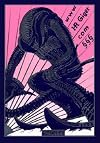
This book, sort of a biography / scrapbook / overview of HR Giger's life and work, is very much Giger himself: fascinating, offputting, gorgeous, disgusting, bizarre, boring, and intriguing.
It captures all phases of his art and he provides most of the copy...and ultimately proves that he's an artist and not an author.
I came across Giger like, I suspect, many did when the first ALIEN movie was released, and suddenly the world knew of this strange genius that finally gave us an alien that show more actually looked like a freaking alien, instead someone tinted a different colour and some rubber glued to their face.
I fell in love with that phase of his artistry, and collected a lot of books that highlighted it. From this collection, I saw the various other phases, some of which I enjoyed, much of which I didn't.
Bottom line, if you want to learn about HR Giger, this is the book to provide that. show less
It captures all phases of his art and he provides most of the copy...and ultimately proves that he's an artist and not an author.
I came across Giger like, I suspect, many did when the first ALIEN movie was released, and suddenly the world knew of this strange genius that finally gave us an alien that show more actually looked like a freaking alien, instead someone tinted a different colour and some rubber glued to their face.
I fell in love with that phase of his artistry, and collected a lot of books that highlighted it. From this collection, I saw the various other phases, some of which I enjoyed, much of which I didn't.
Bottom line, if you want to learn about HR Giger, this is the book to provide that. show less

Author Akron (pseudonym of C. F. Frey) is the occultist chiefly responsible for the H. R. Giger Tarot, according to the turn-of-the-millennium account he gives in this book. Giger had certainly been working with tarot themes and motifs on his own, but he produced the tarot-centric volume Baphomet (1992) in collaboration with Frey, as a "tarot cycle" to manifest the ambitions that Frey had nurtured separately for a "Shadow Tarot." The trump images in Baphomet were largely drawn from Giger's show more existing oeuvre.
When publisher Taschen was contemplating an abridged softcover reprint of the Baphomet material for a wider audience to accompany a popular printing of the tarot deck, Akron supplied this text that was superficially more in keeping with typical manuals of tarot. (He was already the author of a successful book on the Crowley tarot.) I do not have the deck, just the book. In particular, the book is limited to the trumps and does not show the small cards, if any exist.
The philosophical introduction and the preliminary chapters on the "spread systems" are applicable to any divinatory tarot, and they are thoughtful and innovative. I was especially intrigued by Akron's use of fiction for allegories that he uses to structure the spreads. In one case, he draws on Gustav Myerink's Angel of the West Window, and in another he seems to be referencing the cometary apocalypse from Lucifer's Hammer by Niven and Pournelle.
The bulk of the book consists of chapters for each of the trumps. These begin with two images in each case: the Giger tarot trump itself and an original sketch by Giger for each trump. Sometimes these are closely aligned, and sometimes they differ widely. All the art reproductions are in greyscale and black and white, which is largely sufficient for Giger's minimally chromatic, gloomy palette.
Akron supplies a little cluster of psychoanalytic sermons for each trump, and these are divided into "The Card" and "The Interpretation" in each case. "The Card" discusses symbolism, and also helps the reader to parse some of the densely clustered imagery of the trump paintings. Despite the collaborative relationship of the writer and artist, it is not clear that Akron is always transmitting Giger's compositional intent. In fact, it seems likely that there is creative misprision in play.
"The Interpretation" is addressed to the (tarot) reader/querent and is four-fold for each card, divided first by the querent's sex ("Woman" followed by "Man") and then by the orientation of the card in a spread--a "Reversed" section follows and complements each main interpretation. Each of the four sections consists of two paragraphs, the second of which is italicized. I was never able to figure out what was supposed to distinguish these two voices from one another.
The book ends with short biographical chronologies for the two Swiss creators Giger and Akron. show less
When publisher Taschen was contemplating an abridged softcover reprint of the Baphomet material for a wider audience to accompany a popular printing of the tarot deck, Akron supplied this text that was superficially more in keeping with typical manuals of tarot. (He was already the author of a successful book on the Crowley tarot.) I do not have the deck, just the book. In particular, the book is limited to the trumps and does not show the small cards, if any exist.
The philosophical introduction and the preliminary chapters on the "spread systems" are applicable to any divinatory tarot, and they are thoughtful and innovative. I was especially intrigued by Akron's use of fiction for allegories that he uses to structure the spreads. In one case, he draws on Gustav Myerink's Angel of the West Window, and in another he seems to be referencing the cometary apocalypse from Lucifer's Hammer by Niven and Pournelle.
The bulk of the book consists of chapters for each of the trumps. These begin with two images in each case: the Giger tarot trump itself and an original sketch by Giger for each trump. Sometimes these are closely aligned, and sometimes they differ widely. All the art reproductions are in greyscale and black and white, which is largely sufficient for Giger's minimally chromatic, gloomy palette.
Akron supplies a little cluster of psychoanalytic sermons for each trump, and these are divided into "The Card" and "The Interpretation" in each case. "The Card" discusses symbolism, and also helps the reader to parse some of the densely clustered imagery of the trump paintings. Despite the collaborative relationship of the writer and artist, it is not clear that Akron is always transmitting Giger's compositional intent. In fact, it seems likely that there is creative misprision in play.
"The Interpretation" is addressed to the (tarot) reader/querent and is four-fold for each card, divided first by the querent's sex ("Woman" followed by "Man") and then by the orientation of the card in a spread--a "Reversed" section follows and complements each main interpretation. Each of the four sections consists of two paragraphs, the second of which is italicized. I was never able to figure out what was supposed to distinguish these two voices from one another.
The book ends with short biographical chronologies for the two Swiss creators Giger and Akron. show less
You May Also Like


Associated Authors
Statistics
- Works
- 51
- Also by
- 7
- Members
- 2,400
- Popularity
- #10,690
- Rating
- 4.2
- Reviews
- 33
- ISBNs
- 118
- Languages
- 10
- Favorited
- 5
