

Gary Russell
Author of The Lord of the Rings: The Art of The Fellowship of the Ring
About the Author
Image credit: Gallifrey One 2008, photo by pinguino k
Series
Works by Gary Russell
Invasion of the Cat-People (Doctor Who the Missing Adventures) (1995) — Author — 171 copies, 5 reviews
Doctor Who: The Collection [2009] 3 copies
Doctor Who Magazine 205 2 copies
Doctor Who (2008) Issue #5 2 copies
Doctor Who (2008) Issue #4 2 copies
Doctor Who Magazine #222 2 copies
Doctor Who Magazine 207 2 copies
Doctor Who Magazine 213 2 copies
Doctor Who Magazine 202 2 copies
Doctor Who Magazine 201 2 copies
Doctor Who: Urknall 2 copies
Sky: Before the Chaos — Author — 1 copy
Doctor Who #5 1 copy
Go Figure 1 copy
Doctor Who (16 Book Series) 1 copy
Doctor Who Magazine 214 1 copy
Doctor Who Magazine 210 1 copy
Doctor Who Magazine 209 1 copy
Real time (Doctor Who) 1 copy
Blake's 7, Winter special 1 copy
Doctor Who Magazine 217 1 copy
Gaylaxicon 2012 Chapbook 1 copy
Doctor Who: Real Time 1 copy
Doctor Who Magazine 193 1 copy
Doctor Who Quiz Book 1 copy
Cyberspace 3000 #1 1 copy
Doctor Who Magazine 215 1 copy
Doctor Who Magazine 218 1 copy
Doctor Who Magazine 219 1 copy
Doctor Who Magazine 220 1 copy
Associated Works
More Short Trips (1999) — Author "Missing, Part One: Business as Usual" and "64 Carlysle Street" — 144 copies, 1 review
Queers Dig Time Lords: A Celebration of Doctor Who by the LGBTQ Fans Who Love It (2013) — Contributor — 81 copies, 2 reviews
Valuegenesis: Shall We Dance, Rediscovering Christ-Centered Standards (Project Affirmation, Volume 4) (1996) — Contributor — 5 copies
Party Like It's 1998 — Author — 2 copies
In●Vision: The Trial of a Time Lord — Parts 9 - 12 — Terror of the Vervoids (2000) — Contributor "Borderline: Academic Tensions" and "Putting Down Roots" — 2 copies
In●Vision: The Trial of a Time Lord (2000) — Contributor issue 90 & The Lost Season supplement — 2 copies
In●Vision: The Trial of a Time Lord — Parts 13 - 14 — The Ultimate Foe (2000) — Contributor "Borderline: A Good Lawyer" and "Weighing Up the Evidence" — 2 copies
Doctor Who — An Adventure in Space & Time: The Web of Fear (1984) — Contributor "The Yeti – Mark II" — 1 copy
Sky: Into the Chaos — Director — 1 copy
Doctor Who — An Adventure in Space & Time: The Abominable Snowmen (1984) — Contributor ""The Yeti": Hit...or myth?" — 1 copy
Doctor Who — An Adventure in Space & Time: Day of the Daleks (1986) — Contributor "Day of the Daleks!" — 1 copy
Doctor Who — An Adventure in Space & Time: The Time Monster (1986) — Contributor "Happy Families" — 1 copy
Doctor Who — An Adventure in Space & Time: Season Ten Special (1987) — Contributor "Taken for Granted?" and On Target" — 1 copy
Tagged
Common Knowledge
- Other names
- Martyn, Warren (pseudonym)
- Birthdate
- 1963-09-18
- Gender
- male
- Nationality
- UK
- Birthplace
- Maidenhead, Berkshire, England, UK
- Map Location
- England, UK
Members
Reviews

This has Bernice Summerfield meeting up with the twelfth Doctor. For the Doctor, it's part of a set of loosely-linked novels called The Glamour Chronicles, where the Doctor keeps bumping into an Ancient technology called the Glamour. For Benny, it takes place following on from the Big Finish box sets set on Legion, seemingly after Missing Persons, and it features her main cast from those stories alongside her: Ruth, Jack, and her son Peter.
This was sort of a reread for me: I actually already show more listened to it on audio as part of my journey through Bernice stories on audio. When I heard it, I thought it was terrible. Aimless, confusing, overlong, unfunny, belabored. Not even Lisa Bowerman as reader could save it.
As a book, it was better, mostly I suspect because instead of having to suffer through every single word of Gary Russell's excruciating dull prose, I could speed read my way through it. So even though the fact that there are repeated, inexplicable digressions about the twelfth Doctor's relationship with the obscure New Adventures character Keri Pakhar, of all people, I could just jump over them.
Keri is not the only annoying use of continuity. It also has the Doctor claiming to Benny that every time he goes to France, he thinks of Guy de Carnac. Seriously? Gary Russell wants me to believe that when David Tennant was snogging Madame de Pompadour, he was thinking, "oh i'm so sad about a one-off character from a mediocre david mcintee VNA who died centuries and centuries of years ago in my personal timeline." Go ahead, pull the other one. On top of that, there's a cheeky reference to the NA version of Human Nature, where the Doctor claims he went to "extraordinary lengths" to understand Benny's sorrow over the death of Guy. This is a fundamental misunderstanding and misreading of the events of Human Nature. Benny raises this as a theory on p. 116 of Human Nature, but on p. 202, the Doctor gives his actual reason, which has nothing to do with freaking Guy de Carnac, c'mon.
On top of this, there's an excruciatingly out of character moment where the Doctor and Benny console each other that bad things happen because of fate so oh well, which I think is contradictory to the entire ethos of the programme and of the characters.
The plot doesn't make a lot of sense. It was never clear to me why the Doctor, Benny, and company pretend to be a gang of con artists in order to fool an actual gang of con artists; I don't know what anyone would have done different had they actually been aboveboard about their intentions. Seriously, what was the point of all that?
Even by Doctor Who standards, Gary Russell has little grasp on science. We're told that the planet Legion doesn't orbit a sun... which would surely make it too cold to live on. However, we're also told it has a light side and a dark side; the light side faces the rest of the galaxy. Gary Russell has apparently never looked at the sky and realized the light of distant stars is actually not that light. But we're also told it spins very slowly. Well, if it does rotate, even if slowly, how can you do something like build a city in the middle of the light side?
Continuity-wise, it seems to follow on from the box set Missing Persons. I say "seem to" because given Gary Russell wrote this novel and produced those box sets, the details don't really line up. Specifically, Jack and Ruth are engaged to be married here... whereas there was a not a single hint of any kind of attraction at all in any of the preceding box sets. Like, where did this even come from? Why do this? Bizarre. Only Gary Russell could write a book that has detailed references to novels from over two decades prior but messed up continuity with something he wrote himself five years ago. Similarly weirdly, there's a bit where the Doctor thinks of his past companions, and it's only ones from tv and audio. Like, Gary, I know you know the books "count" because freaking Keri Pakhar is in this book! Are you telling me that Samson and Gemma really loom larger in the Doctor's mind than Fitz?
I was vaguely amused by how the story contorts to avoid mentioning Irving Braxiatel, who was a member of Benny's Legion-era supporting cast, but who could wreck the entire premise of post-2005 Doctor Who if he turned up. The Doctor's not quite the "last of the Time Lords" anymore by the Peter Capaldi era, but the Doctor still certainly shouldn't be bumping into random Time Lords. Braxiatel is only referred to as the owner of the White Rabbit; at one point Benny is probably about to say "your brother" to the Doctor but gets cut off.
So anyway, pretty bad but you can read the whole thing in about a day, because basically nothing that happens matters. show less
This was sort of a reread for me: I actually already show more listened to it on audio as part of my journey through Bernice stories on audio. When I heard it, I thought it was terrible. Aimless, confusing, overlong, unfunny, belabored. Not even Lisa Bowerman as reader could save it.
As a book, it was better, mostly I suspect because instead of having to suffer through every single word of Gary Russell's excruciating dull prose, I could speed read my way through it. So even though the fact that there are repeated, inexplicable digressions about the twelfth Doctor's relationship with the obscure New Adventures character Keri Pakhar, of all people, I could just jump over them.
Keri is not the only annoying use of continuity. It also has the Doctor claiming to Benny that every time he goes to France, he thinks of Guy de Carnac. Seriously? Gary Russell wants me to believe that when David Tennant was snogging Madame de Pompadour, he was thinking, "oh i'm so sad about a one-off character from a mediocre david mcintee VNA who died centuries and centuries of years ago in my personal timeline." Go ahead, pull the other one. On top of that, there's a cheeky reference to the NA version of Human Nature, where the Doctor claims he went to "extraordinary lengths" to understand Benny's sorrow over the death of Guy. This is a fundamental misunderstanding and misreading of the events of Human Nature. Benny raises this as a theory on p. 116 of Human Nature, but on p. 202, the Doctor gives his actual reason, which has nothing to do with freaking Guy de Carnac, c'mon.
On top of this, there's an excruciatingly out of character moment where the Doctor and Benny console each other that bad things happen because of fate so oh well, which I think is contradictory to the entire ethos of the programme and of the characters.
The plot doesn't make a lot of sense. It was never clear to me why the Doctor, Benny, and company pretend to be a gang of con artists in order to fool an actual gang of con artists; I don't know what anyone would have done different had they actually been aboveboard about their intentions. Seriously, what was the point of all that?
Even by Doctor Who standards, Gary Russell has little grasp on science. We're told that the planet Legion doesn't orbit a sun... which would surely make it too cold to live on. However, we're also told it has a light side and a dark side; the light side faces the rest of the galaxy. Gary Russell has apparently never looked at the sky and realized the light of distant stars is actually not that light. But we're also told it spins very slowly. Well, if it does rotate, even if slowly, how can you do something like build a city in the middle of the light side?
Continuity-wise, it seems to follow on from the box set Missing Persons. I say "seem to" because given Gary Russell wrote this novel and produced those box sets, the details don't really line up. Specifically, Jack and Ruth are engaged to be married here... whereas there was a not a single hint of any kind of attraction at all in any of the preceding box sets. Like, where did this even come from? Why do this? Bizarre. Only Gary Russell could write a book that has detailed references to novels from over two decades prior but messed up continuity with something he wrote himself five years ago. Similarly weirdly, there's a bit where the Doctor thinks of his past companions, and it's only ones from tv and audio. Like, Gary, I know you know the books "count" because freaking Keri Pakhar is in this book! Are you telling me that Samson and Gemma really loom larger in the Doctor's mind than Fitz?
I was vaguely amused by how the story contorts to avoid mentioning Irving Braxiatel, who was a member of Benny's Legion-era supporting cast, but who could wreck the entire premise of post-2005 Doctor Who if he turned up. The Doctor's not quite the "last of the Time Lords" anymore by the Peter Capaldi era, but the Doctor still certainly shouldn't be bumping into random Time Lords. Braxiatel is only referred to as the owner of the White Rabbit; at one point Benny is probably about to say "your brother" to the Doctor but gets cut off.
So anyway, pretty bad but you can read the whole thing in about a day, because basically nothing that happens matters. show less
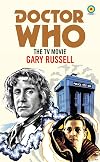
Novelizations live or die on the quality of the scripts they are novelizing - either the plot, the dialogue, or both. TV pilots are particularly hard to novelize because they're usually focusing on introducing you to characters, concepts, and tone, and the plots are usually pretty perfunctory. That's essentially the problem with Doctor Who: The TV Movie, which was, naturally, a TV movie that also functioned as a backdoor pilot. The plot is hokum, and while the dialogue isn't terrible, a lot show more of the life that was brought to it came from the actors' performances (ranging from the very good to the extremely camp). As far as the actual script goes, there's not a whole lot of there there.
In some ways these limitations are similar to Russell T. Davies' Rose, and so it makes sense that when Davies came to novelize his own pilot script, he enriched it by expanding our understanding of the human characters, their lives, relationships, and experiences. The TVM isn't a totally different plot - it is, again, about a mystery man showing up in a world of ordinary people - but novelizing it is even more uphill climbing because the people are "TV-ordinary" (meaning, they're very idealized and as thin as cardboard). Worse, the script really doesn't care about them. It cares about the mystery man, the Doctor.
That's fine for me because I'm a Doctor Who fan, and when I was 12 years old, the TV Movie on TV was great, too. There's no mistaking why average TV viewers didn't like it, though: the interesting stuff was full of unfamiliar jargon, and the real-life stuff was very, very generic. Here, Gary Russell has almost doubled down on the trick. Huge portions of the novel are fine but unremarkable. He has tried to add a little - just a little - to the "ordinary" characters, although it sometimes bounces back on him; his Americans constantly slip into British argot. None of them ever really rise above their roots, though, and a couple of them are actually less memorable than they were on TV. Instead, where he really focuses his energy is on the Doctor, and the TARDIS, and on smoothing over the bits that seemed inconsistent between the TV Movie and the original Doctor Who series.
Some of Russell's "improvements" are incredibly enjoyable - I particularly loved the more extensive exploration of the new TARDIS - and I'm glad that he was able to add back in things he was forced to cut, even if some of them are a little silly (like the extended prologue with the seventh Doctor on Skaro). By and large, though, they felt like set pieces, and I spent the book waiting for the next one...and then the next one...and then the next one.
Ultimately, it's a pleasant, slightly campy read, perhaps deliberately more like an American movie novelization. It is, however, somewhat uneven in its pleasures. show less
In some ways these limitations are similar to Russell T. Davies' Rose, and so it makes sense that when Davies came to novelize his own pilot script, he enriched it by expanding our understanding of the human characters, their lives, relationships, and experiences. The TVM isn't a totally different plot - it is, again, about a mystery man showing up in a world of ordinary people - but novelizing it is even more uphill climbing because the people are "TV-ordinary" (meaning, they're very idealized and as thin as cardboard). Worse, the script really doesn't care about them. It cares about the mystery man, the Doctor.
That's fine for me because I'm a Doctor Who fan, and when I was 12 years old, the TV Movie on TV was great, too. There's no mistaking why average TV viewers didn't like it, though: the interesting stuff was full of unfamiliar jargon, and the real-life stuff was very, very generic. Here, Gary Russell has almost doubled down on the trick. Huge portions of the novel are fine but unremarkable. He has tried to add a little - just a little - to the "ordinary" characters, although it sometimes bounces back on him; his Americans constantly slip into British argot. None of them ever really rise above their roots, though, and a couple of them are actually less memorable than they were on TV. Instead, where he really focuses his energy is on the Doctor, and the TARDIS, and on smoothing over the bits that seemed inconsistent between the TV Movie and the original Doctor Who series.
Some of Russell's "improvements" are incredibly enjoyable - I particularly loved the more extensive exploration of the new TARDIS - and I'm glad that he was able to add back in things he was forced to cut, even if some of them are a little silly (like the extended prologue with the seventh Doctor on Skaro). By and large, though, they felt like set pieces, and I spent the book waiting for the next one...and then the next one...and then the next one.
Ultimately, it's a pleasant, slightly campy read, perhaps deliberately more like an American movie novelization. It is, however, somewhat uneven in its pleasures. show less
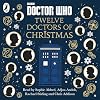
If you like a Doctor Who Christmas Special, this collection of short stories will be an utter delight. With twelve stories, one for each Doctor (at the time of publication), there's plenty of charm, Doctor Who sci fi zaniness, and a dash of festive vibes. The four narrators for this audiobook edition all do excellent jobs of voicing a wide range of characters and there were only a couple stories where I felt their choices for a Doctor's voice wasn't quite right. Be warned that if you're show more listening to this collection with kiddos, the first story does state that Santa Claus is really parents giving gifts so if you're preserving that particular bit of magic, you may want to skip that story. Otherwise, an excellent festive listen for any Doctor Who fan. show less

This set of twelve Doctor Who Christmas tales, a worthy successor to the old Big Finish Christmas Short Trips collections, was my Doctor Who Christmas read for the season, though it slipped in a little late (I think I finished it up December 30th). With twelve Doctor and twelve days of Christmas, things lined up quite nicely.
The stories are an odd assortment, which is kind of always true of these Doctor Who Christmas anthologies. Some are genuinely Christmassy; others just happen to be set show more on Christmas, but are pretty much standard Doctor Who runarounds. The most Christmassy is definitely the first, Jacqueline Rayner's "All I Want for Christmas," where the first Doctor, Ian, Barbara, and Vicki end up in a perfect 1963 Christmas: it beautifully captures the wistfulness and nostalgia of Christmas, of a yearning for a time that's slipped away. Rayner has always demonstrated a sympathy for the first Doctor era, and Ian and Barbara are exceptionally written here. I also really enjoyed Rayner's other story, "The Christmas Inversion," where the third Doctor, Jo Grant, and Mike Yates pick up a distress call from the future and end up in the middle of the events of "The Christmas Invasion"; it's as hilarious as "All I Want" is touching. Jackie Tyler meets the third Doctor! Brilliant.
Many of the others are fine, but not particularly noteworthy, and sometimes the Christmas links are tenuous at best. I didn't really get the point of Richard Dungworth's "Three Wise Men," where the fourth Doctor meets the Apollo astronauts (nothing happens), and Gary Russell's "Fairy Tale of New New York," where the sixth Doctor and Mel meet the Catkind, seemed to have potential, but there's no plot. I did enjoy "Ghost of Christmas Past" by Scott Handcock, where a Time War-era eighth Doctor is trapped in the minute before Christmas and ends up finding a mysterious message in the TARDIS. (It is a little weird from a continuity standpoint, though; it's consistent with the Big Finish stories in giving the Doctor a great-grandson named Alex, but given what happened to Alex in To the Death, it's hard to believe the Doctor would find comfort in thinking about him!)
Sort of weirdly, the tenth, eleventh, and twelfth Doctor tales all feature the Doctor teaming up with kids. I wonder why that approach was taken up for three of the four new series Doctors? Each would probably work on its own, or even in a different sequence, but since the stories come back-to-back-to-back, it's a bit repetitive. ("Loose Wire" by Richard Dungworth, the story for the tenth, was the best of them, because Dungworth captures the Doctor exceptionally well here.)
There are a lot of unexpected continuity nuggets, with the Catkind of New Earth, the Master, the Meddling Monk, Rose's red bicycle, the Slitheen, Jackie Tyler, and the Wire (from "The Idiot's Lantern") all popping up-- plus one really unexpected but fun reference in the last story. Even in the weaker stories, the Doctor's voice(s) is well captured, and the whole package is great looking; the cover looks gorgeous in person, and there's a full-page color illustration for each story. This is one of those anthologies whose theme makes it greater than the sum of its parts. Read it on a cold winter night under thick blankets and time travel to your own Christmases past and future. show less
The stories are an odd assortment, which is kind of always true of these Doctor Who Christmas anthologies. Some are genuinely Christmassy; others just happen to be set show more on Christmas, but are pretty much standard Doctor Who runarounds. The most Christmassy is definitely the first, Jacqueline Rayner's "All I Want for Christmas," where the first Doctor, Ian, Barbara, and Vicki end up in a perfect 1963 Christmas: it beautifully captures the wistfulness and nostalgia of Christmas, of a yearning for a time that's slipped away. Rayner has always demonstrated a sympathy for the first Doctor era, and Ian and Barbara are exceptionally written here. I also really enjoyed Rayner's other story, "The Christmas Inversion," where the third Doctor, Jo Grant, and Mike Yates pick up a distress call from the future and end up in the middle of the events of "The Christmas Invasion"; it's as hilarious as "All I Want" is touching. Jackie Tyler meets the third Doctor! Brilliant.
Many of the others are fine, but not particularly noteworthy, and sometimes the Christmas links are tenuous at best. I didn't really get the point of Richard Dungworth's "Three Wise Men," where the fourth Doctor meets the Apollo astronauts (nothing happens), and Gary Russell's "Fairy Tale of New New York," where the sixth Doctor and Mel meet the Catkind, seemed to have potential, but there's no plot. I did enjoy "Ghost of Christmas Past" by Scott Handcock, where a Time War-era eighth Doctor is trapped in the minute before Christmas and ends up finding a mysterious message in the TARDIS. (It is a little weird from a continuity standpoint, though; it's consistent with the Big Finish stories in giving the Doctor a great-grandson named Alex, but given what happened to Alex in To the Death, it's hard to believe the Doctor would find comfort in thinking about him!)
Sort of weirdly, the tenth, eleventh, and twelfth Doctor tales all feature the Doctor teaming up with kids. I wonder why that approach was taken up for three of the four new series Doctors? Each would probably work on its own, or even in a different sequence, but since the stories come back-to-back-to-back, it's a bit repetitive. ("Loose Wire" by Richard Dungworth, the story for the tenth, was the best of them, because Dungworth captures the Doctor exceptionally well here.)
There are a lot of unexpected continuity nuggets, with the Catkind of New Earth, the Master, the Meddling Monk, Rose's red bicycle, the Slitheen, Jackie Tyler, and the Wire (from "The Idiot's Lantern") all popping up-- plus one really unexpected but fun reference in the last story. Even in the weaker stories, the Doctor's voice(s) is well captured, and the whole package is great looking; the cover looks gorgeous in person, and there's a full-page color illustration for each story. This is one of those anthologies whose theme makes it greater than the sum of its parts. Read it on a cold winter night under thick blankets and time travel to your own Christmases past and future. show less
Lists
Awards

You May Also Like


Associated Authors
Statistics
- Works
- 176
- Also by
- 136
- Members
- 6,778
- Popularity
- #3,606
- Rating
- 3.6
- Reviews
- 125
- ISBNs
- 186
- Languages
- 8