
Justin Richards (1961–2026)
Author of The Clockwise Man
About the Author
Justin Richards is the author of over a dozen science fiction novels, as well as non-fiction books, audio and television scripts. He has edited anthologies of short stories, been a technical writer, founded and edited a media journal, and contributed articles to many mainstream magazines. At show more present, Justin is best known for acting as Creative Consultant to the BBC Books range of Doctor Who novels, and his own novels for the series are consistently popular. Justin is married with two sons. (Bowker Author Biography) show less
Image credit: Justin Richards
Series
Works by Justin Richards
Decalog 3: Consequences: Ten Stories, Seven Doctors, One Chain of Events (1996) — Editor — 144 copies, 1 review
Decalog 4: Re:Generations: Ten Stories, A Thousand Years, One Family (1997) — Contributor; Editor — 74 copies, 1 review
Doctor Who: The Scripts, Tom Baker 1974/5 (2001) — Content Editor and additional text — 64 copies, 1 review
"Doctor Who": New Adventures: WITH The Many Hands AND Martha in the Mirror AND Snowglobe 7 (Dr Who) (2008) 4 copies
Doctor Who: The Beast of Kravenos 2 copies
Project X Alien Adventures: Dark Blue Book Band, Oxford Level 15: The Path Through the Woods (2015) 2 copies
[Doctor Who: Essential Guide to 50 Years of Doctor Who] [By: Various] [November, 2013] (2013) 2 copies
In●Vision: Genesis of the Daleks (1988) — Comissioning Co-Editor and Contributor "Now we can begin" — 2 copies
In●Vision: The Talons of Weng-Chiang (1989) — Comissioning Co-Editor and Contributor "The Talents of Hinchcliffe-Holmes" — 2 copies
In●Vision: The Hand of Fear (1989) — Comissioning Co-Editor and Contributor "Hand prints" — 2 copies
The Slasher's Apprentice 1 copy
Mind Games 1 copy
Gallifrey: Ascencion 1 copy
Gallifrey: Disassembled 1 copy
Associated Works
The DWB Interview File: The Best of the First 100 Issues No.1 (1993) — "Troughton & The Daleks" and "Mechanical Evolution" — 20 copies
In●Vision: The Trial of a Time Lord — Parts 13 - 14 — The Ultimate Foe (2000) — Contributor — 2 copies
In●Vision: The Trial of a Time Lord — Parts 9 - 12 — Terror of the Vervoids (2000) — Contributor — 2 copies
In●Vision: The Trial of a Time Lord — Parts 1 - 4 — The Mysterious Planet (1999) — Contributor — 2 copies
Doctor Who — An Adventure in Space & Time: Frontier in Space (1987) — Contributor "Retrograde Time Lord" — 1 copy
Big Finish Classics: Hamlet — Script Editor — 1 copy
Tagged
Common Knowledge
- Birthdate
- 1961-09-14
- Date of death
- 2026-06-28
- Gender
- male
- Education
- University of Warwick
- Occupations
- author
technical writer
IT professional
editor - Nationality
- UK
- Birthplace
- Epping, Essex, England, UK
- Places of residence
- Warwick, England, UK
- Map Location
- England, UK
Members
Reviews
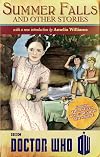
OK, no part of this was actually written by Amelia Williams or Melody Malone, because Amelia Williams (better known as Amy Pond) and Melody Malone (aka River Song, among other things) are fictional characters from Doctor Who. But they're characters who both did some writing at some point, according to the show, and this book purports to feature some of it. In actuality, the stories were written by Justin Richards (who did put his name on his contributions) and James Goss (who didn't, but is show more credited on the copyright page).
I'll be honest here. A lot of these Doctor Who tie-in books are not great, and this particular concept seemed super gimmicky, so I wasn't really expecting much. Which means I was delightfully surprised by how much I enjoyed it!
Here's what's included:
"Introduction": An introduction supposedly written by Amy, in which she starts off talking about the book, but then throws in a message for the Doctor that ties in to events that happened on the show after she left. Which is a bit clever, and the characterization of Amy and her husband Rory feels spot-on.
"Summer Falls": A kids' story, supposedly written by Amy, in which a young girl finds her seaside town in the grip of an unnatural winter and has to bring summer back. It features a very Doctor-like character (or perhaps a character who simply is the Doctor), and does a great job with his very Doctorish dialog. Arguably, this could be a Doctor Who episode written as if it were a kids' story, albeit with fewer sciencey-sounding explanations and more talking cats. But it's actually a genuinely good kids' story in its own right, aside from a slightly rushed-feeling ending, and I thoroughly enjoyed reading it.
"The Angel's Kiss": This is the one by "Melody Malone," a pulpy SF/detective piece in which River's alter ego, Melody Malone, is hired by a movie star who thinks people are plotting to kill him, and discovers the truth is much weirder than that. The plot makes less than zero sense, but it's hard to care, because the writing is so much fun. And I could hear pretty much every line in River's voice.
"The Devil in the Smoke": This one isn't by a Doctor Who character, but rather about some of them. It features the great Silurian detective, Madame Vastra, and her friends investigating a strange murder and ultimately saving the world. The writing here doesn't work quite as well as in the last one, as it's trying to mimic a Victorian style just by throwing a lot of big words around, but it was fun to read, anyway. The story felt like it could very easily have been an episode of the show, and the characters are well done. In particular, Strax was pitch-perfect and hilarious.
"The Girl Who never Grew Up": This is supposedly an extract from an interview with Amy in 1969, in which Amy says a lot of things that the (rather annoying) interviewer doesn't understand, but the reader does. It makes for a little bit of a poignant emotional moment at the end. show less
I'll be honest here. A lot of these Doctor Who tie-in books are not great, and this particular concept seemed super gimmicky, so I wasn't really expecting much. Which means I was delightfully surprised by how much I enjoyed it!
Here's what's included:
"Introduction": An introduction supposedly written by Amy, in which she starts off talking about the book, but then throws in a message for the Doctor that ties in to events that happened on the show after she left. Which is a bit clever, and the characterization of Amy and her husband Rory feels spot-on.
"Summer Falls": A kids' story, supposedly written by Amy, in which a young girl finds her seaside town in the grip of an unnatural winter and has to bring summer back. It features a very Doctor-like character (or perhaps a character who simply is the Doctor), and does a great job with his very Doctorish dialog. Arguably, this could be a Doctor Who episode written as if it were a kids' story, albeit with fewer sciencey-sounding explanations and more talking cats. But it's actually a genuinely good kids' story in its own right, aside from a slightly rushed-feeling ending, and I thoroughly enjoyed reading it.
"The Angel's Kiss": This is the one by "Melody Malone," a pulpy SF/detective piece in which River's alter ego, Melody Malone, is hired by a movie star who thinks people are plotting to kill him, and discovers the truth is much weirder than that. The plot makes less than zero sense, but it's hard to care, because the writing is so much fun. And I could hear pretty much every line in River's voice.
"The Devil in the Smoke": This one isn't by a Doctor Who character, but rather about some of them. It features the great Silurian detective, Madame Vastra, and her friends investigating a strange murder and ultimately saving the world. The writing here doesn't work quite as well as in the last one, as it's trying to mimic a Victorian style just by throwing a lot of big words around, but it was fun to read, anyway. The story felt like it could very easily have been an episode of the show, and the characters are well done. In particular, Strax was pitch-perfect and hilarious.
"The Girl Who never Grew Up": This is supposedly an extract from an interview with Amy in 1969, in which Amy says a lot of things that the (rather annoying) interviewer doesn't understand, but the reader does. It makes for a little bit of a poignant emotional moment at the end. show less
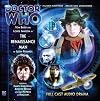
At last the new Fourth Doctor adventures have found their feet, with the prolific Justin Richards very much on form, delivering a brilliant weird tale for Toma Baker, Louise Jameson and Ian McNeice as the sinister Harcourt (which was also his character's name in Edge of Darkness back in 1985). The Doctor brings Leela to the famous Moravanian Museum for the sake of her education, but finds instead a peculiar manor house where nothing is as it seems. The setting is one that has been done in show more many Who stories, but rarely this well, and the particular twists here are inventive; also Baker is on top form as clown, magician and moral leader. If you just want to sample the new Fourth Doctor range, this is where to start. show less
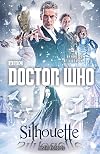
I think by the time Doctor Who got past the 50th anniversary and to the Peter Capaldi era, the BBC were in a bit of a pickle. They had reinvented the Who book range for kids in 2005, but in 2014 the audience was increasingly veering older, with a lot more attraction for older fans who remembered the old days - and the much darker, more complex novels.
This is a book that is probably passingly successful in the 2005 framework but feels very wanting almost ten years later. The premise is show more intriguing, but it never gets beyond feeling like a TV episode on paper. At 11 or 12 years I would have really liked that, I think. As an adult in my 30s, it feels thin. It feels thin even as a kids' story.
When I was actually 11 and 12, Justin Richards was writing books for that more complex 1990s range. I liked them a lot - they were straightforward stories, probably with much of the same "TV on paper" qualities. The difference is I always remember Richards doing a great job of replicating the dialogue of the Doctor and other regulars. They sounded right. His Doctor in this book, on the other hand, is completely generic - doubtless a product of his only getting to read a script or script sections including the new Doctor, and without seeing Capaldi's performance. If I had to make a stab at it, he comes over like an intensely serious Tom Baker - or maybe a humorless Matt Smith. (And maybe one of those is what Richards went for.)
I can even understand the limits of writing for a brand new Doctor, but I'm utterly baffled at the inclusion of Vastra, Jenny, and Strax, all of whom Richards has written for before and all of whom appear prominently on the cover. Sadly, they are only really utilized as plot shortcuts. Vastra barely appears at all, and only Strax makes an impact because, yes, he's the one character blessed with unique and interesting speech patterns.
I wanted to like Silhouette, and there's probably an 11-year-old out there who finds it pretty ripping. That's good! I was disappointed because of the underutilized potential: in the ideas, in the characters, and in the writing. It all felt, to me, like a very tepid version of something that could have been much more fun. show less
This is a book that is probably passingly successful in the 2005 framework but feels very wanting almost ten years later. The premise is show more intriguing, but it never gets beyond feeling like a TV episode on paper. At 11 or 12 years I would have really liked that, I think. As an adult in my 30s, it feels thin. It feels thin even as a kids' story.
When I was actually 11 and 12, Justin Richards was writing books for that more complex 1990s range. I liked them a lot - they were straightforward stories, probably with much of the same "TV on paper" qualities. The difference is I always remember Richards doing a great job of replicating the dialogue of the Doctor and other regulars. They sounded right. His Doctor in this book, on the other hand, is completely generic - doubtless a product of his only getting to read a script or script sections including the new Doctor, and without seeing Capaldi's performance. If I had to make a stab at it, he comes over like an intensely serious Tom Baker - or maybe a humorless Matt Smith. (And maybe one of those is what Richards went for.)
I can even understand the limits of writing for a brand new Doctor, but I'm utterly baffled at the inclusion of Vastra, Jenny, and Strax, all of whom Richards has written for before and all of whom appear prominently on the cover. Sadly, they are only really utilized as plot shortcuts. Vastra barely appears at all, and only Strax makes an impact because, yes, he's the one character blessed with unique and interesting speech patterns.
I wanted to like Silhouette, and there's probably an 11-year-old out there who finds it pretty ripping. That's good! I was disappointed because of the underutilized potential: in the ideas, in the characters, and in the writing. It all felt, to me, like a very tepid version of something that could have been much more fun. show less
Words can’t describe how excited I was to purchase a copy of Summer Falls. I might seem like a childish geek, but I couldn’t wait to get my hands on a book that appeared on my favourite show, and was written by fictional characters from that show. Just to clarify, the paperback copy includes Summer Falls by Amelia Williams (fictional), The Angel’s Kiss by River Song (alias Melody Malone, another fictional character, and Justin Richards (a frequent and very much real author of many show more Doctor Who books).
Summer Falls is the first story in this book, and features Kate, a young girl who has just moved into the area with her rather oblivious mother, and who stumbles straight into a mystery involving magic, a very helpful grey cat, and a whole lot of adventure. While Kate is very similar to her fictional creator, and is a well drafted character, I found her somewhat annoying. I also have to wonder what young male readers would make of this story. Kate is a very strong determined girl, and this is contrasted heavily with the boys in the story, who are shown as being rather useless anti-heroes. This saddens me, and I feel for at least one of the boys, this characterisation could have been changed without damage to the plot. In fact, in my opinion, this would have been an improvement to the plot, and I would have enjoyed a strong equal bond between the two main protagonists more than the inequality that was presented. I also had one other quibble with the story. While the author has for the most part written a text that is accessible to young readers, he at times wrote in a chunky abrupt style that felt unnatural and jarring. Three stars.
The second story, Angel’s Kiss is a complete deviation from the first story. Anyone who has watched Doctor Who will know River Song as a feisty character, who isn’t ashamed to flirt a little to get what she wants. To write a first person story for children featuring such a character must have been a challenge. It’s one that the author has largely succeeded at, hinting at the risqué without openly portraying it, and young fans of the show should enjoy reading it and discovering a little of what River got up to in 1930’s New York. However, kids who are new to Doctor Who may not enjoy it as much, as despite being written successfully for young readers, it still didn’t feel like a children’s book. Perhaps this is due to the story’s content and the all-adult cast. Three stars.
Devil in the Smoke was my favourite story in this collection, featuring a young protagonist called Harry, who has the misfortune to come between the villain and his evil plot to take over the world. Readers will enjoy reconnecting with the Paternoster Gang, and especially with Strax who as usual provides plenty of good laughs. The voicing and interaction between the characters is spot on, and young Harry provides a useful connection for readers to both the story and the strange world he has stumbled onto. This is a fun adventurous story and is right on target for the audience it was written for. Four stars.
The hero of this collection has to be the Introduction and the short extract, The Girl Who Never Grew Up. Though brief, these are totally fan-worthy, giving that extra taste of well-loved characters and what might have been. I can safely promise that readers will savour these few extra moments with Amy and Rory. Five stars. show less
Summer Falls is the first story in this book, and features Kate, a young girl who has just moved into the area with her rather oblivious mother, and who stumbles straight into a mystery involving magic, a very helpful grey cat, and a whole lot of adventure. While Kate is very similar to her fictional creator, and is a well drafted character, I found her somewhat annoying. I also have to wonder what young male readers would make of this story. Kate is a very strong determined girl, and this is contrasted heavily with the boys in the story, who are shown as being rather useless anti-heroes. This saddens me, and I feel for at least one of the boys, this characterisation could have been changed without damage to the plot. In fact, in my opinion, this would have been an improvement to the plot, and I would have enjoyed a strong equal bond between the two main protagonists more than the inequality that was presented. I also had one other quibble with the story. While the author has for the most part written a text that is accessible to young readers, he at times wrote in a chunky abrupt style that felt unnatural and jarring. Three stars.
The second story, Angel’s Kiss is a complete deviation from the first story. Anyone who has watched Doctor Who will know River Song as a feisty character, who isn’t ashamed to flirt a little to get what she wants. To write a first person story for children featuring such a character must have been a challenge. It’s one that the author has largely succeeded at, hinting at the risqué without openly portraying it, and young fans of the show should enjoy reading it and discovering a little of what River got up to in 1930’s New York. However, kids who are new to Doctor Who may not enjoy it as much, as despite being written successfully for young readers, it still didn’t feel like a children’s book. Perhaps this is due to the story’s content and the all-adult cast. Three stars.
Devil in the Smoke was my favourite story in this collection, featuring a young protagonist called Harry, who has the misfortune to come between the villain and his evil plot to take over the world. Readers will enjoy reconnecting with the Paternoster Gang, and especially with Strax who as usual provides plenty of good laughs. The voicing and interaction between the characters is spot on, and young Harry provides a useful connection for readers to both the story and the strange world he has stumbled onto. This is a fun adventurous story and is right on target for the audience it was written for. Four stars.
The hero of this collection has to be the Introduction and the short extract, The Girl Who Never Grew Up. Though brief, these are totally fan-worthy, giving that extra taste of well-loved characters and what might have been. I can safely promise that readers will savour these few extra moments with Amy and Rory. Five stars. show less
Lists
Awards


You May Also Like


Associated Authors
Statistics
- Works
- 253
- Also by
- 41
- Members
- 12,452
- Popularity
- #1,883
- Rating
- 3.5
- Reviews
- 347
- ISBNs
- 446
- Languages
- 13
- Favorited
- 2