
Gareth Roberts
Author of Shada: The Lost Adventure
About the Author
Series
Works by Gareth Roberts
Witchcraft in Early Modern Europe: Studies in Culture and Belief (1996) — Editor — 42 copies, 1 review
The Mirror of Alchemy: Alchemical Ideas and Images in Manuscripts and Books from Antiquity to the 17th Century (1994) 41 copies
Associated Works
Decalog 2: Lost Property: Ten Stories, Seven Doctors, No Fixed Abode (1995) — Contributor — 159 copies, 1 review
Decalog 3: Consequences: Ten Stories, Seven Doctors, One Chain of Events (1996) — Contributor — 144 copies, 1 review
Short Trips and Side Steps (2000) — Co-Author "Special Occasions: 1. the Not-So-Sinister Sponge" — 144 copies, 2 reviews
Adventures with the Wife and Blake: Volume 1 - The Blake Years (2014) — Foreword — 9 copies, 1 review
Tagged
Common Knowledge
- Legal name
- Roberts, Gareth John Pritchard
- Birthdate
- 1968-06-05
- Gender
- male
- Education
- Liverpool Polytechnic
- Occupations
- screenwriter
novelist - Nationality
- UK
- Birthplace
- Chesham, Buckinghamshire, England
- Associated Place (for map)
- Chesham, Buckinghamshire, England
Members
Reviews

So, here I've been lo these many months, out of my mind with excitement that soon (but not soon enough), I'd be holding a Doctor Who novel written by my favorite living science fiction writer (that would be Alastair Reynolds*, duh, and may he live long and prosper**), and one that concerns one of my favorite Doctors (that would be the Third, portrayed by the inimitable Jon Pertwee), and I realized, hey, I've never actually read a Doctor Who novel.
So I went hunting. Concurrently with a recent show more mania to watch the whole of the Ninth Doctor's single TV season and an accompanying wild hair to write a novel starring said Ninth Doctor, because Christopher Eccleston is another favorite.*** And Only Human had the best blurb. This might be Jasper Fforde's fault for making me sympathize so with Neanderthals. I'm just not sure on that.
I am now dangerously close to writing a blog post that is longer than the actual novel, which is short and sweet but packed with goodies to satisfy the wibbly wobbly timey wimey longings of any Who fan, new or old, with offerings ranging from a Neanderthal lost in 21st century England (whom Captain Jack, of all people, must help to acclimatize) to a population of technologically advanced modern humans living in a Prisoneresque village in prehistoric England but strangely uninterested in the Neanderthal and Homo sapiens sapiens populations nearby unless their "popper packs" (basically a ripoff of the Penfield Mood Organs from Philip K. Dick's Do Androids Dream of Electric Sheep) compel them to, even though studying these populations and the charismatic megafauna that share their world is why said H.s.s. are there and then (for of course, they are time travelers, using a cheap and dirty version of time travel so cheap and dirty as to make Captain Jack's vortex manipulator look like something from the pages of Inhabitat).
But so, the Doctor and cavemen of various species. Who doesn't love a combination like that? I'm certainly in for a go, even if Rose has to come along, too, which she does, but no tale is perfect, right?****
Anyway.
Like I said, there's a lot packed into this short little book. While Captain Jack is training the displaced Neanderthal, Das in 21st century living, the Doctor and Rose travel back to Das' time (to which he cannot return because of reasons. And cheap and dirty time travel tech. Wibbly wobbly) to find out how/why Das got when he is and put a stop to whatever's going on because it is Bad. And they find the aforementioned Penfield Mood Organ junkies. Who are all enslaved via their Poppers by a charismatic and devastatingly (and artificially) intelligent, ruthless scientist named Chantal. Everybody wants to please Chantal. And Chantal is up to no good. Basically a Master/Rani hybrid, is Chantal. Except a bit more effective; at one point even the Doctor is drug-boozled into wanting to please Chantal -- and were this not a Doctor Who story, one might well have come to believe the jeopardy in which this places him. As it was, it was not at all easy to see how he was going to get out of his predicament. While Rose was off cavorting with cave men.
So, I wound up enjoying this little romp rather a lot. And I'll say this for my fellow Rose haters: book Rose, at least this book Rose, is rather more enjoyable than TV Rose -- not because Billie Piper did a bad job on TV or anything, just that the kind of stuff Gareth Roberts put her through would not be easy at all to pull off on TV, and is very likely way more satisfying for people who consider her dominance of the early seasons of NuWho to be their flaw rather than their glory.
Heh.
*I say this not only because it's true, but also because Reynolds occasionally reads my blog and my saying this makes him blush, and I'm just sadistic enough to enjoy making him blush. Especially when, for reasons that blast out my logic circuits, right now Britons can enjoy Harvest of Time, but I as an American not legally do so for another month. Harrumph.
**Heh.
***For those who will surely ask, my current (because they fluctuate, because I'm only human (heh) order of favorite Doctors is: Ninth, Third, Eleventh, Sixth, Fourth, First, Seventh, Second, Tenth, Fifth. Usually Eleventh is higher, and he's like to regain a higher spot on my list after the bravura performance in the most recent Neil Gaiman-penned episode in which Matt Smith got to pull a Gollum/Locutus of Who thing. But I'm all about the Pert right now because of Alastair Reynolds. Duh.
****And there I've outraged all the Rose partisans out there. Bring it. I've been dealing with people who aren't down with my dislike of Perpugilliam Brown† for decades now, and Al Bruno III and I are still even friends.
†I wasn't going to nerd out quite so much for this post, but dudes, trying to choke the life out of Peri on his very first day beneath Colin Baker's blonde curls is a huge part of why the Sixth Doctor is so high on my list. That and I'm just generally a bit partial to Bastard Doctors. show less
So I went hunting. Concurrently with a recent show more mania to watch the whole of the Ninth Doctor's single TV season and an accompanying wild hair to write a novel starring said Ninth Doctor, because Christopher Eccleston is another favorite.*** And Only Human had the best blurb. This might be Jasper Fforde's fault for making me sympathize so with Neanderthals. I'm just not sure on that.
I am now dangerously close to writing a blog post that is longer than the actual novel, which is short and sweet but packed with goodies to satisfy the wibbly wobbly timey wimey longings of any Who fan, new or old, with offerings ranging from a Neanderthal lost in 21st century England (whom Captain Jack, of all people, must help to acclimatize) to a population of technologically advanced modern humans living in a Prisoneresque village in prehistoric England but strangely uninterested in the Neanderthal and Homo sapiens sapiens populations nearby unless their "popper packs" (basically a ripoff of the Penfield Mood Organs from Philip K. Dick's Do Androids Dream of Electric Sheep) compel them to, even though studying these populations and the charismatic megafauna that share their world is why said H.s.s. are there and then (for of course, they are time travelers, using a cheap and dirty version of time travel so cheap and dirty as to make Captain Jack's vortex manipulator look like something from the pages of Inhabitat).
But so, the Doctor and cavemen of various species. Who doesn't love a combination like that? I'm certainly in for a go, even if Rose has to come along, too, which she does, but no tale is perfect, right?****
Anyway.
Like I said, there's a lot packed into this short little book. While Captain Jack is training the displaced Neanderthal, Das in 21st century living, the Doctor and Rose travel back to Das' time (to which he cannot return because of reasons. And cheap and dirty time travel tech. Wibbly wobbly) to find out how/why Das got when he is and put a stop to whatever's going on because it is Bad. And they find the aforementioned Penfield Mood Organ junkies. Who are all enslaved via their Poppers by a charismatic and devastatingly (and artificially) intelligent, ruthless scientist named Chantal. Everybody wants to please Chantal. And Chantal is up to no good. Basically a Master/Rani hybrid, is Chantal. Except a bit more effective; at one point even the Doctor is drug-boozled into wanting to please Chantal -- and were this not a Doctor Who story, one might well have come to believe the jeopardy in which this places him. As it was, it was not at all easy to see how he was going to get out of his predicament. While Rose was off cavorting with cave men.
So, I wound up enjoying this little romp rather a lot. And I'll say this for my fellow Rose haters: book Rose, at least this book Rose, is rather more enjoyable than TV Rose -- not because Billie Piper did a bad job on TV or anything, just that the kind of stuff Gareth Roberts put her through would not be easy at all to pull off on TV, and is very likely way more satisfying for people who consider her dominance of the early seasons of NuWho to be their flaw rather than their glory.
Heh.
*I say this not only because it's true, but also because Reynolds occasionally reads my blog and my saying this makes him blush, and I'm just sadistic enough to enjoy making him blush. Especially when, for reasons that blast out my logic circuits, right now Britons can enjoy Harvest of Time, but I as an American not legally do so for another month. Harrumph.
**Heh.
***For those who will surely ask, my current (because they fluctuate, because I'm only human (heh) order of favorite Doctors is: Ninth, Third, Eleventh, Sixth, Fourth, First, Seventh, Second, Tenth, Fifth. Usually Eleventh is higher, and he's like to regain a higher spot on my list after the bravura performance in the most recent Neil Gaiman-penned episode in which Matt Smith got to pull a Gollum/Locutus of Who thing. But I'm all about the Pert right now because of Alastair Reynolds. Duh.
****And there I've outraged all the Rose partisans out there. Bring it. I've been dealing with people who aren't down with my dislike of Perpugilliam Brown† for decades now, and Al Bruno III and I are still even friends.
†I wasn't going to nerd out quite so much for this post, but dudes, trying to choke the life out of Peri on his very first day beneath Colin Baker's blonde curls is a huge part of why the Sixth Doctor is so high on my list. That and I'm just generally a bit partial to Bastard Doctors. show less
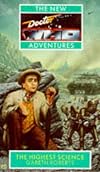
This is the first published novel for Gareth Roberts who went on to write numerous Doctor Who books, audio dramas, comics, and episodes of the revived tv series and the Sarah Jane Adventures including "The Shakespeare Code," "The Unicorn and the Wasp," "The Lodger," "Closing Time," and "The Caretaker." His stories are known for being clever and funny. Unfortunately, Roberts has also revealed himself as a bigot who rants against LGBT people and I believe the BBC has rightly decided to not show more have him write for the show again. If it's any consolation I got this book second hand so he won't get any royalties.
As to the book, it features the Seventh Doctor and companion Benny investigating a Fortean flicker, a temporal anomaly bringing together beings from different people from different times on one unremarkable planet. This includes the Chelonians, a militaristic tortoise-like species who clear planets of "infestations of humans," a group of hippie-like individuals traveling to a music festival; people riding an English commuter train; and a galactic criminal traveling with a stolen organic intelligence called The Cell. Without giving too much away, the book is largely a parody of the elaborate plots and schemes that the Seventh Doctor is known to create, with the twist of this time the Doctor failing to anticipate someone else's scheme. But is it worth it to have to keep up with so many different characters and their plotlines, especially since only some tie in with the conclusion while others are shaggy dog stories? show less
As to the book, it features the Seventh Doctor and companion Benny investigating a Fortean flicker, a temporal anomaly bringing together beings from different people from different times on one unremarkable planet. This includes the Chelonians, a militaristic tortoise-like species who clear planets of "infestations of humans," a group of hippie-like individuals traveling to a music festival; people riding an English commuter train; and a galactic criminal traveling with a stolen organic intelligence called The Cell. Without giving too much away, the book is largely a parody of the elaborate plots and schemes that the Seventh Doctor is known to create, with the twist of this time the Doctor failing to anticipate someone else's scheme. But is it worth it to have to keep up with so many different characters and their plotlines, especially since only some tie in with the conclusion while others are shaggy dog stories? show less

Access a version of the below that includes illustrations on my blog.
I've always been a bit salty that this book exists. Well, it would be more accurate to say that I am salty that the DWM Special Edition The Ninth Doctor Collected Comics exists. I dutifully bought that, expecting that no such graphic novel would ever come out—there just weren't enough strip adventures to justify such a collection! Eight years later, and the size of these collections had been halved, and so I bought those show more stories all over again, with just one addition—a prose story that I already had! Well, that and the as usual excellent extras.
So this was a reread again for me, but the added context of the extras was new. I appreciated in particular that were get to hear a lot from Mike Collins, who illustrated every DWM strip of the ninth Doctor; this is one of those eras where we have a consistent artist but not a consistent writer. I've opined before that you need one of those two, otherwise the strip doesn't feel cohesive because you don't have an actor's performance to unify the various voices as the tv programme does. And Mike Collins does good work; he's been with DWM since 1987 as a writer, and since 1991 as an artist, but I knew him first from his work on Star Trek comics for Marvel and Wildstorm and Babylon 5 comics for DC. He's good at likenesses, great at storytelling—exactly the artist you want, I reckon, when you're suddenly producing a tv tie-in strip to an actual tv programme for the first time in over fifteen years!
It's funny, in the extras to both this and the next volume, The Betrothal of Sontar, editor Clay Hickman talks about how they felt they had to a go a bit more kid-friendly now that the tv show was back... but I would hesitate to call any of the DWM strips here notably kid friendly, especially Rob Shearman's! But overall, I remembered this era as a bit of a shambles, and rereading it I didn't find that true at all. It's not perfect, but this is a solid slice of Doctor Who comics. Certainly it's much better than what DWM was putting out last time the tv programme was still on!
The Love Invasion
The ninth Doctor and Rose debut with a very solid piece of Russell T Davies pastiche. There's a lot of running back and forth in 1960s London as the Doctor and Rose must piece together what links some overly helpful young women, the death of several prominent scientists, and a woman who keeps killing aliens. There's solid humor, a decent alien motivation, and a strong sense of the voices of both Eccleston and Piper. The main thing I didn't like was that there's sort of a fake-out double ending, which felt tacked on.
Art Attack
This is a decent story with a good ending, about the Doctor and Rose coming to a futuristic art gallery, and getting caught up in an evil piece of performance art. That said, I felt like there's a better version of this story somewhere in the multiverse: a comics story about art written by an artist seems like it could have done more fun stuff than the story does, and there's surprisingly little made of the fact that both the Doctor and the alien are the last of their kinds—that would have been the emotional center of the story on tv, I think.
The Cruel Sea
I was pretty surprised when Mike Collins noted this as one of the best comic strips he's ever illustrated—because to me it was the weakest story in this volume. It has striking visuals—a cruise ship on the red oceans of Mars, Billie Piper in a skintight spacesuit, a woman whose face looks like a fractured mirror—and some neat uses of the medium—the conversation between the two Doctors—but even though I'm a big fan of Robert Shearman's audio work for Big Finish and his original prose fiction, I found something deeply unpleasant about reading this story. Some of the visuals struck me as inappropriate for the Doctor Who of 2005, and some I just didn't like. Well rendered, but genuinely unpleasant to think about. It's the kind of thing Shearman makes work in prose or audio, I guess (there's some gross stuff in Scherzo), but when you have to actually see it, it's very different. The characters generally are unpleasant, too—this story is very much the epitome of something that's well-crafted but just did not work for me.
When I posted the above on GallifreyBase, Rob himself popped up to opine, "I absolutely agree with you! I'm so grateful to Mike Collins for his amazing art and lovely support, but I don't think I got this story right at all. I've never been a big comics fan, and so misunderstood the particular demands of the medium - and yeah, I think I got the tone wrong completely." Phew!
Mr Nobody / What I Did on My Christmas Holidays by Sally Sparrow
These two stories, one comics, one prose, are both from Panini's only Doctor Who Annual, and are both more child-focused than the average DWM strip. But they're still both solid. You can of course count on Scott Gray for a well put-together done-in-one, and Steven Moffat's story is a fun time travel loop. We should meet this Sally Sparrow again!
A Groatsworth of Wit
The ninth Doctor's DWM tenure comes to a quick end with this, a decently fun story with some good jokes and a nice last scene. Obviously this ended up a dry run for a David Tennant episode, like some many stories in this volume, but it's different enough to be worthwhile.
Other Notes:
I've always been a bit salty that this book exists. Well, it would be more accurate to say that I am salty that the DWM Special Edition The Ninth Doctor Collected Comics exists. I dutifully bought that, expecting that no such graphic novel would ever come out—there just weren't enough strip adventures to justify such a collection! Eight years later, and the size of these collections had been halved, and so I bought those show more stories all over again, with just one addition—a prose story that I already had! Well, that and the as usual excellent extras.
So this was a reread again for me, but the added context of the extras was new. I appreciated in particular that were get to hear a lot from Mike Collins, who illustrated every DWM strip of the ninth Doctor; this is one of those eras where we have a consistent artist but not a consistent writer. I've opined before that you need one of those two, otherwise the strip doesn't feel cohesive because you don't have an actor's performance to unify the various voices as the tv programme does. And Mike Collins does good work; he's been with DWM since 1987 as a writer, and since 1991 as an artist, but I knew him first from his work on Star Trek comics for Marvel and Wildstorm and Babylon 5 comics for DC. He's good at likenesses, great at storytelling—exactly the artist you want, I reckon, when you're suddenly producing a tv tie-in strip to an actual tv programme for the first time in over fifteen years!
It's funny, in the extras to both this and the next volume, The Betrothal of Sontar, editor Clay Hickman talks about how they felt they had to a go a bit more kid-friendly now that the tv show was back... but I would hesitate to call any of the DWM strips here notably kid friendly, especially Rob Shearman's! But overall, I remembered this era as a bit of a shambles, and rereading it I didn't find that true at all. It's not perfect, but this is a solid slice of Doctor Who comics. Certainly it's much better than what DWM was putting out last time the tv programme was still on!
The Love Invasion
The ninth Doctor and Rose debut with a very solid piece of Russell T Davies pastiche. There's a lot of running back and forth in 1960s London as the Doctor and Rose must piece together what links some overly helpful young women, the death of several prominent scientists, and a woman who keeps killing aliens. There's solid humor, a decent alien motivation, and a strong sense of the voices of both Eccleston and Piper. The main thing I didn't like was that there's sort of a fake-out double ending, which felt tacked on.
Art Attack
This is a decent story with a good ending, about the Doctor and Rose coming to a futuristic art gallery, and getting caught up in an evil piece of performance art. That said, I felt like there's a better version of this story somewhere in the multiverse: a comics story about art written by an artist seems like it could have done more fun stuff than the story does, and there's surprisingly little made of the fact that both the Doctor and the alien are the last of their kinds—that would have been the emotional center of the story on tv, I think.
The Cruel Sea
I was pretty surprised when Mike Collins noted this as one of the best comic strips he's ever illustrated—because to me it was the weakest story in this volume. It has striking visuals—a cruise ship on the red oceans of Mars, Billie Piper in a skintight spacesuit, a woman whose face looks like a fractured mirror—and some neat uses of the medium—the conversation between the two Doctors—but even though I'm a big fan of Robert Shearman's audio work for Big Finish and his original prose fiction, I found something deeply unpleasant about reading this story. Some of the visuals struck me as inappropriate for the Doctor Who of 2005, and some I just didn't like. Well rendered, but genuinely unpleasant to think about. It's the kind of thing Shearman makes work in prose or audio, I guess (there's some gross stuff in Scherzo), but when you have to actually see it, it's very different. The characters generally are unpleasant, too—this story is very much the epitome of something that's well-crafted but just did not work for me.
When I posted the above on GallifreyBase, Rob himself popped up to opine, "I absolutely agree with you! I'm so grateful to Mike Collins for his amazing art and lovely support, but I don't think I got this story right at all. I've never been a big comics fan, and so misunderstood the particular demands of the medium - and yeah, I think I got the tone wrong completely." Phew!
Mr Nobody / What I Did on My Christmas Holidays by Sally Sparrow
These two stories, one comics, one prose, are both from Panini's only Doctor Who Annual, and are both more child-focused than the average DWM strip. But they're still both solid. You can of course count on Scott Gray for a well put-together done-in-one, and Steven Moffat's story is a fun time travel loop. We should meet this Sally Sparrow again!
A Groatsworth of Wit
The ninth Doctor's DWM tenure comes to a quick end with this, a decently fun story with some good jokes and a nice last scene. Obviously this ended up a dry run for a David Tennant episode, like some many stories in this volume, but it's different enough to be worthwhile.
Other Notes:
- The Love Invasion, despite being three issues long, spans the entirety of Christopher Eccleston's on-screen tenure.
- The behind-the-scenes stuff about Mike Collins trying to get Christopher Eccleston and Billie Piper's likenesses down was great. On the one hand, Eccleston kept shooting down images that were too heroic and good-looking and muscular, too American comics! On the other hand, Piper just said, "Ooh, he's given me hips and tits, I like it!"
- After all the talk of likenesses, it thus becomes very noticeable when Rose has a dream in The Cruel Sea about marrying Mickey, but we never actually see his face, presumably so the story could avoid an extra set of approvals just for a one-page sequence.
- Elements of The Love Invasion, The Cruel Sea, What I Did on My Christmas Holidays, and A Groatsworth of Wit arguably all ended up on screen. The latter two are obvious, but Clay Hickman makes the case that The Cruel Sea influenced "The Waters of Mars." Is this an offshoot of the Flood? A GallifreyBase commenter pointed out to me that the scene in Love Invasion where the Doctor counteracts being poisoned by eating random foods was lifted for "The Unicorn and the Wasp."
- Rose is the first companion to spontaneously appear in the strip since Benny, and only the second to ever do so. Every other previous companion was introduced, even if (as in Peri and Ace) it was a reintroduction. Between this and the Doctor's regeneration, the illusion of the DWM strip as a standalone continuous narrative is shattered. We're in for a lot of that over the next couple years...
- Rob Shearman is, I think, the first tv writer to work on the strip since Marc Platt. (Though one other strip writer here would go on to be a tv writer, as is the case with a couple past writers.)
- It's pretty mind-boggling to learn about the ninth Doctor strips we didn't get from the extras: Russell T Davies and Bryan Hitch writing the ninth Doctor's debut! Russell T Davies and Dave Gibbons writing his final episode!! It's a shame we've still never gotten an RTD Doctor Who comic. I don't know if comics would play to his strength like tv, but I'd certainly be interested to see it.

Access a version of the below that includes illustrations on my blog.
I think at the time, this surely must have been an abrupt transition. From the dangerous and moody seventh Doctor in #211, straight into the fourth Doctor and Romana gadding about in #212. Ace and Bernice are gone without a word; the strip of course has had to write out TV companions before (i.e., Peri) but usually at least says something about it. We get nothing like that this time. For me, though, it reads a little less show more abruptly because of where I included The Age of Chaos, which caps off the VNA era with The Last Word and eases us into the "past Doctor" stuff with Under Pressure and The Age of Chaos itself; plus, in publication order, Bringer of Darkness opens this volume, which is sort of a second Doctor story in a seventh Doctor style, giving another transitional point.
Unfortunately, the backmatter doesn't include anything from Gary Russell, who was strip editor at the time, and thus the one responsible for the sudden, unprecedented change in the DWM comics format. No longer is the strip one ongoing story; it's now a nostalgia tour. Thankfully, Gareth Roberts does explain a bit in his notes on The Lunar Strangers: there was no longer a television programme to follow, and so the mag became a celebration of Doctor Who's history, driven in part by the VHS range, which randomly dipped into the show's history, "So he was going to follow a similarly randomised pattern in DWM." I'm not sure this would have been my choice, but it has a good logic behind it.
First, it makes sense to uncouple from the NAs: why should one range of tie-ins be beholden to another, when the other clearly doesn't care about this one? Had the strip kept following the books, Ace would have had to disappear again around the time of #223, and then two new companions would have appeared out of nowhere in #227. But if you're going to uncouple, it makes sense to do so in a strong, distinctive way: continuing to do seventh Doctor adventures, just without Benny and "Spacefleet" Ace I think would have raised questions as to why the strip wasn't consistent with the NAs (a range the mag promoted every month with the preludes!) if it was featuring the same characters. Going into the show's past gives a clear reason for the strip to be unconnected to the novels, even if I don't like the loss of the strip's ongoing nature.
Bringer of Darkness
This is a neat little story, very effectively done. We begin our "past Doctor" adventures with the second Doctor, Jamie, and Victoria, and the story follows on from The Evil of the Daleks in having the Doctor investigate if he really did kill off all the Daleks or if he needs to finish the job, and in examining Victoria's emotional reactions to the Daleks, who killed her father; Victoria narrates the story in retrospect from some time shortly after she leaves the TARDIS. Add the dark, moody art of Martin Geraghty, and it all works rather well: a story with some darkness, but also some emotional depth, and it does a neat job of foreshadowing the NAs in a plausible, interesting way. (This came out during Emperor of the Daleks!, so arguably at the height of DWM's VNA era.)
Victims
The fourth Doctor and second Romana investigate murders on a world known for its high fashion. The best part of this is the repartee between the Doctor and Romana; Abnett captures season 17 perfectly in that regard. No, strike that; the best part is the joke about the Doctor trying on Colin Baker's coat, which made me laugh out loud. The story is a bit darker than a real season 17 story, which works; what works less well is that it's kind of a mystery... but it has exactly one suspect, who turns out to have done it. I felt like it fizzled out by the end despite a strong start. Colin Andrew does a reasonable Tom Baker, but his Lalla Ward likeness is very inconsistent; if you're going to go for this retro/nostalgia approach, though, I think you need artists who are good at likenesses.
The Lunar Strangers
The very first page of this one is genius, stuff only the DWM comic could do: cows in spacesuits on the moon. Nothing else here quite lives up to that. The evil space cows' evil plan didn't strike me as wholly plausible, even by the standards of reading about the plans of evil space cows, and I didn't buy the human base administrator's actions either; it turns out she's been pretending, but 1) a good fake-out needs to be plausible, and 2) if she was suspicious, she could have just locked up the evil space cows and every subsequent problem would have been avoided! Gareth Roberts does capture the voices of the fifth Doctor, Tegan, and Turlough well, though, and Martin Geraghty draws a good evil space cow, even if I struggled to distinguish the two.
Food for Thought
In his notes, Nicholas Briggs says this wasn't his first comic strip, but it was his last. We can be thankful for this, I guess, because it feels like a first attempt, full of awkward, confusing transitions and unclear action, though perhaps a good artist could have saved the script somewhat. At least Briggs correctly notes that the characterization for Polly is downright awful.
Change of Mind
This third Doctor and Liz Shaw story is, I believe, Kate Orman's only comics work, though I gather one of the characters here recurs from her novels. She has a good handle on Liz; the throughline of the Doctor trying to figure out why Liz left (this is set some time later) works very well. It has some good set pieces, such as where the Doctor and Liz use a sit-in to distract the villain, and the climax. Unfortunately, there are two mysterious men in long coats, and as Orman herself points out, some sequences are hard to follow the action of.
This leads me on to a different point: there are three different writers in this volume who were new to comics (essentially, as far as I can tell) in Roberts, Briggs, and Orman; contrast this against Dan Abnett, by this point highly experienced, and Warwick Scott Gray, gradually amassing a body of quality DWM work. For most of its run, the strip has been written by experienced comics writers from outside the Doctor Who world, but that's been slowly changing since the late 1980s. We've seen fan writers with little comics experience come aboard before, of course (e.g., Paul Cornell, Marc Platt), but this is the first volume where I've read a couple strips and thought to myself that the writers were clearly inexperienced comics writers. Orman mentions making mistakes of the medium: but addressing this kind of mistake the exact thing an editor ought to have been on top of! My inference would be that, say, John Freeman and Richard Starkings knew how to nurture a new comics writer in a way that Gary Russell does not. Which, if you've read any of Gary Russell's comics work, is entirely to be expected.
Land of the Blind
Thankfully, the volume closes out as strongly as it opens, with another well put together second Doctor story (this time with Jamie and Zoe) from Scott Gray, now paired with Lee Sullivan. This is a clever, inventive story about a city cut off from the outside universe, with some neat turns, good villains, and one really good joke. You could have stuck this in the Dave Gibbons era and no one would have batted an eye: not crazy ambitious, but the exact kind of thing the strip ought to be doing. I breezed through it in the best of ways.
Stray Observations:
I think at the time, this surely must have been an abrupt transition. From the dangerous and moody seventh Doctor in #211, straight into the fourth Doctor and Romana gadding about in #212. Ace and Bernice are gone without a word; the strip of course has had to write out TV companions before (i.e., Peri) but usually at least says something about it. We get nothing like that this time. For me, though, it reads a little less show more abruptly because of where I included The Age of Chaos, which caps off the VNA era with The Last Word and eases us into the "past Doctor" stuff with Under Pressure and The Age of Chaos itself; plus, in publication order, Bringer of Darkness opens this volume, which is sort of a second Doctor story in a seventh Doctor style, giving another transitional point.
Unfortunately, the backmatter doesn't include anything from Gary Russell, who was strip editor at the time, and thus the one responsible for the sudden, unprecedented change in the DWM comics format. No longer is the strip one ongoing story; it's now a nostalgia tour. Thankfully, Gareth Roberts does explain a bit in his notes on The Lunar Strangers: there was no longer a television programme to follow, and so the mag became a celebration of Doctor Who's history, driven in part by the VHS range, which randomly dipped into the show's history, "So he was going to follow a similarly randomised pattern in DWM." I'm not sure this would have been my choice, but it has a good logic behind it.
First, it makes sense to uncouple from the NAs: why should one range of tie-ins be beholden to another, when the other clearly doesn't care about this one? Had the strip kept following the books, Ace would have had to disappear again around the time of #223, and then two new companions would have appeared out of nowhere in #227. But if you're going to uncouple, it makes sense to do so in a strong, distinctive way: continuing to do seventh Doctor adventures, just without Benny and "Spacefleet" Ace I think would have raised questions as to why the strip wasn't consistent with the NAs (a range the mag promoted every month with the preludes!) if it was featuring the same characters. Going into the show's past gives a clear reason for the strip to be unconnected to the novels, even if I don't like the loss of the strip's ongoing nature.
Bringer of Darkness
This is a neat little story, very effectively done. We begin our "past Doctor" adventures with the second Doctor, Jamie, and Victoria, and the story follows on from The Evil of the Daleks in having the Doctor investigate if he really did kill off all the Daleks or if he needs to finish the job, and in examining Victoria's emotional reactions to the Daleks, who killed her father; Victoria narrates the story in retrospect from some time shortly after she leaves the TARDIS. Add the dark, moody art of Martin Geraghty, and it all works rather well: a story with some darkness, but also some emotional depth, and it does a neat job of foreshadowing the NAs in a plausible, interesting way. (This came out during Emperor of the Daleks!, so arguably at the height of DWM's VNA era.)
Victims
The fourth Doctor and second Romana investigate murders on a world known for its high fashion. The best part of this is the repartee between the Doctor and Romana; Abnett captures season 17 perfectly in that regard. No, strike that; the best part is the joke about the Doctor trying on Colin Baker's coat, which made me laugh out loud. The story is a bit darker than a real season 17 story, which works; what works less well is that it's kind of a mystery... but it has exactly one suspect, who turns out to have done it. I felt like it fizzled out by the end despite a strong start. Colin Andrew does a reasonable Tom Baker, but his Lalla Ward likeness is very inconsistent; if you're going to go for this retro/nostalgia approach, though, I think you need artists who are good at likenesses.
The Lunar Strangers
The very first page of this one is genius, stuff only the DWM comic could do: cows in spacesuits on the moon. Nothing else here quite lives up to that. The evil space cows' evil plan didn't strike me as wholly plausible, even by the standards of reading about the plans of evil space cows, and I didn't buy the human base administrator's actions either; it turns out she's been pretending, but 1) a good fake-out needs to be plausible, and 2) if she was suspicious, she could have just locked up the evil space cows and every subsequent problem would have been avoided! Gareth Roberts does capture the voices of the fifth Doctor, Tegan, and Turlough well, though, and Martin Geraghty draws a good evil space cow, even if I struggled to distinguish the two.
Food for Thought
In his notes, Nicholas Briggs says this wasn't his first comic strip, but it was his last. We can be thankful for this, I guess, because it feels like a first attempt, full of awkward, confusing transitions and unclear action, though perhaps a good artist could have saved the script somewhat. At least Briggs correctly notes that the characterization for Polly is downright awful.
Change of Mind
This third Doctor and Liz Shaw story is, I believe, Kate Orman's only comics work, though I gather one of the characters here recurs from her novels. She has a good handle on Liz; the throughline of the Doctor trying to figure out why Liz left (this is set some time later) works very well. It has some good set pieces, such as where the Doctor and Liz use a sit-in to distract the villain, and the climax. Unfortunately, there are two mysterious men in long coats, and as Orman herself points out, some sequences are hard to follow the action of.
This leads me on to a different point: there are three different writers in this volume who were new to comics (essentially, as far as I can tell) in Roberts, Briggs, and Orman; contrast this against Dan Abnett, by this point highly experienced, and Warwick Scott Gray, gradually amassing a body of quality DWM work. For most of its run, the strip has been written by experienced comics writers from outside the Doctor Who world, but that's been slowly changing since the late 1980s. We've seen fan writers with little comics experience come aboard before, of course (e.g., Paul Cornell, Marc Platt), but this is the first volume where I've read a couple strips and thought to myself that the writers were clearly inexperienced comics writers. Orman mentions making mistakes of the medium: but addressing this kind of mistake the exact thing an editor ought to have been on top of! My inference would be that, say, John Freeman and Richard Starkings knew how to nurture a new comics writer in a way that Gary Russell does not. Which, if you've read any of Gary Russell's comics work, is entirely to be expected.
Land of the Blind
Thankfully, the volume closes out as strongly as it opens, with another well put together second Doctor story (this time with Jamie and Zoe) from Scott Gray, now paired with Lee Sullivan. This is a clever, inventive story about a city cut off from the outside universe, with some neat turns, good villains, and one really good joke. You could have stuck this in the Dave Gibbons era and no one would have batted an eye: not crazy ambitious, but the exact kind of thing the strip ought to be doing. I breezed through it in the best of ways.
Stray Observations:
- Surely the story should have been called Fashion Victims. It's so obvious it boggles my mind that it's not.
- After a pretty substantial run on the writing roster, Dan Abnett finally exits the Doctor Who Magazine comic strip. It's not his final Doctor Who work; he also wrote a couple Big Finish audio dramas and the Christmas novel The Silent Stars Go by. He has also been a pretty prolific writer in American comics. My favorite comics work by him is the excellent Legion Lost, but he's also the kind of writer who will reliably churn out tie-in issues to crappy "events," so I've actually read quite a lot by him, with things like Flashpoint and Convergence. Oh, and he also invented something called "Guardians of the Galaxy"!
- Enid Orc has got to be a pseudonym, yes? But for who...
- I always like to imagine what my hypothetical knows-Doctor Who-only-from-the-comics reader is thinking. In this volume, it's "Who the heck are Romana, Tegan, and Turlough? Where are Sharon and Gus?"
- It is not clear to me what comics Nicholas Briggs has written other than Food for Thought; not Doctor Who ones at any rate. You may have heard of him, though, for going on to voice the Daleks on tv, and for writing a couple Big Finish audio dramas. (I have 79 releases written or co-written by him, according to iTunes!)
- A hard-bitten space freighter captain going, "I ain't waitin' up here to get what's due! I don't care what the hell's goin' on down there! We're goin' in now, or we'll frazz the atmosphere!" (about which another character thinks "...hell's going on down there...") is surely one of the most Nick Briggs pieces of dialogue to ever Nick Briggs. I'm sure he put his heart and soul into it.
- How do they decide who gets cover credit on these collections, anyway? Poor Colin Andrew contributes to more strips than anyone else in this volume (he draws six of them) but is shut out by Scott Gray (writes four), Lee Sullivan (draws three), Gareth Roberts (draws three), Martin Geraghty (draws four), and Dan Abnett (writes three). Well, I'm sure it's about who is famous, either to comicdom at large, or to Who fans, but it does seem unfair.
Lists
Cancelled Books (1)
Read in 2006 (1)
Awards


You May Also Like


Associated Authors
Statistics
- Works
- 49
- Also by
- 23
- Members
- 3,830
- Popularity
- #6,620
- Rating
- 3.7
- Reviews
- 106
- ISBNs
- 98
- Languages
- 9