
Lance Parkin
Author of The Eyeless
About the Author
Series
Works by Lance Parkin
Ahistory: An Unauthorised History of the Doctor Who Universe (2nd edition) (2014) 68 copies, 2 reviews
Whoniverse: An Unofficial Planet-by-Planet Guide to the World of the Doctor from Gallifrey to Skaro (2015) 63 copies
The Impossible Has Happened: The Life and Work of Gene Roddenberry, Creator of Star Trek (2016) 39 copies
Time, Unincorporated: The Doctor Who Fanzine Archives, Vol. 1: Lance Parkin (2009) 39 copies, 1 review
Dark Matters: An Unofficial and Unauthorised Guide to Philip Pullman's Dark Materials Trilogy (2005) 29 copies, 1 review
Ahistory: An Unauthorized History of the Doctor Who Universe: 4th Edition, Volume 1 (2018) 21 copies
Ahistory: An Unauthorized History of the Doctor Who Universe: 4th Edition, Volume 2 (2018) — Author — 18 copies
Ahistory: An Unauthorized History of the Doctor Who Universe: 4th Edition, Volume 3 (2019) — Author — 15 copies
The Doctor Who Chronology 5 copies
Unhistory: Apocryphal Stories Too Strange for Even Ahistory: An Unauthorized History of the Doctor Who Universe (2017) 4 copies, 1 review
Doctor Who: The Collection [2009] 3 copies
Associated Works
Short Trips and Side Steps (2000) — Co-Author "A Town Called Eternity (Parts Ones and Two)" — 145 copies, 2 reviews
Doctor Who FAQ: All That's Left to Know About the Most Famous Time Lord in the Universe (2013) — Foreword, some editions — 119 copies
Decalog 4: Re:Generations: Ten Stories, A Thousand Years, One Family (1997) — Contributor — 74 copies, 1 review
Time and Relative Dissertations in Space: Critical Perspectives on Doctor Who (2007) — Contributor — 48 copies, 4 reviews
Tagged
Common Knowledge
- Birthdate
- 1971-09-03
- Gender
- male
- Nationality
- UK
- Associated Place (for map)
- UK
Members
Reviews

This book is kind of "Doctor Who does James Bond"—you can get that as soon as you look at the cover, which could come out of a Bond film title sequence. But though it has its goofy moments, and definitely owes something to the Pierce Brosnan films in particular, it's not a parody. Rather, Parkin does that thing Doctor Who does so well: crash the Doctor into the conventions of a different genre and see what happens. Parkin explore the consequences with seriousness. Well, as serious as show more Doctor Who ever gets, anyway.
What would a Bond villain look like in the Doctor Who world? Bond villains, when not Soviets themselves, were often trying to incite conflict between East and West for their own reasons. Parkin gives us a new Cold War in the twenty-first century, and then thinks of a Doctor Who way an arms dealer might trying to make money off this conflict: selling time travel. The result is a fast-paced action story, but one firmly in the Doctor Who realm. Especially early on, the way the Doctor gets out of James Bond-esque jams nonviolently is inspired, and a sequences where the Doctor stages a bank robbery to protect people from a tidal wave is delightful, a perfect extrapolation from the eighth Doctor in the tv movie. The Doctor's sort-of companion for the story, Malady Chang, feels exactly like a female ally character from a Pierce Brosnan film.
Parkin always does well by Eight, I reckon, and he also has a good handle on Anji, who here gets to plausibly bluff her way into the confidence of the villain. The subplot about Fitz pretending to be the Doctor probably could have gone further, but was enjoyable anyway. Some people praise Parkin for his Big Ideas about Doctor Who, and while he does indeed have them, he can also write solid Doctor Who books without them. A perfect example of the kind of fun you can have with a "regular" Doctor Who book. show less
What would a Bond villain look like in the Doctor Who world? Bond villains, when not Soviets themselves, were often trying to incite conflict between East and West for their own reasons. Parkin gives us a new Cold War in the twenty-first century, and then thinks of a Doctor Who way an arms dealer might trying to make money off this conflict: selling time travel. The result is a fast-paced action story, but one firmly in the Doctor Who realm. Especially early on, the way the Doctor gets out of James Bond-esque jams nonviolently is inspired, and a sequences where the Doctor stages a bank robbery to protect people from a tidal wave is delightful, a perfect extrapolation from the eighth Doctor in the tv movie. The Doctor's sort-of companion for the story, Malady Chang, feels exactly like a female ally character from a Pierce Brosnan film.
Parkin always does well by Eight, I reckon, and he also has a good handle on Anji, who here gets to plausibly bluff her way into the confidence of the villain. The subplot about Fitz pretending to be the Doctor probably could have gone further, but was enjoyable anyway. Some people praise Parkin for his Big Ideas about Doctor Who, and while he does indeed have them, he can also write solid Doctor Who books without them. A perfect example of the kind of fun you can have with a "regular" Doctor Who book. show less

Reading this shortly after another "caught on Earth" arc novel, I could see that one of the real benefits of this storyline was how it let you see Doctor Who from the outside. This happens in three ways. One is that, since the Doctor is spending a century on Earth, and the stories are spaced decades apart, each can use a new, outsider viewpoint character. Some of my favorite Doctor Who stories are ones that introduce you to the Doctor from a new character's perspective: "An Unearthly Child," show more "Rose," The Harvest, "Smith and Jones," certainly others I am forgetting. The premise of this arc means that literally every story can take this approach! Here, we follow Debbie, a schoolteacher who takes refuge at the Doctor's house after a car accident, and becomes enraptured by him and his world. She's a well drawn character; Parkin makes her and her world feel very real, and we get the sense of an ordinary person seeking an escape that Russell T Davies would often use to excellent effect on screen.
It also is Doctor Who from the outside in that the Doctor himself doesn't know who he is. Now, amnesia has become a bit of an overused trope in Doctor Who tie-ins, especially for the eighth Doctor, but it's put to good effect here. He's Doctorish... but not exactly the Doctor. Here, he's a man who settles down with a daughter and does business consulting in the 1980s! But the kind of business consulting he does is pretty amazing.
Which leads me into the last way these stories really work. They are not traditional Doctor Who stories, but they still feel like Doctor Who stories. As a friend said, paraphrasing Elizabeth Sandifer, there are Doctor Who stories that "speak[ ] Doctor Who fluently, but with a charming accent you haven’t heard before." These "caught on Earth" stories are among them, and Father Time is particularly good at it. This has a lot of Doctor Who tropes you'll recognize, but in a new, unfamiliar context. How does the Doctor deal with evil aliens from the far future attacking the Earth to find another alien who's in hiding... when he lives on the Earth and lives with the alien? I've read four of the six caught on Earth books (five of the seven if we count the retroactively inserted Past Doctor Aventure Wolfsbane), and, except for the utterly mediocre finale by Colin Brake, they all do this successfully to varying degrees... but I think Father Time does it best of all. There's a particularly great bit where, when the Doctor realizes his daughter has been kidnapped into Earth orbit, he basically just shrugs and goes, "Well, I guess we're off to Cape Canaveral to steal a space shuttle." It's the kind of audaciousness you can imagine a Russell T Davies or Steven Moffat story having on screen... but the way the Doctor steals the shuttle is very different than what they might do because this is a Doctor without his usual technical resources.
The issue I have with the book, however, is that it's not long enough. It's divided into three sections: 1980, 1986, 1989. The first section runs about a hundred pages, and it is the best of them: strongly atmospheric and character driven. But the last two sections thus only get half the book between them and must be squeezed into fifty pages apiece; I felt the character work suffered as a result. Debbie, who really drives the first section, fades into the background. (Imagine if, having been the focus of "Rose," Rose spent the rest of series one just standing there and asking questions like a Chibnall companion. Why do all that set-up and do nothing with it?) And though there's a lot of focus on Miranda, the Doctor's daughter, the one thing I didn't quite see enough of was her relationship with the Doctor. They are usually separate in the actual novel; most of their time together happens off-page between the 1980 and 1986 sections. But if the 1986 and 1989 sections had got 100 pages apiece just like the first, I think this would have gone from a verging-on-great Doctor Who novel to surely one of the greatest of them all. The potential is all there in the first part, but the rocket doesn't achieve the heights it could.
Still, this is a blast. I always enjoy a Lance Parkin Doctor Who story. He knows how to blend cool concepts with over-the-top storytelling, and I wish we heard more of his voice these days.
Also, this is one of a few pre-2005 Doctor Who novels to get an official ebook release, for which I am immensely grateful. It seems to average $13-20 on the secondary market, but you can get it for $7 on Amazon. show less
It also is Doctor Who from the outside in that the Doctor himself doesn't know who he is. Now, amnesia has become a bit of an overused trope in Doctor Who tie-ins, especially for the eighth Doctor, but it's put to good effect here. He's Doctorish... but not exactly the Doctor. Here, he's a man who settles down with a daughter and does business consulting in the 1980s! But the kind of business consulting he does is pretty amazing.
Which leads me into the last way these stories really work. They are not traditional Doctor Who stories, but they still feel like Doctor Who stories. As a friend said, paraphrasing Elizabeth Sandifer, there are Doctor Who stories that "speak[ ] Doctor Who fluently, but with a charming accent you haven’t heard before." These "caught on Earth" stories are among them, and Father Time is particularly good at it. This has a lot of Doctor Who tropes you'll recognize, but in a new, unfamiliar context. How does the Doctor deal with evil aliens from the far future attacking the Earth to find another alien who's in hiding... when he lives on the Earth and lives with the alien? I've read four of the six caught on Earth books (five of the seven if we count the retroactively inserted Past Doctor Aventure Wolfsbane), and, except for the utterly mediocre finale by Colin Brake, they all do this successfully to varying degrees... but I think Father Time does it best of all. There's a particularly great bit where, when the Doctor realizes his daughter has been kidnapped into Earth orbit, he basically just shrugs and goes, "Well, I guess we're off to Cape Canaveral to steal a space shuttle." It's the kind of audaciousness you can imagine a Russell T Davies or Steven Moffat story having on screen... but the way the Doctor steals the shuttle is very different than what they might do because this is a Doctor without his usual technical resources.
The issue I have with the book, however, is that it's not long enough. It's divided into three sections: 1980, 1986, 1989. The first section runs about a hundred pages, and it is the best of them: strongly atmospheric and character driven. But the last two sections thus only get half the book between them and must be squeezed into fifty pages apiece; I felt the character work suffered as a result. Debbie, who really drives the first section, fades into the background. (Imagine if, having been the focus of "Rose," Rose spent the rest of series one just standing there and asking questions like a Chibnall companion. Why do all that set-up and do nothing with it?) And though there's a lot of focus on Miranda, the Doctor's daughter, the one thing I didn't quite see enough of was her relationship with the Doctor. They are usually separate in the actual novel; most of their time together happens off-page between the 1980 and 1986 sections. But if the 1986 and 1989 sections had got 100 pages apiece just like the first, I think this would have gone from a verging-on-great Doctor Who novel to surely one of the greatest of them all. The potential is all there in the first part, but the rocket doesn't achieve the heights it could.
Still, this is a blast. I always enjoy a Lance Parkin Doctor Who story. He knows how to blend cool concepts with over-the-top storytelling, and I wish we heard more of his voice these days.
Also, this is one of a few pre-2005 Doctor Who novels to get an official ebook release, for which I am immensely grateful. It seems to average $13-20 on the secondary market, but you can get it for $7 on Amazon. show less
This review contains spoilers.
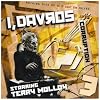
Davros is continuing his experiments to push Kaled physiology beyond its current limits and engineer a species that is adapted to life on a highly polluted Skaro. This is the moment where Davros becomes Davros: the science centre is hit by a warhead and he’s irreversibly mutated into the person we know from Doctor Who.
This was a brilliant and chilling episode, my favourite of the four. I found it interesting that at one point Davros says that “purity is show more meaningless from a scientific standpoint” or words to that effect, because the TV show gives the impression that Daleks (which Davros will have created) are obsessed with purity and have had most of their emotions engineered out, just not anger (not coding anger as an emotion is ridiculous, but that’s another story).
I did also find it mildly hilarious when Davros had his near-death experience and his mom (who had died earlier) and others who had predeceased her were talking to Davros from beyond the grave. His mom had very Yzma-from-Emperor’s-New-Groove vibes for me. This is not a bad thing. show less
Davros is continuing his experiments to push Kaled physiology beyond its current limits and engineer a species that is adapted to life on a highly polluted Skaro. This is the moment where Davros becomes Davros: the science centre is hit by a warhead and he’s irreversibly mutated into the person we know from Doctor Who.
This was a brilliant and chilling episode, my favourite of the four. I found it interesting that at one point Davros says that “purity is show more meaningless from a scientific standpoint” or words to that effect, because the TV show gives the impression that Daleks (which Davros will have created) are obsessed with purity and have had most of their emotions engineered out, just not anger (not coding anger as an emotion is ridiculous, but that’s another story).
I did also find it mildly hilarious when Davros had his near-death experience and his mom (who had died earlier) and others who had predeceased her were talking to Davros from beyond the grave. His mom had very Yzma-from-Emperor’s-New-Groove vibes for me. This is not a bad thing. show less

This is an odd book. The Doctor seems to be the one portrayed on screen by Paul McGann, but he lives on Gallifrey; the Time Lord we would call the Master is a government official called the Magistrate, and they are friends. There are hints that would indicate it's a Doctor who's settled down after a long time traveling the universe; there are also hints that indicate the tv adventures we know didn't happen. Is it a Doctor who returned home? Or one who never left? Or one who has yet to show more leave?
The real pleasure of the book is in the worldbuilding. When I was a young Doctor Who fan, I was fascinated by the Time Lords; after years of mediocre Big Finish stories about them, I've come to think that killing them off was the best thing that ever happened to them, and I'd happily go a decade without going to Gallifrey or hearing about the Matrix or transduction barriers. But Lance Parkin does a great job with the Time Lords and Gallifrey, arguably better than anyone ever. The details of how the Capitol operates, the Citadel, the relationship between the Time Lords and other Gallifreyans, the details on the technologies they possess, they're all so well done. You get an amazing sense of scale and power at the same time you see how and why a Time Lord can never actually do anything: a group of people whose power is so momentous they can never make use of it. The book is chock-full of great ideas; I loved the Needle and its inhabitants; I thought the Sontarans and the Rutan have rarely been so well depicted.
On the other hand, I did kind of wonder what the point of it all was. Why tell a story about the Doctor not leaving Gallifrey? What kind of point is this book making? I'm not quite sure. It's very epic-- but on the other hand, it feels like just another adventure in a storyworld where the Doctor lives in Gallifrey. Why tell this story in that world? What is Parkin trying to say about a Doctor who lives on Gallifrey?
I'm not sure, but I do think Parkin does a great job with the (kind of) eighth Doctor. You can hear Paul McGann saying the lines. More than that, this story does a good job of maintaining the Doctor's essential Doctorishness in a non-Doctor situation. This is the kind of thing Doctor Who writers often struggle with-- on audio, when the Doctor becomes someone else, you often wouldn't even recognize them as the Doctor except for the actor playing them. But if the Doctor did live on Gallifrey and try to work within its structures, this is how he would do it. He's playful and committed to justice and clever, and improvising so much he impresses himself; he just happens to be confined to one planet.
This book originally came out in 1998, for Doctor Who's thirty-fifth anniversary (is that really a thing?), when the television show had been off the air for nearly a decade; Big Finish wasn't even making Doctor Who audio dramas yet. There's an attempt to build up a new mythology around the character. There are hints about the Doctor's secret past, about his parents, about his past loves and losses; there's old friends we've never heard of, and new lovers. In some ways it's very like what Russell T Davies and Steven Moffat would do in the revival, but in others its very different. It adds romance and myth as they did, but it can feel a little backward-looking. Twenty years later, it feels like a bit of a dead end. I think it suffers a bit from being read out of context; it's part of something building through the novels of its era, but it's been around twenty years since I read Alien Bodies or Unnatural History or The Gallifrey Chronicles! A lot of it was lost on me. (It is fun, though, to imagine the coming doom for Gallifrey that is hinted at is the Last Great Time War against the Daleks.)
The ending is a bit sudden and definitely disappointing. But up until that point, it's always enjoyable even when it's odd. Parkin has a sense of tone that many tie-in writers don't. I might sound a little down on this novel, but I'm not really. I don't entirely get what it's trying to do, and I think some of what it's trying to do is a mistake-- but what it's trying to do is big and interesting, and pulled off fairly well, and I was almost always engaged. This is a weird side-step in more than one way, but it's a great one and well worth reading. show less
The real pleasure of the book is in the worldbuilding. When I was a young Doctor Who fan, I was fascinated by the Time Lords; after years of mediocre Big Finish stories about them, I've come to think that killing them off was the best thing that ever happened to them, and I'd happily go a decade without going to Gallifrey or hearing about the Matrix or transduction barriers. But Lance Parkin does a great job with the Time Lords and Gallifrey, arguably better than anyone ever. The details of how the Capitol operates, the Citadel, the relationship between the Time Lords and other Gallifreyans, the details on the technologies they possess, they're all so well done. You get an amazing sense of scale and power at the same time you see how and why a Time Lord can never actually do anything: a group of people whose power is so momentous they can never make use of it. The book is chock-full of great ideas; I loved the Needle and its inhabitants; I thought the Sontarans and the Rutan have rarely been so well depicted.
On the other hand, I did kind of wonder what the point of it all was. Why tell a story about the Doctor not leaving Gallifrey? What kind of point is this book making? I'm not quite sure. It's very epic-- but on the other hand, it feels like just another adventure in a storyworld where the Doctor lives in Gallifrey. Why tell this story in that world? What is Parkin trying to say about a Doctor who lives on Gallifrey?
I'm not sure, but I do think Parkin does a great job with the (kind of) eighth Doctor. You can hear Paul McGann saying the lines. More than that, this story does a good job of maintaining the Doctor's essential Doctorishness in a non-Doctor situation. This is the kind of thing Doctor Who writers often struggle with-- on audio, when the Doctor becomes someone else, you often wouldn't even recognize them as the Doctor except for the actor playing them. But if the Doctor did live on Gallifrey and try to work within its structures, this is how he would do it. He's playful and committed to justice and clever, and improvising so much he impresses himself; he just happens to be confined to one planet.
This book originally came out in 1998, for Doctor Who's thirty-fifth anniversary (is that really a thing?), when the television show had been off the air for nearly a decade; Big Finish wasn't even making Doctor Who audio dramas yet. There's an attempt to build up a new mythology around the character. There are hints about the Doctor's secret past, about his parents, about his past loves and losses; there's old friends we've never heard of, and new lovers. In some ways it's very like what Russell T Davies and Steven Moffat would do in the revival, but in others its very different. It adds romance and myth as they did, but it can feel a little backward-looking. Twenty years later, it feels like a bit of a dead end. I think it suffers a bit from being read out of context; it's part of something building through the novels of its era, but it's been around twenty years since I read Alien Bodies or Unnatural History or The Gallifrey Chronicles! A lot of it was lost on me. (It is fun, though, to imagine the coming doom for Gallifrey that is hinted at is the Last Great Time War against the Daleks.)
The ending is a bit sudden and definitely disappointing. But up until that point, it's always enjoyable even when it's odd. Parkin has a sense of tone that many tie-in writers don't. I might sound a little down on this novel, but I'm not really. I don't entirely get what it's trying to do, and I think some of what it's trying to do is a mistake-- but what it's trying to do is big and interesting, and pulled off fairly well, and I was almost always engaged. This is a weird side-step in more than one way, but it's a great one and well worth reading. show less
Lists
Awards


You May Also Like


Associated Authors
Statistics
- Works
- 49
- Also by
- 16
- Members
- 2,921
- Popularity
- #8,768
- Rating
- 3.8
- Reviews
- 53
- ISBNs
- 88
- Languages
- 4
- Favorited
- 12

