

Tat Wood
Author of About Time 1: The Unauthorized Guide to Doctor Who: Seasons 1 to 3
Series
Works by Tat Wood
About Time 5: The Unauthorized Guide to Doctor Who: Seasons 18 to 21 (2005) — Author — 123 copies, 2 reviews
About Time 4: The Unauthorized Guide to Doctor Who: Seasons 12 to 17 (2004) — Author — 115 copies, 5 reviews
About Time 6: The Unauthorized Guide to Doctor Who: Seasons 22 to 26, the TV Movie (2007) 111 copies, 2 reviews
About Time 3: The Unauthorized Guide to Doctor Who: Seasons 7 to 11 (Expanded Second Edition) (2009) 77 copies, 4 reviews
About Time 3: The Unauthorized Guide to Doctor Who: Seasons 7 to 11 (2004) — Author — 61 copies, 3 reviews
About Time 9: The Unauthorized Guide to Doctor Who (Series 4, the 2009 Specials) (About Time: The 2009 Speicals) (2019) 26 copies, 1 review
Associated Works
Time and Relative Dissertations in Space: Critical Perspectives on Doctor Who (2007) — Contributor — 48 copies, 4 reviews
Time, Unincorporated: The Doctor Who Fanzine Archives, Vol. 2: Writings on the Classic Series (2010) — Contributor — 30 copies, 1 review
In●Vision: The Greatest Show in the Galaxy (2001) — Contributor "Welcome to the Cheap Seats" — 2 copies
In●Vision: The Legacy (2003) — Contributor "What If... 1966: Huw Weldon's mum had hated the Daleks." — 1 copy
The Frame — Issue Seven (1988) — Writer "Milestones: The Caves of Androzani" and "Dorothy Who?" — 1 copy
The Frame — Issue Eleven (1989) — Writer "Cat Among the Pigeons" and "The Plan of Rassilon" — 1 copy
Tagged
Common Knowledge
- Birthdate
- 20th century
- Gender
- male
- Nationality
- UK
- Associated Place (for map)
- UK
Members
Reviews
http://nwhyte.livejournal.com/2230815.html
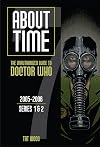
As I had hoped, this is an in depth and critical look at the first two years of New Who, the time of Rose Tyler as a regular companion. It's the seventh volume of the superlative About Time series, and it's difficult to imagine anyone producing a better survey of the period. (Phil Sandifer's book on this, when it comes out, will also be on the must-have shelf, but he is pursuing a different intellectual project and anyway his chapters are usually show more shorter.)
For each episode, as before, there are substantial sections on continuity (fitting in what we are told into what we know from other Who stories and 'real' history), analysis and the production process. This last is the biggest improvement from previous volumes; About Time 7 has practically a day-by-day breakdown of production (Eccleston's first scene, filmed on 18 July 2004, was chasing the pig down the corridor in Aliens of London; his last was on 5 March 2005, as he steps into the TARDIS in The Parting of the Ways). The sections on guest stars are consistently more informative than in previous volumes as well, probably because there are a lot more of them. The sections on popular culture sources for the stories remain as interesting as ever.
Wood is consistently upbeat about the lead actors, particularly about Billie Piper, who of course was known mainly as a teen pop singer before 2005. His snark, however, is fully unleashed for the plotting and sometimes the directing of individual episodes - the "Things That Don't Make Sense" section, which has always been an attractive feature of the AboutTime series, reaches new lengths and depths here. As he points out, although Series Two was a huge hit at the time, there's an awful lot of plot nonsense in it, and the real difference is that the series had a bigger budget than it had ever had or would ever have again.
This volume doesn't have the strongest accompanying essays of the series (for those, you want the second edition of Volume 3), but they are still satisfactory enough. Probably the two most interesting are "Was Series Two Meant To Be Like This?", which speculates about original plans for the 2006 episodes, including Stephen Fry's unmade story, and "Did He Fall Or Was He Pushed?", looking at the various accounts given of Eccleston's departure and tryng to find the overall picture - the evidence pointing to his not having firmly signed on for more than a year in the first place, and then a series of circumstances and incidents which all pushed against renewal of his contract.
Though this is Volume 7 of the ongoing About Time series of books about Doctor Who, those who started with New Who can jump in here. It is strongly hinted that Volume 8, which will cover the rest of the Tennant era, as well as Torchwood and Sarah Jane, is already written - at the rate this volume goes, about 16 pages for each episode, I suspect that may appear in two pieces - and that a projected Volume 9 will cover the Matt Smith era. Anyway, it's well worth getting, not just for Who fans but generally for fans of 21st century sf television.
Standar formatting gripe - 90 endnotes? Seriously? Why can't we have footnotes, which actually put the interesting nuggets next to the text they illuminate? show less
As I had hoped, this is an in depth and critical look at the first two years of New Who, the time of Rose Tyler as a regular companion. It's the seventh volume of the superlative About Time series, and it's difficult to imagine anyone producing a better survey of the period. (Phil Sandifer's book on this, when it comes out, will also be on the must-have shelf, but he is pursuing a different intellectual project and anyway his chapters are usually show more shorter.)
For each episode, as before, there are substantial sections on continuity (fitting in what we are told into what we know from other Who stories and 'real' history), analysis and the production process. This last is the biggest improvement from previous volumes; About Time 7 has practically a day-by-day breakdown of production (Eccleston's first scene, filmed on 18 July 2004, was chasing the pig down the corridor in Aliens of London; his last was on 5 March 2005, as he steps into the TARDIS in The Parting of the Ways). The sections on guest stars are consistently more informative than in previous volumes as well, probably because there are a lot more of them. The sections on popular culture sources for the stories remain as interesting as ever.
Wood is consistently upbeat about the lead actors, particularly about Billie Piper, who of course was known mainly as a teen pop singer before 2005. His snark, however, is fully unleashed for the plotting and sometimes the directing of individual episodes - the "Things That Don't Make Sense" section, which has always been an attractive feature of the AboutTime series, reaches new lengths and depths here. As he points out, although Series Two was a huge hit at the time, there's an awful lot of plot nonsense in it, and the real difference is that the series had a bigger budget than it had ever had or would ever have again.
This volume doesn't have the strongest accompanying essays of the series (for those, you want the second edition of Volume 3), but they are still satisfactory enough. Probably the two most interesting are "Was Series Two Meant To Be Like This?", which speculates about original plans for the 2006 episodes, including Stephen Fry's unmade story, and "Did He Fall Or Was He Pushed?", looking at the various accounts given of Eccleston's departure and tryng to find the overall picture - the evidence pointing to his not having firmly signed on for more than a year in the first place, and then a series of circumstances and incidents which all pushed against renewal of his contract.
Though this is Volume 7 of the ongoing About Time series of books about Doctor Who, those who started with New Who can jump in here. It is strongly hinted that Volume 8, which will cover the rest of the Tennant era, as well as Torchwood and Sarah Jane, is already written - at the rate this volume goes, about 16 pages for each episode, I suspect that may appear in two pieces - and that a projected Volume 9 will cover the Matt Smith era. Anyway, it's well worth getting, not just for Who fans but generally for fans of 21st century sf television.
Standar formatting gripe - 90 endnotes? Seriously? Why can't we have footnotes, which actually put the interesting nuggets next to the text they illuminate? show less
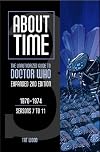
The standard response to Tat Wood's revised edition of this volume (more revised editions are due in the coming years) is that less really should have been more. I don't entirely agree, as I'm very attracted by the phrase "exhaustive". Let's be honest, if you're going to a printed book in 2022 to gain insight into an old television series, you're not doing it just to get some facts and figures. Between Wikipedia, the Blu-Rays, and the enviable array of Doctor Who websites, any casual or show more part-time fan will be more than sated. These books are an old-fashioned idea, to etch an astonishing array of facts and theories in stone, and Wood has successfully carried it out.
The sense of humour about the flawed side of the program is enjoyable, while the detailed examination of the series in light of cultural context is highly valued. For those of us who weren't there in the 1970s or are from across the seas (or both, in my case), it can be easy to forget that most episodes of the program - like most works of fiction in general - played very differently to its original intended audience, who carried with them a head full of symbols, images, social assumptions, tropes, popular culture linkages, actors' names and faces, political understandings, bromides, fairy tales, religious concepts, and attitudes, not to mention being "locked in" to a Saturday evening timeslot in the way that modern viewers to a TV program are not. I think the About Time series is the best overall work to hold one's hand through the experience of diving deep into Who.
(This review is based entirely on the first three volumes, so I cannot speak as to whether the wheels will give out when Wood reaches the oft-criticised 1980s seasons, nor whether his alleged cruelty toward the new series will be warranted.)
Of course, it's not perfect, and the flaws do matter. First of all, as others have noted, lots of little facts are not quite as factual as one would like. There is an entire thread on Gallifrey Base devoted to this, exposing what are mostly minor niggles (surnames of historical figures misspelled, dates slightly incorrect) but do sometimes extend to historical situations being misinterpreted or misrepresented, which is a problem given the book's schoolmasterly tone. Second, could we acknowledge that occasionally the dives go too deep? Sure. There may be one too many footnotes, and one's eyes roll automatically when the footnote is merely explaining a joke made by Wood rather than relating anything to the program. Third, it’s clear that Wood owes a debt to that pioneering 1990s volume on the subject, The Discontinuity Guide, and adopts something of its tone in the intro to each serial. But whereas that volume was written at a time when many fans were unable to see every story, this is the era of streaming and home media (and easy piracy). The entry on “Inferno”, for example, rather beguilingly reads as if it were made for someone who has know hope of seeing the program. I’d like to know of even one reader who decided, in this modern age, that the book was all they needed!
And fourth, yes, it must be said: "schoolmasterly" is how I described the tone, but others might go for "snotty". Whether lecturing us on the music of Stockhausen or the relationship between Wales and its parent, the United Kingdom, Wood has chosen to approach this book like an expert introducing new immigrants to a culture. Often that's welcomed, as I mentioned earlier, when it places the program into its context. But by the time he's explaining what "beans on toast" are (thanks, Tat!), it's a tad dispiriting. Yes, my American partner wouldn't understand baked beans, but in this situation it is a thoroughly unnecessary interjection designed to make English culture sound like something thrillingly esoteric. It makes for a discombobulating experience, as he clearly wants to write for both ignorant millennials like myself and interested armchair Who scholars of his own generation. Sometimes, thus, he leans toward the "this funny thing happened in 1971 and, no, I'm not lying!" while other times he casually mentions multiple television programs or bands with the expectation they'll be familiar to us. It's an uneven mix that comes from his desire to write a book that is all things for all people, which perhaps also explains its length.
Those are not complaints, just honest criticisms. I'm having great fun revisiting the series in its entirety for the first time since I discovered it back in the late 2000s; it's a privilege to have Wood by my side... even if I'm reminded sometimes of how my partner's eyes glaze over when I rabbit on about the exact order of Shakespeare's plays. This book replicates the feeling of having an excessively nerdy friend tie you to a chair and not let you leave until you've listened to his entire PhD in one hit. Indeed, my relationship with Wood is rather how I imagine the Doctor felt about K-9: it's exceptionally nice to have you here, I appreciate what you bring to the team, and I couldn't survive without you. But when you're not required, please go back in the cupboard. There's a good dog. show less
The sense of humour about the flawed side of the program is enjoyable, while the detailed examination of the series in light of cultural context is highly valued. For those of us who weren't there in the 1970s or are from across the seas (or both, in my case), it can be easy to forget that most episodes of the program - like most works of fiction in general - played very differently to its original intended audience, who carried with them a head full of symbols, images, social assumptions, tropes, popular culture linkages, actors' names and faces, political understandings, bromides, fairy tales, religious concepts, and attitudes, not to mention being "locked in" to a Saturday evening timeslot in the way that modern viewers to a TV program are not. I think the About Time series is the best overall work to hold one's hand through the experience of diving deep into Who.
(This review is based entirely on the first three volumes, so I cannot speak as to whether the wheels will give out when Wood reaches the oft-criticised 1980s seasons, nor whether his alleged cruelty toward the new series will be warranted.)
Of course, it's not perfect, and the flaws do matter. First of all, as others have noted, lots of little facts are not quite as factual as one would like. There is an entire thread on Gallifrey Base devoted to this, exposing what are mostly minor niggles (surnames of historical figures misspelled, dates slightly incorrect) but do sometimes extend to historical situations being misinterpreted or misrepresented, which is a problem given the book's schoolmasterly tone. Second, could we acknowledge that occasionally the dives go too deep? Sure. There may be one too many footnotes, and one's eyes roll automatically when the footnote is merely explaining a joke made by Wood rather than relating anything to the program. Third, it’s clear that Wood owes a debt to that pioneering 1990s volume on the subject, The Discontinuity Guide, and adopts something of its tone in the intro to each serial. But whereas that volume was written at a time when many fans were unable to see every story, this is the era of streaming and home media (and easy piracy). The entry on “Inferno”, for example, rather beguilingly reads as if it were made for someone who has know hope of seeing the program. I’d like to know of even one reader who decided, in this modern age, that the book was all they needed!
And fourth, yes, it must be said: "schoolmasterly" is how I described the tone, but others might go for "snotty". Whether lecturing us on the music of Stockhausen or the relationship between Wales and its parent, the United Kingdom, Wood has chosen to approach this book like an expert introducing new immigrants to a culture. Often that's welcomed, as I mentioned earlier, when it places the program into its context. But by the time he's explaining what "beans on toast" are (thanks, Tat!), it's a tad dispiriting. Yes, my American partner wouldn't understand baked beans, but in this situation it is a thoroughly unnecessary interjection designed to make English culture sound like something thrillingly esoteric. It makes for a discombobulating experience, as he clearly wants to write for both ignorant millennials like myself and interested armchair Who scholars of his own generation. Sometimes, thus, he leans toward the "this funny thing happened in 1971 and, no, I'm not lying!" while other times he casually mentions multiple television programs or bands with the expectation they'll be familiar to us. It's an uneven mix that comes from his desire to write a book that is all things for all people, which perhaps also explains its length.
Those are not complaints, just honest criticisms. I'm having great fun revisiting the series in its entirety for the first time since I discovered it back in the late 2000s; it's a privilege to have Wood by my side... even if I'm reminded sometimes of how my partner's eyes glaze over when I rabbit on about the exact order of Shakespeare's plays. This book replicates the feeling of having an excessively nerdy friend tie you to a chair and not let you leave until you've listened to his entire PhD in one hit. Indeed, my relationship with Wood is rather how I imagine the Doctor felt about K-9: it's exceptionally nice to have you here, I appreciate what you bring to the team, and I couldn't survive without you. But when you're not required, please go back in the cupboard. There's a good dog. show less
http://nhw.livejournal.com/809156.html
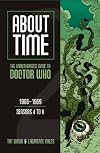
This series is a wonderful cornucopia of facts and analysis of the early years of everyone's favourite Time Lord. I think the second volume, dealing with the last two William Hartnell stories and the Patrick Troughton era, actually exceeds the high standard set by the first volume. Again, we have the exhaustive picking apart of each story looking for its sources of inspiration, broken up by substantive essays on more-or-less relevant topics - the one show more near the end, "Does Plot Matter", has considerable analytical depth and genre-wide interest - I hope someone (like perhaps Strange Horizons?) might consider approaching the authors to put it on-line for general information.
Lots of things I loved about this book. The vicious wit with which the authors savage any aspects of their favourite series that they disapprove of. (The chapter on every single story has a section devoted to Things That Don't Make Sense. Sometimes these sections are long, and sometimes they are longer.) Wood and Miles seem to particularly enjoy being able to argue at forty years' distance with Innes Lloyd, who was producer of the programme for much of this time, on the grounds that he betrayed the original Verity Lambert concept. Lloyd has been dead since 1991 and so can't argue back. But the tone is witty rather than polemical and myself I think a more balanced view of Lloyd's achievements emerges from these pages despite the authors' efforts.
Two minor mysteries that had troubled me in the last few months are explained: i) Colin Baker's narration of The Macra Terror is terrible not because Colin Baker is reading it but because John Nathan Turner wrote it; ii) Ian Marter's novelisation of The Enemy of the World is incomprehensible because the publisher slashed large chunks out of it to bring it down to the right page count. There is learned discussion of i) whose accent is the worst in the entire history of Doctor Who, ii) whether or not anyone in the TARDIS (Doctor excepted) ever had sex, and iii) the possible alchemical significance of mercury in the works of David Whitaker. There is constant mockery of Victoria. And there is a very thoughtful piece on why The Power of the Daleks is such a good story. I read it all except the chapter on The Mind Robber, because the authors insist very strongly that you should see it in all its glory first.
(One small nit-pick - The Third Man is set in Vienna, not Berlin, which was divided into four parts, not three. But this is tangential to its likely influence on The Invasion.)
I cannot imagine that future volumes in this series can possibly be as good as this one - but I shall buy them anyway. show less
This series is a wonderful cornucopia of facts and analysis of the early years of everyone's favourite Time Lord. I think the second volume, dealing with the last two William Hartnell stories and the Patrick Troughton era, actually exceeds the high standard set by the first volume. Again, we have the exhaustive picking apart of each story looking for its sources of inspiration, broken up by substantive essays on more-or-less relevant topics - the one show more near the end, "Does Plot Matter", has considerable analytical depth and genre-wide interest - I hope someone (like perhaps Strange Horizons?) might consider approaching the authors to put it on-line for general information.
Lots of things I loved about this book. The vicious wit with which the authors savage any aspects of their favourite series that they disapprove of. (The chapter on every single story has a section devoted to Things That Don't Make Sense. Sometimes these sections are long, and sometimes they are longer.) Wood and Miles seem to particularly enjoy being able to argue at forty years' distance with Innes Lloyd, who was producer of the programme for much of this time, on the grounds that he betrayed the original Verity Lambert concept. Lloyd has been dead since 1991 and so can't argue back. But the tone is witty rather than polemical and myself I think a more balanced view of Lloyd's achievements emerges from these pages despite the authors' efforts.
Two minor mysteries that had troubled me in the last few months are explained: i) Colin Baker's narration of The Macra Terror is terrible not because Colin Baker is reading it but because John Nathan Turner wrote it; ii) Ian Marter's novelisation of The Enemy of the World is incomprehensible because the publisher slashed large chunks out of it to bring it down to the right page count. There is learned discussion of i) whose accent is the worst in the entire history of Doctor Who, ii) whether or not anyone in the TARDIS (Doctor excepted) ever had sex, and iii) the possible alchemical significance of mercury in the works of David Whitaker. There is constant mockery of Victoria. And there is a very thoughtful piece on why The Power of the Daleks is such a good story. I read it all except the chapter on The Mind Robber, because the authors insist very strongly that you should see it in all its glory first.
(One small nit-pick - The Third Man is set in Vienna, not Berlin, which was divided into four parts, not three. But this is tangential to its likely influence on The Invasion.)
I cannot imagine that future volumes in this series can possibly be as good as this one - but I shall buy them anyway. show less
https://fromtheheartofeurope.eu/about-time-9-by-tat-wood-and-dorothy-ail/
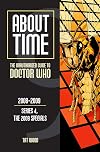
Latest in the magisterial set of books about Doctor Who (I have previously read volumes 1, 2, 3, 3 (revised), 4, 5, 6, 7 and 8), this covers Series 4 of New Who, the season with the Tenth Doctor and Donna, and also the 2009 special, with a side order of the Proms concert Music of the Spheres, The Wedding of Sarah Jane Smith and the animated Dreamland story. This actually came out in 2019, but I only got it in August, show more and with David Tennant and Donna Noble about to return to our screens, it’s a timely read.
As usual, there is lovely detailed analysis of each story, including all the sections familiar from past volumes plus a new one, “English Lessons”, explaining cultural allusions which may not be as clear to the non-UKanian reader. None of these stories has yet been covered by the Black Archives, so you can’t really compare and contrast, but I feel comfortable that the two series are doing different things and both doing them well. In particular, the chapters on Silence in the Library / Forest of the Dead, Midnight and The End of Time were very good.
I’m sorry to say that I did not feel the same way about the sidebar essays accompanying the analysis of each story. There are two standout pieces in the middle of the book, one on the history of the online spinoffs of the show, and one asking “Why Can’t Anyone Just Die?” in the Moffat version of the show, a valid question answered in forensic detail. But in general the companion essays seemed to me a notch or two below the very high standards set in previous volumes, most of them dedicated to exploring obscure rabbit-holes of continuity which I find it difficult to care about.
However, it’s comprehensive on the actual episodes, and the Black Archives you would get for the same price would cover a fraction of the material. So I would still recommend it to the analytical fan, just not as highly as some of the earlier volumes. show less
Latest in the magisterial set of books about Doctor Who (I have previously read volumes 1, 2, 3, 3 (revised), 4, 5, 6, 7 and 8), this covers Series 4 of New Who, the season with the Tenth Doctor and Donna, and also the 2009 special, with a side order of the Proms concert Music of the Spheres, The Wedding of Sarah Jane Smith and the animated Dreamland story. This actually came out in 2019, but I only got it in August, show more and with David Tennant and Donna Noble about to return to our screens, it’s a timely read.
As usual, there is lovely detailed analysis of each story, including all the sections familiar from past volumes plus a new one, “English Lessons”, explaining cultural allusions which may not be as clear to the non-UKanian reader. None of these stories has yet been covered by the Black Archives, so you can’t really compare and contrast, but I feel comfortable that the two series are doing different things and both doing them well. In particular, the chapters on Silence in the Library / Forest of the Dead, Midnight and The End of Time were very good.
I’m sorry to say that I did not feel the same way about the sidebar essays accompanying the analysis of each story. There are two standout pieces in the middle of the book, one on the history of the online spinoffs of the show, and one asking “Why Can’t Anyone Just Die?” in the Moffat version of the show, a valid question answered in forensic detail. But in general the companion essays seemed to me a notch or two below the very high standards set in previous volumes, most of them dedicated to exploring obscure rabbit-holes of continuity which I find it difficult to care about.
However, it’s comprehensive on the actual episodes, and the Black Archives you would get for the same price would cover a fraction of the material. So I would still recommend it to the analytical fan, just not as highly as some of the earlier volumes. show less
You May Also Like


Associated Authors
Statistics
- Works
- 13
- Also by
- 17
- Members
- 932
- Popularity
- #27,550
- Rating
- 4.3
- Reviews
- 30
- ISBNs
- 23