
Peter Haining (1940–2007)
Author of Wizards of Odd
About the Author
Series
Works by Peter Haining
The Sherlock Holmes Scrapbook: Fifty years of occasional articles, newspaper cuttings, letters, memoirs, anecdotes, pictures, photographs and drawings relating to the great… (1973) — Editor — 264 copies, 2 reviews
Murder on the Menu: Cordon Bleu Stories of Crime and Mystery, Volume 1 (1984) — Editor — 213 copies, 2 reviews
The Leprechaun's Kingdom: The World of Banshees, Fairies, Demons, Giants, Monsters, Mermaids, Phoukas, Vampires, Werewolves, Witches, and Many Others (1979) 109 copies
Great British Tales of Terror: Gothic Stories of Horror and Romance 1765-1840 (1972) — Editor — 86 copies
Weird Tales : a selection in facsimile, of the best from the world's most famous fantasy magazine (1976) — Editor — 82 copies
Great Tales of Terror from Europe and America: Gothic Stories of Horror and Romance 1765-1840 (1972) — Editor — 77 copies
Time Travelers: Fiction in the Fourth Dimension (1997) — Editor & Introduction — 69 copies, 3 reviews
The Secret History of Cults: Bizarre Rituals and Murderous Practices Revealed (2009) 41 copies, 1 review
The Golden Age of Crime Fiction: The Authors, the Artists and Their Creations from 1920 to 1950 (2013) 31 copies
Weird Tales: A Facsimile of the World's Most Famous Fantasy Magazine: v. 1 (1978) — Editor — 29 copies
The Gentlewomen of Evil: An Anthology of Rare Supernatural Stories from the Pens of Victorian Ladies (1967) — Editor — 29 copies
A Circle of Witches: An Anthology of Victorian Witchcraft Stories (1971) — Editor — 28 copies, 1 review
Where the Eagle Landed: The Mystery of the German Invasion of Britain, 1940 (World War II Stories) (2004) 21 copies, 2 reviews
The Jail that Went to Sea: An Untold Story of the Battle of the Atlantic, 194142 (World War II Stories) (2003) 20 copies
The Banzai Hunters: The Forgotten Armada of Little Ships That Defeated the Japanese, 1944-45 (World War II Stories) (2006) 19 copies
The Edgar Allan Poe scrapbook: Articles, essays, letters, anecdotes, illustrations, photographs, and memorabilia about the legendary American genius (1977) — Editor — 18 copies
The Spitfire Log: A 50th Anniversary Tribute to the World's Most Famous Fighter Plane (1985) 17 copies, 1 review
The Chianti Raiders: The Extraordinary Story of the Italian Air Force in the Battle of Britain (2005) 14 copies
The Mystery of Rommel's Gold: The Search for the Legendary Nazi Treasure (World War II Stories Series) (2004) 14 copies
The Complete Maigret: From Simenon's Original Novels to Granada's Much Acclaimed TV Series (1993) 13 copies
The Witchcraft Papers: Contemporary Records of the Witchcraft Hysteria in Essex, 1560-1700 (1974) 13 copies
The Flying Bomb War: Contemporary Eyewitness Accounts of the German V1 and V2 Raids on Britain 1942-1945 (2002) 6 copies
Hashish Club: Anthology of Drug Literature: The Psychedelic Era from Huxley to Lennon v. 2 (1975) 5 copies
Mords- Cocktails. Sonderausgabe. Die hinterhältigsten Giftmorde der Krimi- Weltliteratur (1996) 3 copies
Alfred Hitchcock : Anyone for Murder 2 copies
The Hashish Club : an anthology of drug literature: Volume One: The Founding of the Modern tradition: From Coleridge to Crowley (1975) 2 copies
The gentlewomen of evil: An anthology of rare supernatural stories from the pens of Victorian ladies (1967) 2 copies
Los Satánicos 2 copies
Marsbound 1 copy
The Wild Night Company 1 copy
The H.G. Wells Scrapbook 1 copy
Book of Learned Nonsense 1 copy
Beyond The Curtain Of Dark 1 copy
A Figment in Time 1 copy
Chronology For 1900–2000 1 copy
Millemondi Inverno 1998: La macchina che uccide — Editor — 1 copy
Ghouls, The 1 copy
DETOURS DANS LES TENEBRES 1 copy
Phantoms Of The World 1 copy
Cults (Evil) 1 copy
Magia negra e feiticaria 1 copy
The midnight penthouse 1 copy
The Theories Of The Experts 1 copy
Associated Works
The Final Adventures of Sherlock Holmes (His Last Bow + The Valley of Fear + The Case-Book of Sherlock Holmes) (1981) — Editor — 634 copies, 5 reviews
The Complete Ghost Stories of Charles Dickens (1982) — Editor, some editions — 414 copies, 6 reviews
Tagged
Common Knowledge
- Legal name
- Haining, Peter Alexander
- Other names
- Alexander, Ric
Peyton, Richard
Pattrick, William
Richards, Sean - Birthdate
- 1940-04-02
- Date of death
- 2007-11-19
- Gender
- male
- Occupations
- journalist
anthologist
publishing
author - Awards and honors
- British Fantasy Society, Karl Edward Wagner Award (2001)
- Short biography
- Peter Alexander Haining was a British journalist, author and anthologist who lived and worked in Suffolk. Born in Enfield, Middlesex, he began his career as a reporter in Essex and then moved to London where he worked on a trade magazine before joining the publishing house of New English Library. Haining achieved the position of Editorial Director before becoming a full time writer in the early Seventies.
- Nationality
- UK
- Birthplace
- Enfield, Middlesex, England, UK
- Places of residence
- Suffolk, England, UK
London, Middlesex, England, UK - Place of death
- Boxford, Suffolk, England, UK
- Map Location
- England, UK
Members
Reviews

This is one of my favorite collections of stories of this kind. In it is Montague Summers' "The Grimoire", his only piece of fiction, offering delights of bibliomania and demonology; also Ambrose Bierce's piece on dreams, "Visions of the Night", in which he recounts a dream which prefigures Arthur Machen's capture of evil as that which goes against Nature ("evil is when flowers sing"), but also inspires a cynic's amusement. The Crowley story is among the most effective horror tales I have show more ever read - reminding me of aspects of the Tibetan Book of the Dead. "The Shifting Growth", written by John Gawsworth (Juan I) and Edgar Jepson, shares affinity with Crowley's tale, and is, well, uncommonly disturbing (as well as uncommonly anthologized). Acquire, enjoy, and wind through the labyrinth where you're led (to be lost). show less

A review I read nearly forty years ago of Peter Dickinson's The Flight of Dragons mentioned how the author used scholasticism, biology and chemistry "to prove how dragons could have physically existed, breathed fire, and flown." This put me in mind of a discussion of dragon legends in the Quantock Hills of Somerset where, of at least nine dragons mentioned, only one breathed fire: the dragon of Kingston St Mary. Peter Haining's The Man Who Was Frankenstein suggested to me why this might be show more so.
A couple of miles north of Kingston, near the highest point on the Quantocks, once stood Fyne Court in the village of Broomfield. The best known of the owners of Fyne Court was Andrew Crosse (1784-1855) whose epitaph in St Mary's church reads The Electrician ... He was Humble Towards God and Kind to His Fellow Creatures.
Other names were more colourful: the Wizard of the Quantocks, the Thunder & Lightning Man. What Crosse did was to convey atmospheric electricity along one-and-a-quarter miles of insulated copper wires strung from trees and poles to his laboratory. When the electricity was discharged from his batteries the reports could be "as loud as those of a cannon" and "the stream of fire ... too vivid to look on for any length of time". Might not the memory of this early experimenter in electricity have added the description "fire-breathing" to the dragon legend closest to Broomfield?¹
Hesiod's Theogony told various legends of the Titan Prometheus who created man from clay, stole fire from Hephaestus' forge and stored it in a rod (a fire-drill perhaps), and was bound to a rock and tortured for his pains. Millennia later Percy Bysshe Shelley, author of Prometheus Unbound, and Mary Godwin (later Mary Shelley) were present in 1814 at Andrew Crosse's only London lecture. Haining believes that Mary's impressions of the lecturer contributed significantly to her chief claim to literary fame, Frankenstein, which was subtitled The Modern Prometheus: hence the title of Haining's book.
And then, in an almost incredible episode of nature imitating art, Andrew Cross appeared, like Victor Frankenstein, to create life itself, in 1837, twenty years after Mary Shelley's book first appeared. Crosse was trying to form artificial minerals by the action of electricity on fluids but during the course of repeated experiments produced six- and eight-legged 'insects' of the genus acarus, reputedly confirmed in independent parallel experiments by no less a person than Faraday (though there is no evidence to support this).
Like a real-life Frankenstein, Crosse was vilified as a blasphemer and atheist, which distressed him greatly, but the mystery has not really been satisfactorily explained.²
________
¹ It's probable, however, that the fire-breathing dragon legend predated Andrew Crosse's lifetime, as a dragon is carved on one of the medieval bench ends of nearby Crowcombe church. However, all the accounts of the Kingston St Mary dragon appear to date from the 20th century: Vince Russett, 'The Dragons of Quantock' in Picwinnard, the magazine of Wessex leys and folklore 8, February 1979
² It's argued that cheese-mites or dust-mites had contaminated Crosse's experiments
This review, now slightly revised, first appeared in The Journal of the Pendragon Society Vol XIII No 3, Summer 1980. It forms part of a short series celebrating the bicentenary of Mary Shelley's Frankenstein, first published 1818.
https://wp.me/s2oNj1-crosse show less
A couple of miles north of Kingston, near the highest point on the Quantocks, once stood Fyne Court in the village of Broomfield. The best known of the owners of Fyne Court was Andrew Crosse (1784-1855) whose epitaph in St Mary's church reads The Electrician ... He was Humble Towards God and Kind to His Fellow Creatures.
Other names were more colourful: the Wizard of the Quantocks, the Thunder & Lightning Man. What Crosse did was to convey atmospheric electricity along one-and-a-quarter miles of insulated copper wires strung from trees and poles to his laboratory. When the electricity was discharged from his batteries the reports could be "as loud as those of a cannon" and "the stream of fire ... too vivid to look on for any length of time". Might not the memory of this early experimenter in electricity have added the description "fire-breathing" to the dragon legend closest to Broomfield?¹
Hesiod's Theogony told various legends of the Titan Prometheus who created man from clay, stole fire from Hephaestus' forge and stored it in a rod (a fire-drill perhaps), and was bound to a rock and tortured for his pains. Millennia later Percy Bysshe Shelley, author of Prometheus Unbound, and Mary Godwin (later Mary Shelley) were present in 1814 at Andrew Crosse's only London lecture. Haining believes that Mary's impressions of the lecturer contributed significantly to her chief claim to literary fame, Frankenstein, which was subtitled The Modern Prometheus: hence the title of Haining's book.
And then, in an almost incredible episode of nature imitating art, Andrew Cross appeared, like Victor Frankenstein, to create life itself, in 1837, twenty years after Mary Shelley's book first appeared. Crosse was trying to form artificial minerals by the action of electricity on fluids but during the course of repeated experiments produced six- and eight-legged 'insects' of the genus acarus, reputedly confirmed in independent parallel experiments by no less a person than Faraday (though there is no evidence to support this).
Like a real-life Frankenstein, Crosse was vilified as a blasphemer and atheist, which distressed him greatly, but the mystery has not really been satisfactorily explained.²
________
¹ It's probable, however, that the fire-breathing dragon legend predated Andrew Crosse's lifetime, as a dragon is carved on one of the medieval bench ends of nearby Crowcombe church. However, all the accounts of the Kingston St Mary dragon appear to date from the 20th century: Vince Russett, 'The Dragons of Quantock' in Picwinnard, the magazine of Wessex leys and folklore 8, February 1979
² It's argued that cheese-mites or dust-mites had contaminated Crosse's experiments
This review, now slightly revised, first appeared in The Journal of the Pendragon Society Vol XIII No 3, Summer 1980. It forms part of a short series celebrating the bicentenary of Mary Shelley's Frankenstein, first published 1818.
https://wp.me/s2oNj1-crosse show less
Thank God I only read one of Peter Haining's anthologies. The mediocre stories here put me off seeking out any more of his editorial efforts.
If this wasn't already enough reason to avoid him, it has come to light in later years that Haining was an unrepentant plagiarizer, fabricator, and just plain liar. He would scavenge obscure pulp fare, rewrite it, and try to pass it off as the product another obscure but more desirable author. He would provide bogus references for the stories that were show more harder to investigate in the good ol' days. He edited texts without any acknowledgement, "borrowed" stories without attribution (or deliberately incorrect attribution), and generally did what he wanted while compiling his little anthologies.
Wonder why his anthologies are so mediocre? Besides cramming them with second rate real stories, He wasn't a particularly gifted writer even when trying to dress up third class fare. A pig with lipstick still looks like a pig!
Check out Douglas A. Anderson's entries in the "Wormwoodiana" blog for more interesting research about Mr. Haining. show less
If this wasn't already enough reason to avoid him, it has come to light in later years that Haining was an unrepentant plagiarizer, fabricator, and just plain liar. He would scavenge obscure pulp fare, rewrite it, and try to pass it off as the product another obscure but more desirable author. He would provide bogus references for the stories that were show more harder to investigate in the good ol' days. He edited texts without any acknowledgement, "borrowed" stories without attribution (or deliberately incorrect attribution), and generally did what he wanted while compiling his little anthologies.
Wonder why his anthologies are so mediocre? Besides cramming them with second rate real stories, He wasn't a particularly gifted writer even when trying to dress up third class fare. A pig with lipstick still looks like a pig!
Check out Douglas A. Anderson's entries in the "Wormwoodiana" blog for more interesting research about Mr. Haining. show less
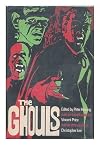
Terrific collection of stories on which various classic horror films were based. Well-known fare such as Bram Stoker's "Dracula's Guest" and Robert Louis Stevenson's "The Body Snatcher" is nicely balanced with more obscure items like Francis Mann's "The Devil in a Convent" (an early twentieth century retelling of a medieval legend) and Nikolai Gogol's "The Viy" (from which Mario Bava freely adapted his film Black Sunday). There's also a skillful abridgement of Gaston Leroux's The Phantom of show more the Opera, which packs considerably greater punch as a sixty-odd-page novella than in its original novel-length form. My only quibble is with editor Peter Haining's decision to identify the stories by the titles of the films on which they were based: e.g., Stoker's story is listed in the table of contents as "Dracula's Daughter," not "Dracula's Guest." In some cases the story and movie titles were the same, but H.P. Lovecraft's "The Colour Out of Space" appears here as "Monster of Terror"...which is doubly confusing for American readers, since the film based on the Lovecraft tale was entitled Die, Monster, Die! in the United States. (Monster of Terror was the film's British title.)
The introduction by Vincent Price and afterword by Christopher Lee add to the fun, as do photographs from all but three of the films. There's one particularly rare still from the lost 1909 film Lunatics in Power, which was based on Edgar Allan Poe's story "The System of Doctor Tarr and Professor Fether." (Usually credited to Thomas Edison, the film was a production of the Edison Manufacturing Company, but actually was directed by J. Searle Dawley.) show less
The introduction by Vincent Price and afterword by Christopher Lee add to the fun, as do photographs from all but three of the films. There's one particularly rare still from the lost 1909 film Lunatics in Power, which was based on Edgar Allan Poe's story "The System of Doctor Tarr and Professor Fether." (Usually credited to Thomas Edison, the film was a production of the Edison Manufacturing Company, but actually was directed by J. Searle Dawley.) show less
Lists
Awards


You May Also Like


Associated Authors
Statistics
- Works
- 301
- Also by
- 13
- Members
- 10,311
- Popularity
- #2,304
- Rating
- 3.7
- Reviews
- 105
- ISBNs
- 652
- Languages
- 17
- Favorited
- 10