
Bill Strutton (1923–2003)
Author of Doctor Who and the Zarbi
About the Author
Image credit: On Target
Works by Bill Strutton
The Lair of the Zarbi 1 copy
Associated Works
Tagged
Common Knowledge
- Legal name
- Strutton, William Harold
- Birthdate
- 1923-02-23
- Date of death
- 2003-11-23
- Gender
- male
- Short biography
- The first Doctor Who episode writer to also write a novelisation of his work.
- Nationality
- UK
- Birthplace
- Moonta, South Australia, Australia
- Place of death
- Catalonia, Spain
- Associated Place (for map)
- Moonta, South Australia, Australia
Members
Reviews

The interesting thing about reading these first Doctor novelisations in publication order is that it encourages you not to think about them as installments in a series of books designed to novelise every Doctor Who story—this wouldn't be the case, of course, until they were reissued in 1973. Instead, just as Doctor Who in an exciting adventure with the Daleks (1964) was the only Doctor Who book, Doctor Who and the Zarbi (the novelisation of 1965's The Web Planet) is the second one.
If you show more think of it that way, you spend your time reading it not thinking of it as "yet another tie-in" but "the second book"—and thus you spend your time comparing it to The Daleks. I had never really thought of The Web Planet is comparison to The Daleks before, but they're actually quite similar. This makes sense, because as I understand it, the production team was trying to recapture the success of the earlier serial. The Web Planet isn't really anything like what we now think of as a "Dalek story," though, so this might be hard for a modern viewer to notice.
But it is like The Daleks, and reading it right after the previous novel brings that out in a way that wasn't true when I watched The Web Planet on VHS. Like The Daleks, The Zarbi begins with a long extended sequence of the TARDIS crew (or, rather, Tardis crew) exploring a seemingly deserted planet. Like The Daleks, The Zarbi features dangerous bodies of water! Like The Daleks, The Zarbi features two opposing forces on this planet that have been in conflict a long time. Like The Daleks, The Zarbi is interested in evolution and devolution; just as The Daleks focused on how the Daleks and Thals has changed over time, a key part of The Zarbi is the discovery of how the Menoptera left behind in subterranean Vortis have devolved into a different species. Like The Daleks, The Zarbi is often at its best when focusing on the alienness of the planet and the titular species. Like the Daleks, the Zarbi are dependent on some kind of centralized force that gets neutralized by the TARDIS crew. Like The Daleks, The Zarbi ends with a promise of a new age on its planet, as the planet is reclaimed by the "proper" species.
Now, the Zarbi did not take off like the Daleks did, clearly, but I hadn't realized how much work they were definitely putting into recreating the previous story—but also amplifying it. The Zarbi are weirder than the Daleks in some ways, and unlike the Thals, the friendly alien species is also obviously inhuman.
Though while The Daleks tried to pretend there were no other Doctor Who stories than it, to the extent of ignoring the entire television programme, The Zarbi does retain explicit references to tv serials, including The Rescue and The Romans; it may be the second book but not the second story. I haven't seen the tv story in two decades, so I can't comment much on specific changes, but I did notice that while on tv the "astral map" is a little device on wheels the Doctor pulls out of the TARDIS to show the Zarbi, Strutton actually renders it here as one-sixth of the TARDIS console, which can be detached! And, infamously, the narrative pretty consistently calls its main character "Doctor Who" (and it's also used at least once in dialogue that I noticed).
All that said, while the alien element comes through fairly well, I found The Zarbi otherwise an inferior experience to The Daleks. Bill Strutton doesn't have David Whitaker's interest in characterization; The Daleks gave us a strong sense of Ian's voice, and subplots about Ian's relationships with the Doctor and Barbara, but here we mostly just have dialogue that you have to imagine being brought to life by the actors. The characters do clever things (even Vicki, who at first I thought Strutton was neglecting), but we don't get that novelistic access to their thoughts. And my guess is (I don't remember my VHS copy of The Web Planet very well) that the alien Voice controlling the Zarbi probably comes through as more interesting on screen than in prose.
I've been reading the modern reprints of the Targets when available... unfortunately the Amazon seller I bought this from sent me a 1981 printing of the 1973 edition, rather than the 2016 reprint I actually ordered. (They did refund my money when I complained.) I did really like the pictures by John Wood, though; simple stuff, perhaps, but he takes the visuals of the television version and amplifies them by drawing them as they ought to have been, not as they were. Unlike Schwartzman's illustrations for The Daleks, he picks visually striking moments that capture the weirdness of the text. show less
If you show more think of it that way, you spend your time reading it not thinking of it as "yet another tie-in" but "the second book"—and thus you spend your time comparing it to The Daleks. I had never really thought of The Web Planet is comparison to The Daleks before, but they're actually quite similar. This makes sense, because as I understand it, the production team was trying to recapture the success of the earlier serial. The Web Planet isn't really anything like what we now think of as a "Dalek story," though, so this might be hard for a modern viewer to notice.
But it is like The Daleks, and reading it right after the previous novel brings that out in a way that wasn't true when I watched The Web Planet on VHS. Like The Daleks, The Zarbi begins with a long extended sequence of the TARDIS crew (or, rather, Tardis crew) exploring a seemingly deserted planet. Like The Daleks, The Zarbi features dangerous bodies of water! Like The Daleks, The Zarbi features two opposing forces on this planet that have been in conflict a long time. Like The Daleks, The Zarbi is interested in evolution and devolution; just as The Daleks focused on how the Daleks and Thals has changed over time, a key part of The Zarbi is the discovery of how the Menoptera left behind in subterranean Vortis have devolved into a different species. Like The Daleks, The Zarbi is often at its best when focusing on the alienness of the planet and the titular species. Like the Daleks, the Zarbi are dependent on some kind of centralized force that gets neutralized by the TARDIS crew. Like The Daleks, The Zarbi ends with a promise of a new age on its planet, as the planet is reclaimed by the "proper" species.
Now, the Zarbi did not take off like the Daleks did, clearly, but I hadn't realized how much work they were definitely putting into recreating the previous story—but also amplifying it. The Zarbi are weirder than the Daleks in some ways, and unlike the Thals, the friendly alien species is also obviously inhuman.
Though while The Daleks tried to pretend there were no other Doctor Who stories than it, to the extent of ignoring the entire television programme, The Zarbi does retain explicit references to tv serials, including The Rescue and The Romans; it may be the second book but not the second story. I haven't seen the tv story in two decades, so I can't comment much on specific changes, but I did notice that while on tv the "astral map" is a little device on wheels the Doctor pulls out of the TARDIS to show the Zarbi, Strutton actually renders it here as one-sixth of the TARDIS console, which can be detached! And, infamously, the narrative pretty consistently calls its main character "Doctor Who" (and it's also used at least once in dialogue that I noticed).
All that said, while the alien element comes through fairly well, I found The Zarbi otherwise an inferior experience to The Daleks. Bill Strutton doesn't have David Whitaker's interest in characterization; The Daleks gave us a strong sense of Ian's voice, and subplots about Ian's relationships with the Doctor and Barbara, but here we mostly just have dialogue that you have to imagine being brought to life by the actors. The characters do clever things (even Vicki, who at first I thought Strutton was neglecting), but we don't get that novelistic access to their thoughts. And my guess is (I don't remember my VHS copy of The Web Planet very well) that the alien Voice controlling the Zarbi probably comes through as more interesting on screen than in prose.
I've been reading the modern reprints of the Targets when available... unfortunately the Amazon seller I bought this from sent me a 1981 printing of the 1973 edition, rather than the 2016 reprint I actually ordered. (They did refund my money when I complained.) I did really like the pictures by John Wood, though; simple stuff, perhaps, but he takes the visuals of the television version and amplifies them by drawing them as they ought to have been, not as they were. Unlike Schwartzman's illustrations for The Daleks, he picks visually striking moments that capture the weirdness of the text. show less
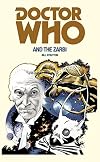
This was one of the very first novelisations of a Doctor Who story, published soon after its original broadcast in 1965. I have always regarded this story as a brave experiment that didn't quite come off, given its attempt to create an insect-based alien culture in a relatively cramped TV studio with minimal budget for special effects. Given these constraints, it works well and does convey a genuine alien culture. I have started rewatching this story alongside rereading the novelisation, and show more am revaluating them both. This book pretty much sticks to the TV script with a few changes of character and creature names. The Doctor is jarringly referred to in the narrative, and once even in direct speech, as Doctor Who. There are some nice line drawings, a feature of the early novelisations that was soon dropped; it wouldn't matter now, but back then this would be the only visual record a reader or viewer would have of the story. show less

This is the second Doctor Who novelization ever published and is of the second season serial commonly known as The Web Planet, a First Doctor story. This novel was written by Bill Strutton, who wrote the screenplay for the televised serial, and this novelization was originally published in 1965 (and subsequently reprinted by Target in 1973). This is not one of the 12 novels that BBC Books has currently reprinted, although it was listed in an online poll where fans voted on which books to show more reprint first.
The Doctor, Ian, Barbara, and Vicki crash-land on a strange barren planet (much like the Earth's moon) when they lose control of the TARDIS. On it, they find the butterfly-like Menoptra and the ant-like Zarbi. The Zarbi, normally peaceful cattle-like creatures, have become hostile and organized while the Menoptra are attempting to re-claim their planet from the Zarbi and the strange web that is spreading over its surface. The TARDIS crew gets mixed up in this battle and ultimately get to the bottom of what's going on, as you'd expect.
I watched The Web Planet a few years ago on DVD, and it was not one of my favorite stories: not that it was bad, but it just didn't stand out in my mind. The Menoptra were reasonably believable (although the furry body and striping of their costume reminded me more of a bee than a butterfly), but the Zarbi costumes were a bit ridiculous: as bad as the old two part horse costumes where one person is the head and front legs of the horse and the other person is the horse's behind. ;) It just seemed very unwieldy and unbelievable, even for the special effects of the time it was made. Reading this book made me re-evaluate the story and I feel like I want to go back and give the serial a second chance. The book consists of six very long chapters which probably corresponds to the episodes as they aired since it was a six part story. I haven't compared the book to the televised episode, so I can't say how faithful it was, but I will have to do that at some point now that I have a desire to rewatch the televised serial. :) show less
The Doctor, Ian, Barbara, and Vicki crash-land on a strange barren planet (much like the Earth's moon) when they lose control of the TARDIS. On it, they find the butterfly-like Menoptra and the ant-like Zarbi. The Zarbi, normally peaceful cattle-like creatures, have become hostile and organized while the Menoptra are attempting to re-claim their planet from the Zarbi and the strange web that is spreading over its surface. The TARDIS crew gets mixed up in this battle and ultimately get to the bottom of what's going on, as you'd expect.
I watched The Web Planet a few years ago on DVD, and it was not one of my favorite stories: not that it was bad, but it just didn't stand out in my mind. The Menoptra were reasonably believable (although the furry body and striping of their costume reminded me more of a bee than a butterfly), but the Zarbi costumes were a bit ridiculous: as bad as the old two part horse costumes where one person is the head and front legs of the horse and the other person is the horse's behind. ;) It just seemed very unwieldy and unbelievable, even for the special effects of the time it was made. Reading this book made me re-evaluate the story and I feel like I want to go back and give the serial a second chance. The book consists of six very long chapters which probably corresponds to the episodes as they aired since it was a six part story. I haven't compared the book to the televised episode, so I can't say how faithful it was, but I will have to do that at some point now that I have a desire to rewatch the televised serial. :) show less

Very interesting book about an area of WWII I literally knew nothing about. Not so much about the Commando Operations as it is about the medical crew thats been dispatched to the island to set up a field hospital. Still a very interesting and quick reading book that provides good insight in to British and Yugoslav relations.
You May Also Like


Associated Authors
Statistics
- Works
- 6
- Also by
- 4
- Members
- 429
- Popularity
- #56,933
- Rating
- 3.2
- Reviews
- 5
- ISBNs
- 16
- Languages
- 1